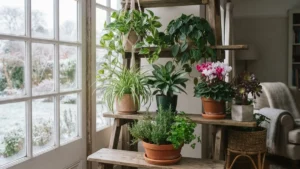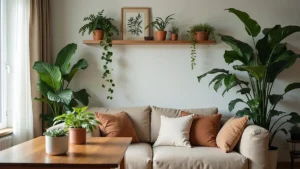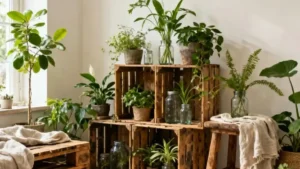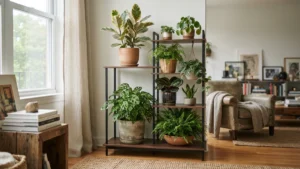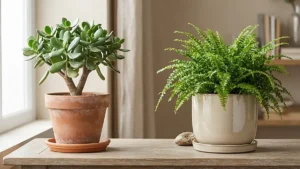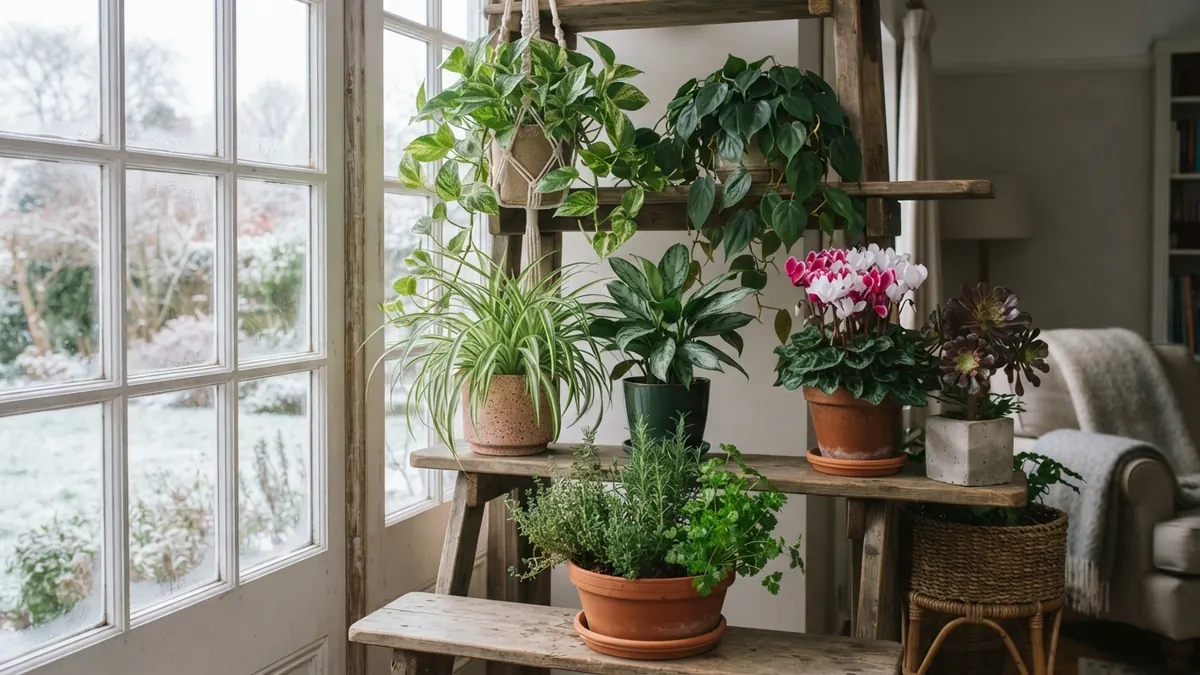

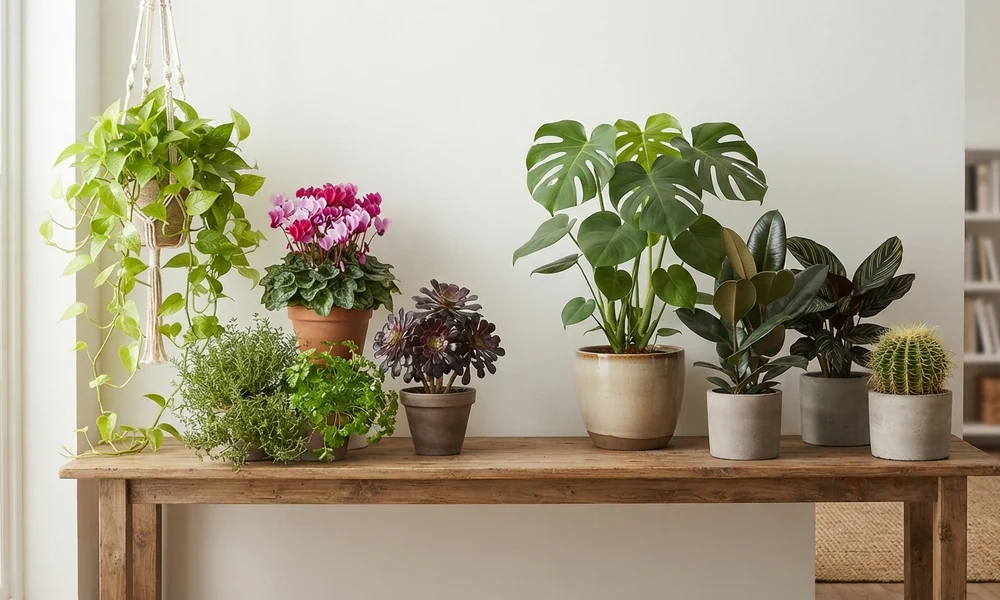
Pothos, heartleaf philodendron, spider plants, and Chinese evergreens can keep growing through winter when they receive enough light and stay in a warm room. If you’re choosing houseplants that grow well in winter, these varieties are good options for warm indoor spaces. Cyclamen, Aeonium succulents, and cool-season herbs are different: winter is naturally an active season for them. Many other houseplants slow down or rest until spring.
The important distinction is winter growers versus winter sleepers. Growing plants may still need light, warmth, and occasional feeding. Resting plants usually need less water and no fertilizer. Treating both groups the same can cause weak growth, soggy soil, and root problems.
Why Most Houseplants Stop Growing in Winter
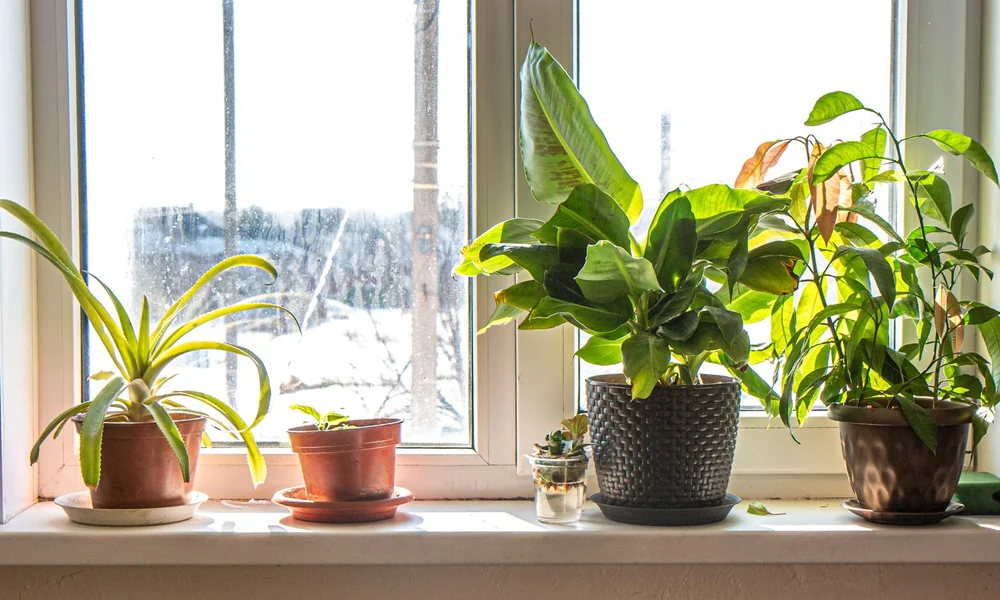
Houseplant growth depends heavily on light and temperature. In winter, daylight hours shorten, the sun sits lower in the sky, and indoor light levels often fall. A plant that grew quickly beside a window in summer may receive too little usable light to produce new leaves in December.
Temperature matters too. Many tropical houseplants grow best in rooms around 65–75°F (18–24°C). When temperatures fall, their growth can slow further. A plant may remain healthy but use less water because it is no longer producing leaves at its usual rate.
This seasonal slowdown is normal. It does not automatically mean your plant is unhealthy or needs fertilizer. The key is to notice whether it is actively growing or simply maintaining its existing leaves.
Winter Growers vs. Winter Sleepers: What Is the Difference?
| What to check | Winter growers | Winter sleepers |
|---|---|---|
| Visible growth | New leaves, longer vines, shoots, or plantlets | Little or no new growth |
| Water use | Soil dries at a relatively steady pace | Soil takes longer to dry |
| Fertilizer | Light feeding may be appropriate during active growth | Usually no fertilizer until growth resumes |
| Main need | Enough light, suitable warmth, and measured care | Reduced watering and stable conditions |
| Examples | Pothos, heartleaf philodendron, spider plant, Chinese evergreen, cyclamen, Aeoniums, and cool-season herbs | Many monsteras, fiddle-leaf figs, calatheas, rubber plants, and most cacti and succulents |
These are general patterns, not fixed rules. A Monstera in a warm, bright room may still produce a leaf in winter. A pothos in a dark, chilly corner may stop growing. Watch the plant itself rather than relying only on the calendar.
Warm-Room Houseplants That Grow Well in Winter
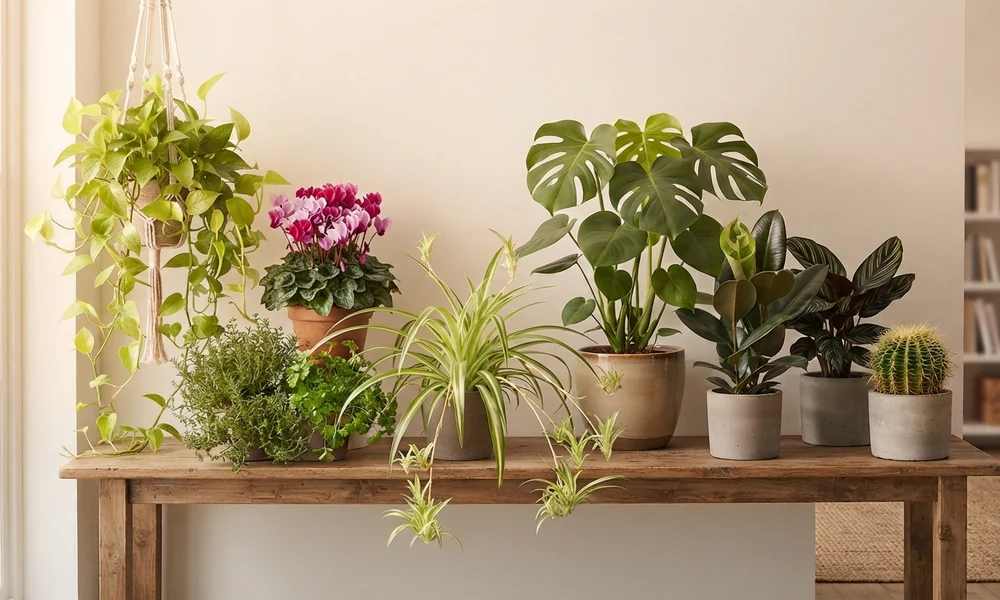
Some familiar foliage plants can continue producing new growth through winter if their indoor conditions remain suitable.
1. Pothos
Pothos is a dependable choice for indoor growers. In a warm room with reasonable natural or supplemental light, its vines can continue extending and producing leaves, although growth is usually slower than in summer.
If your pothos has stopped growing, check its light and temperature before changing its fertilizer routine. Keep it away from cold window glass and avoid watering while the soil is still wet.
2. Heartleaf Philodendron
Heartleaf philodendron can also produce new leaves during winter when it receives enough light and warmth. Its trailing stems may grow more slowly during the darkest weeks, but a warm indoor position can help it remain active.
Avoid placing it beside a drafty door or a cold window. If the plant is not producing new leaves, assess its growing conditions before assuming it needs more fertilizer.
3. Spider Plant
Spider plants can handle average indoor conditions and may continue growing through winter. Look for fresh leaves emerging from the center and, on mature plants, new plantlets developing on runners.
They generally prefer bright, indirect light. A plant that receives too little light may remain alive without producing much new growth. Spider plants also tend to produce plantlets readily when slightly pot-bound, so winter is not usually the best time to repot one without a clear need.
The spider plant care basics cover its light, watering, and general growing needs.
4. Chinese Evergreen
Chinese evergreen (Aglaonema) can continue growing slowly in a warm indoor space. It prefers warmth and should not be treated as a cold-tolerant plant. Cool conditions can cause stress, particularly when temperatures fall below about 60°F (16°C).
Give it bright, indirect light or suitable medium indirect light, and keep it away from cold drafts. If it stops producing leaves, check the temperature and light before increasing watering or feeding.
True Winter Growers: Cyclamen, Aeoniums, and Cool-Season Herbs
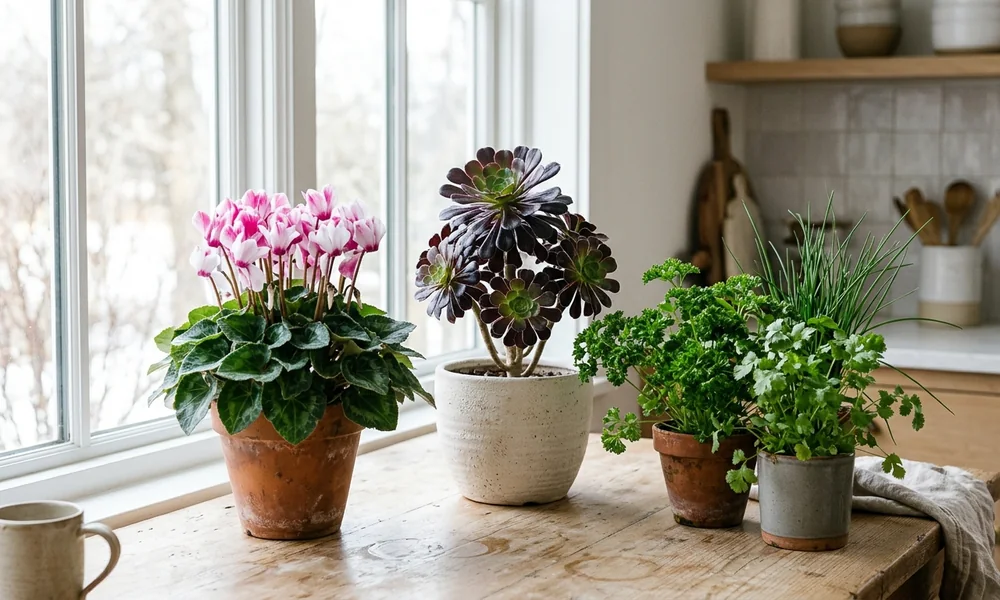
Some plants do more than tolerate winter. Their natural growth cycles make the cooler season a period of active growth.
Cyclamen
Cyclamen is a cool-season plant that grows and flowers during winter. It generally prefers cool conditions, with daytime temperatures around 60–65°F (16–18°C) and cooler nights. Warm rooms can shorten its display and cause buds to fail.
Place it somewhere bright and cool rather than beside a heater. Water carefully around the edge of the pot or from below, and avoid leaving water sitting in the crown.
Cyclamen is included here because it actively grows during the cooler months; its flowering is a separate part of its winter appeal. Our guide to winter-flowering plants covers the broader seasonal display.
Aeoniums
Aeoniums follow a different cycle from many familiar succulents. Many varieties grow mainly from fall through spring and slow down or become dormant during hot summer weather.
Give an actively growing Aeonium plenty of bright light and a free-draining potting mix. Water when its growing medium has dried appropriately, rather than following the schedule used for tropical foliage plants.
Growth can still slow during very dark or cold periods. Aeoniums are not frost-proof, so protect them from freezing temperatures and avoid assuming that every succulent follows the same winter routine.
Cool-Season Herbs
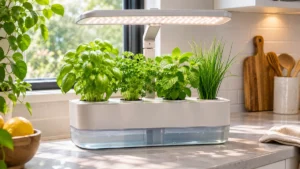
Several herbs can grow indoors during winter, including parsley, cilantro, chives, mint, and oregano. Parsley and cilantro generally prefer cooler growing conditions than heat-loving herbs.
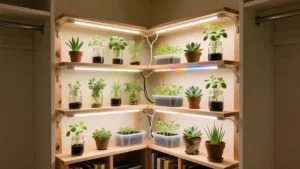
The main challenge indoors is light. A bright window may be enough in some homes, but short winter days can limit growth. Supplemental lighting can help herbs produce usable leaves when natural light is weak.
Harvest modestly and avoid removing too much foliage at once. The plant needs enough healthy leaves to keep growing.
Houseplants That Usually Rest Until Spring
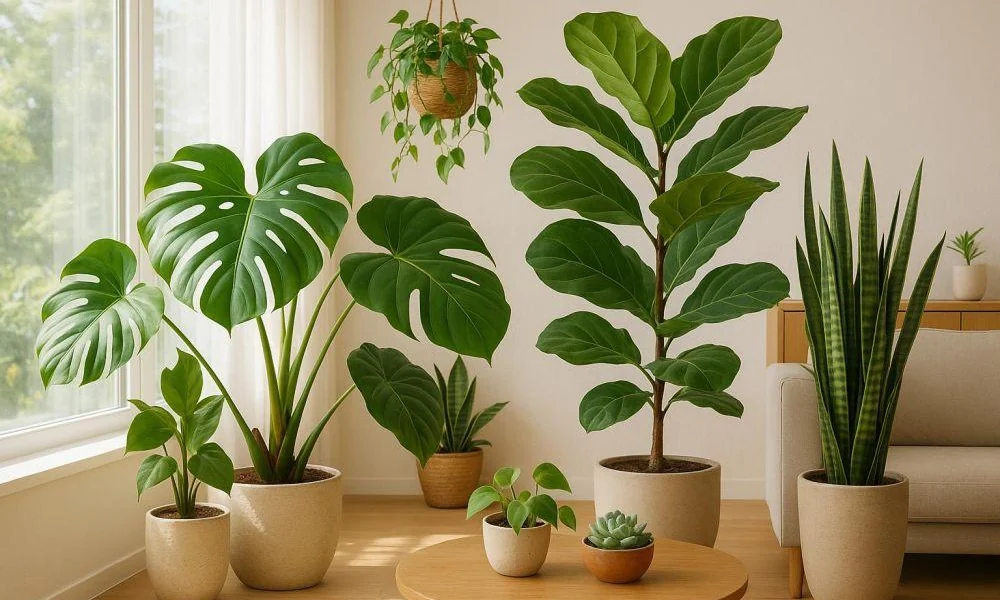
Many popular houseplants slow down during winter, particularly when indoor light levels fall or rooms become cooler.
Common examples include:
- Monstera: Often produces fewer leaves during winter, especially in lower light.
- Fiddle-leaf fig: May pause new growth as daylight decreases.
- Calathea: Often grows more slowly and needs careful watering when soil dries less quickly.
- Rubber plant: May maintain its existing leaves without producing much new growth.
- Most cacti and many succulents: Often benefit from a cooler, brighter, drier winter rest, depending on the species.
A resting plant does not need to be pushed into growth. Water less often when the soil takes longer to dry, pause routine feeding, and avoid unnecessary repotting.
Succulents are not one uniform group, however. Aeoniums are winter growers, while many other popular succulents rest during the cooler months. Identify the plant before changing its seasonal care.
How to Support Winter Growth Without Forcing It
If your houseplants are still actively growing, four conditions matter most.
1. Give Growing Plants Enough Light
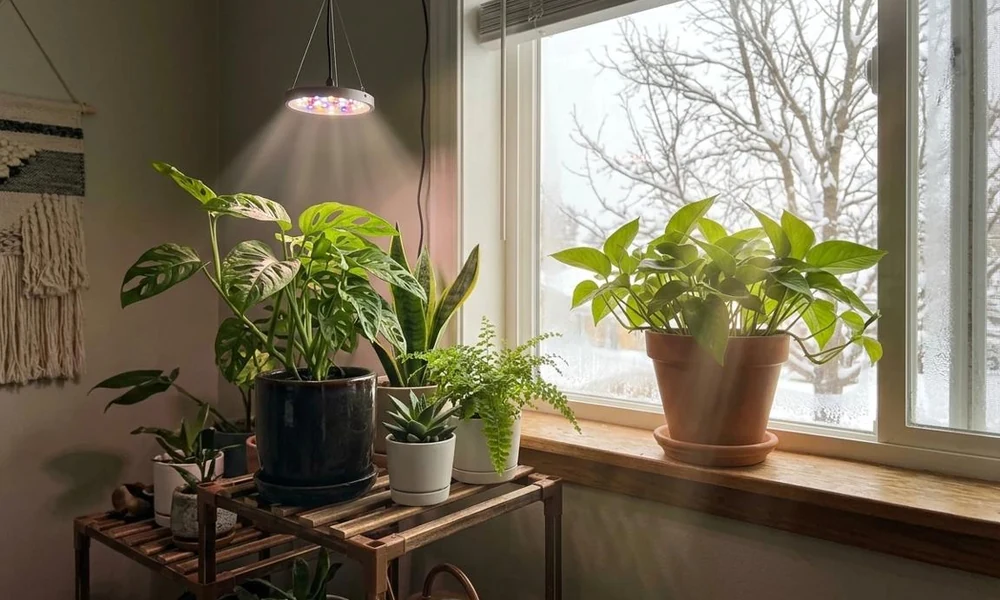
Light is often the biggest limit on winter growth. Move plants closer to a bright window if the position is suitable, while keeping foliage away from cold glass and harsh direct sun that may scorch leaves.
Supplemental lighting can help when natural daylight is insufficient. University of Minnesota Extension recommends around 12–14 hours of supplemental light for foliage houseplants and 14–16 hours for flowering plants. Iowa State Extension also discusses a 12–14-hour range for indoor plants grown under supplemental lights.
Use a timer to keep the schedule consistent. The best grow lights for indoor plants explains the main fixture types and what to consider when choosing one. A plant light meter can also help you assess the light reaching a particular spot.
2. Keep Warm-Room Growers Away From Cold Drafts
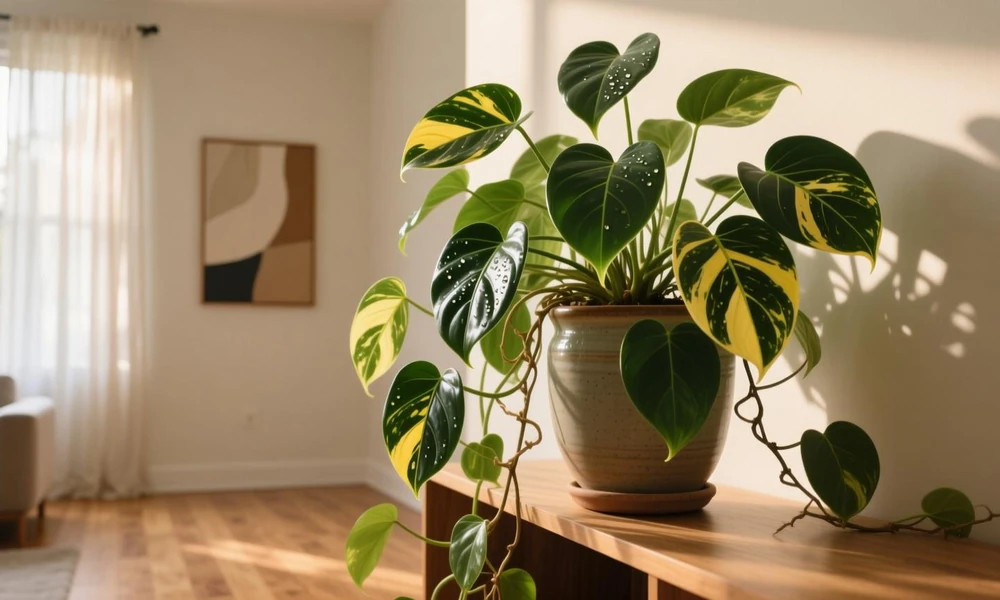
Tropical foliage plants generally prefer stable indoor temperatures. Keep active growers away from exterior doors, drafty windows, and heating vents that create sudden temperature changes.
A warm room does not need to be hot. Consistent conditions are more useful than placing a plant directly beside a radiator.
Cyclamen and other cool-season plants have different preferences, so do not apply tropical-houseplant temperature advice to every winter grower.
3. Feed Only Plants That Are Actively Growing
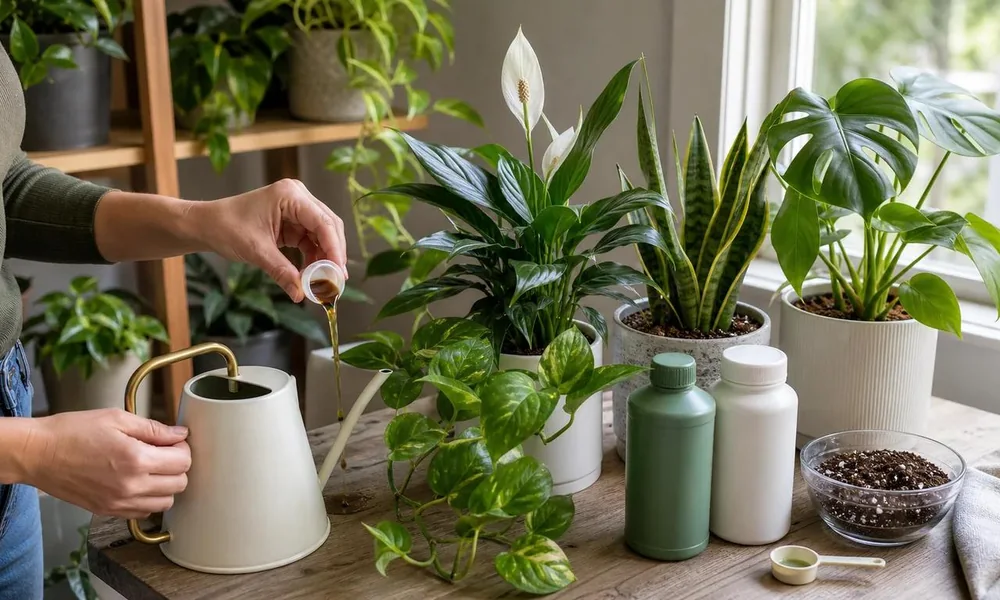
Winter is not automatically a fertilizer season. If a plant is producing new leaves or shoots and has suitable light and warmth, reduced-rate feeding may be reasonable.
If a plant is resting, skip fertilizer until active growth returns. Nutrients that the plant does not use can accumulate in the potting mix, particularly when soil stays damp for longer.
If you are unsure about the amount to use, follow the product’s dilution directions and avoid increasing the dose to compensate for slow growth. Our guide to houseplant fertilizing explains the basics.
4. Water According to Soil Dryness
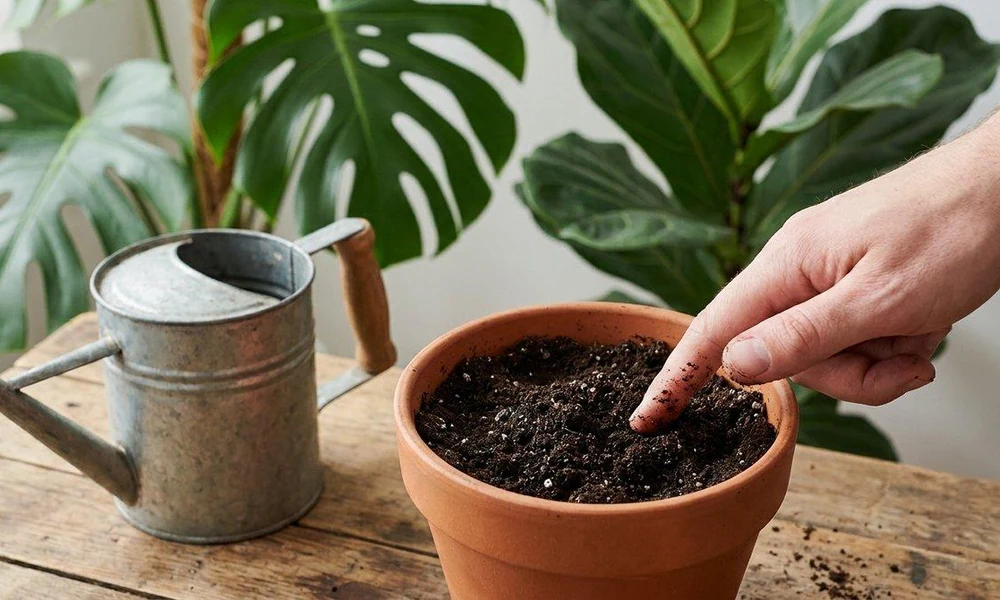
Do not keep using your summer watering schedule in winter. A growing plant may still need regular water, while a resting plant may use much less.
Check the soil before watering. For many common foliage plants, feeling the top inch of potting mix is a useful starting point, but the correct depth depends on the plant and pot size. Water thoroughly when the plant needs it, then allow excess water to drain.
If the soil stays wet for much longer than usual, check the light, temperature, drainage, and watering frequency before adding more water.
FAQ: Houseplants and Winter Growth
Do houseplants grow in winter?
Some do, especially warm-room plants such as pothos and spider plants. Cyclamen, Aeoniums, and several cool-season herbs also grow during winter, while many tropical plants slow down.
Which houseplants grow the most in winter?
Cyclamen and Aeoniums are notable winter growers. Pothos and heartleaf philodendron can also keep producing leaves when they receive enough light and warmth.
Should I fertilize houseplants in winter?
Only consider light feeding for plants that are actively growing. Resting plants generally do not need fertilizer until new growth resumes.
How many hours of grow light do houseplants need in winter?
University extension guidance commonly recommends about 12–14 hours of supplemental light for foliage houseplants. Flowering plants may need a different schedule, depending on the species.
Why has my pothos stopped growing?
Low winter light, cool temperatures, and reduced seasonal growth are common reasons. Check its position and soil moisture before changing its fertilizer routine.
Is cyclamen a good winter houseplant?
Yes. Cyclamen grows and flowers in cool conditions, making it a strong seasonal choice for a bright, cool indoor location.
Final Thoughts: Houseplants That Grow Well in Winter
The best way to manage houseplants in winter is to separate active growers from plants that are resting. Pothos, heartleaf philodendron, spider plants, and Chinese evergreens may continue growing in warm, bright rooms. Cyclamen, Aeoniums, and cool-season herbs have their own winter growth cycles.
For the plants that are still growing, provide enough light, stable temperatures, and measured care. For the sleepers, reduce watering and leave the fertilizer until spring. You do not need to force every plant to grow all year; you need to give each one the conditions its natural cycle requires.
Disclaimer: This article is for general educational purposes. Plant care varies by species, cultivar, growing medium, and indoor conditions. Check the needs of your specific plant before changing its watering, lighting, or feeding routine.