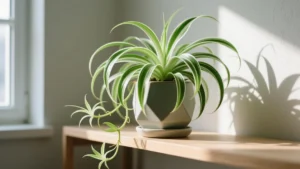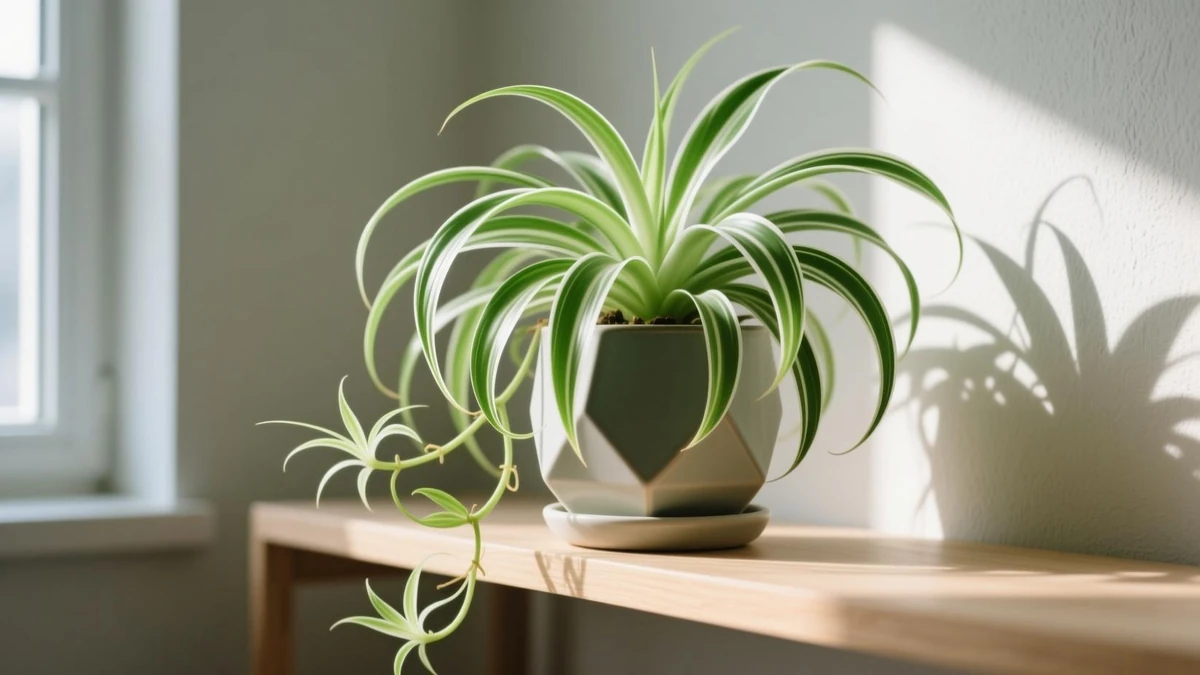
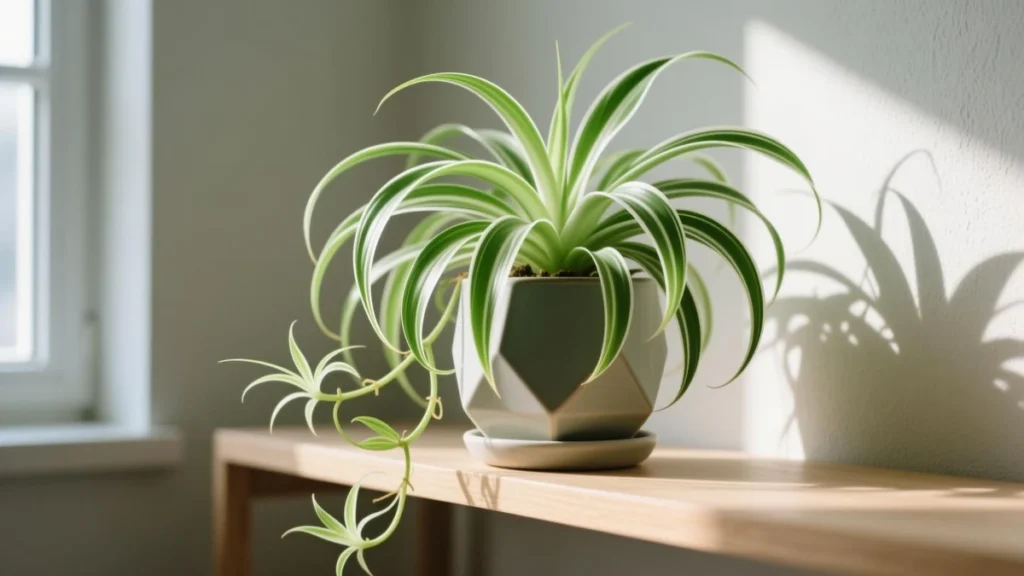
A spider plant can turn a simple shelf, windowsill, or hanging basket into a lively green corner of your home. Its long, arching leaves create a graceful fountain-like shape, and mature plants often produce small plantlets that hang from the mother plant like tiny green ornaments.
The best part is that spider plants are relatively easy to grow indoors. They tolerate a range of household conditions, adapt well to containers, and can produce new plants without complicated propagation techniques. The key is to give them bright, indirect light, well-draining soil, and water when the top layer of soil begins to dry.
Whether you are buying your first houseplant or trying to revive a struggling one, this guide explains how to grow a healthy spider plant and keep its leaves looking fresh.
What Is a Spider Plant?
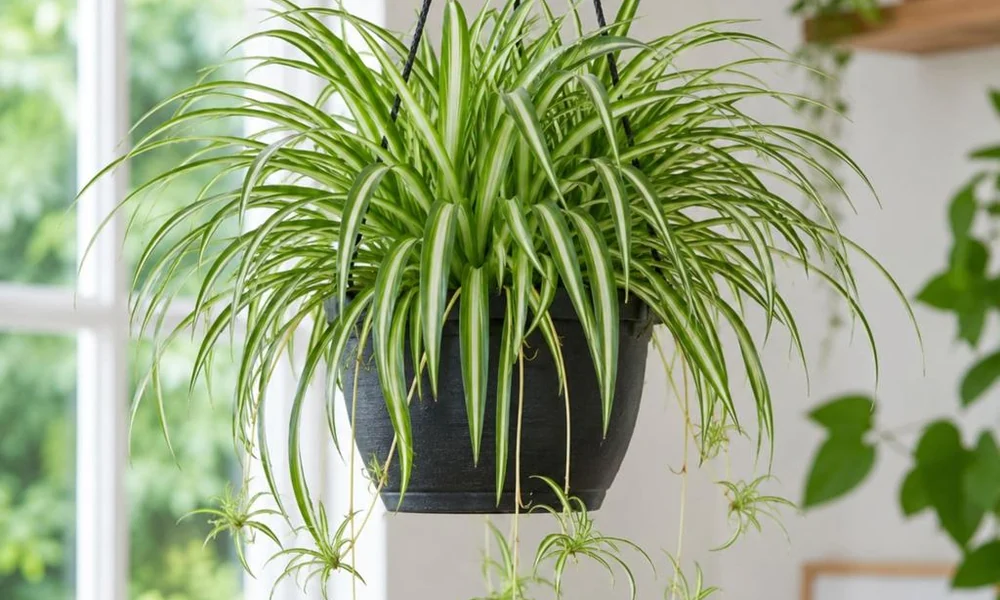
The spider plant (Chlorophytum comosum) is a perennial plant native to tropical and southern Africa. It is widely grown as a houseplant because of its narrow, arching foliage and ability to produce baby plants, commonly called spiderettes.
Most indoor varieties have green leaves with white or cream stripes. Some cultivars have predominantly green foliage, while others feature different stripe patterns or slightly curled leaves.
Spider plants work particularly well in:
- Hanging baskets, where their leaves and plantlets can cascade over the edges
- Shelves and plant stands with room for their arching foliage
- Bright bedrooms, living rooms, and home offices
- Plant collections for beginners who want a forgiving indoor species
Their mature size depends on the variety, growing conditions, and container. A healthy plant can gradually become broad and full, so allow enough space for its leaves to spread.
How to Care for a Spider Plant
Spider plant care is straightforward once you understand its basic needs. The following conditions provide a reliable starting point.
| Care requirement | What works best |
| Light | Bright, indirect light |
| Water | When the top 1–2 inches of soil feel dry |
| Soil | Loose, well-draining potting mix |
| Temperature | Typical comfortable indoor temperatures |
| Humidity | Average household humidity is usually suitable |
| Fertilizer | Balanced houseplant fertilizer during active growth |
| Propagation | Rooting plantlets or dividing a mature plant |
| Repotting | When roots crowd the pot or emerge through drainage holes |
Adjust watering to your home’s conditions rather than following a rigid calendar. A plant in a warm, bright room may dry out much faster than one in a cool corner.
1. Give Your Spider Plant the Right Light
Spider plants grow best in bright, indirect light. A spot near an east-facing window is often suitable, while a bright room with filtered daylight can also work well.
They can tolerate lower-light conditions, but growth may slow and variegated leaves may become less colorful. On the other hand, strong direct afternoon sunlight can scorch the foliage, leaving pale, bleached, or brown patches.
If your plant is near a sunny window, observe the leaves over several days. Move it a little farther from the glass or use a sheer curtain if the sunlight becomes harsh.
For rooms with limited natural light, an appropriate grow light can help support healthy growth. You can learn more in our guide to growing plants indoors.
2. Water When the Soil Begins to Dry
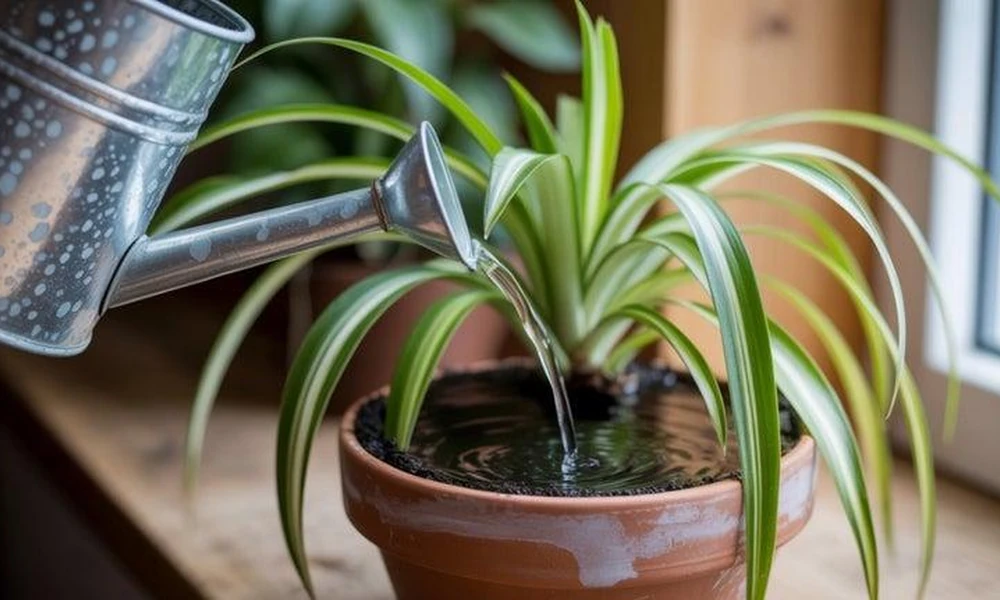
One of the most common spider plant care mistakes is watering too frequently.
Before watering, check the soil with your finger. If the top 1–2 inches feel dry, water thoroughly until excess water drains from the bottom of the pot. Empty any water collected in the saucer so the roots are not left sitting in it.
Avoid giving the plant tiny amounts of water repeatedly. Thorough watering followed by a suitable drying period encourages more consistent moisture throughout the root zone.
How often should you water a spider plant?
There is no single schedule that works for every plant. During warm, bright weather, you may need to water more often. In winter or in a low-light room, the soil may remain moist for longer.
Watch for these signs:
- Dry soil and drooping leaves: The plant may need water.
- Persistently wet soil and yellowing leaves: Watering may be too frequent, or drainage may be poor.
- Brown, crispy tips: Several factors can contribute, including inconsistent watering, mineral buildup, or low humidity.
Always check the soil before deciding what the plant needs.
3. Choose Soil That Drains Well
Spider plants need a potting mix that retains some moisture without becoming waterlogged. A quality indoor potting mix is usually sufficient if it drains freely.
Avoid dense garden soil in containers because it can compact and restrict airflow around the roots. If your mix remains soggy for days, consider improving its structure with a suitable drainage amendment.
The pot matters, too. Choose a container with drainage holes and avoid placing the plant in a decorative outer pot where water can collect unnoticed.
For more container-care guidance, read our article on how to care for potted plants.
4. Maintain Comfortable Indoor Temperatures
Spider plants generally grow well at normal household temperatures. Protect them from cold drafts, freezing conditions, and sudden temperature changes.
Avoid placing the pot directly beside heating vents or air conditioners that blow hot or cold air onto the leaves. These locations can dry the foliage or expose the plant to uncomfortable temperature fluctuations.
If you move your spider plant outdoors during warm weather, introduce it to the new conditions gradually. Keep it in a sheltered location with filtered light rather than immediately exposing it to strong sunlight.
5. Does a Spider Plant Need High Humidity?
Spider plants can adapt to average indoor humidity, making them practical choices for many homes. They do not normally require a humidifier to survive.
However, very dry air can contribute to brown leaf tips, especially when combined with inconsistent watering or mineral-rich water.
If the air in your home is particularly dry, consider grouping plants together or using a room humidifier. Avoid keeping the pot in a constantly damp environment, and do not rely on frequent misting as a substitute for proper watering.
6. How to Fertilize a Spider Plant
A spider plant does not need heavy feeding. During active growth, use a balanced and best houseplant fertilizer according to the product label.
Apply fertilizer to appropriately moist soil rather than feeding a severely dry or stressed plant. Excess fertilizer can cause mineral salts to accumulate in the potting mix and may contribute to brown leaf tips.
Reduce or pause feeding when growth slows during cooler, darker months. If your plant has not been growing well, first check its light, watering, roots, and soil before assuming it needs more fertilizer.
7. How to Propagate a Spider Plant
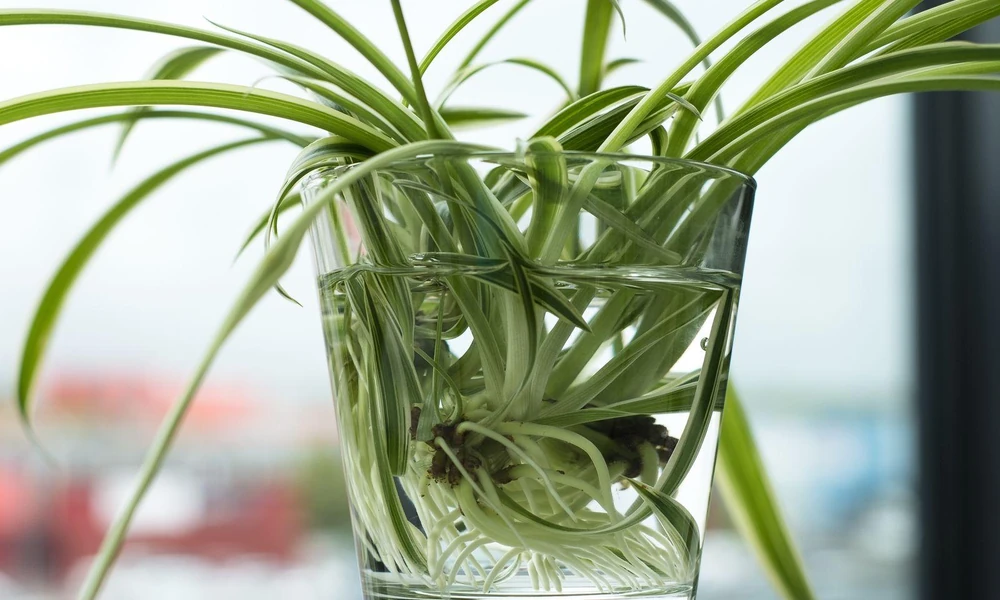
Spider plants are especially rewarding to propagate because mature plants often produce small plantlets on long stems. These baby plants can become independent houseplants.
Method 1: Root the baby plant in water
- Choose a healthy plantlet with visible root bumps or small roots.
- Cut it from the mother plant using clean scissors.
- Place its base in a small container of water, keeping the leaves above the surface.
- Position it in bright, indirect light.
- Replace the water regularly and watch for root development.
- Transfer the plantlet into a pot with well-draining potting mix once its roots are established.
Avoid submerging the leaves, and do not leave the young plant in water indefinitely if your goal is to grow it in soil.
Method 2: Root the plantlet directly in soil
This method allows the baby plant to develop roots in its eventual growing medium.
- Fill a small pot with lightly moist potting mix.
- Position the plantlet so its base touches the soil.
- Secure it gently if necessary.
- Keep the mix lightly moist, not saturated.
- Once the plantlet is established, cut the connecting runner from the mother plant.
You can also leave the plantlet attached while it roots in its own pot. This makes it easier to keep the young plant hydrated during establishment.
Method 3: Divide a mature spider plant
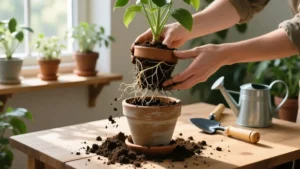
If your spider plant has become large and crowded, remove it carefully from its container. Separate the root mass into smaller sections, ensuring each division has healthy roots and foliage. Plant each section in a suitable container and water it thoroughly.
Division is useful when you want multiple mature-looking plants rather than waiting for baby plantlets to grow.
8. Why Are Your Spider Plant’s Leaves Turning Brown?
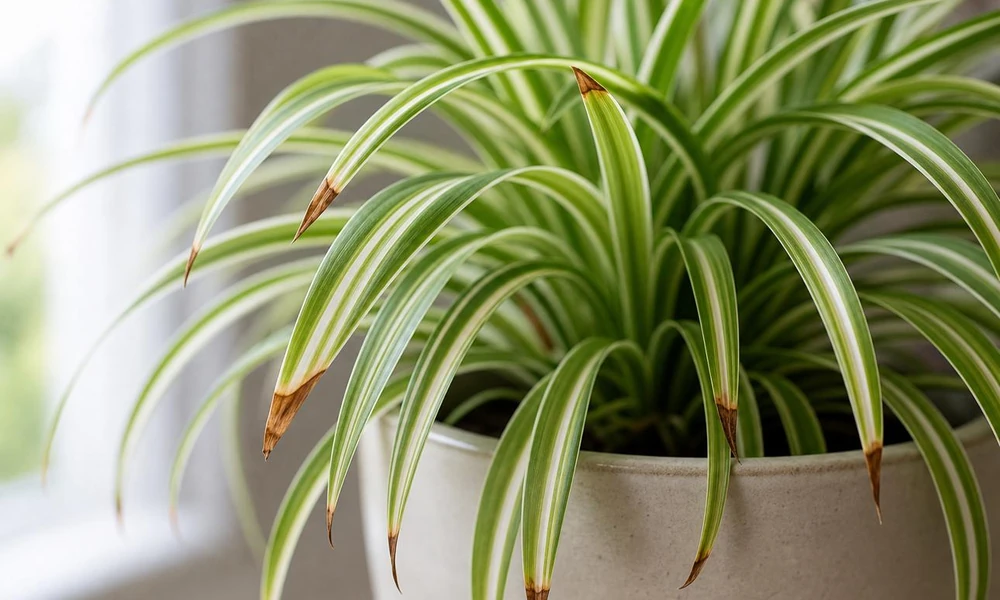
Brown leaf tips are one of the most frequently noticed spider plant problems. They do not automatically mean the plant is dying.
Several factors may be responsible:
- Mineral buildup: Minerals or salts in tap water and fertilizer can accumulate in the soil.
- Inconsistent watering: Repeatedly allowing the root ball to become extremely dry can stress the plant.
- Excess fertilizer: Too much fertilizer can damage roots and foliage.
- Dry conditions: Very low humidity or exposure to hot airflow may contribute to crispy tips.
- Root problems: Waterlogged soil can damage roots and interfere with water uptake.
Start by checking soil moisture, drainage, and fertilizer use. If mineral buildup is suspected, flush the potting mix thoroughly with suitable water and allow the excess to drain away.
You can trim brown tips with clean scissors, following the natural shape of the leaf. Leave the healthy green portion intact rather than cutting deeply into the foliage.
9. Why Is My Spider Plant Turning Yellow?
Yellow leaves can have several causes, so look at the overall pattern rather than reacting to one leaf.
An occasional older leaf turning yellow is usually less concerning than several leaves changing color at once. If multiple leaves are yellowing while the soil stays wet, check for overwatering and poor drainage.
If the soil is very dry and the leaves are limp, the plant may be underwatered. Also consider whether the plant receives enough light and whether its pot has become overcrowded.
Remove fully yellow or dead leaves with clean scissors. Correct the underlying condition instead of simply removing the visible symptoms.
10. Why Is My Spider Plant Not Producing Babies?
A healthy spider plant may eventually produce runners and plantlets, but the timing varies. A plant that is still young, growing in low light, or recovering from stress may not produce babies yet.
To encourage healthy growth:
- Provide bright, indirect light.
- Water consistently without keeping the soil saturated.
- Feed moderately during active growth.
- Maintain comfortable indoor temperatures.
- Allow the plant time to mature.
A crowded root system is sometimes associated with flowering and plantlet production, but deliberately keeping a plant severely root-bound is not necessary. Prioritize healthy roots and foliage over forcing it to reproduce.
11. Are Spider Plants Safe for Pets?
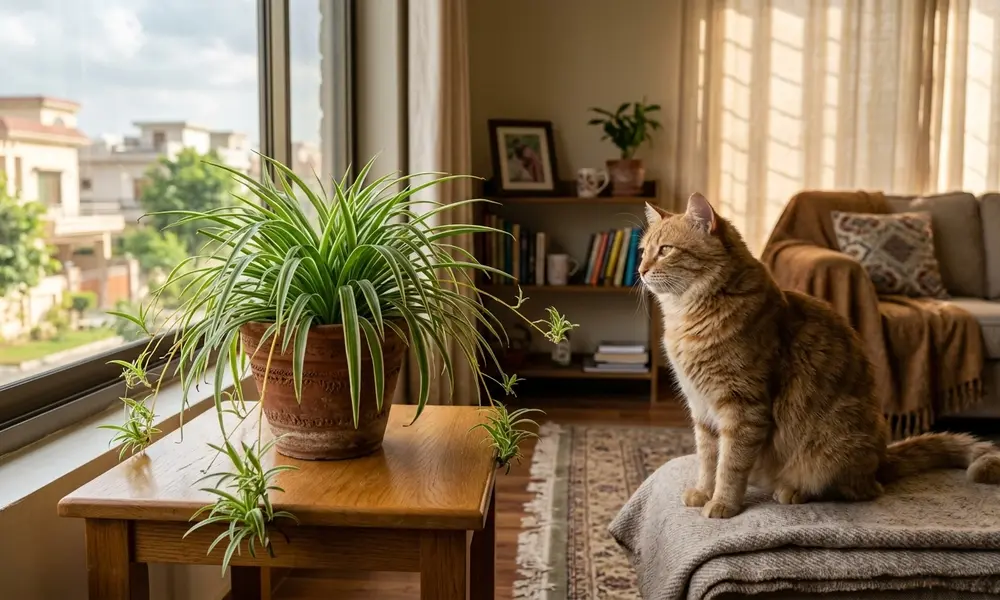
Spider plants are generally listed as non-toxic to cats and dogs. However, pets may still experience stomach upset after eating plant material, and chewing can damage the leaves.
Some cats are particularly interested in the dangling foliage. If your pet repeatedly chews the plant, place it out of reach and monitor for unusual symptoms after ingestion. Contact a veterinarian if your pet becomes unwell.
Common Spider Plant Care Mistakes
Avoid these problems to keep your plant healthy over the long term.
- Watering on a fixed schedule: Check soil moisture instead.
- Using a pot without drainage: Excess water needs somewhere to go.
- Exposing leaves to harsh sunlight: Bright, filtered light is safer.
- Overfertilizing: More fertilizer does not automatically mean faster growth.
- Ignoring brown tips: Check water quality, moisture, and fertilizer buildup.
- Repotting unnecessarily: Move the plant when roots are crowded or the growing mix no longer drains properly.
- Expecting instant propagation: Give new plantlets time to establish roots.
Healthy growth comes from consistent care rather than frequent adjustments.
Frequently Asked Questions
How often should I water a spider plant?
Water when the top 1–2 inches of soil feel dry. The interval depends on light, temperature, pot size, and the type of potting mix.
Do spider plants need direct sunlight?
No. Bright, indirect light is usually best. Some gentle morning sun may be tolerated, but strong direct sunlight can scorch the leaves.
How long does it take a spider plant to grow babies?
There is no fixed timeline. Mature plants growing under suitable conditions may produce runners and plantlets, while young or stressed plants may take longer.
Can I grow a spider plant in water?
Yes. Spider plantlets can develop roots in water. For long-term growth, transfer a rooted plantlet to potting mix or learn the specific care needs of water-grown plants.
Should I cut off spider plant babies?
Only if you want to propagate them, reduce the number of runners, or change the plant’s appearance. You can leave healthy plantlets attached to the mother plant.
Why does my spider plant have brown tips even when I water it?
Watering is only one possible cause. Mineral-rich water, excess fertilizer, dry air, and root problems can also contribute. Check the growing conditions before changing your watering routine.
Are spider plants good for beginners?
Yes. They tolerate a range of indoor conditions and are relatively easy to propagate, making them a useful choice for people learning basic houseplant care.
Final Thoughts
A spider plant can thrive for years when its basic needs are met. Give it bright, indirect light, use a potting mix that drains well, water according to soil moisture, and avoid excessive fertilizer.
Pay attention to changes in the leaves rather than following a rigid care calendar. Once the plant is established, its arching foliage and hanging plantlets can provide lasting greenery with relatively little maintenance.