
Indoor plant care services send a technician to water, prune, clean, and inspect your plants on a schedule. Published US examples put one-time visits at roughly $50–$100 and recurring home care at about $50–$250 per month, depending on plant count and visit frequency. Hiring makes sense when you have a large collection, demanding plants, or limited time to care for them.
Plants can develop problems quietly. Soil may stay wet for too long, pests can spread beneath leaves, and a failed grow light may go unnoticed for days. A professional plant care service provides regular attention and helps identify these issues before they become serious.
This guide explains what indoor plant care services include, how much they may cost, what technicians do during visits, and how to decide whether professional help is worth the expense.
Key Takeaways
- Indoor plant care services can include watering, pruning, leaf cleaning, pest inspections, and basic plant-health checks.
- Home services, vacation plant-sitting, commercial maintenance, and installation projects have different pricing models.
- Plant count, visit frequency, plant needs, and replacement policies influence the total cost.
- Small collections of hardy plants are often manageable without professional help.
- Always ask about insurance, pest treatment, replacement guarantees, and visit reports before signing a contract.
What Indoor Plant Care Services Include
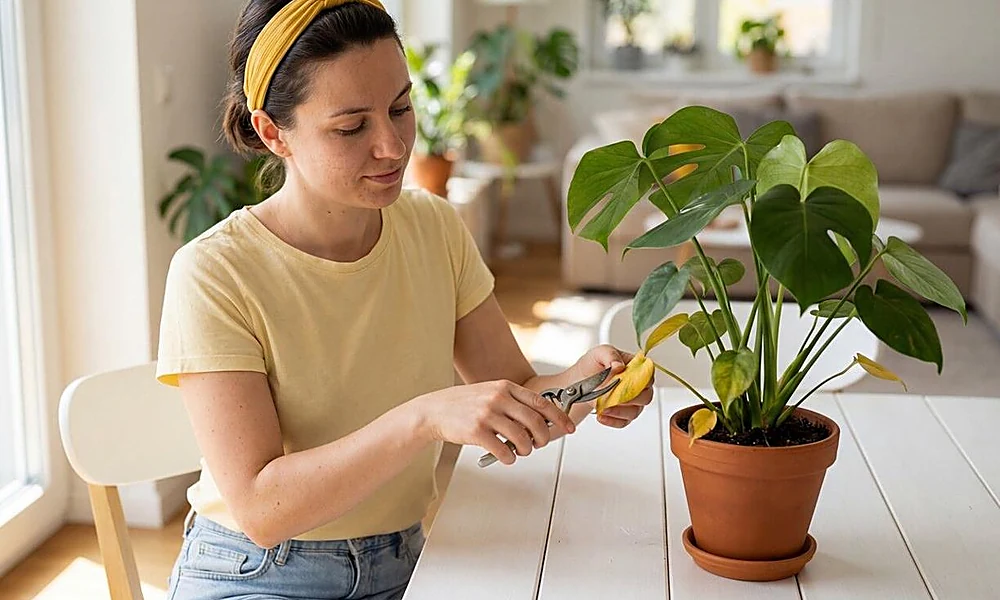
The main purpose of an indoor plant care service is to keep plants healthy through scheduled maintenance. However, a professional visit should involve more than watering every pot.
A technician should consider each plant’s condition, species, soil moisture, light exposure, and seasonal needs. This matters because indoor plants do not all use water at the same rate. A plant in bright light may dry faster than one in a dim corner, while some species need their soil to dry between waterings.
Virginia Tech Extension explains that watering needs depend on factors such as plant type, light, temperature, humidity, soil, and container.
A typical indoor plant care service may include:
- Watering: Checking soil moisture and watering plants according to their needs.
- Pruning and grooming: Removing dead leaves, damaged stems, and unwanted growth.
- Leaf cleaning: Removing dust from foliage where appropriate.
- Pest inspection: Checking leaves, stems, and soil for common indoor plant pests.
- Light checks: Identifying plants that may not be receiving suitable light.
- Basic reporting: Recording plant problems and recommending further care.
Some providers also offer repotting, fertilizing, plant replacement, and installation services. These tasks may be included in a contract or charged separately, so confirm the exact scope before booking.
If you manage your plants yourself, the indoor plant care guide covers the routine tasks involved in keeping a houseplant collection healthy.
Four Types of Indoor Plant Care Services
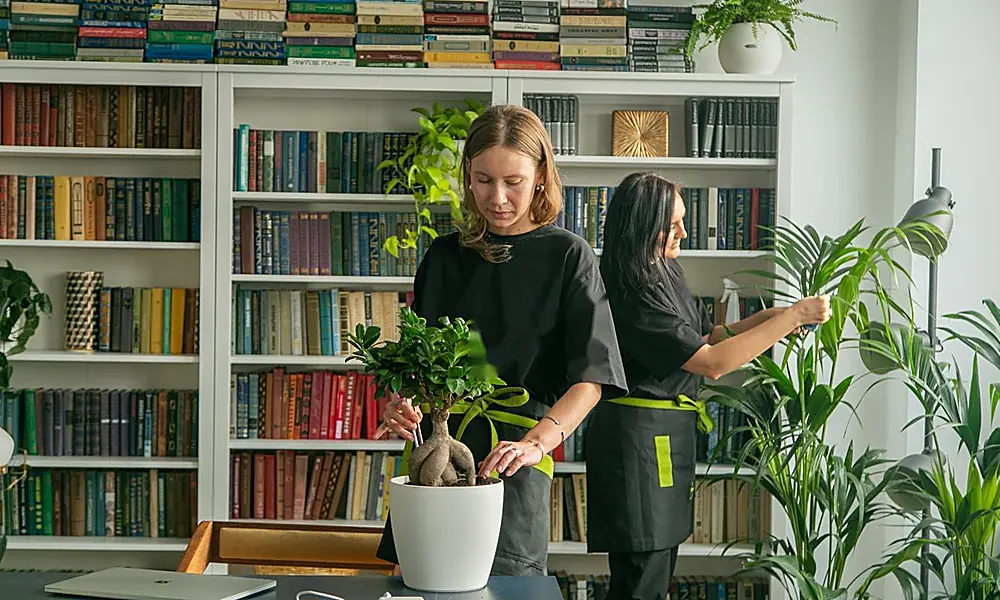
Not every plant owner needs the same service. The right option depends on whether you need regular maintenance, temporary help, or a complete indoor planting project.
| Service type | What it covers | Typical arrangement |
|---|---|---|
| Recurring home maintenance | Watering, grooming, and plant-health checks | Weekly, bi-weekly, or monthly visits |
| Vacation plant-sitting | Watering and basic checks while you are away | One-time booking or several visits during a trip |
| Office and commercial plant care | Maintenance of office plants, lobbies, and indoor displays | Scheduled visits under a service contract |
| Plant installation and styling | Selecting, arranging, and planting indoor greenery | One-time project, sometimes followed by maintenance |
1. Recurring Home Plant Maintenance
This service suits people with larger plant collections or busy schedules. A technician visits at agreed intervals to water, prune, inspect, and maintain the plants.
The visit schedule should reflect the collection. A home with moisture-loving tropical plants may need more attention than one with a few drought-tolerant species.
2. Vacation Plant-Sitting
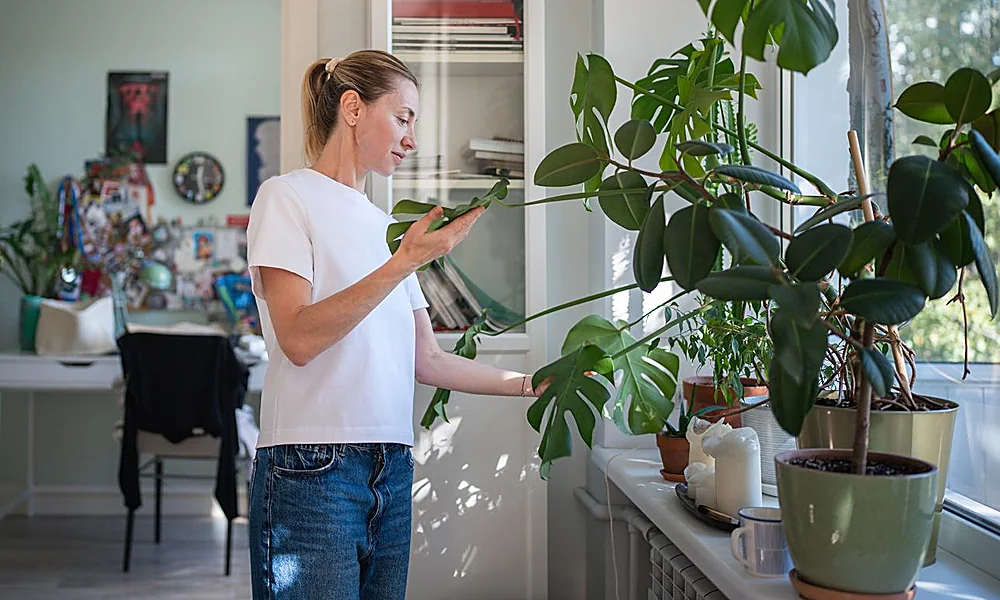
Vacation plant-sitting is temporary help while you are away. The sitter follows your care instructions and checks whether plants need water or other basic attention.
Before leaving, provide a written list with each plant’s location and watering needs. Avoid giving every plant the same instructions unless their requirements are genuinely similar.
For short absences, some plants may need little intervention. For longer trips, the Royal Horticultural Society explains options such as capillary mats and wick watering in its guide to houseplant holiday care.
3. Office and Commercial Plant Care
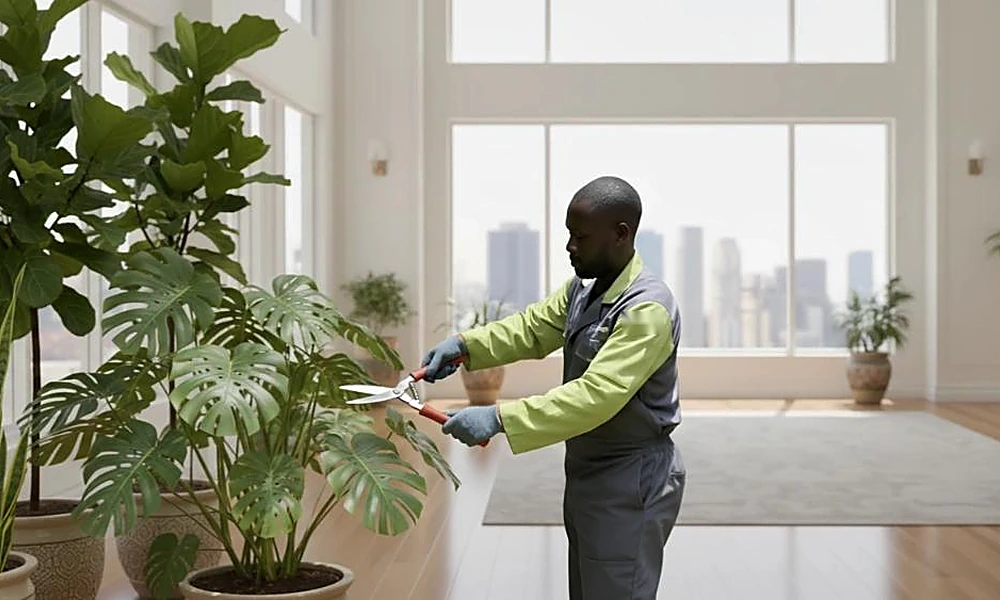
Commercial plant care covers greenery in offices, hotels, shops, restaurants, and other indoor spaces.
A contract may include routine watering, pruning, cleaning, pest monitoring, and replacement of plants that fail under the agreed conditions. Some providers also maintain the containers and growing materials.
Replacement policies vary. Do not assume that every commercial or residential contract includes free replacement plants.
4. Plant Installation and Styling
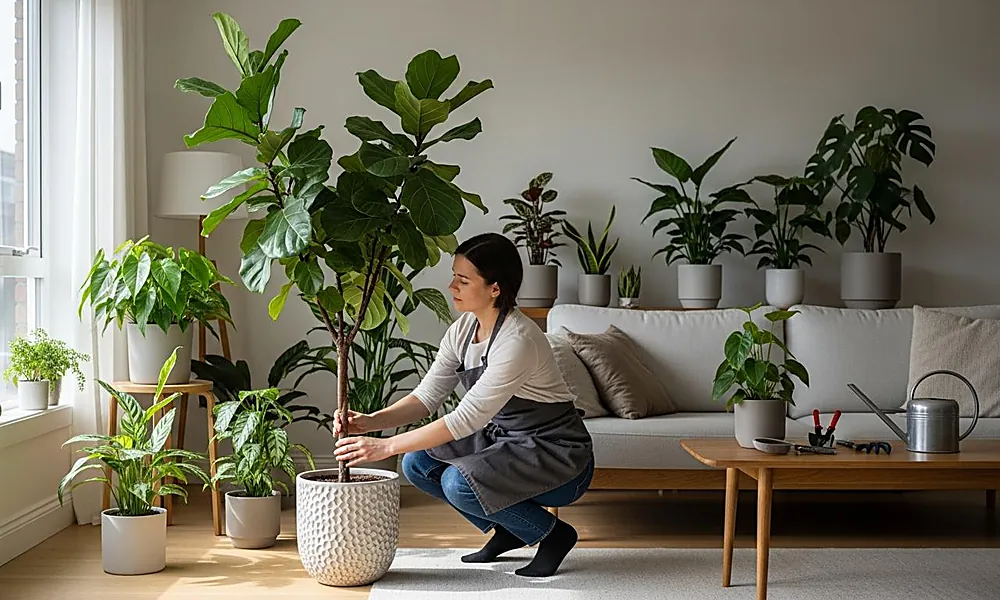
Installation services help create a new indoor plant arrangement. The provider may recommend plant types, select suitable containers, position the plants, and prepare the display.
Some projects include a follow-up maintenance agreement. This can be useful for offices or large interiors where the plants form part of the overall space design.
What a Plant Technician Does on Each Visit

A plant technician should follow a clear maintenance routine rather than water every pot automatically. The exact work depends on the contract, plant collection, and condition of the plants.
A standard visit may include these tasks:
- Check soil moisture and water as needed. The technician assesses each pot and waters only when the plant needs it. This reduces the risk of keeping moisture-sensitive plants too wet.
- Prune and groom plants. Dead leaves, damaged stems, and unhealthy growth are removed when appropriate.
- Inspect for pests. The technician checks leaf undersides, stems, and the soil surface for signs of spider mites, mealybugs, scale, and fungus gnats.
- Review light and growing conditions. Plants showing weak or stretched growth may need a different position or improved lighting.
- Check equipment. If the service includes grow lights or timers, the technician can confirm that the equipment is operating.
- Record and report problems. The technician shares notes or photographs and explains which plants need further attention.
Not every provider includes all these tasks. For example, pest treatment, fertilizing, repotting, and replacement plants may be separate services.
A useful service report should identify which plants were watered, which were left alone, and any problems that need your attention. This gives you a clearer picture of the work completed.
How Much Do Indoor Plant Care Services Cost?

Indoor plant care prices vary by location and provider. Published US service-provider examples suggest the following ranges:
| Service | Published US price examples |
|---|---|
| One-time visit | Around $50–$100 |
| Monthly home maintenance | Around $50–$150 per month |
| Bi-weekly home maintenance | Around $100–$250 per month |
| Commercial maintenance | Some published examples start around $125–$150 per month |
These are reported examples, not standard market rates or guaranteed quotes. Much of the published pricing comes from service providers themselves, so treat it as a starting point rather than an independent industry average. Prices in other countries and cities may be very different.
What Affects the Price?
Four main factors usually influence the cost.
1. Number of plants
More plants generally mean more time. A technician can inspect and water five plants faster than a collection of 30 or 40.
2. Plant care requirements
A collection of hardy plants may need less attention than one containing ferns, calatheas, or other plants with more specific moisture and humidity needs.
3. Visit frequency
Weekly service usually costs more than monthly service because the technician makes more visits and spends more time maintaining the collection.
4. Included services
A basic watering visit may cost less than a package that includes pruning, pest treatment, fertilizing, repotting, and plant replacement.
Ask for an itemized quote that separates the visit fee, additional tasks, materials, and replacement costs. A single monthly figure does not tell you exactly what you are paying for.
DIY or Hire: The Indoor Plant Care Decision Table
Professional care is not necessary for every indoor plant collection. Many people can manage a small group of plants with a consistent routine and suitable growing conditions.
| Your situation | Better fit | Reason |
|---|---|---|
| A few hardy plants and a regular home routine | DIY | Basic care is usually manageable |
| Occasional travel with hardy plants | DIY with a suitable watering plan | Short absences may not require a regular service |
| Frequent travel and moisture-sensitive plants | Hire | A person can inspect plants and respond to problems |
| A collection of 20 or more plants | Consider hiring | Regular maintenance can take significant time |
| Office, lobby, or commercial display | Hire | Scheduled maintenance and clear responsibility are useful |
| One struggling plant | One-time consultation | A diagnosis may help identify the cause |
| Large collection and limited budget | DIY with a simpler plant collection | Lower-maintenance plants can reduce routine work |
When DIY Is Enough
DIY care is often suitable when you have a small collection, understand the basic needs of your plants, and can check them regularly.
A consistent routine does not mean watering every plant on the same day. Check the soil and consider the plant’s growing conditions before watering. The Peace Lilly guide to watering indoor plants correctly explains the basics.
If you often forget to water, you can also review self-watering plants and decide whether a reservoir-based setup suits your plant collection.
When Hiring Makes More Sense
Professional help may be worth considering if:
- You travel frequently and have no reliable person to check your plants.
- Your collection is large or contains plants with different care requirements.
- You are responsible for plants in an office or commercial space.
- You repeatedly struggle with pests, watering problems, or plant decline.
- You want someone to inspect the collection on a regular schedule.
If your main problem is the time required for routine maintenance, choosing easier plants may also help. The low-maintenance indoor plants guide covers options that generally require less frequent attention.
Questions to Ask Before Signing a Plant Care Contract

Before hiring a plant care provider, clarify what the service includes and what happens if something goes wrong.
1. Are You Insured?
A technician may need access to your home or office. Ask whether the provider has appropriate insurance and what procedures are used for staff access.
2. What Is the Plant Replacement Policy?
Some commercial contracts include replacement plants, while residential arrangements may not. Ask which plants are covered, what conditions apply, and whether replacement is included in the monthly price.
3. How Do You Handle Pest Problems?
Ask how the provider responds when they find spider mites, mealybugs, scale, or other pests. Find out whether treatment is included, charged separately, or simply reported to you.
4. Are Materials Included?
Confirm whether fertilizer, growing medium, pest treatments, and other materials are included in the quoted price. Ask about additional charges before approving extra work.
5. Do You Provide Visit Reports?
Written notes or photographs help you understand what happened during each visit. Ask whether the report records watering, pruning, pest findings, and plants that need attention.
6. What Are the Cancellation Terms?
Check the minimum contract period, notice requirements, payment schedule, and cancellation fees. A long commitment should be clearly explained before you agree.
7. Who Is Responsible for Plant Damage?
Ask what happens if a plant declines after a visit. The contract should explain how the provider handles mistakes, accidental damage, and disagreements about plant health.
FAQ: Indoor Plant Care Services
How much does an indoor plant care service cost?
Published US examples range from about $50–$100 for one-time visits to roughly $50–$250 per month for recurring home care, but local quotes vary.
How often do plant care services visit?
Residential services may visit weekly, bi-weekly, or monthly, while commercial schedules depend on the number of plants and contract.
Do plant care services replace dead plants?
Some commercial contracts include replacements, but residential policies vary, so check the written agreement.
What is the difference between a plant sitter and a plant care service?
A plant sitter usually provides temporary care while you are away, while a regular plant care service handles ongoing maintenance and plant-health checks.
Do I need to be home during a service visit?
Not always; some providers arrange approved key or access-code procedures, but you should confirm their security and reporting policies first.
Can a plant care service save a dying plant?
A technician may identify and correct some care problems, but plants with severe root damage or advanced disease may not recover.
Conclusion
Indoor plant care services can help maintain a large collection, support demanding plants, and keep office greenery in good condition. The best option depends on how many plants you own, how often you travel, and how much maintenance you can manage yourself.
Before hiring, compare the tasks included, visit schedule, pricing, pest procedures, and replacement policy. If your collection is small and your plants have straightforward needs, DIY care may be enough. If regular maintenance has become difficult, a professional service can provide more consistent attention.
Disclaimer: Cost figures in this article are approximate published US examples, not verified local quotes. Actual prices and service terms vary by provider, location, plant count, and contract. Confirm all costs and responsibilities directly before hiring a service.