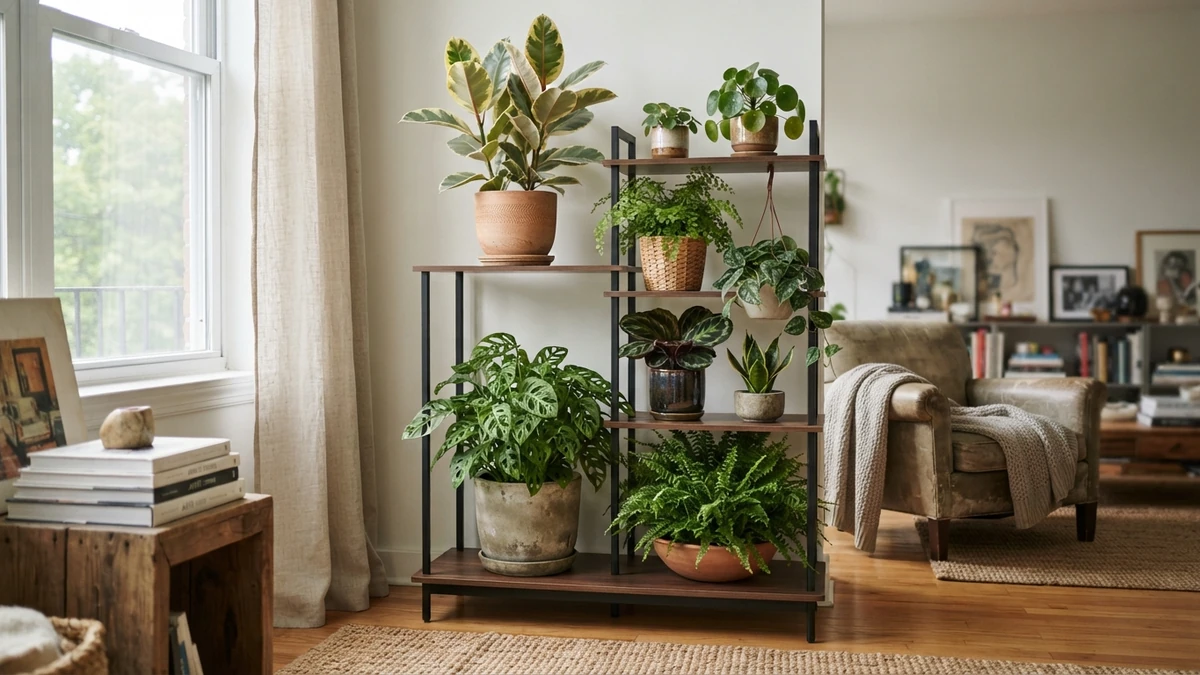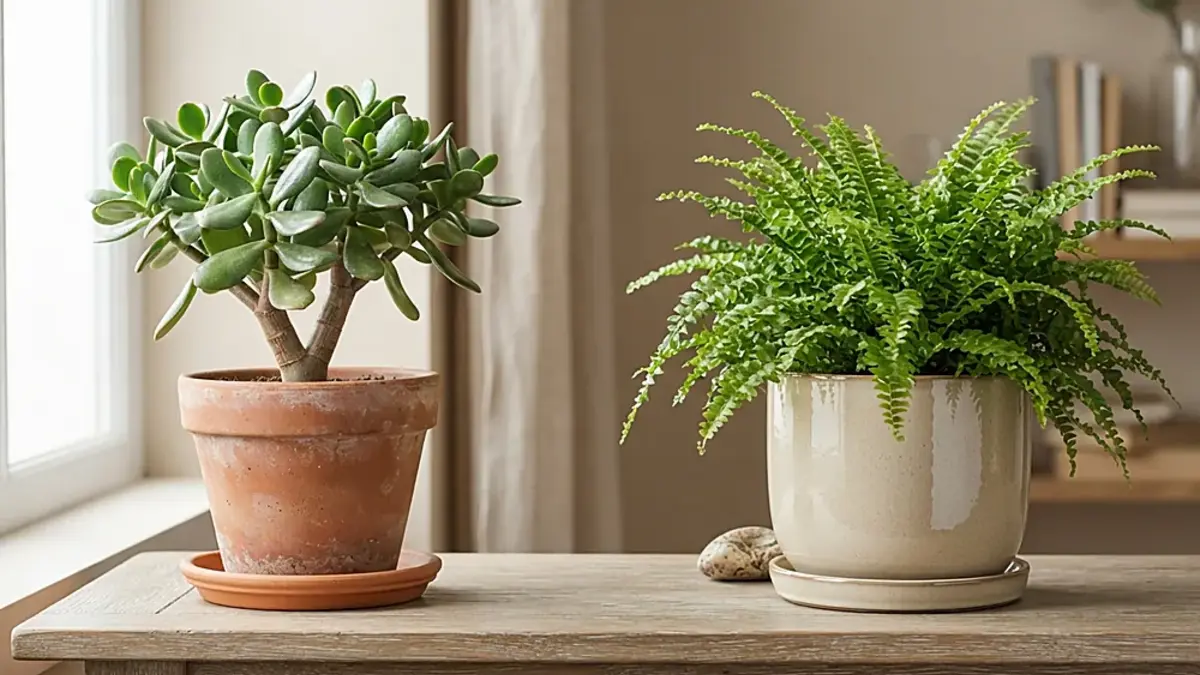

The best way to arrange multiple plants on an indoor plant stand is to organize them by light needs, watering habits, and size. Place taller plants where they won’t shade smaller ones, leave enough room for airflow, group plants with similar care needs, and keep heavy pots on the bottom tiers. This creates a display that looks attractive while keeping the plants healthy and easier to maintain.
A multi-plant stand can save floor space and turn an ordinary corner into a green display. However, simply placing every available pot on the shelves rarely works. Some plants end up in too much shade, others become crowded, and watering becomes difficult.
The solution is to plan the arrangement before you start filling the shelves.
Key Takeaways
- Arrange plants according to light: Place plants where they receive the amount of light their species needs.
- Leave space between pots: Good spacing improves access, airflow, and routine plant inspection.
- Group plants by care needs: Keep plants with similar watering requirements together.
- Put heavy pots on lower shelves: This helps lower the stand’s center of gravity and improve stability.
- Rotate and reposition plants: Adjust their positions as they grow or as seasonal light changes.
- Choose the right stand arrangement: Match the stand’s shape and position to your window, available floor space, and plant collection.
Light First: How to Arrange Plants on a Multi-Plant Stand

Light should be the first thing you consider when arranging plants. A plant stand may have several shelves, but each level receives a different amount of light.
The upper shelves may be closer to a window or artificial light source. Lower shelves can receive less light, especially when larger plants block the view of the window.
According to the University of Maryland Extension’s guide to indoor plant lighting, light intensity decreases as the distance from the light source increases. Window direction, curtains, nearby buildings, and other obstructions also affect the light a plant receives.
Use these placement principles as a starting point:
Top Tier: Taller and Light-Hungry Plants
The top shelf often receives more light, making it a useful location for plants that need brighter conditions. You can also place taller plants here if their leaves and stems will not block the plants below. Check the overall height of the plant and its container before positioning it.
Middle Tier: Medium-Light and Trailing Plants
The middle shelf works well for plants that tolerate moderate light and have trailing growth. Trailing stems can soften the edges of a stand without taking up additional floor space. However, make sure the foliage does not cover nearby plants or hang into a walkway.
Bottom Tier: Smaller or Shade-Tolerant Plants
The bottom shelf often receives less light, particularly when the upper shelves hold large plants. This can be suitable for plants that tolerate lower-light conditions, provided they still receive enough light to grow. Shade-tolerant does not mean that a plant can survive indefinitely in complete darkness.
If you have a dim room, explore our guide to low-light indoor plants before choosing plants for the lower shelves.
One important rule: Do not automatically place every sun-loving plant at the top and every shade-tolerant plant at the bottom. Check the actual light reaching each shelf. A stand beside a bright window will behave differently from one placed in a shaded corner.
Rotate Plants to Keep Growth Balanced
Plants often grow toward their strongest light source. Over time, this can make them lean toward a window. Turn pots slightly when you water them if they are receiving uneven light. You can also switch positions between compatible plants every few weeks to balance the display.
Avoid moving a plant suddenly from a dim location into strong direct sunlight. Some plants need time to adjust to brighter conditions.
If you are unsure how bright a particular shelf is, a light meter can help. Our guide to plant light meters explains how to measure indoor light and interpret the readings.
Spacing and Airflow on Indoor Plant Stands

A crowded plant stand may look full, but it can make everyday care difficult. When leaves overlap heavily, plants may shade one another. You may also struggle to inspect the undersides of leaves, reach the soil, or remove a pot for watering. Leave enough space between containers for their foliage to grow without constantly pressing against neighboring plants.
A hand’s width, around four inches, can be a useful starting point for smaller pots. Larger plants need more room, while compact plants may need less. Let the mature size of the foliage guide your spacing.
Good spacing helps you:
- Reach each pot without disturbing the others.
- Check soil moisture before watering.
- Inspect leaves for pests and damage.
- Remove dead or yellowing leaves.
- Reduce excessive foliage contact and improve air movement.
Do not fill every empty space just because the stand has room. A little open space makes the arrangement easier to maintain.
If you want a fuller look, use a trailing plant along the edge of a shelf rather than squeezing more pots between existing plants.
Group Plants by Care Needs, Not Just Appearance

One of the most useful ways to organize a multi-plant stand is to group plants with similar care requirements.
Two plants may look beautiful beside each other but need completely different watering routines. If you water every pot on a shelf at the same time, one plant may receive too much water while another remains too dry.
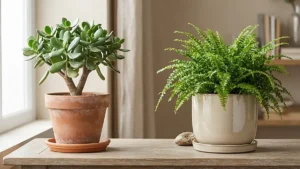
For example, a fern generally needs more consistent moisture than a cactus or succulent. Putting them together does not mean they should receive the same watering schedule.
Instead, organize your collection into broad care groups:
| Care Group | Examples | Arrangement Advice |
| Plants that prefer drier soil | Cacti and many succulents | Keep together in a bright area and check soil before watering |
| Plants with moderate watering needs | Pothos and many foliage plants | Group where their light and moisture requirements overlap |
| Plants that prefer more consistent moisture | Ferns and some tropical plants | Keep together where you can monitor moisture more easily |
| Plants with similar seasonal needs | Species that slow down during winter | Make seasonal care adjustments together |
These are general groups, not fixed watering instructions. Different species and growing conditions can change how often a plant needs water.
The same principle applies to fertilizing. Plants with similar feeding requirements can be easier to manage together, but do not assume every plant on one shelf needs fertilizer at the same time.
Do Grouped Plants Increase Humidity?

Yes, grouping plants can create a slightly more humid area around their leaves. Plants release water vapor through transpiration, and moisture also evaporates from the growing medium.
However, the effect depends on the number of plants, room size, and air movement.
The University of New Hampshire Extension explains how grouping houseplants can create a local humidity effect in its guide to increasing indoor humidity for houseplants.
Think of grouping as a small benefit, not a replacement for proper humidity control. If your tropical plants need higher humidity than your room provides, a suitable humidifier may be more useful than adding more pots to the stand.
Also, do not sacrifice airflow to create a humid display. Plants still need space around their foliage.
Weight, Stability, and Safety for Multi-Plant Stands

A plant stand is not just a decorative shelf. It carries containers filled with soil, water, and growing plants, so stability matters. A poorly balanced stand can tip when someone bumps it or when a heavy pot is placed too high.
Use these practical safety rules.
Keep Heavy Pots on the Bottom
Place your heaviest containers on the lowest shelf. This lowers the center of gravity and makes the stand less likely to tip. Avoid placing a large ceramic pot on the highest tier, especially if the plant is tall or top-heavy.
Check the Weight Capacity
Every stand has a weight limit. Check the manufacturer’s instructions before filling the shelves. Remember that wet growing medium weighs more than dry medium. The container itself also adds weight, particularly when it is made from thick ceramic. Spread the load across the shelves instead of concentrating several heavy pots in one area.
Secure Tall Stands When Appropriate
Tall ladder-style and tiered stands may benefit from wall anchoring if the design provides suitable attachment points. Use the correct anchors for the wall material and follow the manufacturer’s instructions. Do not assume that every decorative stand is designed to be fixed to a wall.
Protect Floors and Nearby Furniture
Use suitable saucers beneath pots to catch excess water. Make sure water does not remain trapped against wooden shelves or metal joints.
On wood floors, choose stable feet or protective pads that prevent scratching and rocking. Also leave enough room to walk around the stand and remove pots safely. A beautiful arrangement should not create a tripping hazard.
Configuration Types for Indoor Plant Stands
The shape of your plant stand affects how you can arrange your collection. The best configuration depends on your room, window position, and the number of plants you want to display.
| Stand Configuration | Best For | Arrangement Tips |
| Tiered corner stand | Empty corners and smaller collections | Put plants according to light needs and keep larger containers on lower levels |
| Ladder-style stand | Narrow spaces and vertical displays | Use the different shelf heights to separate plants by size and light |
| Long console-style stand | Wide windows and larger collections | Arrange plants in a row so each receives suitable light |
| Compact multi-level stand | Small apartments and limited floor space | Use smaller pots and avoid overcrowding the shelves |
Tiered Corner Stand

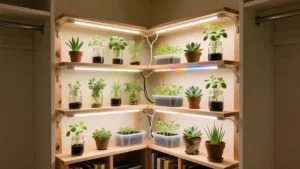
A corner stand makes use of space that might otherwise remain empty. However, corners can be darker than they appear. Place the stand close enough to a suitable light source and check the conditions on every shelf. Use trailing plants to soften the edges, but keep their stems away from walking areas.
Ladder-Style Stand

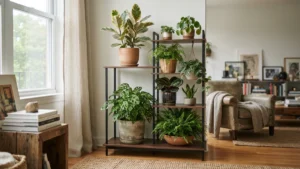
A ladder-style stand creates a stepped arrangement. Each shelf sits at a different height, giving you room to display plants of different sizes. Place heavier pots on the lower shelves and avoid allowing upper plants to shade the lower levels too much.
This style works particularly well when you have a narrow area beside a window.
Long Console-Style Stand

A long console-style stand is useful along a window wall. It gives you more room to spread plants out instead of stacking them closely together. If you use two rows, remember that plants at the back may shade those in front or receive less light themselves.
Rotate the arrangement when needed so each plant receives suitable exposure.
How to Maintain a Multi-Plant Stand Throughout the Year

Once your plants are arranged, regular maintenance will help keep the display healthy. You do not need to rearrange the entire stand every week. A few simple habits are usually enough.
On watering days:
- Check each plant’s soil separately.
- Remove any standing water from saucers or outer containers.
- Inspect leaves for pests, yellowing, or damage.
- Rotate pots slightly if growth is leaning toward the window.
Every few weeks:
- Check whether plants are shading one another.
- Move compatible plants if their light exposure needs adjusting.
- Remove dead leaves and tidy trailing stems.
- Check that the stand remains stable.
As seasons change:
- Reassess the light reaching each shelf.
- Move sensitive plants away from cold drafts or direct heat.
- Adjust watering as growth and drying conditions change.
- Check whether growing plants need more room.
In small apartments, seasonal placement is especially important because windows, doors, and heating or cooling sources can affect plant conditions. Our guide to winter indoor plants for apartments offers additional ideas for managing plants during colder months.
FAQ: Indoor Plant Stands for Multiple Plants
How do you arrange plants on a tiered stand?
Place plants according to their light needs, keep taller plants from shading smaller ones, and put heavy pots on the bottom shelves.
Can you put succulents and ferns on the same plant stand?
Yes, if they occupy suitable positions and receive separate watering routines because their moisture needs differ.
How much space should be between plants on a stand?
About four inches can work as a starting point for small pots, but larger plants need more room for their foliage and airflow.
Do grouped plants really increase humidity?
They can create a slightly more humid local environment, but the effect is usually too limited to replace a humidifier when one is needed.
How do I keep a multi-plant stand stable
Place heavy pots on lower shelves, follow the stand’s weight limits, and use suitable wall anchors when the design allows.
Where should I put a plant stand in a small apartment?
Place it near a suitable window while keeping enough space for walking, watering, and accessing every pot.
Final Thoughts
Indoor plant stands for multiple plants can make a room look greener without taking up too much floor space. The secret is to arrange plants around their actual growing needs rather than trying to fill every shelf.
Start with light, then consider spacing, watering requirements, and weight distribution. Recheck the arrangement as your plants grow and the seasons change.
A well-planned stand should make plant care easier, not turn it into another daily chore.
Disclaimer: This article provides general indoor gardening guidance. Plant light, watering, humidity, and spacing requirements vary by species and growing conditions. Always check the specific needs of your plants and the weight limits of your stand before arranging your collection.