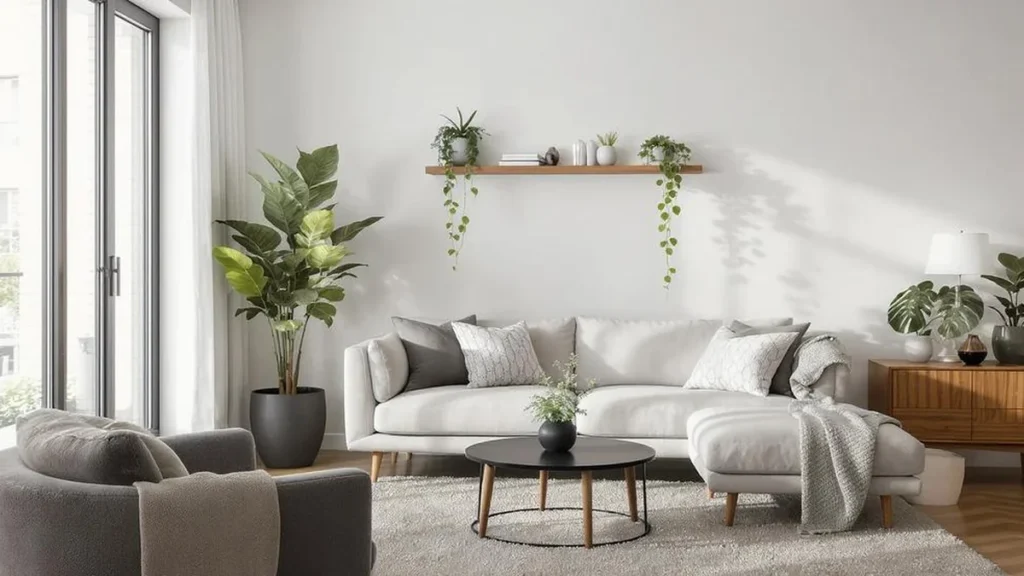
Small apartment decorating ideas work best when every plant has a purpose. Use vertical space instead of filling the floor, group plants to create visual zones, choose compact varieties for narrow corners, and match each plant to the light available. With the right shelves, hanging displays, and coordinated planters, even a small apartment can feel greener without becoming crowded.
The goal is not to fit as many plants as possible into one room. It is to create a balanced display that leaves enough space to move, keeps plants healthy, and makes the apartment feel more inviting.
Instead of giving you a random list of decorating ideas, this guide focuses on the problems that commonly make small apartments difficult to style—and the plant-focused solutions that address them.
How Small Apartment Decorating Ideas Work With Plants
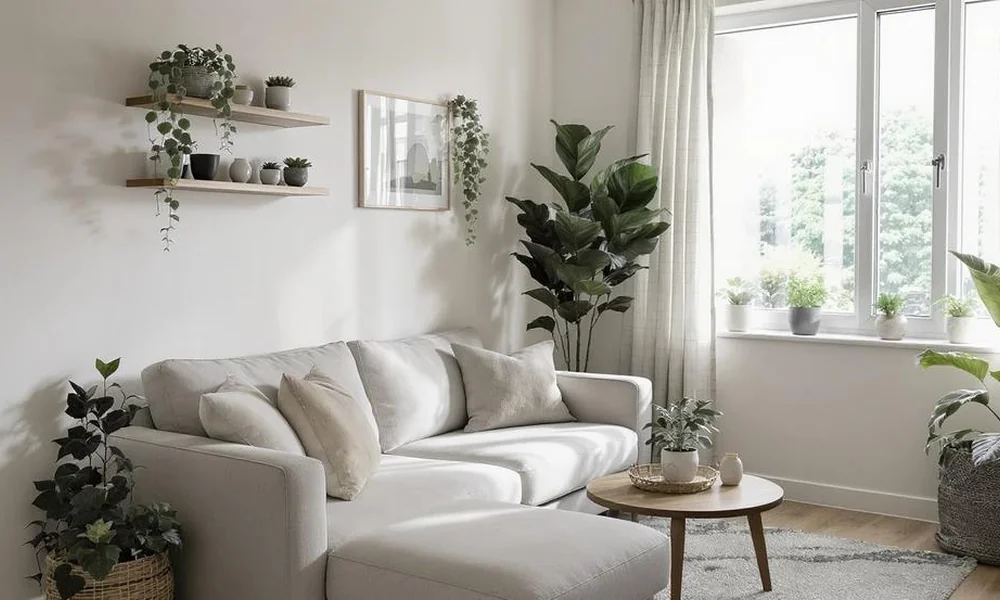
A small apartment can feel crowded even when it contains relatively little furniture. The problem often comes from visual clutter, blocked windows, oversized pots, and plants placed wherever an empty surface happens to be.
A better approach is to plan your plant displays around three things:
- Available space: Identify shelves, corners, windowsills, and wall areas that can support plants without blocking walkways.
- Growing conditions: Check the light, temperature, and humidity before choosing a location.
- Visual balance: Combine different plant heights and leaf shapes instead of placing similar pots in every corner.
The order matters. Start with the apartment’s layout, then decide where plants can grow successfully. Choose planters and decorative details after you understand the available space.
The Royal Horticultural Society recommends matching houseplants to the conditions in which they will grow. A plant that looks perfect in a particular corner may struggle if the light or temperature is unsuitable.
Zone First: Use Plants to Separate Areas in a Small Apartment
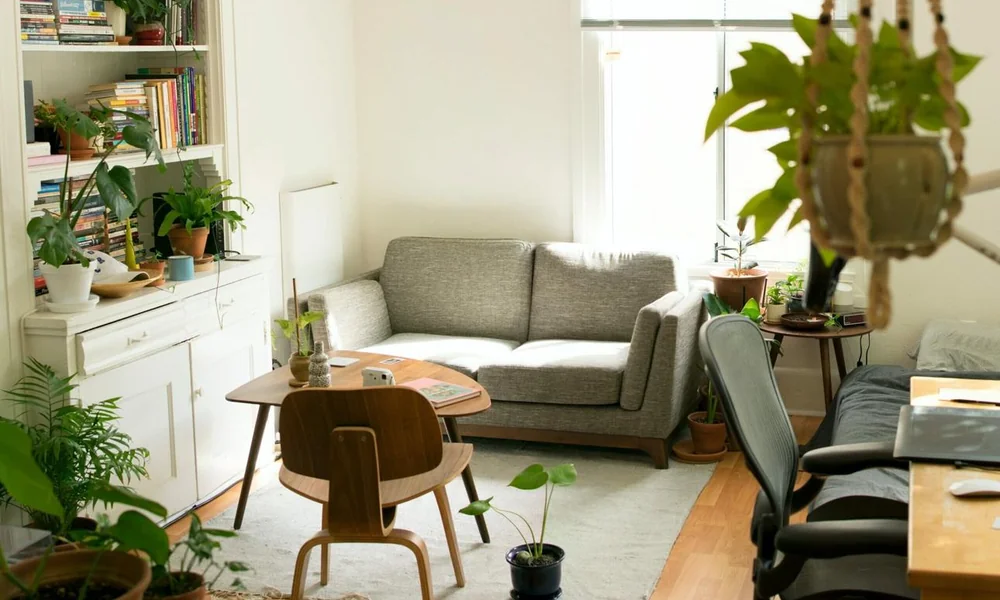
In a studio or compact apartment, one room may need to function as a living room, dining area, and workspace. Plants can help distinguish these areas without making the layout feel closed off.
Try these three arrangements:
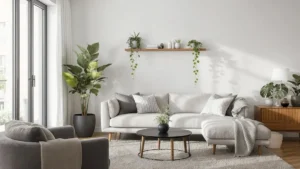
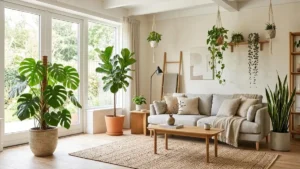
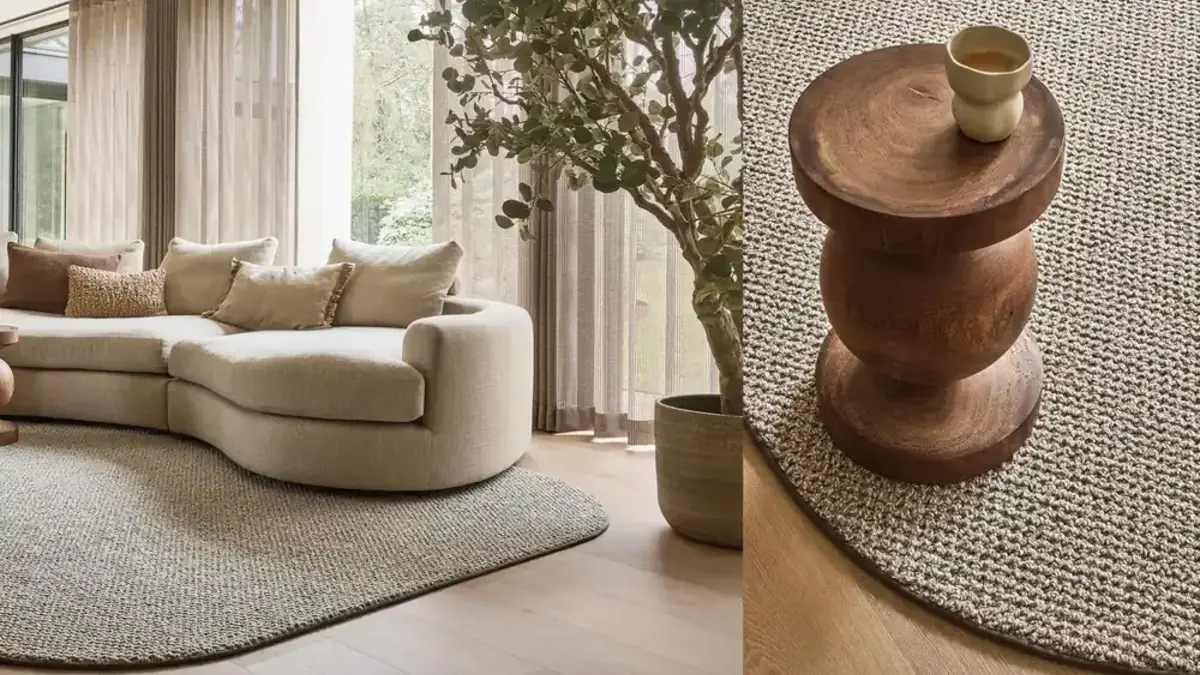
1. Create a living room boundary. Place a medium-sized plant beside the sofa or at the edge of a seating area. It creates a subtle visual boundary while keeping the room open. Avoid placing a large pot where people need to walk.
2. Give your workspace a green corner. A small plant on a desk or a narrow shelf above it can make the area feel distinct from the rest of the room. Keep the display simple so it does not take over your working surface.
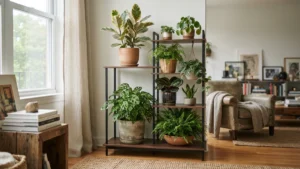
3. Use plant groupings to define a relaxation area. Arrange two or three plants at different heights near a reading chair or window. Keep their care requirements compatible, especially their light and watering needs.
The key is to use plants as visual markers rather than room dividers. A few carefully placed plants usually work better than a dense row of pots.
For more room-specific inspiration, explore these living room plant ideas and adapt the arrangements to your available floor space.
Go Vertical: Small Apartment Plant Displays on Walls and Shelves
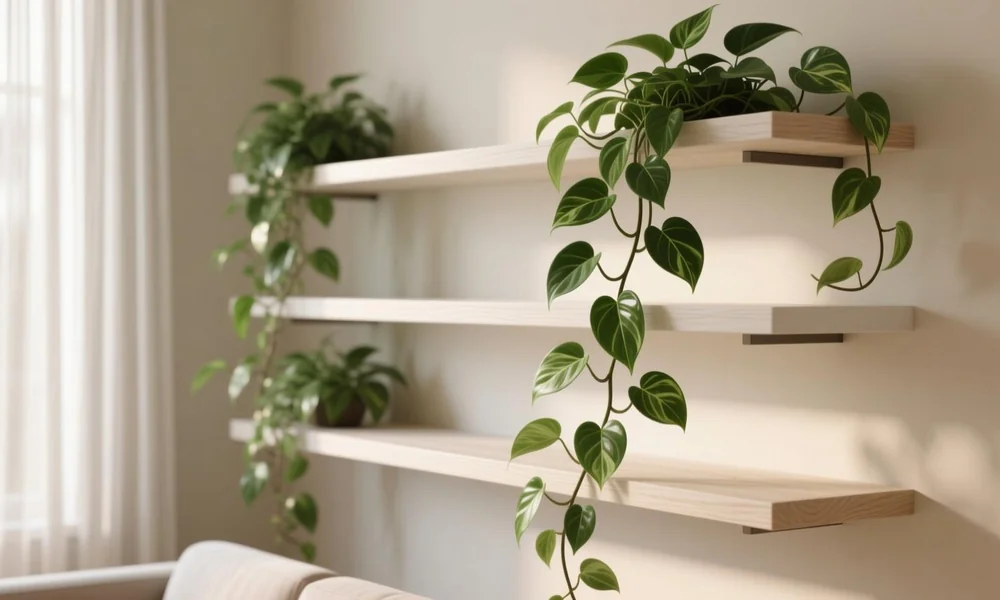
When floor space is limited, look upward. Walls, unused corners, and the space above furniture can provide room for plants without taking up valuable walking space.
Here are practical ways to build a vertical display:
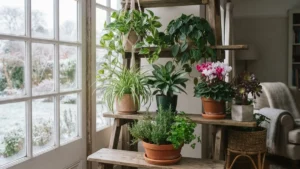
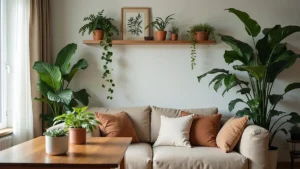
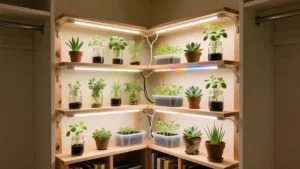
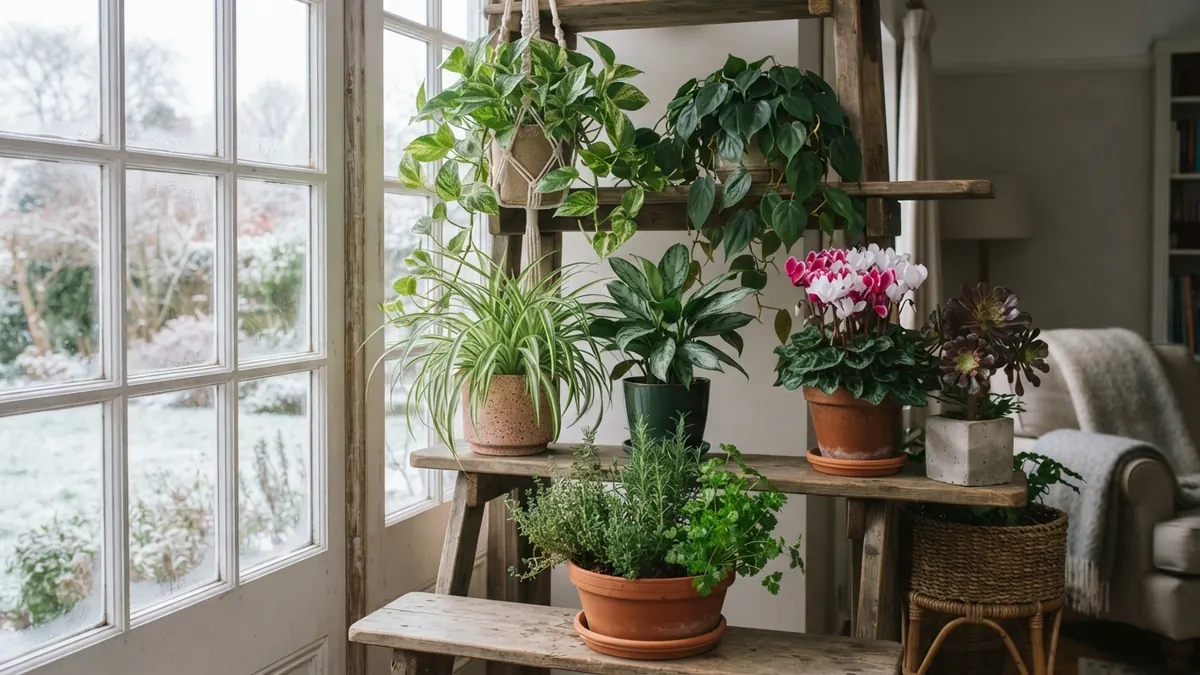
- Use narrow plant shelves. A slim shelf can hold small pots while leaving the floor clear. Choose a position that receives suitable natural light and does not obstruct windows.
- Hang trailing plants. Hanging displays can use otherwise empty upper areas. Make sure the ceiling hook or wall fitting is rated for the combined weight of the planter, soil, and watered plant.
- Create a small plant wall. A few carefully arranged plants can add greenery to a blank wall. Keep the arrangement accessible enough for watering, pruning, and checking leaves.
- Use a raised plant stand. A stand creates height and separates plants from floor-level furniture. It can also make a small group of pots look more intentional.
A vertical arrangement should still be practical. Avoid placing plants so high that routine watering becomes difficult. Hanging pots should have secure fittings, and any water drainage must be managed to protect floors and furniture.
For inspiration, these indoor plant shelf ideas show ways to display greenery at different heights. You can also explore indoor hanging plant ideas when you want to use ceiling or wall space.
If you prefer a softer decorative look, a macrame plant hanger can introduce texture while keeping a planter off the floor.
Light and Color: Make a Small Apartment Feel Greener Without Hiding Its Light
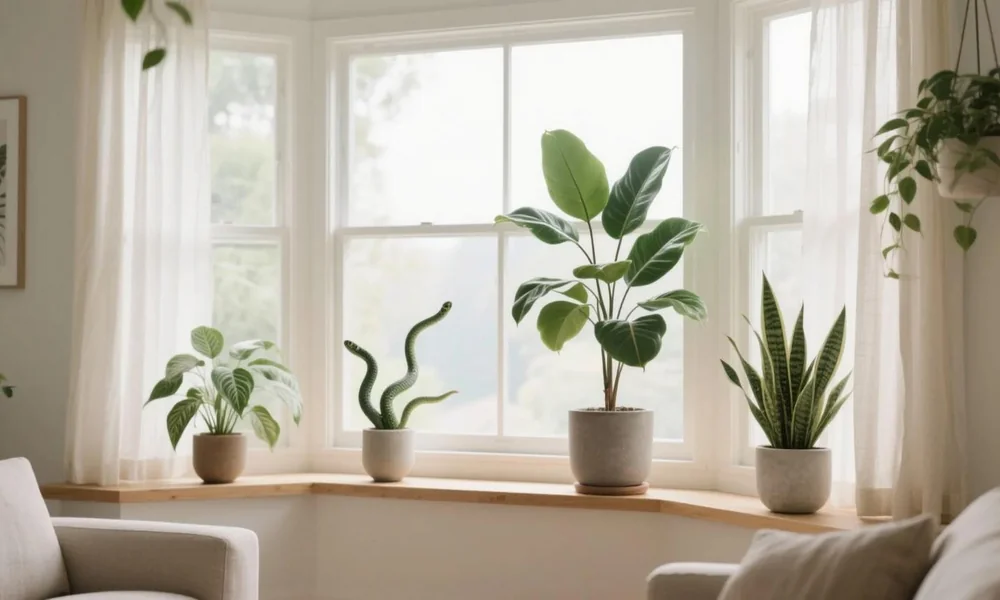
Plants can make a compact apartment feel more lively, but placing them in the wrong position can create problems. A dark corner may look like the perfect place for a large plant, yet it may not provide enough light for healthy growth.
Use these placement principles:
Keep windows open to daylight. Avoid covering a large part of a window with tall plants or dense displays. Place smaller plants along the sides of the window where they can receive suitable light without blocking the view.
Choose plants for the actual light level. A bright windowsill, a spot with indirect light, and a shaded corner are different growing environments. Do not assume that every plant marketed as low-light tolerant will thrive far from a window.
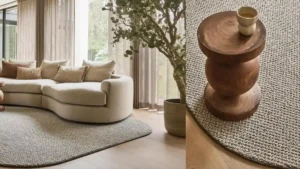
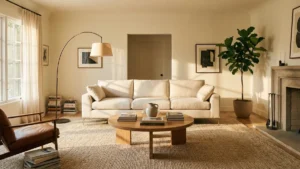
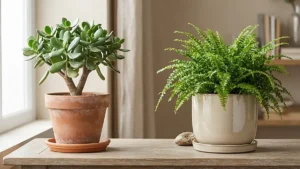
Use neutral planters to reduce visual clutter. Cream, beige, grey, white, and natural clay finishes can help different plant displays feel connected. Repeating one or two planter finishes creates a calmer look than mixing too many colors and patterns.
Keep foliage visible against the background. Green leaves can stand out against a light wall, while plants with lighter or variegated foliage can create contrast against darker surfaces. Choose the combination that suits the room without compromising the plant’s light needs.
The RHS houseplant growing guide explains how light, temperature, watering, and humidity affect indoor plants. Check the needs of each plant before deciding where it belongs.
For apartments with limited daylight, browse low-light hanging plants and consider which options suit the conditions you can actually provide.
Choose the Right Plant Size for Small Apartments
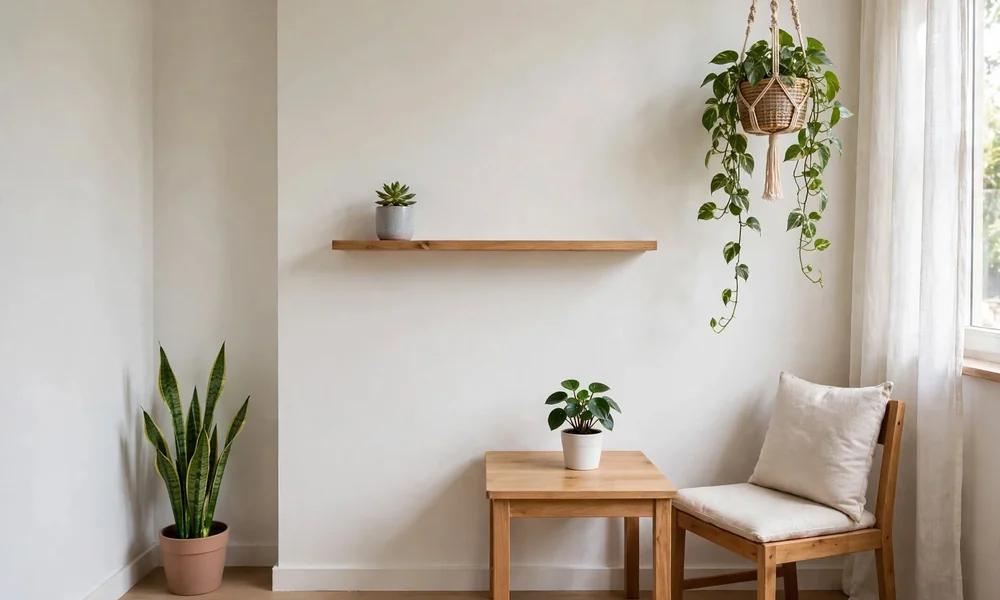
A common decorating mistake is choosing plants based only on their appearance in a shop. A large, spreading plant may look attractive but can quickly dominate a narrow room.
Think about the plant’s mature size and growth habit before placing it in your apartment.
- For narrow shelves: Choose compact plants that do not spread far beyond the edge.
- For empty vertical space: Consider upright or climbing plants that can grow with support.
- For corners: Choose a plant with a growth habit that fits the available width and height.
- For small tables: Use one compact plant rather than several pots that leave no space for everyday items.
- For hanging displays: Choose trailing plants with growth that can be managed without interfering with doors, walkways, or furniture.
Trailing plants can be especially useful because their foliage adds height and movement without requiring a wide floor footprint. However, hanging plants still need suitable light and regular maintenance.
Explore small indoor houseplants for compact options, or look at trailing indoor houseplants when you want foliage that grows downward.
Planters and Furniture: Keep Small Plant Displays Organized
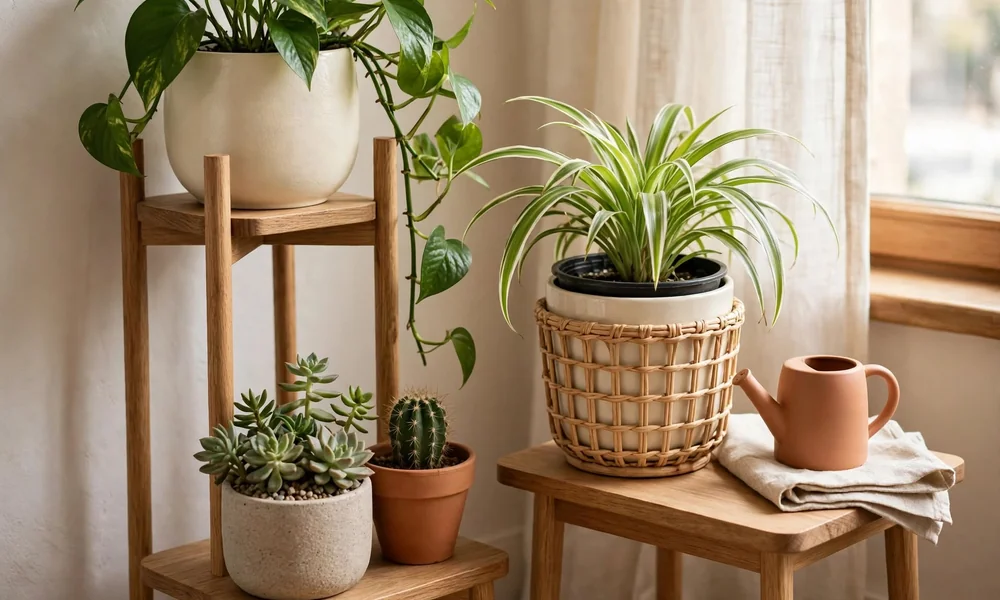
The containers you choose affect how a small apartment looks and functions. Too many different pot styles can make a display feel scattered, while oversized containers can take up more room than the plants need.
Use these simple guidelines:
Repeat planter finishes. Choose two or three complementary materials or colors and use them throughout the apartment. This creates a consistent look even when plants are displayed in separate rooms.
Use the right pot size. A decorative container should not force a plant into an unsuitable growing space. Check that the growing pot has proper drainage and that any outer cover can be emptied when water collects.
Raise plants where appropriate. A narrow plant stand can create a display without requiring a large table. It also helps separate foliage from nearby furniture.
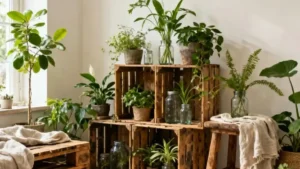
Reuse containers carefully. Upcycled containers can add character, but they must be suitable for plants. Make sure drainage is addressed and that the material can safely hold the plant and growing medium.
For simple display inspiration, explore DIY plant stand ideas, upcycled planters, and indoor plant styling.
Small Apartment Decorating Ideas: Problem-to-Fix Table
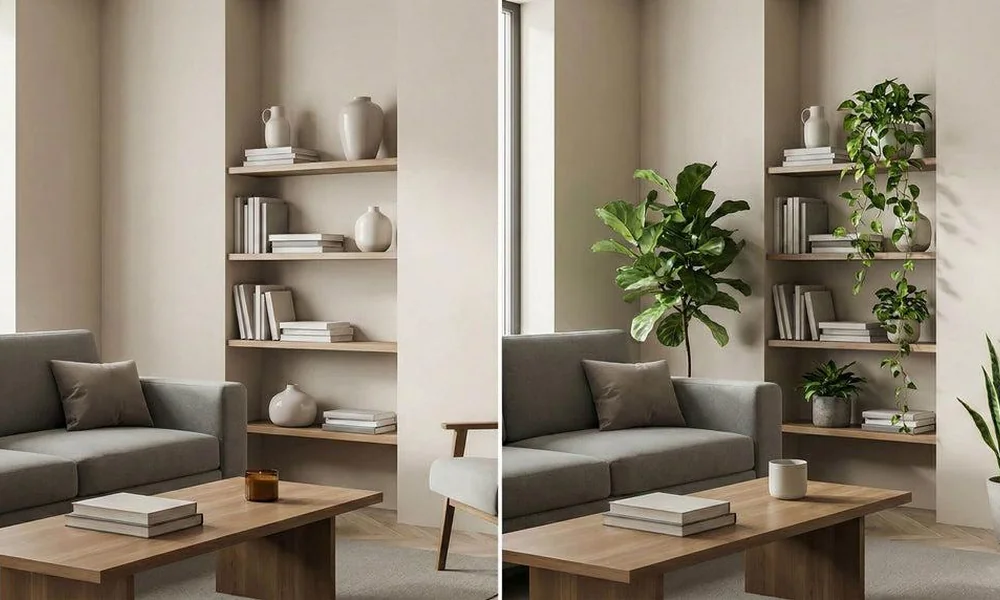
Use this table to identify what makes your apartment feel crowded and choose a practical plant-focused solution.
| Problem | Why it happens | Plant-focused fix |
|---|---|---|
| Too many pots on the floor | Every plant has been placed at ground level | Move suitable plants to shelves, stands, or secure hanging displays |
| A blank wall feels unfinished | Vertical space is unused | Create a small plant shelf or wall display |
| A room feels crowded | Plants are too large or poorly positioned | Choose compact plants and keep walkways clear |
| A corner looks empty | No display has been planned for the available height | Add one appropriately sized upright plant |
| The apartment looks visually messy | Pots and materials do not work together | Repeat a small selection of planter colors and finishes |
| Plants struggle indoors | Their positions do not match their growing needs | Match each plant to available light, temperature, and humidity |
| Windows look blocked | Tall or dense displays cover the natural light | Move plants to the sides of windows or use smaller containers |
You do not need to solve every problem at once. Start with the area that feels most crowded, move the plants you already own, and see whether the layout improves before buying anything new.
Keep Small Apartment Plant Displays Easy to Maintain
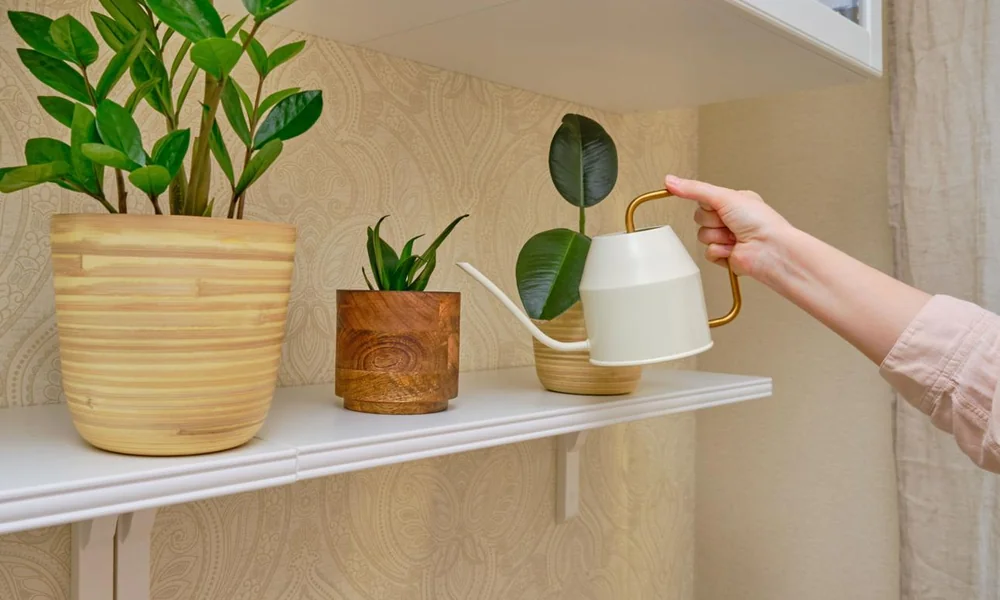
A beautiful display is only useful if you can care for it. In a small apartment, you may place plants on high shelves, near furniture, or in corners that are hard to reach. Plan maintenance into the arrangement.
Keep these habits in mind:
- Make watering accessible. Do not place plants where you cannot reach the soil or remove the pot when necessary.
- Check moisture before watering. Different plants dry at different rates. Avoid watering every pot on the same schedule without checking its growing medium.
- Protect furniture and floors. Use suitable saucers or waterproof protection, and empty excess water rather than letting pots sit in it.
- Leave room for growth. A plant that fits a shelf today may spread beyond it as new leaves develop.
- Inspect leaves regularly. Check for pests, damaged foliage, and signs that the plant is receiving too much or too little light.
If you have pets, check plant safety before bringing new varieties into the apartment. A decorative arrangement should not create an avoidable risk for animals that chew or investigate foliage.
For additional guidance, see PeaceLily’s pet-safe plants resource.
FAQ: Small Apartment Decorating Ideas With Indoor Plants
How can I decorate a small apartment with plants on a budget?
Start with the plants and containers you already own. Rearrange pots onto existing shelves, group plants by size, and use empty vertical areas where suitable. Reuse containers only when they can safely support plant growth and drainage. Add new stands or planters only when the layout needs them.
How do you make a small apartment look bigger with plants?
Keep the floor and walkways clear. Use shelves and secure hanging displays to move suitable plants upward, choose compact varieties, and avoid covering windows. A few well-positioned plants create a more balanced appearance than filling every available surface.
Where should plants go in a small apartment?
Place plants according to their growing requirements rather than appearance alone. Windowsills, shelves near natural light, suitable corners, and secure hanging positions can all work. Check the light, temperature, and humidity in each location before choosing a plant.
What are the best plants for a small apartment?
The best choices depend on the available light, room temperature, humidity, and the space you can give each plant. Compact houseplants and manageable trailing varieties can suit smaller homes, but always check their mature size and care requirements before choosing.
How do you display plants without using floor space?
Use wall shelves, secure ceiling hooks, hanging planters, and narrow raised stands. Keep each display accessible for watering and maintenance, and check that shelves and fittings can support the weight of the plants and containers.
Can you put plants in a small apartment with little natural light?
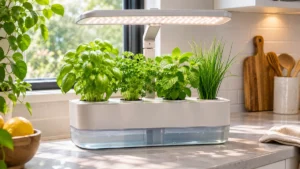
Some houseplants tolerate lower-light conditions, but no plant can grow in complete darkness. Choose varieties suited to the available light and consider a suitable grow light if natural daylight is insufficient. Do not rely on ordinary decorative room lighting to replace plant-growing light.
Final Thoughts
The best small apartment decorating ideas are not about adding more objects. They are about using the available space carefully. Plants can define different areas, soften empty walls, add height to compact rooms, and bring natural texture into everyday spaces.
Start with a simple layout, use vertical displays where they make sense, choose plants that fit your light conditions, and keep the floor clear. A small number of healthy, well-positioned plants can create a more balanced home than a crowded collection of pots.