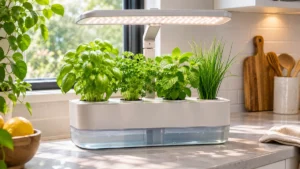
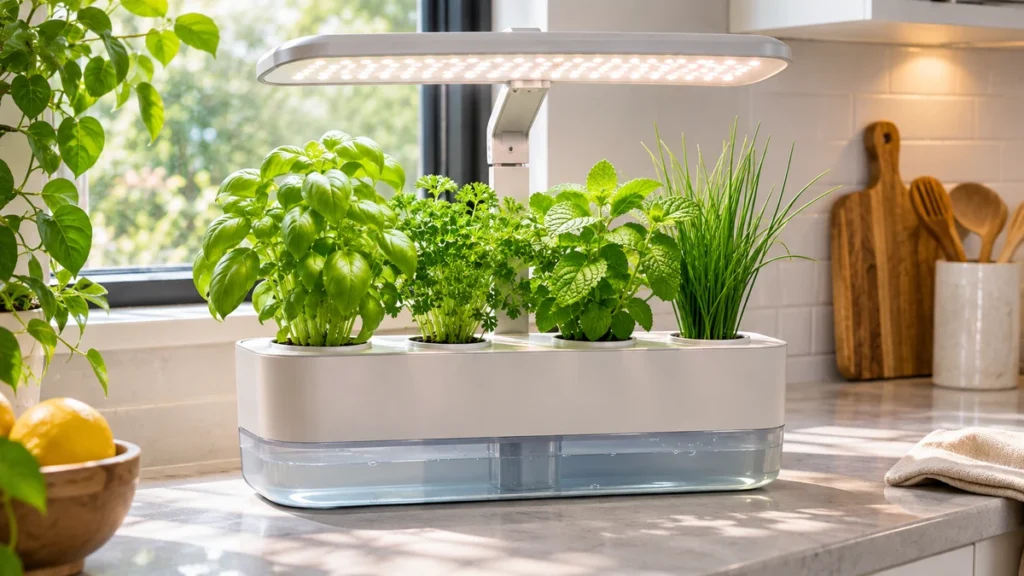
Countertop herb garden kits make indoor herb growing easier by combining a water reservoir, growing space, and built-in LED light. Some use pre-seeded hydroponic pods, while others use ordinary pots under a grow light. They can produce fresh herbs year-round, but expect regular small harvests rather than enough to replace every bunch you buy at the grocery store.
Their main advantage is consistency. A built-in timer provides regular light, while a reservoir or watering setup helps maintain moisture. This can make a countertop garden more dependable than a poorly lit windowsill, especially during winter.
However, not every herb grows equally well indoors. Light, temperature, growing space, and harvesting habits all affect the results. This guide explains how countertop herb garden kits work, which herbs are worth growing, what kind of harvest to expect, and what the setup may cost to run.
Key Takeaways
- Countertop herb gardens generally use either hydroponic pods or regular pots placed under a grow light.
- Basil, mint, parsley, and chives are practical herbs to consider for indoor growing.
- Most indoor herbs need strong light; many countertop systems use timers to provide around 12–16 hours of supplemental light.
- Harvests are usually best for garnishes, small recipe portions, and regular fresh use.
- Pod systems offer convenience, while pots and grow lights provide more flexibility and can reduce recurring seed costs.
How Countertop Herb Garden Kits Work
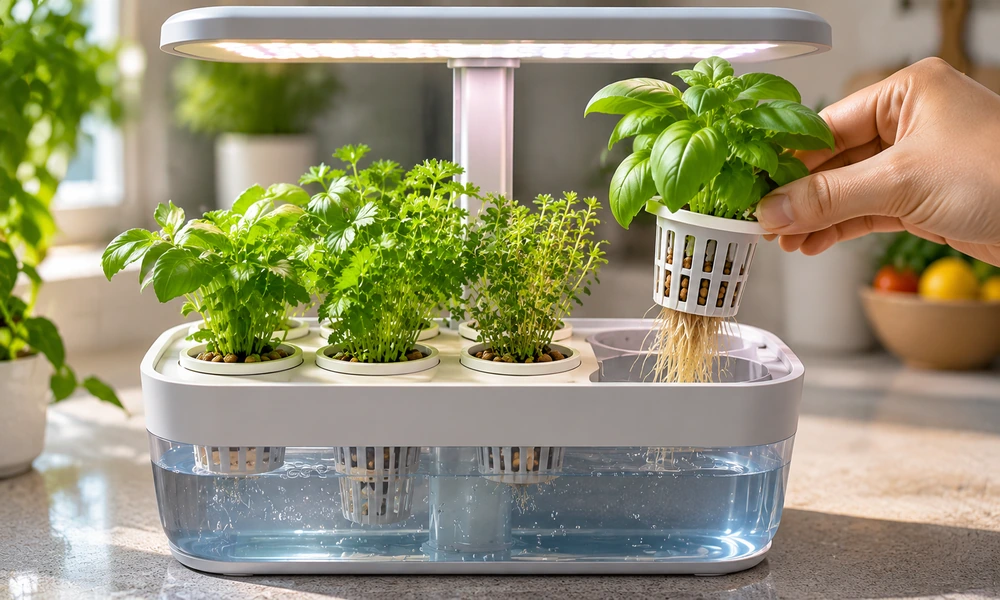
Most countertop herb garden kits combine four basic functions: water supply, growing support, lighting, and plant nutrients.
1. A Water Reservoir Holds the Supply
Many countertop hydroponic gardens have a reservoir built into the base. You fill it with water, and the system supplies moisture to the roots.
Depending on the design, roots may grow directly into the nutrient solution or receive moisture through a growing medium. Some systems use a small pump to circulate water, while simpler designs rely on passive water movement.
A reservoir reduces the need for frequent hand watering, but it does not remove maintenance. You still need to check the water level, follow the system’s cleaning instructions, and monitor the plants.
2. Growing Pods or Medium Support the Roots
Pod-style gardens use small growing inserts that hold seeds or young plants. These inserts provide support while allowing roots to access water and nutrients. The medium is not necessarily ordinary potting soil. Hydroponic systems often use materials that support the roots without supplying the nutrients themselves.
This is the basic principle behind indoor hydroponic gardening kits, although larger hydroponic setups offer more room and flexibility than countertop models.
3. Built-In LED Lights Provide Supplemental Light
Light is one of the biggest challenges when growing herbs indoors. A kitchen window may look bright to you but still provide too little light for strong, compact growth. Countertop gardens often use an adjustable LED light positioned above the plants. A timer controls how long the light stays on.
For hydroponic herbs, the University of Minnesota Extension suggests around 12–14 hours of artificial light per day. Other indoor herb guidance may recommend longer periods depending on the light source and growing conditions.
The right light duration also depends on the fixture’s strength and distance from the leaves. More hours cannot always compensate for a weak light.
4. Nutrients Support Plant Growth
Plants need nutrients as well as water and light. In a soil-based pot, some nutrients are already present in the growing medium. In a hydroponic system, nutrients usually need to be added to the water. Follow the kit’s feeding instructions. Adding too much fertilizer can damage roots or create an unsuitable nutrient balance.
If you want to understand how different hydroponic systems handle water and nutrients, the broader indoor hydroponic gardening guide explains the main approaches.
Which Herbs Actually Succeed Indoors?
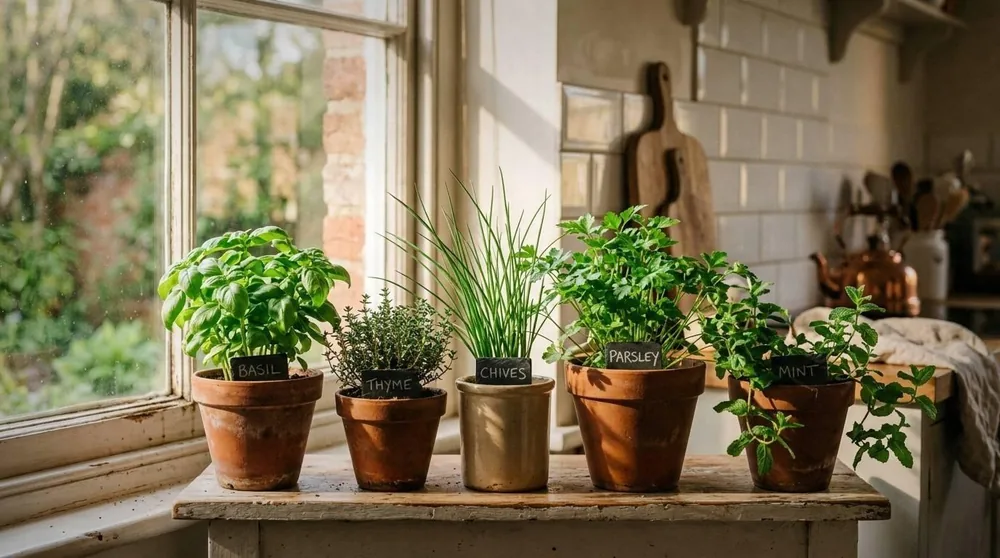
The best herbs for a countertop garden are those that fit the available light, root space, and harvesting routine. Some grow quickly and produce new leaves regularly, while others need more space or stronger light.
Basil: A Practical Starter Herb
Basil is a useful choice for a countertop garden because you can harvest individual leaves and growing tips as the plant develops. It prefers warmth and strong light. Regularly pinch or cut the growing tips to encourage branching rather than allowing the plant to become tall and sparse.
Do not remove too much foliage at once. The plant needs enough healthy leaves to keep growing.
Mint: Vigorous and Useful
Mint can grow well indoors when it receives adequate light and consistent moisture. It is useful for drinks, sauces, and fresh garnishes. Its growth can become crowded, so give it enough room. In a shared system, monitor its roots and foliage so it does not overwhelm nearby plants.
Parsley: Slower but Worth Growing
Parsley is useful in everyday cooking, but it can take longer to establish than basil. Starting with a young plant may give you a harvest sooner than starting from seed.
It needs suitable light and regular moisture without waterlogged roots.
Chives: Compact and Convenient
Chives are a good option when counter space is limited. Their narrow leaves can be snipped as needed, and the plant can continue producing new growth when maintained properly. They generally suit smaller growing spaces, although light and temperature still affect how well they perform.
Cilantro and Dill: Possible, but Less Predictable
Cilantro and dill can be grown indoors, but they may be less convenient choices for a small countertop kit.
Cilantro can bolt as conditions change, while dill develops a taller growth habit and may need more root and vertical space than compact systems provide. Their success depends on the variety, light, temperature, and available room.
The University of Iowa Extension includes both herbs among its indoor growing options. Its guide to growing herbs indoors explains their different light and space requirements.
A practical starting combination: Try basil, mint, parsley, or chives first. Add cilantro or dill once you understand how much light and space your setup can provide.
Honest Harvest Expectations from a Countertop Herb Garden
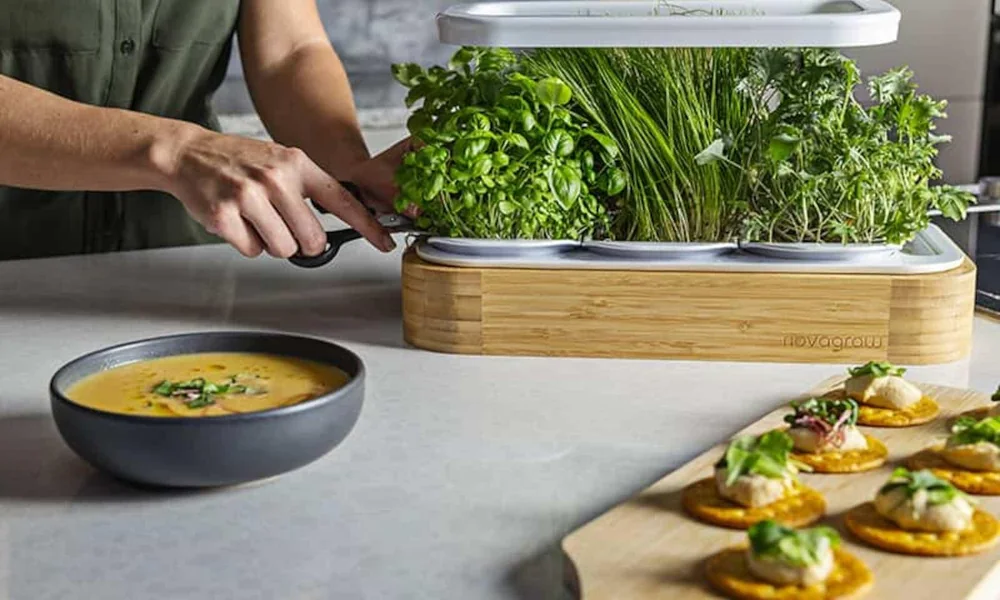
Countertop herb gardens can produce useful amounts of fresh leaves, but their small growing area limits how much you can harvest at once. Think of the system as a living herb supply for everyday cooking rather than a replacement for a full outdoor garden.
Expect Small, Regular Harvests
A healthy basil plant may provide a few leaves or sprigs for a meal. Several established plants can give you more variety, but a single compact unit is unlikely to supply large quantities for frequent pesto batches or heavy cooking. Harvest size depends on plant maturity, light, nutrients, and how much foliage remains after cutting.
Growth Takes Time
Seeds need time to germinate and develop into harvestable plants. Product photographs often show mature plants, but your first weeks may involve small seedlings and gradual growth.
Starting with young plants can shorten the wait, although they still need time to adjust to the new environment.
Rotate Plantings for a More Consistent Supply
If all your herbs are planted at the same time, they may reach maturity together and then decline together. For a steadier supply, start a new plant or seed pod as an older one becomes less productive. This is a simple form of succession planting.
Harvest Without Weakening the Plant
Avoid cutting away most of a plant’s leaves at once. Leave enough healthy growth for it to continue photosynthesizing and producing new leaves. For leafy herbs, regular light harvesting can help maintain a compact shape. Remove damaged or flowering growth when appropriate for the herb.
Indoor herbs often grow more slowly than outdoor plants. The University of Missouri Extension notes that indoor herbs can be less productive and are often best used fresh.
Pod Systems vs Soil-and-Lamp Setups
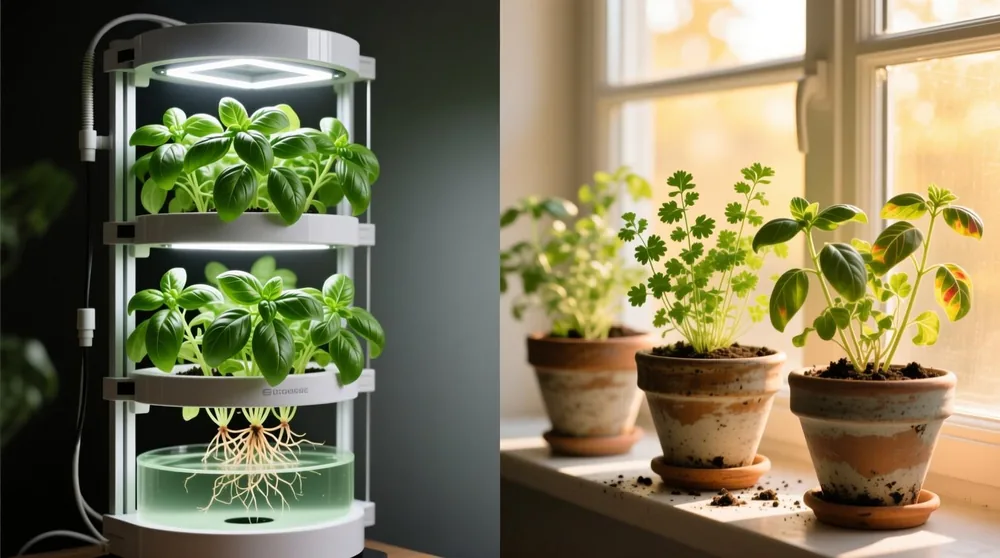
The term “countertop herb garden kit” can describe two different arrangements. One uses pre-seeded hydroponic pods, while the other uses ordinary pots under a grow light.
| Factor | Pod-style hydroponic garden | Pots with a grow light |
|---|---|---|
| Setup | Add water, nutrients, and pods | Add pots, growing mix, seeds or young plants, and a light |
| Starting plants | Some systems simplify seed starting with prepared pods | You choose seeds or established plants |
| Flexibility | Limited by pod slots and system design | You can choose different herbs and pot sizes |
| Ongoing costs | Replacement pods and nutrients may be needed | Seeds, growing mix, and fertilizer |
| Maintenance | Check reservoir, nutrients, roots, and light | Water pots, feed plants, and check soil |
| Space | Compact and designed for a counter | Depends on the pots and light arrangement |
| Main advantage | Convenience and a tidy setup | Choice, flexibility, and control |
| Main limitation | Fixed growing space and recurring pod costs | More hands-on care and setup |
When a Pod System Makes Sense
A pod system is suitable if you want a compact arrangement with a built-in light and reservoir. It can simplify the routine for people who do not want to assemble separate pots, lights, and timers.
The trade-off is that you may be limited to the pod sizes and varieties supported by the system. Replacement pods can also add to the long-term cost.
When Pots and a Grow Light Make More Sense
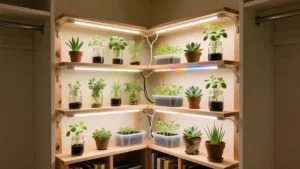
Regular pots under a grow light are better if you want to choose your own herb varieties, start plants from seed, or use established nursery plants.
This arrangement also makes it easier to give different herbs separate growing conditions. For example, one herb may need more moisture while another prefers its growing medium to dry slightly between waterings.
If you are comparing lighting options for a larger indoor growing area, the best grow lights for indoor plants guide explains the differences between bulbs, strips, bars, and other fixture types.
Running Costs and Kitchen Placement
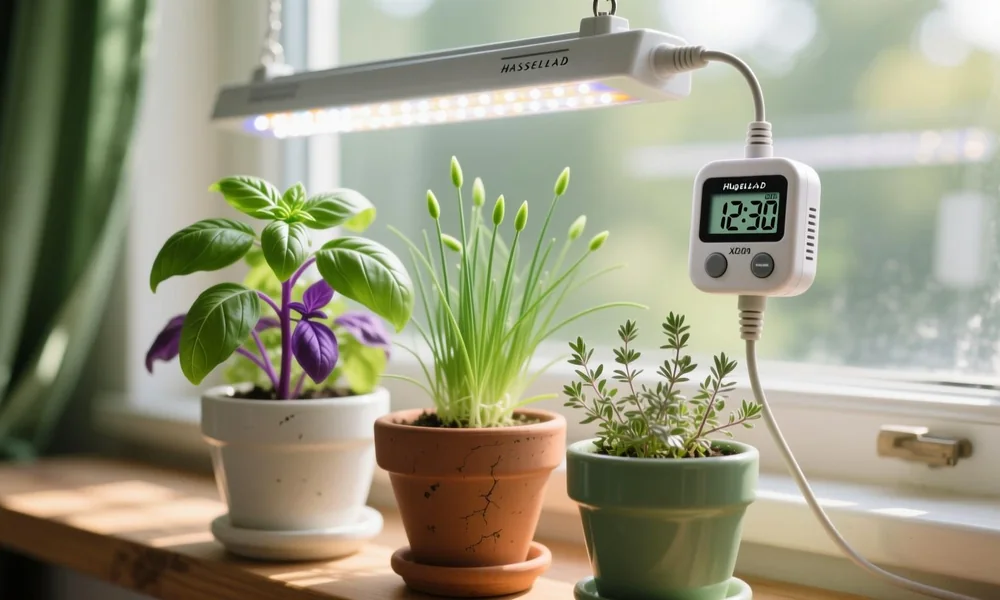
The cost of running a countertop herb garden includes more than electricity. You should also consider replacement pods, nutrients, seeds, and occasional maintenance.
Electricity Use
Many compact LED garden lights use relatively little power, but actual consumption depends on the fixture.
You can estimate electricity use with this formula:
Daily electricity use (kWh) = watts × hours used ÷ 1,000
For example, a hypothetical 15-watt light running for 14 hours uses:
15 × 14 ÷ 1,000 = 0.21 kWh per day
Multiply that figure by your local electricity rate to estimate the daily cost. Check the actual wattage on the kit rather than assuming every countertop garden uses the same amount.
Replacement Pods and Nutrients
Pod systems may require replacement inserts or seed kits. These recurring purchases can become more expensive over time than buying seeds separately.
A soil-and-lamp setup usually gives you more freedom to reuse pots and start new plants from seed. However, you still need to account for growing mix, fertilizer, and replacement plants.
Where to Place a Countertop Herb Garden
Choose a location that makes maintenance easy and gives the plants suitable conditions.
- Near a power outlet: Keep the electrical connection accessible and arrange cords safely around water.
- Away from stove heat: Hot air and sudden temperature changes can stress plants and dry growing media.
- On a stable surface: The unit should sit level and remain secure when you refill its reservoir.
- Where you can see it: A visible position makes it easier to notice low water levels, pests, or plants that need harvesting.
- Consider the light schedule: A bright LED running for many hours may be noticeable in an open-plan kitchen at night.
During winter, supplemental lighting can be especially useful because natural daylight is often limited. For more ideas about growing food indoors during colder months, see best plants for indoor winter gardens.
FAQ: Countertop Herb Garden Kits
Do countertop herb gardens really work?
Yes. They can grow fresh herbs by providing water, nutrients, and supplemental light, but harvests are usually small and depend on the herbs and growing conditions.
How many hours of light do indoor herbs need?
Many indoor herb setups use 12–16 hours of supplemental light, although the right duration depends on light strength, distance, and natural sunlight.
What herbs grow best in a countertop garden?
Basil, mint, parsley, and chives are practical starting choices, while cilantro and dill may need more careful attention to light and space.
Do countertop gardens use a lot of electricity?
Usually not compared with larger appliances, but actual use depends on the LED’s wattage and daily operating hours.
Can I grow regular potting-soil herbs in a pod system?
Most pod systems are designed for their own growing inserts, so ordinary soil-filled pots generally will not fit or work as intended.
How long does it take to get the first harvest?
It depends on the herb and whether you start from seed or a young plant; seedlings need time to establish before they can be harvested regularly.
Conclusion
Countertop herb garden kits can make fresh herbs easier to grow in kitchens where outdoor space or natural light is limited. Their biggest advantage is convenience: a compact growing area, supplemental lighting, and a water supply help create more consistent conditions.
They are most useful when you want small, regular harvests of herbs such as basil, mint, parsley, or chives. If you need larger quantities or want to grow unusual varieties, ordinary pots under a grow light may offer better flexibility.
Before choosing a setup, consider the herbs you actually cook with, the available counter space, the light schedule, and the recurring cost of supplies. The best countertop garden is the one that fits your routine and produces herbs you will use.
Disclaimer: Growing times, harvest amounts, electricity use, and ongoing supply costs vary by system, herb variety, growing conditions, and local utility rates. Treat wattage examples as estimates and follow the growing and maintenance instructions supplied with your chosen setup.