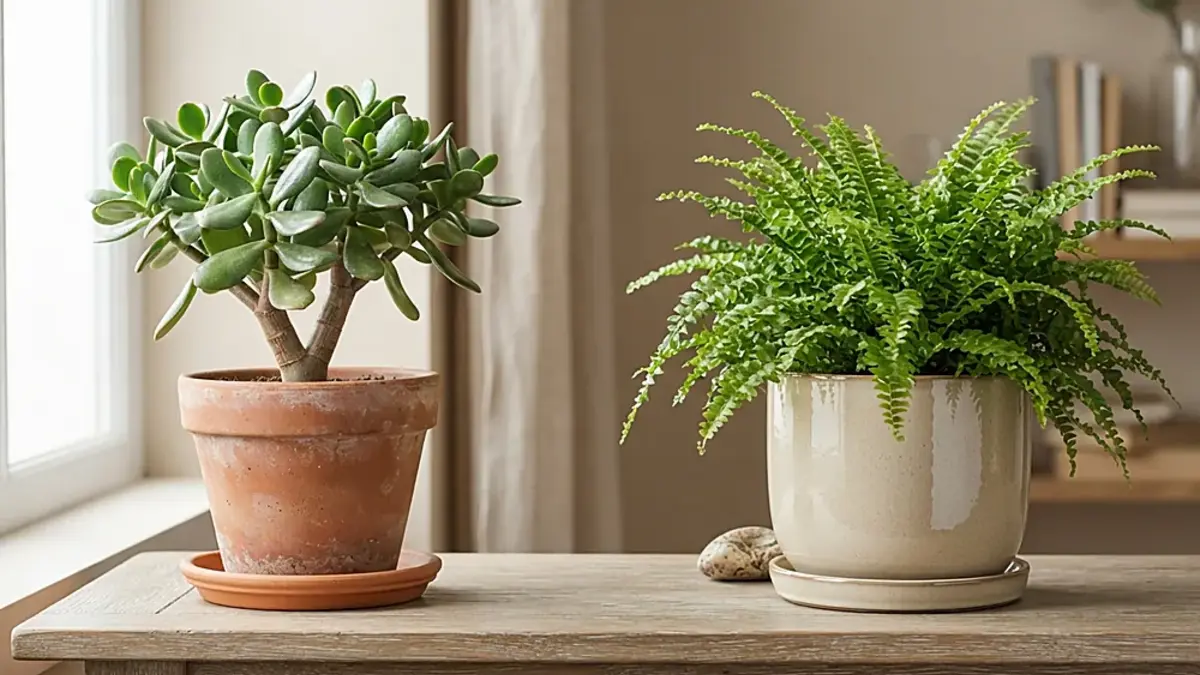

The best grow lights for indoor plants are usually full-spectrum LED lights because they provide useful light for plant growth without producing excessive heat. A bulb works well for one or two plants, LED strips suit shelves and cabinets, and panels cover wider growing areas. The right choice depends on your plants, available space, light requirements, and distance from the fixture.
Choosing a grow light becomes easier when you understand three things: the type of light, the amount of light it provides, and the area it can cover. Wattage alone does not tell you whether a light is suitable. This guide explains the differences and how to choose a practical setup for your indoor plants.
Key Takeaways
- Full-spectrum LED grow lights are suitable for most indoor foliage plants.
- Bulbs work best for individual plants, while strips and bars are useful for shelves.
- Panels cover wider growing areas and can suit groups of plants.
- Wattage measures electricity use, not the actual amount of light reaching leaves.
- Distance, light intensity, and daily operating time all affect plant growth.
- A timer helps maintain a consistent lighting schedule.
What Do Full-Spectrum Grow Lights Mean?

Full-spectrum grow lights produce light across a broad range of wavelengths used by plants for photosynthesis. Photosynthetically active radiation, commonly called PAR, covers wavelengths from approximately 400 to 700 nanometers.
Plants use different parts of this range during photosynthesis. Blue light supports compact vegetative growth, while red light plays an important role in photosynthesis and flowering. A balanced spectrum provides a practical option for growing different types of houseplants.
Older grow lights often produced a strong purple or pink glow because they emphasized red and blue wavelengths. Modern full-spectrum LEDs can produce white or warm-white light, making them easier to use in living rooms, offices, and plant displays.
Full-spectrum does not automatically mean that a light is powerful enough for every plant. A low-output full-spectrum bulb may still provide too little light for a plant that needs bright conditions.
The University of Minnesota Extension explains how light quality, intensity, distance, and duration affect indoor plant growth in its guide to lighting for indoor plants.
Types of Grow Lights for Indoor Plants

Grow lights come in several shapes and configurations. The best form depends on where your plants sit and how much area needs additional lighting.
1. LED Grow Light Bulbs
LED grow bulbs fit into compatible standard light fixtures. They are a practical choice when you want to provide extra light to one plant or a small group.
Best for:
- A single Monstera or rubber plant.
- Small indoor plant collections.
- Plants placed away from windows.
- People who want a simple lighting setup.
The main limitation is coverage. One bulb may not distribute enough light across several plants placed far apart. Its performance also depends on the reflector, beam angle, wattage, and distance from the foliage.
2. LED Grow Light Strips
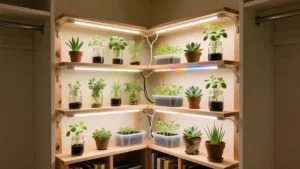
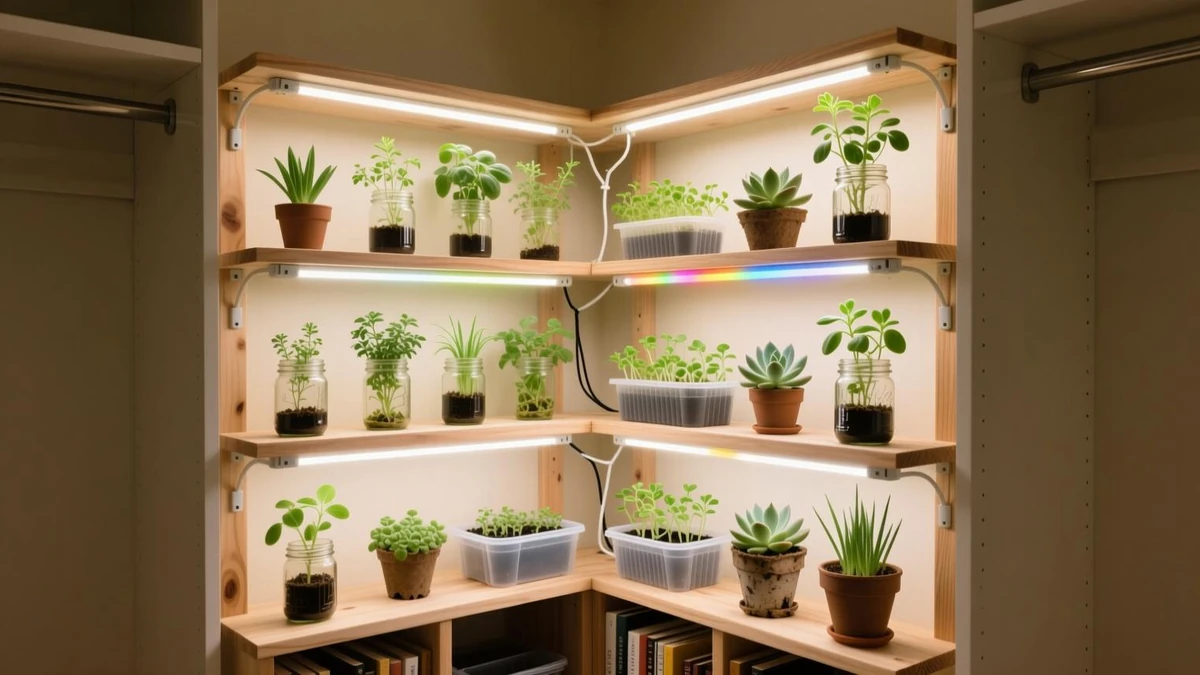
LED strips are long, narrow fixtures that can be installed underneath shelves or inside plant cabinets. They distribute light along a horizontal growing area.
Best for:
- Indoor plant shelves.
- Propagation stations.
- Small plant collections.
- Multi-level plant cabinets.
Some strips can connect to one another, allowing you to cover a longer shelf with several fixtures. Check the total electrical load and the manufacturer’s connection limits before installing multiple units.
For a shelf arrangement, position the strips so light reaches the plants evenly rather than concentrating it on one side.
3. LED Grow Light Bars
Grow light bars are similar to strips but may have different dimensions, output levels, and mounting systems. They are useful when you need more coverage or a stronger fixture than a basic strip provides.
Best for:
- Long plant shelves.
- Larger foliage collections.
- Indoor growing racks.
- Groups of plants with similar light requirements.
Before choosing a bar, check its light distribution and the recommended mounting distance. A fixture that covers a long shelf may still provide uneven intensity if plants are placed outside its strongest lighting area.
4. LED Grow Light Panels
Panels use multiple LED chips arranged across a wider surface. They are generally designed to cover a larger growing area than a single bulb.
Best for:
- Seed-starting trays.
- Groups of small plants.
- Indoor growing areas.
- Larger collections with similar light requirements.
Panels can be more powerful than basic bulbs and strips. However, they may be unnecessary for a few ordinary foliage plants. Check the manufacturer’s coverage information before choosing a large panel for a small room.
5. Pendant Grow Lights
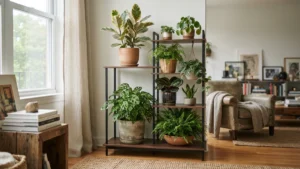
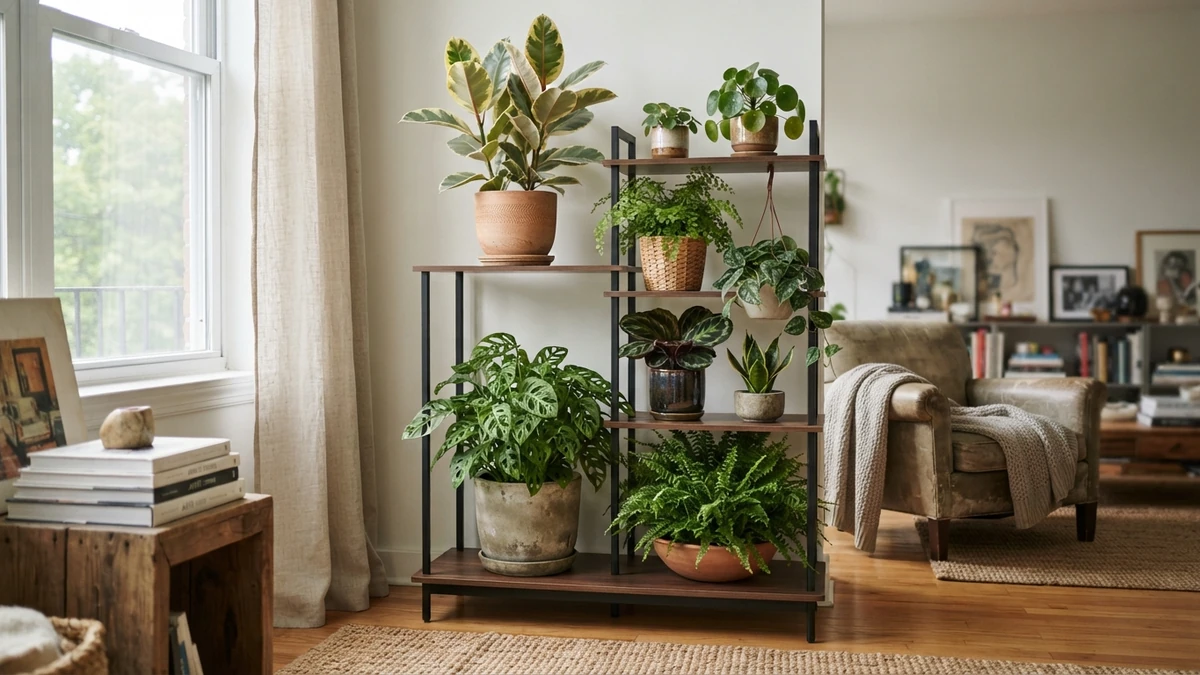
Pendant lights hang from the ceiling or an overhead support. They combine plant lighting with a decorative fixture, making them suitable for prominent plants in living spaces.
Best for:
- A large statement plant.
- A tall indoor tree.
- A decorative plant corner.
- Living rooms where ordinary grow fixtures may look out of place.
Their main limitation is coverage. A pendant usually illuminates a defined area rather than an entire room. Height adjustment and beam angle are important when choosing one.
Grow Light Wattage and Coverage: How Much Do You Need?

Wattage is one of the first specifications buyers notice, but it does not measure the amount of useful light that reaches your plant.
Watts measure electrical power consumption. Two lights with the same wattage can produce different amounts of plant-usable light because their LEDs, optics, and efficiency differ.
When comparing grow lights, look for these measurements:
| Measurement | What It Tells You |
| Watts (W) | How much electrical power the fixture uses |
| PPF | The total amount of photosynthetic light produced per second |
| PPFD | The amount of photosynthetic light reaching a particular surface |
| Lumens | Brightness as perceived by human eyes |
| Color temperature (K) | Whether the light appears warm, neutral, or cool white |
PPFD is particularly useful because it helps explain how much plant-usable light reaches the leaves at a specific distance.
Lumens and wattage alone are not reliable ways to compare two grow lights. A bright-looking bulb may not provide enough light for a plant that needs strong illumination.
Practical Starting Points
The following are general setup examples, not universal wattage requirements:
| Growing Setup | Suitable Light Type | What to Consider |
| One small plant | LED grow bulb | Beam angle and distance |
| Two or three nearby plants | Wider bulb or small bar | Even light distribution |
| One plant shelf | LED strips or bars | Shelf length and coverage |
| A group of seedlings | LED panel or bars | Adjustable height and intensity |
| One large statement plant | Pendant or focused LED fixture | Plant height and light requirements |
The University of Minnesota Extension recommends keeping supplemental lights at appropriate distances from plants. Its general guidance places foliage houseplants around 12–24 inches from a light source, although the correct distance depends on the fixture’s output and the plant’s needs.
Why Distance Matters
Light intensity decreases as the distance from the source increases. A fixture that provides useful light close to the leaves may become much less effective when raised several feet above the plant.
For this reason:
- Keep adjustable fixtures at a suitable distance.
- Check the manufacturer’s recommended hanging height.
- Avoid placing high-output lights too close to sensitive foliage.
- Observe leaves for bleaching, curling, or signs of insufficient light.
Do not copy another person’s hanging distance without considering the output of your own fixture.
Best Grow Lights for Indoor Plants by Use Case

Different grow lights suit different spaces. These examples illustrate three common options using published specifications. They are not presented as independently tested winners.
Best Bulb Option for Individual Plants: SANSI BR30 36W
A bulb-style grow light is convenient when one plant needs additional illumination. The SANSI BR30 36W is an example of a full-spectrum LED bulb designed for this purpose.
Its published specifications include:
- 36W power consumption.
- 4000K color temperature.
- Full-spectrum output covering 400–780nm.
- PPF of 65.6 µmol/s.
- Published PPFD of 265.58 µmol/m²/s at one foot.
The main advantage is its focused bulb format, which can fit into a compatible lamp fixture. It may suit a single plant or a small cluster positioned within its effective beam.
Limitation: One bulb has a limited coverage area. Several plants spread across a wide shelf may need more than one light source.
Best Strip Option for Shelves: Barrina T5 10W
LED strips are useful when plants are arranged in rows or across several shelves. Barrina’s T5 10W model is one example of a linkable strip design.
Its published specifications include:
- 10W per fixture.
- 5000K color temperature.
- Two-foot fixture length.
- 120-degree beam angle.
- Linkable installation.
The slim design makes this type of fixture suitable for plant shelves, racks, and indoor cabinets. Multiple units can provide more even coverage across a longer growing area.
Limitation: Installation requires planning for mounting clips, cables, and electrical connections. Check the manufacturer’s maximum connection limit before linking several fixtures.
Best Decorative Pendant Option: Soltech Aspect Gen 2
A pendant grow light can provide supplemental illumination while fitting into a room’s interior design.
The Soltech Aspect Gen 2 is a warm-white pendant model with published specifications including:
- 36W power consumption.
- 3000K color temperature.
- PPF of 50 µmol/s.
- Built-in dimmer.
- 60-degree beam angle.
Its pendant design can suit a prominent indoor plant where a conventional grow fixture would look out of place.
Limitation: The focused beam does not automatically cover several plants spread across a large area. Its premium design also makes it a more expensive route than a basic bulb or strip setup.
How Long Should Grow Lights Stay On?
The correct lighting duration depends on the plant species, natural daylight, and the intensity of the artificial light.
For many foliage houseplants, 12–14 hours of supplemental lighting per day can be a useful starting point. Plants also need a dark period, so leaving grow lights on continuously is not a good routine.
A simple timer helps maintain a consistent schedule.
Consider these points:
- Count natural daylight when deciding how much supplemental lighting is needed.
- Keep the daily schedule consistent.
- Adjust the duration according to the plant’s response.
- Avoid assuming that more hours always produce better growth.
Flowering plants and plants with specific seasonal requirements may need different light schedules. Check the needs of the species rather than applying one routine to every plant.
How to Tell Whether Your Grow Light Is Working

A grow light can appear bright without delivering enough useful light to the leaves. Check the plant’s response and, when possible, measure the light.
1. Watch New Growth
Healthy new growth is one of the most useful signs that a plant is receiving suitable light.
Look for:
- New leaves developing at a normal size.
- Compact growth rather than long, stretched stems.
- Stable leaf color.
- Continued growth during the growing season.
If stems become unusually long and leaves appear pale or widely spaced, the plant may need more light.
2. Look for Signs of Excessive Light
Too much intensity can also cause problems.
Watch for:
- Bleached or faded patches.
- Scorched leaf surfaces.
- Curling or stressed foliage.
- Dry-looking areas on leaves exposed directly to the fixture.
Move the light farther away or reduce its intensity if the plant shows signs of light stress.
3. Measure Light Intensity
A light meter can help you compare the intensity reaching different parts of a shelf or plant collection.
Lux meters measure light as perceived by human eyes. PPFD meters measure photosynthetic photon flux density, which is more directly related to the light plants receive for photosynthesis.
Measurements are especially useful when you have multiple shelves or plants with different light requirements. Our guide to plant light meters explains the differences between common measurement methods.
Setting Up Grow Lights in Plant Shelves and Cabinets

A good fixture can still perform poorly if it is installed in the wrong position. Shelf and cabinet layouts need attention to distance, coverage, and plant placement.
Keep Light Close Enough to Reach the Leaves
Install strips or bars above the plants at a distance suitable for their output. Adjustable mounting systems make it easier to raise the lights as plants grow.
Avoid Uneven Coverage
Plants near the middle of a fixture may receive more light than those at the edges. Check the entire shelf rather than measuring only the center.
Prevent Plants From Shading Each Other
Tall plants can block light from smaller ones. Place larger plants where they do not create deep shadows over the rest of the collection.
Allow Airflow
Grow lights should not turn a plant cabinet into a hot, stagnant space. Leave room for air circulation and check the temperature around the leaves.
If you grow plants inside an enclosed display, our guide to indoor plant cabinets covers the practical considerations of arranging plants in a contained space.
FAQ: Grow Lights for Indoor Plants
What does full spectrum mean for grow lights?
Full-spectrum grow lights provide a broad range of wavelengths, including the red and blue light plants use for photosynthesis.
What wattage grow light do I need for indoor plants?
There is no universal wattage requirement because light output, coverage, distance, and plant needs all affect the result.
How far should a grow light be from plants?
The correct distance depends on the fixture’s intensity and the plant species; use the manufacturer’s guidance and monitor the leaves.
Do grow lights work for all houseplants?
Yes, supplemental lighting can support many houseplants, but each species needs an appropriate light intensity and daily duration.
Are LED grow lights better than regular bulbs?
Purpose-designed LED grow lights are generally more suitable because their spectrum, output, and coverage are designed with plant growth in mind.
Can I leave grow lights on all night?
No. Most plants need a regular dark period, so use a timer to provide a consistent day-and-night cycle.
Final Thoughts
The best grow lights for indoor plants depend on the space you want to illuminate. Bulbs are practical for individual plants, strips and bars suit shelves, panels cover wider growing areas, and pendants work well for prominent indoor displays.
Before choosing a fixture, compare its actual power consumption, PPF or PPFD information, beam angle, and recommended distance. Then adjust the daily schedule according to the plant’s needs.
A suitable grow light can help compensate for weak natural daylight, but the goal is not simply to buy the brightest fixture. It is to provide the right amount of light to the right plants, at a useful distance, for a consistent period each day.
Disclaimer: Product specifications and availability may change. Check current manufacturer information before purchasing. Lighting recommendations are general starting points; actual requirements vary by plant species, fixture output, distance, and growing conditions.