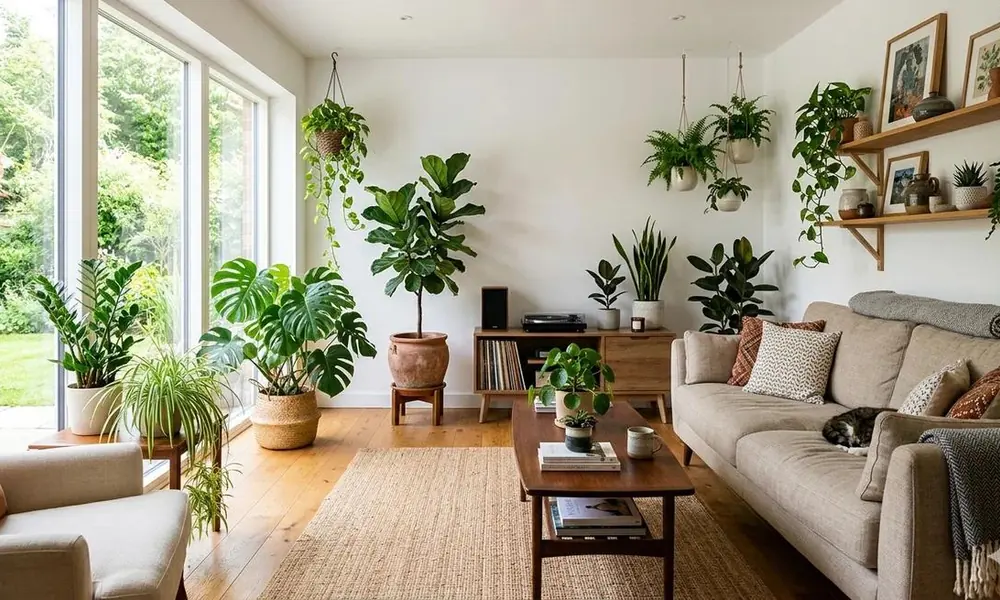
Modern living room plant decor works best when you treat plants as part of the room’s layout rather than adding pots wherever there is empty space. Start with one focal plant, build around it with smaller displays, use shelves or hanging planters to add height, and choose positions based on each plant’s light needs. This creates a balanced room that looks intentional while giving your plants suitable growing conditions.
The goal is not to fill every corner with greenery. It is to create a few well-planned displays that complement your furniture, leave enough open space and make plant care manageable.
How Modern Living Room Plant Decor Works as a System
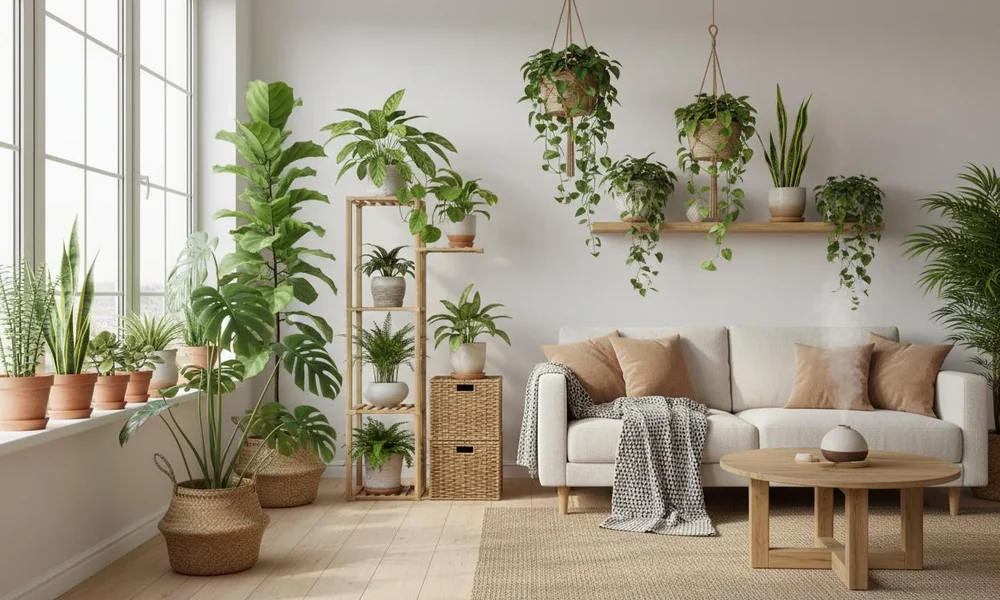
A balanced plant display uses five connected elements:
- Focal plants: Larger plants establish the main visual points in the room.
- Vertical displays: Shelves, plant stands and hanging planters use height without crowding the floor.
- Smaller groupings: Compact plants fill selected gaps and create visual continuity.
- Planters and materials: Pot shapes, textures and finishes help connect the displays with the room.
- Light and maintenance: Plant placement must support healthy growth and practical care.
These elements work together. A large plant can anchor an empty corner, while a smaller plant on a nearby shelf creates a visual connection. Repeating a few planter materials can make the arrangement feel coordinated without making every display identical.
For a broader introduction to arranging greenery at home, explore PeaceLily’s guide to plant home decor.
Start With One Focal Plant in Your Living Room
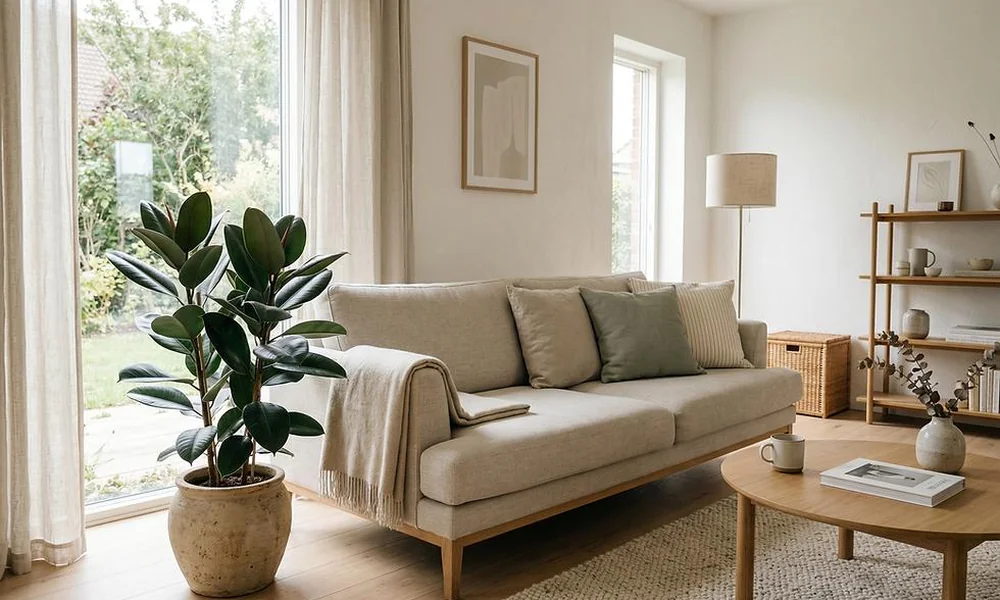
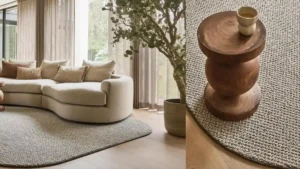
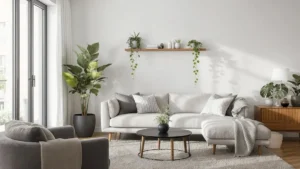
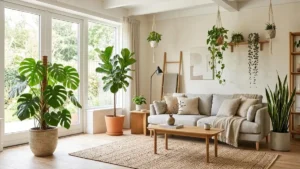
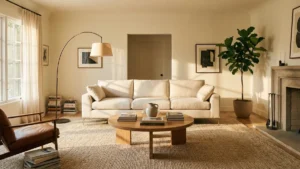
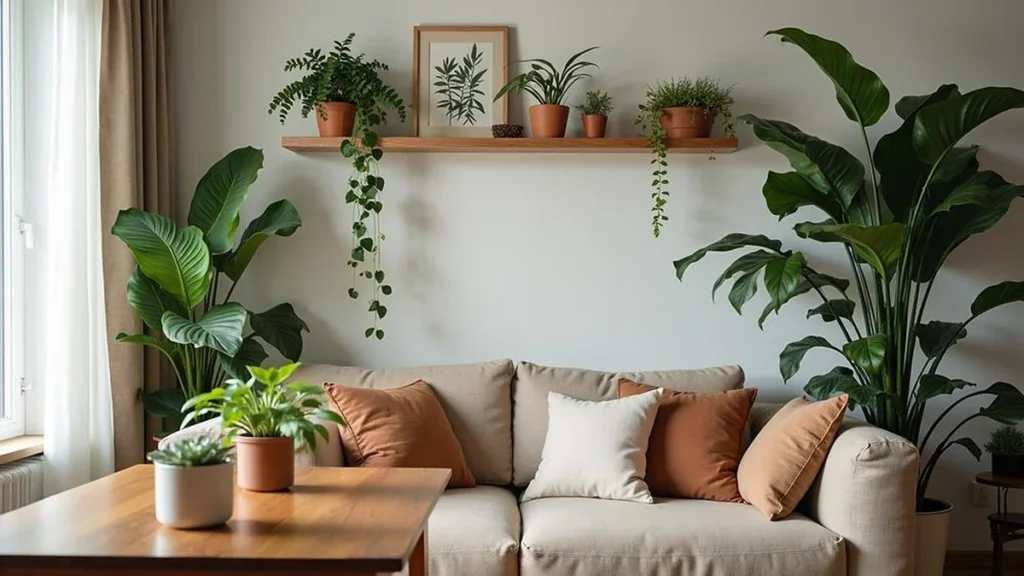
A focal plant gives the room a clear starting point. Instead of distributing plants evenly around the walls, choose one suitable location where a larger plant can stand out.
Good locations may include:
- An unused corner beside a sofa
- A bright area near a window
- The end of a seating arrangement
- An open space beside a console or bookcase
Choose the plant according to the actual conditions in that position. A large plant may look impressive near a window, but strong direct sunlight can damage species that prefer indirect light. Similarly, a dark corner may not provide enough natural light for a plant that needs bright conditions.
The Royal Horticultural Society explains that houseplants should be selected and positioned according to their individual light, temperature and humidity requirements not purely for decoration. Its houseplant growing guide is useful when deciding whether a particular location will support healthy growth.
For more room-specific inspiration, see these living room plant ideas.
Use Plant Shelves to Add Height Without Cluttering the Floor
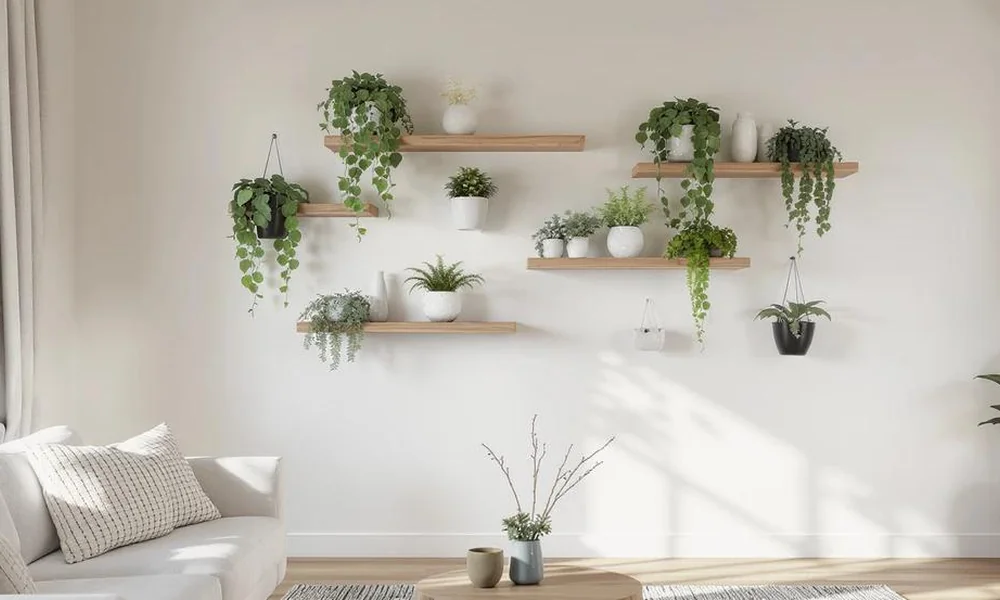
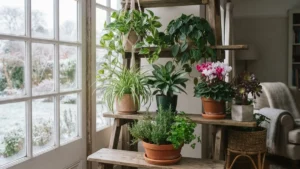
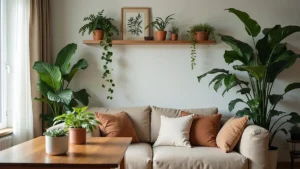
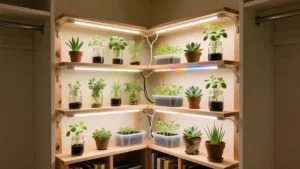
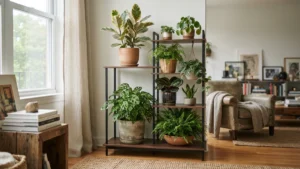
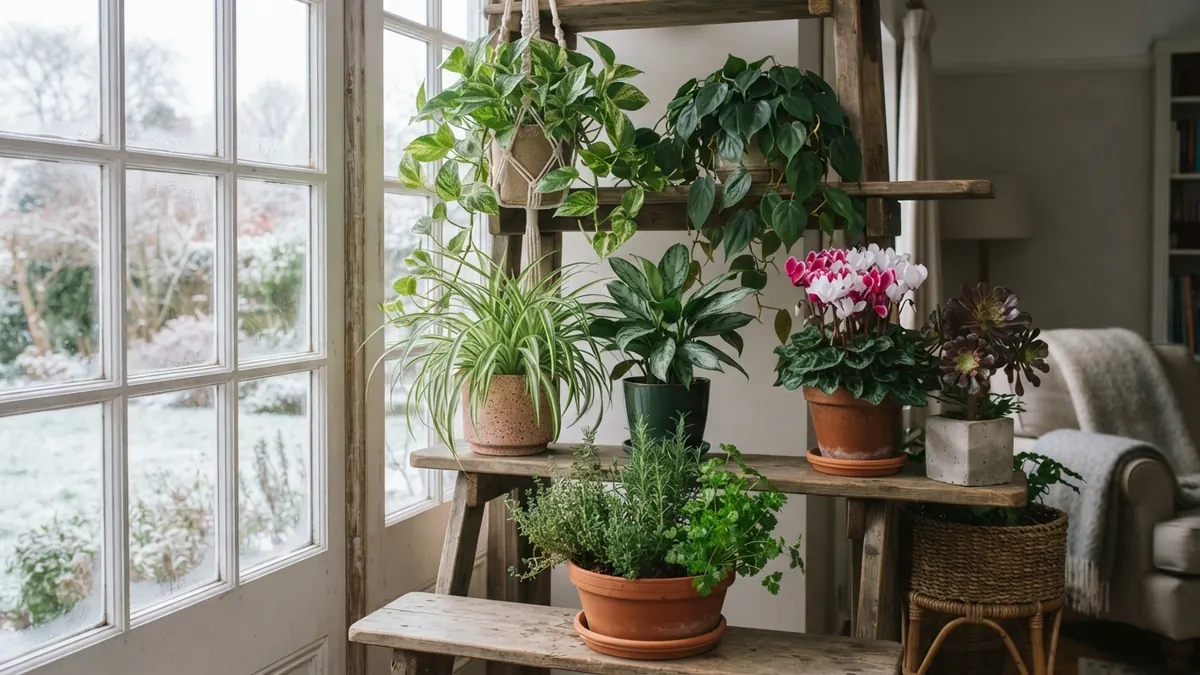
Plant shelves are useful when you want more greenery but have limited floor space. They let you arrange plants at different heights and make an otherwise plain wall part of the display.
You can use a few simple arrangements:
A single statement shelf: Place one or two plants on a shelf above a side table or console. Leave some open space around them so the display does not look crowded.
A staggered arrangement: Use shelves at different heights to create movement. This works particularly well with plants that have different leaf shapes and growth habits.
A compact plant corner: Combine a small shelf with a floor plant or plant stand. Keep the arrangement visually connected without blocking walkways.
Before placing plants on shelves, check the shelf’s weight capacity. Include the weight of the wet pot, growing mix and mature plant. Also consider drainage: use a suitable saucer or waterproof tray to protect the shelf from water damage.
Explore more arrangements in PeaceLily’s guides to indoor plant shelf ideas and plant shelf ideas.
Add Hanging Plants to Make Use of Vertical Space
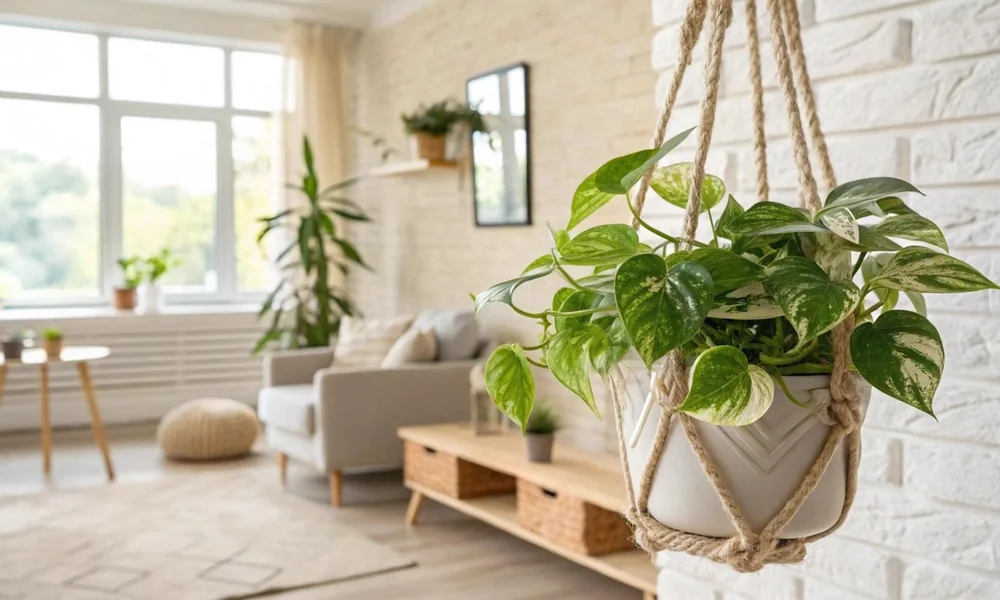
Hanging plants can soften the hard lines of shelves, windows and furniture. Their trailing stems introduce a different shape from upright floor plants, helping the room feel layered.
Useful places for hanging displays include:
- Near a bright window, if the plant’s light requirements allow it
- In an unused corner with suitable natural light
- Above a plant shelf, where trailing foliage can extend the display
- Along a wall where the planter will not obstruct movement
Do not assume that a higher position receives more light. Check the actual light where the leaves will grow. Also make sure the ceiling hook, wall bracket or other support is suitable for the planter’s fully watered weight.
A macramé hanger can add texture while keeping the pot separate from the hanging support. You can explore indoor hanging plant ideas and macramé plant hangers for different ways to use vertical space.
Arrange Smaller Plants in Groups
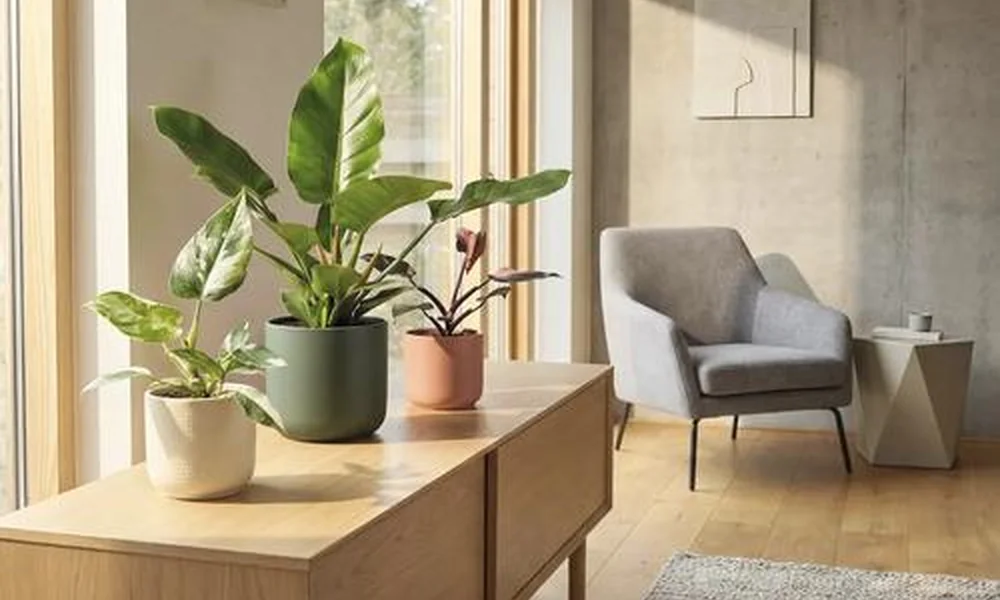
Small plants can make a living room feel connected without requiring a large display. The key is to group them intentionally rather than scattering individual pots across every available surface.
Try these approaches:
- Group by height: Place a taller plant behind two smaller plants.
- Group by leaf shape: Combine broad leaves with finer or trailing foliage for contrast.
- Group by planter finish: Use a similar material or finish to connect plants that have different shapes.
- Leave breathing room: Keep enough space between pots for leaves to spread and for you to reach each plant.
A group of three plants can be a useful starting point, but it is not a strict design rule. The right number depends on the size of the surface and the mature growth of each plant.
Avoid placing plants so close together that leaves press against walls, curtains or one another. Crowded displays can also make watering and checking for pests more difficult.
Choose Planters That Connect With Your Living Room
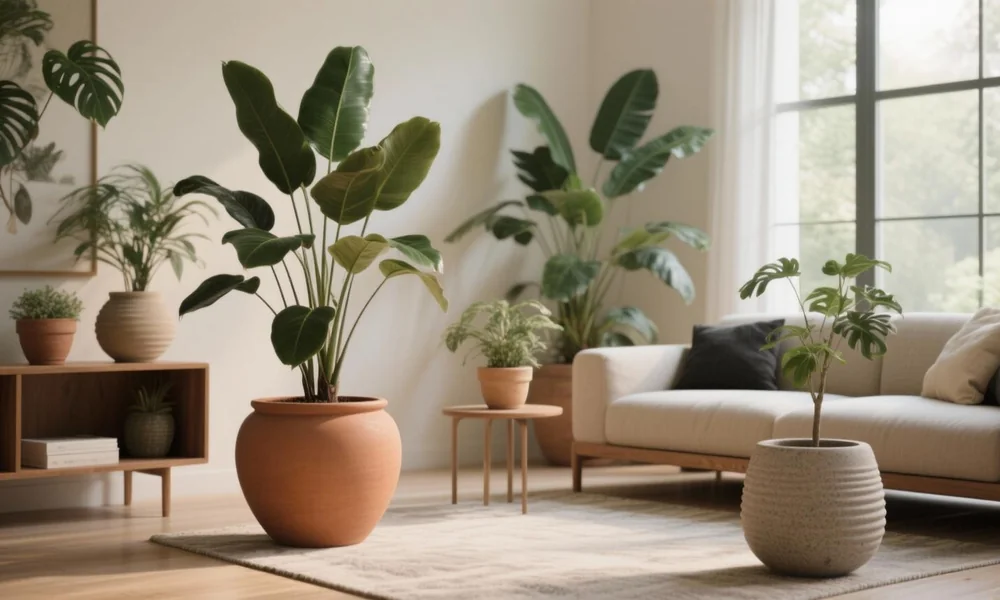
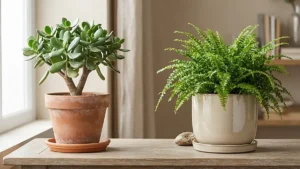
Planters are part of the visual arrangement, so their materials and finishes matter. You do not need matching pots throughout the room. A consistent visual direction is usually enough.
For a restrained modern look, consider:
- Matte ceramic for a simple, solid finish
- Terracotta for natural texture
- Concrete-style containers for a more architectural appearance
- Woven baskets as decorative outer covers
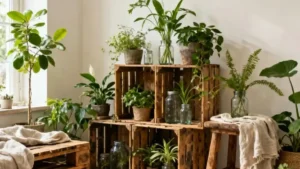
- Reused containers for a more resource-conscious display
Think about proportion as well as appearance. A small plant in an oversized pot may look unbalanced, while a large plant in a narrow container may become unstable or need repotting.
The container must also suit the plant. Check for drainage holes and use an appropriate inner pot if the decorative planter does not allow excess water to escape. Never let a plant sit in standing water for long periods.
For more ideas, explore PeaceLily’s guides to upcycled planters and houseplant interior design.
Choose Living Room Plants According to Light
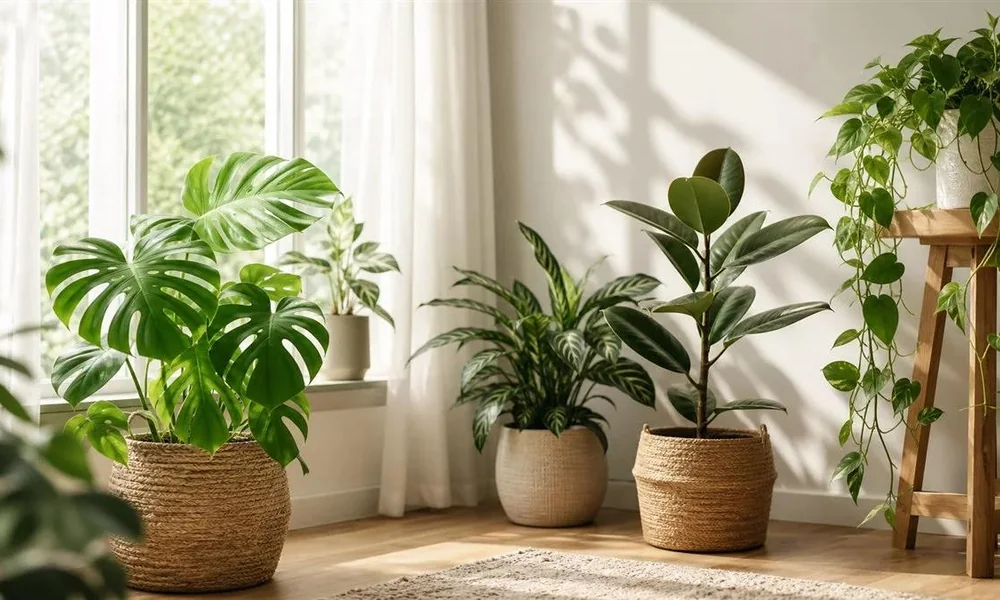
Plant selection should come before final placement. A display may look attractive on the day you arrange it, but the wrong light conditions can lead to weak growth, leaf damage or a plant that gradually declines.
Start by observing the room:
- Bright, indirect light: Often suitable for popular foliage plants that prefer filtered daylight.
- Direct sunlight: Better suited to plants that can tolerate stronger sun. Some foliage plants may scorch in intense sunlight through glass.
- Lower-light positions: Choose plants that tolerate lower light, but do not treat low-light tolerance as a requirement for no light.
- Areas near heating or cooling vents: Avoid direct airflow that can create unsuitable temperature and humidity conditions.
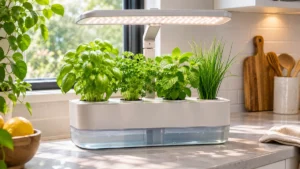
The Royal Horticultural Society notes that light levels change with window direction, distance from windows and the season. It also explains that ordinary household bulbs are not a substitute for suitable plant-growing lights. Read its advice on choosing the best houseplants before deciding which plants belong in different parts of your living room.
If the room has limited daylight, you can also explore indoor hanging plants for low-light spaces, while checking the needs of each individual species.
Keep the Arrangement Practical for Everyday Care
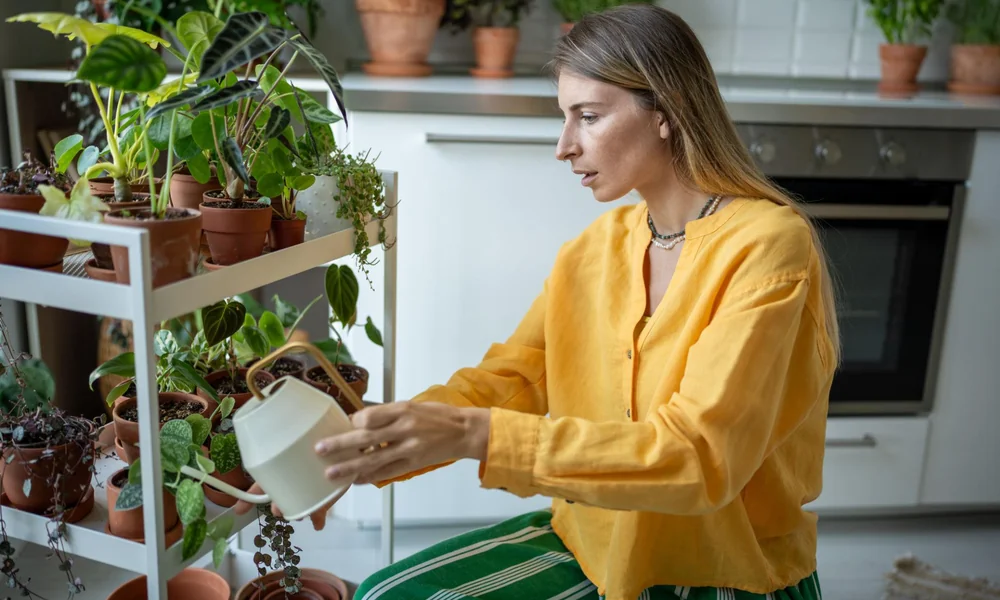
A good living room display should be easy to maintain. If you cannot reach the soil, inspect the leaves or remove excess water, the arrangement may become difficult to manage.
Before finalizing the layout, check:
- Can you reach every pot without moving heavy furniture?
- Can you water each plant without soaking the floor or shelves?
- Is there enough space for leaves to grow?
- Are plants kept away from strong heating or cooling airflow?
- Can you inspect the foliage for pests?
- Are the plants safe for children and pets in your household?
If you have pets, check each plant by its botanical name before bringing it home. Some popular houseplants can be harmful if chewed. PeaceLily’s pet-safe plants guide is a useful starting point.
For easier care, use pots with drainage and check the soil before watering. Different plants and pot sizes dry at different rates, so a fixed watering schedule may not suit every display.
The Modern Living Room Plant Decor Plan
Use this table to plan a balanced arrangement without filling every available surface.
| Display layer | What it contributes | Practical styling approach | PeaceLily guide |
|---|---|---|---|
| Focal plant | Establishes the main visual point | Place one larger plant in a suitable open area | Living room plant ideas |
| Plant shelves | Adds height and uses wall space | Arrange plants at different levels without overcrowding | Indoor plant shelf ideas |
| Hanging plants | Adds trailing shapes and vertical interest | Use secure supports and suitable light positions | Indoor hanging plant ideas |
| Plant stands | Raises plants from the floor | Use stands to vary plant height and improve access | DIY plant stand ideas |
| Planters | Connects the display with the room | Repeat a few materials or finishes | Upcycled planters |
| Plant groupings | Adds smaller points of greenery | Combine different heights and leaf shapes | Indoor plant styling |
The most important rule is to plan around the plants’ growing conditions first. Once the focal plant, shelf positions and hanging points are chosen, you can adjust the arrangement to suit the room.
FAQ: Modern Living Room Plant Decor
How do you decorate a modern living room with plants?
Start with one focal plant, then add smaller plants on shelves, stands or hanging planters. Repeat a few planter materials or finishes to connect the displays, and leave open space so the room does not feel crowded. Choose every position according to the plant’s light requirements.
How many plants should you put in a living room?
There is no fixed number. The right amount depends on the room’s size, available light, furniture layout and the time you can give to plant care. A few well-positioned plants can create a balanced display without filling every corner.
Where should you place plants in a living room?
Good positions include bright corners, suitable windowside areas, shelves and plant stands. Avoid placing plants where they block walkways or sit directly beside heating and cooling vents. Always check the light requirements of the species before choosing a permanent position.
How do you make indoor plants look coordinated?
Use a consistent approach to planter materials, finishes or shapes. You can also group plants by height or leaf form. The pots do not need to match exactly; a small amount of variation helps the display feel natural.
Can you decorate a dark living room with indoor plants?
Yes, if you choose plants that tolerate the available light. However, no living plant can grow indefinitely without suitable light. Move plants closer to natural daylight or consider appropriate horticultural lighting if the room is too dark.
Are all living room plants safe for pets?
No. Some common houseplants can be harmful to cats and dogs if eaten. Check the exact plant species before buying it, and keep unsuitable plants away from pets. Do not assume that placing a plant on a shelf makes it inaccessible.
Final Thoughts
Modern living room plant decor is about creating a balanced arrangement that works for both the room and the plants. Begin with a focal plant, use shelves and hanging displays to add height, and connect the arrangement with a few coordinated planters.
Most importantly, do not sacrifice growing conditions for appearance. When plants receive suitable light, have room to grow and remain easy to care for, the display can become a lasting part of your living room rather than a short-lived styling project.