Key Takeaways
- Why Are My Plant Leaves Turning Brown? Brown leaves can have several different causes.
- Dry soil and low humidity commonly contribute to crispy brown tips.
- Overwatering can damage roots and also lead to browning.
- Strong direct sunlight can scorch sensitive foliage.
- Excess fertilizer and salt buildup can burn leaf edges.
- Water quality matters for some sensitive plants.
- Temperature changes and drafts can stress foliage.
- Pests and diseases should be considered when unusual spots or damage appear.
- Older leaves can naturally turn brown as part of normal plant aging.
- Correcting the underlying cause is more important than simply cutting off damaged leaves.
Quick Answer: Why Are My Plant Leaves Turning Brown?
Why are my plant leaves turning brown? The most common causes include underwatering, overwatering, low humidity, excessive sunlight, fertilizer or salt buildup, poor water quality, temperature stress, pests, diseases, and natural aging.
Importantly, brown leaves can have more than one cause. For example, dry air can increase water loss from leaves, while poor watering can make the same plant look stressed. Similarly, too much fertilizer can damage roots and cause brown leaf edges.
Consequently, do not change everything at once. Instead, examine the plant carefully and match the symptoms with its growing conditions.
1. Underwatering Can Make Leaves Brown and Crispy
One of the first things to check when asking why my plant leaves are turning brown is water availability.
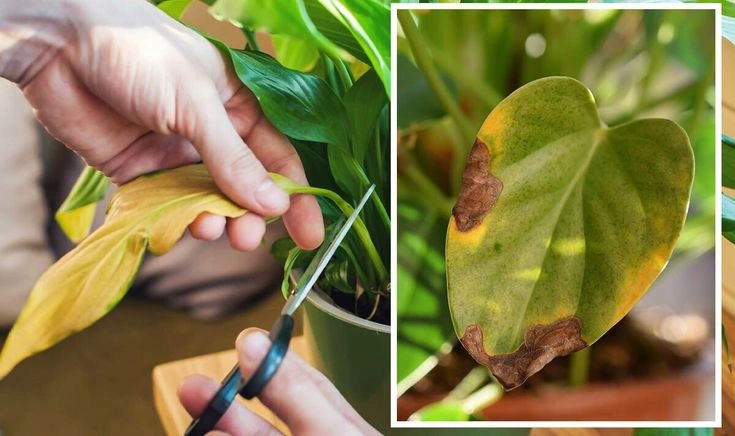
When a plant does not receive enough water, leaves may become dry, crispy, wilted, or brown. The damage can appear along the edges and tips, while severely stressed plants may develop completely brown leaves.
The RHS notes that brown, crispy edges and wilting can indicate that a plant is not receiving enough water. Older lower leaves may also yellow and fall first when a plant becomes too dry.
How to check
Push your finger a few centimetres into the growing medium. If it feels very dry, the plant may need water.
Nevertheless, avoid following a fixed watering calendar. Plant water requirements change with species, temperature, light, season, pot size, and growing conditions.
2. Overwatering Can Also Cause Brown Leaves
It may sound surprising, but why my plant leaves are turning brown can be the opposite: too much water.
Constantly wet soil can deprive roots of the conditions they need and contribute to root damage. When roots are unhealthy, the plant may struggle to take up water properly, even though the soil appears wet.
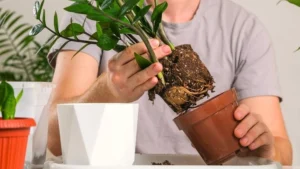
The RHS recommends checking the roots when browning is accompanied by signs of overwatering. Soft, brown, rotting roots are a warning sign.
Therefore, always use a container with drainage holes and empty excess water from a saucer. Missouri Botanical Garden also warns that keeping indoor plants standing in water or using pots without drainage can cause serious problems.
| Symptom | More likely concern |
|---|---|
| Dry soil and crispy leaves | Underwatering |
| Wet soil and wilting | Possible overwatering/root damage |
| Brown tips with dry air | Low humidity |
| Brown patches facing a window | Sun or heat damage |
| Brown edges with heavy feeding | Salt or fertilizer injury |
3. Low Humidity Can Cause Brown Tips
If the leaves are mostly green but the tips and edges are becoming brown and crispy, dry air deserves attention.
Plants lose water through their leaves. When the surrounding air is very dry, some plants can lose moisture faster than their roots can replace it. Tropical houseplants are particularly likely to show problems when humidity is too low for their needs.
Indoor heating can make this worse during colder months. In addition, plants placed close to radiators, heaters, or hot air vents can experience especially dry conditions.
A humidifier, grouping plants, or a suitable pebble tray can help increase local humidity. However, the plant’s species should determine how much humidity it actually needs.
4. Too Much Direct Sunlight Can Scorch Leaves
Another important answer to why my plant leaves are turning brown is excessive light or heat.
Some plants tolerate bright direct sunlight, while others are adapted to filtered or indirect light. A plant that is suddenly exposed to strong sunlight can develop brown, tan, or bleached-looking areas.
Missouri Botanical Garden describes sunburn as brown or tan tissue on the side of a plant directly exposed to the sun.
Therefore, look at the location of the damage. If the brown patches are concentrated on the side facing a strong window, excessive sunlight may be involved.
Do not automatically move every plant into a dark room, though. Instead, check the light requirements of the particular species and make changes gradually.
5. Too Much Fertilizer or Salt Can Burn Leaf Edges
Fertilizer helps plants obtain nutrients, but more is not necessarily better.
Excess fertilizer can contribute to soluble salt buildup in the growing medium. One common symptom is brown or dry leaf tips and edges. Missouri Botanical Garden and University of Minnesota Extension both identify salt buildup or excessive fertilizer as causes of brown leaf margins.
As a result, follow the fertilizer label instead of increasing the dose because a plant looks weak.
If you suspect excessive salts, improving watering practices and flushing accumulated salts when appropriate can help. However, the correct approach depends on the plant, growing medium, and severity of the problem.
6. Water Quality May Be the Hidden Problem
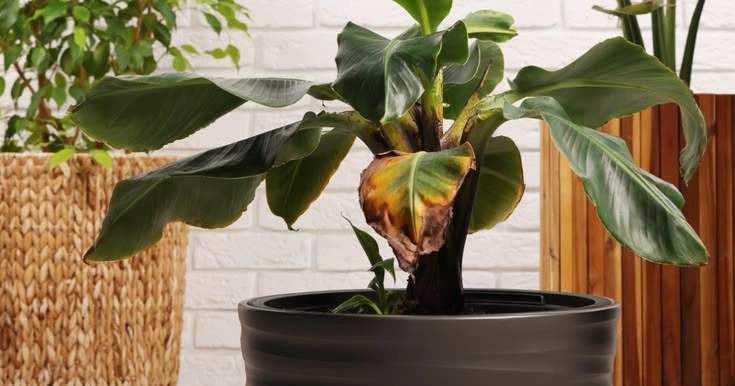
Sometimes you may be watering correctly and still wonder, why are my plant leaves turning brown?
Water quality can matter for certain sensitive plants. Missouri Botanical Garden lists poor water quality among factors associated with brown leaf tips.
The RHS also notes that some plants are sensitive to substances found in tap water, while particular species may respond better to filtered, distilled, or rainwater.
However, this does not mean every houseplant needs bottled or distilled water. Different plants have different tolerances. Instead, consider water quality when browning continues despite otherwise suitable care, especially with a species known to be sensitive.
7. Temperature Changes and Drafts Can Stress Plants
Plants can react badly to sudden environmental changes.
Hot drafts, cold drafts, air-conditioning vents, heaters, and sudden changes in temperature can contribute to foliage damage. Missouri Botanical Garden specifically identifies unfavorable temperature conditions and drafts as possible contributors to brown foliage.
For example, a plant placed directly beside a heater may experience hot, dry air while another plant in front of an air-conditioning outlet may face repeated cold airflow.
Move sensitive plants away from strong drafts and avoid sudden changes whenever possible.
8. Pests Can Lead to Brown or Damaged Leaves
Pests can also help answer why my plant leaves are turning brown, particularly when the browning is accompanied by speckling, curling, distortion, sticky residue, webbing, or visible insects.
Spider mites, scale insects, mealybugs, aphids, and other pests can damage foliage. Dry conditions can also favor spider mite problems on some indoor plants.
Therefore, inspect both sides of the leaves, the stems, and areas around new growth. Early detection makes pest management much easier.
9. Diseases Can Cause Brown Spots
Not every brown mark is caused by watering.
Fungal and other plant diseases can produce spots, patches, discoloration, curling, or leaf loss. The exact symptoms vary considerably between plant species and diseases. University of Minnesota Extension, for example, documents several diseases and pests that can cause brown areas on foliage.
Consequently, avoid treating every brown spot with fertilizer, extra water, or more humidity. If the damage appears as spreading spots or occurs alongside other unusual symptoms, identify the plant and investigate the specific problem.
10. Older Leaves Naturally Turn Brown
Sometimes the answer to why are my plant leaves turning brown is simply age.
Healthy houseplants do not keep every leaf forever. Older leaves can naturally yellow, brown, and eventually fall as the plant grows. The RHS identifies this as a normal process when older foliage gradually dies back.
If only an occasional old lower leaf is changing while the rest of the plant looks healthy, there may be no serious problem.
How to Diagnose Brown Leaves Before Taking Action
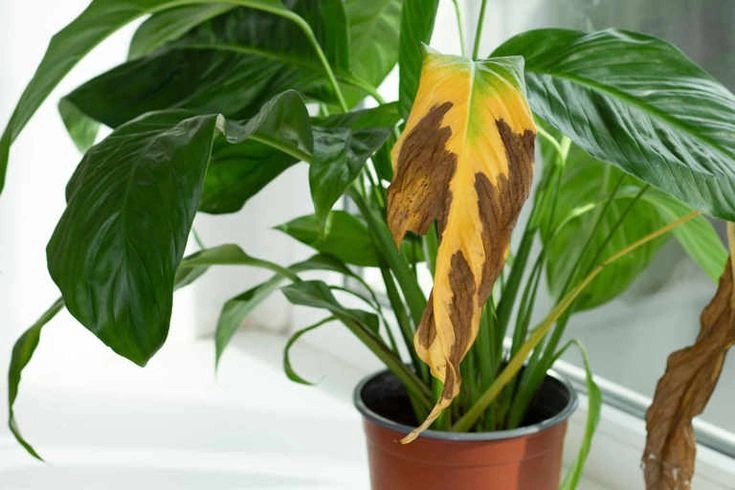
Before changing your plant’s care routine, check these clues:
Look at where the browning starts
Brown tips often point toward dryness, low humidity, watering problems, or salt buildup. Brown patches on sun-facing foliage can suggest scorching.
Check the soil
Feel the growing medium rather than guessing from the surface. Very dry soil suggests a different problem from persistently wet soil.
Inspect the roots
If overwatering is suspected, examine the roots when practical. Soft, brown, damaged roots are a warning sign of root problems.
Examine the environment
Check sunlight, temperature, humidity, drafts, heaters, air-conditioning vents, and the plant’s position.
Look for pests
Inspect leaves and stems carefully, particularly underneath leaves and around new growth.
How to Fix Brown Leaves
Once you know why your plant leaves are turning brown, the solution becomes much more straightforward.
First, correct the underlying care problem rather than simply removing the damaged leaves.
Next, adjust watering according to the plant and growing medium. Avoid both prolonged dryness and constantly saturated soil.
Then, improve the plant’s environment if low humidity, excessive sun, heat, cold, or drafts are contributing to the damage.
Afterward, review fertilizer use and consider whether salt buildup could be involved.
Finally, remove badly damaged foliage with clean, sharp tools when appropriate. Brown tissue will not become green again, so the goal is to protect new growth rather than restore dead tissue.
Common Mistakes to Avoid
| Mistake | Why it can make things worse |
| Watering every day automatically | Can keep soil excessively wet |
| Adding fertilizer to a struggling plant | May increase salt stress |
| Moving a shade plant into harsh sun | Can cause scorching |
| Ignoring drainage | Encourages waterlogging |
| Assuming every brown leaf means underwatering | Brown foliage has many possible causes |
| Treating without checking for pests | The real problem may remain |
| Cutting into healthy green tissue | Removes living leaf area unnecessarily |
Brown Leaf Prevention Checklist
-
Learn the light needs of your plant
-
Check soil moisture before watering
-
Use a pot with proper drainage
-
Keep roots from sitting in excess water
-
Watch humidity for plants that need moist air
-
Keep plants away from harsh drafts
-
Avoid sudden exposure to strong sunlight
-
Follow fertilizer directions carefully
-
Inspect plants regularly for pests
-
Remove severely damaged foliage when necessary
Conclusion
So, why are my plant leaves turning brown? There is rarely one universal answer. Watering, humidity, sunlight, fertilizer, water quality, temperature, pests, disease, and natural aging can all play a role.
Most importantly, look at the complete picture instead of reacting to the brown color alone. Check the soil, roots, light, humidity, temperature, and foliage before making a major change.
At Peeacelily, the best plant-care approach is simple: understand what your particular plant needs, observe its response, and make careful adjustments. With that approach, brown leaves become a useful warning sign rather than a reason to panic.
FAQs
Why are my plant leaves turning brown at the tips?
Brown tips can be associated with underwatering, low humidity, excessive fertilizer or salts, poor water quality, and other environmental stresses. The surrounding conditions are important for identifying the actual cause.
Why are my plant leaves turning brown even though I water them?
Watering alone does not guarantee healthy roots. Overwatering, poor drainage, low humidity, strong sunlight, salt buildup, water quality, pests, or temperature stress can still cause brown foliage.
Should I cut off brown leaves?
Removing severely damaged leaves can improve the plant’s appearance and eliminate tissue that is no longer useful. However, avoid cutting into healthy green tissue unnecessarily.
Can brown leaves turn green again?
Dead brown tissue generally does not return to healthy green tissue. The more useful goal is to correct the cause and encourage healthy new growth.
Does brown leaf color always mean the plant is dying?
No. An occasional old leaf can naturally turn brown and fall. On the other hand, widespread browning, rapid decline, root damage, or multiple symptoms can indicate a more serious problem.
How can I tell whether brown leaves are caused by too much or too little water?
Check the growing medium and roots rather than relying on leaf color alone. Very dry soil combined with crispy foliage points toward insufficient moisture, while persistently wet soil and damaged roots suggest overwatering or root problems.