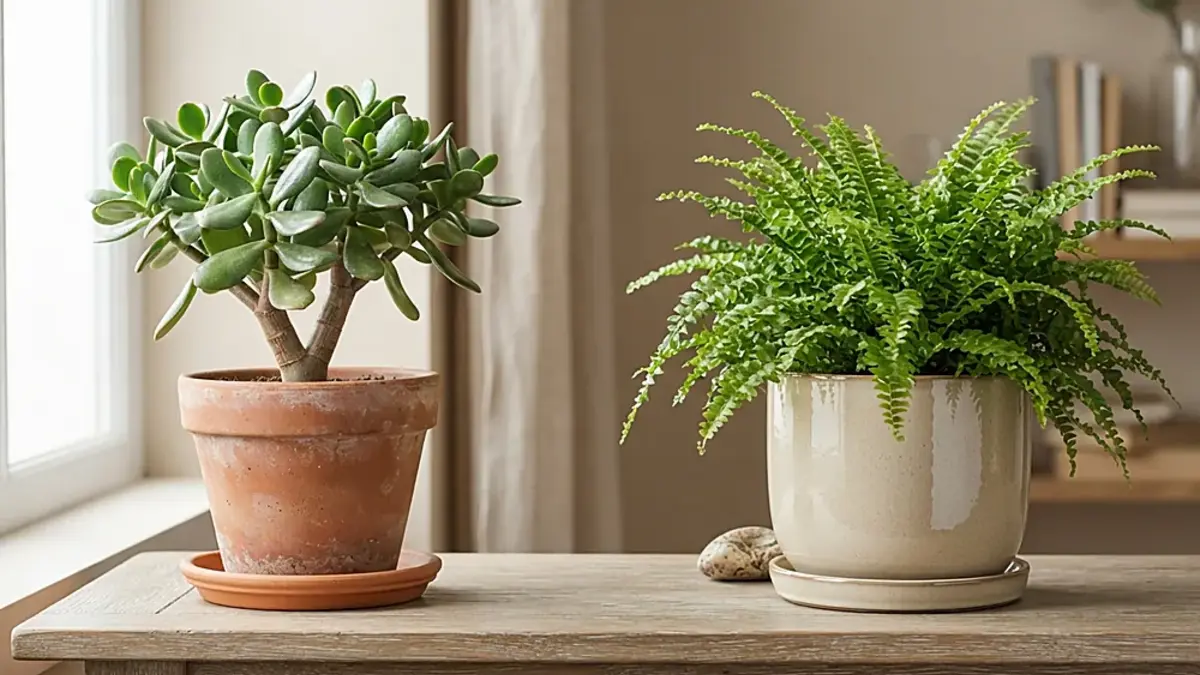

When choosing the best self-watering planters, start by considering which plants you want to grow. These planters are useful for thirsty foliage plants such as ferns, peace lilies, and calatheas because a wick pulls water up from a reservoir as the soil dries. However, they are a poor choice for succulents and cacti, which need their soil to dry between waterings.
A good self-watering planter should have a reliable wick, a water-level indicator, and an overflow hole. These features matter more than the brand or appearance. Here is how the system works, which plants suit it, and what to look for before buying.
How we chose: This guide draws on manufacturer documentation, published product roundups, and plant-care references. No hands-on product testing was performed.
Key Takeaways
- Self-watering planters use capillary action to move water from a reservoir into the potting mix.
- Ferns, peace lilies, and many moisture-loving tropical plants can benefit from consistent moisture.
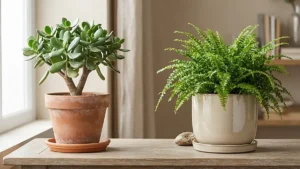
- Succulents, cacti, jade plants, snake plants, and ZZ plants generally need a drying period and are poor choices for permanently moist reservoirs.
- Look for a dependable wick, a water-level indicator, and an overflow feature.
- Choose the planter according to the plant’s watering needs rather than buying one simply because it promises fewer refills.
How Self-Watering Planters Work

A self-watering planter stores water in a reservoir beneath or beside the growing area. A wick connects the reservoir to the potting mix. Through capillary action, water travels along the wick and into the soil, where the roots absorb it.
The process provides a more consistent supply of moisture than occasional top watering. It does not mean the plant controls every part of the watering process automatically. The reservoir still needs refilling, and the plant’s roots still need suitable air circulation.
Some designs use a separate fabric or synthetic wick. Others rely on a column of growing medium that stays in contact with the reservoir. Both approaches can work when the design maintains reliable contact between the water and the soil.
There are two practical limitations to understand:
- Wick reach: Water does not travel upward indefinitely. A reservoir that sits too far below the growing medium may not supply enough moisture.
- Wick maintenance: If a wick dries out completely or deteriorates, it may stop drawing water effectively. Some wicks need to be re-wetted or replaced.
For a more detailed look at plant watering habits, see our guide to watering indoor plants correctly.
Which Plants Suit Self-Watering Pots?

The best plants for self-watering pots are generally those that prefer consistently moist, but not waterlogged, growing conditions. Plants that need a pronounced dry period between waterings are usually unsuitable.
Plants That Can Benefit
These plants often appreciate steady moisture when the planter and growing medium provide enough airflow:
- Boston ferns: They prefer evenly moist soil and can struggle when the root zone dries too much.
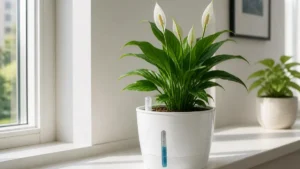
- Peace lilies: They generally prefer consistent moisture, although their roots should not sit in stagnant water.
- Calatheas and marantas: These tropical foliage plants often respond poorly to repeated drying.
- Fittonia: Its small leaves can wilt quickly when the growing medium becomes too dry.
- Some other tropical foliage plants: Their suitability depends on the species, potting mix, and growing conditions.
A self-watering system can make moisture management easier, but it does not remove the need to check the plant. If the soil remains saturated, even a moisture-loving plant can develop root problems.
Plants That Usually Should Not Use Them
Avoid using a constantly supplied reservoir for plants that need their growing medium to dry substantially between waterings.
- Succulents: Their roots are vulnerable to prolonged moisture.
- Cacti: Most need fast-draining soil and a clear drying period.
- Jade plants: They store water in their leaves and stems, so consistently wet soil can cause root rot.
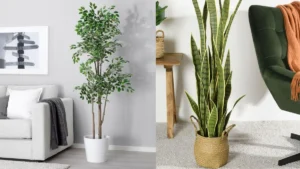
- Snake plants: They prefer the soil to dry between waterings.
- ZZ plants: Their water-storing rhizomes make them sensitive to overwatering.
These plants generally do better in containers with drainage holes and a suitable, fast-draining growing mix. Our guides to succulent care and snake plant care explain their different watering needs.
What About Pothos and Philodendrons?
Pothos and philodendrons fall somewhere between the two groups. They can grow in self-watering systems, but they do not necessarily need a constant reservoir supply.
Choose a planter that allows you to control the moisture level. Avoid keeping the reservoir permanently full if the growing medium is staying too wet. Check the roots and soil condition rather than relying only on the water indicator.
What Makes the Best Self-Watering Planter?

A planter can look convenient but still perform poorly if its reservoir or wick is badly designed. Check these features before buying.
1. A Reliable, Replaceable Wick
The wick is the central part of the system. It needs to draw water consistently and maintain contact with the growing medium. Natural-fiber wicks can move water effectively, but some deteriorate over time. Synthetic wicks may last longer, depending on their construction and use. A replaceable wick is a useful feature because it allows you to maintain the planter without replacing the entire container.
2. A Water-Level Indicator
A water-level indicator makes it easier to see when the reservoir needs attention. It can also help prevent unnecessary refilling. Some indicators use a simple float mechanism. Others have a visible window or marked reservoir. Choose a design that is easy to read without dismantling the planter. Remember that the indicator measures the reservoir, not the moisture level around the roots. A full reservoir does not automatically mean the plant needs more water.
3. An Overflow Opening
An overflow opening gives excess water somewhere to go if the reservoir is overfilled. This is especially useful when the planter is used outdoors or near a window where rainwater may enter. Check where the opening sits. It should allow excess water to escape without emptying the reservoir during normal use.
4. A Suitable Reservoir and Pot Size
A larger reservoir can reduce how often you refill the planter, but bigger is not always better. The reservoir should suit the plant’s size, water use, and growing conditions. A small plant in a very large reservoir may remain too wet if the growing medium receives more moisture than it can use. Choose a size that matches the plant rather than buying the largest available option.
5. Easy Cleaning and Maintenance
Mineral deposits, algae, and debris can build up in a reservoir over time. A removable insert or accessible reservoir makes cleaning easier. Look for a design that lets you inspect the wick, remove standing debris, and clean the water compartment without disturbing the plant unnecessarily.
Best Self-Watering Planters by Budget

The right option depends on the plant, available space, and how much you want to spend. The following choices represent different approaches to reservoir watering. They are based on published product information and reviews, not personal testing.
Best Premium System: Lechuza Self-Watering Planters
Lechuza is a premium option known for its sub-irrigation system. Models such as the Deltini use a separate reservoir, an insert, and a water-level indicator. The system is designed to work with LECHUZA-PON mineral substrate rather than relying only on ordinary loose potting soil.
This setup can suit people who want a more structured watering system and a polished decorative planter. The indicator also makes reservoir checks easier.
Consider before buying: Lechuza planters generally cost more than basic self-watering pots. The recommended mineral substrate also adds a separate cost and requires you to follow the system’s instructions.
Best for Larger Plants: Crescent Garden TruDrop
Crescent Garden’s TruDrop system is designed for larger planters and more substantial planting arrangements. The manufacturer describes its TruDrop One insert as a self-watering system with a visible water-level indicator. The company also advertises a limited 10-year warranty on the planter shell.
This type of system may be worth considering for larger indoor plants or outdoor containers where frequent manual watering is inconvenient.
Consider before buying: Check the dimensions of the planter and insert before ordering. Larger systems can take up considerable space and may be more expensive than smaller indoor options. Also confirm the warranty terms for the exact model and region.
Best Budget Route: Elho Inserts and T4U Small Planters
If you want to try reservoir watering without investing in a premium planter, look at simpler inserts or small self-watering containers.
Elho inserts can fit inside compatible decorative pots, giving you a way to use a reservoir system without buying an entirely new outer planter. T4U also offers smaller string-style self-watering pots.
These options may suit small foliage plants and people testing whether the system works with their watering routine.
Consider before buying: Budget models vary considerably. Check whether the wick is replaceable, whether the reservoir is easy to inspect, and whether excess water has an escape route. Do not assume that every product labelled self-watering has the same design or performance.
A Note About Product Reviews
Published reviews can help narrow your choices, but their recommendations are not a substitute for checking whether a planter suits your plant. Some editorial roundups include hands-on testing, while other recommendations rely on product specifications and reported features.
For this guide, product descriptions and published recommendations were reviewed, but the planters were not independently tested.
How to Use a Self-Watering Planter Correctly

Even a well-designed planter needs the right setup. Follow these steps when moving a plant into one.
- Check the plant’s watering needs. Confirm that it prefers consistent moisture rather than a long dry period.
- Use a suitable growing medium. Choose a mix that holds enough moisture while allowing air to reach the roots. Avoid dense, compacted soil.
- Position the wick correctly. Make sure it contacts both the reservoir water and the growing medium as the manufacturer directs.
- Fill the reservoir according to the instructions. Do not assume that filling it to the maximum level is always best.
- Allow the plant to adjust. Watch the soil and leaves after repotting. A plant may need time to adapt to the new watering arrangement.
- Clean and inspect the system. Check for mineral buildup, algae, damaged wicks, and stagnant water.
A moisture meter can help you understand what is happening in the growing medium, especially while learning how a new planter behaves. Our guide to plant moisture meters explains what these tools can and cannot tell you.
FAQ: Best Self-Watering Planters
Do self-watering planters actually work?
Yes, they can work well for plants that prefer steady moisture, provided the wick, reservoir, and growing medium are suitable.
Can you put succulents in self-watering pots?
It is generally not recommended because succulents need their growing medium to dry between waterings.
How long do self-watering planters last between refills?
It depends on reservoir size, plant size, temperature, light, and growth rate; some need refilling every few days, while larger systems may last longer.
Do self-watering planters need drainage holes?
Many reservoir designs use an overflow opening rather than a conventional bottom drainage hole, so follow the manufacturer’s instructions for that specific planter.
Can I use regular potting soil in a self-watering planter?
Some systems allow regular potting mix, while others require a specific substrate, so check the planter’s instructions before filling it.
Do self-watering planters prevent overwatering?
No, they can still cause overwatering if the plant dislikes constant moisture or the growing medium stays saturated.
Final Thoughts
The best self-watering planter is one that matches the plant’s natural watering needs. Ferns, peace lilies, calatheas, and other moisture-loving plants can benefit from a steady supply of water, while succulents, cacti, jade plants, snake plants, and ZZ plants usually need a different setup.
Before buying, check the wick design, water-level indicator, overflow feature, reservoir size, and cleaning access. A well-designed system can make plant care more consistent, but it cannot replace choosing the right plant, soil, and watering routine.
Disclaimer: Product features, prices, availability, and warranty terms can change. Check the manufacturer’s current specifications before purchasing. Plant suitability also varies by species, growing medium, light, temperature, and indoor conditions.