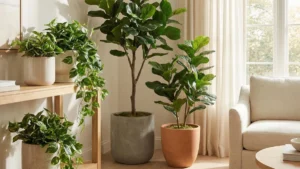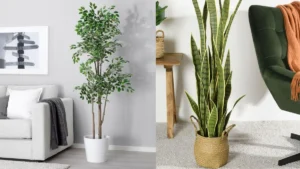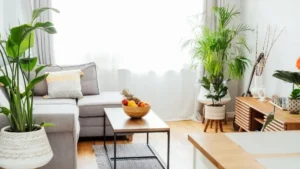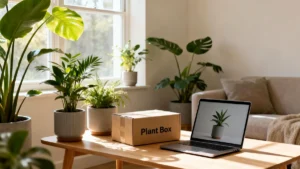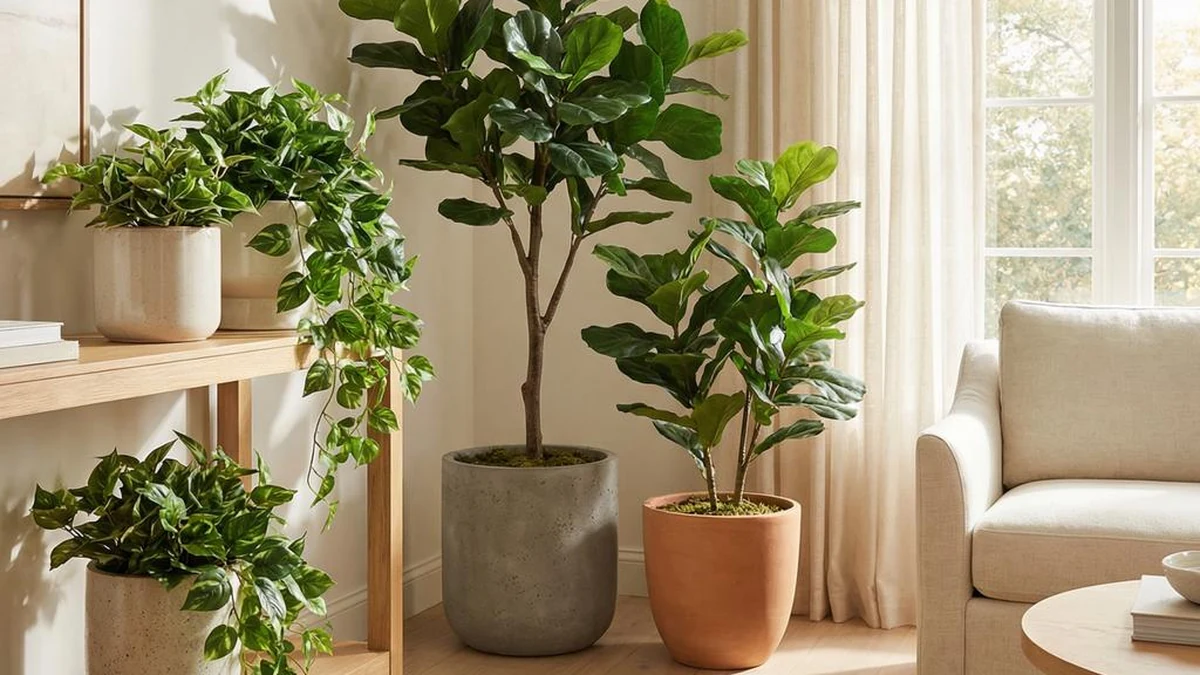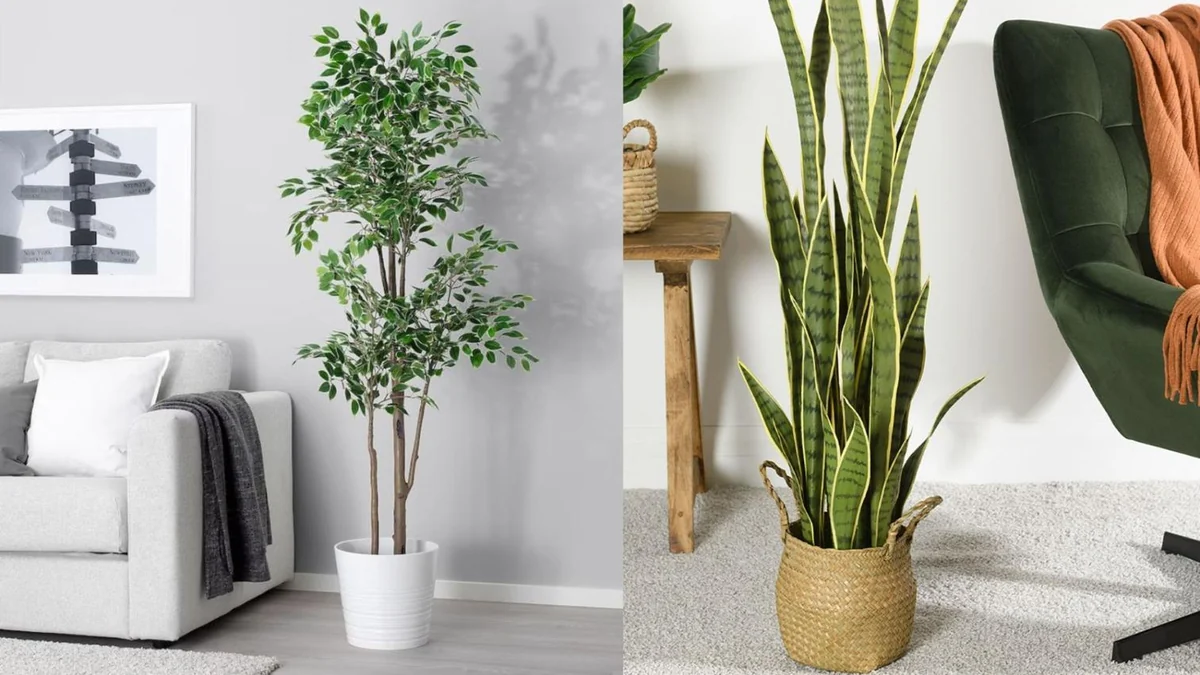

The best artificial plants for home decor look believable in your space. Focus on four details: realistic leaf texture, flexible stems, natural color variation and the right size. Pair the plant with a suitable pot, place it where living plants would struggle, and clean it regularly to keep it looking convincing.
Instead of recommending products from particular retailers, this guide explains what to look for before buying. You’ll learn how to judge artificial foliage, style it naturally, choose the right location and maintain its appearance.
If you are still deciding whether artificial or living greenery suits your home, read our artificial plants vs real plants comparison. This guide focuses on choosing and styling artificial plants once you have made that decision.
What Makes Artificial Plants Look Real?
A convincing artificial plant depends on more than its overall shape. Look closely at its material, construction, color and proportions.
1. Choose realistic leaf materials
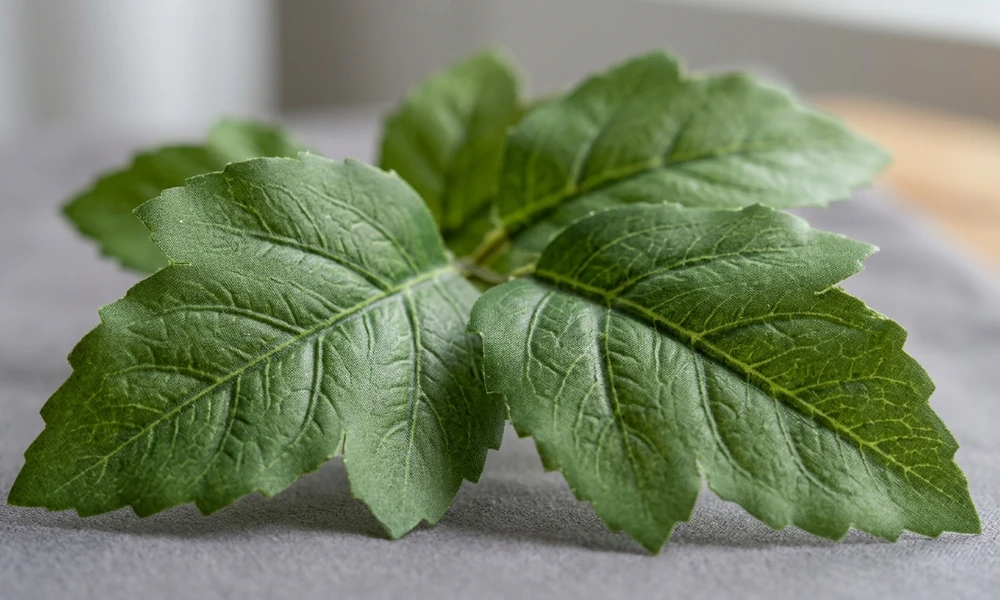
Artificial foliage is commonly made from plastic, polyethylene, fabric or silk-like materials. Some molded-plastic and polyethylene leaves are marketed as “real touch” because they can reproduce surface details and textures more closely than flat fabric.
Look for:
- Visible leaf veins and natural surface texture.
- A finish that is mostly matte rather than excessively shiny.
- Leaves with realistic thickness and edges.
- A material that feels appropriate for the plant’s appearance.
Fabric foliage can still work well on high shelves or in places where people view it from a distance. For a large floor plant or a piece placed near eye level, inspect the leaf texture more carefully.
2. Look for flexible stems and natural asymmetry
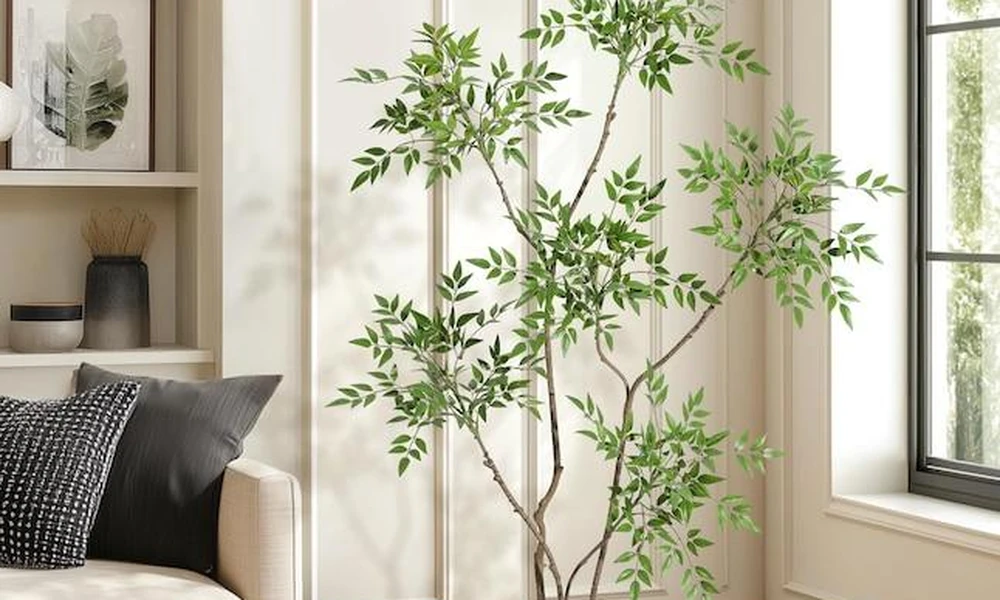
Real plants rarely grow in perfectly even shapes. Their stems point in different directions, and their leaves sit at different heights.
Artificial plants with wired stems are easier to arrange because you can gently adjust their shape. After unpacking, separate crowded branches, vary the leaf angles and avoid making both sides look identical.
Do not force a stem if its construction does not allow bending. Some artificial plants have fixed joints that can break under pressure.
3. Check the color variation
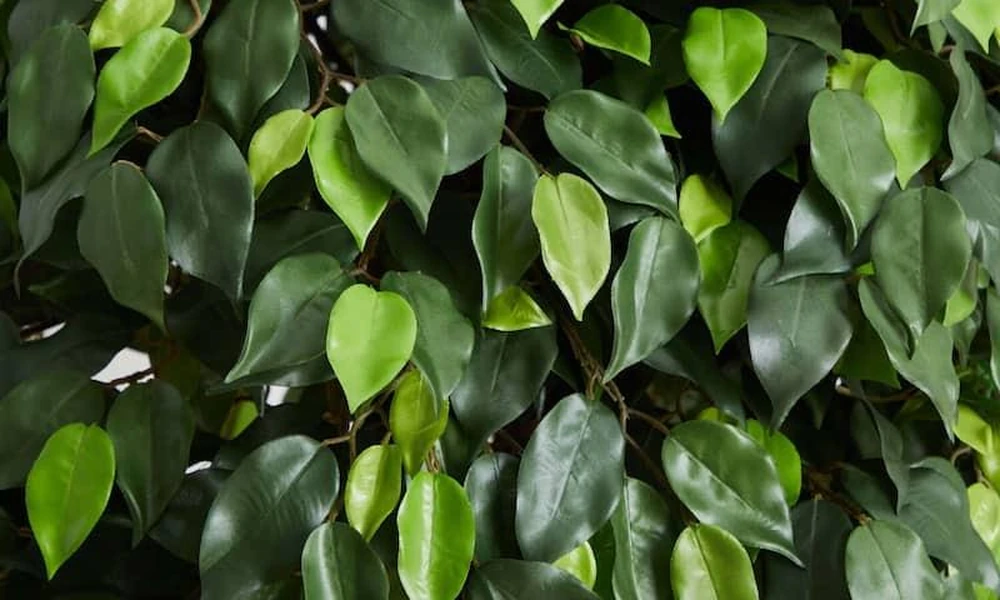
A single, uniform shade of green can make artificial foliage look flat. Realistic-looking pieces often include subtle differences between mature leaves, newer growth and shaded areas.
Before buying, check product photographs for:
- More than one shade of green.
- Natural-looking lighter and darker areas.
- Subtle color changes along the leaves.
- A finish that does not look overly glossy.
Be cautious with heavily edited product photographs. Zoom in on close-up images where possible, and look for pictures that show the plant from more than one angle.
4. Match the plant to the available space
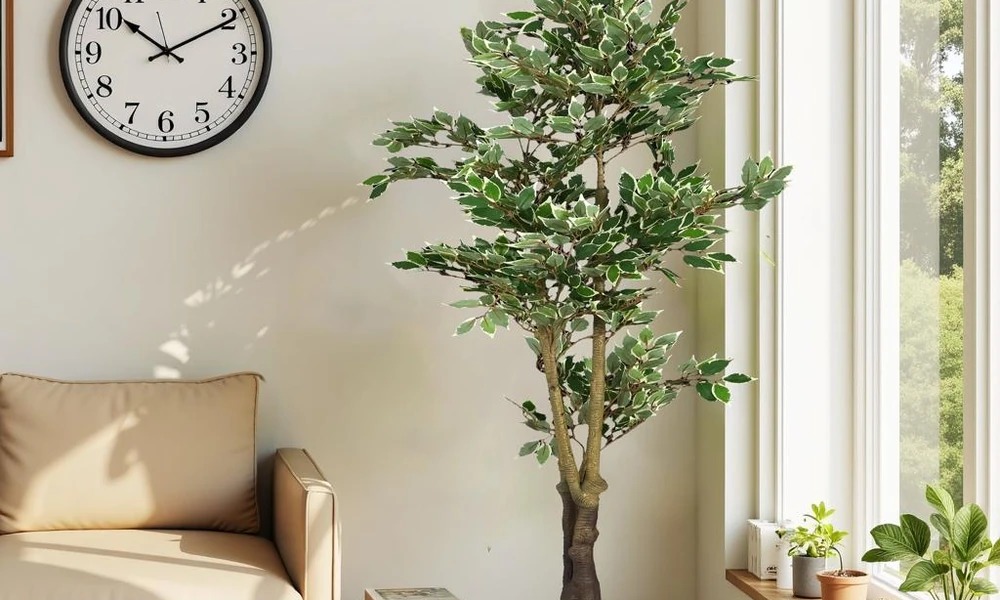
A plant can look realistic on its own but still look wrong in a room if it is too large or too small.
Measure the available height and width before choosing a floor plant, tabletop arrangement or shelf piece. Leave some visible space around it rather than filling every corner.
For example, a tall artificial tree may suit an open living-room corner, while a compact leafy arrangement may work better on a console table. The goal is proportion, not maximum size.
The Pot Matters as Much as the Plant
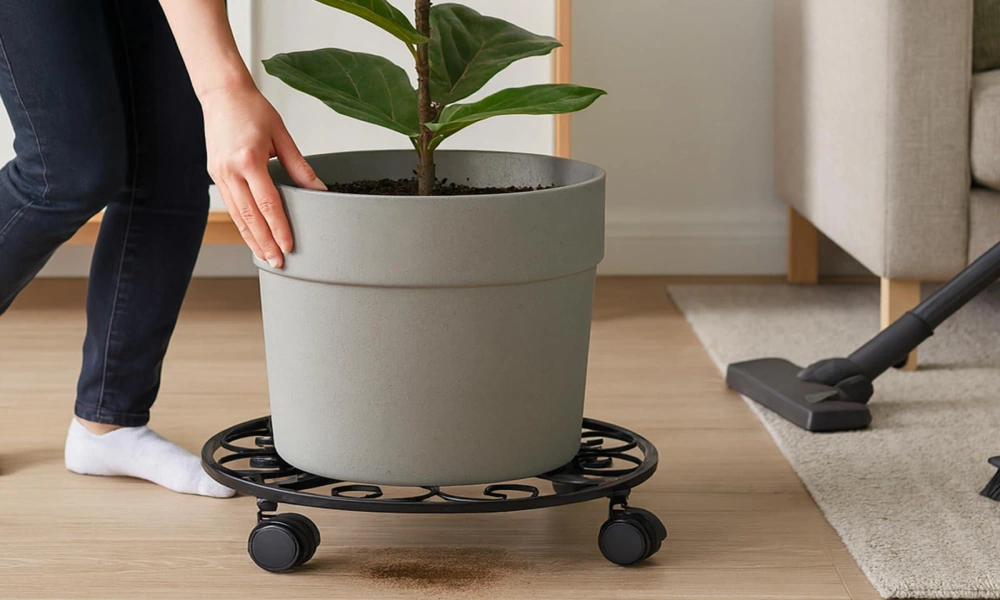
A convincing artificial plant can still look cheap if it sits in a thin, exposed plastic nursery pot. The container is part of the overall arrangement, so treat it as a styling choice rather than an afterthought.
Ceramic, terracotta, stone-effect and woven containers can all work. Choose a finish that suits the room and complements the foliage.
For more inspiration, explore these creative planter ideas.
Finish the base properly
Many artificial plants arrive fixed into foam or a basic plastic base. Leaving that material exposed makes the arrangement look unfinished.
You can cover the visible surface with:
- Decorative pebbles.
- Bark chips.
- Preserved moss.
- Suitable decorative stones.
- A layer of clean potting material used only as a visual dressing.
Make sure the plant is stable before adding decorative material. A tall or top-heavy arrangement may need a heavier outer container or a secure internal support.
Choose a container that suits the plant
Use the plant’s shape to guide your pot choice. A tall, narrow plant may look balanced in a simple cylindrical container, while a broad leafy arrangement can suit a wider pot.
Avoid combining too many competing textures. If the foliage is detailed, a simple container often gives it room to stand out.
Best Placement for Artificial Plants at Home

Artificial plants are especially useful in places where living plants may struggle because of poor light, limited access or inconsistent care.
| Location | Why artificial plants work | Styling suggestion |
| Dark corners | Living plants may not receive enough usable light | Use a medium or tall floor plant with a finished base |
| Windowless rooms | There may be too little natural light for most living foliage | Choose a compact arrangement with realistic leaves |
| High shelves | Watering and routine care can be inconvenient | Use lightweight foliage viewed from a distance |
| Guest rooms | The room may not receive regular attention | Choose a simple arrangement that needs little maintenance |
| Hallways | Narrow spaces can limit plant-care access | Use a slim plant that does not obstruct movement |
| Home staging | Greenery can add visual interest without watering | Use balanced arrangements that suit the room’s scale |
Dark corners and windowless rooms
A dark corner is one of the most practical places for artificial greenery. Living plants need suitable light to remain healthy, and a location that looks bright to the eye may still be too dim for many species.
Artificial foliage can add color and texture without needing a grow light or regular watering. For a room that also contains living greenery, our guide to low-light indoor plants can help you distinguish between genuinely suitable plants and places better served by artificial alternatives.
Living rooms and open spaces
In a living room, use artificial plants to balance furniture and fill an empty area without crowding the layout.
A tall plant can soften an unused corner. A smaller arrangement can add detail to a side table or shelf. Keep the plant in proportion to nearby furniture, and avoid placing it where people regularly walk.
For a more coordinated look, our guide to modern green interior design explains how greenery can work with the wider room scheme.
Bathrooms and humid spaces
Artificial plants can be useful in bathrooms where natural light is limited. However, moisture and poor ventilation can still affect some materials, finishes and adhesives.
Choose a piece with materials suitable for the location, keep it away from direct water spray and check it occasionally for dust or residue. Do not assume every fabric or silk-style plant is suitable for a damp room.
High shelves and hard-to-reach areas
High shelves are a good place for smaller artificial plants. Because the foliage is viewed from a distance, minor texture differences may be less noticeable.
Choose a lightweight piece that sits securely. Avoid arrangements that extend too far over the edge or could fall when someone reaches for nearby items.
How to Care for Artificial Plants
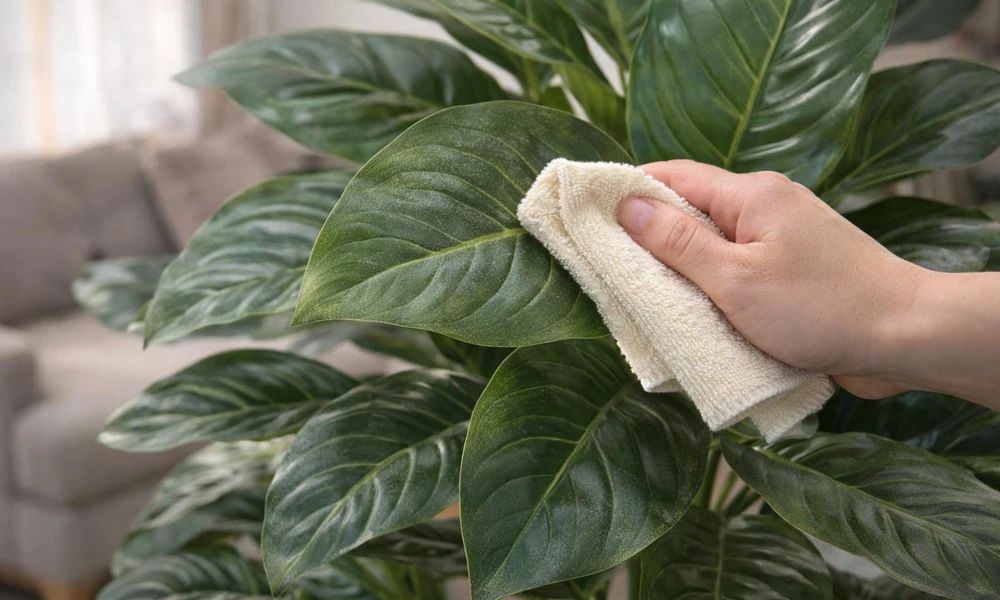
Artificial plants do not need watering, pruning, or fertilizer, but they still collect dust. A simple cleaning routine helps preserve their appearance.
Dust the leaves regularly
Dust can settle on leaves and make their color and texture look dull. A light clean every few weeks or about once a month is a useful starting point. Dust more often if the plant is near an open window, entrance or busy area.
Use a method that suits the material:
- Microfiber cloth: Useful for broad, smooth leaves.
- Soft duster: Convenient for quick cleaning.
- Soft brush: Helps reach small leaves and detailed foliage.
- Gentle cool air: Can help remove dust from dense arrangements if the material is suitable.
Work gently and support delicate branches while cleaning.
Use water only when the material allows it
Not every artificial plant can be rinsed or soaked. Fabric, silk-style leaves, coatings, wire and glued joints may react differently to moisture.
Check the care instructions first. If damp cleaning is allowed, test a hidden area and use a lightly damp cloth rather than soaking the entire plant.
For more detailed cleaning guidance, see this artificial plant cleaning guide. The safest method still depends on the specific plant’s materials and construction.
Keep artificial foliage away from prolonged direct sunlight
Artificial leaves do not need sunlight. Prolonged exposure to strong direct sun can fade some synthetic materials and finishes.
Bright indirect light is generally a better display location. If a plant must sit near a sunny window, check whether the manufacturer specifies UV-resistant construction. Treat UV-resistance claims as product-specific rather than assuming all artificial foliage has the same protection.
Once a plant has visibly faded, cleaning will not restore its original color.
Reshape the foliage when needed
Stems can shift during handling, storage or cleaning. Gently adjust flexible branches to restore the arrangement’s shape.
Keep the result slightly uneven. A natural-looking arrangement usually has varied leaf angles and heights rather than a perfectly rounded outline.
What to Check Before Buying Artificial Plants

Use this checklist before placing an order or choosing a plant in a store.
- Material: Check whether the foliage is molded plastic, polyethylene, fabric or another material.
- Leaf texture: Look for visible veins, natural edges and a suitable surface finish.
- Stem construction: Check whether the stems can be adjusted without damaging the plant.
- Color variation: Avoid foliage that appears uniformly bright or glossy.
- Size: Measure the space and compare it with the plant’s listed height and width.
- Base and trunk: Inspect how the plant is attached and whether the visible base can be finished neatly.
- Care instructions: Confirm whether the plant can be dusted, wiped or exposed to moisture.
- Sunlight suitability: Check for specific UV-resistance information if it will be displayed near strong sunlight.
- Product photographs: Look for close-ups and images from several angles rather than relying on one heavily styled photograph.
- Stability: Consider the weight of the plant and whether its pot or base will keep it upright.
Remember that product descriptions and photographs are supplied by sellers. Compare the details carefully, especially when a listing uses broad terms such as “realistic,” “premium” or “UV protected” without explaining what they mean.
FAQ: Artificial Plants for Home Decor
What are the most realistic artificial plants made of?
Molded plastic and polyethylene can reproduce leaf texture and detail, although quality varies by construction and finish.
Do artificial plants fade in sunlight?
Some synthetic foliage fades with prolonged direct sun, so check for UV-resistance information before placing it near a sunny window.
How do you make an artificial plant look real?
Arrange flexible stems asymmetrically, choose a realistic pot and cover any exposed foam or plastic at the base.
How often should you dust artificial plants?
Every few weeks or about once a month is a practical starting point, with more frequent cleaning in dusty rooms.
Where should artificial plants go in a home?
They work well in dark corners, windowless rooms, high shelves, guest rooms and other places where living plants may be difficult to maintain.
Can artificial plants go in bathrooms?
Yes, if their materials suit the room, but keep them away from direct water spray and check for moisture-related wear.
Final Thoughts
The best artificial plants for home decor are not necessarily the largest or most expensive. Realistic materials, flexible construction, natural color variation, and correct proportions make a bigger difference.
Choose a pot that completes the arrangement, place the plant where it makes practical sense and keep dust from building up. These simple decisions can make artificial greenery look more considered and less like a temporary decoration.
Disclaimer: Artificial plant materials and care requirements vary by product. Follow the manufacturer’s instructions, especially before using water or placing a plant near direct sunlight.