
Hanging planters for indoor plants work best when you choose a secure mounting method, make watering easy, and select plants that suit the available light. Before hanging a pot, check how much it weighs when wet and what supports the hook. Then choose a plant that naturally trails or has arching leaves.
A good setup should look attractive without creating problems later. You should be able to water the plant without soaking the floor, reach it for pruning, and keep it away from pets if the leaves are toxic.
Key Takeaways
- Choose a hanging planter based on the plant’s mature size, weight, root space, and watering needs.
- Make sure the ceiling hook, wall bracket, or hanging support can safely hold the planter’s total weight, including wet soil.
- Select plants that suit the available light and the location’s temperature and humidity.
- Use a pot with suitable drainage to reduce the risk of waterlogged soil and root problems.
- Consider trailing plants when you want foliage to cascade naturally from a shelf, ceiling, or wall-mounted planter.
- Leave enough space around hanging plants for watering, pruning, cleaning, and routine inspection.
- Check the planter and its support regularly to keep the setup stable and prevent water damage.
Types of Hanging Planters for Indoor Plants
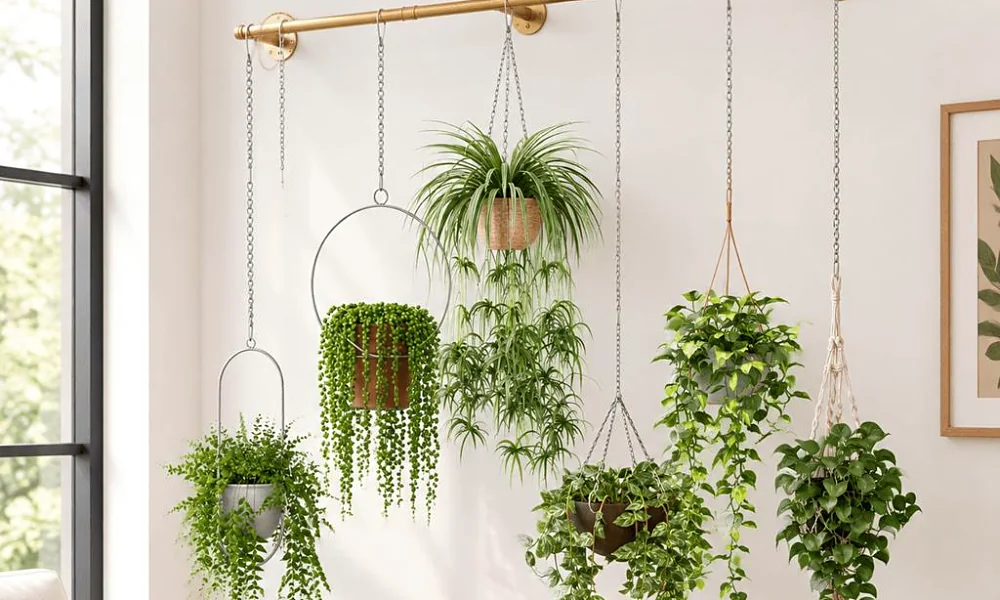
Hanging planters come in several styles. The right choice depends on your room, the plant’s weight, and whether you can drill into the ceiling or wall.
| Planter type | How it works | Best use |
| Ceiling-hook planter | Hangs from a hook fixed into a ceiling joist or suitable anchor | Larger displays and trailing plants |
| Macramé hanger | Holds a pot inside a knotted cord cradle | Lightweight pots and decorative displays |
| Wall-mounted planter | Attaches to a wall with suitable screws and anchors | Small rooms and vertical displays |
| Tension-pole system | Uses pressure between the floor and ceiling to support hooks | Rental homes and multiple lightweight plants |
| Window-frame hanger | Uses a suitable tension rod or frame-mounted support | Plants that need brighter window light |
A macramé hanger can change the look of a plain pot without requiring a new planter. However, the cord does not make a weak ceiling hook stronger. The hook and the surface supporting it still carry the full load.
If you want to make this style yourself, the macramé plant hanger project is a useful starting point.
How to Install Hanging Planters Safely
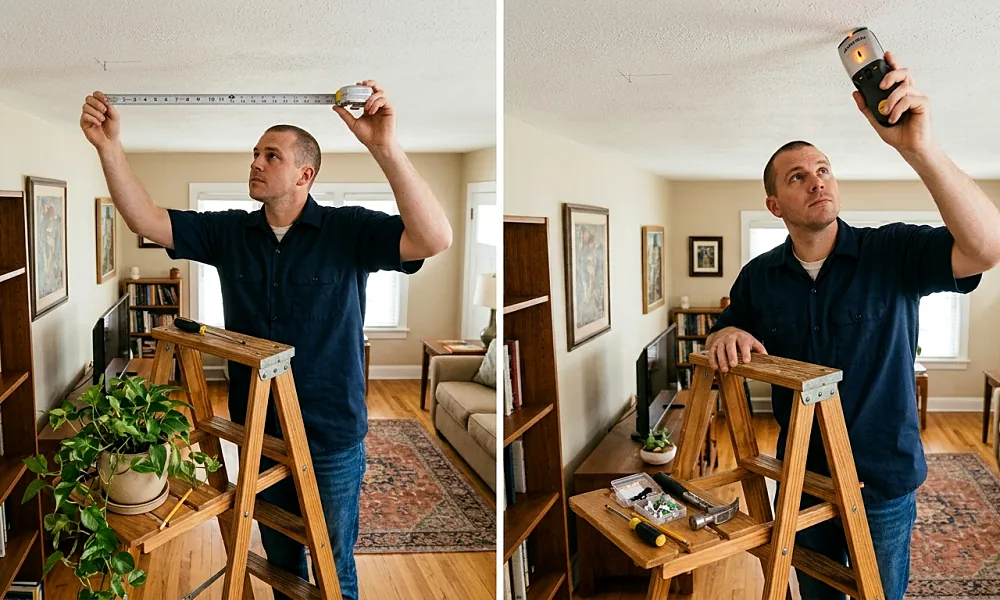
The most important part of installation is the material behind the ceiling or wall. A strong-looking hook can still pull out if it is fixed into the wrong surface.
Check the total weight before choosing a hook
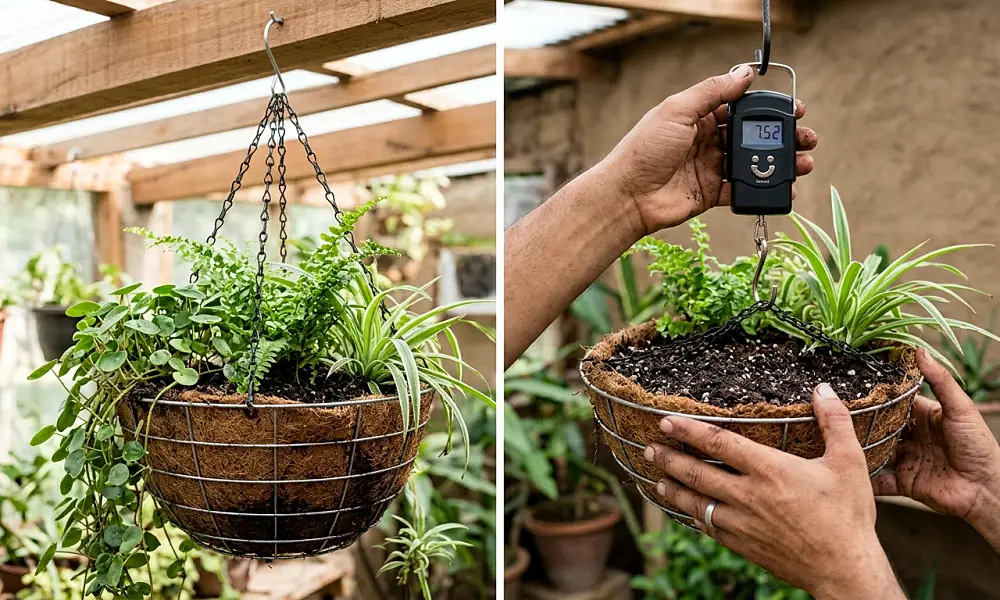
Do not calculate the load using the empty pot alone. Add together:
- The planter or basket
- The potting mix
- The plant
- Water held in the soil
- Any liner or decorative material
A pot becomes heavier after watering. Choose mounting hardware with a suitable load rating for the complete setup, and follow the manufacturer’s installation instructions.
Use a ceiling joist when possible
For a heavier planter, fixing the hook into a ceiling joist is generally a more secure option than relying on unsupported drywall.
Use a stud finder to locate the joist, check that the selected hardware is suitable for the material, and drill a pilot hole if the manufacturer’s instructions require one.
Choose the right anchor for hollow drywall
If there is no joist in the desired position, a suitable hollow-wall anchor may be an option. Toggle-style anchors use wings that open behind the drywall and spread the load across a wider area.
However, not every anchor is suitable for overhead use. Check its stated rating, installation requirements, and whether the manufacturer approves it for the intended application. Do not assume that a rating for a wall-mounted load automatically applies to a ceiling.
The Home Depot’s hanging plant installation advice can help you understand the basic installation process.
Important: If the ceiling is cracked, damaged, unusually thin, or made from an unfamiliar material, get advice from a qualified installer before attaching a planter. Never hang a heavy pot above a bed, sofa, or frequently used walkway unless the support has been properly assessed.
No-Drill Hanging Planter Ideas for Renters
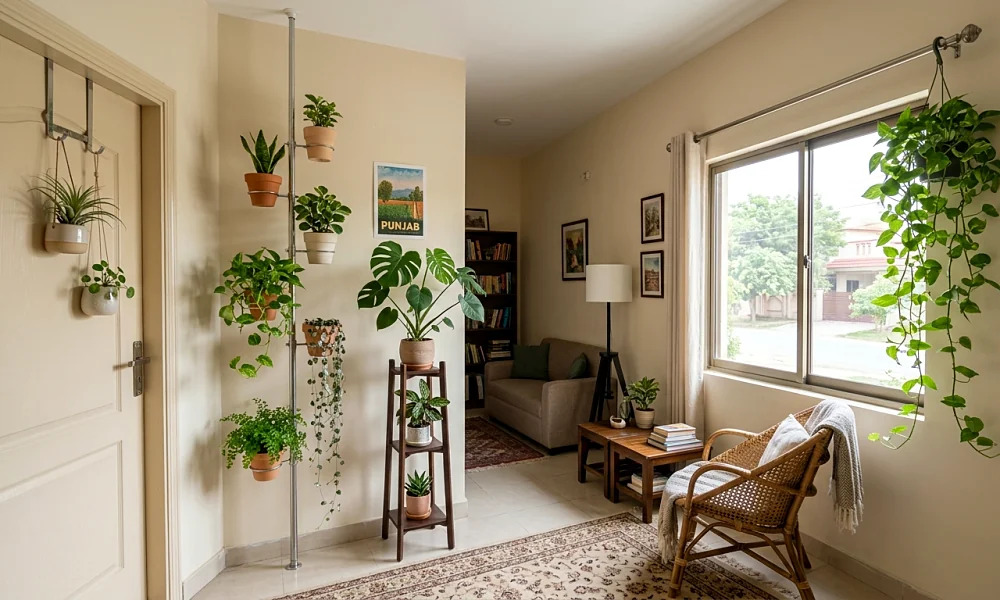
You can display indoor plants vertically without drilling holes. The key is to choose a support that can safely carry the weight of the pot.
Here are some practical options:
- Floor-to-ceiling tension poles: These use pressure between the floor and ceiling. Choose a model with secure fittings and stay within its stated weight limit.
- Over-door hooks: These can hold a lightweight planter if the door and hook are designed for that purpose. Check that the door closes properly.
- Curtain-rod or window-frame supports: A sturdy rod can support small plants when its brackets and load rating allow it.
- Adhesive hooks: Reserve these for very light decorative items. Do not trust an adhesive hook with a heavy, wet planter or use it overhead unless its manufacturer explicitly approves that application.
- Freestanding plant stands: If hanging is not safe or practical, a floor display can create a similar effect. You can explore plant stand ideas for an alternative.
Before using any no-drill option, check its weight limit and the condition of the surface. A support that works for an empty basket may not be safe once the plant has grown and the soil is wet.
How to Water Hanging Plants Indoors Without Making a Mess
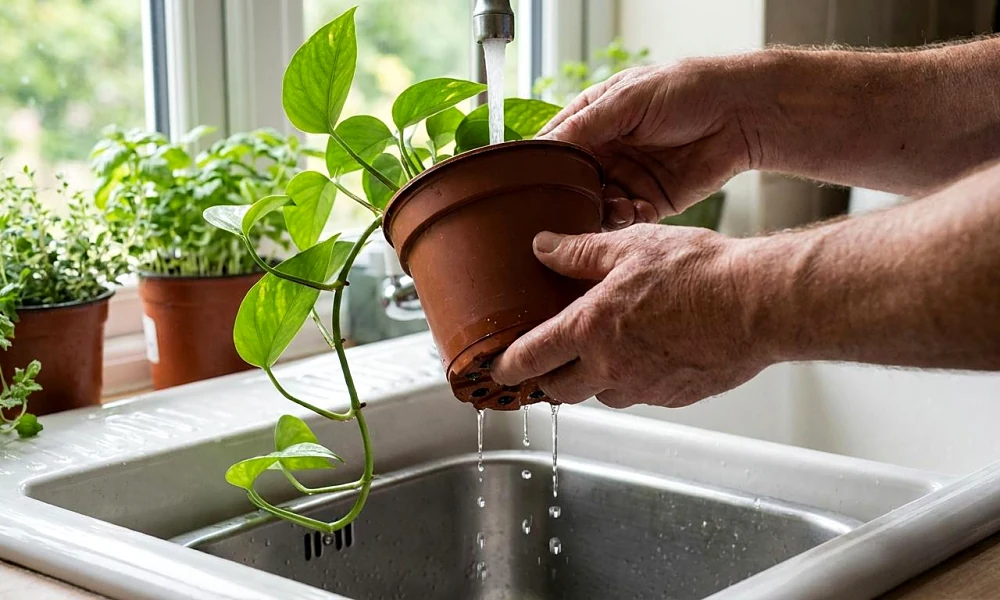
Watering is one of the main practical challenges with hanging planters. You need to reach the soil, allow excess water to drain, and prevent runoff from reaching floors, furniture, or walls.
There are three useful ways to manage it.
1. Remove the planter before watering
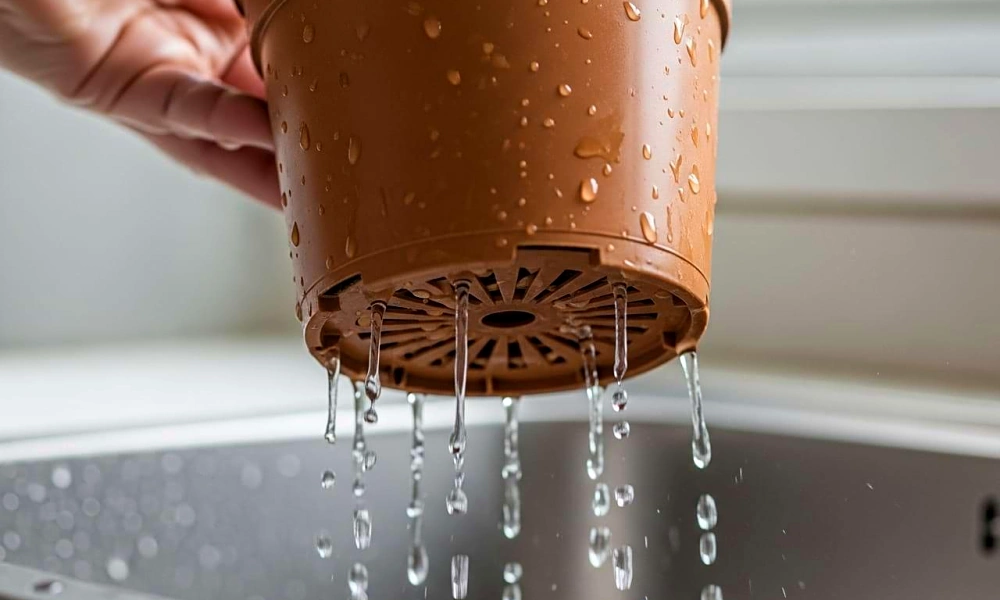
If the hanger is easy to unhook, take the pot down and place it in a sink or suitable basin. Water the soil evenly, allow excess water to drain, and return the planter only when it has stopped dripping.
This method gives you the best control over runoff. It is especially useful for small and medium-sized pots.
2. Use an inner pot with drainage
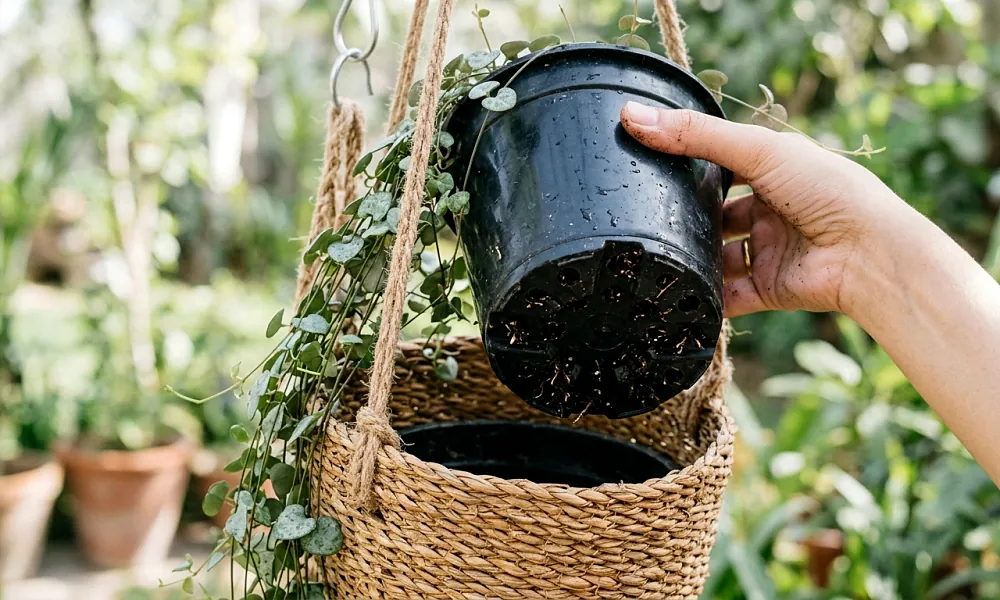
Place a nursery pot with drainage holes inside a decorative hanging basket. When the plant needs watering, remove the inner pot and water it separately.
This makes it easier to inspect the roots, check the soil, and prevent water from collecting inside a decorative container.
Do not leave the inner pot sitting in standing water. Empty the outer container after watering.
3. Water in place carefully
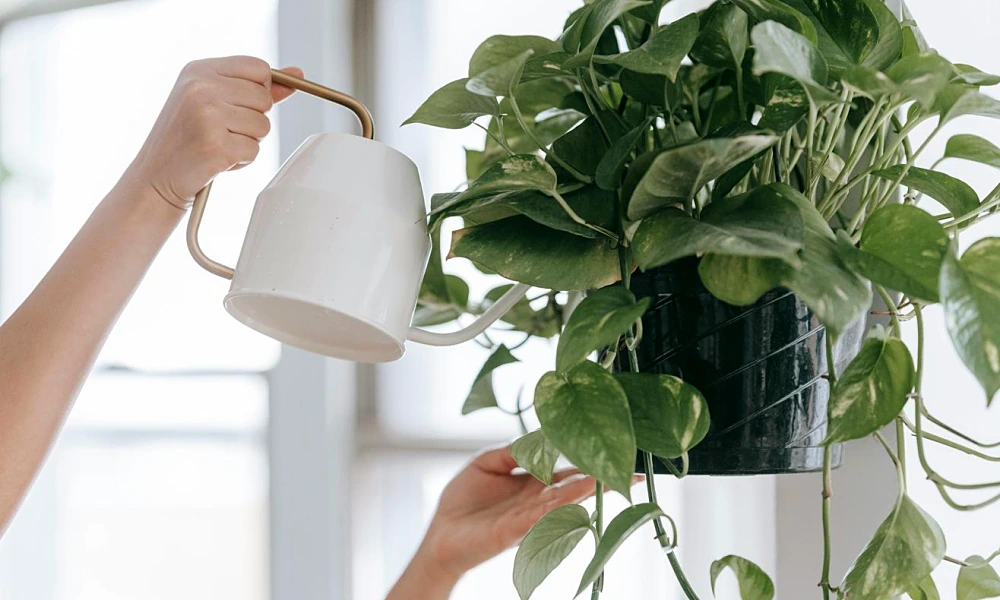
If you cannot remove the planter, use a long-spout watering can and pour slowly near the soil rather than over the leaves.
A removable drip tray or suitable liner can catch some runoff, but you must still empty it. A decorative basket is not automatically waterproof.
How often should you water hanging plants?
There is no reliable watering schedule that works for every hanging plant. The pot size, soil mix, plant type, temperature, airflow, and season all affect how quickly the soil dries.
Check the soil before watering. For many houseplants, the upper layer should feel dry before you water again, although moisture needs vary by species.
A small hanging pot may need checking more often than a large floor pot because it contains less soil. However, do not water simply because a fixed number of days has passed. Use the plant and soil as your guide.
For more detail on timing, see the indoor plant watering schedule.
Best Plants for Hanging Planters Indoors
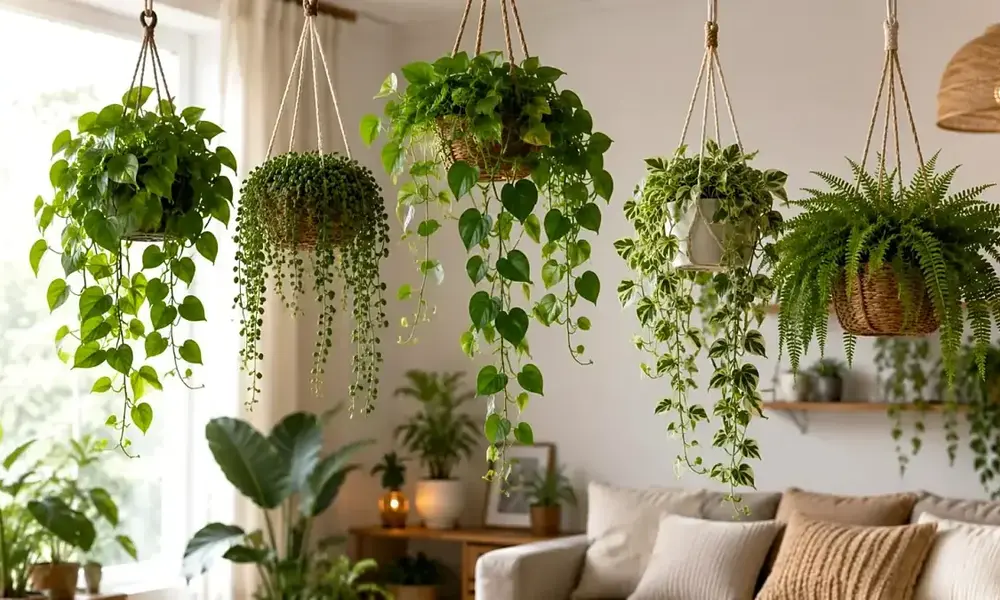
The best plants for hanging planters usually have trailing stems, arching leaves, or a natural growth habit that looks attractive above eye level. Before choosing one, check its light needs and whether it is suitable for a home with pets.
Pothos
Pothos is a popular hanging plant because its stems grow outward and downward. It can work in bright, indirect light and tolerate lower-light conditions, although growth may slow when light is limited.
Its trailing stems make it suitable for shelves, baskets, and ceiling planters. Trim long stems when they become difficult to manage.
Pet warning: Pothos is toxic to cats and dogs if chewed. Keep it out of reach and consider a different plant if pets can access fallen leaves.
Spider Plant
The spider plant is a good choice for hanging baskets because its long, arching leaves naturally spill over the edge. Mature plants can also produce small plantlets that hang from the parent plant.
Give it bright, indirect light for good growth. Avoid placing it where strong direct afternoon sunlight can scorch the leaves.
Spider plants are generally listed as non-toxic to cats and dogs, making them a more suitable choice for many pet-owning households.
Boston Fern
A Boston fern creates a full, leafy display. Its soft fronds spread outward and hang over the sides of a basket.
It generally needs more consistent moisture and humidity than pothos or spider plants. A hot, dry position near a ceiling vent or radiator may not suit it. Check the soil regularly and avoid letting the root ball dry out completely.
Boston ferns are generally considered non-toxic to cats and dogs.
Heartleaf Philodendron
The heartleaf philodendron has heart-shaped leaves and trailing stems, so it works well in a hanging planter.
It usually grows well in bright, indirect light and can tolerate some lower light. However, very dark positions can lead to weak growth and fewer leaves.
Pet warning: Philodendrons are toxic to cats and dogs if chewed. Keep the plant away from pets and children who may handle or eat the leaves.
String of Pearls
String of pearls has small, rounded leaves along long trailing stems. It creates a distinctive hanging display, especially near a bright window.
Unlike ferns, it is a succulent and needs a well-draining potting mix. Allow the soil to dry between waterings. Frequent watering or a container that holds excess moisture can cause root problems.
Pet warning: String of pearls is toxic if ingested by pets. Avoid it in areas where cats or dogs can reach the plant or fallen stems.
Check plant safety before choosing
A hanging position does not make a toxic plant safe. Leaves can fall, stems can grow downward, and pets may reach the plant by climbing nearby furniture.
Check the ASPCA’s toxic and non-toxic plant database before bringing a plant into a home with pets. If you are unsure about a plant’s identity or toxicity, do not rely on its common name alone.
Light and Temperature Near the Ceiling
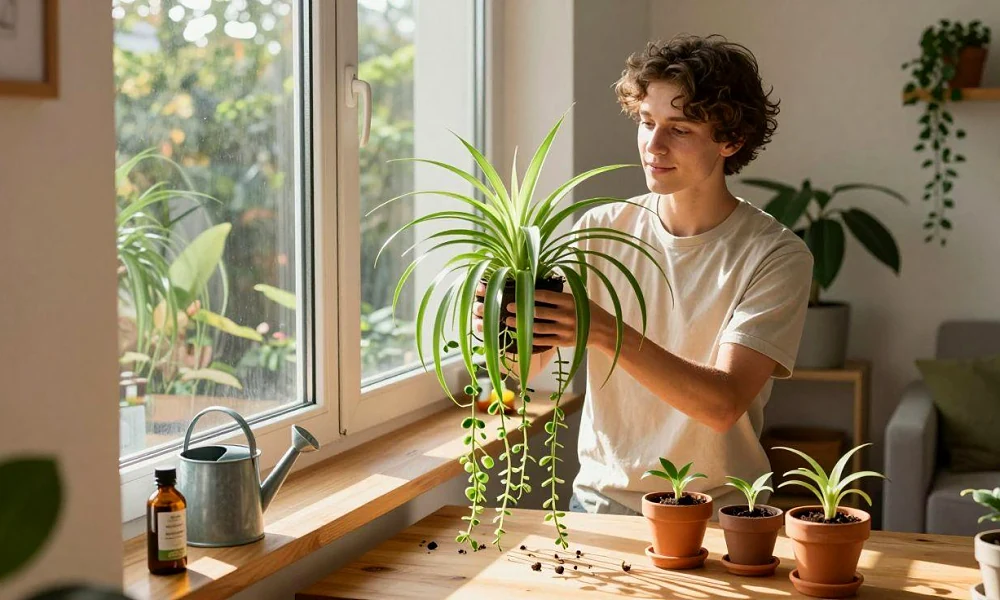
A plant’s position near the ceiling can affect its growing conditions. The light may be different from the light available on a lower shelf, and the plant may sit closer to warm air from heating equipment.
Before installing a hanger, look at the position throughout the day.
Check the available light
A spot that looks bright to you may not provide enough light for a plant. Observe whether the area receives direct sunlight, bright indirect light, or mostly shade.
- Bright indirect light: Often suitable for pothos, spider plants, and heartleaf philodendrons.
- Brighter window positions: Can work for spider plants and some succulents, depending on how much direct sun reaches the leaves.
- Lower-light positions: May suit pothos and heartleaf philodendrons better than plants that need stronger light, but low light does not mean complete darkness.
If you are unsure about the light in your room, compare the location with the needs of the plant before installing the hook.
Watch for heat and dry air
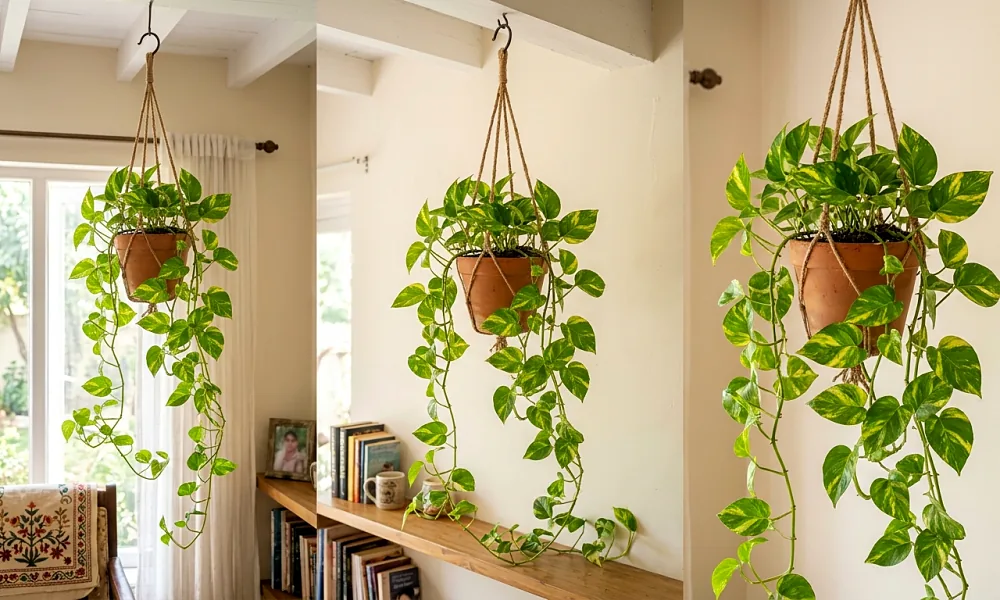
A hanging pot placed near a ceiling vent, heater, or warm window can experience more heat and airflow than a pot on a lower surface. This can affect how quickly the soil dries.
Check the soil instead of assuming that every hanging plant needs extra water. If the plant repeatedly dries out too quickly, move it away from direct heat or consider a slightly larger pot, provided the support can carry the extra weight.
Avoid harsh direct sunlight
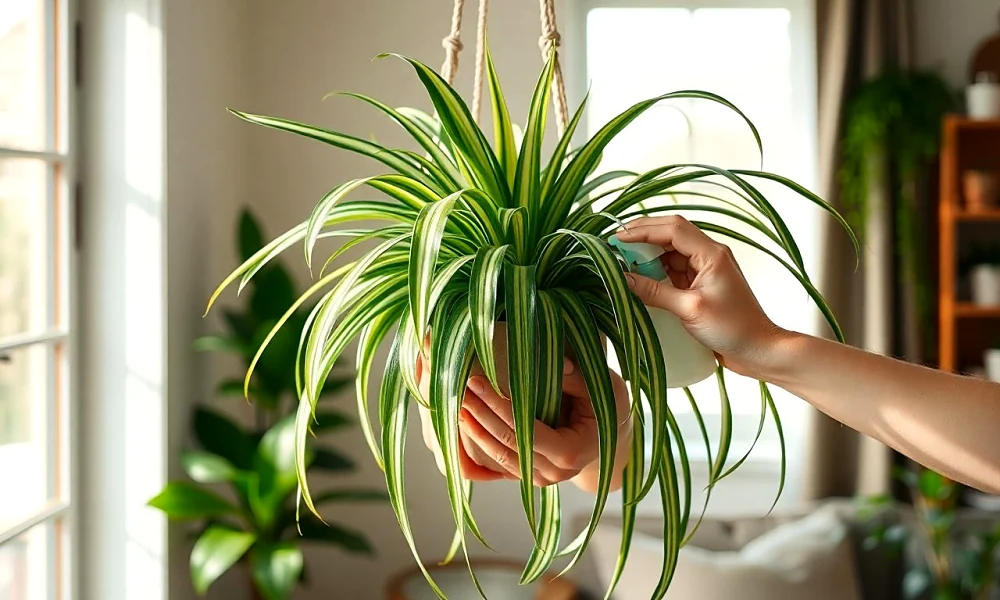
Some plants tolerate direct sun better than others. A small pot hanging directly behind hot glass may become warm quickly, especially during summer.
Watch for pale, scorched, or crispy leaves. If these appear, move the planter farther from the glass or choose a position with filtered light.
Common Hanging Planter Mistakes to Avoid
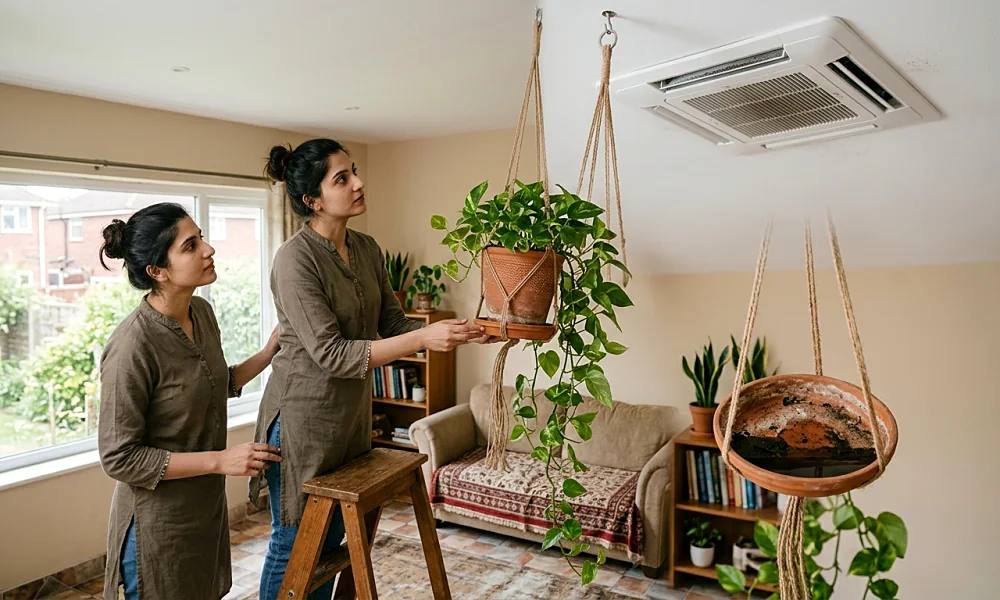
A few simple mistakes can make a hanging display difficult to maintain or unsafe.
- Choosing a hook before weighing the planter: The wet setup can be much heavier than the empty pot.
- Relying on weak drywall or adhesive: A decorative hook is not necessarily a load-bearing support.
- Ignoring drainage: Water that collects inside a decorative basket can damage roots and nearby surfaces.
- Hanging plants too high: You still need to reach the plant for watering, pruning, and pest checks.
- Choosing a plant for appearance alone: A beautiful plant will struggle if the light and moisture conditions do not suit it.
- Ignoring pets: Toxic leaves can fall within reach even when the planter is mounted high.
- Placing plants near heating vents: Warm, moving air can make moisture management harder.
The best hanging display is one you can safely reach and maintain. If watering or checking the plant becomes difficult, lower the hanger or move it to a more practical position.
Conclusion
Hanging planters can make better use of vertical space and bring greenery into corners that ordinary pots cannot reach. Start by choosing a safe support, then plan how you will water and drain the pot. Finally, select a plant that suits the light, temperature, and pet conditions in your home.
Pothos, spider plants, Boston ferns, and heartleaf philodendrons can all create attractive hanging displays, but they do not have the same care or pet-safety needs. Match the plant to the room rather than choosing by appearance alone.
FAQ: Hanging Planters for Indoor Plants
How do you hang plants from the ceiling without drilling?
Use a suitable floor-to-ceiling tension pole, an approved over-door hook, or a sturdy window-frame support. Keep the planter within the support’s stated weight limit. Adhesive hooks should not carry heavy or wet planters overhead unless the manufacturer specifically approves that use.
How much weight can a ceiling hook hold?
There is no single weight limit for all ceiling hooks. The safe load depends on the hook, fastener, installation method, and material behind the ceiling. Check the manufacturer’s rating for the exact installation and account for the planter’s weight after watering.
How do you water hanging plants indoors?
Take the planter down and water it in a sink when possible. If you cannot remove it, use a long-spout watering can and a suitable drip tray or liner. Always allow excess water to drain and empty collected runoff.
Are hanging plants safe for cats and dogs?
Some are, but others are toxic. Spider plants and Boston ferns are generally considered non-toxic to cats and dogs. Pothos, philodendrons, and string of pearls are toxic if eaten. Check the plant’s identity and keep toxic plants away from pets.
Why does my hanging plant dry out so quickly?
Small pots hold less soil and therefore have less moisture available to the roots. Warm air, strong airflow, direct sunlight, and a fast-draining potting mix can also speed up drying. Check the soil and adjust the plant’s position or pot size if needed.
Can any indoor plant grow in a hanging planter?
Not every plant is a good choice. Trailing plants and plants with arching leaves usually look best because their growth can spill over the container. Upright or heavy plants may be awkward to display overhead and can require stronger supports.
Disclaimer: This article is for general educational purposes. Plant care needs vary by species and growing conditions. Always follow the manufacturer’s instructions for hanging hardware, and consult a qualified professional if you are unsure whether a ceiling or wall can safely support a planter. Keep toxic plants away from pets and children.