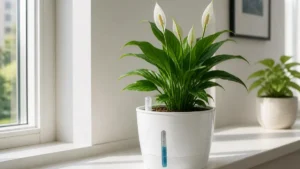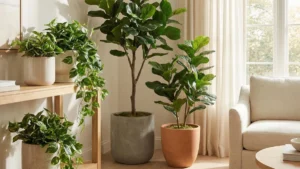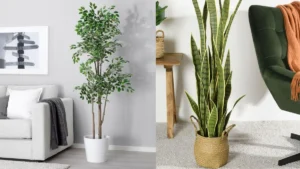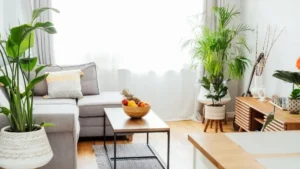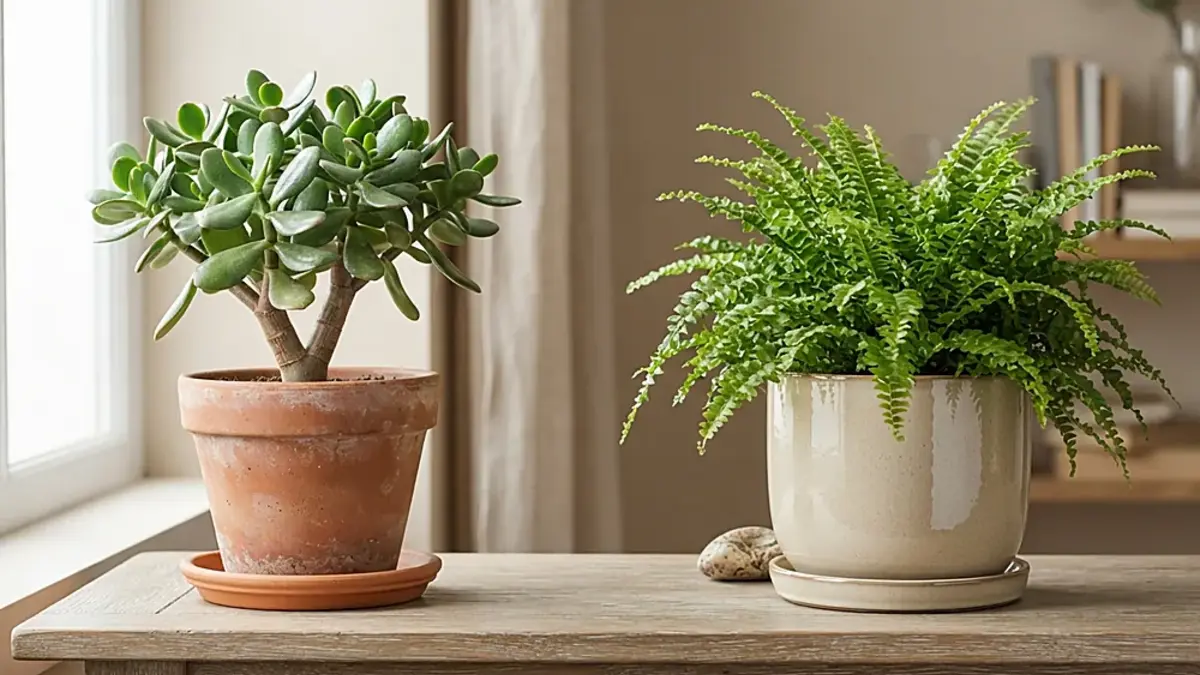

Decorative indoor plant pots can make houseplants look more attractive, but the safest setup is usually a two-pot system. Keep the plant in a nursery pot with drainage holes, then place that pot inside your decorative container. This gives you more styling choices while allowing excess water to drain away.
The important part is choosing the right size, understanding how each material handles moisture, and preventing water from collecting around the roots or damaging your floors. Here is how to make decorative pots work without sacrificing plant health.
How Decorative Plant Pots Actually Work: The Cache-Pot System

A cache pot is a decorative outer container that holds a separate growing pot. The inner pot is usually plastic or clay and has drainage holes. The outer container provides the appearance you want without needing to function as the plant’s growing pot.
This setup is useful because many attractive indoor containers do not have drainage holes. Without an exit for excess water, moisture can collect around the roots and increase the risk of root rot.
How to use a cache pot correctly
Follow these steps:
- Keep your plant in a nursery pot with drainage holes.
- Choose a decorative container wide enough to hold the nursery pot comfortably.
- Place the inner pot inside the decorative container.
- Water the plant over a sink or in another suitable area.
- Allow excess water to drain fully.
- Return the inner pot to the decorative container.
- Check the bottom of the outer pot regularly and remove any collected water.
You can also water the plant while it is inside the decorative container, but you must remove the inner pot afterward and empty any water that has collected outside it.
The main rule is simple: the roots should not sit in standing water. A decorative pot does not remove the need for proper drainage.
Should you drill drainage holes in a decorative pot?
You can drill holes if the material and construction allow it. However, drilling may crack ceramic, damage a finished surface or ruin a container you want to keep decorative.
A cache-pot setup is often easier. You can remove the growing pot for watering, cleaning and repotting without disturbing the outer container.
Should you put gravel at the bottom?
There is an important difference between using gravel inside a growing pot and using it in an outer decorative container.
Adding gravel beneath potting soil inside a pot does not improve drainage. Water can collect in the soil above the gravel, leaving the root zone wetter than expected. Iowa State University Extension explains this issue in its guide to caring for houseplants and choosing containers.
A decorative outer pot is different. If it has enough depth, a stable support can keep the inner pot above a small amount of collected drainage water. The inner pot’s drainage holes must remain clear, and the plant must never sit in the water.
Choosing Decorative Pot Materials for Indoor Plants

The material affects more than appearance. It changes the weight of the container, how quickly moisture leaves the soil and how easy the pot is to move.
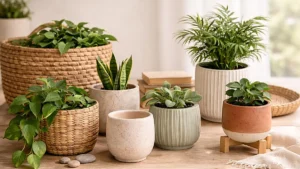
| Material | Moisture behavior | Weight and handling | Useful for |
| Unglazed terracotta | Porous; allows moisture to escape through the sides | Moderate weight; can be fragile | Plants that prefer faster-drying conditions |
| Glazed ceramic | Non-porous; does not absorb moisture through the glazed surface | Often heavy | Decorative displays and plants that prefer more consistent moisture |
| Plastic | Retains moisture and is generally lightweight | Easy to move; quality varies | Budget-friendly containers and lightweight displays |
| Metal | Usually non-porous; may heat up in direct sun | Varies by thickness and construction | Modern decorative styles and cache pots |
| Woven baskets | Not reliably waterproof | Usually lightweight | Decorative outer containers with a waterproof liner |
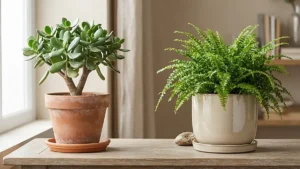
Terracotta: A natural, breathable look

Unglazed terracotta absorbs and releases moisture through its porous walls. This can help the growing medium dry more quickly, but it also means plants may need more frequent watering than they would in a non-porous container.
Terracotta suits warm, natural interiors and works well with many succulents and cacti when the growing pot and watering routine are appropriate. One drawback is that mineral salts can leave a pale deposit on the surface. The material can also crack if dropped or exposed to unsuitable conditions.
Glazed ceramic: Decorative and substantial
Glazed ceramic pots come in many colors, patterns and finishes. Their heavier construction can also make them useful for larger decorative arrangements.
Because the glazed surface does not absorb moisture like unglazed clay, the container itself does not help the soil dry through its walls. If you plant directly in a glazed pot, drainage holes become especially important.
For a pot without holes, use it as a cache pot instead.
Plastic: Lightweight and practical
Plastic pots are easy to move, clean and reuse. They also retain moisture longer than porous clay containers. This can be useful for plants that prefer a more consistently moist growing medium, but it means you should avoid watering on a fixed schedule without checking the soil.
Plastic is also a practical choice for an inner nursery pot hidden inside a more decorative container.

Metal: Modern but worth checking
Metal containers can suit minimalist and contemporary interiors. However, they are usually better as decorative outer pots unless they are specifically designed for growing plants.
Check for rust, damaged coatings and sharp edges. Keep metal containers away from conditions that could cause excessive heating or damage to the finish.

Woven baskets: Best as outer containers
Woven baskets add texture and warmth, but they are not automatically waterproof. Water can pass through the material, stain nearby surfaces or damage the basket over time.
Place a waterproof nursery pot or suitable liner inside the basket. Remove the inner pot for watering and allow it to drain before returning it.
Sizing Decorative Pots for Healthy Plants

Choosing the right size is about more than making the arrangement look balanced. A growing pot that is too large can hold more wet soil than the roots can use, while one that is too small can restrict root growth.
It also helps to distinguish between two different measurements:
- Growing pot size: The container that holds the plant and its soil.
- Decorative pot size: The outer container that hides or displays the growing pot.
How much bigger should a pot be when repotting?
When a plant needs repotting, a useful starting point is to choose a new growing pot about 1–2 inches wider in diameter than the current one. The right increase depends on the plant, its root system and the size of its root ball.
Avoid moving a small plant into a very large container simply to give it more room. Excess soil can remain wet for longer, increasing the risk of root problems.
Signs that a plant may need repotting include:
- Roots circling tightly around the root ball.
- Roots emerging from several drainage holes.
- Potting mix drying much faster than usual.
- Growth slowing despite suitable light and care.
- The plant becoming unstable or top-heavy.
One sign alone does not always mean repotting is necessary. Check the root ball and growing conditions before changing containers.
Our guide to repotting houseplants explains the process in more detail.
How should a decorative cache pot fit?
The inner nursery pot should fit securely without becoming difficult to remove.
Before buying, check:
- The inner pot can slide in and out without force.
- There is enough space to lift it for watering.
- The decorative pot is deep enough to hide the nursery pot’s sides.
- The inner pot does not sit in collected drainage water.
- The arrangement remains stable when the plant is in place.
You do not need a large gap around the nursery pot. A comfortable fit is usually more useful than choosing an oversized decorative container.
Match pot depth to the plant
Some plants have relatively shallow root systems, while others need more vertical room. A decorative pot can be deeper or wider than the growing pot, provided the inner container remains correctly sized.
This is another advantage of double-potting: you can choose a decorative shape based on your room without forcing the plant into an unsuitable amount of soil.
Saucers, Spills, and Floor Protection

A beautiful pot can still cause problems if water leaks onto furniture, rugs or flooring. Build floor protection into the arrangement before watering.
Use saucers under growing pots
A saucer catches water that drains from a pot with holes. Choose one that is wide enough to catch the runoff without making the arrangement unstable. After watering, empty the saucer rather than allowing the plant to sit in collected water.
Protect the surface beneath decorative pots
If your cache pot sits on wood, stone, laminate or a delicate table, use a suitable protective tray or plant coaster.
Useful options include:
- Waterproof trays.
- Cork or felt pads for scratch protection.
- Plant coasters designed to support heavier containers.
- Waterproof mats beneath woven baskets.
Pads protect against scratches, but they are not a substitute for waterproof protection. Felt and cork can absorb moisture, so check them regularly.
Check for hidden leaks
A small amount of water can remain under a decorative pot without being immediately visible. After watering, check beneath the container and around its base. Pay particular attention to wooden furniture and floors. Water trapped underneath can cause staining, swelling or surface damage.
If a pot is heavy, use a tray that can support its full weight when the plant and wet growing medium are inside.
Styling Decorative Indoor Plant Pots Room by Room
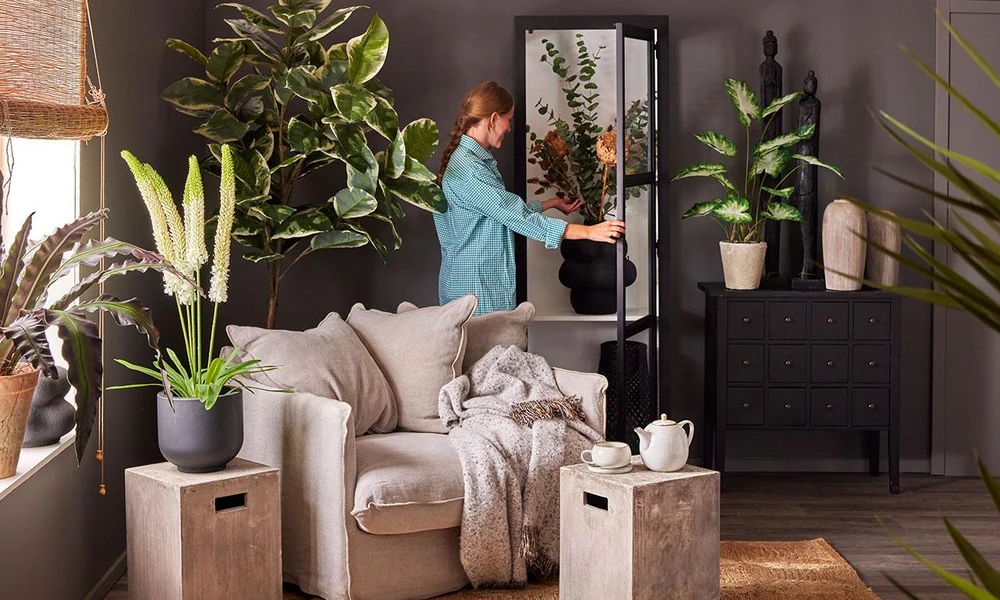
Once the growing pot, drainage and floor protection are sorted, you can choose containers based on the room’s style.
Living rooms
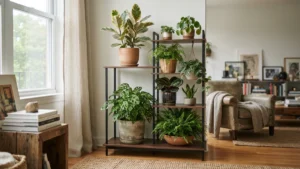
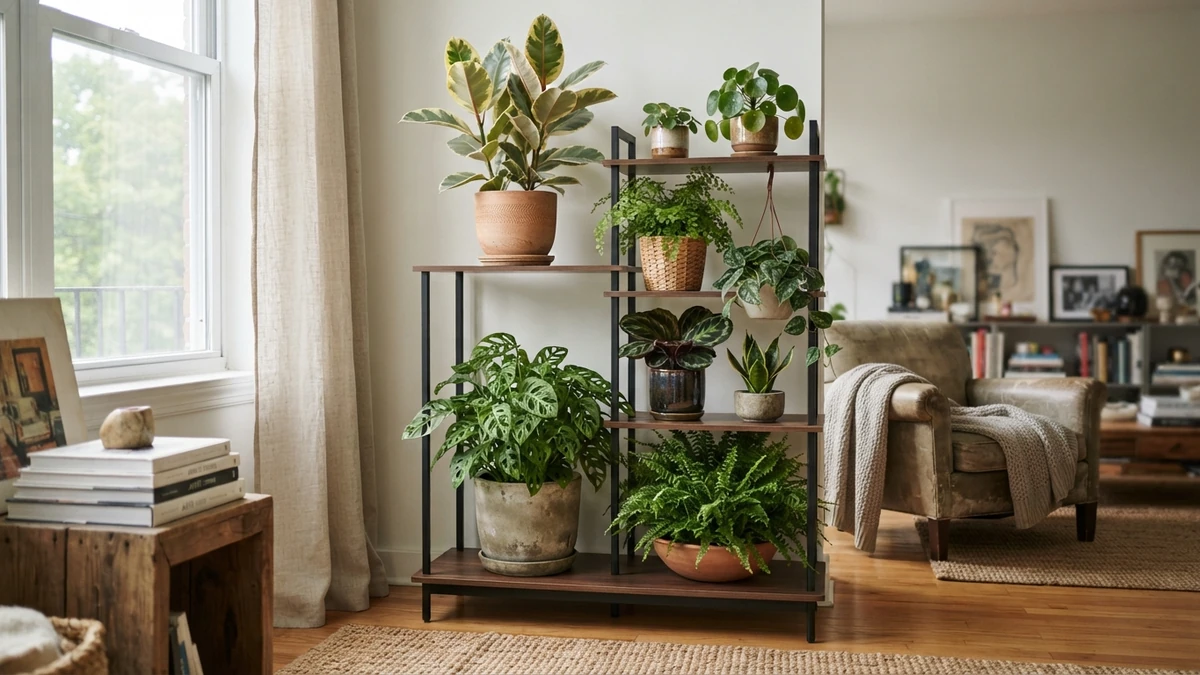
Living rooms often have enough space for larger decorative containers. Choose a pot that complements the nearby furniture rather than competing with it.
For example, a neutral ceramic container can balance a leafy plant, while a woven basket can add texture to a room with natural wood and soft furnishings.
Our modern green interior ideas show how greenery can fit into a coordinated room design.
Bedrooms
Bedrooms usually benefit from simple, uncluttered arrangements. Small ceramic, matte-finish or neutral-colored pots can sit on dressers, shelves or bedside tables. Make sure the container is stable and does not obstruct drawers, walkways or other everyday items.
Kitchens
Kitchens often have limited counter space, so choose compact containers that are easy to move for cleaning. Glazed ceramic and plastic outer pots are practical options because they are easy to wipe down. Keep plants away from hot appliances and places where they may be knocked over.
Bathrooms
Bathrooms can have higher humidity and occasional water splashes. Choose materials that can handle the room’s conditions, and avoid leaving woven baskets or unprotected metal containers in areas that stay wet. A decorative pot should not block access to sinks, showers or ventilation.
Shelves and small spaces
For shelves, prioritize weight and stability. A lightweight decorative pot can be easier to manage, but the complete arrangement must still be secure. Choose a container that fits the shelf depth and leaves enough room for nearby objects. Avoid placing heavy ceramic pots on narrow or weak shelves.
For more ways to bring greenery into a room, explore our green home decor ideas.
FAQ: Decorative Indoor Plant Pots
Can you plant directly in a pot without drainage holes?
It is possible, but a safer option is to keep the plant in a nursery pot with drainage holes and use the decorative pot as an outer container.
How much bigger should a decorative pot be than the nursery pot?
Choose one that comfortably holds the nursery pot and allows you to remove it for watering without forcing it into place.
What do you put under indoor plant pots to protect floors?
Use a suitable waterproof saucer or tray, with a plant coaster or protective pad where needed.
Why does my terracotta pot have a white crust?
Mineral salts from water and fertilizer can collect on porous clay as moisture evaporates, leaving a pale surface deposit.
Can I leave a plant in its original plastic nursery pot?
Yes, provided the pot is appropriately sized, has drainage holes and the plant is otherwise healthy.
Do woven baskets work as plant pots?
They are best used as decorative outer containers with a waterproof inner pot or liner.
Final Thoughts
Decorative indoor plant pots work best when appearance and plant health are treated as separate but connected decisions. Use a properly drained growing pot, choose an outer container that fits comfortably, and make sure excess water cannot collect around the roots.
Once those basics are covered, you can experiment with ceramic, terracotta, plastic, metal and woven finishes to suit different rooms. The best decorative pot is one that looks right, protects your surfaces and makes routine plant care easier.
Disclaimer: Plant watering and container needs vary by species, growing medium and indoor conditions. Check the requirements of your specific plant, and never leave its roots sitting in standing water.