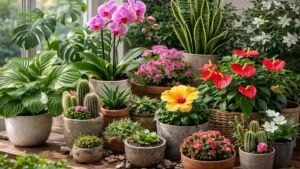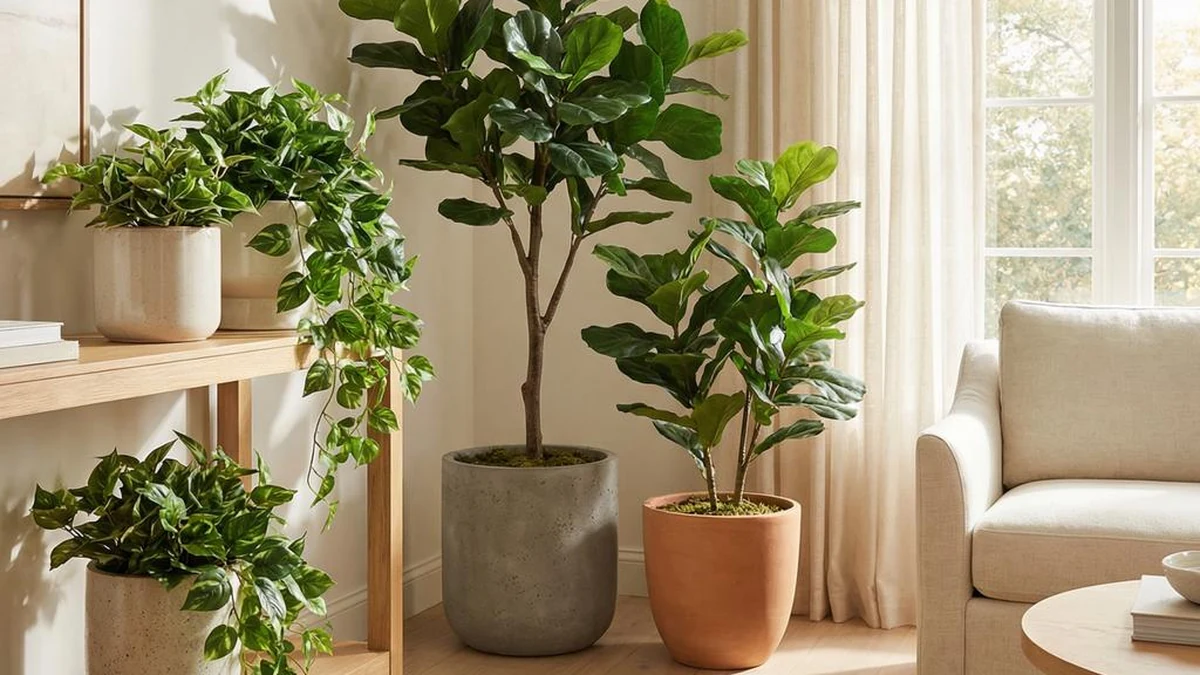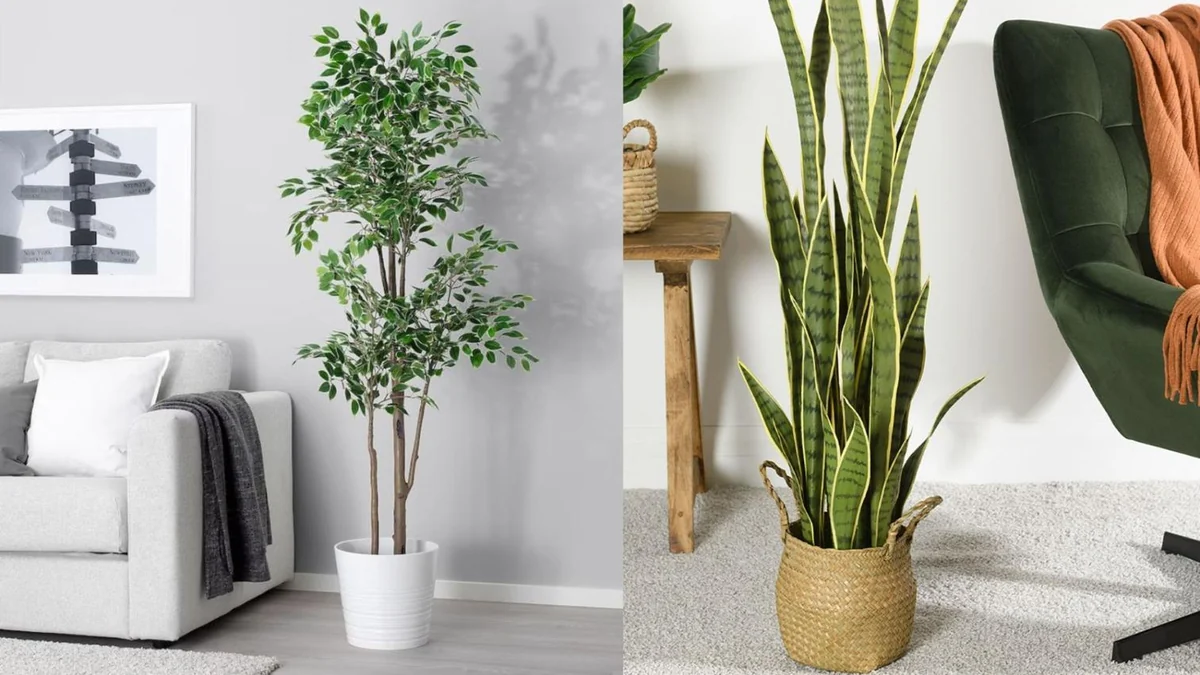

Neither artificial plants nor real plants are better for every home. Real plants grow, need light and care, and offer the experience of looking after something living. Artificial plants need no watering or sunlight, making them useful for dark corners and hard-to-reach spaces. Neither type meaningfully purifies indoor air. For many homes, the smartest choice is a combination of both.
The decision becomes easier when you look beyond appearance. Think about your available light, daily routine, budget, pets, and the purpose of each space. A living plant can be rewarding beside a bright window, while an artificial one may be the more sensible choice on a high shelf or in a room that receives almost no natural light.
This guide compares both options without promoting a particular product or retailer. You’ll also find an illustrative five-year cost comparison and a practical way to decide where each type belongs.
Artificial Plants vs Real Plants: The Head-to-Head Comparison
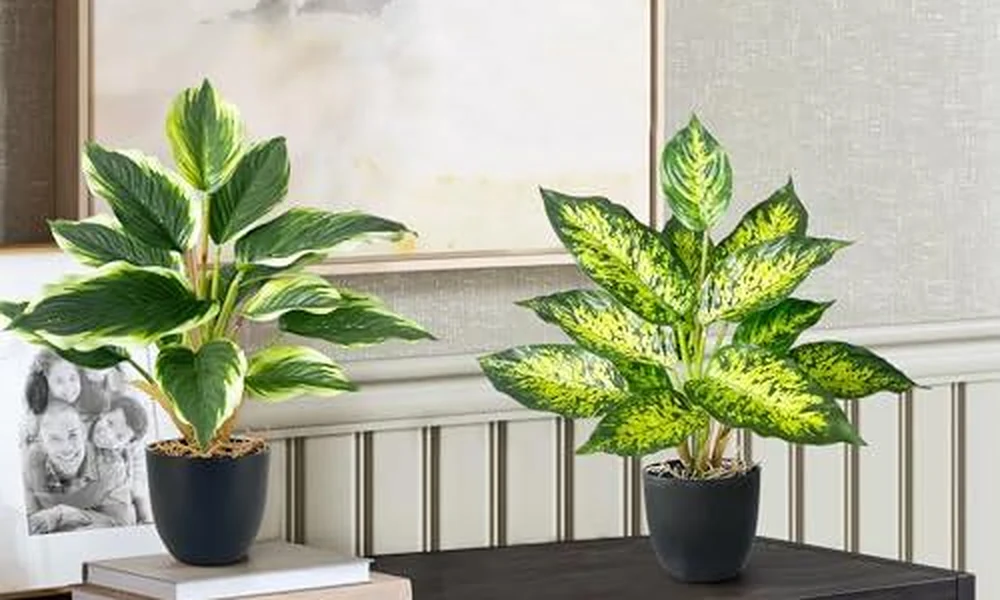
Both types bring greenery into a room, but they work in very different ways.
| Factor | Real plants | Artificial plants |
| Light requirements | Need suitable natural or supplemental light | No light required |
| Watering | Regular watering based on species and conditions | No watering |
| General maintenance | Watering, pruning, soil checks, and occasional repotting | Dusting and occasional cleaning |
| Pet safety | Depends on the exact plant species | No natural plant toxins, but loose or swallowed parts can be dangerous |
| Air quality | Do not meaningfully clean typical indoor air | Do not clean indoor air |
| Humidity | Can make a modest contribution when plants are grouped | No meaningful humidity effect |
| Appearance | Grows and changes naturally | Remains mostly unchanged until it fades or wears |
| Wellbeing | Some research suggests benefits from interacting with living plants | Can provide visual decoration, but evidence for equivalent effects is limited |
| Upfront cost | Often lower for a small plant | Often higher for a convincing, realistic model |
| Ongoing cost | Soil, fertilizer, pots, and possible replacements | Usually very little beyond cleaning |
| Lifespan | Can last for years with suitable care | Can last for years indoors, depending on quality and exposure |
| Environmental considerations | Growing, packaging, water, and transport have impacts | Plastic, fabric, wire, and other materials create disposal concerns |
The comparison shows why a simple winner is difficult to name. Artificial plants offer convenience and placement flexibility. Real plants offer natural growth and the experience of caring for living greenery.
Two issues deserve particular attention before you decide.
Do Real Plants Purify Air Better Than Artificial Plants?
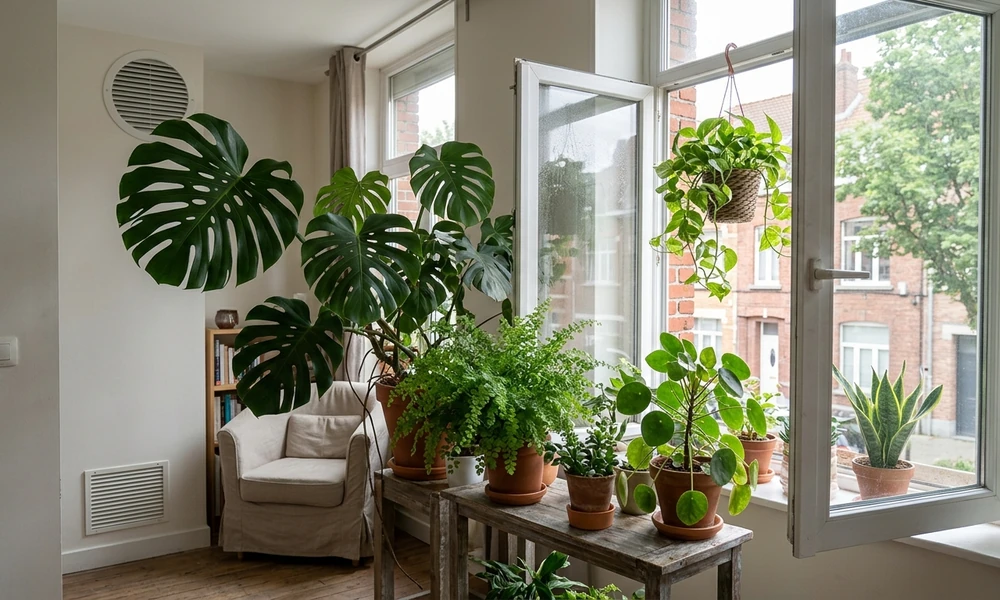
Real plants do not meaningfully purify the air in an ordinary home. Artificial plants do not purify it either.
You may have heard that houseplants remove harmful chemicals from indoor air. This idea partly comes from experiments in small, sealed laboratory chambers. However, those conditions are very different from an occupied room with doors, windows, ventilation, furniture, and changing air movement.
A peer-reviewed review by Cummings and Waring, published in the Journal of Exposure Science & Environmental Epidemiology, examined the practical air-cleaning potential of potted plants. Its findings indicate that an impractically large number of plants would be needed to match the air-removal effect of ordinary building ventilation.
So, if your main goal is cleaner indoor air, focus on ventilation and suitable air filtration. Choose plants for their appearance, growth, and enjoyment—not as a replacement for an air-cleaning system.
Are Artificial Plants Safe for Pets?
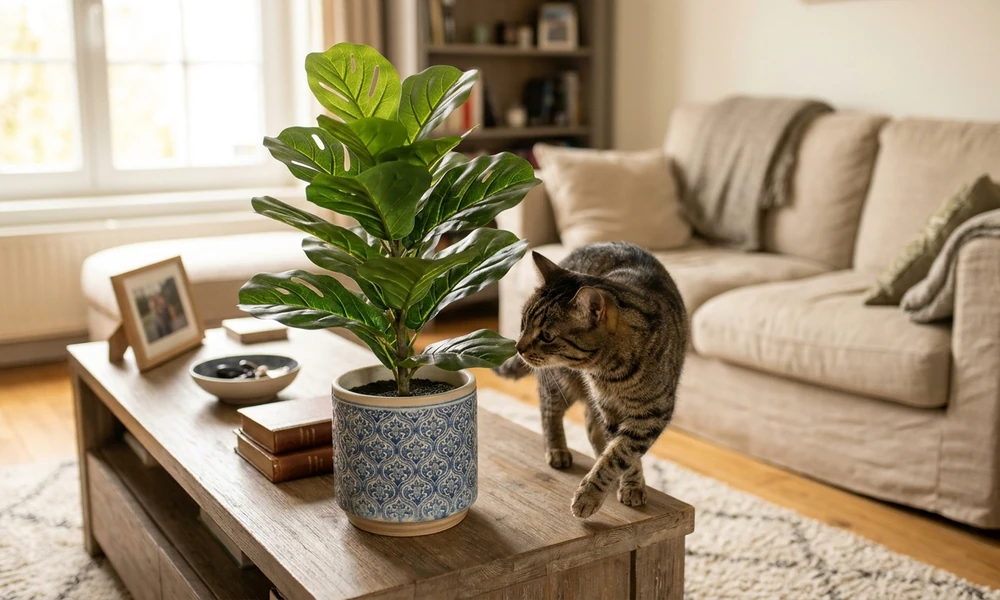
Artificial plants do not contain the natural plant toxins found in some living species, but that does not make them safe to chew or swallow.
Plastic leaves, fabric, wire stems, glued decorations, and small detachable parts can create choking or ingestion hazards. Keep artificial plants away from pets that chew household objects.
Real plants also require care when pets are present. Some species are toxic, while others are listed as non-toxic. For example, the ASPCA lists parlor palm (Chamaedorea elegans) and money tree (Pachira aquatica) as non-toxic to cats and dogs. Jade plant (Crassula ovata), by contrast, is listed as toxic.
Check the scientific name rather than relying on a common name. The ASPCA Toxic and Non-Toxic Plants Database is a useful starting point, although the organization notes that its list is not exhaustive and that eating even non-toxic plant material can upset an animal’s stomach.
For a more focused selection of living greenery, our pet-safe indoor plants guide covers the topic in greater detail.
Artificial Plants vs Real Plants: The Five-Year Cost Reality
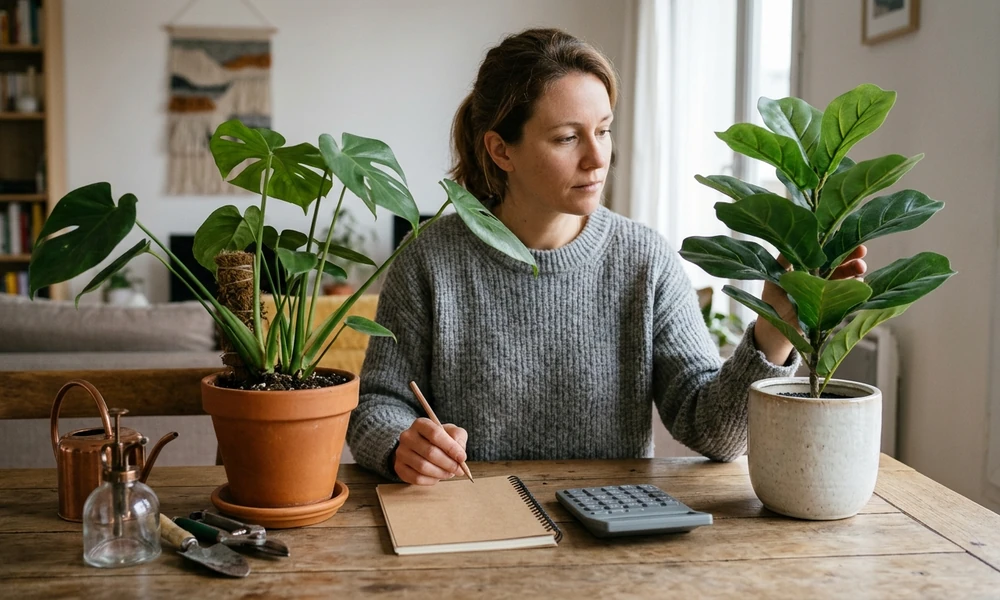
Cost is one of the biggest reasons people compare artificial and real plants. However, the purchase price alone doesn’t tell the whole story.
A small living plant may cost less than a realistic artificial version of the same size. But a living plant can also need fresh soil, fertilizer, a larger pot, or replacement if it doesn’t survive. Artificial greenery usually costs more at the beginning, but its ongoing expenses are much lower.
Here is an illustrative five-year estimate for one display spot.
Estimated Cost of One Real Plant Over Five Years
| Expense | Estimated cost |
| One medium houseplant | $20–40 |
| Quality pot and saucer | $25–60 |
| Potting mix and occasional fertilizer | Around $30 |
| One replacement plant, if needed | $20–40 |
| Estimated total | $95–170 |
This estimate assumes one medium-sized plant, a suitable pot, and modest replacement and growing-supply costs. It does not put a price on your time.
Estimated Cost of One Artificial Plant Over Five Years
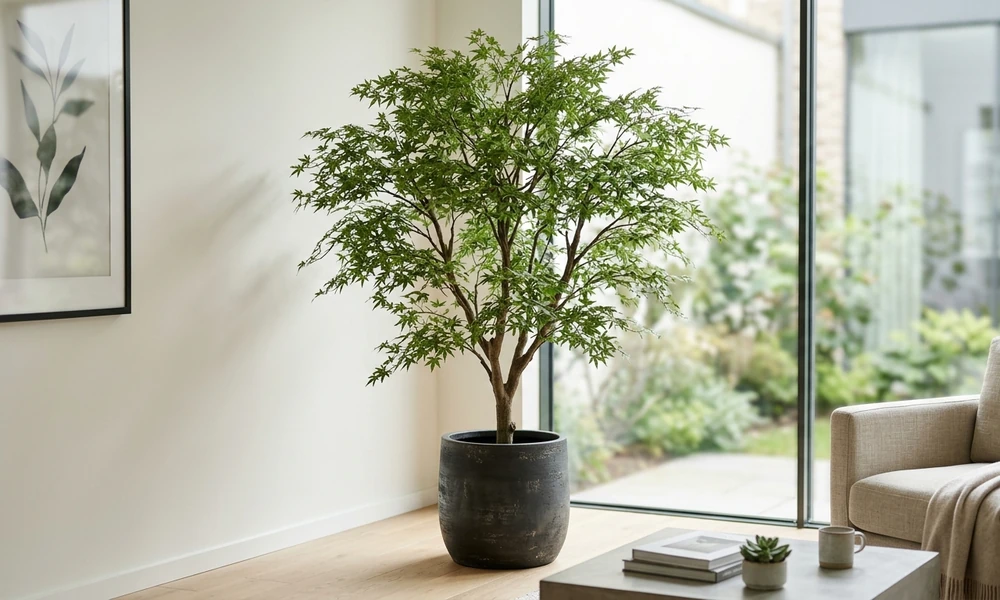
| Expense | Estimated cost |
| Convincing molded-plastic artificial plant | $40–150 |
| Quality pot | $25–60 |
| Possible replacement due to fading or wear | $0–80 |
| Estimated total | $65–290 |
This estimate assumes a reasonably realistic artificial plant rather than a very inexpensive fabric decoration. A replacement may not be necessary if the plant stays indoors and away from strong direct sunlight.
Which Option Is Cheaper?
The estimates overlap. Neither type is automatically cheaper over five years.
A real plant usually spreads its costs over time, while an artificial plant requires more money upfront. However, a real plant that repeatedly dies in an unsuitable location can become expensive. An artificial plant may be more economical for a spot where living greenery has little chance of surviving.
These figures are illustrative USD calculations, not published market averages or universal prices. Actual costs vary by country, plant size, material quality, pot choice, and availability. Your local prices may produce a very different result.
There is another cost that deserves attention: your time. If watering and pruning feel like a relaxing hobby, real plants may be worth the effort. If you see them as another household responsibility, artificial plants may offer better value.
Where Real Plants Win
Real plants offer something artificial decorations cannot fully reproduce: they are living things that respond to their surroundings.
Growth Makes a Room Feel Different
A real plant changes as it grows. New leaves appear, stems extend, and the overall shape develops over time.
You can also prune a plant, propagate a cutting, or move it to a better location as your home changes. For people who enjoy gardening, these small developments are part of the attraction.
An artificial plant can copy the appearance of greenery, but it cannot grow or respond to care.
Living Plants Offer an Experience, Not Just Decoration
There is some scientific evidence that interacting with living plants can influence short-term stress responses.
For example, a 2015 randomized crossover study by Lee and colleagues compared a plant-related task with a computer task in 24 young adult men. Participants reported more comfortable and relaxed feelings after interacting with plants, alongside changes in some measured physiological responses.
That is a useful finding, but it has limits. It was a small study involving a specific group and a short activity. It does not prove that every living plant produces a particular health benefit or that plants treat stress-related conditions.
Still, if you enjoy caring for greenery, an artificial plant cannot provide the same experience of tending to something alive.
Real Plants Work Best Where the Growing Conditions Are Suitable
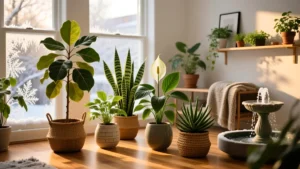
A real plant needs a location that matches its light requirements. When you choose the right species and give it suitable care, it can become a lasting part of your home.
For example, a forgiving houseplant near a bright window may be easier to maintain than a demanding species placed in the same spot. Our low-maintenance indoor plants guide can help you compare living options.
If your home has limited daylight, explore our low-light indoor plants guide before buying. Remember that low-light tolerant does not mean light-free.
Where Artificial Plants Win
Artificial plants are not simply a substitute for people who struggle with gardening. They solve practical problems that living plants cannot always solve.
Dark Corners and Windowless Spaces
Some places in a home receive too little natural light to support healthy plant growth. A hallway, interior bathroom, or deep corner may look empty, but that doesn’t mean it needs a struggling living plant.
Artificial greenery can fill these spaces without depending on sunlight. You won’t need to keep moving a plant around or buying replacements because it cannot survive in the location.
High Shelves and Difficult-to-Reach Places
A plant on a tall shelf may look attractive, but watering it can become inconvenient. You may need a ladder, have limited access to the pot, or risk spilling water onto furniture.
An artificial plant avoids those problems. You can place it on a high shelf, above a cabinet, or in another difficult-to-reach position without worrying about watering or drainage.
Guest Rooms, Rentals, and Staging
Some rooms don’t receive regular attention. A guest room, holiday property, rental, or home being prepared for sale may need decoration without another care responsibility.
Artificial plants maintain a consistent appearance when nobody is available to water them. They also avoid the risk of water spilling from pots onto floors or furniture.
A Consistent Appearance With Less Work
A living plant can develop yellow leaves, grow unevenly, or lose foliage when its conditions change. Artificial greenery does not experience those biological problems.
It still needs cleaning, however. Dust can collect on leaves, especially in rooms near open windows or busy areas. A soft cloth or gentle brush is usually enough for routine cleaning, depending on the material.
Quality also matters. Very shiny leaves, identical shapes, stiff stems, and unnatural colors can make a fake plant look unconvincing. A realistic model should have natural-looking variation and proportions that suit the room.
If you are planning a room around greenery, our modern green interior ideas show how plants and other natural-looking elements can work together.
The Hybrid Strategy Most Homes Should Use
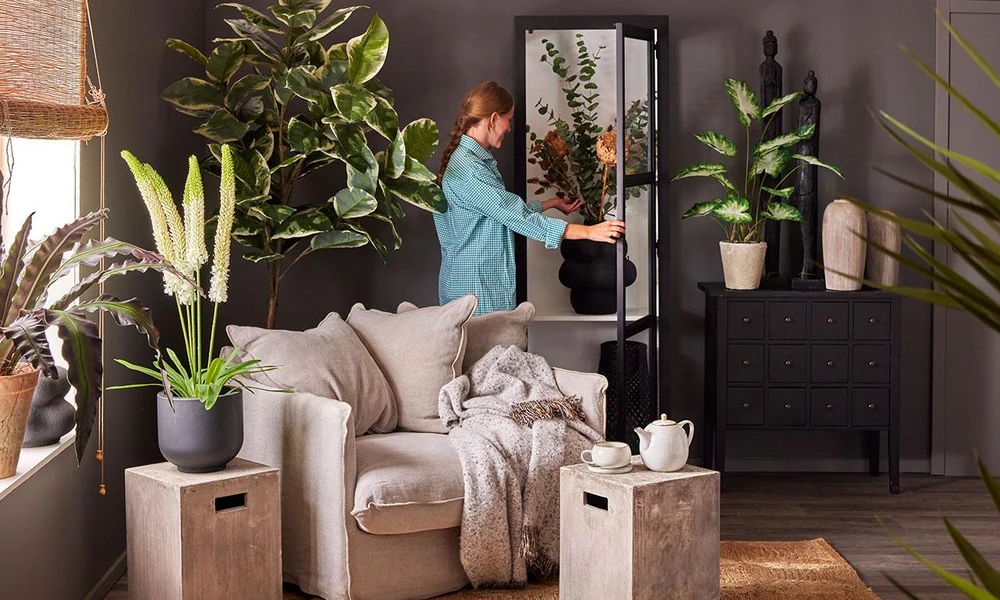
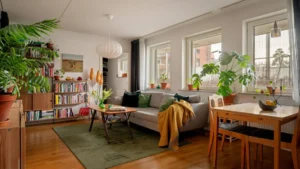
You don’t have to choose one type for the entire house. In fact, combining artificial and real plants is often the most practical approach.
Use real plants in locations where they can receive suitable light and where you can reach them for watering and care. Choose species that match your available conditions and check their safety if you have pets.
Use artificial plants where a living plant would struggle or where maintenance would become inconvenient.
Here is a simple way to divide the space:
| Location | Better choice | Reason |
| Bright living-room window | Real plant | Suitable light can support healthy growth |
| Dark hallway | Artificial plant | No natural light is required |
| High wall shelf | Artificial plant | No watering or drainage access needed |
| Bright home office | Real plant | A suitable species can grow in the available light |
| Guest bedroom used occasionally | Artificial plant | Keeps a consistent appearance without regular care |
| Pet-accessible area | Depends on the exact plant and pet | Check real-plant toxicity and prevent chewing of artificial materials |
The important thing is to choose based on the location rather than following a rule that every room needs living plants.
There is also no reason to fill every empty corner. If a space is too dark for a real plant and too visible for an artificial one to look convincing, leaving it empty may be the better design decision.
FAQ: Artificial Plants vs Real Plants
Are artificial plants better than real plants?
Neither is better overall; artificial plants suit dark and hard-to-reach spaces, while real plants suit places with suitable light and people who enjoy caring for living greenery.
Do artificial plants purify air?
No, artificial plants do not purify indoor air, and ordinary numbers of real houseplants do not meaningfully clean the air in typical homes either.
Which is cheaper over five years, real or artificial plants?
The costs can overlap: this guide estimates $95–170 for a real setup and $65–290 for an artificial setup, depending on quality, supplies, and replacement needs.
Are artificial plants safe for pets?
They contain no natural plant toxins, but swallowed leaves, wires, or loose parts can create choking or intestinal hazards.
Do real plants provide wellbeing benefits?
Some research suggests that interacting with living plants can improve short-term feelings of comfort and relaxation, although the evidence has limitations.
Where should I use artificial plants instead of real plants?
Artificial plants are useful in windowless rooms, dark corners, high shelves, guest rooms, and locations where regular plant care is impractical.
Final Thoughts
Artificial plants and real plants serve different purposes. Living plants bring natural growth and the experience of caring for greenery, while artificial plants provide a consistent appearance without watering or light requirements.
The best decision depends on the conditions in your home. Use real plants where they can grow, artificial plants where they cannot, and don’t feel that every space needs greenery.
A thoughtful combination can give your home the appearance you want without creating unnecessary maintenance or spending money on plants that are unlikely to thrive.
Disclaimer: This article provides general information for home-decorating and plant-selection purposes. Cost figures are illustrative estimates, not guaranteed prices. Pet-safety information should be checked against the exact plant species and your veterinarian’s advice.