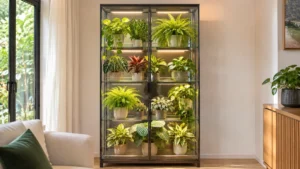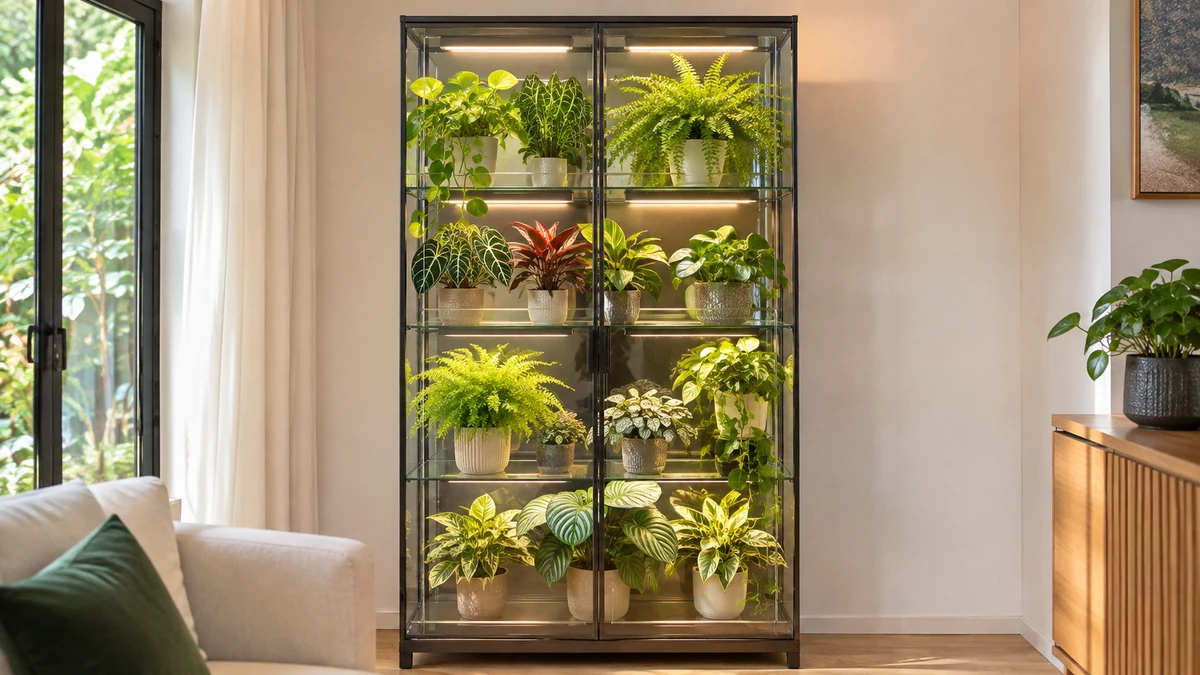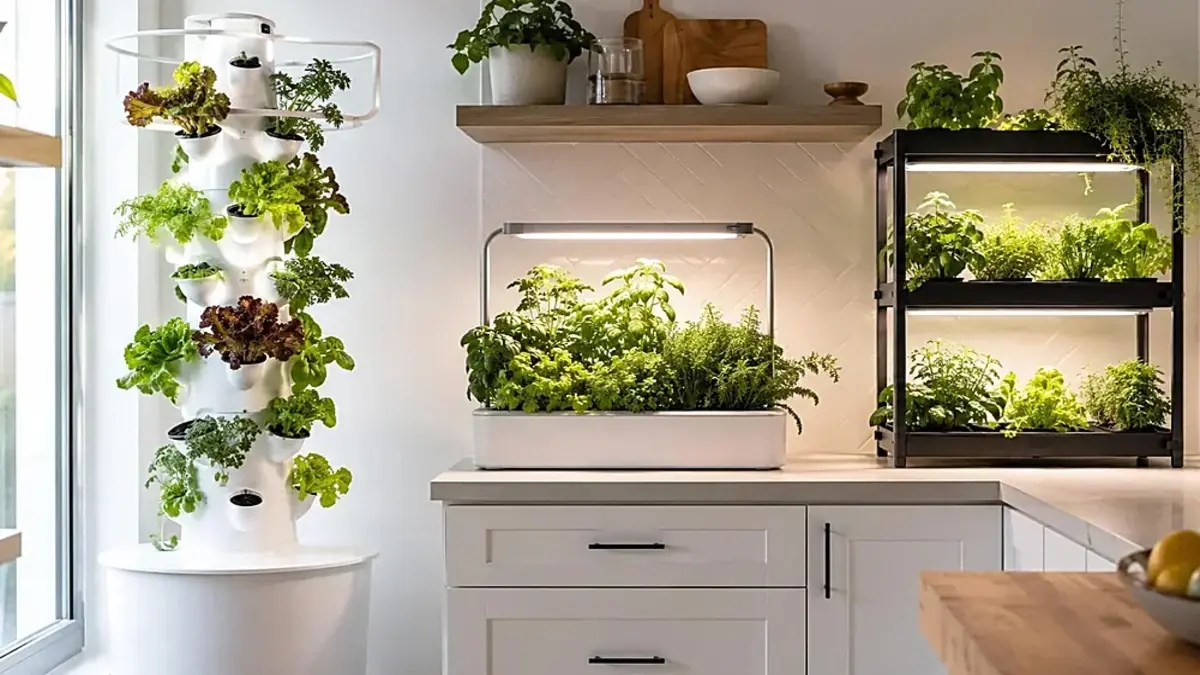
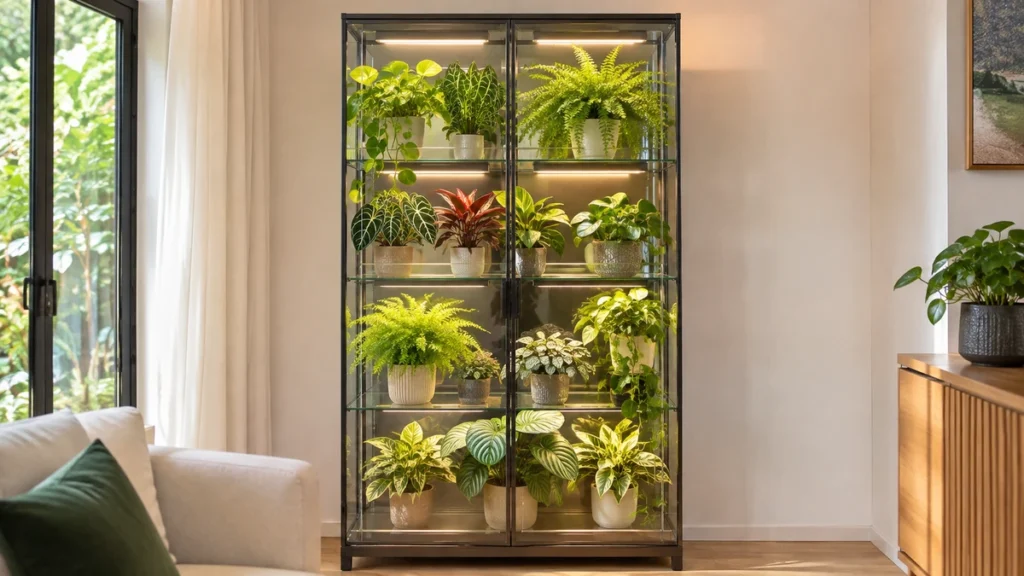
An indoor plant cabinet is a glass-door cabinet adapted for growing and displaying houseplants. The best options have adjustable shelves, room for suitable grow lights, and enough ventilation to prevent excess moisture from building up. You can convert a glass display cabinet, such as an IKEA MILSBO, or choose a smaller ready-made greenhouse for seedlings and compact plants.
A cabinet can create a useful growing space, especially for humidity-loving plants and propagation projects. However, glass doors alone do not make a healthy greenhouse. Lighting, airflow, watering, shelf strength, and placement all matter.
AI Overview
Indoor plant cabinets are enclosed spaces used to grow and display houseplants. A suitable cabinet needs adjustable shelves, appropriate grow lighting, airflow, and protection from water. Glass display cabinets such as IKEA MILSBO can be converted for plant use, while compact greenhouses such as IKEA ÅKERBÄR suit seedlings and smaller collections. The best option depends on plant needs, available space, shelf strength, and maintenance.
Key Takeaways
- Choose a cabinet with glass doors, adjustable shelves, and a suitable weight capacity.
- Add grow lights that provide enough coverage for every shelf.
- Use ventilation or gentle airflow to manage excess humidity.
- Protect shelves and floors from water spills.
- Adjust watering based on soil moisture, not a fixed schedule.
What Makes an Indoor Plant Cabinet Work?

A regular display cabinet can become a plant cabinet, but it needs a few practical features.
1. Glass Doors
Glass doors help create a more humid environment by slowing the movement of air between the cabinet and the room. This can benefit plants that prefer higher humidity, including some ferns and tropical foliage plants.
However, a closed cabinet can also trap too much moisture. You should be able to open the doors easily and allow fresh air inside when needed.
2. Adjustable Shelves
Adjustable shelves make it easier to fit plants of different heights. They also give you room to install lighting above each growing level.
Glass and metal shelves are generally easier to wipe clean than untreated wood. Whatever material you choose, check its weight limit before adding heavy pots.
3. Space for Grow Lights
The light reaching the lower shelves may be much weaker than the light near the top. Plan where each light will go before filling the cabinet with plants.
Full-spectrum LED grow lights are a practical option for many indoor setups. Choose fixtures that fit the cabinet and can be positioned at a suitable distance from the foliage.
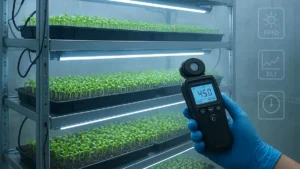
If you are unsure how much light reaches each shelf, a light meter can help you compare readings. The right measurement depends on the type of light and the plants you grow.
4. Airflow and Ventilation
A cabinet that stays closed all the time can develop stagnant, humid conditions. Give the plants regular access to fresh air by opening the doors or adding gentle internal air movement.
A small fan may help circulate air, but it should not blow strongly or constantly against delicate leaves. Ventilation also helps manage excess humidity, which can contribute to plant disease when conditions remain damp.
5. Water Protection
Water spills and dripping pots can damage furniture over time. Place saucers or waterproof trays under your plants, and wipe up spills promptly.
A removable shelf liner can also make cleaning easier. Avoid placing wet pots directly on surfaces that may swell, stain, or rust.
The IKEA Greenhouse Cabinet Hack

The IKEA greenhouse cabinet trend involves converting a glass display cabinet into a small indoor growing space. It can be a practical option if you want several shelves for tropical plants, cuttings, or a small plant collection.
One model often considered for this purpose is the IKEA MILSBO glass-door cabinet. The tall version measures approximately 73 cm wide, 42 cm deep, and 175 cm high. Its product listing specifies three adjustable glass shelves and a maximum load of 5 kg per shelf.
Those details matter when planning your setup. The shelf weight limit is relatively modest, so avoid loading the upper shelves with heavy ceramic pots or large containers filled with wet soil. Keep heavier plants on the cabinet floor or another properly supported surface.
How to Convert a Display Cabinet

You do not need to add every possible accessory at once. Start with the basics:
- Clean the cabinet: Wipe the glass and frame before adding plants or equipment.
- Plan the shelves: Leave enough vertical room for plant growth and lighting.
- Install grow lights: Attach suitable LED bars or fixtures securely, following the manufacturer’s instructions.
- Add a small fan if needed: Use gentle airflow to prevent stagnant conditions.
- Protect the shelves: Put pots on waterproof trays or saucers.
- Check the environment: Monitor temperature, humidity, and light after the cabinet is set up.
You can also explore other DIY greenhouse ideas if you want to compare different ways to create a protected growing space.
Purpose-Built Greenhouse Cabinets and Smaller Options

Not every indoor gardener needs a tall display cabinet. The right choice depends on the number and size of your plants.
Purpose-Built Indoor Greenhouse Cabinets
Some cabinets are designed specifically for growing plants. They may include lighting, ventilation, timers, or finishes intended for humid conditions.
These features can save setup time, but check the specifications carefully before buying. Look for:
- Grow lights suitable for plant growth rather than decorative lighting.
- Shelves with clear weight limits.
- Accessible electrical connections.
- Replaceable fans, lights, and timers.
- Surfaces that are easy to clean and protect from water.
A higher price does not automatically mean better growing conditions. Compare the included equipment with what you would need to add to a standard display cabinet.
A Compact Greenhouse: IKEA ÅKERBÄR
For seedlings, small herbs, or propagation projects, a tabletop greenhouse may be more practical than a tall cabinet.
The IKEA ÅKERBÄR greenhouse is a compact indoor/outdoor option. The smaller model measures approximately 45 × 22 × 35 cm. IKEA also lists a larger version in some markets.
Its opening front makes it easier to reach plants and let fresh air inside. It is not a replacement for a full-sized cabinet, but it can work well for a small collection or a windowsill growing project.
Sizing and Placement: Weight, Outlets, and Floors

Before buying a cabinet, measure the space where you plan to put it. A cabinet that looks compact in a product photograph may need more room once its doors are open and equipment is installed.
Pay attention to three details.
Weight
Wet potting mix, ceramic pots, water trays, and equipment add up quickly. Check the manufacturer’s maximum shelf load and distribute weight carefully.
For glass shelves, follow the stated limit rather than estimating how much weight they can hold. Put heavier pots on the cabinet base whenever possible.
Electrical Outlets
Grow lights, fans, and timers may all need power. Choose a location with a suitable outlet and plan cable routes before installing equipment.
Keep electrical connections away from water trays, condensation, and watering areas. Follow the equipment manufacturer’s electrical safety instructions.
Floors and Surfaces
A cabinet can collect condensation or experience occasional water spills. A suitable floor mat can help protect wood or other sensitive flooring.
Also check that the cabinet stands on a level, stable surface. Follow the manufacturer’s instructions for anchoring tall furniture to reduce the risk of tipping.
Lights and Airflow Inside the Cabinet

Lighting and ventilation are two of the most important parts of a successful indoor plant cabinet.
Choosing and Positioning Grow Lights
LED grow lights are commonly used because they are available in compact formats that fit under shelves. Choose a fixture designed for plant growth, and check its coverage area, intensity, and recommended mounting distance.
Do not assume that one light at the top will reach every plant equally. Lower shelves and cabinet corners may receive less light.
Measure at leaf level and take readings in more than one place. Our guide to measuring plant light explains the difference between lux and PPFD and when each type of measurement is useful.
The lighting schedule should also suit the plants inside. Seedlings, shade-tolerant foliage plants, and sun-loving succulents do not all need the same conditions.
Maintaining Gentle Airflow
A small USB fan can help move air around a cabinet, especially when plants are crowded together. Position it so that air circulates without creating a strong direct draft.
You do not necessarily need to run a fan all day. Check for condensation, persistently wet surfaces, and signs of poor air movement, then adjust ventilation as needed.
Remember that airflow is not a substitute for sensible watering. Soil that stays wet for too long can still attract fungus gnats. If they become a problem, review the steps in our guide to getting rid of fungus gnats.
Adjusting Your Watering Routine
Plants often use water more slowly in enclosed spaces because conditions can be more humid and evaporation may be reduced.
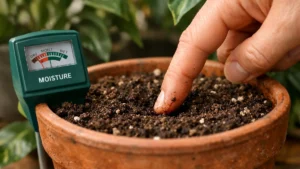
Do not water every plant on a fixed schedule. Check the potting mix first and consider the needs of each plant. If you are new to indoor growing, our guide to growing plants indoors covers the basic conditions houseplants need.
Indoor Plant Cabinet Mistakes to Avoid
A few common mistakes can make a plant cabinet harder to maintain.
- Closing the cabinet all the time: Open the doors when fresh air is needed, and monitor condensation.
- Using decorative lights as grow lights: Choose lighting designed to support plant growth.
- Overwatering: Enclosed conditions can slow drying, so check the soil before watering.
- Overloading glass shelves: Follow the stated weight limits and keep heavy pots low.
- Ignoring lower shelves: Check light levels throughout the cabinet, not just near the top.
- Crowding plants: Leave enough room for leaves to grow and air to move.
- Ignoring electrical safety: Keep plugs and connections away from water and condensation.
FAQ: Indoor Plant Cabinets
Are IKEA cabinets good for plants?
They can be, if the cabinet has suitable shelves, room for lighting, and a way to manage airflow. The MILSBO is one option, but check its dimensions and shelf weight limit before converting it. You will also need to add suitable growing equipment.
Do plant cabinets need a fan?
Not every cabinet needs a fan, but some form of ventilation is important. Opening the doors regularly may be enough for a lightly planted cabinet. A small fan can help circulate air in a crowded or consistently humid setup.
What lighting goes inside a plant cabinet?
Full-spectrum LED grow lights are a practical choice for many indoor plant cabinets. Select fixtures that fit the shelves and provide suitable coverage for your plants. Measure light at leaf level rather than relying on how bright the cabinet looks.
How do you protect shelves from water?
Use saucers or waterproof trays under pots, wipe up spills, and choose shelves that can tolerate regular cleaning. Check the shelf weight limit as well, especially if you use large pots or water-filled containers.
Can you keep tropical plants in a glass cabinet?
Yes, some tropical plants can benefit from the more humid conditions. However, plant needs vary. Monitor temperature, humidity, light, and airflow, and avoid keeping the cabinet permanently sealed.
Final Thoughts
An indoor plant cabinet can give your houseplants a dedicated growing and display space, but the cabinet itself is only the starting point. Choose a sturdy design, plan the lighting, protect the shelves from water, and make sure fresh air can circulate.
A converted glass display cabinet works well for a larger collection, while a compact greenhouse may be enough for seedlings and small plants. Start with a simple setup, observe how your plants respond, and adjust the conditions gradually.
Disclaimer: Product specifications and availability can vary by country and may change. Always check current manufacturer details, shelf weight limits, and electrical safety instructions before setting up an indoor plant cabinet.