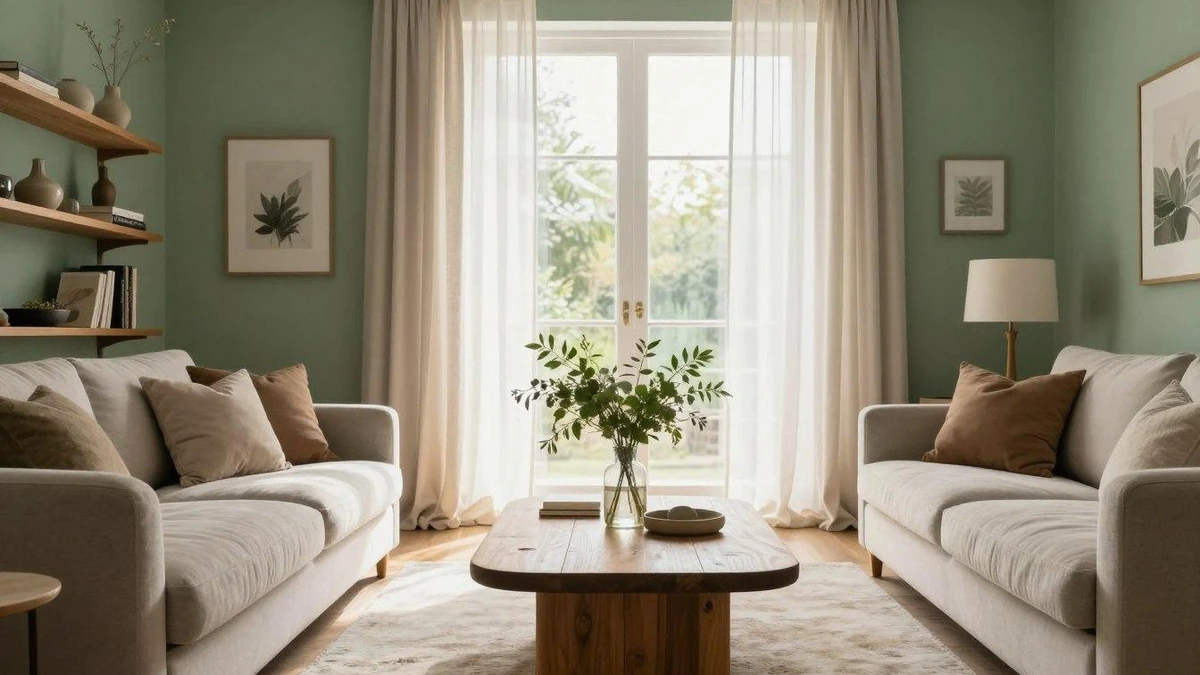
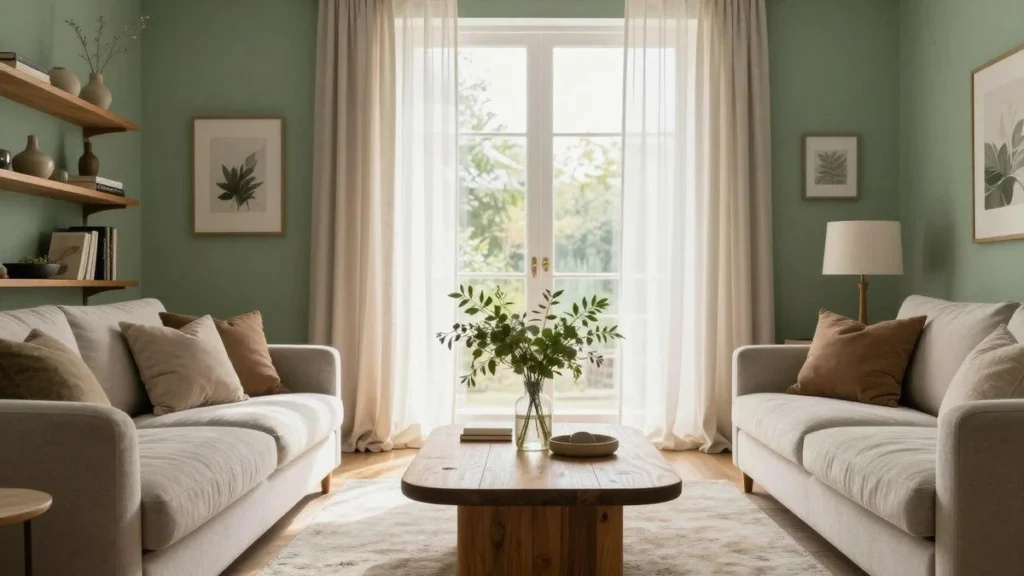
A modern green interior brings natural green shades into your home through paint, furniture, fabrics, and decorations. It combines colors such as sage, olive, and forest green with wood, linen, and other natural materials.
But a truly green interior is about more than color. It also means choosing durable furniture, lower-VOC paint, and materials that are better suited to everyday living. Here is how to bring both ideas together without making your home look too dark, busy, or old-fashioned.
What Is a Modern Green Interior?
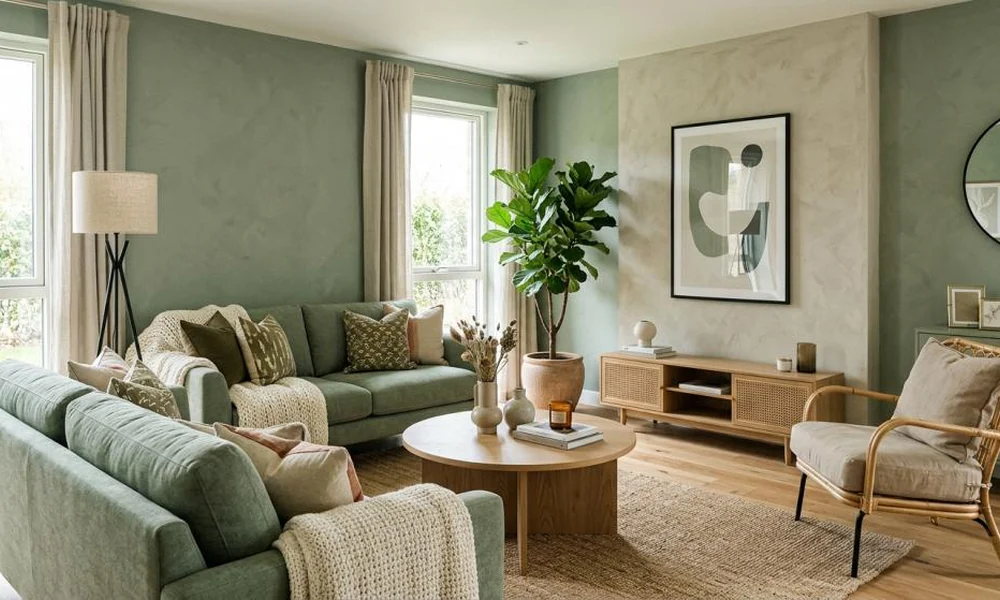
A modern green interior is a home design style that uses green shades with simple furniture, natural textures, and balanced colors.
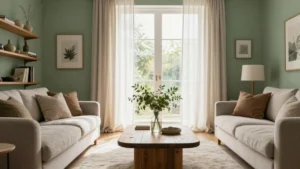
It can be soft and light, with sage walls and pale wood furniture. It can also feel rich and dramatic with forest-green walls, dark wood, and brass details.
The style works because green has many different shades. Some look almost neutral, while others make a strong statement.
There is also another meaning to consider. A green interior can use materials that are more thoughtful choices for your home and the environment. These include low-VOC paint, natural fabrics, long-lasting furniture, and secondhand pieces.
The best approach brings both ideas together: a home that looks natural and uses materials carefully.
Why Green Works So Well in Modern Interiors
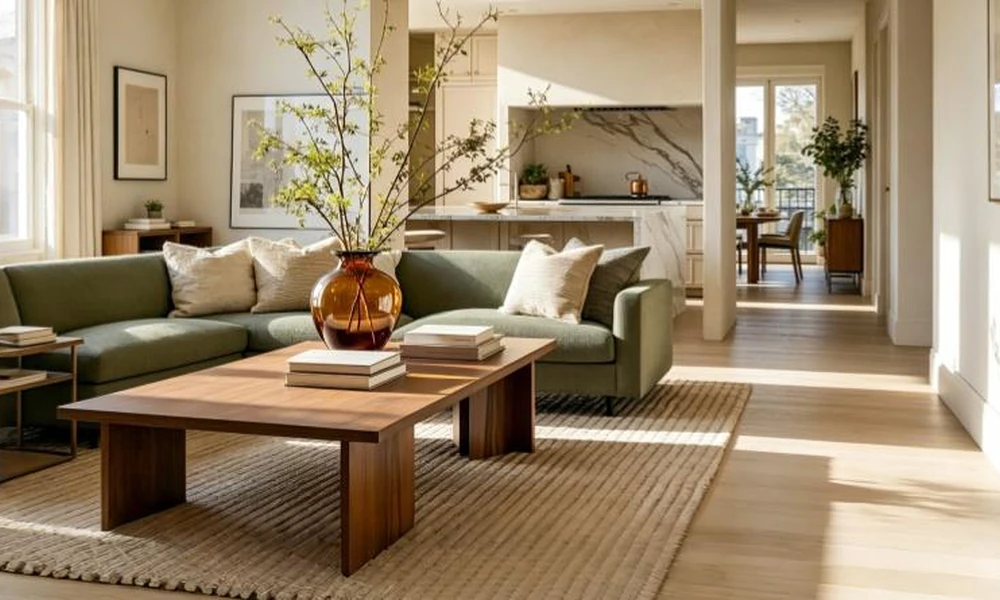
Green brings a connection to nature into indoor spaces. It can make a room feel calm, warm, fresh, or rich, depending on the shade.
For years, gray was a common choice for modern homes. Green offers a different look while still working well with simple furniture and neutral colors.
It also pairs easily with materials that are already popular in home design, such as:
- Light and dark wood
- Stone and marble
- Linen and cotton
- Rattan and woven materials
- Brass and other metal details
- Cream, beige, and warm white
You do not need to decorate your entire home in green. A green sofa, a painted cabinet, or a few carefully chosen accessories can make a room feel more natural.
How to Choose the Right Green Color Palette
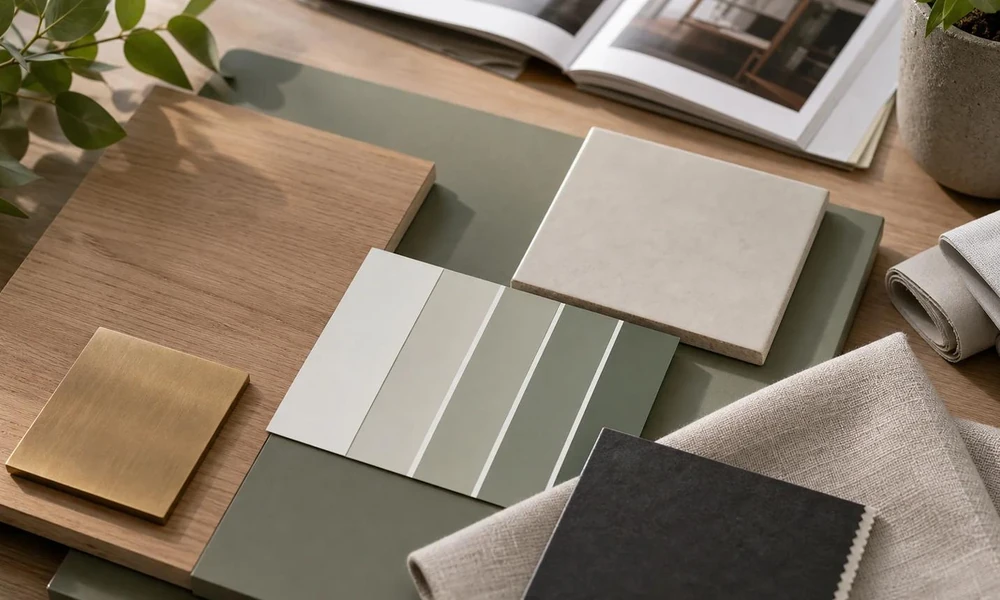
Choosing the right shade is one of the most important parts of designing a modern green interior. Two green colors may look similar in a store but appear very different on your walls.
Start by understanding their undertones. Then think about how much green you want in the room.
1. Understand Green Undertones
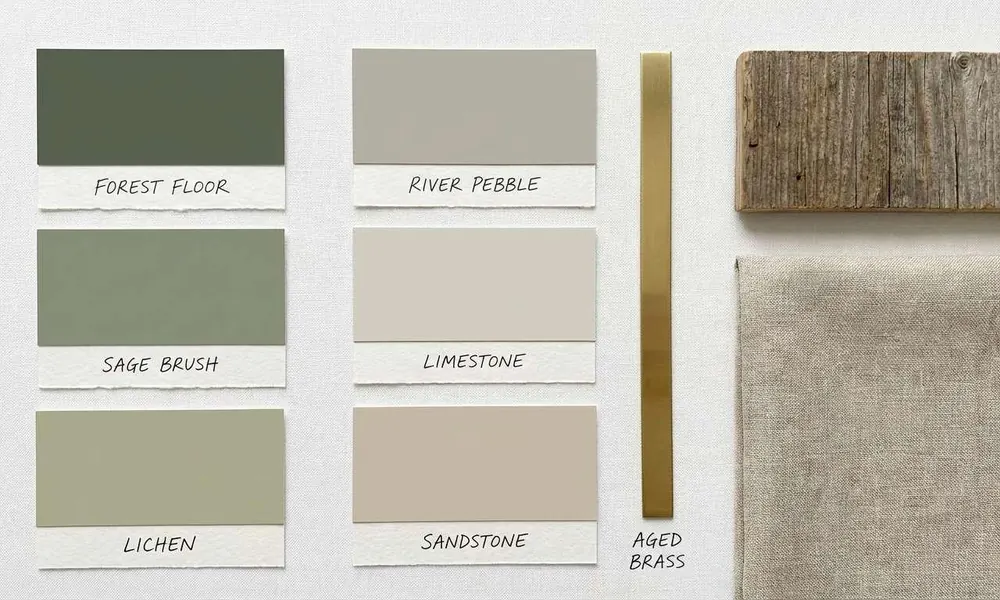
An undertone is the color you notice beneath the main shade. Green can lean toward gray, yellow, blue, or even brown.
Here are five common green color families:
| Green shade | Undertone | Colors that work well | Best use |
| Sage | Gray | Cream, oak, linen, rattan | Walls and large surfaces |
| Olive | Yellow and brown | Walnut, brass, terracotta | Cabinets and feature walls |
| Forest green | Deep blue | Dark wood, marble, cream | Walls and furniture |
| Emerald | Rich blue-green | Brass, marble, warm white | Accent furniture and dining rooms |
| Mint and sea glass | Light blue | White, pale wood, chrome | Bathrooms and small rooms |
| Chartreuse | Bright yellow | Charcoal, black, white | Small decorative accents |
Sage green is a good starting point if you want a soft, relaxed room. It works with light wood, cream furniture, and natural fabrics.
Olive green feels warmer and deeper. It looks especially good with brass, walnut, and terracotta.
Forest green adds depth and creates a stronger look. Use it on one wall, a sofa, or a few selected pieces if you do not want the room to feel too dark.
Mint and sea-glass green are lighter choices. They work well in bathrooms and smaller spaces where you want a fresh feeling.
2. Use the 60-30-10 Color Rule

The 60-30-10 rule is a simple way to balance colors in a room.
- 60% main color: Use a neutral shade such as cream, warm white, or beige on the largest surfaces.
- 30% secondary color: Add green through walls, a sofa, curtains, or cabinets.
- 10% accent color: Use a stronger color through cushions, artwork, lamps, or small decorations.
For example, a living room could have warm white walls, a sage-green sofa, and terracotta cushions. Wood furniture can connect the colors and add warmth.
You do not have to measure the colors exactly. Think of the rule as a guide that stops one color from taking over the whole room.
3. Test Paint Colors in Your Own Room
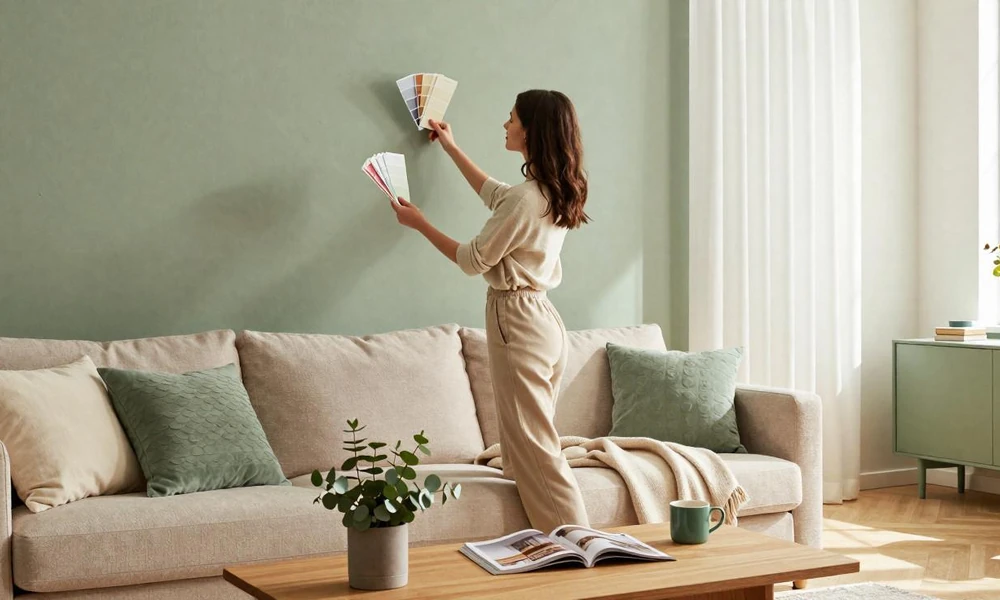
A green shade can look different depending on the room’s natural light.
A north-facing room may make some gray-greens look colder. Warm afternoon sunlight can make yellow-based greens appear richer.
Before painting an entire wall:
- Get a small paint sample.
- Paint it on a board or sample sheet.
- Move it to different parts of the room.
- Look at it in the morning, afternoon, and evening.
- Check how it looks beside your furniture and flooring.
Give yourself a couple of days before making the final choice.
4. Choose Your White After Your Green
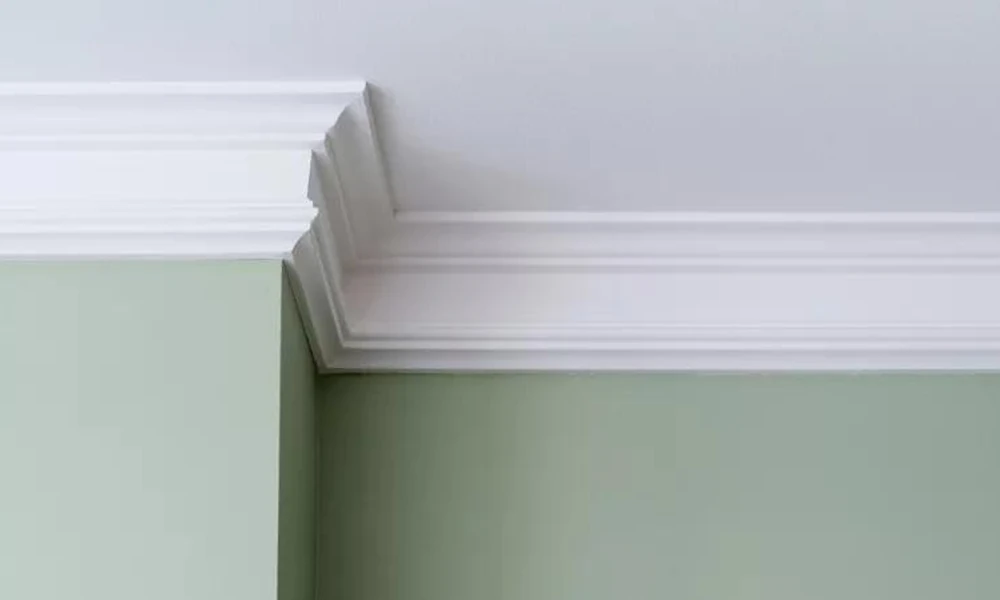
White paint also has undertones. Some whites look cool and slightly blue, while others have a warm cream appearance.
This matters when choosing trim, ceilings, curtains, and other light-colored surfaces.
- Cool greens, such as mint and sea glass, often work with crisp white.
- Warm greens, such as sage and olive, often look better with creamier whites.
- Deep forest green can work with either, depending on the room’s light and other materials.
Choose your green first, then test the white beside it. This helps the two colors look connected rather than mismatched.
Modern Green Interior Ideas for Every Room
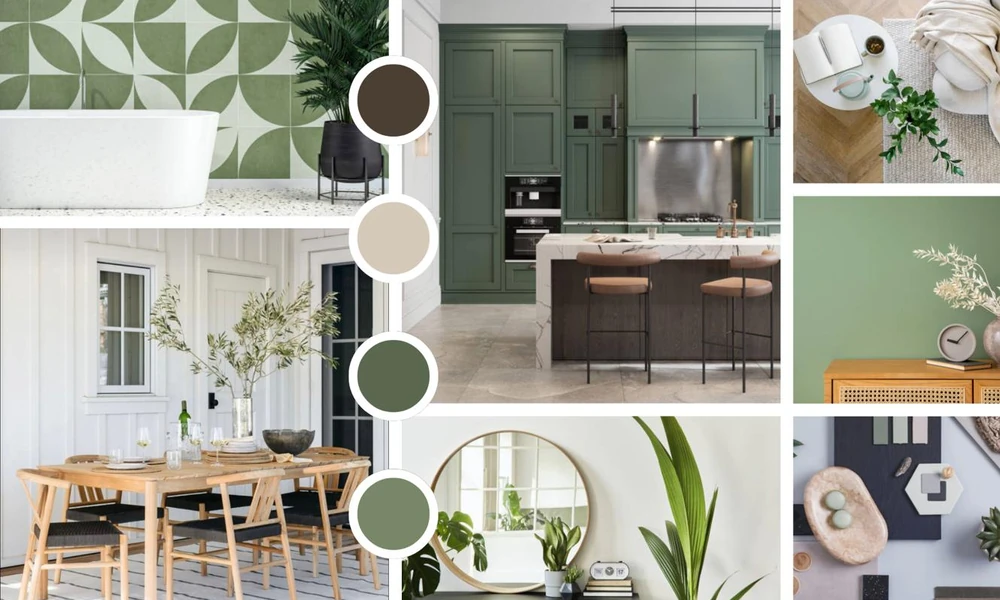
You do not need to use the same shade in every room. Each space has different lighting, furniture, and needs.
Here are some simple ways to bring green into the main rooms of your home.
Green Living Room
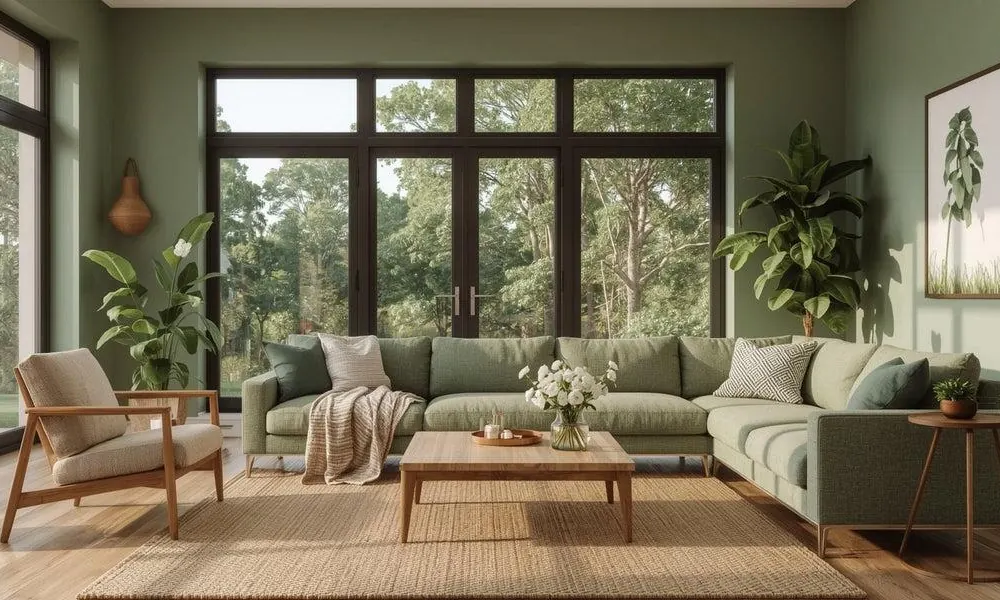
A green living room is a good place to start because you can add the color in several ways.
Sage walls with cream furniture and oak details create a soft, balanced look. If you prefer a warmer style, try an olive-green sofa against warm white walls.
For a richer room, use forest green on one wall or a large piece of furniture. Add brass lighting, wood furniture, and a few light-colored accessories to balance the darker shade.
If you are unsure about painting, start with a green chair, cushions, or a rug.
Green Kitchen
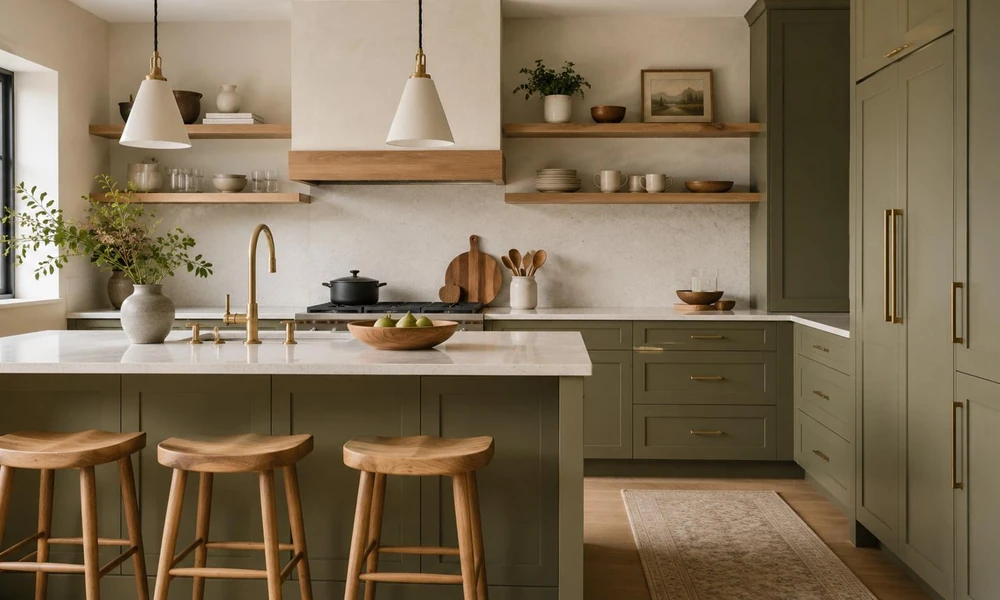
Green cabinets can make a kitchen feel warm and modern without looking too colorful.
Sage works well with light wood counters, cream walls, and simple stone surfaces. Olive cabinets create a deeper look and pair nicely with brass handles.
If you do not want to change the whole kitchen, try green on a kitchen island or lower cabinets. Keep the remaining surfaces simple so the room does not feel crowded.
Green Bedroom
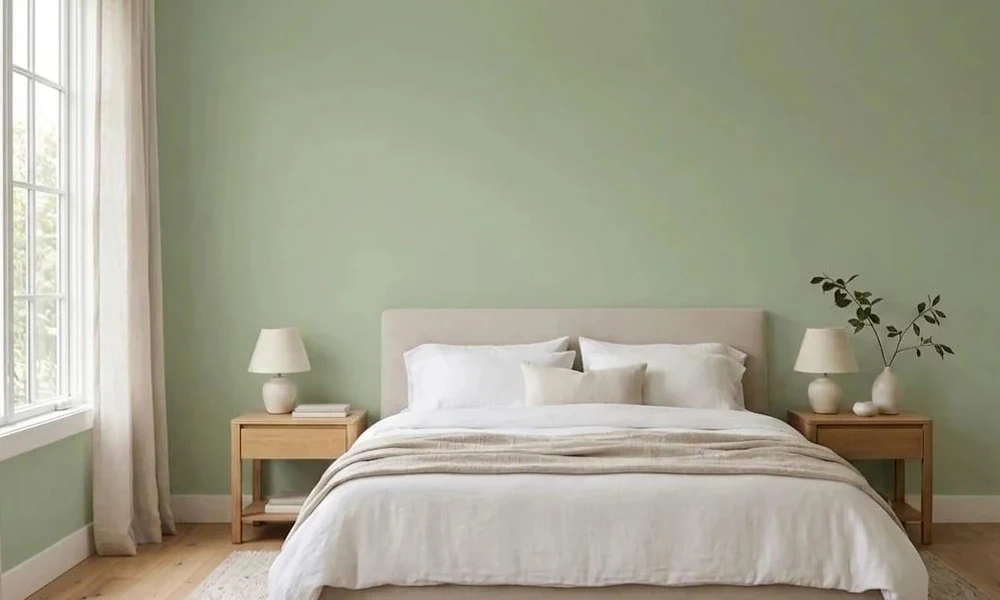
Bedrooms often benefit from softer shades of green.
Sage and gray-green can create a quiet background for rest. Pair them with cotton or linen bedding, pale wood furniture, and warm lighting.
Avoid adding too many strong patterns or bright colors. A simple combination of green, cream, and natural textures is often enough.
Green Bathroom
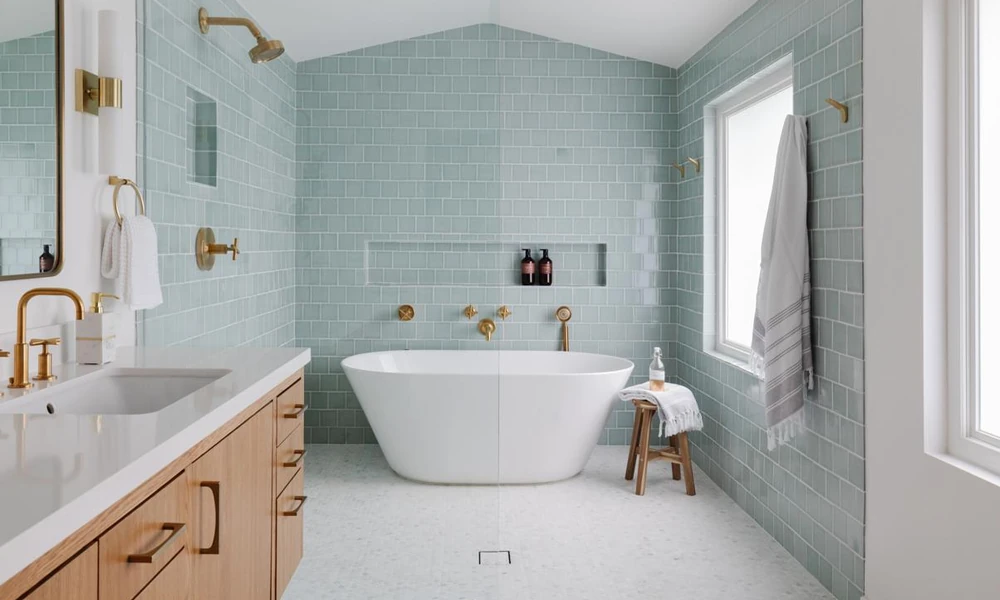
Mint and sea-glass green are useful choices for bathrooms because they keep the space looking light.
You can use green on the walls, tiles, vanity, or small accessories. Pair it with white surfaces, pale wood, and simple metal details.
A small bathroom can also handle a darker look. Forest-green walls with brass fixtures create a rich, jewel-like style. Keep the lighting suitable so the room remains comfortable to use.
Green Interior for Small Apartments
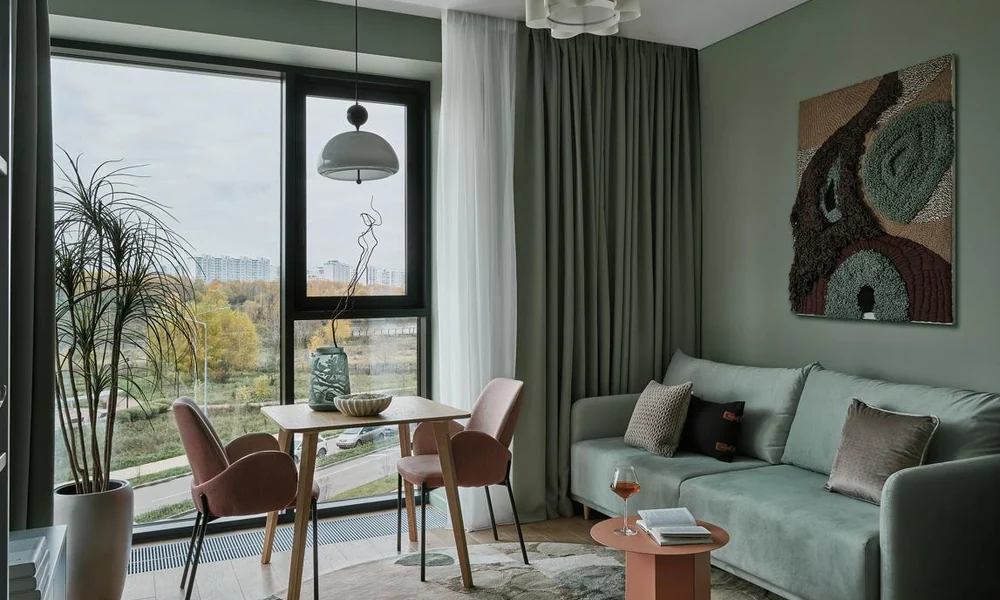
Green can work in small rooms too. The key is to avoid too many sharp color changes.
Try sage walls with a slightly deeper green sofa and light wood furniture. Keeping the main colors close in tone helps the room feel more connected.
You can also use green through one main piece of furniture instead of painting every wall.
If you rent your home, use removable decorations, cushions, rugs, and artwork to bring in the color without making permanent changes.
Choose Healthier Materials for a Greener Interior

The color is only one part of a modern green interior. The materials you bring into your home also matter. Paint, furniture, flooring, and fabrics can affect indoor air quality and how long your belongings last.
The US Environmental Protection Agency (EPA) reports that people spend about 90% of their time indoors. It also notes that levels of some indoor pollutants can be two to five times higher than typical outdoor levels.
This makes material choices worth considering when you update a room.
Choose Low-VOC Paint
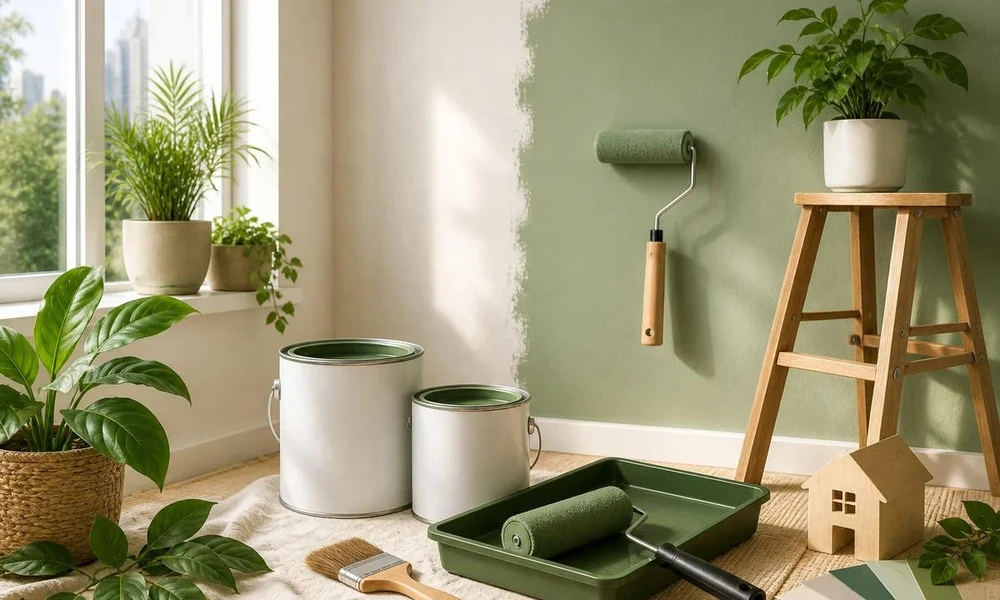
Paint is one of the largest surfaces in a room, so it is a useful place to start. Some conventional paints release volatile organic compounds, commonly called VOCs. These chemicals can enter indoor air as paint dries and cures.
Low-VOC and zero-VOC paints are designed to reduce these emissions. They are available in many colors, including sage, olive, and other green shades.
When buying paint, read the product label and check what the manufacturer says about VOC content. A low-VOC label does not mean a product has no emissions at all, so follow the instructions and ventilate the room while painting.
Use Natural Fabrics

Natural fabrics can add softness and texture to a green interior.
Consider:
- Linen: Useful for curtains, cushions, and bedding.
- Cotton: A common choice for sheets, covers, and everyday textiles.
- Wool: Often used for rugs and blankets.
- Natural woven materials: Rattan and similar materials can add texture to furniture and accessories.
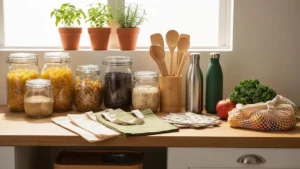
Look for well-made products that suit how you use the room. Buying fewer, durable textiles is often a better choice than replacing cheap items regularly.
Choose Furniture That Lasts

Furniture is a major part of a room’s appearance and its environmental impact.
Solid wood furniture can often be repaired, sanded, refinished, and used for many years. Look for strong joints and a design that will still suit your home as your style changes.
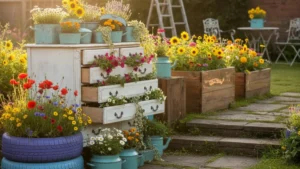
Secondhand furniture is another useful option. A well-made vintage table or wooden dresser may already have many years of use left.
Before buying a secondhand piece, check it carefully:
- Look for signs of dampness, mold, or water damage.
- Smell for strong smoke or mildew odors.
- Open and close every drawer.
- Check the legs and joints for movement.
- Look for lifting or damaged veneer.
Choose pieces that are in good condition or can be repaired without too much work.
You can find more ways to reuse household items in our guide to repurposing household items.
Do Houseplants Really Purify Indoor Air?
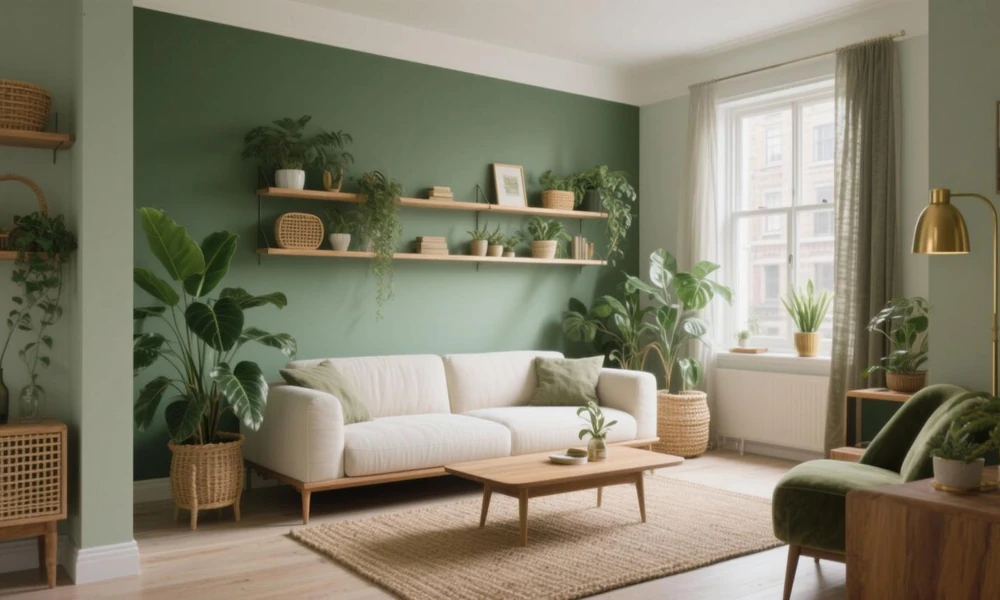
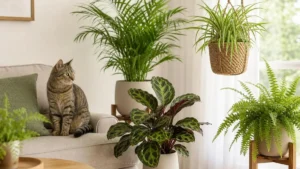
Houseplants are a natural part of many modern green interiors. They add color, texture, and life to a room.
But can they clean the air?
The idea became popular after a NASA study in 1989 tested plants in sealed chambers. The results showed that some plants could remove certain pollutants under those laboratory conditions.
However, a sealed chamber is very different from a normal home. According to an EPA response discussed in health reporting, it could take roughly 680 houseplants in a typical home to match the effect seen in those experiments.
That does not mean houseplants are useless. They can make a room feel more welcoming and bring nature indoors. They simply should not be treated as air-cleaning machines.
For better indoor air quality, focus on practical steps:
- Open windows when outdoor conditions allow.
- Use kitchen and bathroom exhaust fans.
- Control moisture and fix leaks.
- Avoid unnecessary sources of indoor pollution.
- Choose suitable lower-emission paints and materials.
Keep plants because you enjoy them, not because you expect them to replace good ventilation.
Frequently Asked Questions
Does green make a room look smaller?
Not always. Light shades such as sage and mint can keep a room feeling open. Dark greens can add depth, especially when balanced with suitable lighting and lighter materials.
What colors go with sage green walls?
Cream, warm white, oak, beige, and rattan are reliable choices. Brass and terracotta add warmth, while charcoal creates a stronger contrast.
Is green still a popular interior design color?
Green remains a common choice in modern interiors because it works with natural materials and many decorating styles. Trends change, so choose a shade you enjoy rather than following a trend alone.
How can I add green without painting my walls?
Try an olive chair, green cushions, a rug, curtains, artwork, or decorative items. These choices are also useful if you rent your home.
What makes an interior eco-friendly rather than just green-colored?
The materials and buying choices make the difference. Low-VOC paint, durable furniture, natural fabrics, secondhand items, and fewer unnecessary purchases can make an interior more thoughtful.
Is low-VOC paint better for indoor air?
Low-VOC paint is designed to release fewer volatile organic compounds than many conventional paints. However, it does not guarantee zero emissions. Read the label and ventilate the room during and after painting.
Final Thoughts
A modern green interior combines a natural color palette with materials chosen to last. Start with a shade that suits your room, use the 60-30-10 rule to balance colors, and add wood, natural fabrics, and durable furniture.
You do not need to redesign your entire home at once. Begin with one room, one green feature, or one better material choice.
For a wider approach to sustainable home choices, explore our green living ideas guide. You can also find more ways to reuse everyday objects in our repurposing guide.
Disclaimer: This article provides general interior design and material guidance. Product ingredients and safety standards vary, so always check labels and manufacturer instructions before buying or using materials.