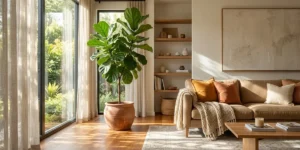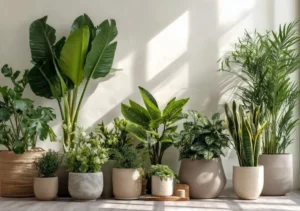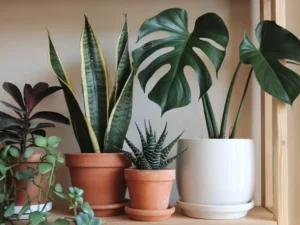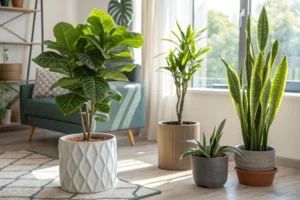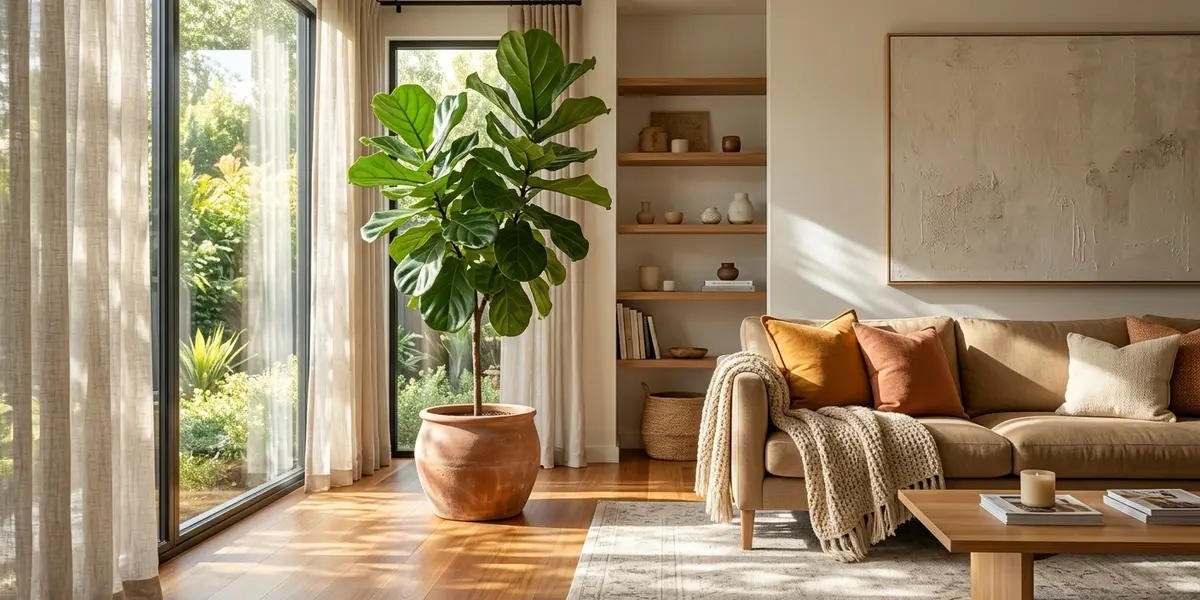
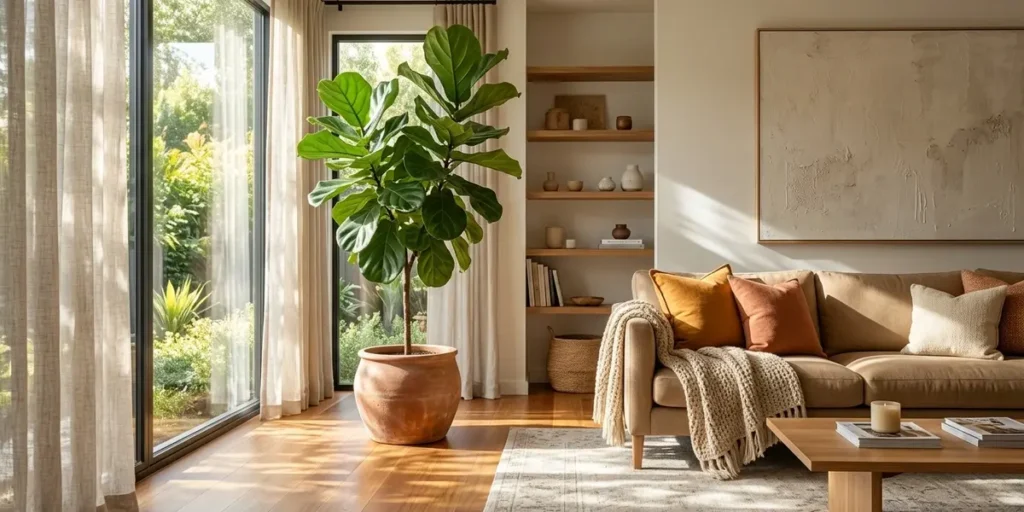
You spend $150 on a 6 foot fiddle leaf fig. You park it in the dark corner beside the sofa because that’s where the empty space is. For 2 years, it drops a leaf every few weeks while you wonder what you’re doing wrong.
You’re doing nothing wrong. The plant was fine. The spot was wrong. This guide to tall indoor plants is sorted by light instead of by looks. Find the light in your corner first. Then choose from the plants that can live there.
Each plant comes with a mature indoor height, a growth rate, and the one thing most likely to kill it. I also cover the stuff that surprises people after they buy, like what a wet 14 inch pot weighs and how to water a plant you can’t lift.
Key takeaways
- Light decides which tall plant survives. Match the plant to the spot.
- Check the mature indoor height and growth rate before buying. A pot size on the tag describes the pot and says nothing about the plant.
- Most rooms offer medium light so the medium list is the safest shortlist.
- Very few tall plants grow in low light. Several only tolerate it.
- A wet 14 inch pot can weigh 30 to 50 pounds (14 to 23 kg).
- A decorative outer pot with standing water is the most common slow killer.
- Check pet safety before you buy.
What counts as tall and what you’re really buying
I call a plant tall once it reaches about 4 feet (1.2 m). Statement plants reach 6 to 8 feet (1.8 to 2.4 m) and brush a standard ceiling. The gap between the height you buy and the height it becomes is where people get surprised.
A rubber plant sold at 3 feet can add 1 to 2 feet a year in good light. In 3 to 4 years, it touches the ceiling. A Kentia palm sold at 5 feet grows only a few inches a year indoors, so it stays close to that height for a long time. A fiddle leaf fig adds roughly 6 to 12 inches a year in bright light.
Retail labels add confusion. A “10 inch” tag usually describes the grow pot. It tells you nothing about the plant’s height or spread.
Do two checks before buying. Measure your ceiling and subtract the pot height. Then look up the plant’s mature indoor height on a database like the Missouri Botanical Garden Plant Finder or the NC State Extension Plant Toolbox. Most popular lists copy each other, and some get the numbers wrong.
How to judge the light in your room
You don’t need a meter. You need 4 observations.
Window direction
In the Northern Hemisphere a south window gets the strongest light. West gives hot afternoon sun. East gives gentle morning light. North is the dimmest. Flip this south of the equator.
Distance from the glass.
Light fades fast as you move back. A spot 6 feet from a window can get a small fraction of the light at the glass.
What’s outside.
A tree, a building or a balcony overhang can turn a south window into a medium one.
The shadow test.
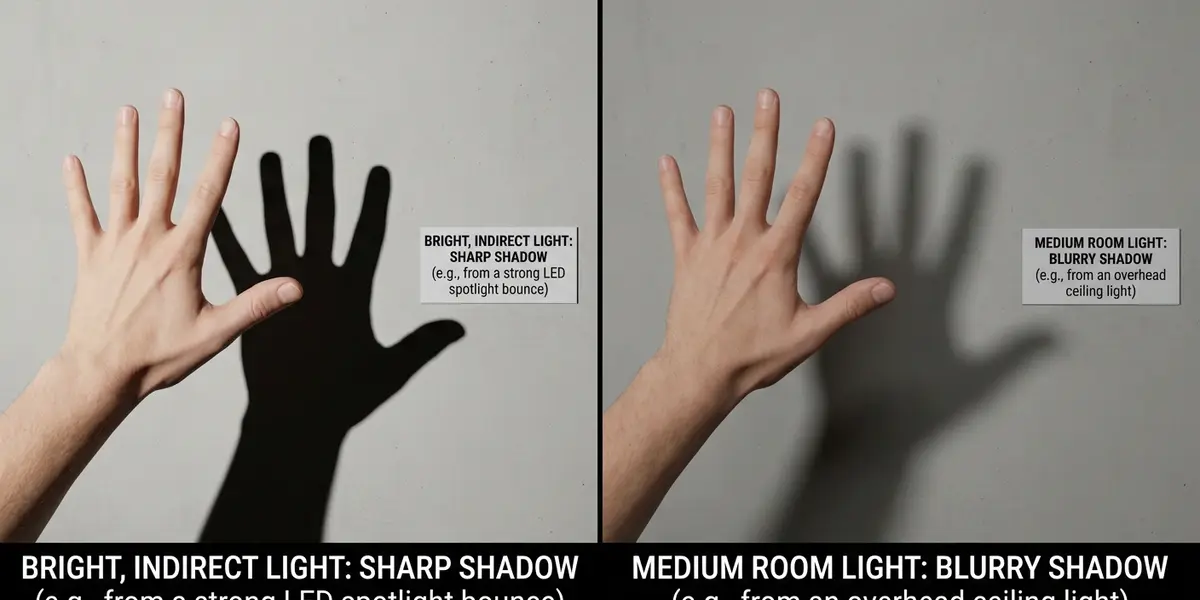
Hold your hand about a foot above the spot around midday. Then read the shadow:
- Bright indirect: a clear shadow with fairly sharp edges. This is within about 3 feet (1 m) of a south, east, or west window with no direct sun landing on the leaves. A sheer curtain keeps it indirect.
- Medium: a visible shadow with soft blurry edges. This is roughly 3 to 6 feet (1 to 2 m) from a bright window or beside a north window.
- Low: a faint shadow or none. This is the far side of a room or a window that’s blocked. If you need a lamp to read at noon, the light is low.
Check again in winter. Sun angle drops and day length shrinks, so the same corner can slip down a category.
Tall plants for bright indirect light
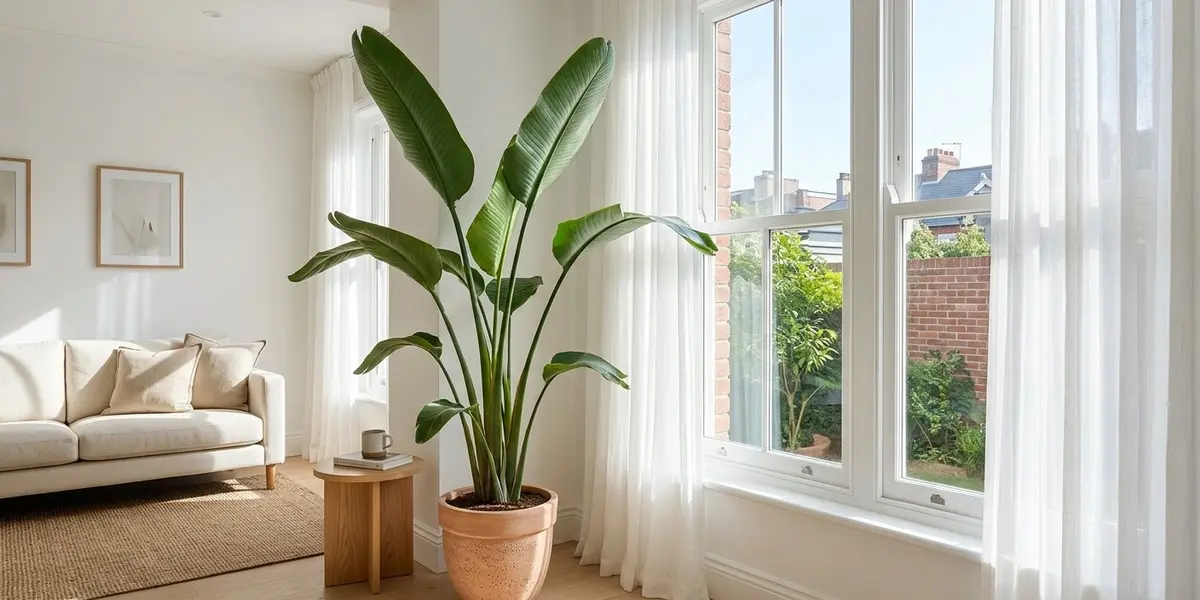
This is the largest group. These plants want a spot near a window, and many of them sulk when moved to a dim corner.
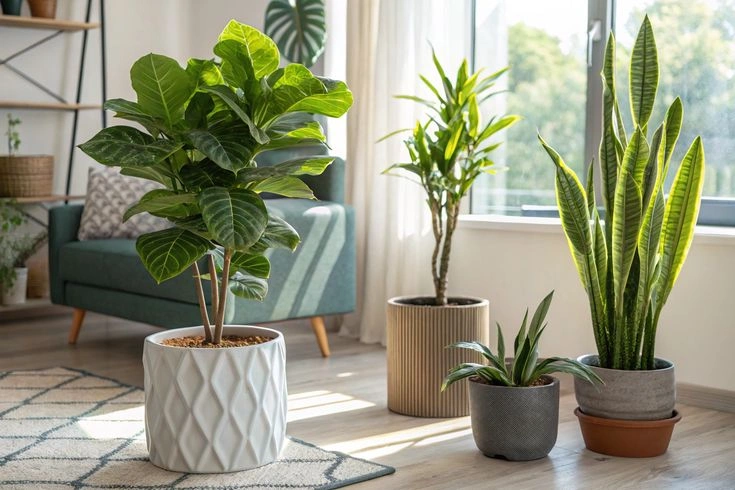
Fiddle leaf fig (Ficus lyrata). 6 to 10 feet indoors. Moderate growth. It needs real brightness. Wet roots in soil that never dries kill it fastest. It also resents drafts and movement.
Rubber plant (Ficus elastica). 6 to 10 feet. Fast in good light. It tolerates medium light but grows leggy there. Overwatering is the killer. A sudden light change makes it drop leaves.
Bird of paradise (Strelitzia nicolai). 5 to 8 feet indoors. Moderate growth. It wants bright light and handles a little direct sun. In low light it stops producing new leaves.
Yucca (Yucca gigantea). 4 to 6 feet or more. Slow. It handles dry air and some direct sun. Constant wet soil rots the trunk.
Norfolk Island pine (Araucaria heterophylla). 4 to 6 feet indoors. Slow. It wants bright light and humid cool air. Dry heated rooms make the lower branches drop and they never regrow.
Weeping fig (Ficus benjamina). 6 to 10 feet. Moderate. It drops leaves dramatically after a move or a draft. Pick its spot once and leave it there.
Tall plants for medium light
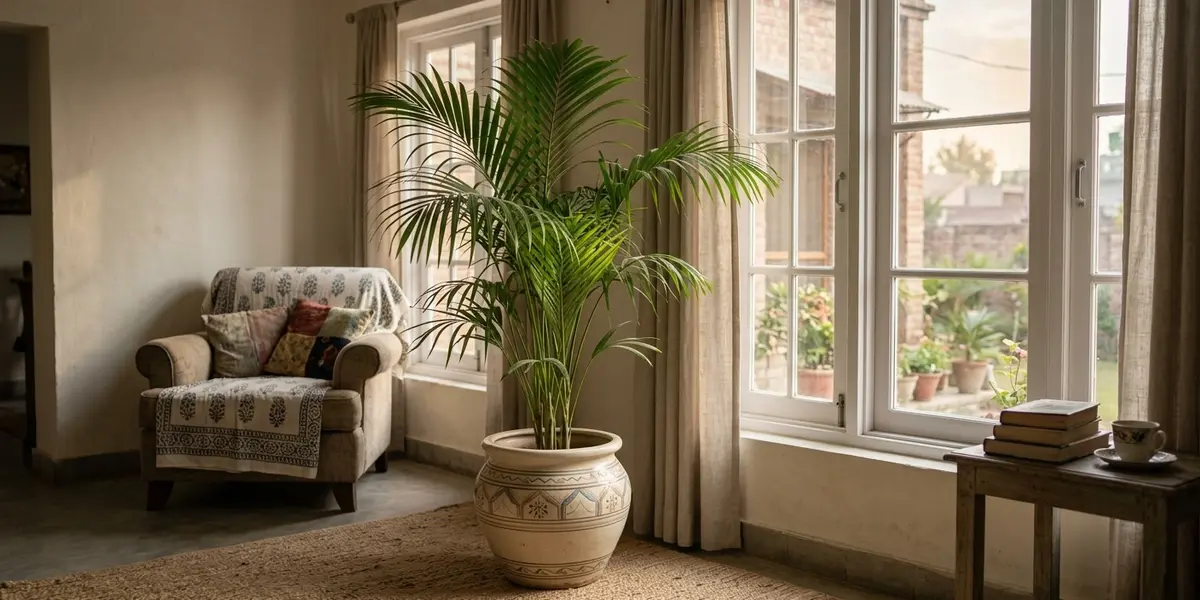
Most rooms land here. Tolerance and thriving aren’t the same thing so I’ve noted where each plant does best.
Kentia palm (Howea forsteriana). 6 to 8 feet. Very slow. It does best in medium to bright indirect light and tolerates lower light. Sitting in water kills it.
Dracaena marginata (dragon tree). 5 to 8 feet. Slow. It prefers medium to bright and copes with a bit less. Overwatering is the main risk. Brown leaf tips usually come from salts or fluoride in tap water.
Dracaena fragrans (corn plant). 4 to 6 feet. Slow. Medium light suits it. Cold drafts and soggy soil are its enemies.
Schefflera (Schefflera arboricola). 4 to 6 feet. Moderate. It grows best in medium to bright light and drops leaves in low light or wet soil.
Monstera deliciosa. 6 to 8 feet with support. Fast in good light. It tolerates medium light but the leaves stay smaller. Soggy soil is the usual killer.
Lady palm (Rhapis excelsa). 5 to 6 feet and clumping. Slow. It does well in medium light. Direct sun scorches it and dry air browns the tips.
Tall plants for low light
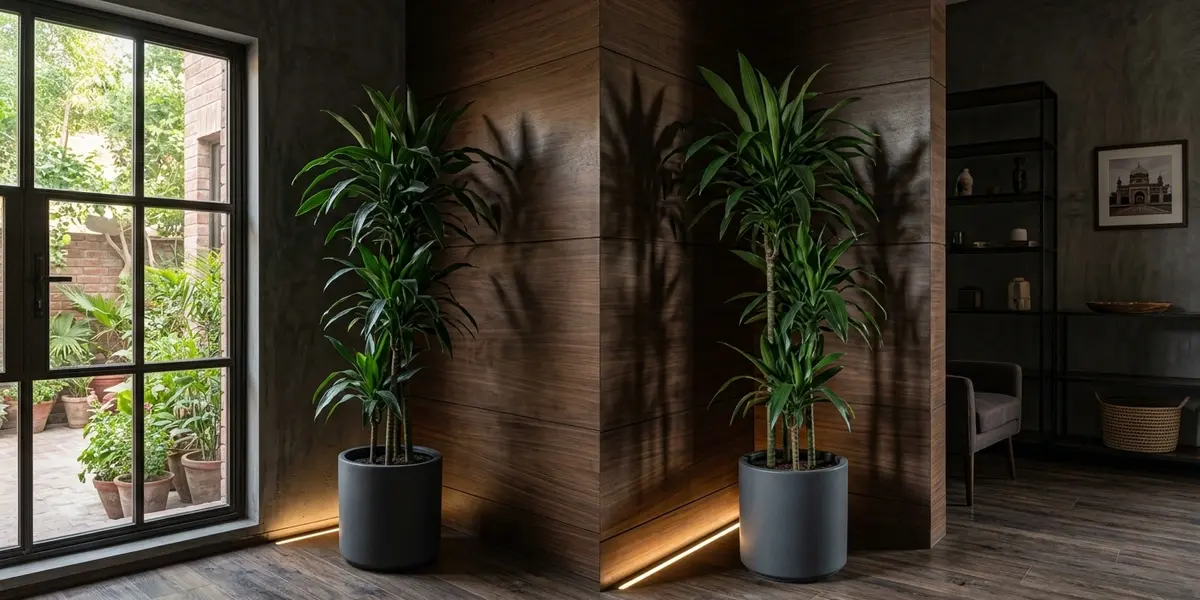
This list is short on purpose. Very few tall plants grow in low light. Several survive there and stop growing. That’s a fair outcome if you know it in advance.
Dracaena ‘Janet Craig’ (Dracaena deremensis). 4 to 6 feet. Slow. Low to medium light. It survives dim corners better than most. Overwatering kills it.
Snake plant (Dracaena trifasciata). 3 to 4 feet. Slow. It tolerates low light. Soggy soil rots it.
ZZ plant (Zamioculcas zamiifolia). 2 to 3 feet, so borderline tall. Slow. It tolerates low light. Rot from overwatering is the main risk.
Parlor palm (Chamaedorea elegans). 3 to 4 feet. Slow. Low to medium light. Spider mites show up in dry air.
If you need a 6 foot plant in a truly dark corner, no real option grows there. A fiddle leaf fig or rubber plant will decline. Your choices are a tolerant plant that holds its size, a grow light on a timer or a good faux plant.
The practical problems of a big plant
This is the part people discover after buying.
Weight. A wet 14 inch pot of mix can weigh 30 to 50 pounds (14 to 23 kg). Put heavy plants on a rolling stand from day one.
Getting it home. Measure doorways and stairwells. Wrap the leaves loosely before you carry the plant.
Watering something you can’t lift. Use a long spout watering can. Water slowly until it runs from the drainage holes. Check moisture with a wooden skewer pushed to the bottom of the pot.
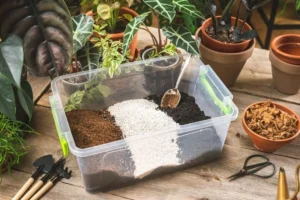
Potting mix. Use a chunky, well-draining mix with bark and perlite. Heavy mix stays wet for days in a large pot.
Repotting. Expect to repot every 2 to 3 years. When the plant is too big to move, scrape off the top 2 inches of mix and replace it with fresh.
Pruning. Cut just above a leaf node. Ficus sap is a skin irritant so wear gloves.
Cleaning leaves. Dust blocks light. Wipe large leaves with a damp cloth once a month. Use a soft duster on palms.
Pots, support and stability
Pot size should grow slowly. Move up 1 to 2 inches (2.5 to 5 cm) in diameter at each repot. A pot far too big holds wet soil around a small root ball.
Stability matters with a top heavy plant. Choose a pot with a wide heavy base. Terracotta adds weight and breathes. Plastic is lighter and holds water longer.
Drainage is essential. The decorative outer pot (cachepot) is the most common slow killer I see. Water pools in it and the roots sit in a puddle for weeks. After watering, lift the inner pot out and let it drain. Then empty the outer pot.
Rubber plants and fiddle leaf figs lean toward the window. Rotate them a quarter turn every time you water. Stake anything top heavy with a bamboo stake or a moss pole and use soft ties.
Keeping it alive after year one
General care belongs in our starting point guide for indoor plants. This section only covers what changes at size.
Feeding schedule. Give diluted balanced fertilizer every 4 to 6 weeks from spring to early autumn. Skip winter.
Rotating. A quarter turn each watering keeps growth even.
Pruning for shape. Prune in spring when growth is strongest. Cutting a rubber plant above a node encourages branching.
Pest inspection. A big plant hides pests. Use a stepladder and a torch. Check leaf undersides and stem joints every month. Fine webbing and speckled leaves mean spider mites. Cottony white lumps mean mealybugs. Small brown bumps on stems mean scale. Wipe leaves and isolate the plant from others as soon as you spot any of them.
If the room is small
Height without spread is the target. If you’re searching for the best indoor plants for small spaces, narrow growth habits win.
Good picks: dracaena marginata, yucca, Norfolk Island pine, snake plant, and ZZ plant. They grow up more than out.
Skip bird of paradise, split leaf philodendron and monstera unless you have room. They spread 3 to 5 feet wide.
A few tricks help. Prune a rubber plant to a single trunk. Use a tall narrow pot. Put a plant on a low stand so the leaves catch more light.
Buying checklist
- Judge the light in the exact spot first.
- Look up the mature indoor height.
- Measure your ceiling and doorways.
- Check the pot weight and use a rolling stand.
- Confirm the pot has drainage holes.
- Inspect leaf undersides for pests before it comes home.
- Check pet safety if you have animals.
Frequently Asked Questions
Can I use a grow light for a tall plant in a dark corner?
Yes. A full spectrum LED on a timer for 8 to 12 hours a day can support medium light plants in a dim spot. Place it within a couple of feet of the leaves.
Why is my tall plant leaning?
It’s reaching for light. Rotate it a quarter turn each time you water and move it closer to the window if you can.
Are tall indoor plants safe for pets?
Many are not. The ASPCA Toxic and Non-Toxic Plants List lists Dracaena, Ficus, snake plant, and Monstera as toxic to cats and dogs. It lists parlor palm and Kentia palm as non-toxic. Check the ASPCA list before buying.
Is a fake plant better for a dark corner?
Often yes. A faux plant looks good with zero light and nothing dies. A real plant that tolerates low light will survive but may never grow.
How often should I water a very large plant?
Check the soil with a wooden skewer instead of following a schedule. Water when the bottom third of the pot feels dry.