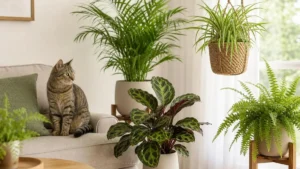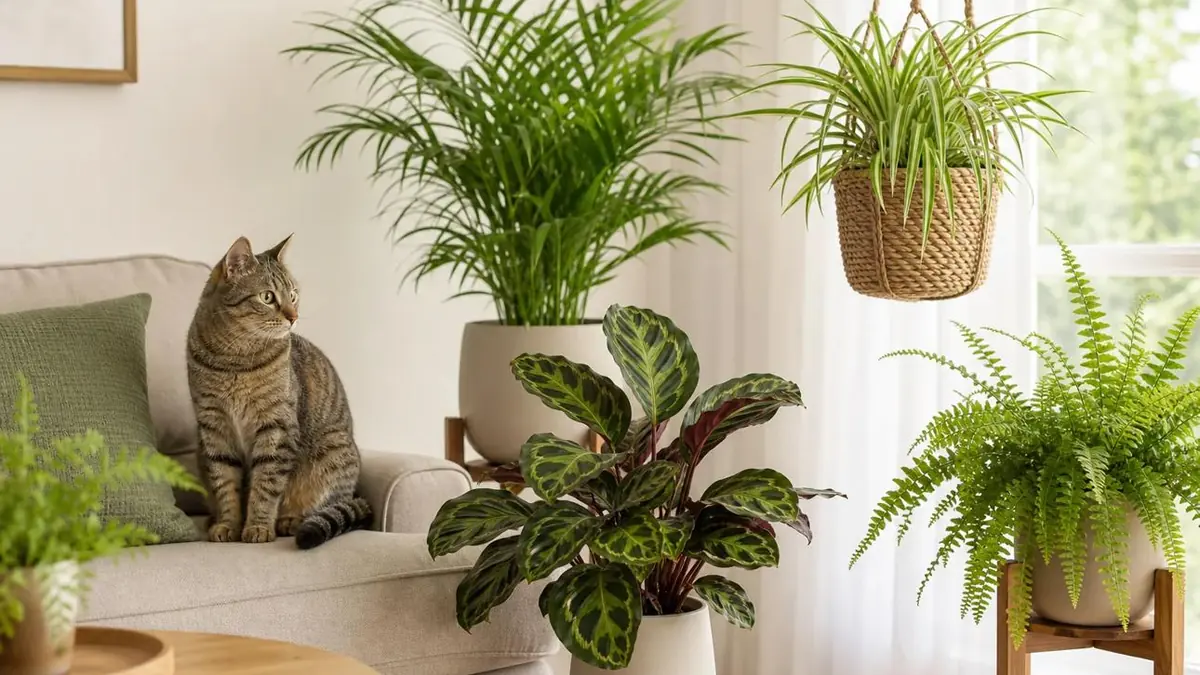
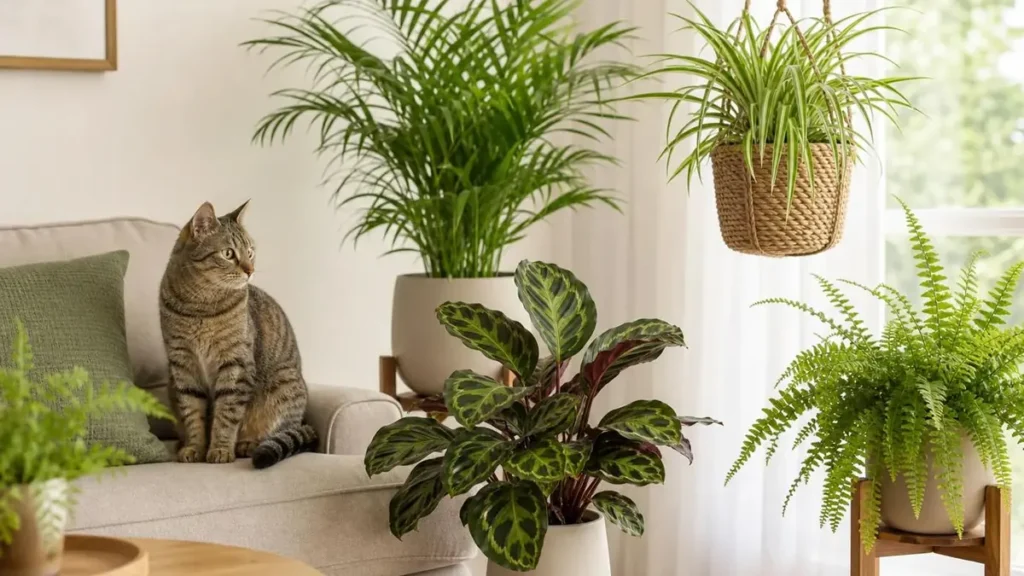
Sharing your home with a cat changes the way you choose houseplants. A beautiful trailing vine might look perfect on a bookshelf, but a curious cat may see it as a toy. A new plant on the windowsill can quickly become something to sniff, paw at, or chew.
The good news is that you do not have to give up indoor greenery to create a safer home for your feline companion. Plenty of attractive houseplants are considered non-toxic to cats, from elegant parlor palms to colorful African violets and easygoing spider plants.
Cat-safe plants are plants recognized as non-toxic to cats when identified correctly. Choosing these varieties can reduce the risk of plant poisoning, but no plant is completely risk-free to chew or eat. Even non-toxic greenery can cause stomach upset if a cat consumes enough of it.
The safest approach is to select verified pet-friendly species, avoid toxic lookalikes, and keep plants out of reach when possible.
What Makes a Plant Cat-Safe?
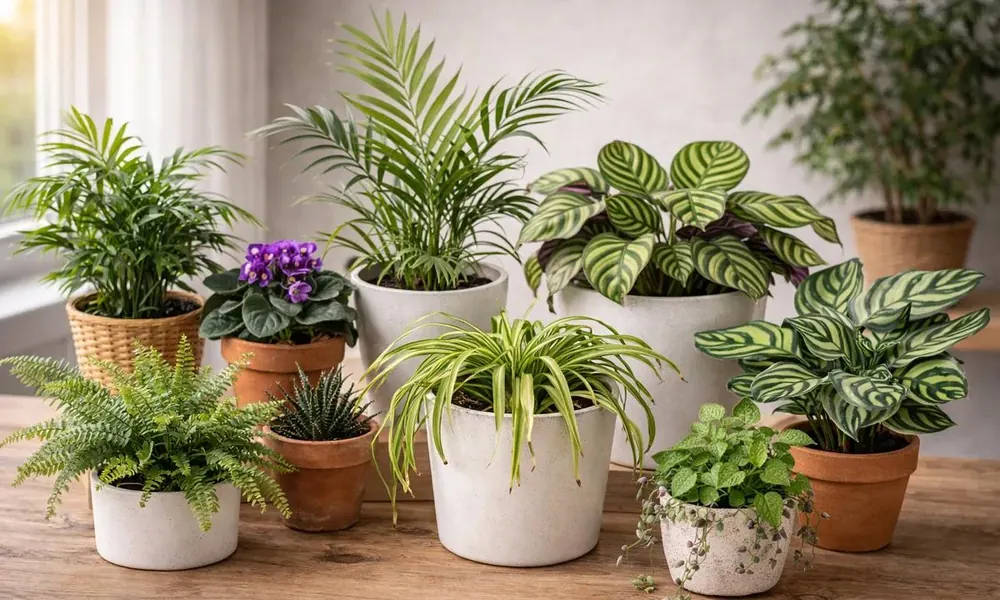
A cat-safe plant is generally one that is not known to contain toxins that cause poisoning in cats. However, safety depends on identifying the exact plant species rather than relying on a common name or appearance.
Some plants have similar-looking leaves but very different toxicity profiles. For example, certain palms are pet-friendly, while sago palms are highly toxic to cats and dogs.
It is also important to understand the difference between a plant being non-toxic and being suitable for eating. Cats are obligate carnivores and do not need to eat houseplants as part of a balanced diet.
Even a non-toxic plant may cause vomiting, diarrhea, or mouth irritation if eaten in large quantities. Pesticides, fertilizers, decorative moss, and plant treatments can introduce additional risks.
25 Cat-Safe Plants to Consider for Your Home
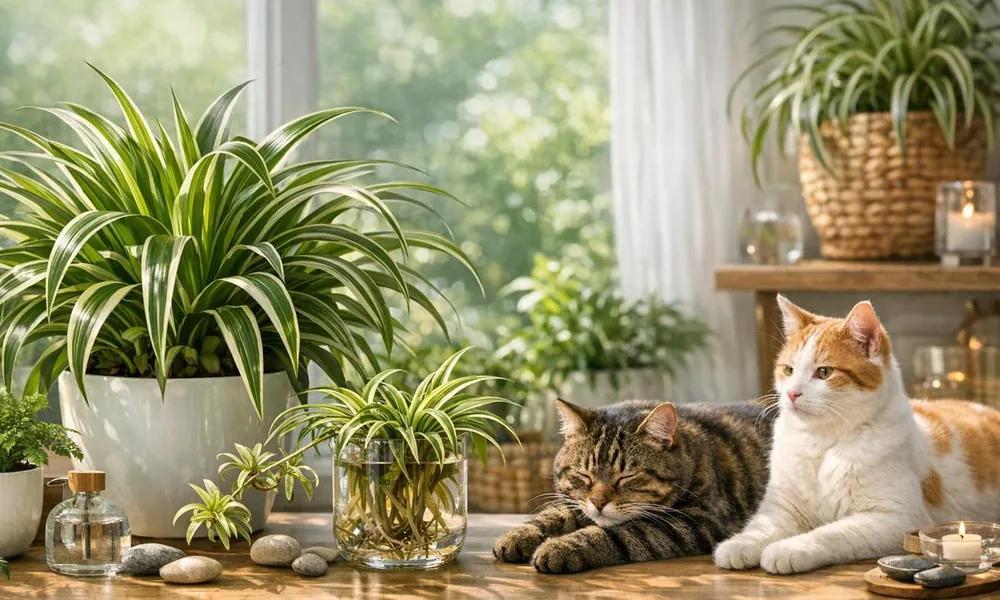
These plants are commonly listed as non-toxic to cats by veterinary or animal-welfare resources. Always confirm the botanical name before purchasing, particularly when a plant is sold under several common names.
1. Spider Plant
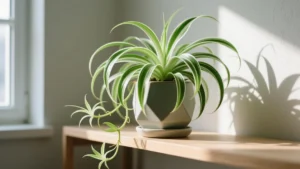
The spider plant (Chlorophytum comosum) is a popular choice for homes with cats because it is generally considered non-toxic to them.
Its long, arching green leaves, often striped with white, create a relaxed look on shelves or in hanging planters. Mature plants also produce small plantlets that can be propagated into new plants.
Care tip: Give it bright, indirect light and water when the upper layer of the growing medium begins to dry.
Although it is non-toxic, cats may be attracted to its grass-like leaves, so protect the plant if chewing becomes a habit.
2. Boston Fern
Boston fern (Nephrolepis exaltata) adds soft, feathery greenery to a room.
It is generally considered non-toxic to cats and works well in a bright bathroom or another space with suitable humidity. Its cascading fronds can soften shelves and hanging displays.
Care tip: Keep the growing medium evenly moist without allowing the roots to remain waterlogged. Avoid placing it beside strong heating or cooling vents.
3. Parlor Palm
Parlor palm (Chamaedorea elegans) is a compact indoor palm with delicate, arching fronds.
Unlike the dangerous sago palm, parlor palm is considered non-toxic to cats. Its relatively slow growth and ability to tolerate moderate indoor light make it a useful choice for many homes.
Care tip: Provide indirect light, moderate watering, and a pot with good drainage.
Always verify that the plant is a true parlor palm rather than another palm species sold under a similar name.
4. Areca Palm
Areca palm (Dypsis lutescens) brings a tropical appearance to living rooms and bright corners.
It is generally listed as non-toxic to cats and can grow into a substantial indoor plant when given enough space and suitable light.
Care tip: Provide bright, indirect light and water when the surface of the growing medium begins to dry. Avoid placing it where cats can easily knock over the pot.
5. Calathea
Calatheas are known for their decorative leaves, which may feature stripes, spots, or contrasting patterns.
Many plants formerly grouped under the name Calathea are now classified in the genus Goeppertia. These plants are generally considered non-toxic to cats.
Care tip: Give them indirect light, suitable humidity, and consistent moisture without waterlogging the roots.
Their patterned foliage can add color and interest without relying on flowers.
6. Prayer Plant
The prayer plant (Maranta leuconeura) is named for its leaves, which often fold upward at night.
Its colorful leaf patterns and relatively compact growth make it a good choice for desks, shelves, and smaller indoor spaces.
Care tip: Use bright, indirect light and keep the growing medium lightly moist. Avoid harsh direct sunlight, which can damage its leaves.
7. Peperomia
Peperomia includes many compact plants with different leaf shapes, textures, and colors.
Species such as baby rubber plant (Peperomia obtusifolia) are generally considered non-toxic to cats. Their small size makes them practical for shelves and windowsills.
Care tip: Provide bright, indirect light and allow the growing medium to dry somewhat between waterings. Avoid keeping the roots constantly wet.
8. African Violet
African violet (Streptocarpus ionanthus, commonly known by its older name Saintpaulia ionantha) produces attractive flowers in shades of purple, pink, blue, or white.
It is considered non-toxic to cats and can add a colorful touch to a bright indoor space.
Care tip: Provide bright, indirect light and water carefully. Avoid leaving the pot standing in water for long periods, and try to keep water off the leaves if it causes spotting in your conditions.
9. Moth Orchid
Moth orchids (Phalaenopsis species) are popular flowering houseplants with elegant blooms that can last for weeks or months under suitable conditions.
They are generally considered non-toxic to cats, making them an attractive alternative to some toxic flowering plants.
Care tip: Grow them in a suitable orchid mix, provide indirect light, and allow the roots to receive adequate airflow.
10. Hoya
Hoyas are tropical plants with thick leaves and trailing or climbing growth habits. Some species produce clusters of fragrant, star-shaped flowers.
Many commonly grown Hoyas, including Hoya carnosa, are considered non-toxic to cats.
Care tip: Provide bright, indirect light and water when the growing medium has dried sufficiently. Choose a stable support or hanging arrangement if your cat tends to explore plant shelves.
11. Wax Plant
The wax plant is another common name for Hoya carnosa. Its thick, glossy leaves make it a popular choice for indoor collections.
It can develop long vines and clusters of flowers under suitable conditions.
Care tip: Avoid excessive watering and provide a bright position with some protection from intense afternoon sun.
12. Haworthia
Haworthia is a group of small succulents with thick leaves, often decorated with stripes, raised markings, or translucent areas.
Many Haworthia species are considered non-toxic to cats, making them an alternative to toxic succulents such as certain Kalanchoe varieties.
Care tip: Give the plant bright light and a fast-draining growing medium. Allow the soil to dry between waterings.
Confirm the species before buying a plant labeled only as a succulent.
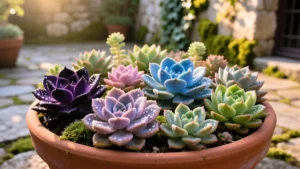
13. Echeveria
Echeveria plants form attractive rosettes of fleshy leaves and come in shades of green, blue-gray, pink, and purple.
Many Echeveria species are considered non-toxic to cats. Their compact form works well on bright windowsills and in small decorative pots.
Care tip: Provide strong light, good drainage, and restrained watering. Keep the plant away from places where a cat could easily knock it onto the floor.
14. Ponytail Palm
Ponytail palm (Beaucarnea recurvata) has a swollen trunk-like base and long, narrow leaves that cascade outward.
Despite its common name, it is not a true palm. It is generally considered non-toxic to cats and can make an interesting focal plant.
Care tip: Provide bright light and a well-draining growing medium. Its swollen base stores water, so avoid frequent watering.
15. Cast Iron Plant
Cast iron plant (Aspidistra elatior) is known for its resilience and tolerance of lower-light indoor conditions.
Its broad, dark green leaves create a simple, elegant look, and it is generally considered non-toxic to cats.
Care tip: Allow the surface of the growing medium to dry between waterings and avoid prolonged exposure to direct sunlight.
16. Baby Rubber Plant
Baby rubber plant (Peperomia obtusifolia) has thick, rounded leaves and a compact growth habit.
It is a useful choice for people who want a plant with a clean, sculptural appearance without a large footprint.
Care tip: Give it indirect light and water moderately. Excess moisture around the roots is a more common problem than occasional dryness.
17. Friendship Plant
Friendship plant (Pilea involucrata) has textured leaves with prominent patterns and a soft, bushy growth habit.
It is generally considered non-toxic to cats and can be an appealing option for a small indoor plant collection.
Care tip: Provide indirect light, moderate humidity, and consistent but not excessive moisture.
18. Chinese Money Plant
Chinese money plant (Pilea peperomioides) is recognized by its round, coin-shaped leaves held on slender stems.
It is generally considered non-toxic to cats and works well in simple, modern interiors.
Care tip: Place it in bright, indirect light and rotate the pot occasionally to encourage balanced growth.
19. Aluminum Plant
Aluminum plant (Pilea cadierei) has green leaves marked with silvery patterns.
Its distinctive foliage adds visual interest without needing large flowers or a substantial amount of space.
Care tip: Provide indirect light and avoid letting the growing medium become either persistently waterlogged or extremely dry.
20. Polka Dot Plant
Polka dot plant (Hypoestes phyllostachya) features leaves decorated with pink, white, or red markings.
It is generally considered non-toxic to cats and can add a playful splash of color to indoor plant arrangements.
Care tip: Provide bright, indirect light and keep the growing medium reasonably moist. Pinching growing tips can help the plant remain compact.
21. Baby’s Tears
Baby’s tears (Soleirolia soleirolii) is a low-growing plant with tiny leaves that form a dense green mat.
It can be used in suitable open containers or as a trailing plant, provided it receives adequate light and airflow.
Care tip: Keep the growing medium lightly moist and avoid allowing dense foliage to remain constantly wet.
22. Swedish Ivy
Swedish ivy (Plectranthus verticillatus) has rounded leaves and trailing stems that work well in hanging planters.
Despite its common name, it is not a true ivy. It is generally considered non-toxic to cats.
Care tip: Provide bright, indirect light and water when the upper layer of the growing medium begins to dry.
23. Blue Echeveria
Blue echeveria is a common descriptive name for several Echeveria varieties with blue-gray or pale green rosettes.
Many Echeveria species are considered non-toxic to cats, but the precise cultivar should still be identified.
Care tip: Give it plenty of light and a well-draining growing medium. Avoid wetting the leaves excessively or leaving water trapped in the center of the rosette.
24. Rattlesnake Plant
Rattlesnake plant (Goeppertia insignis, formerly Calathea lancifolia) has long, wavy leaves with dark markings and purple undersides.
It is generally considered non-toxic to cats and makes a striking foliage plant.
Care tip: Provide indirect light, suitable humidity, and evenly moist soil with adequate drainage.
25. Bamboo Palm
Bamboo palm (Chamaedorea seifrizii) is a tropical palm with slender stems and graceful foliage.
It is generally listed as non-toxic to cats and can suit a larger indoor space with indirect light.
Care tip: Water when the upper layer of the growing medium begins to dry and protect the plant from harsh direct sunlight.
Plants to Avoid If You Have Cats
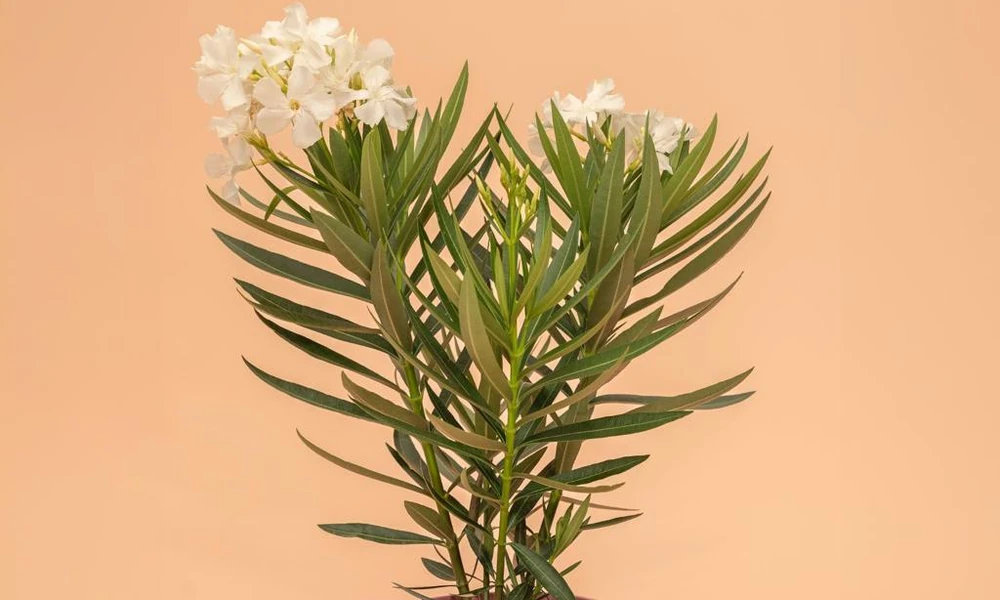
Choosing safe plants is only half the process. It is equally important to recognize common houseplants that can be dangerous to cats.
The following plants have significant toxicity concerns and should not be treated as cat-safe.
| Plant | Main concern |
| True lilies (Lilium species) | Extremely dangerous to cats; even small exposures, including pollen or vase water, can cause acute kidney injury |
| Daylilies (Hemerocallis species) | Can cause severe kidney injury in cats |
| Sago palm (Cycas revoluta) | Contains toxins that can cause severe liver damage and may be fatal |
| Oleander (Nerium oleander) | Contains cardiac toxins |
| Dieffenbachia | Can cause painful oral irritation and swelling |
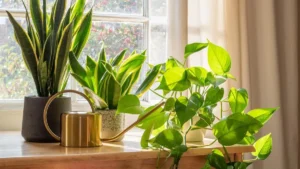
| Pothos (Epipremnum aureum) | Contains insoluble calcium oxalate crystals that irritate the mouth |
| Philodendron | Many species contain irritating calcium oxalate crystals |
| Peace lily (Spathiphyllum) | Can cause oral irritation, drooling, and difficulty swallowing |
| Aloe vera | Contains compounds that can cause vomiting and other symptoms |
| Jade plant (Crassula ovata) | Considered toxic to cats |
| Kalanchoe | Can cause gastrointestinal and, in some cases, cardiac problems |
| English ivy (Hedera helix) | Can cause gastrointestinal irritation and other symptoms |
Important: True lilies and daylilies are particularly dangerous. If you suspect your cat has contacted or ingested a lily, seek urgent veterinary advice immediately, even if your cat appears normal.
Plant names can be confusing. A peace lily is not a true lily, but it can still cause painful irritation. Always identify plants by their botanical names rather than relying only on labels.
How to Create a Cat-Friendly Indoor Garden
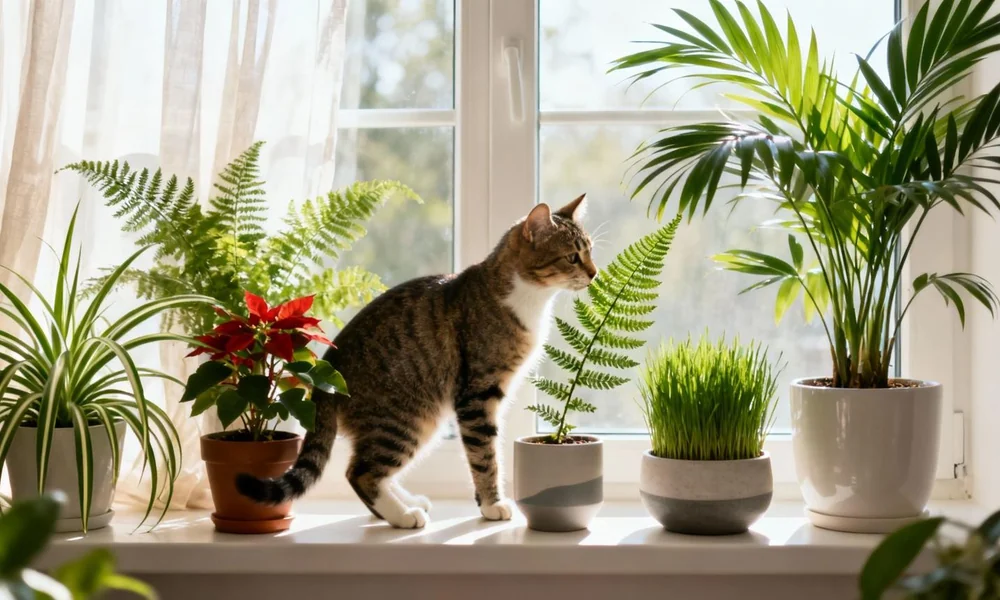
A cat-friendly home does not have to be free of plants. A few thoughtful choices can make it easier to enjoy greenery while reducing the chance of accidental exposure.
Choose Plants by Their Botanical Names
Common names can refer to multiple species, some of which have very different safety profiles.
Before purchasing a plant, check its botanical name against a reliable veterinary toxicity resource. If the identity is uncertain, do not assume it is safe.
Keep Plants Stable and Secure
Cats may knock over pots while climbing or playing. Use stable containers, avoid placing heavy planters on narrow shelves, and secure hanging displays appropriately.
A non-toxic plant can still create a mess or cause injury if a pot falls.
Offer Cat Grass
Some cats enjoy chewing on greenery. Providing suitable cat grass, often grown from wheat, oat, barley, or rye seeds, may give them an alternative to household plants.
Cat grass does not guarantee that a cat will stop chewing other plants, so continue to keep toxic species inaccessible.
Avoid Harmful Chemicals
Pesticides, fertilizers, leaf-shining products, and certain pest-control treatments may introduce additional risks.
Follow product directions, store chemicals securely, and prevent cats from chewing treated foliage or drinking water that may contain fertilizer or pesticide residues.
Monitor Your Cat’s Behavior
Some cats ignore plants, while others repeatedly chew leaves or dig in the soil.
If your cat is particularly interested in greenery, choose plants carefully, move them to safer locations, and provide appropriate toys and enrichment.
Remember that placing a toxic plant on a high shelf is not a reliable safety measure for a determined climber.
What to Do If Your Cat Eats a Plant
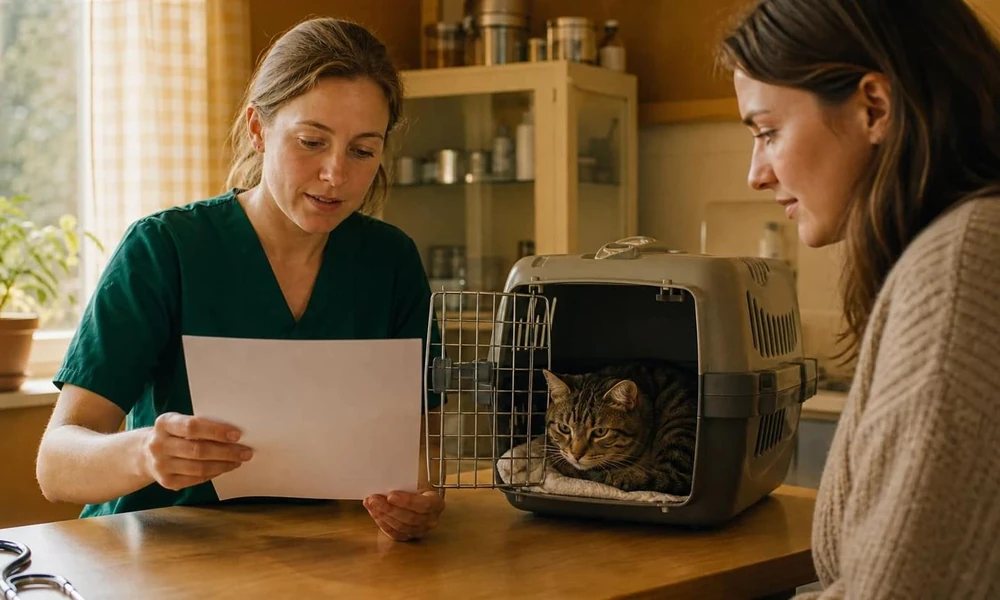
If your cat chews a houseplant, first identify the plant as accurately as possible.
If the plant is known to be toxic, or you cannot identify it and suspect poisoning, contact a veterinarian promptly. Do not wait for symptoms to appear when a dangerous plant may be involved.
Watch for signs such as vomiting, drooling, diarrhea, lethargy, difficulty swallowing, tremors, or unusual behavior. Some toxins can cause serious internal damage before obvious symptoms develop.
Do not induce vomiting or give home remedies unless a veterinarian specifically instructs you to do so. If possible, take a photograph of the plant or keep its label available to help the veterinary team identify it.
For suspected lily exposure, treat the situation as an emergency.
Frequently Asked Questions About Cat-Safe Plants
What is the safest indoor plant for cats?
There is no single best plant for every household, but spider plants, parlor palms, Boston ferns, and many Peperomia varieties are commonly considered non-toxic to cats. Confirm the exact species before purchasing.
Are spider plants safe for cats?
Spider plants are generally considered non-toxic to cats. However, eating large amounts of foliage can still cause stomach upset, and their grass-like leaves may attract curious cats.
Are succulents safe for cats?
Some succulents, including many Haworthia and Echeveria species, are considered non-toxic to cats. Others, such as jade plants and some Kalanchoe species, are toxic. Identify the exact plant before bringing it home.
Are all palms safe for cats?
No. Parlor palms and areca palms are generally considered non-toxic, but sago palms are highly toxic. The word “palm” in a plant’s common name does not guarantee safety.
Can cats live safely with houseplants?
Yes. Many households can enjoy plants and cats together by selecting non-toxic species, securing pots, avoiding harmful treatments, and keeping toxic plants out of the home.
Are lilies dangerous to cats?
Yes. True lilies and daylilies can cause severe kidney injury in cats. Exposure to pollen, leaves, flowers, or vase water can be dangerous. Seek urgent veterinary advice after suspected exposure.
Does a cat-safe plant mean my cat can eat it?
No. Non-toxic means the plant is not expected to cause poisoning in the same way a toxic species might, but chewing or eating plant material can still cause digestive upset or physical irritation.
Conclusion
Creating a green home with cats is possible when plant selection begins with safety. Spider plants, parlor palms, Boston ferns, Peperomia, and several other pet-friendly varieties offer plenty of ways to bring natural texture and color into your space.
Take time to verify each plant’s identity, avoid known toxic species, and consider your cat’s habits when deciding where to place your greenery. With careful choices, you can enjoy a beautiful indoor garden while reducing unnecessary risks to your feline companion.
Disclaimer: This content is for informational purposes only and reflects our personal opinions and experiences. We just love to write and share what we know and research.