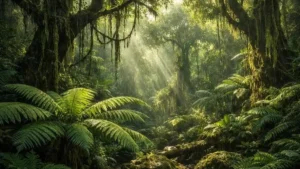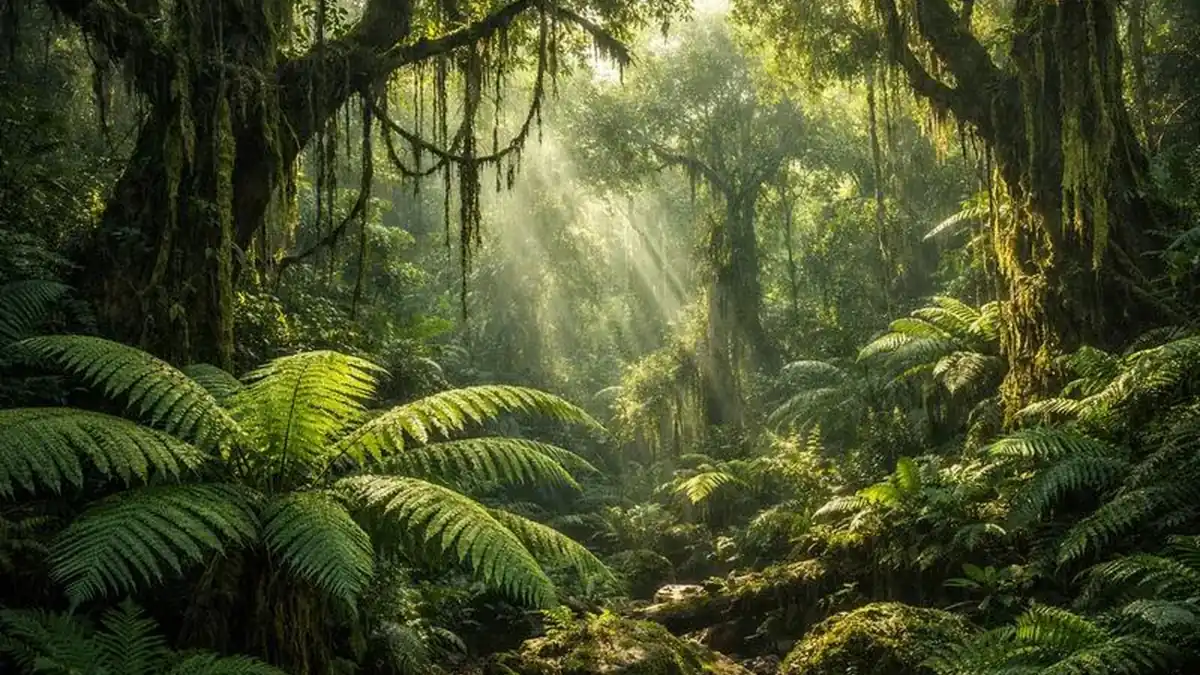
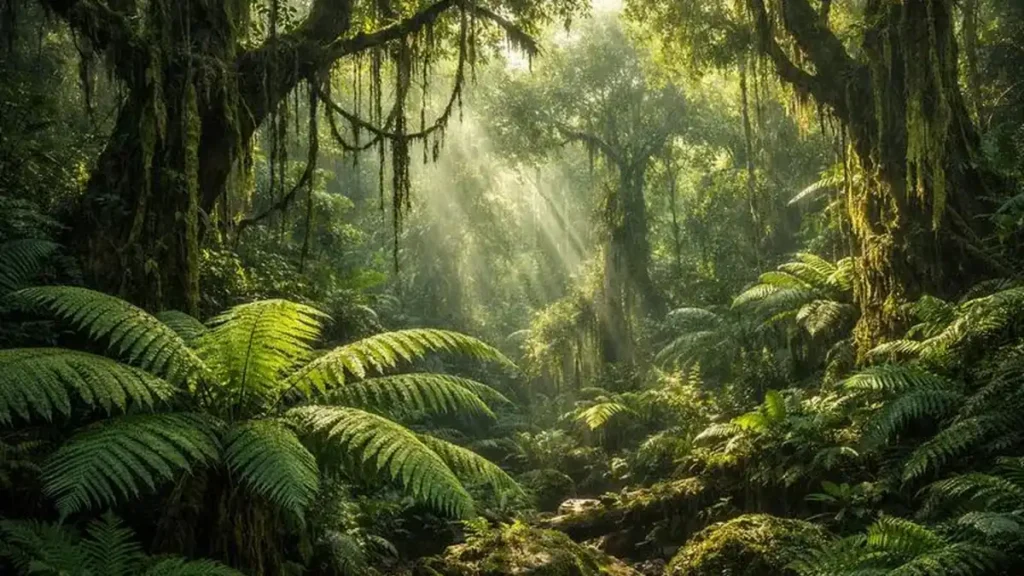
Step into a tropical rainforest, and you enter a world where plants compete for sunlight, climb toward the canopy, and thrive in the warm, humid air. Giant trees rise above layers of ferns, vines twist around trunks, and broad leaves capture light filtering through the dense green canopy.
Rainforest plants are remarkable not only for their beauty but also for the ways they survive in an environment filled with competition. Some grow high above the forest floor to reach sunlight, while others flourish in deep shade. Certain plants live on tree branches without taking nutrients from their hosts, and others develop specialized roots to cope with shallow or nutrient-poor soils.
Rainforest plants are species adapted to the warm, often humid conditions of tropical or temperate rainforests. They include towering trees, climbing vines, orchids, bromeliads, ferns, palms, and many other forms of vegetation. Although tropical rainforests are especially famous for their plant diversity, rainforests also occur in cooler regions.
What Are Rainforest Plants?
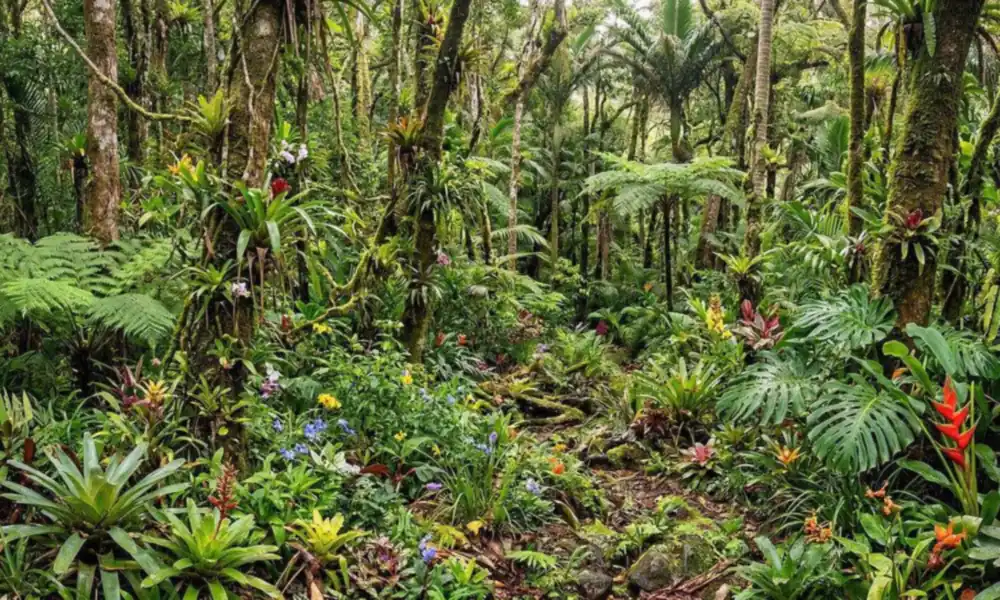
Rainforest plants are plants that grow naturally in rainforest ecosystems. Their characteristics vary according to their habitat, but many tropical rainforest species are adapted to abundant moisture, warm temperatures, and intense competition for sunlight.
Tropical rainforests occur in regions near the equator, including parts of South America, Central Africa, Southeast Asia, Central America, and northern Australia. Each region supports its own mixture of native plants, and some species grow only in particular locations.
Rainforests are not made up of trees alone. Their vegetation includes plants that climb, spread across the forest floor, attach themselves to tree trunks, or grow in the spaces between branches.
The Main Types of Rainforest Plants
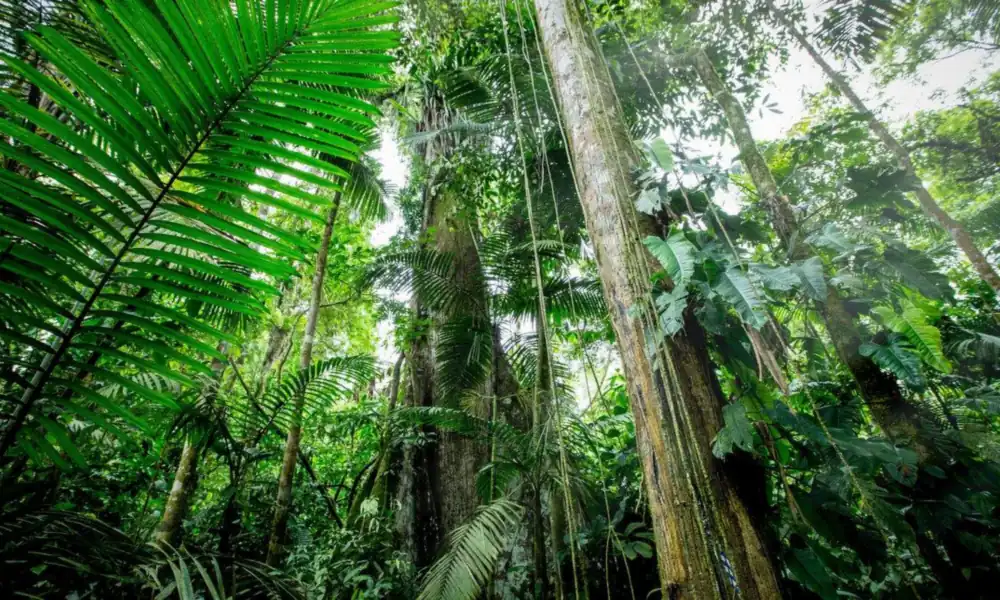
Rainforest ecosystems contain several broad groups of plants, each with its own growth habits and role in the forest.
1. Rainforest Trees
Trees form the structure of many rainforests. In tropical rainforests, tall trees compete to reach the sunlight above the surrounding vegetation.
Some well-known examples include mahogany trees, kapok trees, and various species of fig. Their distribution differs by region, so a tree common in one rainforest may be absent from another.
Large rainforest trees provide shelter and food for animals, support climbing plants, and help create the shaded conditions found beneath the canopy.
2. Climbing Vines and Lianas
Some rainforest plants grow upward by climbing other vegetation rather than supporting themselves with thick, upright trunks. Woody climbing plants are commonly called lianas.
They may wind around tree trunks, attach themselves to branches, or use specialized structures to climb toward brighter conditions. By growing vertically, they can reach sunlight without needing to develop a large supporting trunk of their own.
However, climbing plants can also compete with trees for light and space.
3. Orchids
Rainforests support many orchid species, including orchids that grow on tree branches. These plants are often called epiphytes.
An epiphytic orchid uses a tree as a place to grow rather than as a source of food. It may collect moisture from rain and humid air while absorbing nutrients from organic material around its roots.
Not all orchids are rainforest plants, and orchid species differ widely in their growing requirements.
4. Bromeliads
Bromeliads are a diverse group of plants, many of which are native to the tropical Americas. Some grow on the forest floor, while others live on tree branches.
Certain bromeliads have leaves arranged in a rosette that forms a small reservoir capable of holding water. These pools can create miniature habitats for insects and other small organisms.
Bromeliads demonstrate how a plant’s shape can influence the wider ecosystem around it.
5. Ferns
Ferns are common in many moist forest environments. Their feathery fronds and preference for suitable moisture conditions make them familiar features of shaded rainforest floors.
Some ferns grow on the ground, while others grow on trunks, rocks, or branches. Tree ferns can develop tall, trunk-like stems, giving them a tree-shaped appearance.
Ferns reproduce through spores rather than flowers and seeds.
6. Palms
Palms are prominent in many tropical forests, although their species and abundance vary by region. Some grow in the understory, while others reach into brighter parts of the forest.
Their large leaves can capture light in shaded conditions, and their fruits may provide food for birds and mammals.
Not every palm is a rainforest species; palms also grow in savannas, deserts, coastal habitats, and other environments.
7. Carnivorous Plants
Some carnivorous plants occur in tropical forest regions, particularly in specialized habitats such as nutrient-poor soils or open, wet areas near forests.
Pitcher plants in the genus Nepenthes, for example, are found in parts of tropical Asia. Their modified leaves form pitchers that trap prey, allowing the plants to obtain nutrients that may be limited in the soil.
Carnivorous plants are not typical of every rainforest. They occupy particular ecological niches where their adaptations provide an advantage.
The Layers of a Rainforest
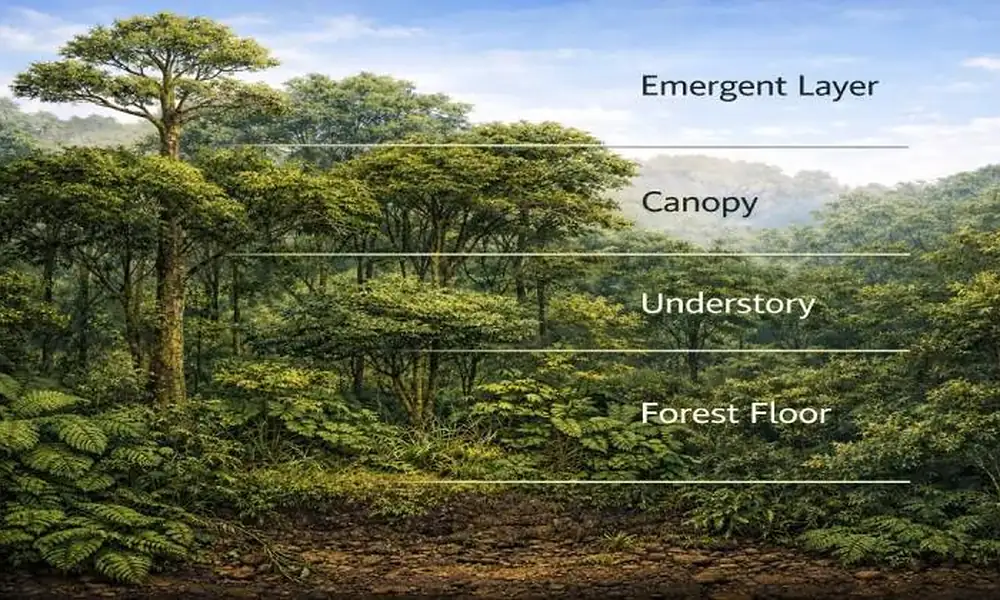
One of the easiest ways to understand rainforest vegetation is to look at how plants are distributed vertically. In many tropical rainforests, the forest can be described in four main layers.
The Emergent Layer
The emergent layer contains the tallest trees, which rise above much of the surrounding canopy. These trees receive abundant sunlight and are exposed to stronger winds than plants below.
Their height allows them to compete for light, but it also means they must withstand challenging conditions.
The Canopy
The canopy forms the broad roof of the forest. Tree branches and leaves overlap, capturing much of the sunlight before it reaches lower levels.
Many rainforest animals live in this layer, and it supports numerous epiphytes, climbing plants, and flowering species.
The Understory
The understory lies beneath the main canopy. Light is more limited here, so many plants have broad leaves that help them capture the sunlight that reaches them.
Young trees, shade-tolerant shrubs, small palms, and various tropical plants may grow in this layer
The Forest Floor
The forest floor is often dim, particularly where the canopy is dense. Fallen leaves, branches, and other organic material decompose, returning nutrients to the ecosystem.
Ferns, seedlings, mosses, and other shade-tolerant plants may grow here. Their survival depends on local conditions, including moisture, soil, and the amount of light that reaches the ground.
How Rainforest Plants Adapt to Their Environment
Rainforest plants have evolved a range of features that help them survive in their particular habitats. Not every species has all these adaptations, and their usefulness depends on local conditions.
Broad Leaves Capture Available Light
Plants growing beneath a dense canopy may receive only a small fraction of the sunlight available above it. Broad leaves can help some species capture the light that reaches the understory.
However, leaf size varies with species, water availability, temperature, and other environmental factors.
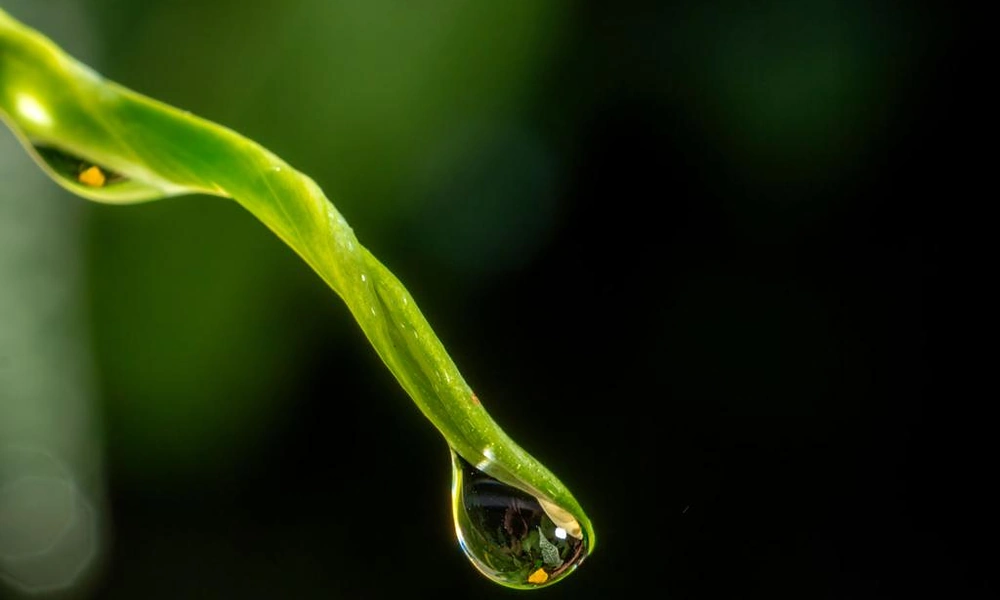
Drip Tips Help Water Run Off
Some tropical plants have leaves with pointed tips that help water drain away. These are often called drip tips.
They may reduce the time water remains on a leaf, although their exact function and importance vary among species and environments.
Shallow Roots Help Access Surface Nutrients
In many tropical rainforests, nutrients are concentrated near the surface, where fallen leaves and other organic matter decompose. Some trees develop extensive shallow roots to access these resources.
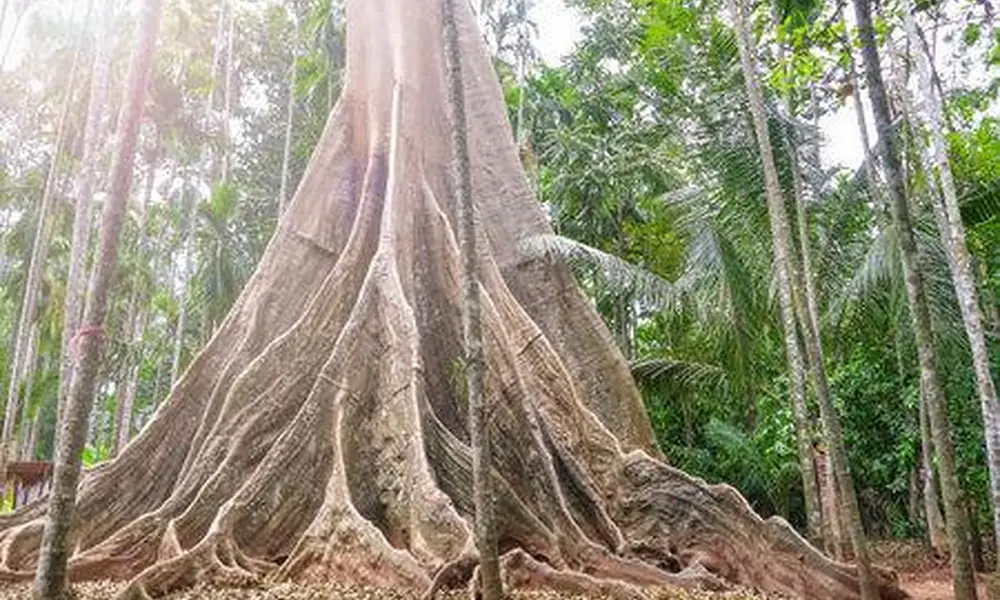
Large trees may also develop buttress roots, which spread outward from the base of the trunk and help support them in shallow soils.
Epiphytes Grow Above the Ground
Epiphytes, including many orchids and bromeliads, grow on other plants for physical support. Growing on branches can give them better access to sunlight than they would have on the forest floor.
They obtain water and nutrients from their surroundings rather than drawing nourishment directly from the host tree.
Climbing Growth Reaches Sunlight
Vines and lianas use other plants as support, allowing them to grow toward brighter parts of the forest. This strategy can be especially useful when the forest floor is heavily shaded.
Specialized Roots and Leaves Manage Moisture
Rainforest plants do not all respond to water in the same way. Some thrive in consistently moist conditions, while others grow in habitats that experience seasonal drying.
Their roots, leaves, and overall growth patterns reflect the specific environments in which their species evolved.
Famous Rainforest Plants Around the World
Rainforests occur across several continents, and their plants are not interchangeable. The following examples illustrate some of the variety found in different regions.
Kapok Tree
The kapok tree (Ceiba pentandra) is a large tropical tree found in parts of the Americas and other tropical regions. It can grow to an impressive height and produce seed pods containing a light, fibrous material.
Kapok trees can be important parts of tropical forest ecosystems, providing structure and resources for wildlife.
Rubber Tree
The Pará rubber tree (Hevea brasiliensis) is native to the Amazon region of South America. Its latex has historically been an important source of natural rubber.
Although it is associated with rainforest environments, commercial rubber cultivation also takes place in plantations outside its original range.
Strangler Figs
Strangler figs are a group of fig trees that begin life on or near another tree in some tropical forests. Their roots may grow downward toward the ground, eventually surrounding the host tree.
In some cases, the host dies, leaving the fig standing with a lattice-like structure. Strangler figs can also provide fruit that feeds many forest animals.
Rafflesia
Certain species of Rafflesia are native to Southeast Asian rainforests. They are known for producing exceptionally large flowers, and some species release an odor resembling rotting meat.
Unlike ordinary green plants, Rafflesia species are parasitic and depend on host plants for much of their nutrition. They lack the familiar leaves and stems seen in most flowering plants.
Pitcher Plants
Tropical pitcher plants in the genus Nepenthes occur in parts of South and Southeast Asia, including Borneo and Sumatra. Their pitchers trap insects and other small prey, helping them obtain nutrients from environments where certain soil nutrients are scarce.
Different species occupy different habitats, and not all are restricted to dense rainforest interiors.
Can You Grow Rainforest Plants at Home?
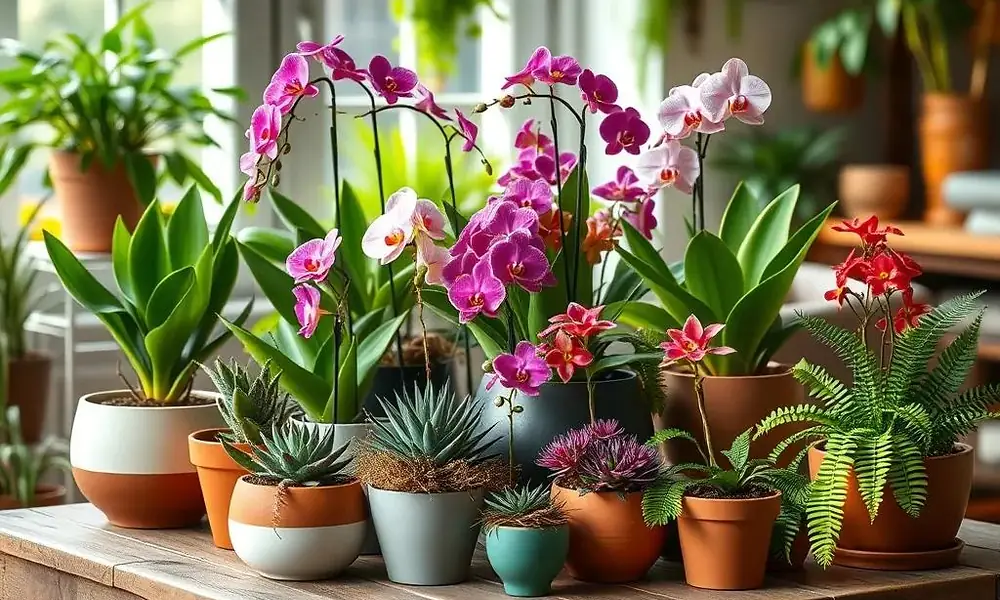
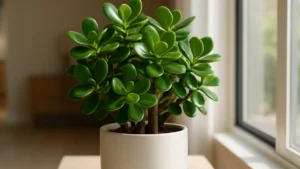
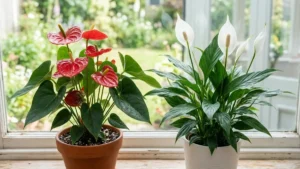
Yes. Many rainforest plants can grow indoors if their environmental needs are met. Common choices include selected orchids, bromeliads, tropical ferns, and certain climbing plants.
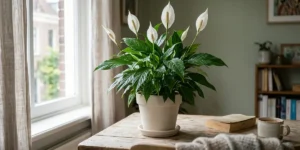
The peace lily, a rainforest native from the shaded understory of Central and South America, is another classic example.
However, a plant originating in a rainforest does not automatically need constant wet soil or extremely high humidity. The best care routine depends on the species.
Choose the Right Light
Many tropical understory plants prefer bright, indirect light rather than intense direct afternoon sun. Some orchids and other species need brighter conditions, so check the requirements of the particular plant.
A window with filtered light can be a useful starting point for many indoor tropical plants.
Maintain Suitable Humidity
Some rainforest plants benefit from higher humidity than an average indoor room provides. Others adapt well to ordinary household conditions.
If a plant needs extra humidity, consider a humidifier or a suitable growing enclosure. Keep enough air movement around the leaves to reduce the risk of fungal problems.
Use a Suitable Growing Medium
Rainforest plants do not all grow in the same soil. A terrestrial fern may prefer a moisture-retentive medium, while an epiphytic orchid generally needs a more open mix that allows air to reach its roots.
Choose a growing medium according to the plant’s natural growth habit.
Water According to the Species
Frequent rainfall in a plant’s native habitat does not mean its potting medium should remain waterlogged. Roots need oxygen as well as water.
Check the growing medium and follow the plant’s specific watering requirements. Use pots with suitable drainage unless the species requires a specialized setup.
Watch for Pests and Leaf Problems
Warm indoor conditions can encourage pests such as spider mites, mealybugs, and scale insects. Inspect leaves, stems, and roots regularly.
Yellowing leaves, brown tips, and drooping growth can have several causes, including watering problems, unsuitable light, low humidity, or damaged roots. Assess the overall conditions before changing the care routine.
Why Rainforest Plants Matter
Rainforest plants support ecosystems in ways that extend far beyond their appearance.
- Wildlife habitat: Trees, vines, epiphytes, and other plants provide shelter, nesting sites, and food for many animals.
- Carbon storage: Forest vegetation stores carbon in plant tissues, while forest soils also hold carbon.
- Water cycling: Plants release water vapor through transpiration, contributing to local and regional moisture cycles.
- Soil protection: Roots help stabilize soil, while leaf litter contributes organic matter.
- Human uses: Many plants provide food, timber, fibers, medicines, and other useful materials, although sustainable use and careful research are essential.
Rainforest ecosystems are threatened in many places by deforestation, habitat fragmentation, mining, agricultural expansion, and climate change. Protecting them helps preserve the plant diversity and ecological relationships that make these forests so valuable.
Rainforest Plants vs. Other Tropical Plants
The terms rainforest plant and tropical plant are related, but they do not mean exactly the same thing.
A tropical plant is one that grows in tropical regions, which can include rainforests, dry forests, grasslands, wetlands, and coastal areas. A rainforest plant is associated with rainforest conditions, although species differ in their tolerance for light, moisture, and seasonal changes.
For example, some tropical palms grow in dry or open habitats rather than dense rainforests. Similarly, some plants commonly grown as indoor tropical houseplants originate from forests but can adapt to a range of indoor conditions.
Knowing a plant’s natural habitat gives you a useful starting point for understanding its care, but its specific species requirements matter most.
Frequently Asked Questions About Rainforest Plants
What are the most common rainforest plants?
Rainforests contain many kinds of plants, including trees, ferns, orchids, bromeliads, palms, vines, and epiphytes. The species present depend on the region and the type of rainforest.
What is the most famous rainforest plant?
There is no single universally recognized rainforest plant. The kapok tree, rubber tree, strangler figs, Rafflesia, and tropical pitcher plants are among the better-known examples.
Do all rainforest plants need lots of water?
No. Many rainforest plants grow in moist environments, but their watering needs differ. Some tolerate seasonal drying, and many cultivated tropical plants are damaged by constantly waterlogged roots.
Can rainforest plants survive indoors?
Yes. Many tropical plants can grow indoors when they receive suitable light, water, humidity, and growing conditions. Orchids, selected ferns, bromeliads, and some climbing plants are possible choices.
Why do rainforest plants have large leaves?
Large leaves can help some plants capture limited sunlight beneath the forest canopy. However, leaf size varies, and large leaves are not a feature of every rainforest species.
Where are tropical rainforests found?
Tropical rainforests occur in parts of Central and South America, Africa, Asia, and northern Australia, among other locations. Each region has its own plant communities and native species.
What is the difference between an epiphyte and a parasite?
An epiphyte grows on another plant for physical support but generally obtains water and nutrients from its surroundings. A parasite depends on a host for resources. Many rainforest orchids are epiphytes, while Rafflesia is a parasitic flowering plant.
Conclusion
Rainforest plants show how life adapts to different levels of sunlight, moisture, and competition. From towering trees and climbing lianas to delicate orchids and unusual pitcher plants, each group has its own way of surviving and contributing to the forest.
Learning about their natural habitats also makes it easier to grow tropical plants at home. Rather than treating all rainforest plants alike, pay attention to the needs of each species. With suitable care and greater awareness of their ecological importance, these remarkable plants can be appreciated both in their native forests and in cultivated spaces.