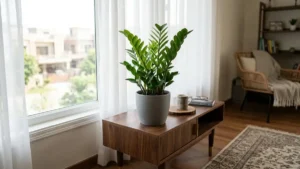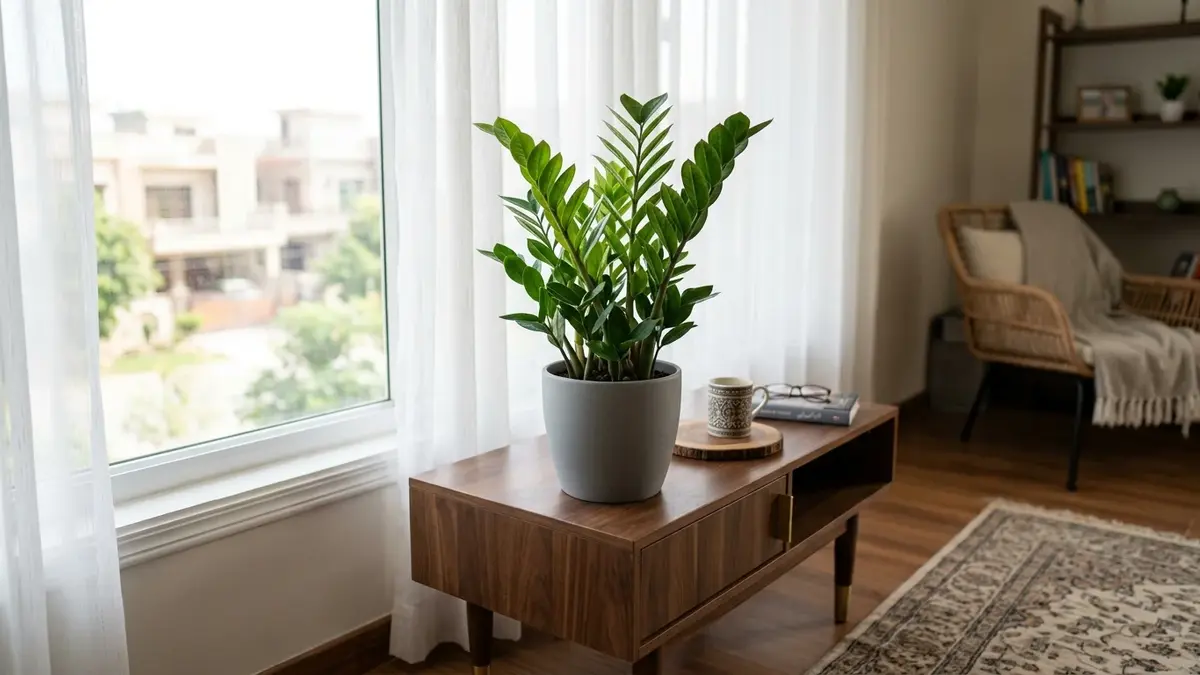
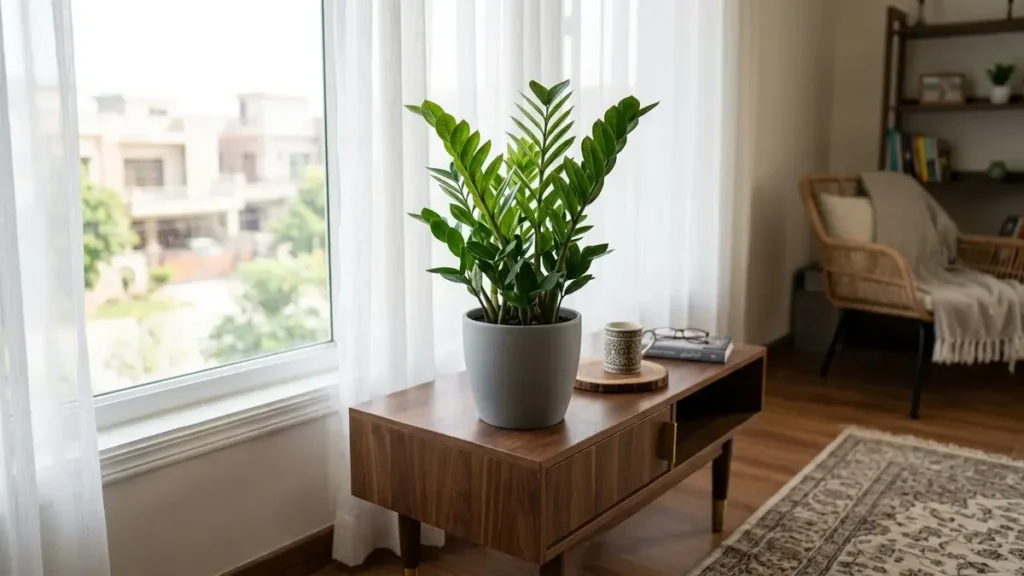
The ZZ plant is one of the easiest houseplants to maintain. Its thick, glossy leaves stay attractive with relatively little attention, and its underground rhizomes store water, helping the plant tolerate periods of dry soil.
Known botanically as Zamioculcas zamiifolia, the ZZ plant grows well in many indoor environments, including rooms that receive less natural light than most houseplants prefer. However, low-light tolerance does not mean it can thrive without light, and its ability to store water makes overwatering a more serious risk than occasional dryness.
With the right light, well-draining soil, and a sensible watering routine, a ZZ plant can remain healthy for years.
ZZ Plant Care at a Glance
| Care requirement | Best approach |
| Light | Low to bright indirect light |
| Water | Allow the soil to dry out thoroughly between waterings |
| Soil | Well-draining indoor potting mix |
| Pot | Container with drainage holes |
| Temperature | Comfortable, stable indoor temperatures |
| Humidity | Average household humidity |
| Fertilizer | Light feeding during active growth |
| Growth rate | Generally slow |
| Propagation | Division, stem cuttings, or leaf cuttings |
| Pet safety | Toxic if chewed or ingested |
1. How Much Light Does a ZZ Plant Need?
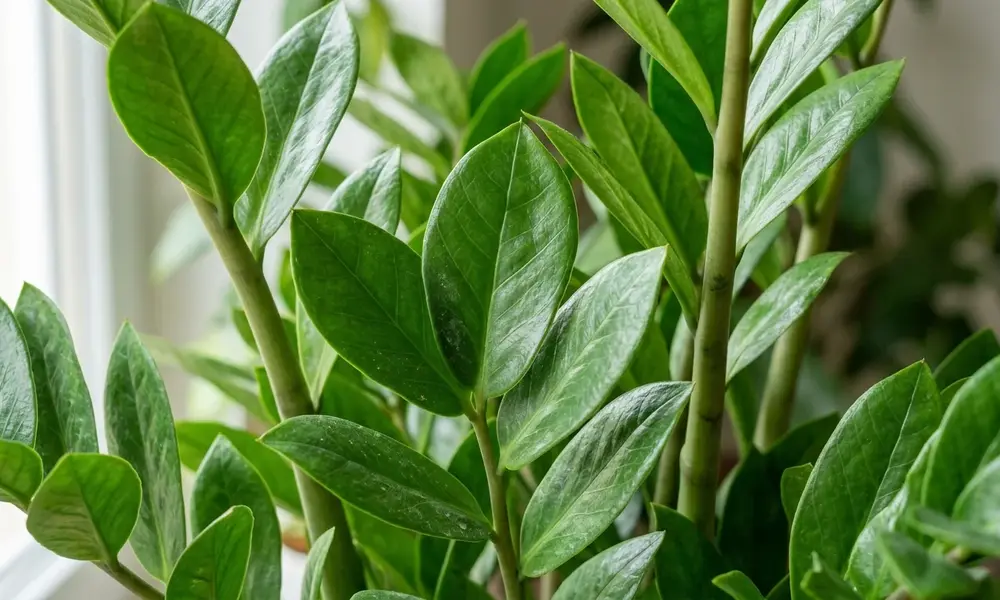
ZZ plants tolerate low light better than many popular houseplants. They can grow in rooms with indirect daylight, offices, and spaces away from bright windows.
However, bright, indirect light usually supports faster, healthier growth. In very dim conditions, a ZZ plant may survive but produce few new stems. Existing growth may also become sparse.
Place your plant near a window where it receives filtered daylight, or position it farther into a bright room if direct sun is too intense.
Strong, prolonged direct sunlight can scorch the leaves. If you move a ZZ plant from a dim corner to a brighter location, do so gradually to reduce the risk of leaf damage.
Artificial grow lights can also help if your room lacks sufficient natural light.
2. How Often Should You Water a ZZ Plant?
Overwatering is one of the most common reasons ZZ plants develop problems. Their thick rhizomes store water, allowing them to tolerate dry periods. When the soil remains wet for too long, roots and rhizomes can begin to rot.
Instead of watering on a fixed weekly schedule, check the soil before adding more water.
Follow these steps:
- Check the soil several inches below the surface.
- If it still feels damp, wait before watering.
- Once the soil has dried thoroughly, water the plant evenly.
- Let excess water drain through the bottom of the pot.
- Empty the saucer or decorative outer pot so the roots do not sit in standing water.
The time between waterings depends on the pot size, soil, light, temperature, and season. A plant in a warm, bright room may dry out faster than one in a cool, dim location.
Signs of overwatering
Watch for a combination of symptoms rather than relying on one leaf:
- Yellowing leaves
- Soft or mushy stems
- Persistently wet soil
- Unpleasant smells from the potting mix
- Soft, dark, or decaying roots and rhizomes
If you suspect root rot, remove the plant from its pot and inspect the roots. Trim away decayed tissue with clean tools and repot the healthy portions in fresh, well-draining soil.
Signs of underwatering
A severely underwatered ZZ plant may develop wrinkled leaflets, drooping stems, or dry, damaged foliage. Check the soil before watering because similar symptoms can occur when damaged roots cannot absorb water.
3. Choose the Right Soil and Pot
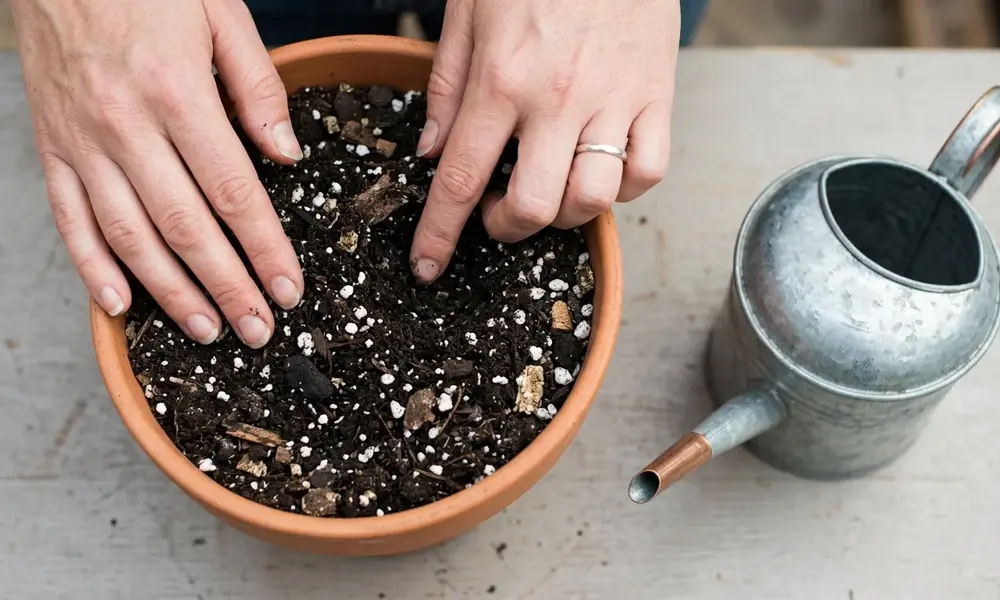
ZZ plants need a growing medium that allows excess water to escape. A standard indoor potting mix can work if it drains well. If the mix stays wet for too long, improve its structure with an appropriate drainage amendment, such as perlite.
The pot is just as important as the soil.
Choose a container with drainage holes and avoid using an oversized pot that holds a large volume of unused, wet soil around the roots. A pot only slightly larger than the root system is generally a sensible choice.
Repot when the plant becomes crowded, the rhizomes fill the container, or the potting mix no longer drains properly.
For more guidance, see our existing guide on how to care for potted plants.
4. What Temperature and Humidity Does a ZZ Plant Need?
ZZ plants adapt well to typical indoor conditions. They do not generally require special humidity equipment, making them suitable for many homes and offices.
Keep the plant away from cold drafts, freezing temperatures, and sudden temperature changes. Avoid placing it directly beside heating or air-conditioning vents that blow hot or cold air onto the foliage.
Although the plant tolerates ordinary indoor humidity, stable conditions are preferable to frequent environmental changes.
5. Does a ZZ Plant Need Fertilizer?
ZZ plants are relatively slow-growing and do not require frequent feeding.
During active growth, you can apply a balanced houseplant fertilizer according to its label. Use it sparingly, particularly if the plant is growing in low light.
Too much fertilizer can cause salts to accumulate in the soil and damage the roots. Do not try to compensate for poor lighting or overwatering by adding more fertilizer.
If your ZZ plant has not produced new growth recently, consider the season and available light before assuming it needs feeding.
6. How to Propagate a ZZ Plant
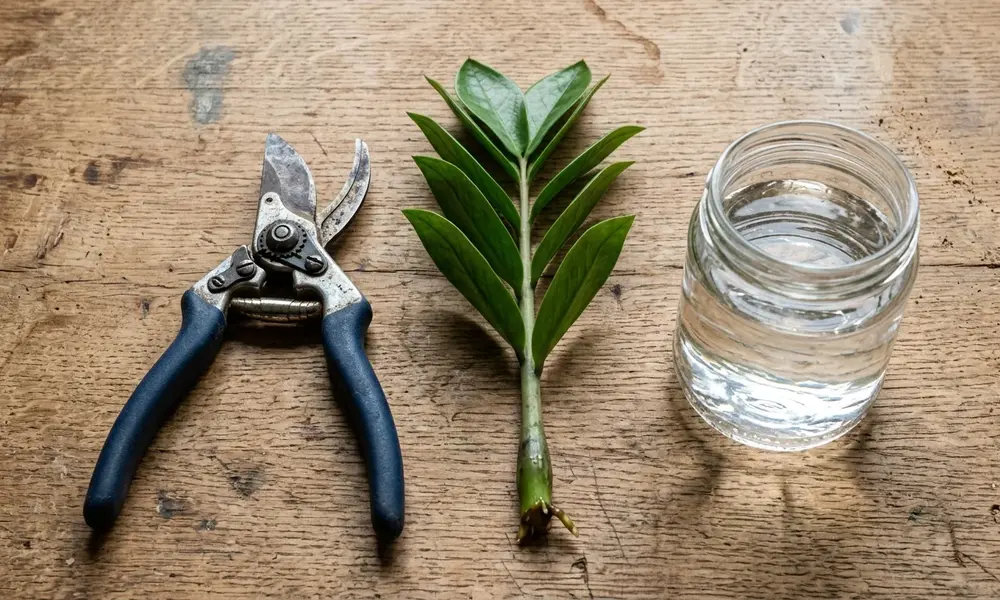
ZZ plants can be propagated in three main ways, aligning with general practices used across many popular indoor foliage propagation methods. All methods require patience because this species generally grows slowly.
Propagation by division
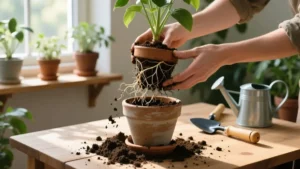
Division is usually the most practical option when a mature ZZ plant has several stems and multiple rhizomes.
- Remove the plant carefully from its pot.
- Gently separate sections of the root system.
- Ensure each division has healthy roots and rhizomes.
- Place each section in its own pot with well-draining soil.
- Water appropriately and keep the plants in indirect light while they establish.
Avoid forcing apart tightly connected rhizomes. Use clean tools if cutting is necessary.
Propagation from stem cuttings
A healthy stem cutting can produce roots and eventually develop a new rhizome.
- Cut a healthy stem with clean scissors or pruning shears.
- Place the cut end in water or a suitable propagation medium.
- Keep it in a warm location with indirect light.
- Replace the water regularly if using water propagation.
- Allow enough time for roots and rhizome development before expecting substantial growth.
This method is slow. A cutting may appear unchanged for an extended period while the underground structure develops.
Propagation from leaf cuttings
Individual leaflets can also be used to propagate ZZ plants.
Insert the base of a healthy leaflet into a suitable propagation medium and maintain light moisture without making the medium soggy. Over time, the leaflet may form a small rhizome and roots.
New shoots can take many months to develop. Leaf propagation is rewarding for patient growers but is not the fastest way to produce a full-sized plant.
7. Why Is My ZZ Plant Turning Yellow?
Yellow leaves can indicate several different problems. Before changing your care routine, check how the plant is growing and whether the soil is too wet or too dry.
Common causes include:
- Overwatering: Wet soil and damaged roots can interfere with normal growth.
- Poor drainage: Water trapped around the roots can lead to decay.
- Natural aging: An occasional older leaf may yellow as the plant replaces it.
- Environmental stress: Sudden changes in temperature or light can affect foliage.
- Root damage: A plant with unhealthy roots may struggle to absorb water and nutrients.
If several stems turn yellow at once, inspect the soil and root system rather than removing leaves and continuing with the same routine.
Remove fully yellow or dead foliage with clean tools once you have addressed the underlying problem.
8. Why Is My ZZ Plant Drooping?
ZZ plants normally have upright stems. Drooping can result from watering problems, root damage, weak growth, or physical imbalance.
Check the following:
- Is the soil excessively wet?
- Has it been dry for an unusually long period?
- Are the stems soft or damaged at the base?
- Is the plant leaning strongly toward its light source?
- Has the pot become unstable or crowded?
If the soil is wet and the stems feel soft, investigate root or rhizome rot. If the soil is thoroughly dry, water appropriately and monitor the plant’s response.
Do not automatically add water whenever the leaves droop. Confirming the soil condition first helps avoid making an overwatering problem worse.
9. Why Is My ZZ Plant Not Growing?
ZZ plants naturally grow slowly, especially when light levels are low or conditions are cool. A healthy plant may not produce new stems continuously throughout the year.
If growth has stopped for a long time, review its growing conditions.
Check the light first. A plant kept in a very dim corner may survive but have limited energy for new growth. Moving it to brighter indirect light can help.
Next, check the roots and soil. A waterlogged pot, damaged rhizomes, or compacted growing medium can interfere with healthy development. Feed only when appropriate, and avoid repeatedly repotting or disturbing the plant in an attempt to force faster growth.
10. Are ZZ Plants Toxic to Pets?
ZZ plants contain calcium oxalate crystals that can irritate the mouth and digestive tract if plant material is chewed or swallowed. Keep the plant away from pets and young children who may bite the leaves or stems.
If ingestion occurs and symptoms develop, seek advice from a medical professional or veterinarian as appropriate. Wearing gloves when pruning or dividing the plant is a sensible precaution, particularly for people with sensitive skin. Wash your hands after handling damaged plant tissue.
Common ZZ Plant Care Mistakes
Avoid these habits if you want your plant to remain healthy:
- Watering before the soil has dried sufficiently
- Using a pot without drainage holes
- Keeping the plant in near-total darkness
- Applying too much fertilizer
- Choosing a pot that is much larger than the root system
- Expecting rapid growth from a naturally slow-growing species
- Ignoring soft stems or persistently wet soil
The best approach is consistent, restrained care. ZZ plants generally respond better to suitable light and careful watering than to frequent interventions.
Frequently Asked Questions
How often should I water a ZZ plant?
Water when the potting mix has dried thoroughly. The interval varies with the plant’s environment, so check the soil instead of following a fixed schedule.
Can a ZZ plant grow in low light?
Yes. ZZ plants tolerate low light, but growth is generally better in bright, indirect light. They cannot grow indefinitely without a usable light source.
Do ZZ plants like direct sunlight?
They generally prefer indirect light. Strong, prolonged direct sunlight can scorch the leaves, especially when the plant has not gradually adapted to it.
Why are the leaves on my ZZ plant turning yellow?
Overwatering, poor drainage, root damage, environmental stress, and natural aging can all cause yellowing. Check the soil and the overall pattern of symptoms to identify the likely cause.
How long does ZZ plant propagation take?
Propagation can take several months, and leaf or stem cuttings may take longer to develop substantial new growth. Division is usually the more practical method for producing a larger plant sooner.
Should I mist my ZZ plant?
Regular misting is unnecessary. ZZ plants tolerate typical indoor humidity, and misting does not replace proper watering or good drainage.
Is a ZZ plant suitable for beginners?
Yes. Its tolerance of low light and its ability to store water make it a useful houseplant for beginners, provided they avoid overwatering it.