Healthy houseplants often start with something you cannot see: the right growing mix around their roots. You can provide good light, water carefully, and keep your plants clean, but a poor potting mix can still leave roots struggling for oxygen or sitting in excess moisture.
For Indoor Trees and other houseplants, the goal is not simply to find “soil.” What matters more is choosing a growing medium that holds enough moisture for the plant while allowing excess water and air to move through the root zone.
A good mix should feel light rather than heavy, drain without becoming bone-dry immediately, and give roots enough space to grow. This guide from Peeacelily explains what to look for, which ingredients matter, and how to choose the right mix without making plant care unnecessarily complicated.
Key Takeaways
- Choose a quality potting mix made for containers rather than ordinary garden soil.
- Look for a balance of moisture retention, aeration, and drainage.
- Peat moss and coconut coir can help retain moisture.
- Perlite and bark can improve aeration and drainage.
- Succulents, orchids, tropical plants, and Indoor Trees may need different types of growing media.
- Always prioritize containers with drainage holes when possible.
- Do not put a thick layer of gravel at the bottom of the pot to “improve” drainage.
- Avoid keeping houseplants constantly wet because roots need oxygen as well as moisture.
- Choose a slightly larger pot when repotting instead of dramatically increasing container size.
What Is the Best Soil for Houseplants?
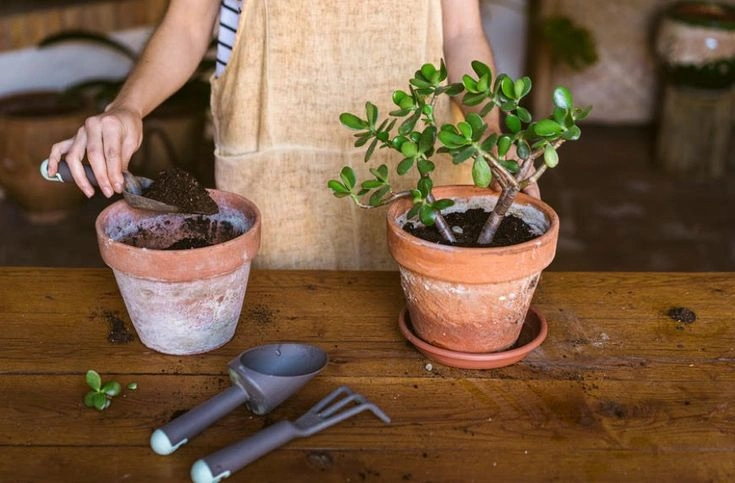
For most houseplants, a quality commercial potting mix made specifically for indoor plants is a reliable starting point. These mixes are usually designed to balance moisture retention, drainage, aeration, and nutrients.
Garden soil is generally not a good choice for indoor containers. It can become dense inside a pot, restrict airflow around roots, and may introduce pests, diseases, or weed seeds. Extension guidance from Penn State and Oklahoma State recommends using suitable potting media rather than ordinary garden soil for container-grown houseplants.
The best mix also depends on the plant. A tropical plant may appreciate more moisture retention, while a cactus or succulent needs a much faster-draining medium.
That is why there is no single “perfect” soil for every plant.
Why Soil Quality Matters for Healthy Roots
Roots need more than water. They also need oxygen. When a potting mix stays saturated for too long, the spaces that should contain air become filled with water. This can create conditions where roots struggle and may eventually rot. Poor drainage is also associated with other indoor plant problems, including fungus gnats.
On the other hand, a mix that dries extremely quickly may leave a plant repeatedly short of moisture. Think of good potting mix as a middle ground. It should hold enough water to support the plant while leaving enough pore space for air and allowing excess moisture to escape.
This balance is especially important for larger Indoor Trees, because their root systems need a stable growing environment as the plant develops.
What Should Be in a Good Potting Mix?
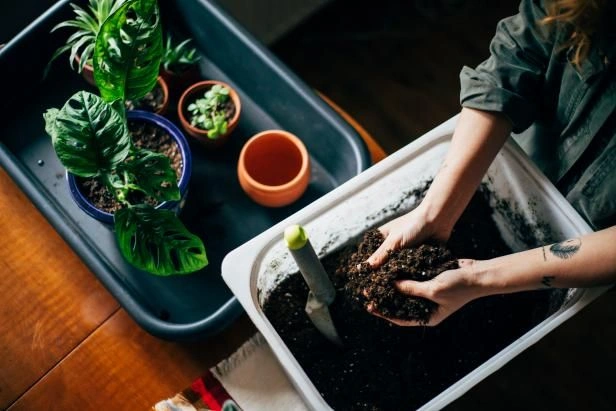
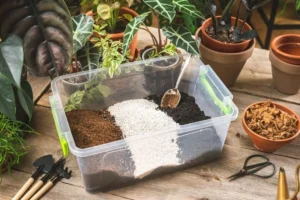
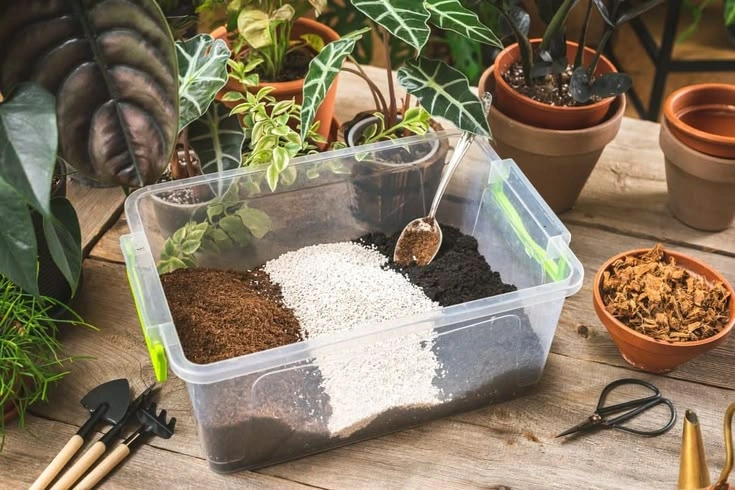
You do not need a long list of complicated ingredients. A few basic materials perform different jobs within the mix.
Peat Moss or Coconut Coir
Peat moss and coconut coir are commonly used as moisture-retaining base materials. They help the mix hold water while remaining lighter than ordinary garden soil.
Coconut coir is particularly common in modern soilless mixes. Oklahoma State University notes that coir and peat moss can provide moisture retention, while other ingredients improve aeration and drainage.
Perlite
Perlite is a lightweight material that helps create air spaces and improves drainage. It is useful when a mix feels too dense or when a plant needs faster drainage. Perlite does not replace a complete potting mix by itself, but it can be an important part of one.
Bark
Fine or appropriately sized bark can improve both drainage and aeration. It is particularly useful in mixes intended for plants that dislike sitting in wet media.
Bark is also commonly used in mixes for tropical plants and other houseplants that benefit from a chunkier structure.
Vermiculite
Vermiculite is better known for helping retain moisture than for creating rapid drainage. It can be useful in mixes where additional water-holding capacity is needed.
The important point is balance. Adding more of one ingredient does not automatically make a mix better.
Potting Soil vs. Potting Mix: Is There a Difference?
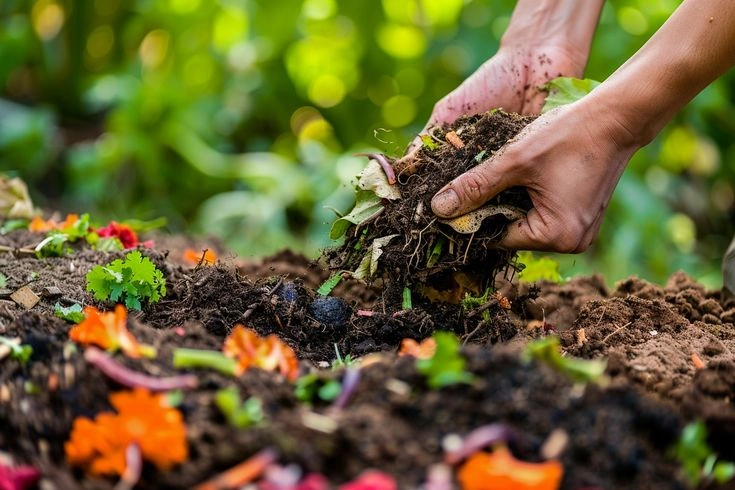
The labels can be confusing when you are standing in a garden center. “Potting soil” and “potting mix” are sometimes used casually as if they mean the same thing. However, soilless potting media are often made from materials such as peat, coir, bark, perlite, or vermiculite rather than natural garden soil.
Soilless media are popular for containers because they can provide a lighter structure with better aeration and drainage. Oklahoma State University describes them as mixtures designed to support root development while balancing moisture and air.
For most indoor plants, focus less on the name printed on the front and more on the ingredient list and the type of plant the product is designed for.
Should You Use Garden Soil for Houseplants?
Usually, no. Garden soil may look rich and healthy outdoors, but a container creates a very different environment. Inside a pot, garden soil can become compacted and heavy, reducing drainage and limiting air around the roots.
There is another concern: outdoor soil can carry pests, pathogens, and weed seeds into your indoor growing space. Penn State specifically recommends a quality soilless potting mix for houseplants rather than garden soil.
If you want to improve a houseplant’s growing medium, choose ingredients designed for containers instead of simply bringing soil in from the yard.
The Right Mix for Different Houseplants
Not every plant wants the same conditions.
Tropical Houseplants
Plants such as pothos, philodendrons, and many other tropical foliage plants generally benefit from a mix that holds some moisture while still draining well.
A balanced indoor potting mix with ingredients such as coir or peat, bark, and perlite can work well when matched with the plant’s watering needs.
Indoor Trees
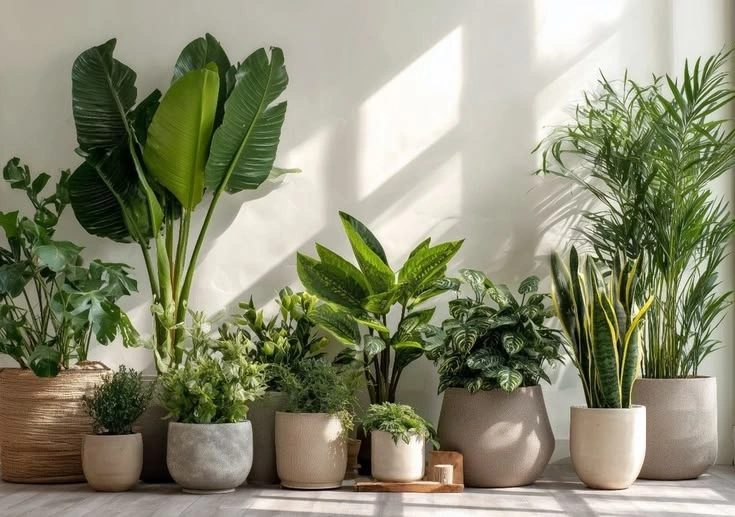
Indoor Trees usually need a stable, well-aerated growing medium because their larger root systems require room to develop.
A quality houseplant mix with good drainage is generally more useful than a heavy soil. Avoid choosing an oversized container simply because the plant is growing quickly. Too much unused wet mix around the roots can stay moist for longer than necessary.
Succulents and Cacti
Succulents and cacti generally need a faster-draining medium than many tropical houseplants.
Look for a commercial cactus or succulent mix, or use a suitable base mix amended with drainage-focused materials. The exact recipe can vary, but the goal remains the same: avoid prolonged waterlogged conditions.
Orchids
Orchids are a special case because many common orchids are not grown in ordinary potting soil. Orchid mixes often use chunky materials such as bark that allow substantial airflow around the roots.
Using regular dense houseplant soil for an orchid can therefore create an unsuitable root environment.
How to Choose Soil at the Store
The easiest approach is to read the bag instead of choosing only by the picture on the front. Look for a product specifically described for indoor plants or the particular plant group you are growing. Check whether the ingredients include materials that support moisture retention and aeration.
Avoid bags that appear excessively dense, compacted, or contaminated with unwanted debris. If you are repotting a healthy houseplant, you generally do not need to create an elaborate homemade recipe. A reputable commercial mix can be perfectly suitable when paired with the right container and watering routine.
Does the Pot Matter as Much as the Soil?
Yes. Even a good potting mix can perform poorly if the container does not allow excess water to escape.
Choose a pot with a drainage hole whenever possible. Penn State recommends using a container with drainage and placing a decorative cover pot around it when necessary.
A decorative pot without a drainage hole can still be used as an outer container, but the plant itself should remain in a suitable inner pot. Empty excess water from the outer container after watering.
And there is one popular mistake worth avoiding: do not add a thick layer of gravel or stones to the bottom of a pot as a drainage solution. Research-based extension guidance explains that this can actually interfere with water movement rather than improving it.
How to Know If Your Potting Mix Is Working
Your plant will usually give you clues.
If water runs through the pot quickly and the mix becomes extremely dry soon afterward, it may not be holding enough moisture for that particular plant.
If water remains around the roots for a long time, the mix may be too dense, the pot may lack adequate drainage, or the plant may simply be receiving too much water.
Yellowing leaves, wilting despite moist soil, slow growth, or unpleasantly wet media can all be reasons to inspect the root environment rather than immediately adding fertilizer.
Healthy roots should generally look firm and vigorous. Oklahoma State University notes that healthy houseplant roots should be white and vigorous.
How to Repot With Fresh Potting Mix
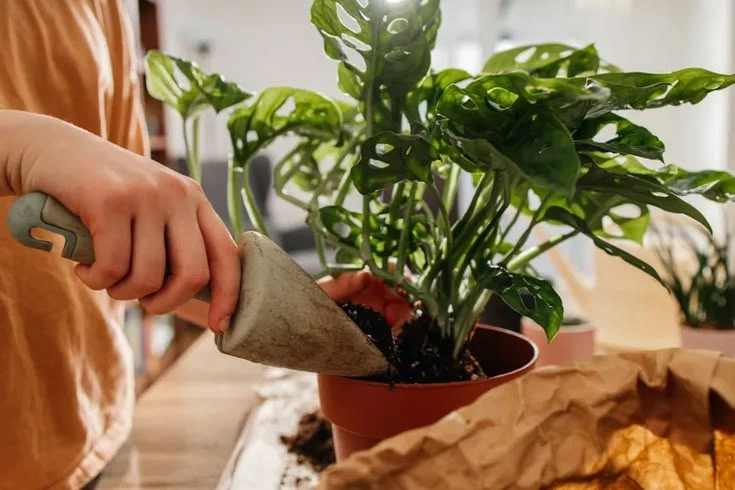
Start by selecting a clean container that is only slightly larger when the plant actually needs repotting. Signs can include roots growing through drainage holes, tightly circling roots, or unusually rapid drying of the existing mix.
Moisten the fresh mix before using it so water can distribute more evenly.
Remove the plant gently and inspect the roots. If they are tightly circling the root ball, loosen them carefully.
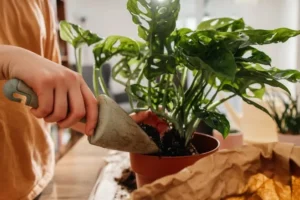
Place enough fresh mix in the new container so the plant sits at an appropriate height. Add mix around the root ball without pressing it down excessively.
Finally, water thoroughly and allow excess water to drain away.
Do not pack the mix tightly. Roots need access to air, and excessive compaction can restrict movement through the growing medium.
Common Soil Mistakes to Avoid
One of the biggest mistakes is assuming that more water always means better growth. It does not.
Another common mistake is using outdoor garden soil inside a houseplant container.
Using the wrong mix for the plant can also cause problems. A succulent and a tropical foliage plant have different moisture requirements, so treating them exactly the same can create unnecessary stress.
Finally, avoid repotting into a dramatically larger container just because you want your plant to grow faster. A slightly larger pot is usually easier to manage because there is less excess growing medium holding unused moisture.
What Plant-Care Guidance Tells Us
Reliable houseplant advice should be based on established horticultural principles rather than viral gardening shortcuts.
University extension sources consistently emphasize the same fundamentals: suitable container media, adequate drainage, root aeration, appropriate watering, and avoiding ordinary garden soil for indoor containers. Penn State, Oklahoma State University, and the University of Minnesota Extension all provide guidance supporting these principles.
At Peeacelily, the practical takeaway is simple: choose the growing medium according to the plant, container, and watering environment rather than looking for one magical soil formula.
FAQs
What is the best soil for most houseplants?
A quality indoor potting mix that balances moisture retention, drainage, and aeration is a good starting point for most houseplants. The exact mix should still be adjusted for the plant’s individual needs.
Can I use garden soil for indoor plants?
It is generally better to avoid garden soil in houseplant containers. It can become dense and may introduce pests, pathogens, or weed seeds into the home.
Is perlite good for houseplants?
Yes. Perlite can improve aeration and drainage within a potting mix. It is especially useful when a growing medium needs more air space and faster drainage.
How often should I replace houseplant soil?
There is no universal replacement schedule. Consider refreshing or replacing the mix when it has become compacted, drains poorly, breaks down significantly, or when the plant needs repotting.
Is potting mix better than soil for Indoor Trees?
For most potted Indoor Trees, a quality container mix is preferable to heavy garden soil because it can provide better aeration and drainage. The exact composition should match the tree’s moisture requirements.
Why is my plant’s soil staying wet?
Several factors can cause this, including overwatering, poor drainage, a dense mix, low light, cool conditions, or an oversized container. Check the pot, drainage hole, growing medium, and watering routine before making changes.