Key Takeaways
- How to Fertilize Houseplants Without Overfeeding: Houseplants mainly when they are actively growing.
- Choose fertilizer according to the plant and product instructions.
- Liquid fertilizer can offer easy control when properly diluted.
- Slow-release fertilizer provides nutrients gradually.
- Never assume more fertilizer means faster growth.
- Avoid feeding wilted or severely stressed plants.
- Watch for brown edges, salt buildup, and other signs of overfertilization.
- Remember that light, water, drainage, and healthy roots matter just as much as fertilizer.
- When in doubt, feeding less is generally safer than repeatedly adding more.
Quick Answer
The safest way to fertilize houseplants is to feed them during active growth, choose a fertilizer suited to the plant, and follow the product label rather than assuming more food means faster growth.
For liquid fertilizer for houseplants, dilute it exactly as directed and apply it to properly hydrated soil rather than dry, wilted soil. During periods of little or no growth, reduce or stop feeding.
Most importantly, watch the plant. Poor growth does not always mean a fertilizer deficiency. Low light, overwatering, underwatering, temperature problems, or root issues can produce similar symptoms.
Why Do Houseplants Need Fertilizer?
Plants need nutrients to produce new leaves, roots, stems, and flowers. However, potted plants have access to a limited amount of growing medium.
Regular watering can also move nutrients out of the pot over time. Therefore, some container-grown plants benefit from additional feeding, particularly while they are actively growing.
Fertilizer commonly provides three major nutrients:
| Nutrient | Main role |
|---|---|
| Nitrogen (N) | Supports leafy growth |
| Phosphorus (P) | Supports roots and reproductive growth |
| Potassium (K) | Helps overall plant function and nutrient movement |
Plants also require smaller amounts of micronutrients. However, the right balance depends on the plant, growing medium, light, and growth stage.
That is why a fertilizer routine should be based on the plant’s needs rather than a fixed rule for every houseplant.
How to Fertilize Houseplants Safely
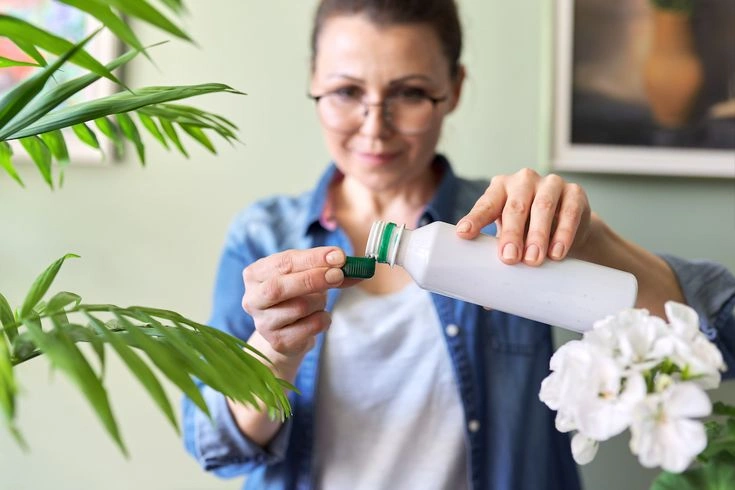
1. Check the Plant First
Before reaching for plant food, look at the entire growing environment.
Is the plant receiving enough light? Is the soil staying wet for too long? Are the roots healthy? Has the plant recently been repotted?
These questions matter because fertilizer cannot fix every plant problem. Missouri Extension notes that poor light and watering problems can look similar to nutrient deficiencies.
2. Fertilize During Active Growth
Most houseplants benefit most from feeding when they are actively producing new growth.
For many indoor plants, this means spring through summer and sometimes into early autumn, depending on indoor conditions and the individual species. The RHS recommends feeding during the growing season and limiting winter feeding when lower light reduces growth.
However, do not rely only on the calendar. A plant growing slowly in low light may need less fertilizer than a vigorously growing plant in bright conditions.
3. Water Before Fertilizing Dry Plants
Never use fertilizer as a substitute for watering.
If your plant is severely dry or wilted, water it appropriately first. Fertilizing a dehydrated plant can increase the risk of root injury. Missouri Extension specifically advises against applying liquid fertilizer to wilted plants.
4. Follow the Label
This is one of the simplest ways to prevent overfeeding.
Fertilizers are concentrated products, so the correct amount depends on the specific formula. Do not assume that doubling the recommended amount will make your plant grow twice as fast.
It can do the opposite by damaging roots and causing salt buildup.
When Should You Feed Indoor Plants?
The best feeding schedule depends on the species, fertilizer type, light level, and growing conditions.
Liquid fertilizers may be applied more frequently at a diluted strength, while slow-release products are designed to release nutrients gradually. The RHS notes that liquid fertilizer can be used once or twice a month, or at quarter strength with each watering during the growing season, depending on the product and plant.
A simple guide looks like this:
| Situation | Feeding approach |
| Active growth | Feed according to the fertilizer label |
| Low light and slow growth | Use less frequently |
| Winter with little growth | Usually reduce or stop |
| Recently repotted | Check whether fresh mix already contains nutrients |
| Wilted or severely stressed | Stabilize the plant before feeding |
| Succulents and cacti | Usually need lighter feeding than heavy feeders |
Always adjust this general guide to the plant and fertilizer instructions.
Choosing the Right Houseplant Fertilizer
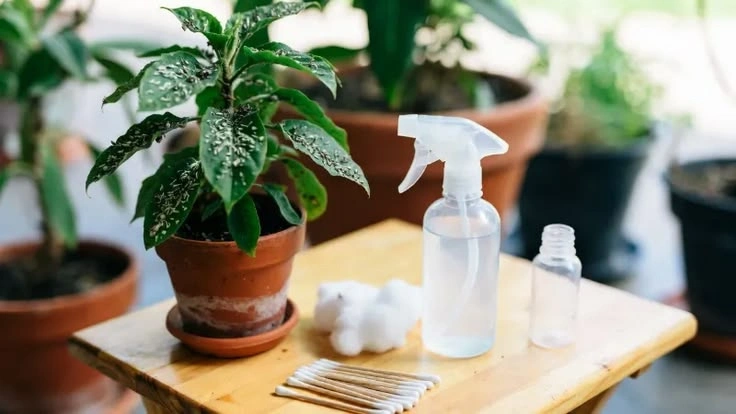
There is no single plant food that is perfect for every indoor plant.
Start by identifying what you are growing. A leafy foliage plant may have different nutritional priorities from a flowering plant or succulent.
Look for a complete fertilizer designed for houseplants and check its NPK numbers. You do not necessarily need the strongest formula available.
In many cases, a modest amount used correctly is safer than a concentrated product applied too often.
Liquid Fertilizer for Houseplants
Liquid fertilizer is popular because it mixes easily with water and can be applied during normal watering.
It also gives you more control over how much fertilizer reaches the plant. However, because it works quickly, incorrect measuring can lead to overfeeding.
For that reason, carefully measure the product and never guess the concentration.
Slow-Release Fertilizer
Slow-release fertilizers gradually provide nutrients over a longer period.
They can be convenient for people who do not want to remember frequent liquid applications. Nevertheless, you still need to follow the manufacturer’s recommended amount because adding extra slow-release fertilizer can also overload the pot.
Liquid vs. Slow-Release Fertilizer
| Feature | Liquid fertilizer | Slow-release fertilizer |
| Application | Mixed with water | Added to soil or potting mix |
| Nutrient release | Relatively quick | Gradual |
| Control | Easy to adjust | Less immediate control |
| Convenience | Requires regular application | Lower maintenance |
| Main risk | Measuring too strongly | Applying too much |
Neither option is automatically better. The right choice depends on your plant, routine, and confidence with measuring fertilizer.
How Much Fertilizer Should You Use?
The safest answer is simple: use the amount recommended for your particular fertilizer and plant.
Different formulas have different concentrations, so copying a dose from another product can be misleading.
If the instructions provide different rates for indoor and outdoor plants, use the indoor recommendation.
Also, remember that more fertilizer does not necessarily mean more growth. Plants can only use nutrients when other conditions such as light, water, temperature, and healthy roots are suitable.
Signs You Are Overfeeding Your Plant
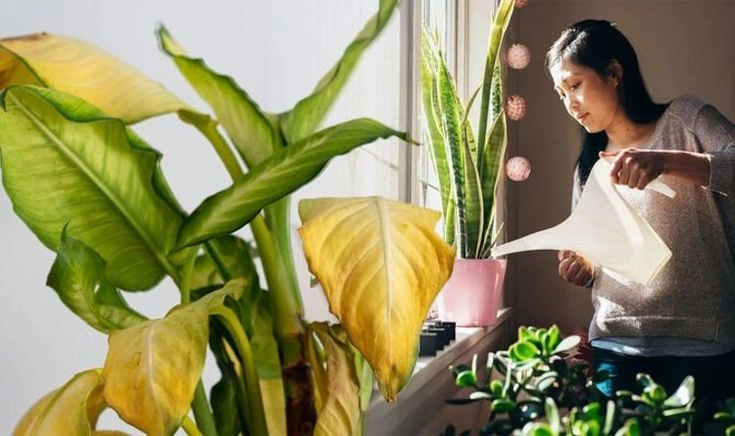
Overfertilization can cause fertilizer burn and salt buildup in the growing medium.
Watch for symptoms such as:
- Brown or crispy leaf edges
- Yellowing leaves
- Wilting despite moist soil
- White crust or residue on the soil
- Stunted growth
- Damaged roots
- Sudden decline after fertilizing
These symptoms are not proof of overfertilization by themselves. Similar problems can come from watering, light, pests, or root disease.
However, if symptoms appeared soon after heavy feeding, fertilizer damage becomes more likely. Excess fertilizer can increase salt concentration around roots and interfere with water and nutrient uptake.
What to Do If You Overfertilize
First, stop applying fertilizer.
If excess fertilizer has recently been added and the plant is in a container with good drainage, thoroughly watering the growing medium and allowing excess water to drain away can help move soluble salts through the pot.
Do not let the container sit in drained water.
For severe cases, changing the potting mix may be necessary, especially when the growing medium contains significant fertilizer buildup or the roots have been damaged.
Afterward, give the plant stable conditions and avoid feeding again until it has recovered and resumed healthy growth.
Common Fertilizing Mistakes
Feeding Every Time You Water
Some plants can tolerate very diluted feeding, but others cannot. Unless the product specifically recommends this method, frequent fertilizing can gradually build up salts.
Fertilizing a Stressed Plant
A struggling plant does not automatically need more nutrients.
If poor light or watering is the real problem, extra fertilizer may make the situation worse.
Using Outdoor Fertilizer Indoors
Outdoor and indoor plants can have different feeding needs. Always check the product label before applying fertilizer to a houseplant.
Mixing Different Fertilizers Without a Plan
Using a slow-release product and then adding frequent liquid feedings can unintentionally increase the total nutrient load.
Keep track of what you have already applied.
Ignoring Fresh Potting Mix
Some commercial potting mixes already contain nutrients. Therefore, newly repotted plants may not need immediate additional fertilizer.
Check the mix before starting a feeding routine.
Expert Tips for Safer Feeding
Start conservatively rather than aggressively.
Keep a simple note of when you fertilized, which product you used, and how the plant responded. This becomes especially useful when you have several different houseplants.
Furthermore, inspect the soil and leaves regularly. A plant that suddenly develops brown edges after repeated feeding may be telling you that the routine needs adjustment.
Most importantly, remember that fertilizer is only one part of plant care. Good light, suitable watering, drainage, temperature, and healthy roots create the foundation for growth.
For more indoor plant care guidance, explore the Peeacelily Plant Care collection, including guides for popular houseplants and beginner-friendly plants.
You can also connect this article internally with relevant Peeacelily content such as Peace Lily Care, Low Maintenance Indoor Plants for Beginners, and Top 10 Indoor Plants.
Frequently Asked Questions
How often should I fertilize houseplants?
There is no universal schedule. During active growth, many houseplants can be fed periodically according to the fertilizer instructions. Liquid and slow-release products have different application schedules.
Can I fertilize houseplants in winter?
If a plant is barely growing because of low light or cooler conditions, regular feeding is usually unnecessary. The RHS recommends limiting winter feeding when plants are not actively growing.
Is liquid fertilizer good for indoor plants?
Yes. Liquid fertilizer can be convenient because it is mixed with water and allows you to control the concentration. However, it must be measured correctly to avoid overfeeding.
Can too much fertilizer kill a houseplant?
Yes. Excess fertilizer can damage roots, create salt buildup, cause leaf burn, and eventually contribute to serious plant decline.
Should I fertilize a newly repotted plant?
Not necessarily. Fresh potting mix may already contain nutrients, so check the product information before adding more fertilizer.
Does yellowing always mean my plant needs fertilizer?
No. Yellow leaves can have many causes, including watering problems, poor light, pests, and root issues. Fertilize only after considering the plant’s overall growing conditions.
Conclusion
Knowing how to fertilize houseplants is really about balance. Your plants need nutrients, but they do not need constant feeding or large amounts of fertilizer.
Start by checking the plant’s growing conditions, then choose a suitable houseplant fertilizer and follow its instructions carefully. Feed mainly during active growth, avoid applying fertilizer to severely dry plants, and reduce feeding when growth slows.
Most importantly, resist the temptation to add extra plant food when a plant looks unhealthy. Sometimes the real solution is better light, improved watering, or healthier roots.
With a simple routine and a little observation, you can feed your indoor plants without overwhelming them.