Key Takeaways
- How Often Should You Fertilize Houseplants? Most actively growing houseplants can be fed about every two to four weeks.
- Spring and summer are common feeding periods for many indoor plants.
- Winter feeding is usually unnecessary when growth slows.
- Always follow the fertilizer label.
- Recently repotted plants may already have available nutrients.
- Succulents and other slow-growing plants generally need less fertilizer.
- Too much fertilizer can damage roots and cause salt buildup.
- Good light, watering, drainage, and soil are just as important as feeding.
- The best schedule depends on the plant, fertilizer, and growing conditions.
Quick Answer
Most houseplants can be fertilized once or twice a month during their active growing period. Spring and summer are generally the main feeding seasons, while many plants need little or no fertilizer during winter when growth slows.
However, there is no universal schedule. Liquid fertilizers may require more frequent applications, while slow release products can last for several months. Always follow the product label and consider your plant’s growth and environment.
How Often Should You Fertilize Houseplants?
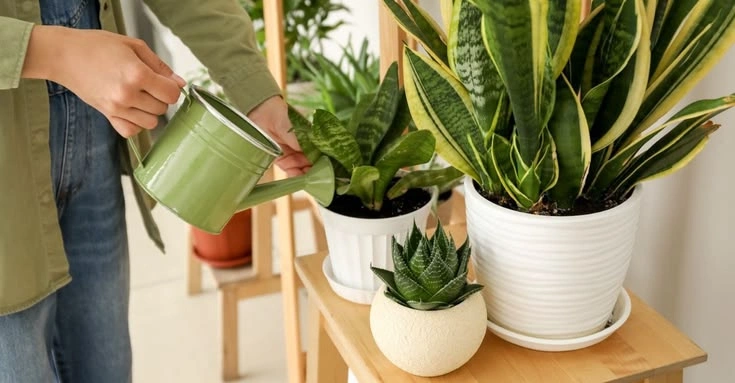
For many common houseplants, feeding every two to four weeks during active growth works well when using a suitable liquid or water-soluble fertilizer.
That said, fertilizer instructions vary considerably. Iowa State University Extension notes that fertilizer products can call for applications ranging from every two weeks to once every three or four months.
Therefore, the fertilizer itself matters. A liquid product designed for frequent feeding should not be treated the same way as a slow release fertilizer.
Your plant also matters. A fast-growing tropical plant in bright light may use nutrients more quickly than a slow-growing plant kept in a dim room.
A Simple Starting Schedule
| Plant situation | General feeding approach |
|---|---|
| Actively growing houseplants | About every 2 to 4 weeks |
| Slow-growing plants | Less frequent feeding |
| Newly repotted plants | Wait and check the potting mix first |
| Winter resting plants | Usually little or no fertilizer |
| Plants under strong grow lights | May continue growing and need feeding |
| Succulents and cacti | Usually need less fertilizer |
These are starting points rather than strict rules. In addition, always check the instructions for your particular fertilizer.
Houseplant Fertilizer Schedule by Season
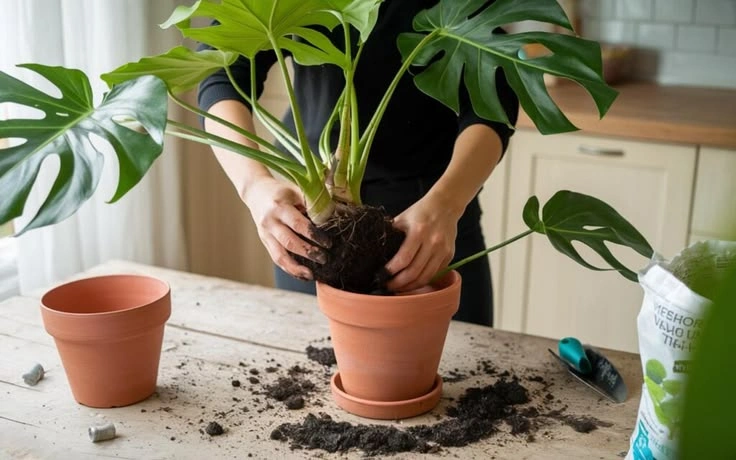
The best houseplant fertilizer schedule usually follows plant growth rather than the calendar alone.
Spring
Spring is often a good time to restart feeding because many houseplants begin producing new leaves and roots as light levels increase.
Start gently rather than immediately giving a large dose. Then, increase feeding according to the plant’s response and the product instructions.
Summer
Summer is usually the busiest growing period for many indoor plants. Consequently, plants receiving good light and producing new growth may benefit from regular feeding.
For many plants, feeding every two to four weeks with a diluted liquid fertilizer can be a practical routine. However, the label should remain your main guide.
Fall
As daylight decreases, growth may slow. Therefore, gradually reduce feeding when your plants stop producing new growth.
Some indoor plants can continue growing well in fall if they have warm temperatures and sufficient light. In that situation, their fertilizer needs may not disappear immediately.
Winter
Many houseplants need little or no fertilizer during winter because reduced light and cooler conditions can slow growth. Fertilizing a plant that is barely growing can contribute to excess nutrients and salt buildup.
However, plants growing actively under strong indoor lighting may be different. In other words, look at the plant’s actual growth rather than assuming every indoor plant follows the same seasonal pattern.
When to Fertilize Houseplants
The best time to fertilize is when a houseplant is actively growing.
Look for signs such as:
- New leaves appearing
- New stems developing
- Fresh roots
- Consistent healthy growth
- Increased growth after better light or warmer conditions
On the other hand, avoid automatically fertilizing a plant that is stressed, severely dry, diseased, or sitting in poor growing conditions.
Fertilizer is not a replacement for proper light, watering, temperature, or suitable soil. In fact, Iowa State University Extension warns that excessive fertilizer can encourage more growth than the available light and moisture can support.
How Often to Feed Different Indoor Plants
Not every houseplant needs the same amount of food. For example, a rapidly growing tropical foliage plant may have different needs from a cactus.
| Plant type | General approach |
| Pothos and similar foliage plants | Regular feeding during active growth |
| Philodendrons | Regular feeding when actively growing |
| Spider plants | Moderate feeding during active growth |
| Peace lilies | Regular but controlled feeding |
| Snake plants | Light and infrequent feeding |
| Succulents | Light feeding, usually less often |
| Cacti | Low feeding needs |
| Flowering houseplants | May need more targeted nutrition |
The table provides a general starting point, not a substitute for species-specific care.
For example, succulents generally grow more slowly and should not be treated like fast-growing tropical foliage plants. Meanwhile, flowering plants may have different nutritional demands during periods of active flowering.
How to Choose Houseplant Fertilizer
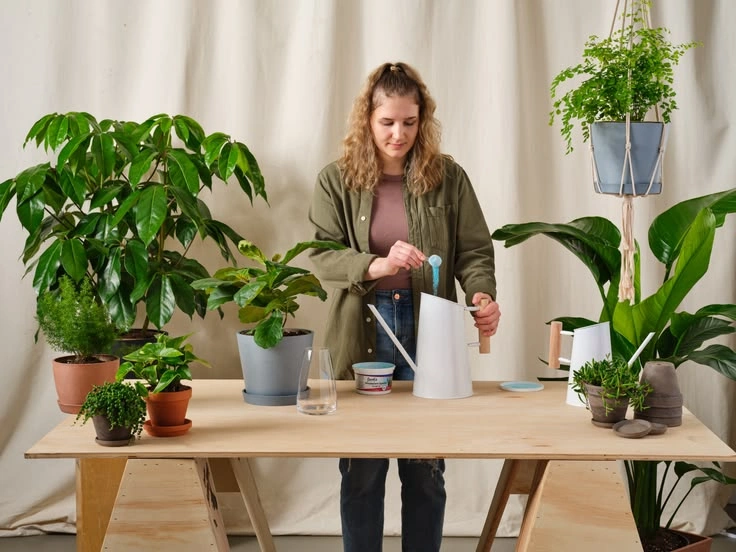
Houseplant fertilizers come in several forms, including liquid, water-soluble, granular, spikes, and tablets.
A complete fertilizer supplies the major nutrients plants need, including nitrogen, phosphorus, and potassium. Some products also provide micronutrients.
Liquid Fertilizer
Liquid fertilizer is convenient because you can dilute it with water and control the amount applied.
It is especially useful when you want to adjust feeding according to the plant’s growth. However, you need to measure it correctly.
Slow Release Fertilizer
Slow-release products provide nutrients over a longer period. Consequently, they generally require fewer applications.
Some slow-release fertilizers can provide nutrients for several months, depending on the product.
Organic Fertilizer
Organic options can also provide nutrients, although their nutrient content and release patterns vary.
Ultimately, the best fertilizer is one that suits the plant and that you can apply correctly and consistently.
How to Fertilize Indoor Plants Properly
Fertilizing correctly is just as important as choosing the right schedule.
First, read the fertilizer label. Never assume that a stronger mixture will make your plant grow faster.
Next, avoid applying concentrated fertilizer to completely dry potting soil. University of Connecticut guidance recommends applying fertilizer to already moist potting soil to reduce the risk of root damage.
Then, measure the product carefully. If you are using a general-purpose fertilizer rather than one specifically formulated for houseplants, Iowa State University Extension recommends using a weaker concentration because indoor plants generally grow more slowly than outdoor plants.
Finally, allow excess water to drain freely. A pot without proper drainage can create additional problems regardless of how carefully you fertilize.
What Happens If You Overfertilize?
More fertilizer does not automatically mean more growth.
Too much fertilizer can cause salts to build up in the potting mix. As a result, roots can become damaged and leaves may develop brown or burned edges. A white crust around the soil or pot can also indicate excess fertilizer salts.
Other possible signs include:
- Brown leaf tips
- Wilting despite adequate moisture
- Yellowing leaves
- Slow or unhealthy growth
- Damaged roots
- White deposits on the soil surface or pot
If you suspect overfertilization, stop feeding temporarily. Then, if the pot drains properly, flushing the soil thoroughly with water can help remove excess soluble salts. Severe cases may require replacing the potting mix.
Common Fertilizing Mistakes
Fertilizing Every Time You Water
Some gardeners prefer very weak fertilizer with frequent watering. However, this approach requires careful dilution and an understanding of the specific product.
For beginners, a simple schedule based on the label is usually easier to manage.
Feeding During Winter Without Checking Growth
Winter is not automatically a feeding season. Therefore, check whether the plant is actually producing new growth before reaching for the fertilizer.
Using Too Much Fertilizer
This is one of the easiest mistakes to make. A stronger dose is not necessarily better.
Instead, measure carefully and follow the manufacturer’s instructions.
Fertilizing a Recently Repotted Plant
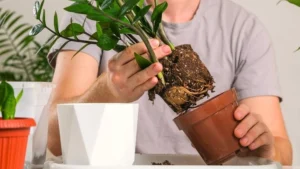
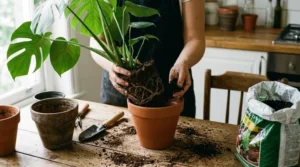
Fresh potting mixes may already contain nutrients. Iowa State University notes that recently repotted plants may need little or no additional fertilizer for the first few months, depending on the mix.
Trying to Fix Every Problem With Fertilizer
Yellow leaves, weak growth, and wilting can have many causes. Poor light, watering problems, pests, temperature stress, or root issues may be responsible.
Therefore, diagnose the problem before adding fertilizer.
A Simple Houseplant Feeding Checklist
Use this quick checklist whenever you plan to fertilize:
- Is the plant actively growing?
- Does the potting mix need nutrients?
- Was the plant recently repotted?
- What type of fertilizer are you using?
- What does the label recommend?
- Is the soil already slightly moist?
- Does the pot have good drainage?
- Have you noticed signs of fertilizer buildup?
- Does this particular plant need less frequent feeding?
- Are light and watering conditions suitable?
If the answers look good, you can proceed with the recommended amount.
Frequently Asked Questions
Can I fertilize houseplants every week?
Some fertilizer programs use very diluted weekly feeding, but this should only be done when the product and plant are suitable for that approach. For beginners, following the product label and using a less frequent schedule is simpler.
Should I fertilize houseplants in winter?
Usually not if the plant has entered a period of slow growth. Reduced winter light can reduce nutrient demand, and unnecessary fertilizer may contribute to problems.
How often should I feed indoor plants in summer?
Many actively growing houseplants can be fed about every two to four weeks with an appropriate liquid fertilizer. Nevertheless, the exact frequency depends on the product and plant.
Is liquid fertilizer better than slow release fertilizer?
Neither is automatically better. Liquid fertilizer gives you more control over individual applications, whereas slow release fertilizer can reduce how often you need to feed.
Should I fertilize a sick houseplant?
Usually, focus on identifying and correcting the underlying problem first. Fertilizer cannot replace proper watering, light, drainage, or pest control.
Can too much fertilizer kill a houseplant?
Yes. Excess fertilizer can cause salt buildup and damage roots, which can eventually seriously weaken or kill a plant.
Conclusion
Knowing how often to fertilize houseplants is less about following a perfect calendar and more about understanding your plant’s growth.
For many indoor plants, feeding every two to four weeks during active growth is a useful starting point. However, some plants need less, while slow-release fertilizer products may require applications only every few months.
Above all, watch your plant, follow the fertilizer instructions, and avoid the temptation to feed more simply because you want faster growth. With the right light, watering, soil, and nutrition working together, your houseplants can grow steadily without unnecessary fertilizer.
For more practical guidance on plant care, explore related houseplant care resources on Peeacelily.