There is something special about an aquarium filled with living plants. Soft green leaves sway in the current, tiny fish weave between stems, and the entire tank begins to feel like a little underwater world rather than a glass box sitting on a shelf.
Aquarium plants do more than make a fish tank beautiful. The right plants provide shelter for fish, create hiding places for shrimp, absorb nutrients from the water, and help build a more natural aquatic environment. Some grow quickly with very little attention, while others need stronger lighting, nutrient-rich substrates, and additional carbon dioxide to thrive.
Aquarium plants are aquatic or water-adapted plants grown inside aquariums to provide natural decoration, shelter, and ecological benefits. Popular choices include Java fern, Anubias, Amazon sword, Java moss, Vallisneria, and floating plants such as Amazon frogbit.
The best plants for your aquarium depend on your tank size, lighting, fish species, water conditions, and the amount of maintenance you are comfortable doing.
What Are Aquarium Plants?
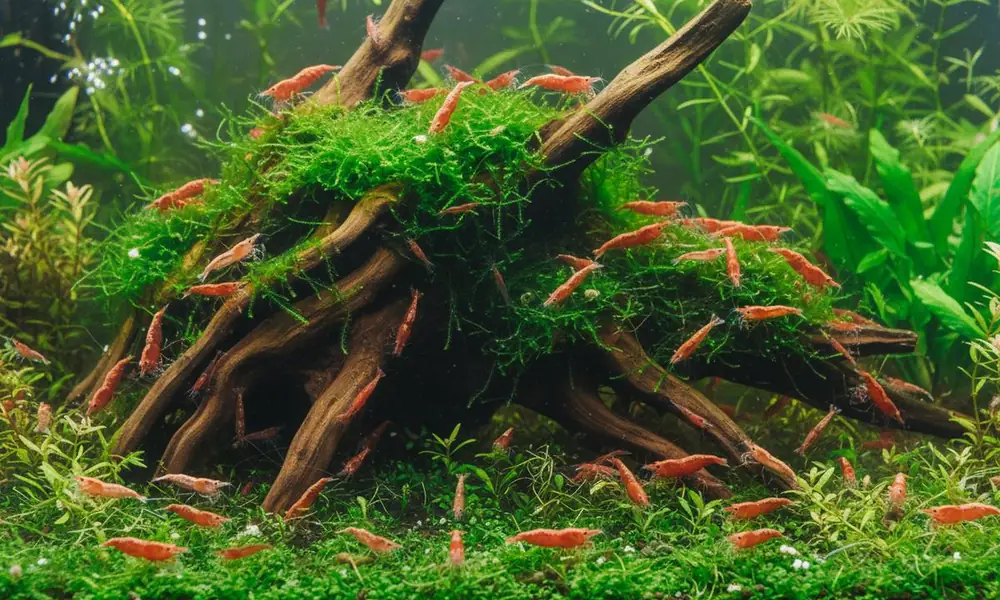
Aquarium plants are plants cultivated in or around an aquarium environment. In freshwater aquariums, they may grow fully submerged, float on the water’s surface, or develop roots in the substrate while their leaves extend above the water.
Some aquarium plants are naturally aquatic, while others are amphibious plants capable of growing both underwater and above the surface. Many popular aquarium species are grown commercially and sold specifically for aquascaping and fishkeeping. Even classic houseplants can adapt to tank life, a peace lily in aquarium can be grown in an aquarium when its roots and crown are set up correctly.
Live plants differ from artificial aquarium decorations because they grow, photosynthesize, and interact with the aquarium’s water and nutrient cycle.
However, not every plant sold as an aquarium decoration is suitable for permanent underwater growth. Before buying a plant, confirm that it can survive in the conditions you plan to provide.
Best Aquarium Plants for Beginners
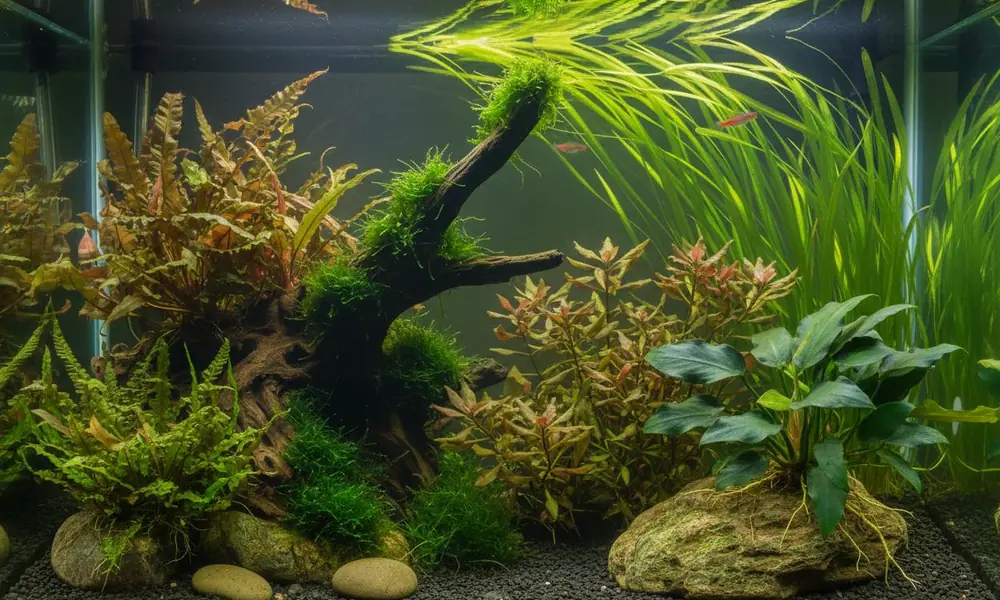
If you are setting up your first planted tank, start with hardy species that tolerate a range of conditions and do not require complicated equipment.
1. Java Fern
Java fern (Microsorum pteropus) is one of the most popular choices for beginner aquariums.
Its long, textured leaves create a natural appearance, and it generally grows well under low to moderate lighting. Java fern is especially useful in tanks where fish may disturb plants rooted in the substrate.
Care tip: Attach Java fern to driftwood or rocks instead of burying its rhizome in gravel. Covering the rhizome can cause it to rot.
2. Anubias
Anubias is a hardy group of aquatic plants with thick, sturdy leaves. Different species vary in size, making them suitable for everything from small aquariums to larger aquascapes.
These plants tolerate relatively low light and grow slowly, so they usually require less frequent trimming than fast-growing stem plants.
Care tip: Keep the rhizome exposed and attach the plant to driftwood or rocks. Its roots can grip the surface as the plant grows.
3. Java Moss
Java moss (Taxiphyllum barbieri) forms a soft, green growth that can be attached to rocks, wood, or mesh.
It is especially popular in shrimp aquariums and breeding tanks because its dense structure creates small hiding places for young shrimp and fish.
Java moss can grow in a range of lighting conditions, although its growth rate and appearance depend on water quality and available nutrients.
Care tip: Trim it occasionally to prevent debris from collecting inside dense growth.
4. Amazon Sword
Amazon sword plants, commonly associated with the genus Echinodorus, are known for their broad green leaves and substantial size.
They can make attractive focal plants in medium and large freshwater aquariums. Unlike Java fern and Anubias, many Amazon sword varieties benefit from being planted in a nutrient-rich substrate.
Care tip: Leave enough room for mature leaves. A plant that looks small in a shop can eventually occupy a large portion of the aquarium.
5. Anacharis
Anacharis is a common name used for several similar-looking aquatic plants, including species sold as Egeria densa.
It is a fast-growing plant that can be planted in the substrate or allowed to float, depending on the species and aquarium setup. Its stems provide cover for small fish and can absorb dissolved nutrients as they grow.
Care tip: Monitor its growth and trim excess stems before they block light from other plants.
6. Vallisneria
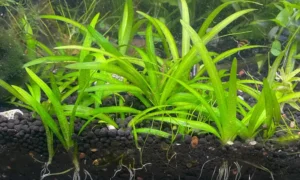
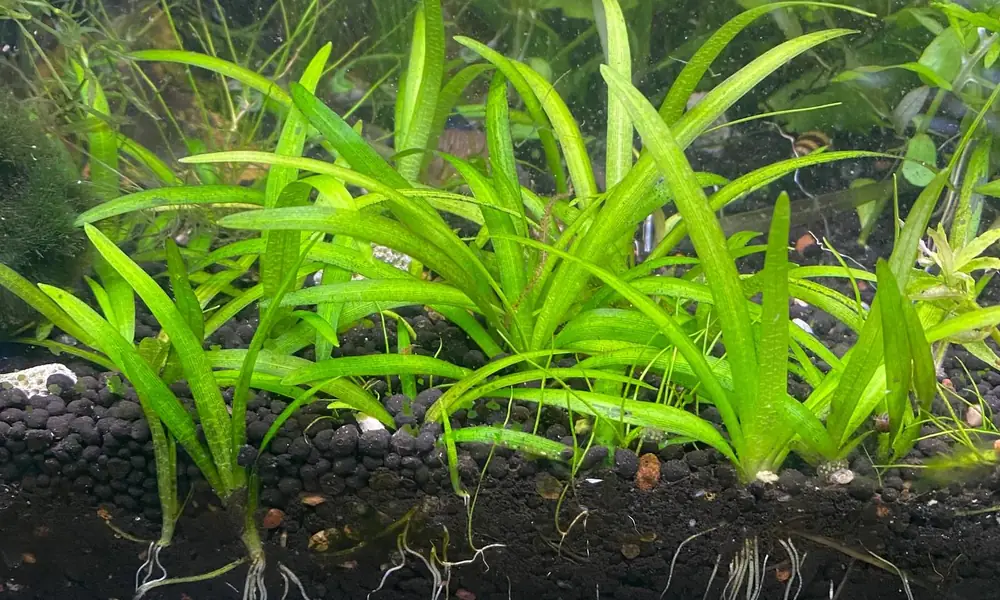
Vallisneria produces long, ribbon-like leaves that create the appearance of underwater grass.
It is often used along the back of an aquarium because its tall leaves add depth without completely hiding the view of the tank. Depending on the species, it can spread through runners and gradually form a dense planting.
Care tip: Allow space for its leaves and runners, and check the mature size of the variety before planting it in a small tank.
7. Cryptocoryne
Cryptocoryne plants, often called crypts, come in a variety of leaf shapes, colors, and sizes.
They can be useful for adding texture to the middle or foreground of an aquarium. Many prefer stable water conditions and moderate lighting, but individual species have different requirements.
Care tip: Crypts may lose leaves when moved or exposed to sudden environmental changes. This is sometimes called crypt melt. Remove decaying leaves and maintain stable conditions while the plant adjusts.
8. Floating Aquarium Plants
Floating plants grow at the water’s surface rather than being rooted in the substrate. Common choices include Amazon frogbit (Limnobium laevigatum) and some species of Salvinia.
Their dangling roots create shelter for fish, while their floating leaves can soften the lighting beneath them.
Floating plants can grow quickly under favorable conditions, so they may need regular thinning. They can also block light from submerged plants if they cover too much of the surface.
Care tip: Keep an open area at the surface for gas exchange and make sure the plants do not interfere with equipment or fish that need access to the surface.
Types of Aquarium Plants by Their Growth Position
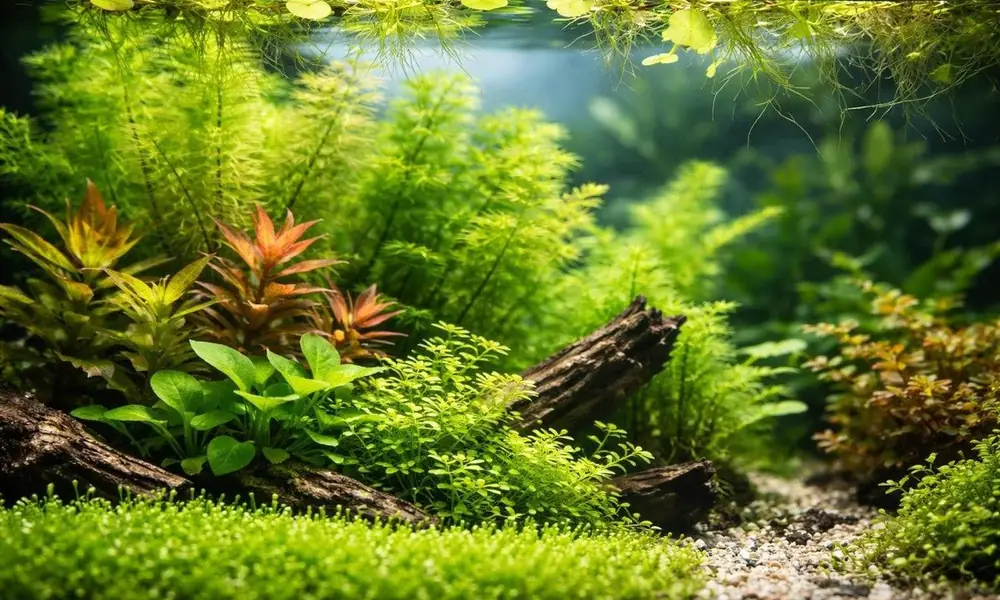
Understanding how aquarium plants grow makes it easier to choose the right species and arrange them attractively.
Foreground Plants
Foreground plants grow close to the substrate and help create a carpet-like appearance.
Some carpeting plants include dwarf hairgrass and certain varieties of Monte Carlo. Many carpeting species need stronger light and more careful maintenance than beginner-friendly plants.
If you are new to planted aquariums, small clumps of low-growing plants or carefully arranged moss may be easier to manage than a demanding carpet.
Midground Plants
Midground plants fill the space between the front of the aquarium and the taller plants at the back.
Anubias, smaller Cryptocoryne varieties, and compact aquatic plants can work well in this position. Their shapes and textures help create a natural transition between the foreground and background.
Background Plants
Background plants are generally taller or faster-growing species placed along the rear glass.
Vallisneria and many stem plants can create height and visual depth. They also provide cover for fish that prefer shaded areas or places to retreat.
Floating Plants
Floating plants remain at the surface and do not need to be planted in the substrate.
They can help create shaded areas, but their growth must be controlled to prevent excessive surface coverage.
Epiphytic Aquarium Plants
Epiphytic aquarium plants grow attached to surfaces such as driftwood and rocks rather than rooted in the substrate.
Java fern and Anubias are familiar examples. Their growth habit makes them useful for aquariums with coarse gravel, bare bottoms, or fish that frequently dig in the substrate.
Benefits of Live Aquarium Plants
Live plants can improve the appearance and function of a freshwater aquarium, but their benefits depend on the overall setup.
They Create a More Natural Environment
Plants add texture, movement, and color to an aquarium. Their leaves and stems also create spaces where fish can hide, explore, and rest.
For species that prefer cover, a well-planted tank may feel more secure than an aquarium with few hiding places.
They Absorb Some Waste Nutrients
Growing plants use nutrients, including nitrogen compounds, to build new tissue. Fast-growing plants can help remove some dissolved nutrients from the water as they grow.
However, plants do not replace filtration, regular maintenance, or water testing. Their ability to manage nutrients depends on growth rate, lighting, plant mass, and the aquarium’s biological load.
They Support Small Aquatic Animals
Dense mosses and fine plant roots create surfaces where microorganisms can grow. These surfaces can provide additional grazing opportunities for shrimp and other small aquatic animals.
Plants also provide shelter for fry, although they do not guarantee that young fish will survive in a community tank.
They Influence Oxygen and Carbon Dioxide
During photosynthesis, plants use light energy to convert carbon dioxide and water into sugars, releasing oxygen. At night, plants also respire and consume oxygen.
This means that live plants can contribute to oxygen production during illuminated periods, but a planted aquarium still needs appropriate water movement and gas exchange.
They Improve Aquascaping
Aquarium plants make it possible to create a range of underwater landscapes, from simple natural arrangements to elaborate aquascapes.
Different leaf shapes, colors, and growth heights can make a small tank appear deeper and more visually balanced.
How to Care for Aquarium Plants
Healthy aquarium plants need more than water. Light, nutrients, substrate, and stable environmental conditions all influence their growth.
1. Provide Suitable Lighting
Light provides the energy plants need for photosynthesis. Different aquarium plants require different intensities and lighting durations.
Low-light species such as many Anubias and Java fern varieties can be good starting points. More demanding carpeting plants may require stronger lighting and closer nutrient management.
For many beginner aquariums, starting with around six to eight hours of lighting daily is a reasonable approach. Adjust the schedule based on plant growth and algae development rather than increasing the light automatically.
Excessive lighting without sufficient plant growth and nutrient balance can encourage algae.
2. Choose the Right Substrate
The substrate is the material at the bottom of the aquarium. It can be gravel, sand, specialized planted-tank soil, or another aquarium-safe material.
Plants that feed heavily through their roots may benefit from a nutrient-rich substrate or suitable root tabs. Plants such as Anubias and Java fern can grow without being planted directly into the substrate.
Choose the substrate according to the needs of your plants and the requirements of your fish.
3. Supply Essential Nutrients
Aquarium plants need nutrients to produce healthy leaves and roots. These include nitrogen, phosphorus, potassium, iron, and other micronutrients.
Fish waste and uneaten food may contribute some nutrients, but the amount varies. In a heavily planted aquarium, a suitable aquarium fertilizer may help prevent deficiencies.
Follow the product instructions carefully. Adding excessive fertilizer can create water-quality problems or encourage algae growth.
4. Understand Carbon Dioxide Requirements
Aquatic plants use carbon dioxide during photosynthesis. Some easy-growing plants can thrive in aquariums without injected CO₂, while many demanding species grow better when additional carbon dioxide is supplied.
CO₂ injection can improve growth in suitable setups, but it also requires careful management. Excessive carbon dioxide can harm fish and other aquatic animals.
If you are starting with low-maintenance plants, you generally do not need to begin with a complex CO₂ system.
5. Maintain Water Quality
Plants and fish share the same aquatic environment, so stable water conditions matter.
Test the water when necessary, maintain the aquarium’s biological filter, and perform appropriate water changes. Avoid sudden changes in temperature, pH, or other important parameters.
The ideal conditions depend on the fish and plants you keep together. Choose compatible species rather than forcing all aquarium inhabitants into unsuitable conditions.
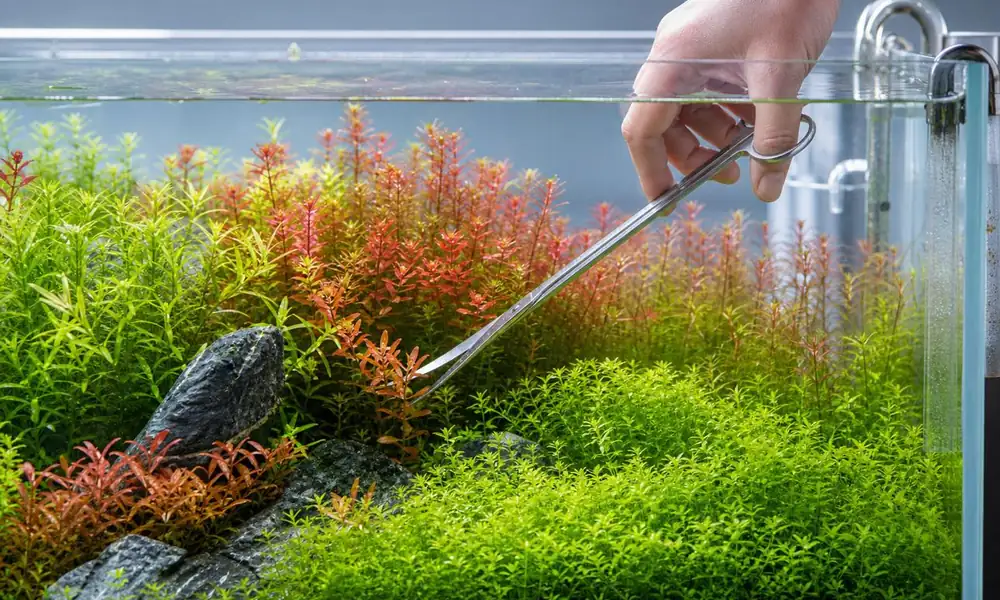
6. Trim and Remove Damaged Growth
Regular trimming prevents fast-growing plants from covering the aquarium or blocking light.
Remove decaying leaves, thin floating plants when needed, and replant healthy stem cuttings if the species can be propagated that way.
Use clean aquarium tools and avoid disturbing fish or damaging nearby plants during maintenance.
Common Aquarium Plant Problems and How to Fix Them
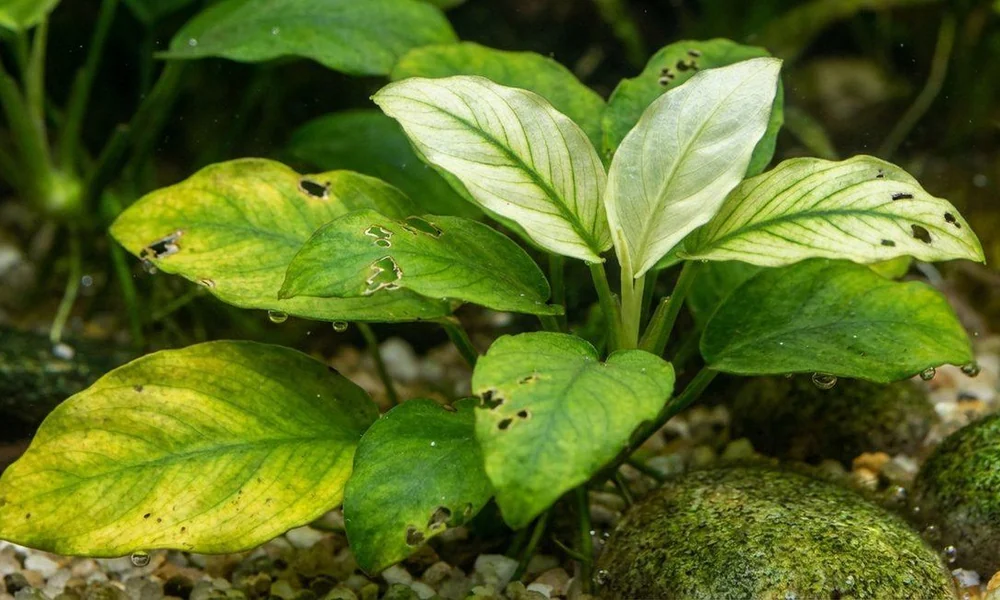
Plant problems are common in new aquariums, but the symptoms often provide useful clues.
Yellow Leaves
Yellowing can result from nutrient deficiencies, poor root health, unsuitable lighting, or natural aging.
Check whether the affected leaves are old or new, review your fertilization routine, and inspect the roots before adding more nutrients.
Brown or Transparent Leaves
Some plants lose older leaves when they adapt to a new aquarium. Other causes include nutrient problems, unsuitable water conditions, or damage during transport.
Remove severely decaying tissue and allow the plant time to adjust if its remaining growth looks healthy.
Algae Growing on Leaves
Algae can develop when lighting, nutrients, maintenance, and plant growth are out of balance.
Avoid making several drastic changes at once. Review the lighting schedule, remove excess algae carefully, maintain consistent water changes, and encourage healthy plant growth.
Plants Keep Floating Out of the Substrate
Some plants need time to establish their roots, while others should not be planted in the substrate at all.
Use suitable planting techniques for the species. Attach rhizome plants to hardscape, and gently secure rooted plants without burying their crowns too deeply.
Slow Growth
Slow growth may be normal for species such as Anubias and Java fern. For other plants, it may indicate inadequate light, missing nutrients, unsuitable temperatures, or unstable conditions.
Identify the plant first and compare its needs with the aquarium environment before changing the setup.
Best Aquarium Plants for Different Tank Setups
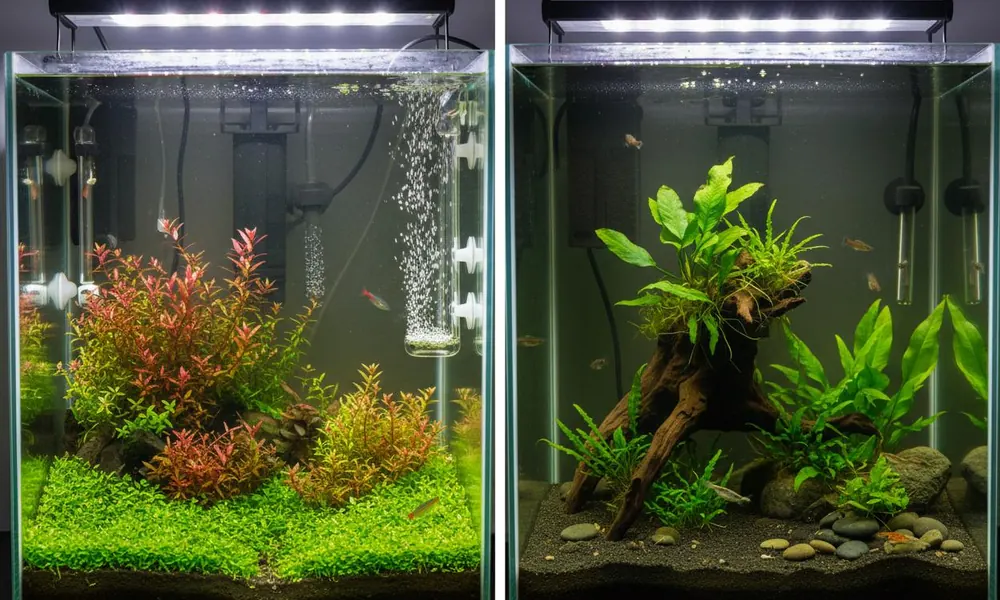
The most suitable aquarium plants depend on the type of aquarium you keep.
| Aquarium setup | Plants to consider | Why they may suit it |
| Beginner freshwater tank | Java fern, Anubias | Hardy plants with relatively simple care needs |
| Shrimp aquarium | Java moss, Anubias | Provide surfaces, cover, and sheltered spaces |
| Low-light aquarium | Java fern, Anubias, some Cryptocoryne | Many varieties tolerate modest lighting |
| Large community tank | Amazon sword, Vallisneria | Can provide height and substantial cover |
| Small aquarium | Compact Anubias varieties, Java moss | Can be managed in limited space |
| Floating plant setup | Amazon frogbit, suitable Salvinia species | Add surface cover and hanging roots |
| High-light aquascape | Selected carpeting and stem plants | Offer detailed layouts but may need more maintenance |
These are starting points, not universal rules. Check each plant’s mature size, compatibility, and legal status before purchasing it.
Are Aquarium Plants Safe for Fish?
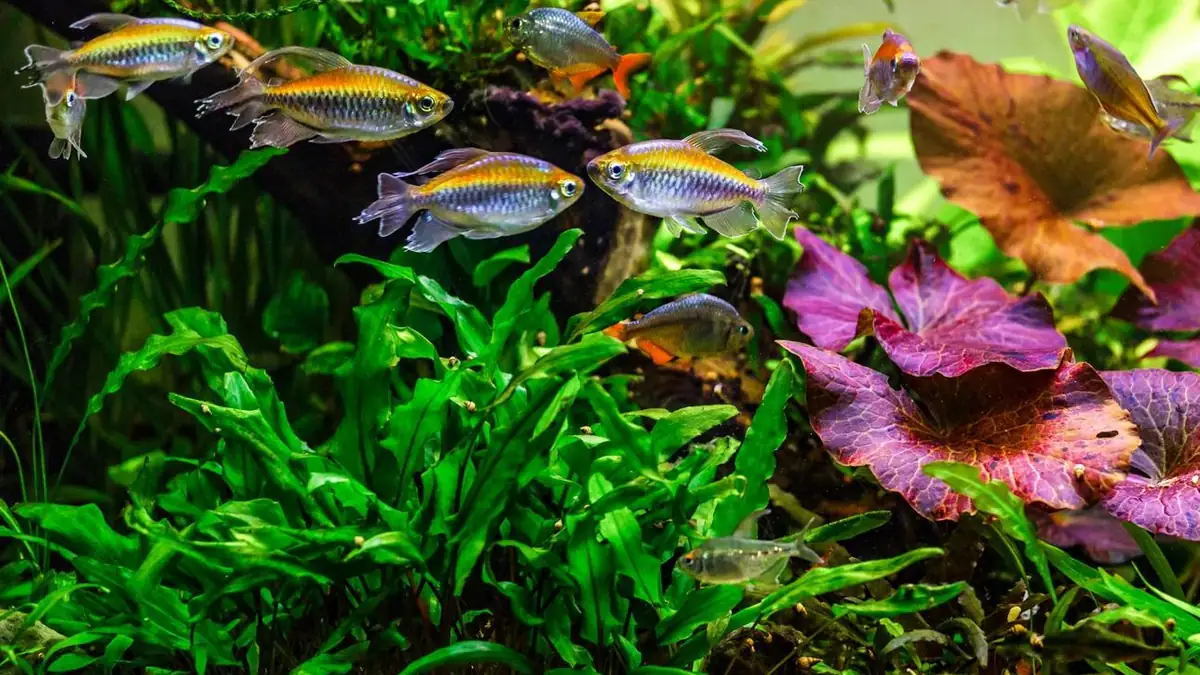
Many aquarium plants are compatible with freshwater fish, but the right combination depends on the species.
Some fish nibble leaves, uproot plants, or dig in the substrate. Others prefer dense vegetation and may benefit from additional cover.
Before introducing plants, inspect them for pests and unwanted organisms. Rinse them appropriately and follow a suitable quarantine process when possible, particularly if you want to avoid introducing snails, parasites, or other unwanted hitchhikers.
Never use garden pesticides or household chemicals on aquarium plants. Even small residues can be harmful to aquatic animals.
Also check whether a plant is genuinely aquatic. Some decorative plants sold for aquariums are terrestrial species that may survive underwater briefly but eventually deteriorate.
Frequently Asked Questions About Aquarium Plants
What are the easiest aquarium plants to grow?
Java fern, Anubias, and Java moss are common beginner choices because many varieties tolerate relatively low light and do not require complicated planting techniques.
Do aquarium plants need soil?
No. Some plants grow well attached to rocks or driftwood, while others grow best in sand, gravel, or nutrient-rich planted-tank substrates. Choose the growing method based on the species.
Do live aquarium plants keep water clean?
Plants absorb some nutrients and can support a healthier aquarium environment, but they do not eliminate fish waste or replace filtration, testing, and water changes.
Can aquarium plants grow without CO₂ injection?
Yes. Many beginner-friendly plants grow without injected carbon dioxide. Additional CO₂ is more useful for certain demanding plants and high-growth aquascaping setups.
How many plants should I put in my aquarium?
There is no single ideal number. Consider the aquarium’s dimensions, the mature size of each species, the needs of your fish, and how much space you want for swimming. Start with a manageable selection and add more as needed.
Why are my aquarium plants turning yellow?
Yellow leaves can indicate nutrient deficiencies, root problems, unsuitable light, or natural aging. Check the plant species and growing conditions before adding fertilizer or making major changes.
Do aquarium plants produce oxygen for fish?
Plants release oxygen during photosynthesis when light is available, but they also respire and consume oxygen. Keep suitable filtration, circulation, and gas exchange in place, especially in densely stocked aquariums.
Can I use plants collected from a pond or river?
It is generally safer to purchase plants from a reputable aquarium supplier. Wild-collected plants may carry pests, pathogens, pollutants, or invasive species, and collection may be restricted by local regulations.
Conclusion
Aquarium plants can transform a fish tank into a living underwater landscape. Whether you choose the sturdy leaves of Anubias, the delicate texture of Java moss, or the tall ribbons of Vallisneria, the best results begin with understanding how each plant grows.
Start with a few compatible species, provide suitable lighting and nutrients, and maintain stable water conditions. As you learn how your plants respond, you can gradually build a fuller aquascape that looks beautiful and supports the animals living in it.
Disclaimer: This content is for informational purposes only and reflects our personal opinions and experiences. We just love to write and share what we know and research.