
Flowers and concentration are linked through biophilia and Attention Restoration Theory. So natural stimuli like blooms reduce mental fatigue, restore directed attention, and support desk flowers productivity. In addition, studies from Texas A&M, Rutgers, and Exeter link flowers for focus with measurable gains in memory, creativity, and attention span.
Struggling to stay focused at your desk? So the answer might be a simple vase of blooms.
At Peeacelily, we explore how flowers and concentration connect through real science. Plus, we show how flowers for focus, desk flowers productivity, and flowers and attention combine to create a calmer, sharper workspace.
Key Takeaways
-
Flowers and concentration are linked through Attention Restoration Theory, so natural elements refresh mental fatigue.
-
Desk flowers productivity gains range from 15% to 38% in workplace studies.
-
Not all blooms work the same, and color and scent change their effect on flowers and attention.
-
Placement, quantity, and flower type matter more than simply having flowers on your desk.
What Is the Link Between Flowers and Concentration?
Understanding how flowers and concentration interact begins with human evolution. The biophilia hypothesis suggests that people carry an innate emotional need to connect with nature.
When employees sit inside windowless offices or stare at digital screens for eight hours, attention fatigue sets in quickly. Modern workspaces often lack natural textures, so brain activity becomes sluggish and stressed.
At Peeacelily, we evaluate indoor plants and floral arrangements through functional science rather than simple home decor trends. Living blooms break up dull interior spaces, and they offer a gentle point of visual interest.
Bringing fresh flowers to your workspace restores cognitive balance. So the relationship between flowers and concentration rests on physical sensory pathways rather than mere visual trickery.
The Science Behind Flowers and Concentration
Psychologist Stephen Kaplan developed Attention Restoration Theory to explain how human brains recover from exhaustion. Working on screens requires directed attention, so your brain actively blocks out distracting background signals.
Eventually, this effort drains your mental energy and lowers daily performance. Natural elements like fresh flowers provide a soft fascination that pulls your interest without demanding heavy thought.
For example, researchers at the University of Michigan led by Dr. Marc Berman found that interacting with natural elements improved memory retention and attention scores by nearly 20%.
In addition, landmark studies at Rutgers University showed that exposure to flowers creates instant positive emotional responses. So placing fresh blooms nearby gives your mind a restorative break while you handle complex daily tasks.
How Flowers and Attention Work Together in the Brain
The brain processes natural colors and subtle organic scents through the limbic system. So when you look at fresh flowers, your body reduces its output of cortisol, which is the primary stress hormone.
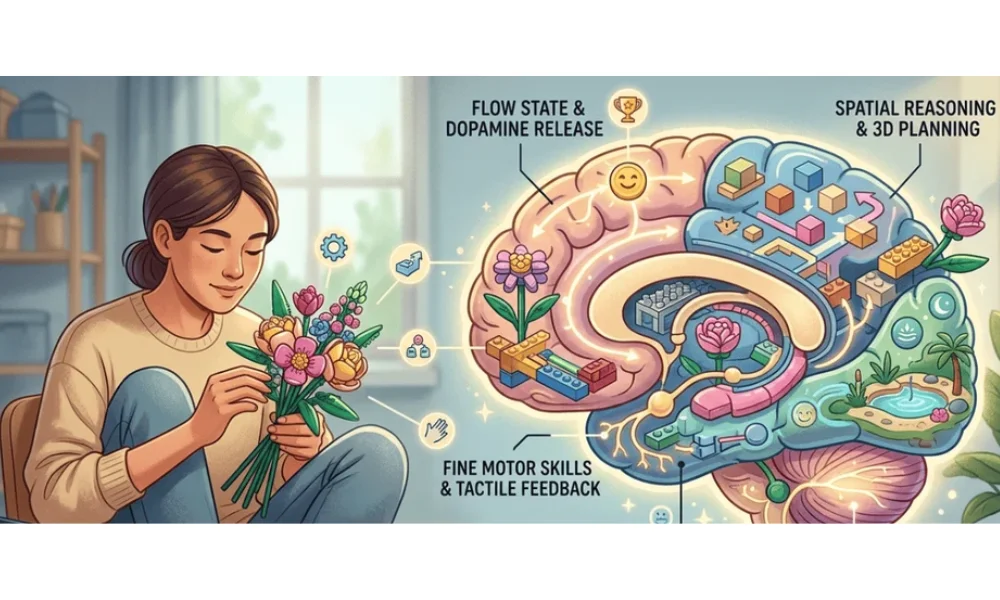 High cortisol levels hinder clear thinking, and lower stress levels allow your brain to process complex information with far less friction.
First, screen fatigue sets in and pushes cortisol levels higher. Next, a quick glance at your desk flowers creates a moment of soft fascination. Then, your cortisol levels drop and your mental focus resets.
Taking a brief visual break to look at a colorful petal creates a micro-restoration moment. This tiny mental reset prevents your focus from fading during long work sessions.
Flowers and attention work together by offering a gentle shift in visual depth. Because your eyes change focus from a flat monitor screen to a three-dimensional living object, your eye muscles relax as well.
As a result, maintaining flowers and attention on your desk protects you against both mental exhaustion and physical eye strain throughout the day.
Desk Flowers Productivity: What the Research Actually Shows
Multiple academic institutions have measured how living plants and flowers alter daily output. In fact, research shows that bringing nature indoors provides measurable boosts to speed, accuracy, and overall workplace satisfaction.
Desk Flowers Productivity: Study Snapshot
| Source / Institution | Reported Effect | Focus Area |
| Texas A&M University | Improved creative problem-solving and idea generation | Idea generation |
| Rutgers University | Increased happiness and social positivity in teams | Mood and engagement |
| University of Exeter | Up to 38% productivity increase in lean spaces | Office performance |
| University of Michigan | ~20% better memory retention and recall | Attention and memory |
| University of Hyogo, Japan | Reduced anxiety and visual fatigue via desk plant gazing | Visual fatigue relief |
While some methodology details vary across these studies, the core finding remains steady. Adding living flowers to an empty office boosts engagement and task speed. So desk flowers productivity is a reliable tool for remote workers and corporate teams alike.
Best Flowers for Focus: Ranked by Color Psychology
Not all blooms produce the exact same mental effect. Because different colors trigger distinct psychological responses, matching your floral choices to your work goals yields better results.
So choosing specific flowers for focus lets you tailor your desk setup for calm detail work or creative output.
Best Flowers for Focus by Effect
| Flower | Color | Best For | Scent Level |
| Lavender | Purple / Blue | Deep focus and calm detail tasks | Low-medium |
| Sunflower | Yellow | Creative brainstorming | Very low |
| Peace Lily | White / Green | Air quality and attention | None |
| Chrysanthemum | Mixed | Long work sessions (extended vase life) | Low |
| Daisy | White / Yellow | Light mood lift and low distraction | None |
| Rose (single stem) | Pink / Red | Motivation and milestone focus | Medium |
Cool colors like purple lavender and white peace lilies soothe an anxious mind, so they help during intense analytical work. On the other hand, warm yellow sunflowers stimulate energy, so they work best when you need fresh ideas.
So picking the right flowers for focus helps align your desk visual environment with your daily workflow requirements.
How to Arrange Flowers and Concentration-Boosting Desk Setups
Creating an effective setup requires balance. You want enough floral color to capture soft fascination, but you do not want visual clutter that steals physical desk space.
-
Select Three to Five Stems: Keep arrangements small and clean. A massive bouquet blocks your view, so stick to three to five healthy stems.
-
Use Low-Profile Vases: Pick a sturdy vase that sits below your chin level when you sit down. Heavy glass or stoneware prevents accidental spills near computer gear.
-
Keep Leaves Fresh: Trim underwater leaves to prevent bacterial growth in the water. Clean water keeps the stems healthy, so your blooms stay vibrant longer.
-
Match Arrangement Scale: Place small single-stem vases on compact desks, and reserve wider arrangements for larger executive tables.
Ideal Desk Flower Placement for Maximum Focus
Placement plays a crucial role in how your brain interacts with natural objects. So put your vase inside your peripheral vision line rather than directly between your eyes and the computer screen.
Set your flowers twelve to eighteen inches away from your monitor, situated slightly to the left or right of your primary line of sight. This allows your gaze to drift naturally toward the petals without interrupting your typing flow or monitor view.
Setting flowers twelve to eighteen inches away from your monitor lets your gaze drift naturally toward the petals without interrupting typing. Also, replace the water every two days to keep the stems fresh.
Placing flowers right in the center of your primary workspace creates physical interference, so keep them slightly off to the side for the best results.
Flowers and Attention: Mistakes That Kill Focus
While fresh blooms offer strong cognitive support, poor floral choices can harm your daily output. So avoiding common mistakes ensures your flowers and attention remain aligned for success.
-
Overpowering Scents: Highly fragrant flowers like stargazer lilies can trigger headaches. Strong odors overpower sensory processing, so pick low-scent stems instead.
-
Excessive Pollen: High-pollen blooms like open lilies drop yellow dust on keypads and trigger sneezing fits. Dusting pollen off your desk breaks your workflow.
-
Wilted Petals: Neglected, dying flowers signal decay and create mental clutter. As a result, rotting stems produce bad odors and lower your mood.
-
Overcrowded Surfaces: Packing too many vases onto a tiny desk leaves no room for your mouse or papers. Physical clutter increases stress, so keep your setup minimal.
Home Office vs. Traditional Office: Flowers and Concentration Compared
Your work environment changes how you should handle floral selection. A home office gives you total control over lighting, temperature, and scent choices.
So you can test lavender or light roses without bothering anyone else. You can adjust placement whenever you want to match your daily lighting.
In contrast, shared traditional offices demand extra courtesy. Coworkers sitting nearby might suffer from plant allergies or sensory sensitivity.
So choosing low-pollen, unscented options like peace lilies or simple daisies protects your colleagues. As a result, you preserve flowers and attention benefits for yourself while respecting shared air space in corporate settings.
Conclusion
Flowers and concentration are not just a temporary trend, so they rest on solid psychological research and office studies.
Whether you pick lavender for calm focus or sunflowers for creative output, the right blooms actively support flowers for focus and desk flowers productivity. Explore more plant-based wellness guides and workspace tips at Peeacelily today.
Frequently Asked Questions
Do flowers really help you concentrate?
Yes, flowers help you concentrate by lowering cortisol stress levels and providing soft visual fascination. This mental break restores directed attention and reduces screen fatigue during long workdays.
What is the best flower for a work desk?
The best flower for a work desk is the peace lily or lavender. Peace lilies require minimal light and produce no distracting scent, while lavender provides a soft soothing tone for deep analytical tasks.
Can flower scent be distracting instead of helpful?
Yes, intense flower scents can distract you by causing headaches or nasal irritation. So experts recommend low-scent options like chrysanthemums, daisies, or single-stem roses for tight office spaces.
How many flowers should I keep on my desk for focus?
You should keep a small arrangement of three to five stems on your desk. This compact size delivers rich visual benefit without cluttering your physical workspace or blocking your computer monitor.