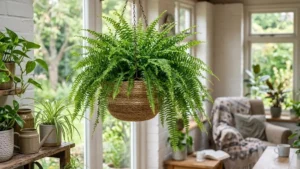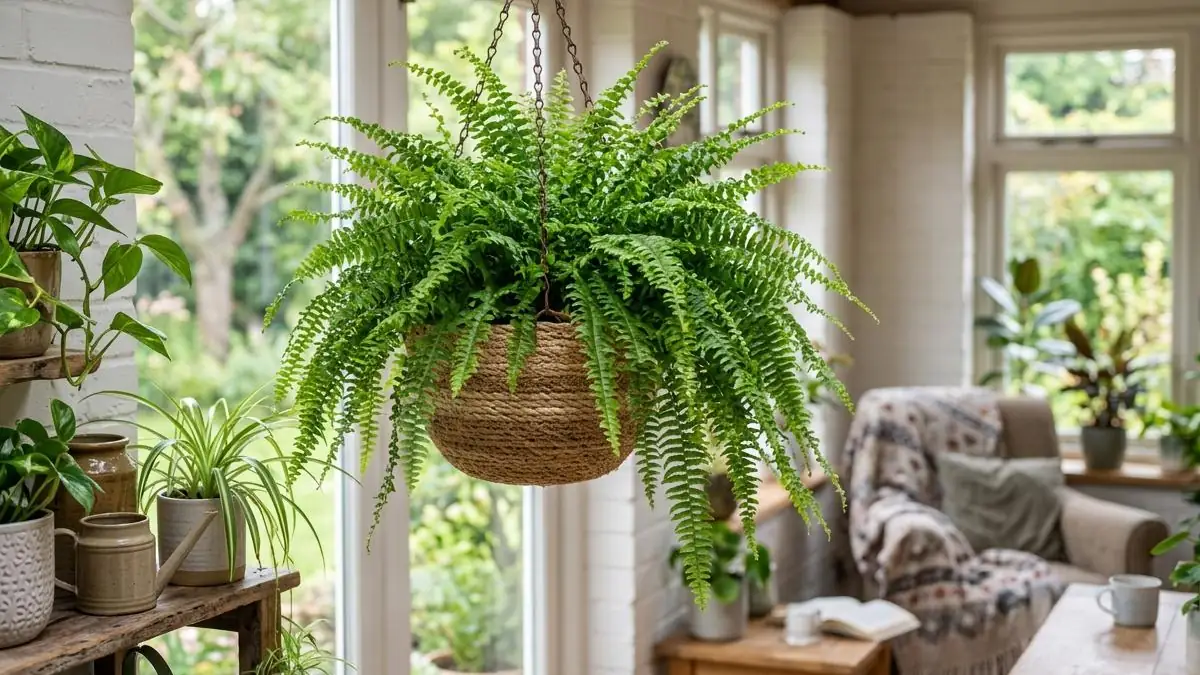
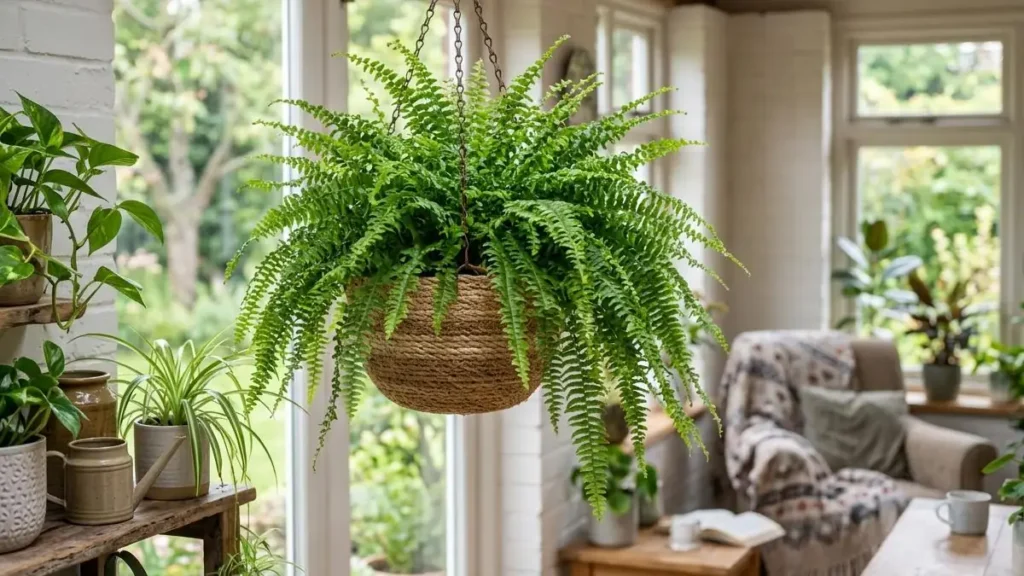
Boston fern care comes down to three things: steady moisture, high humidity, and bright indirect light. Keep the potting mix lightly moist without leaving the roots sitting in water, place the fern away from hot or cold drafts, and raise humidity when indoor air gets dry. These steps help prevent the brown, crispy fronds that often trouble indoor Boston ferns.
A Boston fern (Nephrolepis exaltata ‘Bostoniensis’) can look full and lush indoors, but dry air and inconsistent watering can quickly affect its foliage. The useful approach is to check the plant’s growing conditions before assuming it needs more water.
Key Takeaways: Boston Fern Care
-
Provide bright, indirect light: Keep your Boston fern near a bright window, away from harsh direct sunlight.
-
Keep the soil lightly moist: Water when the surface begins to dry, but never leave the roots sitting in water.
-
Maintain high humidity: Use a humidifier or place the fern in a bright, naturally humid room.
-
Avoid temperature extremes: Keep it away from radiators, air-conditioning vents, and cold drafts.
-
Feed lightly: Apply diluted liquid houseplant fertilizer during spring and summer, following the product directions.
-
Understand brown fronds: Dry air, underwatering, direct sunlight, and fertilizer buildup can all cause browning.
-
Prune damaged foliage: Remove fully brown fronds with clean scissors to keep the plant tidy.
-
Propagate through division: Separate a mature plant into smaller sections with healthy roots and fronds.
-
Check pet safety: Boston ferns are listed as non-toxic to cats and dogs by the ASPCA.
Boston Fern Light Requirements

Give your Boston fern bright, indirect light. An east-facing window is often a good choice. You can also place it near a brighter south- or west-facing window, provided a sheer curtain or some distance from the glass protects it from strong direct sun.
Too much direct sunlight can bleach or scorch the fronds. On the other hand, a very dark corner may leave the plant thin, weak, and slow-growing.
Look at the foliage to judge its position:
- Pale or bleached fronds: The plant may be receiving too much direct light.
- Sparse growth and fewer new fronds: The location may be too dark.
- Healthy green growth: The light level is likely suitable.
If your room has limited natural light, compare suitable options in our guide to low-light indoor plants. A Boston fern still needs enough indirect light to grow well, so don’t treat it as a no-light plant.
How to Water a Boston Fern

Boston ferns prefer consistently moist soil. Don’t let the root ball dry out completely, but don’t keep the pot waterlogged either.
Check the soil every few days. When the surface begins to feel dry, water thoroughly until excess water drains from the bottom. Empty the saucer or outer pot so the roots aren’t left standing in water.
A few habits make watering easier:
- Check the soil, not the calendar. Warm rooms, small pots, and hanging baskets can dry faster than larger containers.
- Water the whole root ball. Pour slowly and evenly rather than wetting only one spot.
- Allow drainage. The pot must have drainage holes, and excess water should be able to escape.
- Check more often in warm weather. Boston ferns can use water faster when temperatures rise.
- Reduce watering in winter when growth slows. Still check the soil regularly; don’t let it become completely dry.
If you’re unsure how to judge soil moisture, our guide to watering indoor plants correctly explains the basic method.
Can You Overwater a Boston Fern?

Yes. Constantly saturated soil reduces the air available to roots and can contribute to root problems.
If the soil stays wet for a long time and the plant develops yellowing or declining fronds, check the drainage before adding more water. Make sure the pot isn’t sitting in a full saucer and that the growing mix isn’t compacted.
Boston Fern Humidity: How to Keep Fronds Green
Low humidity is one of the main reasons Boston fern fronds develop dry, brown edges indoors. The problem often becomes more noticeable when indoor heating runs during winter.
You have several ways to improve the conditions around your plant.
1. Use a Humidifier

A cool-mist humidifier placed near the fern is usually the most dependable option for raising indoor humidity. Follow the manufacturer’s cleaning instructions and avoid directing a strong stream of mist straight at the foliage.
This is especially useful if your home becomes dry during the heating season.
2. Place It in a Bright Bathroom

Bathrooms can provide more humid conditions than many other rooms, particularly when they receive regular use. Choose a bathroom with enough natural light and some air circulation.
A dark bathroom is not a good location just because it gets steamy.
3. Group Plants Together

Placing several houseplants near one another can create a slightly more humid area as moisture moves from their potting mix and foliage into the surrounding air.
This may help in a moderately dry room, but it won’t solve severe dryness on its own.
4. Try a Pebble Tray

Set a shallow tray filled with pebbles beneath the plant’s pot. Add water to the tray, keeping the bottom of the pot above the waterline.
A pebble tray may create a small area of moisture around the plant, but don’t expect it to humidify an entire room. The pot should never sit directly in the tray water.
Does Misting Help Boston Ferns?
Misting can wet the foliage briefly, but it doesn’t maintain room humidity for long. It isn’t a replacement for a humidifier or a consistently suitable growing location.
If your fern repeatedly develops crispy tips, focus on the humidity of the room rather than relying on a spray bottle.
Temperature and the Best Spot for a Boston Fern

Boston ferns generally do well in comfortable indoor temperatures. A range around 60–75°F (16–24°C) is a practical target for many homes.
Avoid placing the plant:
- Directly beside a radiator or heater.
- In front of an air-conditioning vent.
- Near a frequently opened exterior door.
- Against a cold window during chilly weather.
- In a spot exposed to sudden temperature changes.
Warm air from a heater can dry the foliage even when the soil is moist. If the fern sits near a vent, move it to a more stable location before changing your watering routine.
Feeding and Soil for Boston Ferns
What Soil Does a Boston Fern Need?

Use a loose, moisture-retaining potting mix that drains well. The soil should hold enough water to keep the roots from drying out, while allowing excess moisture to escape.
Avoid dense garden soil or a mix that stays soggy for days. A container with drainage holes is just as important as the potting mix.
If you need help choosing or improving a growing medium, see our guide to indoor plant soil mixtures.
How Often Should You Fertilize a Boston Fern?

Feed an actively growing Boston fern lightly during spring and summer. A balanced liquid houseplant fertilizer diluted to half the label strength is a reasonable starting point. Follow the product directions and avoid applying more than recommended.
Reduce or stop feeding when growth slows in fall and winter. Fertilizer doesn’t fix brown fronds caused by dry air or poor watering. Too much fertilizer can also cause salt buildup and damage foliage.
If you’re comparing feeding routines, our guide to liquid fertilizer for indoor plants covers the basics.
Boston Fern Brown Fronds: Causes and Fixes

Brown fronds don’t always mean the same thing. Look at where the damage appears and check the soil and room conditions before choosing a fix.
| What you see | Possible cause | What to do |
|---|---|---|
| Brown, crispy tips on many leaflets | Dry indoor air or inconsistent moisture | Raise humidity and check soil more often |
| Fronds drying out across the plant | Soil has become too dry | Water thoroughly and adjust your checking routine |
| Yellowing or declining fronds with constantly wet soil | Poor drainage or excess watering | Check drainage and let excess water escape |
| Pale or bleached foliage | Too much direct sunlight | Move the fern into bright, indirect light |
| Brown edges after frequent feeding | Possible fertilizer or salt buildup | Pause feeding and review fertilizer strength |
| Damage concentrated near a heater or vent | Hot, dry airflow | Move the plant away from the draft |
Why Are My Boston Fern’s Tips Turning Brown?

Dry air is a common cause of brown tips, especially in heated rooms. However, inconsistent watering and excess fertilizer can also contribute.
Start with three checks:
- Feel the soil to see whether the root ball is drying out.
- Check whether the fern sits near a heater, air conditioner, or draft.
- Review how often and how strongly you’ve been feeding it.
Change the condition that appears to be causing the problem. Changing the plant’s location, watering schedule, and fertilizer routine all at once makes it harder to identify what helped.
Should You Cut Off Brown Boston Fern Fronds?

Yes. Fully brown fronds won’t turn green again, so trim them near the base with clean scissors. You can also remove damaged or dead sections to improve the plant’s appearance.
Don’t remove every partly green frond just because it has a few brown tips. Keep healthy foliage in place while the plant recovers.
If you notice yellowing across several houseplants, our article on yellow leaves on indoor plants can help you compare other possible causes.
Repotting and Propagating Boston Ferns

Boston ferns don’t need frequent repotting. Consider moving yours when roots crowd the container, the plant dries out unusually quickly, or growth becomes restricted.
Spring is a suitable time to repot or divide an actively growing fern.
Choose a container only one size larger than the current one. A much larger pot holds more unused soil, which can remain wet longer than the roots can manage.
How to Propagate a Boston Fern by Division
Division is a straightforward way to make new Boston ferns from a mature plant.
- Remove the fern carefully from its container.
- Examine the root ball and identify natural sections.
- Separate the plant into smaller sections, keeping roots and healthy fronds attached to each one.
- Place each section in its own pot with fresh, well-draining potting mix.
- Water the new divisions and keep the soil lightly moist.
- Place them in bright, indirect light and protect them from dry drafts while they establish.
Use clean tools if you need to cut through the root ball. Avoid making divisions so small that they have very few roots or fronds.
Are Boston Ferns Safe for Cats and Dogs?

Yes. The ASPCA’s Boston fern listing identifies Boston fern (Nephrolepis exaltata) as non-toxic to both cats and dogs.
That makes it a useful option for homes with pets. However, non-toxic doesn’t mean pets should eat it freely. Chewing large amounts of plant material can still cause stomach upset, and pets may damage the foliage.
You can find more options in our guide to cat-safe plants. Always check the exact plant species before bringing a new houseplant into a home with pets.
FAQ: Boston Fern Care
How do I keep a Boston fern alive indoors?
Give it bright, indirect light, keep the soil consistently moist but not waterlogged, and provide higher humidity. Keep it away from heaters, air-conditioning vents, and cold drafts.
Why are my Boston fern’s fronds turning brown?
Dry air is a common cause, but underwatering, direct sunlight, and excess fertilizer can also damage fronds. Check the soil and the plant’s location before changing your care routine.
Do Boston ferns need a lot of humidity?
Yes. Boston ferns prefer humid conditions, and dry indoor air can cause brown, crispy leaf edges. A nearby humidifier is generally more dependable than occasional misting.
How often should I water a Boston fern?
There isn’t one fixed schedule. Check the soil every few days and water when the surface begins to dry, making sure excess water drains from the pot.
Can a Boston fern survive winter indoors?
Yes, if you protect it from cold drafts and dry heating vents. Growth may slow in winter, so adjust watering and feeding to match the plant’s reduced activity.
Are Boston ferns toxic to cats and dogs?
No. The ASPCA lists Boston fern as non-toxic to cats and dogs. Still, discourage pets from chewing large amounts of foliage.
Final Boston Fern Care Tips
A Boston fern is easier to maintain when you focus on its growing conditions instead of reacting to every brown leaflet. Keep the soil lightly moist, give it bright indirect light, and pay close attention to indoor humidity.
If the fronds turn brown, check for dry air, watering problems, direct sun, and fertilizer buildup. Make one change at a time, remove fully dead fronds, and give the plant time to produce healthy new growth.