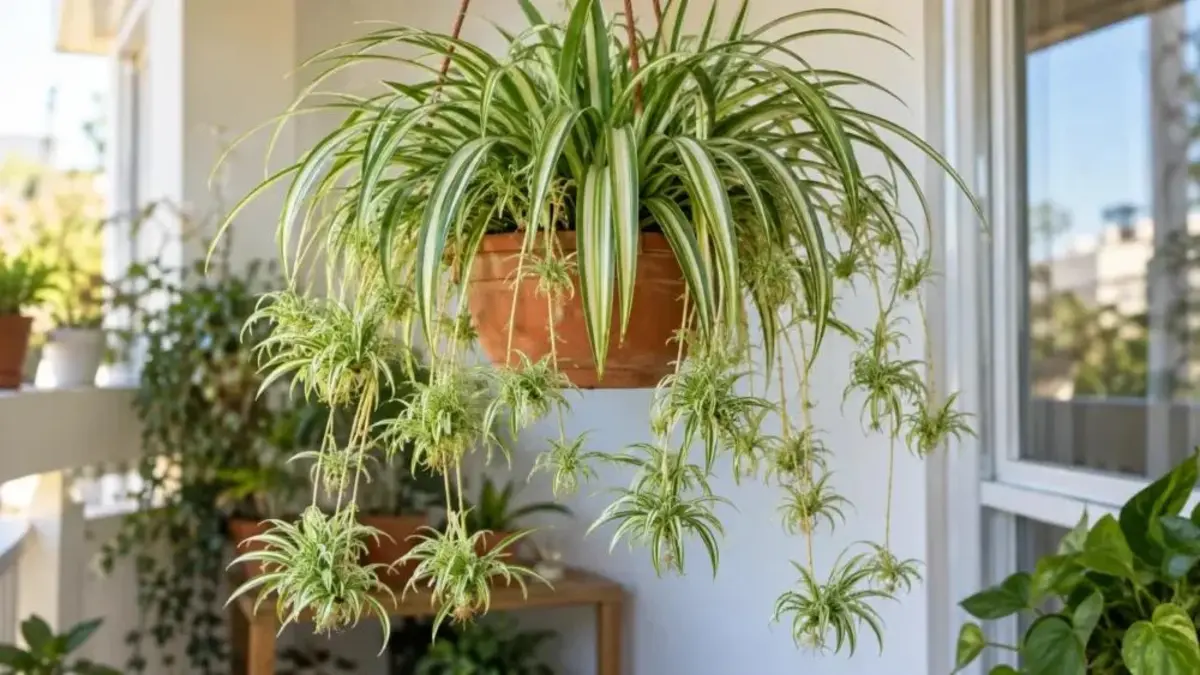
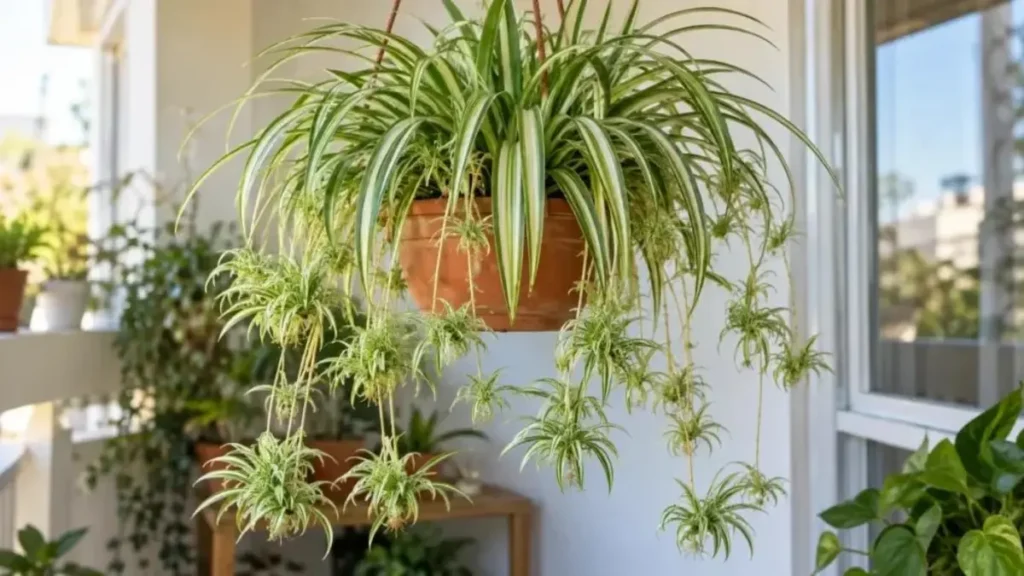
Keep your spider plant in bright, indirect light, water when the top inch of soil feels dry, and use a well-draining potting mix. When the plant produces long stems with baby plantlets, you can root those babies in water or soil to grow new plants. Spider plants (Chlorophytum comosum) are also listed as non-toxic to cats and dogs by the ASPCA.
The baby plantlets are one of the best things about growing a spider plant. A healthy, mature plant can send out long stems carrying small versions of itself. Once those babies develop roots, you can turn them into new plants for your home or share them with someone else.
But first, the parent plant needs the right conditions. Here’s how to care for a spider plant it, prevent common problems, and grow new spider plants from the babies it produces.
Quick Answer: How Do You Care for a Spider Plant?
Spider plants (Chlorophytum comosum) grow best in bright, indirect light and well-draining potting soil. Water when the top inch of soil feels dry, and avoid keeping the roots constantly wet. Mature plants produce baby plantlets on long stems, which can be propagated in water, soil, or while still attached to the parent plant. Spider plants are listed as non-toxic to cats and dogs by the ASPCA.
Key Takeaways
- Light: Provide bright, indirect light for healthy growth and better plantlet production.
- Water: Water when the top inch of soil dries. Reduce watering during winter.
- Soil: Use a well-draining indoor potting mix that retains some moisture.
- Pot: Choose a container with drainage holes. Spider plants tolerate slightly crowded roots.
- Temperature: Average indoor temperatures are generally suitable. Avoid cold drafts and freezing conditions.
- Fertilizer: Feed moderately during spring and summer to support active growth.
- Brown tips: Check water quality, watering habits, dry air, and fertilizer buildup.
- Propagation: Root baby plantlets in water, plant them directly in soil, or let them establish while attached to the parent.
- Baby timing: Wait until plantlets develop small roots before separating them.
- Pet safety: The ASPCA lists spider plants as non-toxic to cats and dogs.
Spider Plant Light Requirements

Bright, indirect light is ideal for spider plants. A position near a bright window works well, especially when a sheer curtain filters the strongest sunlight.
Direct afternoon sun can scorch the leaves, leaving pale or brown patches. On the other hand, spider plants can tolerate lower-light spaces, although growth may become slower and their leaves may lose some of their strong variegation.
Light also affects how many plantlets your spider plant produces. A mature plant in brighter indirect light is generally more likely to grow actively and produce baby stems than one kept in a dim corner.
If your plant isn’t producing babies, check its light before changing everything else. Moving it closer to a bright window may help, provided the leaves are protected from harsh direct sun.
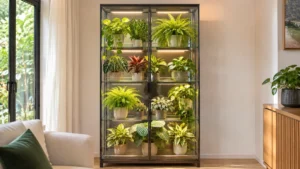
A shelf near a bright window can provide a practical growing position. The right indoor plant shelf can also help you arrange plants where they receive suitable natural light.
How Often to Water a Spider Plant

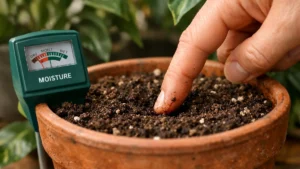
Water your spider plant when the top inch of soil feels dry. During spring and summer, this may be about once a week, but the actual schedule depends on temperature, light, pot size, and the growing medium. In winter, you may need to water less often.
Spider plants have thick, fleshy roots that store some water. They can handle a short dry period, but constantly wet soil can damage the roots.
Use this simple watering routine:
- Check the top inch of soil with your finger.
- If it feels dry, water the plant thoroughly.
- Let excess water drain through the pot’s holes.
- Empty the saucer so the plant doesn’t sit in collected water.
- Check the soil again before the next watering.
Avoid giving small amounts of water every day. A thorough watering followed by a suitable drying period is usually better.
Water quality can also affect the leaf tips. Spider plants are often reported to develop brown tips when exposed to fluoride or excess mineral salts. If the tips keep browning despite good watering habits, try rainwater or suitable filtered water.
Best Soil and Pot for a Spider Plant

Spider plants grow well in a standard, well-draining indoor potting mix. They don’t need the extremely fast-draining soil used for many cacti and succulents because they prefer some consistent moisture around their roots.
A suitable mix should hold enough water for the roots while allowing excess moisture to escape. A quality indoor potting mix with some added perlite can help improve drainage and airflow.
If you’re comparing soil ingredients, this guide to indoor plant soil mixtures explains how different materials affect moisture retention and drainage.
Choose a container with drainage holes. Spider plants can develop large, fleshy roots that fill a pot over time. They also tolerate being slightly root-bound, and growers commonly report that a somewhat snug pot can encourage flowering and plantlet production. However, this isn’t a guaranteed way to make a plant produce babies.
Check the roots when you water or repot. If they are pushing through the drainage holes, filling the container tightly, or making watering difficult, move the plant into a pot one or two inches wider.
Spring is a convenient time to repot because the plant is entering its active growing season.
Temperature, Humidity, and Feeding Your Spider Plant

Average indoor temperatures usually suit spider plants. A range of roughly 60–75°F (15–24°C) is comfortable for steady growth.
Keep the plant away from cold drafts, freezing temperatures, and hot air blowing directly from heaters or air conditioners.
Spider plants can manage normal household humidity. Very dry indoor air may contribute to brown leaf tips, especially during winter, but you don’t need to mist the leaves constantly. If your home is particularly dry, a humidifier nearby can help improve the room’s humidity.
For feeding, use a balanced liquid houseplant fertilizer during spring and summer. Dilute it according to the product label. A light feeding routine is usually enough; excessive fertilizer can cause mineral salts to build up in the soil.
If you’re unsure how to use liquid plant food, the basics of indoor liquid plant fertilizer can help you avoid overfeeding.
Reduce feeding when growth slows in winter. A spider plant doesn’t need frequent fertilizer throughout the year.
Why Does My Spider Plant Have Brown Tips?

Brown leaf tips are one of the most common spider plant complaints. They usually affect the appearance of the plant rather than causing immediate serious damage.
Several conditions can contribute to the problem:
-
Water quality
Spider plants can be sensitive to fluoride and mineral buildup. If the tips continue turning brown, try using rainwater or filtered water and see whether newer leaves develop more cleanly.
-
Inconsistent watering
Allowing the soil to become extremely dry and then keeping it soaked can stress the roots. Check the top inch of soil regularly and water thoroughly when it dries.
-
Dry air and drafts
Very dry air, heating vents, and air-conditioning drafts can contribute to dry leaf tips. Move the plant away from direct airflow and avoid placing it beside a heat source.
-
Fertilizer buildup
Too much fertilizer can leave excess salts in the potting mix. If you suspect buildup, flush the soil with clean water and allow it to drain completely. Reduce future feeding.
Can you cut off brown tips?
Yes. Use clean scissors to trim the brown sections, following the natural pointed shape of each leaf. Leave a small brown edge rather than cutting into healthy green tissue.
Remember that damaged leaf tips won’t turn green again. The goal is to correct the underlying problem so that new leaves grow without the same damage.
How to Propagate Spider Plant Babies

Spider plant propagation is simple because the parent plant produces small plantlets on long stems. These babies can develop their own roots while still attached to the parent.
The Royal Horticultural Society recommends waiting until the offsets have roots before separating them for planting. Rooted babies generally have a better starting point than plantlets without established roots.
You can propagate them in three practical ways.
1. Root Spider Plant Babies in Water

Water propagation lets you watch the roots develop.
- Choose a healthy baby plantlet.
- Cut it from the parent stem if it already has small roots.
- Place its base in a small jar of water.
- Keep the leaves above the water.
- Change the water every few days.
- Once the roots are about an inch or two long, move the baby into a small pot with potting mix.
Avoid submerging the leaves because they can become damaged.
2. Plant Spider Plant Babies Directly in Soil
You can also skip the water stage and plant a rooted baby directly into soil.
- Fill a small pot with a well-draining indoor potting mix.
- Make a shallow space in the centre.
- Place the baby plant’s roots into the mix.
- Cover the roots gently and water the soil.
- Keep the mix lightly moist while the new plant establishes.
Don’t keep the soil soggy. Young roots still need oxygen, and excess water can cause problems.
3. Root the Baby While It’s Attached to the Parent

This method is useful if you want to reduce the chance of a baby drying out before it develops enough roots.
- Place a small pot filled with potting mix beside the parent plant.
- Rest the baby plantlet on the soil.
- Keep the plantlet attached to its parent stem.
- Allow the baby to develop roots in the new pot.
- Once it stays in place and shows signs of growth, cut the connecting stem.
This approach lets the baby receive support from the parent while it establishes its own roots.
What If Your Spider Plant Isn’t Producing Babies?

A young spider plant may need time to reach maturity before producing flowering stems and plantlets.
Low light can also limit active growth and baby production. Try moving the plant to a brighter position with indirect sunlight.
Some growers report that slightly restricted roots encourage plantlet production, but this isn’t a guaranteed result. Don’t keep a plant severely crowded or leave it in a damaged pot just to encourage babies.
Once your new plants are established, you can display them in small containers or decorative pots. A few creative planter ideas can help you arrange the new plants without overcrowding your space.
Are Spider Plants Safe for Cats and Dogs?

Yes. The ASPCA lists the spider plant as non-toxic to cats and dogs.
This makes it a useful option for homes with pets, although non-toxic doesn’t mean pets should eat large amounts of it. Chewing any plant material can still cause mild stomach upset in some animals.
Cats may be attracted to the long, narrow leaves and enjoy batting or chewing them. If your cat keeps damaging the plant, place it in a hanging planter or somewhere the animal cannot easily reach.
If you’re choosing plants for a pet-friendly home, compare species using a reliable cat-safe plant list. Always check the exact plant name because similar-looking houseplants can have very different safety profiles.
FAQ: Spider Plant Care
How often should I water a spider plant?
Water when the top inch of soil feels dry. This may be around once a week during warmer growing months, but indoor conditions affect the timing. Water less often in winter and never leave the pot sitting in excess water.
Do spider plants need a lot of sunlight?
They grow best in bright, indirect light. Spider plants tolerate lower light, but growth may slow and fewer babies may develop. Avoid strong direct afternoon sunlight because it can scorch the leaves.
Why are my spider plant’s leaves turning brown at the tips?
Brown tips can result from fluoride or mineral buildup, inconsistent watering, dry air, drafts, or excess fertilizer. Check the plant’s conditions and adjust one likely cause at a time.
When should I cut spider plant babies off?
Wait until the baby plantlets have developed small roots. You can then cut them from the parent and root them in water or soil. You can also root them in a nearby pot while they’re still attached.
Can spider plant babies grow without roots?
Yes, plantlets without established roots can develop roots in water or soil, but rooted babies have a head start. Keep unrooted plantlets in suitable conditions and avoid letting them dry out.
Are spider plants safe for cats?
Yes. The ASPCA lists spider plants as non-toxic to cats and dogs. However, eating too much plant material can still upset a pet’s stomach, so it’s sensible to discourage chewing.
Why is my spider plant not producing babies?
The plant may be too young, receiving insufficient light, or not yet mature enough to produce flowering stems. Give it time and provide bright, indirect light. Slight root confinement may help in some cases, but it isn’t a guaranteed method.
Final Thoughts About How Do You Care Spider Plant
Spider plant care doesn’t need to be complicated. Give it bright, indirect light, water when the top inch of soil dries, and use a well-draining potting mix. Keep fertilizer moderate and watch for brown tips before they spread across the leaves.
Spider plants adapt to different indoor conditions, although bright, indirect light usually supports better growth, according to the Royal Horticultural Society’s growing guide
When the plant produces baby plantlets, wait for roots to develop and choose water, soil, or attached potting to grow them. With a little patience, one healthy parent plant can provide several new plants for your home.