
Snake plants need bright, indirect light, well-draining soil, and very little water. Let the potting mix dry out completely before watering again. Depending on the season, light, and pot, that may mean watering every few weeks or even less often in winter. Overwatering is one of the biggest risks to a snake plant.
Snake plants have a reputation for being nearly indestructible, but they still need the right conditions. Their thick leaves store water, so they tolerate dry soil much better than constantly wet roots.
This guide explains how to care for a snake plant, recognize early signs of overwatering, and respond if the roots or leaves have already started to rot.
Key Takeaways
- Bright, indirect light supports steady growth.
- Let the potting mix dry completely before watering.
- Reduce watering during winter and low-light periods.
- Use a fast-draining succulent mix and a pot with drainage holes.
- Soft leaves and a mushy base can signal root or rhizome rot.
- Remove damaged tissue and repot healthy sections if rot develops.
- Snake plants are toxic to cats and dogs if eaten.
Quick Answer
Snake plants (Dracaena trifasciata, formerly Sansevieria trifasciata) need bright, indirect light, fast-draining soil, and infrequent watering. Allow the potting mix to dry completely before watering again, especially during winter. Overwatering can cause root and rhizome rot, leading to soft leaves and a collapsing base. Snake plants are toxic to cats and dogs if eaten.
How Much Light Does a Snake Plant Need?

Bright, indirect light is a good choice for most snake plants. Place yours near a bright window where it receives plenty of natural light without being exposed to harsh afternoon sun for long periods.
One reason snake plants are popular indoor plants is their ability to tolerate lower-light rooms. However, surviving in low light does not mean growing quickly. A plant in a dim corner usually produces new leaves more slowly than one in a brighter position.
Use these signs to assess its location:
- Slow growth: The plant may need more light, especially if the room is very dim.
- Pale or scorched patches: Strong direct sunlight may be damaging the leaves.
- Healthy, firm leaves: The current light conditions may be suitable if the plant is also growing steadily.
A few hours of gentle sunlight can be tolerated, but introduce brighter conditions gradually. Moving a plant from deep shade straight into strong sunlight can cause leaf damage.
If your room has very little natural light, a suitable grow light can help. Avoid placing the plant directly beneath an intense light without checking the distance and exposure time.
How Often Should You Water a Snake Plant?

There isn’t one watering schedule that works for every snake plant. In a warm, bright room, the soil may dry sooner. In a cool room with limited light, it can stay damp for much longer.
The most reliable rule is simple: wait until the potting mix is completely dry before watering again.
During spring and summer, you may need to water every few weeks. In winter, watering can be much less frequent. North Carolina State Extension advises allowing the soil to dry between waterings during the growing season and watering only every one to two months in winter. Your own conditions may require a different interval.
Before watering, check more than the surface:
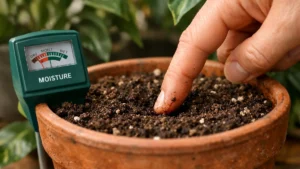
- Push a finger several inches into the potting mix.
- Check whether the soil is still cool or damp below the surface.
- If you find moisture, wait and check again later.
- If the mix is dry, water thoroughly until excess water drains from the bottom.
- Empty the saucer or outer pot so the plant doesn’t sit in collected water.
Don’t pour water into the center of the leaf rosette. Direct water into the soil instead.
A moisture meter can help if you’re unsure how damp the soil is, but it should not replace checking the plant and its growing conditions. The key is to avoid watering simply because a certain number of days has passed.
If you like plants that tolerate dry conditions, our ZZ plant guide covers another low-maintenance houseplant.
Best Soil and Pot for a Snake Plant

Snake plants need a growing mix that drains quickly. A cactus or succulent potting mix is a convenient option. You can also improve a regular houseplant mix by adding materials such as perlite or pumice to create more air space.
The aim is to prevent water from remaining around the roots for too long.
Your container matters just as much as the soil:
- Drainage holes: Choose a pot that allows excess water to escape.
- Suitable size: Avoid an oversized container that holds more wet soil than the roots can use.
- Stable base: Tall snake plants can become top-heavy, so a heavier pot may help prevent tipping.
- Breathable material: Terracotta can help the mix dry faster, although it may also mean you need to check soil moisture more often.
Snake plants don’t need frequent repotting. They can remain in a fairly snug container for a long time. Repot when the roots become crowded, the pot starts to crack, or the plant is no longer stable.
When repotting, move up only one pot size rather than placing a small root system in a much larger container.
Temperature, Humidity, and Feeding Your Snake Plant

Snake plants prefer warm indoor conditions and tolerate ordinary household humidity. You don’t need a humidifier or regular misting to keep them healthy.
Protect the plant from frost and prolonged exposure to cold temperatures. Cold damage can cause soft, discolored patches on the leaves.
Feeding needs are modest. During active growth in spring and summer, use a balanced houseplant fertilizer according to its label. Avoid heavy feeding or applying fertilizer to dry, stressed, or damaged roots.
Reduce or stop feeding during winter when growth slows. A snake plant is a slow grower, so adding more fertilizer than it needs won’t make it grow faster.
Why Is My Snake Plant Dying? Overwatering Warning Signs

If your snake plant is struggling, check the soil and the base of the leaves before changing its light or fertilizer routine.
Overwatering is a common cause of snake plant problems because wet soil limits the oxygen available to roots. Prolonged moisture can lead to root and rhizome rot.
Here are warning signs to look for, from early symptoms to more serious damage.
1. Yellowing Lower Leaves
Yellow leaves can have several causes, but lower leaves that also feel soft or look waterlogged may indicate excess moisture.
Check the soil. If it is still wet, stop watering and allow the mix to dry. Also check that the pot has drainage holes and isn’t standing in water.
One yellowing older leaf does not automatically mean the plant is dying. Look at the overall condition of the plant before deciding what to change.
2. Soft Leaves or a Mushy Base
Leaves that become soft near the soil line may indicate that the roots or underground rhizomes are rotting.
At this stage, simply waiting for the soil to dry may not be enough. Remove the plant from its pot and inspect the roots and rhizomes.
3. Brown, Slimy, or Smelly Roots
Healthy roots should feel firm. Roots that are black, soft, slimy, or unpleasant-smelling are likely damaged. If you find rot, separate the healthy parts from the damaged tissue using clean cutting tools.
How to Rescue an Overwatered Snake Plant

A damaged snake plant may recover if enough healthy roots, rhizomes, or leaves remain. Severe rot can be difficult to reverse, so recovery isn’t guaranteed.
Follow this rescue process:
Step 1: Remove the plant from its pot.
Gently take it out and remove wet soil so you can see the roots and underground stems.
Step 2: Inspect the roots and rhizomes.
Look for firm, healthy sections. Soft, black, or mushy tissue should be removed.
Step 3: Trim damaged parts.
Use clean scissors or pruning shears. Remove rotten roots and leaves, taking care not to cut into healthy sections unnecessarily.
Step 4: Let the healthy sections dry.
Allow cut surfaces to dry before replanting. The time needed depends on the size of the cuts and the surrounding conditions.
Step 5: Repot in fresh, dry mix.
Use a clean pot with drainage holes and a fast-draining succulent or cactus mix.
Step 6: Be cautious with the first watering.
Don’t immediately soak freshly trimmed, damaged roots. Give the cut surfaces time to dry and follow a conservative watering approach while the plant recovers. Once established, continue watering only when the mix has dried completely.
If the main plant has extensive rot, healthy offsets or leaf sections may offer another way to propagate it.
What If the Snake Plant Is Underwatered?

Underwatering is usually easier to correct than advanced root rot.
A very dry snake plant may develop wrinkled or curled leaves and dry brown tips. Check the soil before watering. If it is completely dry, water thoroughly and let excess water drain away.
Don’t respond to every damaged leaf with more water. If the roots are already rotting, additional watering will make the problem worse.
How to Propagate a Snake Plant

You can make new snake plants through division or leaf cuttings. Division is generally the better option when you want new plants to retain the characteristics of a variegated variety. For more inspiration on incorporating greenery into decorative arrangements, explore these event table greenery ideas.
Method 1: Division
Snake plants produce new shoots, often called offsets, from underground rhizomes.
- Remove the plant from its pot, ideally when you’re already repotting.
- Find an offset with its own roots.
- Separate it carefully from the parent plant, keeping as many healthy roots as possible.
- Plant the offset in a small container with drainage holes.
- Use a fast-draining potting mix and water cautiously while it establishes.
Division is useful because the new plant remains connected to the parent plant’s growth pattern.
Method 2: Leaf Cuttings
Leaf cuttings are another option, although they take time to develop.
- Choose a healthy, firm leaf.
- Cut it into sections using clean tools.
- Keep track of which end of each section originally pointed toward the base of the plant.
- Allow the cut surfaces to dry before planting.
- Place the correct end into a suitable propagation medium and keep it lightly moist, not waterlogged.
Be aware that leaf cuttings from some variegated snake plants may produce plain green offspring rather than retaining the parent’s yellow or cream margins. Division is a better choice when preserving those patterns matters.
Is a Snake Plant Toxic to Cats and Dogs?

Yes. The ASPCA lists snake plants (Sansevieria trifasciata) as toxic to both cats and dogs. They contain saponins, which can cause nausea, vomiting, and diarrhea if the plant is eaten.
Keep snake plants somewhere pets cannot chew the leaves. If your pet eats part of the plant, contact your veterinarian or an animal poison-control service for advice. The ASPCA’s snake plant safety information explains its toxicity and the symptoms it can cause in pets.
FAQ: Snake Plant Care
How often should I water my snake plant?
Water only after the potting mix has dried completely. This may mean every few weeks during active growth and every month or two in winter. The exact timing depends on light, temperature, pot size, and soil. Check the mix rather than following a fixed calendar.
Do snake plants need sunlight?
Snake plants grow well in bright, indirect light and can tolerate lower-light conditions. They don’t need harsh direct sunlight. A brighter position usually supports better growth, while very dim conditions can slow new leaf production.
Is a snake plant toxic to cats and dogs?
Yes. The ASPCA lists snake plants as toxic to cats and dogs because they contain saponins. Eating the leaves can cause nausea, vomiting, and diarrhea. Keep the plant out of reach and contact a veterinarian if your pet chews or eats it.
Why is my snake plant falling over?
Soft leaves that collapse near the soil line can indicate root or rhizome rot from overwatering. Check the roots and remove damaged tissue if necessary. If the leaves are firm but the plant is tipping, it may need a more stable pot.
What is the best soil for a snake plant?
A fast-draining cactus or succulent mix is a practical choice. You can also use regular potting mix amended with perlite or pumice. Always choose a pot with drainage holes to prevent excess water from collecting around the roots.
Can a snake plant recover from root rot?
It may recover if some roots, rhizomes, or leaves remain healthy. Remove the rotten tissue, let healthy cut surfaces dry, and repot in fresh, fast-draining mix. Recovery is less likely when the damage has spread through most of the plant.
Final Thoughts
Snake plant care is less about frequent attention and more about avoiding the wrong conditions. Give it suitable light, use a fast-draining mix, and let the soil dry completely before watering again.
If the leaves start turning yellow or falling over, check for excess moisture before assuming the plant needs more water. Catching root problems early gives you a better chance of saving healthy sections and growing a replacement through division or cuttings.
Disclaimer: This article provides general houseplant care information. Watering needs vary with climate, light, pot size, and soil composition. If a pet eats part of a snake plant, contact a veterinarian for advice.