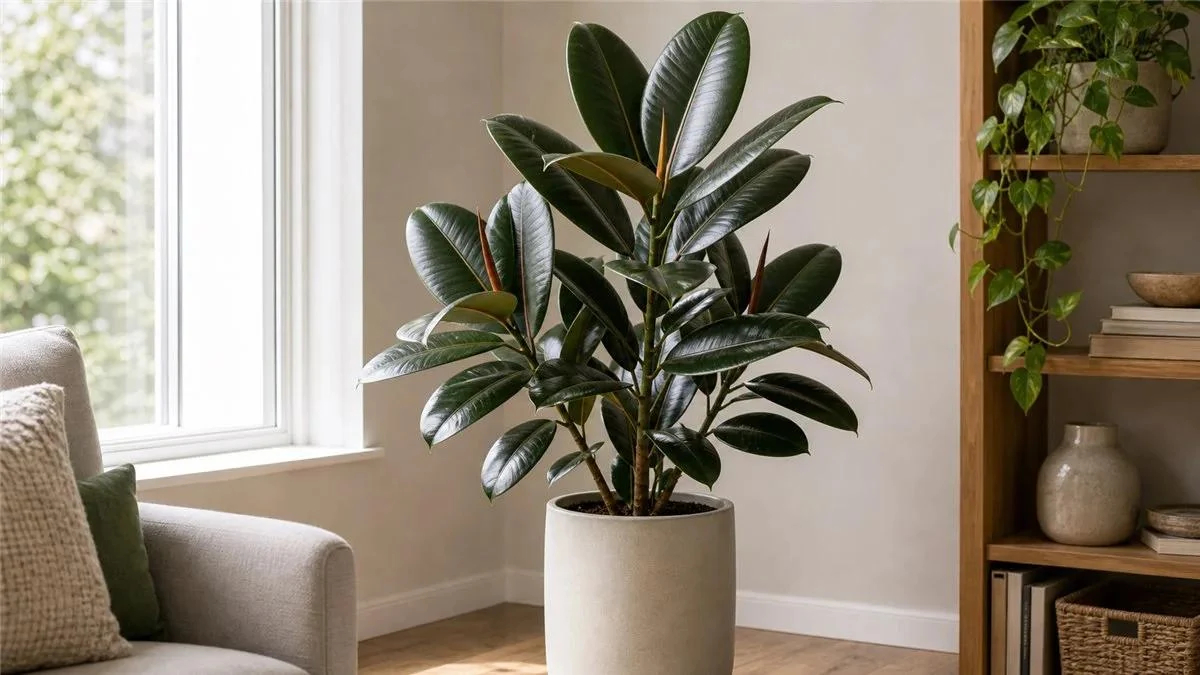
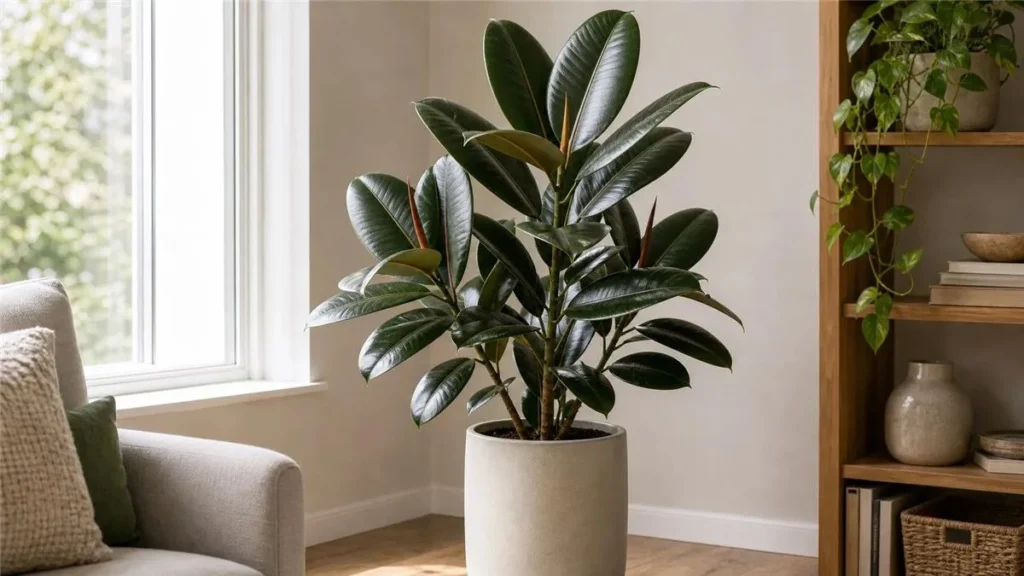
To care for a rubber plant (Ficus elastica), place it in bright, indirect light, water when the top two inches of soil feel dry, and use a well-draining potting mix. Keep it in a warm room, away from cold drafts. Handle it carefully when pruning: its milky sap can irritate skin and eyes, and chewing the leaves can upset pets.
Rubber plants are popular for their large, glossy leaves and upright growth. They can adapt to normal indoor conditions, but they grow best when you get a few basics right. This guide covers light, watering, soil, temperature, feeding, yellow leaves, pruning, propagation, and safety.
Quick Answer: Rubber Plant Care at a Glance
A rubber plant needs bright, indirect light, moderate watering, and well-draining soil. Let the top two inches of soil dry before watering again. Keep the plant warm and away from drafts, feed it during active growth, and wear gloves when pruning because its milky sap can irritate skin.
Key Takeaways
- Light: Give your rubber plant bright, indirect light. Gentle morning sun is usually suitable.
- Water: Water when the top two inches of soil feel dry. Never leave the pot sitting in excess water.
- Soil: Choose an airy, well-draining houseplant mix and a pot with drainage holes.
- Temperature: Keep it in a warm, stable room, away from cold drafts and heating or air-conditioning vents.
- Feeding: Use a balanced liquid fertilizer during active growth and reduce feeding in winter.
- Pruning: Wear gloves and clean your tools because the plant releases irritating milky sap.
- Pet safety: Keep the plant away from cats and dogs that may chew its leaves or stems.
Rubber Plant Light Requirements

Rubber plants grow best in bright, indirect light. A position near an east-facing window is often a good choice because it provides gentle morning sunlight. You can also place the plant a few feet from a bright south- or west-facing window, depending on how strong the sunlight is.
Avoid exposing the leaves to intense afternoon sun through glass. Too much direct sunlight can scorch the foliage, leaving pale, dry, or brown patches.
Rubber plants can tolerate lower light, but that doesn’t mean they will grow equally well in a dark corner. Growth may slow, and the plant may produce smaller leaves or longer gaps between them.
The variety also matters:
- Burgundy: Its dark green or reddish leaves can tolerate slightly less light than some variegated types.
- Tineke: Its cream and green markings need good light to remain clear.
- Ruby: Its pink, cream, and green foliage benefits from a bright position to maintain its color.
If a variegated rubber plant starts producing mostly green leaves, check whether it is receiving enough light. Move it gradually to a brighter location rather than placing it straight into harsh sunlight.
How to Water a Rubber Plant

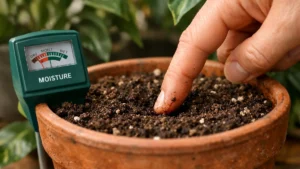
Water your rubber plant when the top two inches of soil feel dry. Push a finger into the potting mix to check. If the soil still feels damp at that depth, wait a little longer.
When it’s time to water, pour slowly and evenly over the soil until excess water runs through the drainage holes. Empty the saucer or decorative outer pot afterward so the roots don’t sit in standing water.
There isn’t one watering schedule that works for every rubber plant. A plant in a warm, bright room may need water more often than one in a cooler room with less light. During winter, growth usually slows, so the soil may take longer to dry.
As a rough guide, a rubber plant may need watering about every 7–10 days during active growth. In winter, the interval can be longer. Always check the soil before watering.
For a better routine, learn how to water indoor plants correctly instead of relying on a fixed weekly schedule.

Signs Your Rubber Plant Needs Water
Underwatering can cause:
- Drooping or curling leaves
- Dry soil that pulls away from the pot’s edges
- Leaves that feel less firm than usual
Water the plant thoroughly and allow excess water to drain. If the roots are still healthy, the plant may recover as it takes up moisture.
Signs You’re Overwatering
Too much water is a more serious problem because roots need oxygen as well as moisture. Watch for:
- Yellowing lower leaves
- Soil that stays wet for many days
- Soft or mushy stems near the soil
- A sour smell coming from the potting mix
- Dark, soft roots if you inspect the root ball
If the soil stays soggy, stop watering and check the drainage. If root rot has developed, remove the damaged roots and repot the plant in fresh, airy mix.
Best Soil and Pot for a Rubber Plant
Rubber plants need soil that holds some moisture but drains well. A dense mix that stays wet for too long can reduce oxygen around the roots and increase the risk of root rot.
A suitable starting mix is:
- Two parts quality indoor potting mix
- One part perlite
- One part orchid bark or another coarse, airy material
You don’t need to follow an exact formula. The aim is a loose mix that allows excess water to move through while holding enough moisture for the roots.
You can also use a suitable ready-made houseplant mix and improve its drainage with perlite if it feels heavy. Our guide to indoor plant soil mixtures explains how different ingredients affect drainage and airflow.
Choosing the Right Soil And Pot

Choose a pot with drainage holes. A decorative container without holes can hold excess water around the roots, even when the soil surface looks dry.
The new pot should be only slightly larger than the root ball. A very large pot contains more soil than the roots can use, which can leave the mix wet for too long.
If you use a decorative outer pot, keep the rubber plant in a nursery pot with drainage holes and remove excess water after watering.
Repot when roots have filled much of the container, the plant dries out unusually quickly, or growth has slowed despite suitable care. You don’t need to move it into a much larger pot every year.
Rubber Plant Humidity and Temperature

Rubber plants usually adapt to normal household humidity. You don’t need to create tropical conditions for the plant to survive indoors.
However, very dry air and sudden temperature changes can cause stress. Keep the plant away from radiators, heaters, air-conditioning vents, and drafty doors.
A stable temperature is more useful than frequent changes in its location. Aim to keep the room comfortably warm and avoid temperatures below about 60°F (16°C). Clemson Cooperative Extension lists warm indoor conditions as suitable for rubber plants, while the North Carolina Extension Plant Toolbox also advises protecting them from drafts and cold temperatures.
Should You Mist a Rubber Plant?

Misting isn’t necessary for routine rubber plant care. It may briefly wet the leaves, but it doesn’t reliably raise room humidity for long.
A better way to care for the foliage is to wipe dust away with a damp, soft cloth. Clean leaves look better and allow light to reach the leaf surface.
If your indoor air is extremely dry, grouping plants together or using a room humidifier can help raise humidity around them.
Feeding a Rubber Plant

Rubber plants benefit from occasional feeding while they’re actively growing. Use a balanced liquid houseplant fertilizer during spring and summer, following the label directions.
If the product is concentrated, dilute it as directed. Don’t assume that adding more fertilizer will make the plant grow faster. Excess fertilizer can leave salts in the soil and damage roots.
A simple feeding routine is:
- Start feeding when new growth appears in spring.
- Apply a balanced liquid fertilizer according to its label.
- Continue during active growth if the plant is healthy.
- Reduce or stop feeding during winter when growth slows.
Avoid feeding a plant that is severely stressed, recently repotted, or dealing with root problems. Fix its growing conditions first.
For more detail, see our guide to liquid fertilizer for indoor plants.
Why Are My Rubber Plant’s Leaves Turning Yellow?

Yellow leaves can have several causes. Overwatering is a common one, but it isn’t the only explanation. Check the soil, light, temperature, and recent changes before deciding what to do.
1. Overwatering
If the soil stays wet and several lower leaves turn yellow, the plant may be receiving too much water. Check that the pot has drainage holes and that water isn’t collecting in the outer container.
Let the upper soil dry before watering again. If the mix remains wet for a long time or smells unpleasant, inspect the roots for rot.
2. Underwatering
A rubber plant that has been left dry for too long may develop drooping leaves, dry edges, or leaf drop. The soil may also pull away from the sides of the pot.
Water thoroughly and allow excess water to drain. Then check the soil more often while the plant recovers.
3. Not Enough Light
A rubber plant in a dim location may grow slowly and lose older leaves. Move it closer to a bright window, but avoid sudden exposure to strong direct sunlight.
4. Cold Drafts or Sudden Changes
Rubber plants can react to cold air, temperature swings, or being moved repeatedly. If leaves start dropping after a move, keep the plant in a stable, warm location and give it time to adjust.
5. Natural Aging
An occasional older leaf turning yellow and falling from the bottom of the plant is usually normal. If new leaves remain healthy and the plant continues growing, there may be no problem to fix.
For a wider diagnosis, see our guide to yellow leaves on indoor plants.
How to Prune and Propagate a Rubber Plant Safely

Pruning helps control the height of a rubber plant and can encourage branching. Without pruning, many indoor rubber plants continue growing as a single upright stem.
The best time to prune is during active growth, usually spring or early summer. Before making a cut, prepare clean, sharp pruning shears and wear gloves.
How to Prune a Rubber Plant
- Decide how tall you want the plant to remain.
- Find a point just above a leaf node, where a leaf joins the stem.
- Make a clean cut with sharp pruning shears.
- Allow the milky sap to stop flowing before handling the cut area.
- Clean your tools and wash your hands after removing your gloves.
Pruning above a node can encourage new growth below the cut. However, branching isn’t guaranteed at a particular point, and the plant may take time to respond.
Important: Handle the Sap Carefully

Rubber plants release a milky latex sap when their stems or leaves are cut. This sap can irritate skin and eyes and may cause a reaction in sensitive people.
Wear gloves when pruning or taking cuttings. Avoid touching your face while working, and wash exposed skin with soap and water. Keep the sap away from children and pets.
The Pet Poison Helpline’s rubber tree guidance explains that chewing the plant can cause oral irritation and digestive signs such as drooling, retching, or vomiting in animals. Keep the plant out of reach of pets that chew houseplants. If a pet eats part of it, contact a veterinarian.
How to Propagate a Rubber Plant

You can propagate a rubber plant from a stem cutting or by air layering. Stem cuttings are a common option, although rooting success can vary with warmth, light, and the condition of the cutting.
To try a stem cutting:
- Choose a healthy stem with at least one node.
- Put on gloves before cutting because the sap can irritate skin.
- Use clean pruning shears to take the cutting.
- Allow the sap to stop flowing before placing the cutting in water or a suitable moist rooting medium.
- Keep it warm in bright, indirect light.
- Check regularly for signs of root development and avoid keeping the medium waterlogged.
A leaf without a section of stem and a node generally won’t develop into a new, normally growing rubber plant. Include a node when taking a cutting.
Air layering is another option, especially if you want to root a section of a larger stem before separating it from the parent plant. The Royal Horticultural Society lists both cuttings and air layering among the propagation methods used for ornamental figs, including Ficus elastica.
Common Rubber Plant Care Mistakes

A few avoidable mistakes can make a healthy rubber plant struggle:
- Watering on a fixed schedule: Check the soil first because drying time changes with light, temperature, and season.
- Using a pot without drainage: Excess water needs a way to escape.
- Choosing a dark corner: The plant may survive, but growth and leaf quality can suffer.
- Moving it repeatedly: Frequent changes in light and temperature can stress the plant.
- Overfeeding: Too much fertilizer can damage roots rather than improve growth.
- Pruning without gloves: The milky sap can irritate skin and eyes.
- Ignoring pests: Inspect the undersides of leaves and stems if you notice speckling, sticky residue, or unusual leaf damage.
FAQ: Rubber Plant Care
How often should I water a rubber plant?
Water when the top two inches of soil feel dry. This may be every 7–10 days during active growth, but indoor conditions can make the interval longer or shorter.
Is a rubber plant toxic to cats and dogs?
Yes. Chewing its leaves or stems can cause mouth irritation, drooling, and vomiting. Keep it away from pets and contact a veterinarian if ingestion occurs.
Why are my rubber plant’s leaves turning yellow?
Overwatering is a common cause, especially when the soil stays wet. Also check for underwatering, low light, cold drafts, and normal aging of older leaves.
How do I make my rubber plant bushier?
Prune the main stem just above a node during active growth. This can encourage branching below the cut, although new growth may take time to appear.
Does a rubber plant need direct sunlight?
No. Bright, indirect light is generally best. Gentle morning sun may be suitable, but strong afternoon sunlight can scorch the leaves.
When should I repot a rubber plant?
Repot when the roots have filled much of the pot, the soil dries unusually fast, or growth slows despite good care. Choose a container only slightly larger than the root ball.
Final Thoughts
Rubber plant care is mostly about balance. Give it bright, indirect light, let the top layer of soil dry before watering, and use a potting mix that drains well. Keep its environment stable, feed it during active growth, and prune with gloves to avoid contact with the irritating sap.
If you notice yellow leaves or leaf drop, check the soil and growing conditions before making several changes at once. A steady routine is usually more helpful than frequent adjustments.