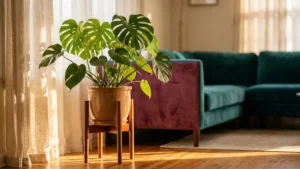

Monstera deliciosa care starts with bright, indirect light, well-draining soil, and watering when the top two inches of soil dry out. As the plant matures, its leaves naturally develop the famous holes and splits called fenestrations. A climbing support can help guide its growth, but age and suitable light are important too.
If your monstera keeps producing whole leaves, it does not always mean something is wrong. Young plants naturally have solid leaves. This guide explains how to care for your monstera, encourage healthy mature growth, and solve common problems such as yellow leaves and slow growth.
AI Overview: How Do You Care for Monstera Deliciosa?
Grow Monstera deliciosa in bright, indirect light and a loose, well-draining potting mix. Water when the top one to two inches of soil become dry, and use a pot with drainage holes. Keep the plant in a warm room, provide climbing support as it grows, and remember that split leaves develop as the plant matures.
Key Takeaways
- Light: Provide bright, indirect light and protect leaves from harsh afternoon sun.
- Water: Water when the top one to two inches of soil feel dry.
- Soil: Use an airy, well-draining potting mix.
- Support: Give the climbing stems a sturdy pole, stake, or other support.
- Fenestration: Leaf holes and splits develop as the plant matures.
- Feeding: Use a balanced houseplant fertilizer during active growth and follow the product label.
- Propagation: Take stem cuttings that include at least one node.
- Pet safety: Monstera deliciosa is toxic to cats and dogs if chewed or swallowed.
Monstera Deliciosa Light Requirements
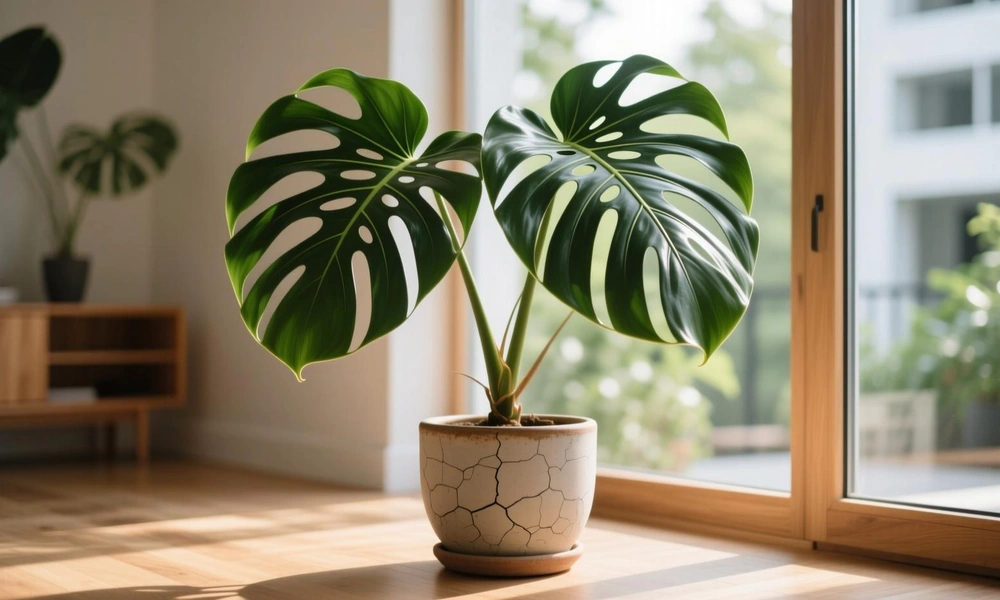
Monstera deliciosa grows best in bright, indirect light. In nature, it grows beneath and climbs through tropical vegetation. Indoors, a bright room near a window usually provides a suitable location.
An east-facing window can offer gentle morning sunlight. Near a south- or west-facing window, place the plant a little farther back or use a sheer curtain to reduce harsh direct rays.
Watch how the leaves respond to their location:
- Pale or scorched patches: The plant may be receiving too much direct sunlight.
- Slow growth: It may need a brighter position.
- Long stems with wide spaces between leaves: The plant may be stretching toward available light.
- Small new leaves without splits: The plant may still be young, or its growing conditions may not support mature growth.
Monsteras tolerate some lower-light conditions, but they usually grow more slowly there. If your room is naturally dim, compare its needs with these low-light indoor plants before choosing a permanent spot.
How to Water Monstera Deliciosa
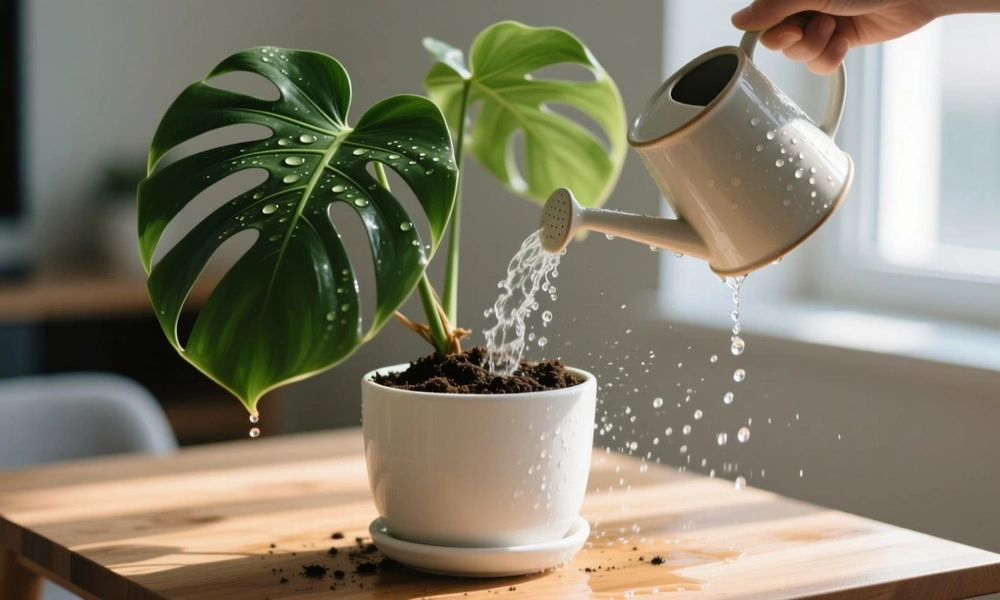
Water your monstera when the top one to two inches of soil feel dry. The exact timing depends on the pot size, soil, room temperature, and amount of light the plant receives.
When it is time to water:
- Pour water slowly over the soil.
- Continue until excess water drains through the bottom holes.
- Let the pot drain fully.
- Empty any water collected in the saucer or decorative outer pot.
Avoid leaving the roots in standing water. Constantly wet soil can reduce airflow around the roots and increase the risk of root rot.
You do not need to follow a strict weekly schedule. Check the soil first, especially during winter, when indoor growth may slow and the plant may use less water. The same soil-checking method explained in this guide to watering indoor plants correctly can help you avoid overwatering.
A moisture meter can provide another reading, but it should not replace checking the soil and observing the plant.
Best Soil and Pot for Monstera Deliciosa
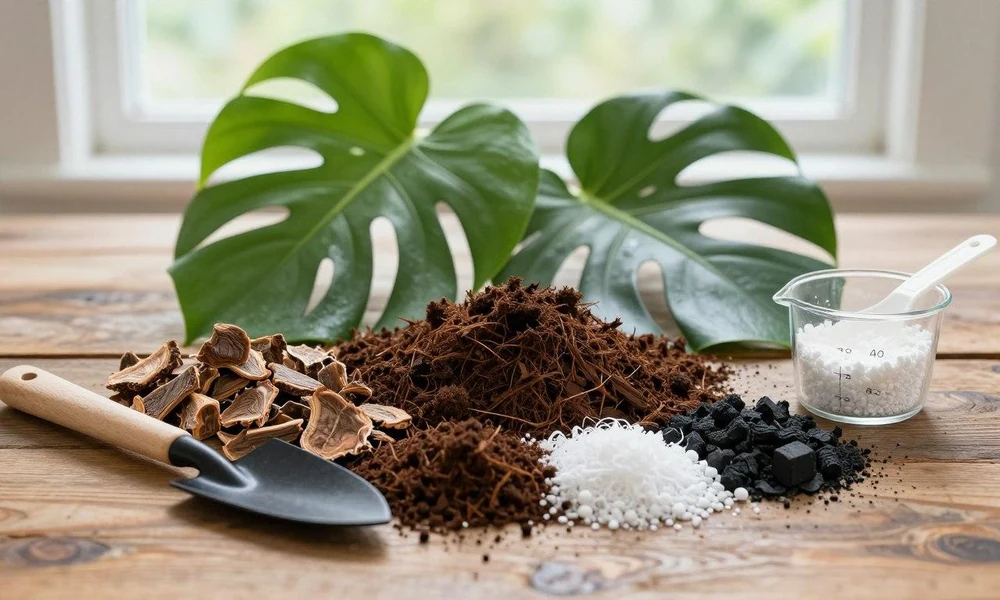
Monstera roots need both moisture and air. A dense growing medium that stays wet for too long can create problems, so choose a loose potting mix that drains well.
A practical starting mix includes:
- Quality indoor potting soil
- Perlite for extra drainage
- Orchid bark for a chunkier texture
You do not need an exact recipe. The important thing is that water can move through the mix without leaving the roots constantly wet. The principles in this guide to indoor plant soil mixtures can help when preparing a suitable growing medium.
Choose a pot with drainage holes. A container that is much larger than the root ball may hold more moisture than the plant can use. If you use a decorative outer pot, remove the nursery pot when watering and let it drain before putting it back.
Temperature and Humidity for Monstera Deliciosa
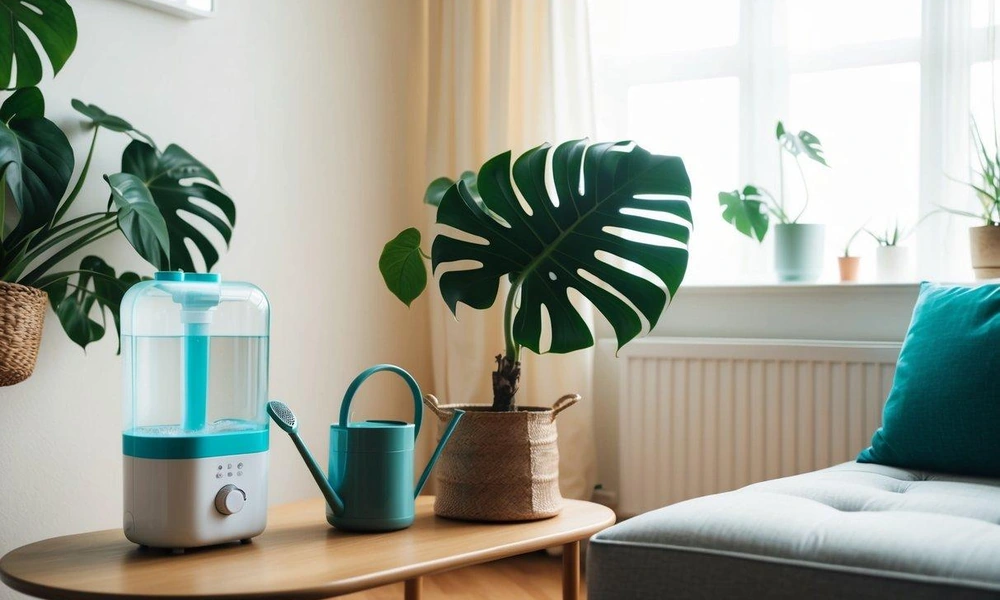
Monstera deliciosa prefers warm indoor conditions. Keep it away from cold drafts, open windows during cold weather, heating vents, and direct blasts of air conditioning.
Average household humidity is often workable. However, very dry indoor air may contribute to brown leaf edges. If the room is consistently dry, grouping plants together or using a room humidifier may help.
Humidity is only one possible cause of brown edges. Check the soil moisture, watering routine, and fertilizer use before making changes.
Wipe dust from the large leaves occasionally with a soft, damp cloth. Clean leaves are easier to inspect for pests and damage.
Feeding and Repotting Monstera Deliciosa
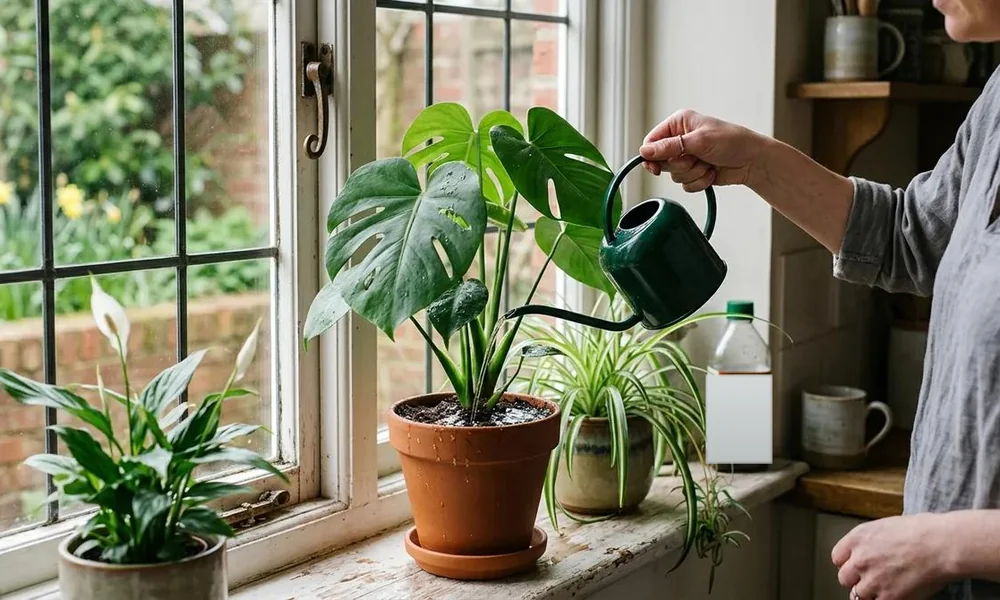
Feed your monstera during active growth in spring and summer. A balanced liquid houseplant fertilizer is one option. Follow the product label and avoid applying extra fertilizer in the hope of getting faster growth or larger split leaves.
Reduce feeding when growth slows during the cooler, darker months. Too much fertilizer can cause salt buildup in the soil and may damage the roots.
If you are unsure how to use liquid plant food, this guide to indoor liquid plant fertilizer explains the basics of feeding houseplants.
Repotting

Monsteras do not need a new pot every year. Check the roots before repotting. Roots growing through drainage holes, a tightly packed root ball, or soil that dries unusually quickly can indicate that the plant needs more space.
When repotting:
- Choose a pot only one size larger than the current one.
- Make sure it has drainage holes.
- Remove damaged or rotten roots with clean tools.
- Add fresh, well-draining potting mix.
- Position the plant at the same general soil depth as before.
Repotting can also be a convenient time to add a climbing support. Place the support carefully near the plant without forcing it through thick roots. For more guidance, see how to repot a plant.
Why Is My Monstera Deliciosa Not Fenestrating?
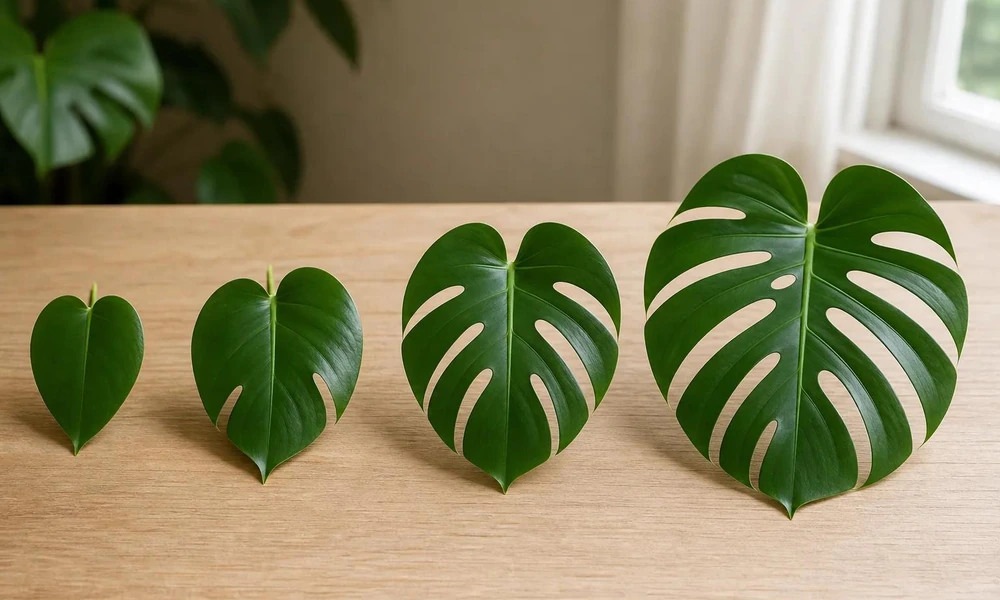
Fenestration is the name for the natural holes and splits that develop in mature monstera leaves. It is one of the plant’s most recognizable features, but young plants do not produce fully split leaves straight away.
Three factors matter most:
1. The Plant Is Still Young
Young monstera plants usually produce smaller, solid leaves. As the plant grows and matures, newer leaves can develop deeper splits and holes.
You cannot force a young plant to produce mature leaves overnight. Give it time to grow under suitable conditions.
2. It Needs Better Light
Light provides the energy a monstera needs to produce healthy new growth. A plant kept in a dim corner may grow slowly and produce smaller leaves with fewer fenestrations.
Move it to a brighter position with indirect light. Avoid suddenly placing it in strong direct sunlight, because the leaves may scorch.
3. It Needs Room to Climb
Monstera deliciosa is a climbing plant. In nature, it uses aerial roots to attach itself to tree trunks and other surfaces.
Indoors, you can guide its growth with a sturdy moss pole, coir pole, or similar support. Attach the main stem loosely with soft plant ties. Avoid tying the leaf stalks tightly because they need room to move.
A climbing support can help the plant grow upright and develop more mature foliage. However, a moss pole is not a guaranteed shortcut to split leaves. Plant maturity and suitable light still matter.
Does a Monstera Need a Moss Pole?

No. A monstera can grow without a moss pole. You can let it spread naturally or guide it along a stake or trellis.
A moss pole is useful when you want the plant to climb. Some supports also give aerial roots a surface to attach to as the plant grows.
If you use a moss pole, secure the stem gently and check the ties as the plant gets taller. Keep in mind that a support helps guide growth; it does not replace good light, proper watering, or time for the plant to mature.
Common Monstera Deliciosa Problems
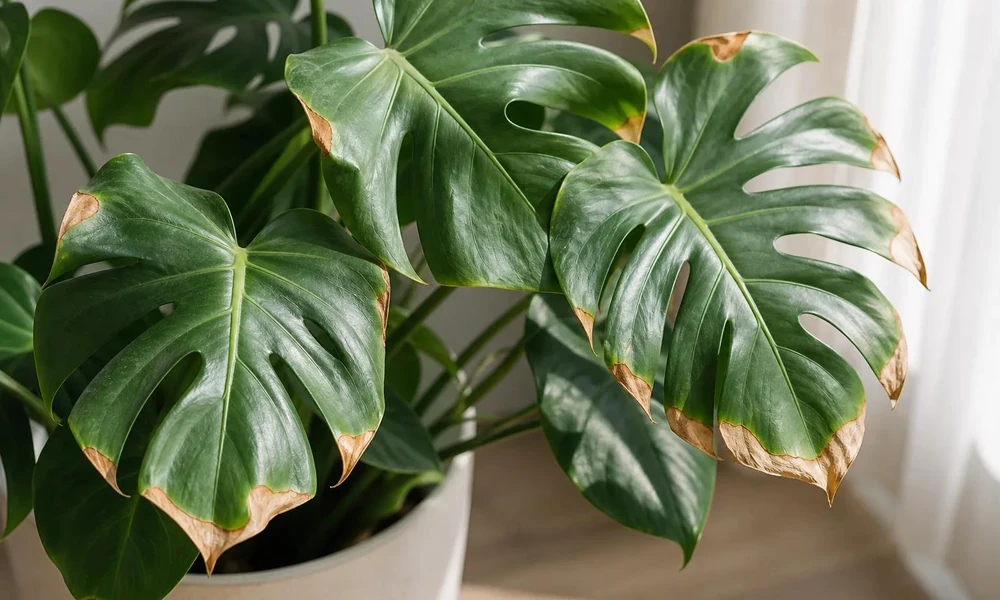
Even with a suitable care routine, monsteras can develop leaf and root problems. Look at the growing conditions before changing several things at once.
| Problem | Possible cause | What to check |
|---|---|---|
| Yellow leaves | Overwatering, poor drainage, or natural aging | Check soil moisture and drainage |
| Brown, crispy edges | Dry soil, dry air, or fertilizer salt buildup | Review watering and feeding |
| No leaf splits | Young age or insufficient light | Check maturity and light |
| Drooping with wet soil | Roots may be struggling in waterlogged soil | Inspect drainage and root health |
| Long, stretched stems | Insufficient light | Move the plant to brighter indirect light |
| Small leaves | Immature growth or unsuitable growing conditions | Check light, roots, and support |
Yellow Leaves
One older lower leaf turning yellow occasionally may be part of normal growth. Several yellow leaves at once deserve closer attention.
Check whether the soil stays wet for too long. Make sure the pot drains freely and that water is not collecting in an outer container. Avoid adding fertilizer until you understand what is causing the yellowing.
This guide to yellow leaves on indoor plants covers other possible causes and what to check.
Brown Leaf Edges
Brown edges can develop when the plant is too dry, the air is very dry, or fertilizer salts have accumulated in the soil. Check the soil before watering, and avoid feeding more often than the product label recommends.
Pests
Inspect the undersides of leaves and along the stems if you notice fine webbing, small moving insects, or unusual leaf damage. Spider mites can be difficult to spot early. If you suspect an infestation, follow the steps in this guide to get rid of spider mites on houseplants.
How to Propagate Monstera Deliciosa
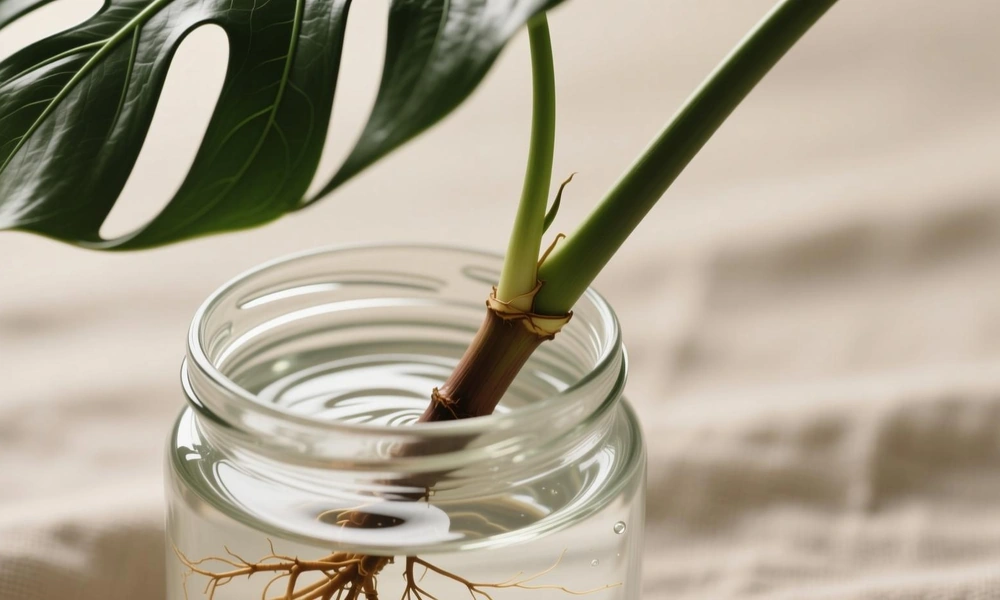
You can propagate a monstera using a stem cutting that includes at least one node. A node is the point on the stem where a leaf, aerial root, or new growth can develop.
A leaf without a node will not produce a new growing stem.
Follow these steps:
- Choose a healthy stem with at least one node.
- Use clean scissors or pruning shears to cut below the node.
- Place the cutting in water or a suitable moist growing medium.
- Keep it in a warm location with bright, indirect light.
- If rooting in water, replace the water when it becomes cloudy.
- Once the cutting has developed healthy roots, transfer it to a pot with suitable potting mix if you rooted it in water.
Be patient. Root development and new leaf growth take time, and the speed depends on the cutting and growing conditions.
The same basic method of using healthy stem cuttings is covered in this guide to propagating indoor plants.
Is Monstera Deliciosa Toxic to Cats and Dogs?
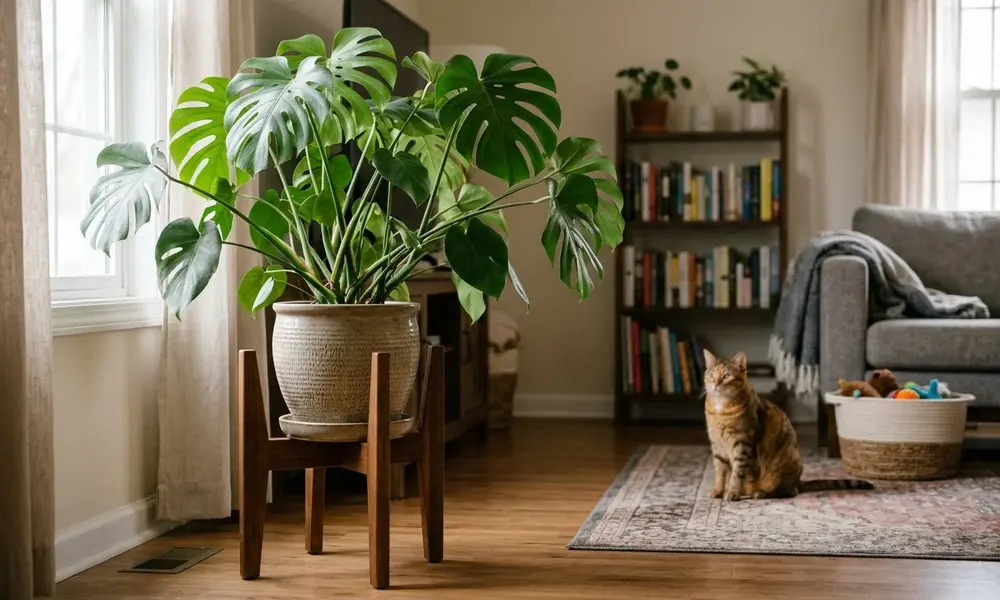
Yes. Monstera deliciosa contains insoluble calcium oxalate crystals. Chewing or swallowing parts of the plant can cause oral irritation, burning, drooling, vomiting, and difficulty swallowing in cats and dogs.
Keep the plant somewhere pets cannot reach. A high shelf may not be enough if the leaves or trailing stems hang within reach.
The ASPCA’s plant safety listing identifies Monstera deliciosa as toxic to cats and dogs. If you think your pet has chewed the plant, contact a veterinarian for advice.
FAQ: Monstera Deliciosa Care
How do you care for a Monstera deliciosa indoors?
Give it bright, indirect light, a well-draining potting mix, and a container with drainage holes. Water when the top one to two inches of soil dry out. Keep it warm, feed during active growth, and provide support as the climbing stems develop.
Why won’t my monstera fenestrate?
Young monsteras naturally produce solid leaves before developing holes and splits. If your plant is mature but still produces small, unfenestrated leaves, check whether it receives enough bright, indirect light. Climbing support can help guide mature growth, but it does not guarantee splits.
Does a monstera need a moss pole?
No. A monstera can grow without one, but a pole or similar support helps guide its climbing stems upward. It can also give aerial roots a surface to attach to. Choose a support that suits the plant’s size and secure the stem loosely.
How often should I water Monstera deliciosa?
Check the soil rather than following a fixed weekly schedule. Water when the top one to two inches feel dry, then allow excess water to drain. The plant may need less frequent watering during cooler months or when growth slows.
Is Monstera deliciosa toxic to cats and dogs?
Yes. Its insoluble calcium oxalate crystals can cause mouth irritation, burning, drooling, vomiting, and difficulty swallowing if chewed. Keep the plant away from pets and contact a veterinarian if you suspect your animal has eaten part of it.
Final Monstera Deliciosa Care Tips
Monstera deliciosa does not need a complicated care routine. Give it bright, indirect light, water when the upper soil dries, and use a potting mix that drains well. As it grows, provide a sturdy support if you want it to climb.
Remember that split leaves come with maturity. Good light and climbing support can encourage healthy development, but neither guarantees immediate fenestration. Focus on steady growth instead of trying to force the plant to produce larger leaves before it is ready.