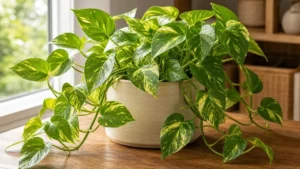

A money plant is usually a golden pothos (Epipremnum aureum) in many South Asian homes and plant shops. Keep it in bright, indirect light, water when the potting mix has partly dried, and use a pot with drainage holes. You can grow it in soil or root stem cuttings in water. The key is avoiding constantly wet roots.
This guide covers the pothos commonly called a money plant, including its light, watering, soil, feeding, propagation, and common problems. It also explains how to tell it apart from the money tree, which is a different plant.
Quick Answer
A money plant commonly refers to golden pothos (Epipremnum aureum) in many South Asian homes. It grows best in bright, indirect light and well-draining soil. Water when the upper potting mix has dried, and avoid leaving the roots in standing water. Pothos can be propagated from stem cuttings in water, but it is toxic to cats and dogs if eaten.
Key Takeaways
- Bright, indirect light supports healthy growth and variegation.
- Let the potting mix dry partly before watering again.
- Use a pot with drainage holes and an airy soil mix.
- Propagate with stem cuttings that include at least one node.
- Water-grown plants need nutrients for long-term growth.
- Pothos is toxic to cats and dogs if chewed or eaten.
What Is a Money Plant? The Name, Cleared Up

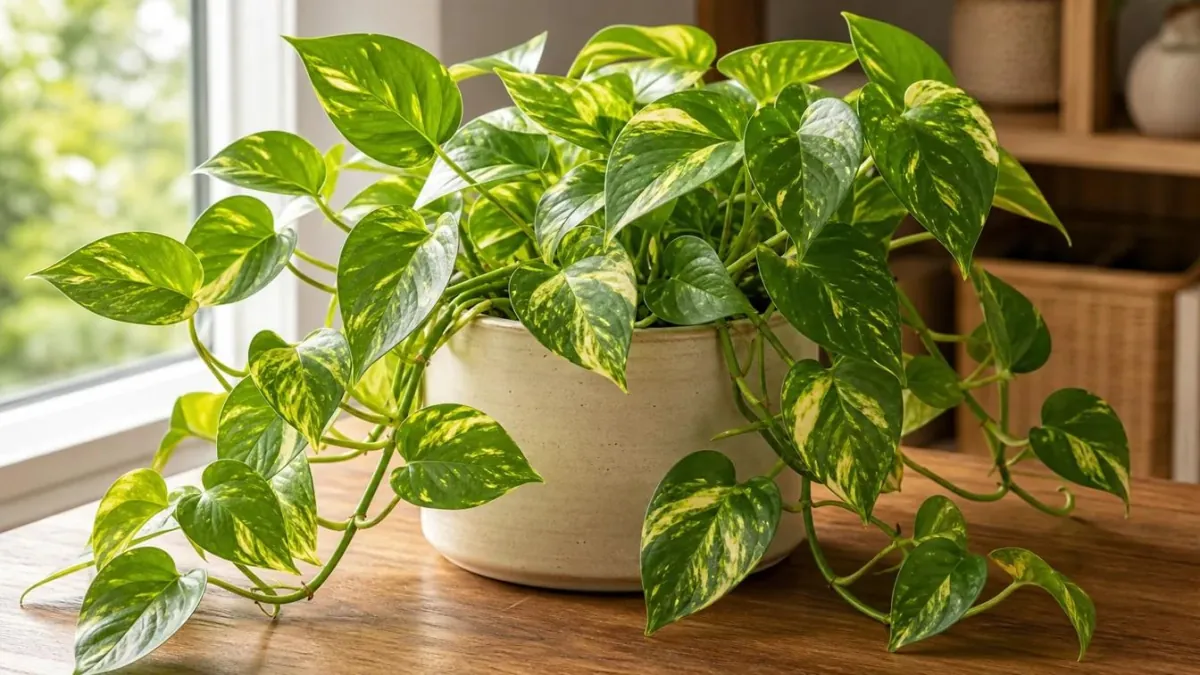
In many parts of South Asia, the name “money plant” commonly refers to Epipremnum aureum. You may also know it as golden pothos, pothos, or devil’s ivy. It is a tropical climbing vine with heart-shaped leaves that may have yellow, cream, or white markings.
The name can be confusing because several unrelated plants are also sold as money plants. One important example is the money tree (Pachira aquatica), which usually has a thicker trunk and may be sold with a braided stem.
These plants need different care. This article focuses on pothos, not the money tree. If your plant has a woody or braided trunk, follow our guide to money tree care.
Money Plant Light Requirements

Bright, indirect light is usually best for a money plant. Place it near a bright window where sunlight does not fall strongly on the leaves for long periods.
Pothos can tolerate lower light, which makes it useful for rooms that do not receive much direct sun. However, low light slows growth and can cause variegated varieties to lose some of their yellow or cream markings.
Watch the leaves for clues:
- Fading variegation: The plant may need brighter indirect light.
- Pale or scorched patches: It may be receiving too much direct sun.
- Long gaps between leaves: The vine may be stretching toward a stronger light source.
Move the plant gradually if you need to change its position. A sudden move from a dim corner into strong sunlight can damage the foliage.
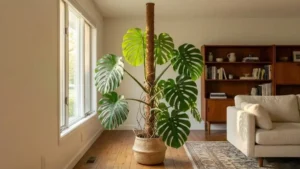
Pothos can also climb. When supported by a suitable pole, a mature climbing plant may develop larger leaves than one left trailing. Leaf size still depends on the plant’s maturity, light, and growing conditions. A support alone does not guarantee large leaves.
If you prefer plants with a similar reputation for easy care, our snake plant guide is another useful starting point.
How to Water a Money Plant

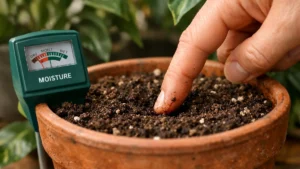
Water your money plant when the upper part of the potting mix has dried. For many indoor pots, checking the top inch or two is a practical starting point, but the drying time depends on pot size, soil, temperature, and light.
When it’s time to water:
- Pour water evenly over the potting mix.
- Continue until excess water runs from the drainage holes.
- Empty the saucer or outer pot so the plant does not sit in collected water.
- Let the mix dry partly before watering again.
Avoid following a fixed weekly schedule. A plant in a warm, bright room may dry much faster than one in a cool, dim space.
Two common watering problems are worth watching for:
Overwatering: Soil that stays wet for too long can deprive roots of oxygen and encourage root rot. Yellowing leaves, persistently wet soil, and soft or dark roots can point to this problem.
Underwatering: A very dry plant may develop drooping or curling leaves. Water it thoroughly and check whether the potting mix absorbs water evenly.
The goal is not to keep the soil completely dry or constantly damp. Let it dry between waterings, then give the roots a thorough drink.
Best Soil and Pot for a Money Plant

Money plants grow well in an airy, well-draining indoor potting mix. A standard houseplant mix is a reasonable starting point. If it holds too much water, you can improve its structure with materials such as perlite or fine orchid bark.
Choose a pot with drainage holes. A decorative container without drainage can trap excess water around the roots, even when the top of the soil looks dry.
Pot size matters too. When repotting, choose a container only slightly wider than the existing root ball. A pot that is much too large can hold more wet mix than the roots can use.
A simple potting checklist:
- Use a loose mix that drains well.
- Choose a pot with drainage holes.
- Avoid packing the soil tightly around the roots.
- Do not move the plant into a much larger pot without a reason.
For more detail on choosing a suitable mix, see our guide to indoor plant soil.
Temperature, Humidity, and Feeding Your Money Plant

Pothos prefers warm indoor conditions. A typical comfortable room is usually suitable, but protect the plant from cold drafts, sudden temperature changes, and direct blasts from heaters or air conditioners.
Average household humidity is generally manageable. Higher humidity can support healthy growth, but you do not need to create a tropical environment just to keep a pothos alive.
Feed the plant during active growth in spring and summer. Use a balanced houseplant fertilizer according to the label. If the product allows dilution, a weaker solution is a sensible way to avoid overfeeding.
Reduce or pause feeding during winter if growth slows. Adding fertilizer to a plant that is barely growing does not make it grow faster and can contribute to fertilizer-salt buildup.
How to Propagate a Money Plant in Water

Water propagation is a simple way to turn one healthy money plant into several. The important detail is the node: a cutting needs at least one node to produce roots.
Follow these steps:
- Choose a healthy vine.
Select a firm stem with healthy leaves. Avoid sections that are yellow, damaged, or soft. - Cut below a node.
Use clean scissors to cut just below a node. A node is the small joint on the stem where a leaf and sometimes an aerial root emerge. - Place the cutting in water.
Put the cutting in a clean jar so the node is underwater but the leaves remain above the surface. Set the jar in bright, indirect light. - Refresh the water.
Top up the water as needed and replace it regularly so it stays fresh. Check the cutting for soft or rotting tissue. - Move it into soil when roots develop.
Once the roots are established and have grown to a useful length, you can plant the cutting in a small pot with well-draining mix. Keep the mix lightly moist while the cutting adjusts, but do not leave it waterlogged.
You can also keep pothos cuttings growing in water long-term. However, plain water does not provide all the nutrients a plant needs indefinitely. Use a suitable hydroponic nutrient solution according to its label if you choose permanent water culture.
Why Are My Money Plant’s Leaves Turning Yellow?

Yellow leaves are a common money plant complaint, but they do not always have the same cause. Check the soil, light, and condition of the stems before changing your care routine.
Overwatering: This is a common cause. If the soil stays wet and several leaves turn yellow, check the drainage and let the mix dry before watering again. If roots are soft or dark, root rot may have started.
Underwatering: A plant that stays dry for too long may develop drooping leaves, dry edges, or yellowing. Water thoroughly and review how quickly the pot dries.
Too much direct sunlight: Strong direct sun can bleach or scorch the foliage. Move the plant to a spot with bright, filtered light.
Not enough light: Very dim conditions can slow growth and reduce the color contrast in variegated leaves. Move it closer to a bright window without exposing it to harsh sun.
Natural aging: An occasional older leaf turning yellow near the base is not always a sign of a problem. If the rest of the plant looks healthy, simply remove the old leaf.
If the stem is soft or black near the soil line, inspect the roots. If the damage is extensive, take healthy stem cuttings from above the affected area and try rooting them in water.
Is a Money Plant Safe for Cats and Dogs?

No. Pothos (Epipremnum aureum) is toxic to cats and dogs if chewed or eaten. It contains insoluble calcium oxalate crystals, which can irritate the mouth and tongue and may cause drooling, vomiting, or difficulty swallowing.
Keep the plant out of pets’ reach. If a pet chews or eats it, contact a veterinarian for advice, especially if symptoms develop.
FAQ: Money Plant Care
Is a money plant the same as pothos?
In many South Asian settings, yes. “Money plant” commonly refers to Epipremnum aureum, also called pothos or golden pothos. However, the name is used for other plants too, so check the leaves and growth habit before following a care guide.
Can a money plant grow in water only?
Yes. Pothos cuttings can root and grow in water. For long-term growth, keep the water clean and provide an appropriate hydroponic nutrient solution. Plain water alone does not supply every nutrient the plant needs indefinitely.
Does a money plant need direct sunlight?
No. Bright, indirect light is better. Direct sunlight can scorch the leaves, while very low light can slow growth and reduce variegation. A bright position near a window, away from harsh sun, is a good choice.
How do I make my money plant bushier?
Prune long vines just above a node to encourage branching. You can also root the healthy cuttings and plant them back into the same pot. Several vines growing together can create a fuller appearance.
Why is my money plant growing slowly?
Low light, cold conditions, poor drainage, root problems, or a lack of nutrients during active growth can all slow development. Check the plant’s growing conditions before adding more fertilizer.
Is a money plant safe for cats?
No. Pothos is toxic to cats and dogs if chewed or eaten. It can cause mouth irritation, drooling, and vomiting. Keep it out of reach.
Final Thoughts
Money plant care mostly comes down to three things: suitable light, careful watering, and well-draining soil. Pothos care is forgiving, but it does not like sitting in wet soil for long periods.
Once the plant is growing well, you can prune long vines, root cuttings in water, or train it to climb. Just make sure you have identified the plant correctly: the pothos, commonly called a money plant, is not the same as the braided money tree.
Disclaimer: This article provides general houseplant care information. Growing conditions vary with climate, pot size, soil, and indoor light. If a pet eats pothos, contact a veterinarian for guidance.