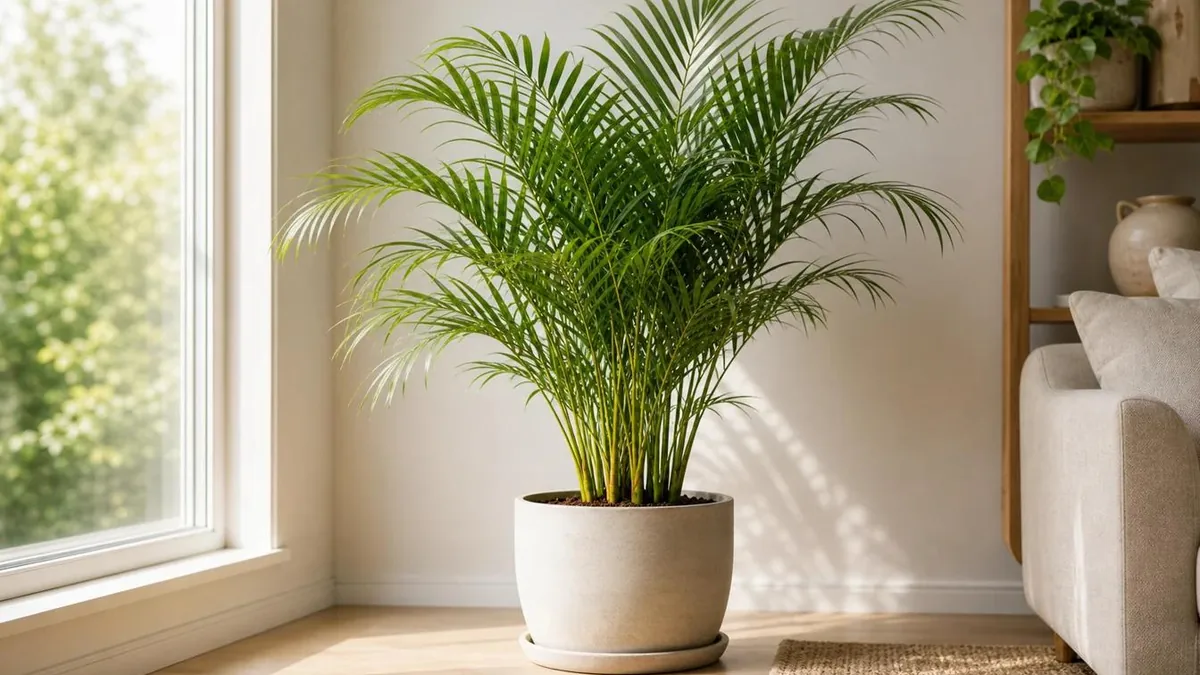
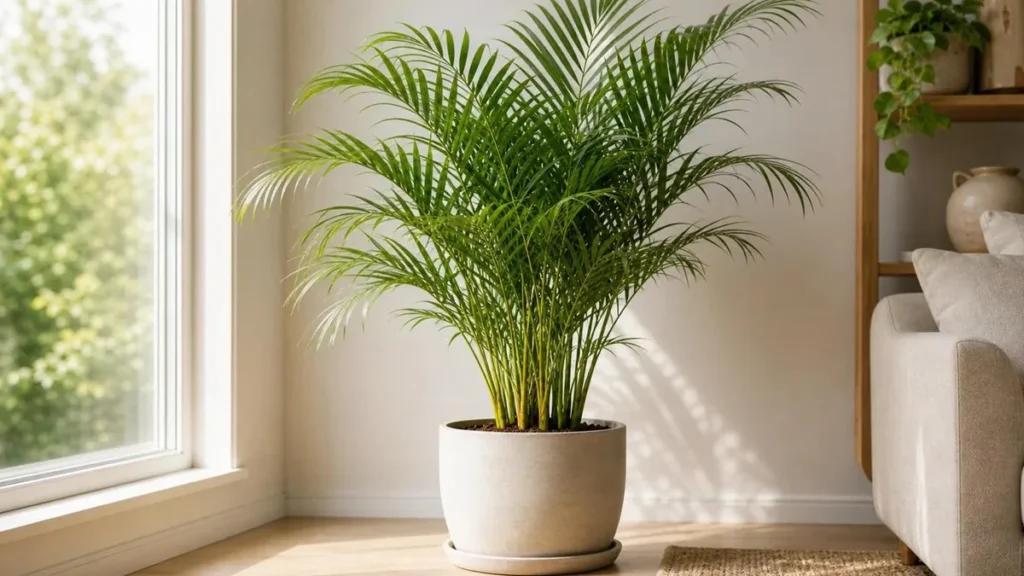
To care for an areca palm (Dypsis lutescens), give it bright, indirect light, water when the top layer of soil begins to dry, and provide a warm environment with moderate to high humidity. Good drainage is equally important because constantly wet soil can damage its roots. With the right balance of light, water, and humidity, you can keep your areca palm looking full and healthy.
Areca palms are popular indoor plants because of their graceful, arching fronds and tropical appearance. However, brown tips, yellow leaves, and spider mites can become problems when growing conditions aren’t suitable.
Here’s how to care for your areca palm and deal with the issues that commonly affect its foliage.
Quick Answer: How to Care for an Areca Palm
Areca palms (Dypsis lutescens) grow best in bright, indirect light, consistently moist but well-draining soil, and moderately humid indoor conditions. Water when the top inch of soil begins to dry, and avoid leaving the roots sitting in excess water. Feed lightly during spring and summer. Brown leaf tips often indicate dry air, inconsistent watering, mineral buildup, or excessive sunlight. Regularly inspect the fronds for spider mites and remove fully dead leaves to keep the plant looking healthy.
Key Takeaways
- Light: Provide bright, indirect sunlight and protect the fronds from harsh afternoon rays.
- Watering: Water when the top inch of soil feels dry, allowing excess water to drain completely.
- Soil: Use a loose, well-draining potting mix and a container with drainage holes.
- Humidity: Aim for moderately humid conditions, around 50% or higher when possible.
- Temperature: Keep the plant in a warm indoor environment and away from cold drafts.
- Fertilizer: Apply diluted, balanced liquid fertilizer during active growth in spring and summer.
- Brown tips: Check humidity, watering habits, water quality, and sunlight exposure.
- Pests: Inspect the undersides of leaves regularly for spider mites and fine webbing.
- Pet safety: The areca palm is listed as non-toxic to cats and dogs by the ASPCA.
Areca Palm Light Requirements

Areca palms grow best in bright, indirect light. A position near an east-facing window is often suitable, while a few feet away from a brighter south- or west-facing window can also work.
Gentle morning sunlight is usually less harsh than strong afternoon sun. Direct sunlight through glass can scorch the fronds, leaving pale, dry, or brown patches.
Although areca palms can tolerate some moderate light, very dark corners aren’t ideal for long-term growth. Low light can slow development and make the plant look thinner. If natural light is limited during winter, a grow light can help maintain more consistent conditions.
Rotate the pot occasionally so that all sides receive light. This encourages more balanced growth and prevents the plant from leaning heavily toward a window.
According to Clemson Cooperative Extension, many indoor palms grow well in filtered natural light, while excessive direct sunlight can damage their foliage.
How to Water an Areca Palm

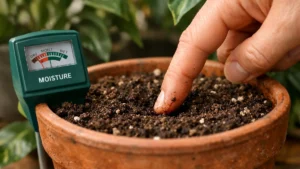
Areca palms prefer evenly moist soil, but their roots shouldn’t sit in water. Water when the top inch of potting mix begins to dry, then continue until excess water flows through the drainage holes.
The exact watering interval depends on your room temperature, light levels, pot size, and soil mixture. In a warm, bright room, you may need to water more frequently than in a cool room with limited sunlight.
Follow these steps:
- Check the top inch of soil with your finger.
- If it feels dry, water the plant thoroughly.
- Allow excess water to drain through the bottom.
- Empty the saucer so the roots aren’t left sitting in runoff.
- Check the soil again before watering next time.
Reduce watering during winter if growth slows and the soil takes longer to dry. Avoid following a rigid weekly schedule because indoor conditions change throughout the year.
For a better understanding of how to judge soil moisture, this guide to watering indoor plants explains how to check when houseplants actually need water.
Best Soil and Pot for an Areca Palm

Areca palms need a loose, well-draining potting mixture that holds some moisture without becoming waterlogged.
A suitable starting mix is a standard indoor potting mix combined with perlite. Perlite improves airflow and helps excess water move through the soil. You can also use a quality palm or houseplant potting mix formulated for container growing.
Avoid heavy garden soil because it can become compacted inside a container. When the soil stays wet for too long, the roots receive less oxygen and become more vulnerable to rot.
Choose a pot with drainage holes. A container without drainage makes it difficult to control excess moisture, even if you use an otherwise suitable potting mix.
The new pot should be only slightly larger than the existing root ball. Moving an areca palm into an oversized container can leave too much unused soil around its roots, increasing the time the mix stays wet.
If you’re preparing your own mixture, this guide to indoor plant soil explains how different potting materials affect drainage and moisture retention.
Areca Palm Humidity and Temperature

Humidity is an important part of areca palm care. These tropical plants generally perform better in moderately humid indoor conditions than in very dry rooms.
Aiming for around 50% humidity or higher can be helpful, although the plant’s response also depends on temperature, watering, and airflow. Dry indoor air may contribute to brown leaf tips, especially when combined with inconsistent watering.
You can improve humidity in several ways:
- Use a humidifier: A room humidifier provides a more consistent source of moisture in the air.
- Group plants together: Placing houseplants near one another can create a slightly more humid local environment.
- Try a pebble tray: Set the pot above a tray of water and pebbles, keeping the bottom of the pot above the waterline.
- Avoid dry airflow: Keep the plant away from heating vents, radiators, and strong air-conditioning drafts.
Misting the leaves may provide brief moisture, but it doesn’t maintain humidity for long. A humidifier is generally a more consistent option.
Temperature matters too. A range of approximately 65–75°F (18–24°C) is suitable for typical indoor growing conditions. Avoid sudden temperature changes and cold drafts, particularly during winter.
The Royal Horticultural Society’s guide to indoor palms also explains the importance of suitable humidity, filtered light, and protection from temperature extremes.
Feeding an Areca Palm

Areca palms benefit from moderate feeding during their active growing season, usually spring and summer.
Use a balanced liquid houseplant fertilizer at the diluted strength recommended on its label. A cautious feeding schedule is better than applying concentrated fertilizer too frequently.
Follow these basic guidelines:
- Feed during active growth rather than routinely throughout winter.
- Dilute liquid fertilizer according to the product instructions.
- Avoid applying fertilizer to completely dry soil.
- Don’t feed a newly repotted or stressed plant until it has settled.
- Reduce or stop feeding when growth slows.
Too much fertilizer can cause salts to accumulate in the potting mix. This buildup may contribute to brown leaf tips and root stress.
If you’re choosing a suitable product, this guide to liquid plant fertilizer explains the basics of feeding indoor plants.
Why Does My Areca Palm Have Brown Tips?

Brown tips are a common areca palm problem, but they don’t always have the same cause. Dry air, inconsistent watering, mineral buildup, and excessive sunlight can all contribute.
Check the plant’s growing conditions before changing its care routine.
1. Low Humidity

Dry indoor air can cause the ends of areca palm leaflets to become brown and crispy. This is especially common in rooms with heating or air conditioning.
What to do: Increase humidity with a humidifier, keep the plant away from dry airflow, and maintain consistent soil moisture.
2. Inconsistent Watering

Allowing the soil to become completely dry for extended periods can stress the plant. On the other hand, watering too frequently can reduce oxygen around the roots and encourage root problems.
What to do: Check the soil before watering and aim for consistent moisture without leaving the pot standing in water.
3. Mineral and Fertilizer Salt Buildup

Minerals in tap water and excess fertilizer salts can accumulate in the potting mix over time. This may contribute to browning along the tips and edges of the leaflets.
What to do: If your tap water is particularly hard, consider using rainwater or another suitable lower-mineral water source. Periodically flush the potting mix with water and allow it to drain completely.
4. Too Much Direct Sunlight

Strong direct sunlight can scorch the leaflets, causing dry brown patches or bleached areas.
What to do: Move the plant to a position with bright, filtered light rather than placing it directly in intense afternoon sun.
5. Natural Leaf Aging

Older, lower fronds eventually turn yellow and brown as the plant replaces aging foliage. A few older leaves changing color doesn’t necessarily indicate a care problem.
What to do: Remove fully brown or dead fronds with clean pruning scissors. Avoid cutting healthy green growth unnecessarily.
If your plant also develops yellow foliage, check the possible causes in this guide to yellow indoor plant leaves.
Should You Cut Brown Tips Off an Areca Palm?
Yes, you can trim dry brown tips if you want to improve the plant’s appearance. Use clean, sharp scissors and follow the natural shape of each leaflet.
Cut only the dead brown portion and leave a narrow brown edge rather than cutting into healthy green tissue. The damaged section won’t turn green again, but trimming can make the plant look neater.
Areca Palm Pests: Spider Mites in Dry Conditions

Spider mites are among the pests that can affect indoor palms. They are tiny and difficult to notice at first, but their feeding can leave small pale speckles across the foliage.
Look for these signs:
- Fine webbing around leaflets or stems.
- Tiny moving dots on the undersides of leaves.
- Pale or yellowish speckling across the foliage.
- Leaves that look dusty, dull, or increasingly damaged.
Dry indoor conditions can favor spider mite problems, so maintaining suitable humidity is useful. However, humidity alone won’t eliminate an established infestation.
If you suspect spider mites, isolate the affected plant from nearby houseplants. Rinse the foliage gently, paying attention to the undersides of the leaves. Repeat inspections and cleaning because eggs and surviving mites may remain after the first treatment.
For persistent infestations, use an insecticidal soap or another product labeled for spider mites on indoor plants. Follow its instructions carefully and test it on a small area first to check for leaf sensitivity.
This guide to spider mites on indoor plants explains how to recognize and manage these common houseplant pests.
Are Areca Palms Safe for Cats and Dogs?

Yes. The ASPCA lists the areca palm (Dypsis lutescens) as non-toxic to cats and dogs. However, pets may still damage the fronds by chewing them, so it’s sensible to keep the plant somewhere it won’t be disturbed.
FAQ: Areca Palm Care
Why does my areca palm have brown tips?
Brown tips can develop because of dry indoor air, inconsistent watering, mineral buildup, or direct sunlight. Check the soil and room conditions before making changes. Improving humidity and maintaining consistent moisture may help prevent new damage.
Do areca palms need high humidity?
Areca palms generally grow better in moderately humid conditions than in very dry indoor air. Around 50% humidity or higher is a useful target, although exact requirements vary with the growing environment.
How often should I water an areca palm?
Water when the top inch of soil begins to dry. This may be every five to seven days in some warm, bright rooms, but the interval can be longer in cooler conditions or during winter. Always check the soil instead of relying on a fixed schedule.
Are areca palms safe for cats and dogs?
Yes. The ASPCA classifies areca palms as non-toxic to cats and dogs. However, chewing the leaves can still cause physical damage to the plant and may upset a pet’s stomach.
Can an areca palm grow in low light?
An areca palm can tolerate some moderate indoor light, but it grows best in a brighter position with filtered sunlight. Very dark locations may lead to slower growth and thinner foliage.
Why are the leaves on my areca palm turning yellow?
Yellow leaves can result from natural aging, underwatering, overwatering, or unsuitable growing conditions. If several leaves turn yellow quickly, check the soil moisture and drainage before changing the watering routine.
Should I mist my areca palm?
Misting can temporarily wet the foliage, but it doesn’t maintain stable humidity. A humidifier or suitable plant grouping is generally more effective when indoor air is consistently dry.
Final Care Checklist
- Place your areca palm in bright, indirect light.
- Water when the top inch of soil begins to dry.
- Use a loose, well-draining potting mixture.
- Choose a container with drainage holes.
- Maintain moderate indoor humidity.
- Keep the plant away from cold drafts and heating vents.
- Feed moderately during active growth.
- Inspect the undersides of fronds for spider mites.
- Remove fully dead or damaged foliage with clean scissors.
Consistent care is more important than frequent adjustments. Give your areca palm suitable light, balanced moisture, and a comfortable indoor environment, and it can remain a healthy, attractive foliage plant for years.