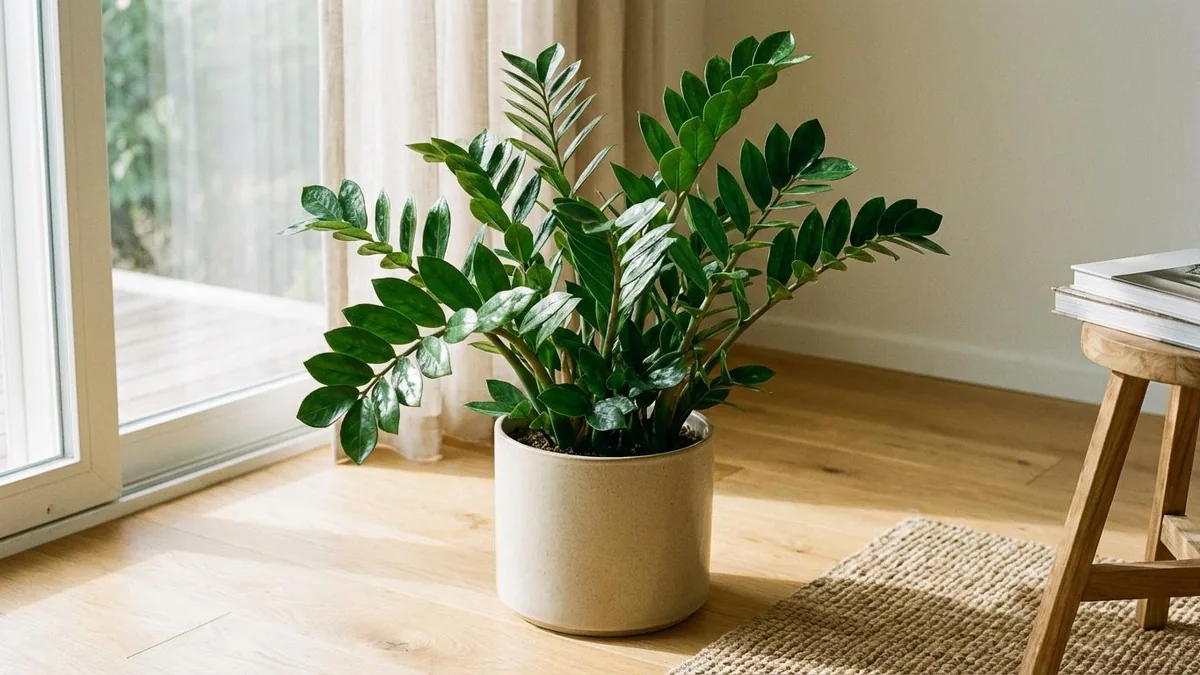
A ZZ plant is easy to care for because it stores water in thick underground rhizomes and tolerates lower light than many houseplants. Let the potting mix dry completely before watering, use a well-draining soil mix, and keep the plant away from harsh direct sunlight. The biggest mistake to avoid is giving it too much water.
The ZZ plant (Zamioculcas zamiifolia) grows from thick, potato-like rhizomes beneath the soil. These structures store water and help the plant survive dry periods. They also explain why ZZ plants need less frequent watering than many tropical houseplants.
Once you understand how these rhizomes work, the rest of ZZ plant care becomes much easier.
Quick Answer: How Do You Care for a ZZ Plant?
A ZZ plant (Zamioculcas zamiifolia) needs bright indirect light, well-draining soil, and infrequent watering. Allow the potting mix to dry completely before watering again because its underground rhizomes store water. Keep it in a pot with drainage holes, feed lightly during active growth, and protect it from pets because the plant is toxic to cats and dogs.
Key Takeaways
- Light: Bright, indirect light encourages healthier growth, but ZZ plants tolerate lower-light conditions.
- Water: Let the potting mix dry completely before watering. Reduce watering during winter.
- Soil: Use a loose, well-draining indoor potting mix with perlite or pumice.
- Pot: Choose a container with drainage holes and avoid oversized pots.
- Temperature: Normal indoor temperatures and humidity usually suit this plant.
- Fertilizer: Feed lightly during spring and summer. Avoid excessive fertilizer.
- Yellow leaves: Check for overwatering, especially if the soil remains wet.
- Propagation: Grow new ZZ plants through rhizome division or leaf cuttings.
- Pet safety: ZZ plants contain calcium oxalate crystals and should be kept away from cats and dogs.
How Much Light Does a ZZ Plant Need?

ZZ plants grow in low, medium, and bright indirect light. They can survive in a dim room, which makes them useful for offices, bedrooms, and spaces that don’t receive strong natural sunlight.
However, surviving in low light doesn’t mean that’s where the plant grows best. Medium to bright indirect light usually encourages stronger growth, fuller stems, and healthier-looking leaves.
Place your ZZ plant near a window where sunlight is filtered through a curtain or reflected from nearby surfaces. Avoid leaving it in strong afternoon sun because intense direct light can scorch the leaves.
If you’re choosing a plant for a darker room, compare its needs with other low-light indoor plants. Remember that low light still means some usable light. A completely dark room cannot support healthy plant growth indefinitely.
Signs your ZZ plant needs more light:
- Stems become unusually long or stretched.
- New growth leans toward the nearest window.
- The plant grows very slowly during its active growing season.
Move it gradually to a brighter position rather than placing it straight into intense sunlight.
How Often Should You Water a ZZ Plant?

Water your ZZ plant only when the potting mix has dried out completely. During active growth, this may mean watering every two to four weeks, but the timing depends on light, temperature, pot size, and the soil mixture. In winter, the plant may need water even less often.
Don’t follow a fixed calendar without checking the soil. A plant in a warm, bright room may dry faster than one in a cool corner.
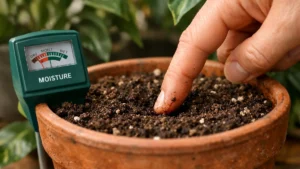
Before watering, check the mix several inches below the surface. If it still feels damp, wait. When the soil is completely dry, water thoroughly until excess water flows through the drainage holes. Empty the saucer afterward.
This approach follows the same basic principle used for watering indoor plants correctly: check the growing medium and the plant’s conditions instead of watering automatically. ZZ plants store water in their underground rhizomes, which helps them tolerate dry periods, so Iowa State University Extension recommends allowing the potting soil to dry before watering again.
Why overwatering is dangerous
The rhizomes store water, so they don’t need constantly moist soil. When the mix stays wet for too long, roots receive less oxygen and may begin to rot.
Watch for these warning signs:
- Yellowing leaves, especially when several appear together.
- Soft or mushy stems near the soil.
- A sour smell coming from the pot.
- Rhizomes that feel soft instead of firm.
These symptoms can point to excess moisture and signs of overwatering. Check the roots and rhizomes if the plant continues to decline.
Best Soil and Pot for a ZZ Plant

ZZ plants need a loose, well-draining growing medium. Heavy soil that stays wet for several days can increase the risk of root and rhizome rot.
A suitable mix can include:
- Two parts quality indoor potting mix.
- One part perlite or pumice.
- Optional fine orchid bark for extra structure.
The goal is a mix that holds enough moisture for the roots but allows excess water to drain away. If you’re comparing ingredients, this guide to indoor plant soil mixtures explains how common potting components affect drainage and airflow.
Choose a pot with drainage holes. Terracotta is a useful option because it allows moisture to evaporate through its sides, while plastic and glazed ceramic pots retain moisture for longer.
Avoid moving a small ZZ plant into a much larger container. Extra soil can remain wet around the roots long after the plant has used the available moisture.
ZZ plants also tolerate being slightly root-bound. Repot when the rhizomes and roots have filled the container, the pot becomes crowded, or the plant is difficult to water properly. If you’re unsure whether it needs a larger container, look for the usual signs of a root-bound plant.
Temperature, Humidity, and Feeding Your ZZ Plant

Average indoor temperatures are usually suitable for a ZZ plant. Aim to keep it in a comfortable room, away from cold drafts, freezing temperatures, and sudden temperature changes.
It doesn’t need high humidity, so ordinary household air is generally fine. You don’t need to mist the leaves or buy a humidifier just for this plant.
ZZ plants are slow growers, which means they also need relatively little fertilizer.
During spring and summer, you can use a balanced liquid houseplant fertilizer diluted according to the label. Feeding once or twice during the growing season is often enough for a plant growing in suitable soil. Avoid heavy feeding, and don’t fertilize a plant that is stressed or showing signs of root rot.
If you need help choosing a suitable product, the basics of liquid plant fertilizer can help you understand how to use it without overfeeding.
During winter, growth often slows, so reduce or stop feeding until active growth returns.
Is the ZZ Plant Toxic to Cats, Dogs, and Children?
Yes. ZZ plants should be treated as toxic if chewed or eaten.
The plant contains calcium oxalate crystals, which can irritate the mouth and digestive system. Pets that chew the leaves or stems may develop drooling, mouth discomfort, nausea, or vomiting. The ASPCA includes ZZ plants among houseplants that can cause problems for pets.
Keep the plant somewhere cats and dogs cannot reach. If you have young children, place it outside their reach as well. Wearing gloves when cutting or dividing the plant is a sensible precaution, particularly if you have sensitive skin.
If a pet or child chews or swallows part of the plant, contact a veterinarian or an appropriate poison-control service for advice. Don’t assume that a small amount is harmless.
For households choosing plants around pets, a list of cat-safe plants can help identify alternatives. However, always check the exact plant species before bringing it home.
Common ZZ Plant Problems and How to Fix Them
ZZ plants are generally resilient, but poor watering habits and unsuitable light can still cause problems.
Yellow Leaves

Yellow leaves can indicate overwatering, especially when the soil stays wet and several leaves begin turning yellow together.
Check the potting mix and drainage holes. If the soil is soggy, remove the plant from the pot and inspect the roots and rhizomes. Cut away any rotten, mushy sections with clean tools and repot the healthy parts in fresh, well-draining mix.
An occasional older leaf turning yellow is not always a serious problem. Look at the overall pattern before changing your care routine.
Long, Stretched Stems

Stems that become unusually long or lean toward a window may be receiving too little light.
Move the plant to a brighter spot with indirect sunlight. Make the change gradually, especially if it has been growing in a dim location.
Brown or Crispy Leaf Tips

Brown leaf tips can develop when the plant experiences prolonged dryness, direct sunlight, or other environmental stress.
Check the soil before watering. If it is completely dry, water thoroughly and let the excess drain. Also make sure the leaves aren’t exposed to intense afternoon sun.
Soft Stems or a Mushy Base

Soft stems near the soil line are a warning sign. The plant may be suffering from root or rhizome rot caused by consistently wet soil.
Remove it from the container and inspect the underground parts. Healthy rhizomes should feel firm. Remove rotten sections, allow cut surfaces to dry, and repot the healthy material in fresh soil.
Don’t water immediately if the remaining rhizomes and roots are still wet.
How to Propagate a ZZ Plant
You can grow new ZZ plants through division or leaf cuttings. Division is usually the quicker and more reliable method because each new section can retain an established rhizome and root system.
Propagation by Division

- Remove the plant carefully from its pot.
- Brush away enough soil to see the rhizomes and roots.
- Separate the clump into smaller sections, keeping roots and healthy rhizomes attached to each section.
- Use a clean knife if the rhizomes need cutting.
- Plant each section in a suitable pot with fresh, well-draining mix.
- Keep the new plants in bright indirect light and avoid watering while the soil is still wet.
Choose sections with healthy roots and at least one growing stem where possible.
Propagation from Leaf Cuttings

Leaf propagation takes much longer, but it can work if you only have a small piece of the plant.
- Remove a healthy leaflet with a clean tool.
- Allow the cut end to dry briefly.
- Place the base of the leaflet in a lightly moist, well-draining growing medium.
- Keep it somewhere warm with indirect light.
- Check occasionally and avoid keeping the medium soggy.
A small rhizome and roots may eventually form at the base. New shoots can take many months to appear, so patience is important.
FAQ: How Do You Care ZZ Plant
Can a ZZ plant survive in a windowless room?
A ZZ plant can live in a room without a window if it receives regular artificial light from suitable indoor lighting. It cannot survive indefinitely in complete darkness because it still needs light for photosynthesis.
How often should you water a ZZ plant?
Water when the potting mix has dried out completely. This may be every two to four weeks during active growth, with longer gaps in winter. Check the soil rather than relying on a fixed schedule.
Is a ZZ plant toxic to cats and dogs?
Yes. ZZ plants contain calcium oxalate crystals that can irritate the mouth and digestive system if chewed. Keep the plant out of pets’ reach and contact a veterinarian if your pet eats any part of it.
Why are my ZZ plant’s leaves turning yellow?
Overwatering is a common cause, particularly when the soil remains wet. Check the drainage and inspect the roots and rhizomes if the plant is declining. An occasional older leaf turning yellow may simply be natural aging.
Does a ZZ plant need direct sunlight?
No. Bright indirect light is a good choice, although ZZ plants can tolerate lower-light conditions. Strong direct sunlight can scorch their leaves.
Should I mist my ZZ plant?
No. ZZ plants generally manage well in normal household humidity. Regular misting isn’t necessary and won’t solve problems caused by poor watering or unsuitable soil.
When should I repot a ZZ plant?
Repot when the rhizomes and roots have crowded the container, the pot becomes difficult to manage, or the growing medium no longer drains properly. Choose a pot only slightly larger than the existing one.
Final Thoughts About How Do You Care ZZ Plant
ZZ plant care is mostly about knowing when not to water. Its underground rhizomes store moisture, so the plant can handle dry periods better than consistently wet soil.
Give it indirect light, a well-draining mix, a pot with drainage holes, and occasional feeding during active growth. Check the soil before watering, watch for yellowing or soft stems, and keep the plant away from pets that may chew it.
With those simple habits, a ZZ plant can remain a healthy, low-maintenance part of your indoor space.