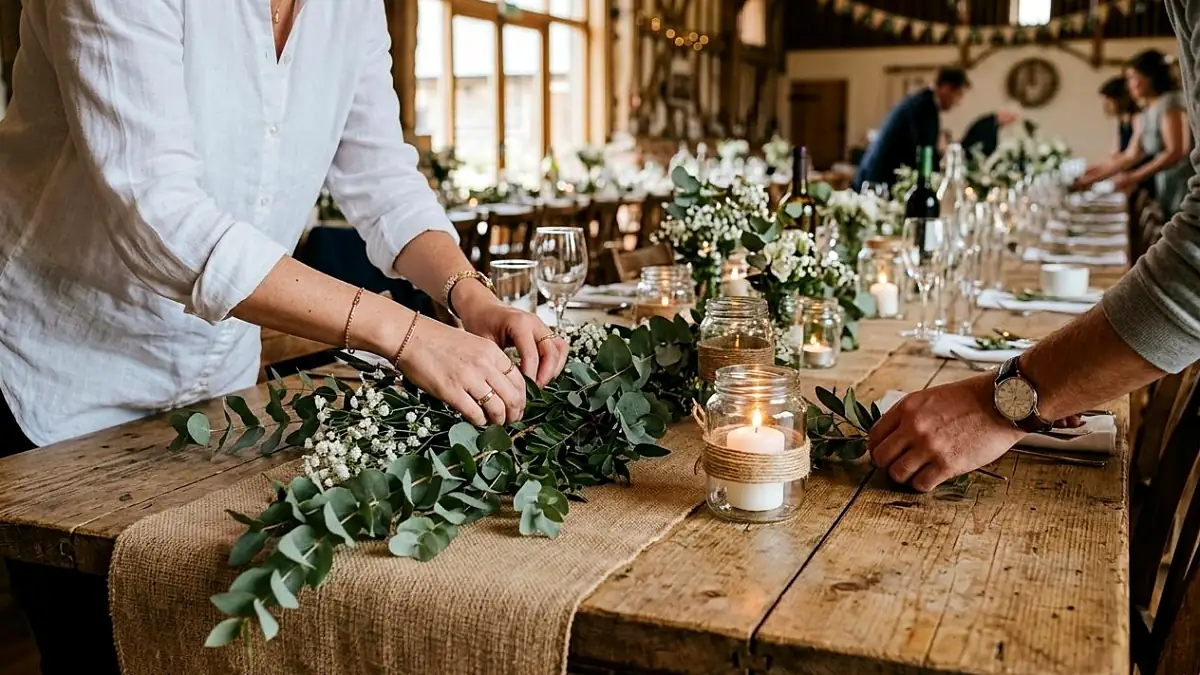
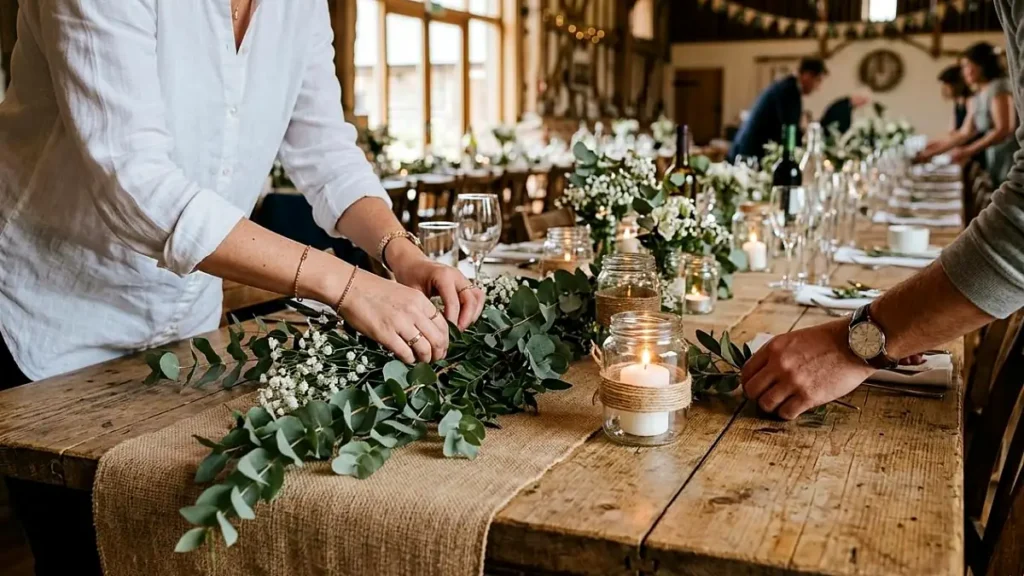
Event table greenery gives a tablescape its shape without relying on expensive flower arrangements. Eucalyptus, ruscus, salal, and ferns can create a natural-looking runner for weddings, dinner parties, and other gatherings. The key is to choose greenery that suits the event, estimate the number of stems before ordering, and prepare everything early enough to avoid a last-minute rush.
You do not need a professional florist to make a good-looking garland. With a few supplies, a simple overlapping technique, and a little preparation, you can build a table runner that looks neat and feels intentional.
Key Takeaways
- Choose sturdy greenery that can handle the event’s temperature and duration.
- Decide whether you want a light runner, a full garland, or small centerpiece clusters before buying stems.
- Treat stem counts as estimates because bunch sizes and foliage density vary between suppliers.
- Hydrate fresh greenery before arranging it and keep it away from direct sun and heat.
- Combine different leaf shapes and textures to make a DIY runner look fuller.
- Keep greenery and especially dried foliage away from open flames.
Why Use Greenery for Event Table Decor?
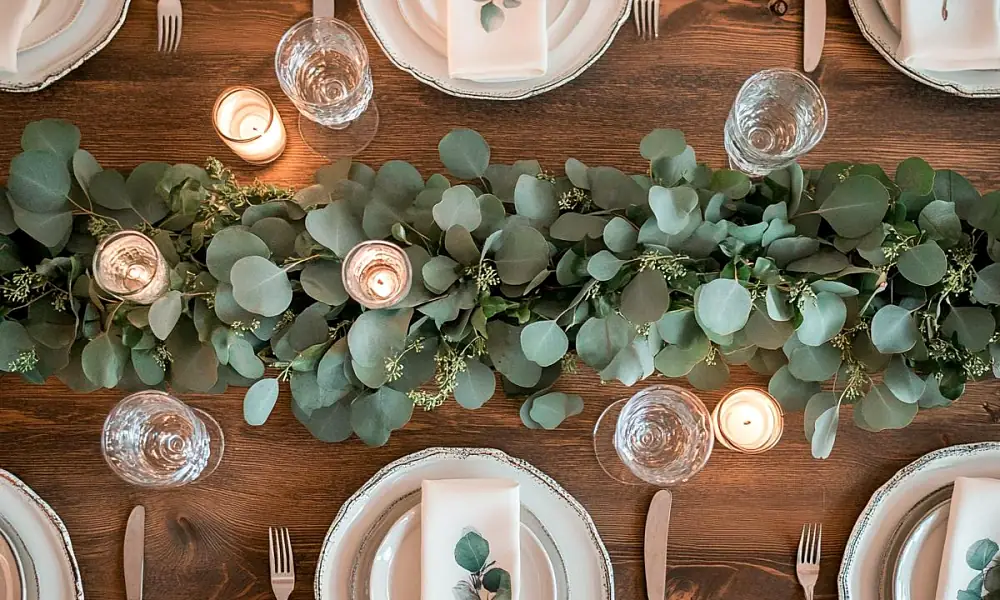
Greenery works well as the foundation of a table arrangement because it fills space, creates a natural line down the table, and can look attractive without a large number of flowers.
It also gives you flexibility. You can use a simple eucalyptus runner for a small dinner, combine ruscus and fern for a fuller wedding table, or add a few flowers where you want more color.
There are three practical advantages:
It can help manage the budget. Foliage is often used to cover more table space, with flowers added only at selected points. Whether it saves money depends on the greenery, supplier, season, and amount of labor involved.
It gives the table a consistent look. A runner connects the place settings and centerpiece elements, so the table feels like one arrangement rather than a collection of separate decorations.
It can be prepared ahead. Some sturdy greens hold their appearance well when handled and stored properly. However, no fresh greenery is completely maintenance-free. Heat, sunlight, and a lack of moisture can cause it to dry out.
For a wider look at bringing plants and natural materials into interior spaces, see our guide to modern green interiors.
Which Greenery Lasts Longest for Table Runners?
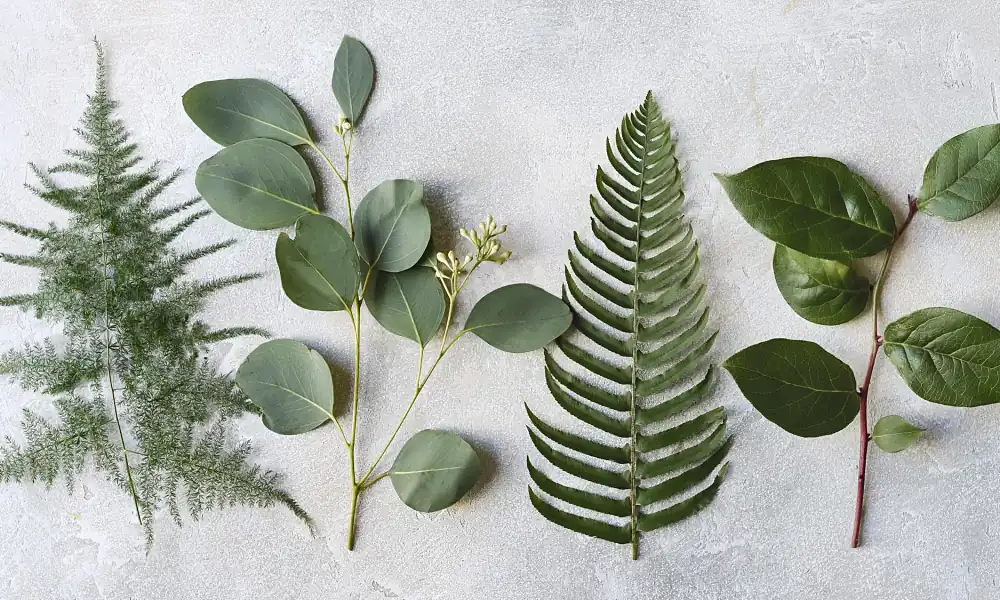
Not every type of foliage behaves the same way. Some greens have firm stems and sturdy leaves, while others are better for short displays in cool rooms.
Here are several popular options for event tables:
| Greenery | Appearance | Best use |
| Silver dollar eucalyptus | Rounded, silvery leaves | Open runners and modern tables |
| Seeded eucalyptus | Small leaves with decorative seed clusters | Textured garlands and layered arrangements |
| Ruscus | Firm, glossy leaves | Structure and long-lasting coverage |
| Salal (lemon leaf) | Broad, dark green leaves | Filling gaps and creating a fuller base |
| Pittosporum | Small leaves with a soft appearance | Adding texture and variety |
| Leatherleaf fern | Fine, divided foliage | Filling spaces between larger stems |
| Ivy | Trailing stems and leaves | Softening the edges of a runner |
For a simple arrangement, choose two or three types rather than using every variety on the list. For example, ruscus can provide structure, eucalyptus can create the main shape, and fern can fill small gaps.
Soft herbs such as basil and mint can also look attractive, especially at a garden-themed dinner. However, they may wilt more quickly in warm conditions. Use them for shorter events or cool indoor settings rather than relying on them for a long display.
The best choice is not necessarily the greenery that looks prettiest in a photograph. It is the greenery that can stay presentable in the conditions where the event will take place.
How Much Greenery Do You Need Per Table?
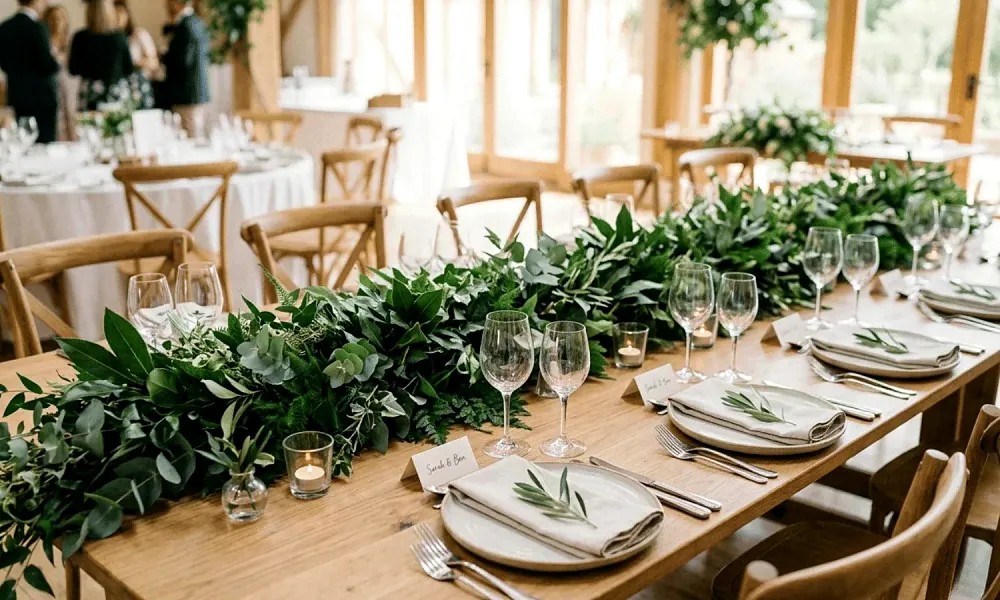
The amount depends on the table length, the width of the runner, and how densely you want to arrange the foliage.
A light runner leaves plenty of the table visible. A fuller garland uses overlapping stems to create a continuous line of greenery. A draped arrangement needs more material because the foliage has to cover additional length and volume.
Use these figures as initial planning estimates:
| Table arrangement | Starting estimate | Planning note |
| Small centerpiece cluster | 15–25 stems | Combine with a vessel or candles to complete the display |
| 6-foot table runner | 30–50 stems | A fuller starting estimate for a continuous runner |
| 8-foot table runner | About 40–67 stems | Roughly one-third more than the 6-foot estimate |
| Full, draped garland | Around 2–3 times the flat runner quantity | Depends heavily on the amount of draping and fullness |
These figures are not fixed florist standards. Stem length, leaf coverage, bunch size, and the type of greenery can change the amount you need. For comparison, this eucalyptus quantity guide gives its own estimates for table runners and other wedding arrangements.
How to Calculate Your Order
Before placing an order, follow these steps:
- Measure the table. Record the length and decide whether the greenery will cover the full table or only the center.
- Choose the look. Decide between a light, open runner and a fuller garland.
- Check the bunch size. Find out how many usable stems come in each bunch.
- Calculate the total. Divide the number of stems you need by the number supplied in each bunch.
- Allow a small buffer. Order some extra of your main greenery so you can replace damaged stems and fill gaps.
For example, if your design needs 40 stems and the supplier sells bunches of 8, you need five bunches. If the bunch contains only 5 stems, you need eight.
Always confirm the supplier’s actual bunch size before checkout. It is an easy detail to overlook, and it can make a noticeable difference to the final order.
Fresh, Faux, or Dried Greenery: Which Should You Choose?
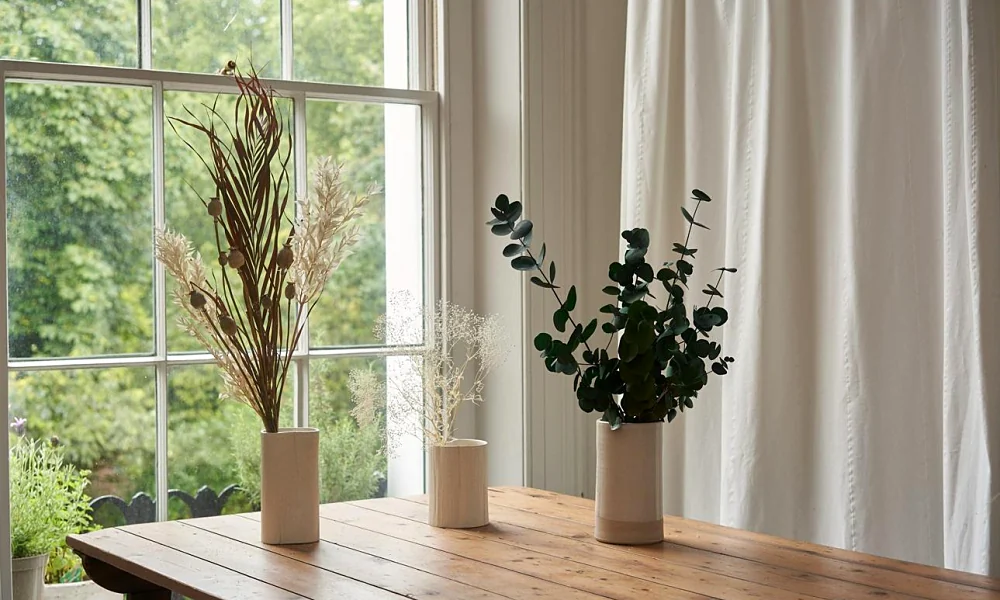
The right material depends on your budget, venue, preparation time, and whether you want to reuse the decorations.
| Type | Main advantage | Possible drawback | Best suited to |
| Fresh | Natural texture, movement, and fragrance | Needs hydration and careful storage | Weddings and one-time events |
| Faux | Reusable and does not wilt | Quality varies; some options look artificial up close | Repeated events and long-term use |
| Dried | Easy to store and naturally textured | Can become brittle and is combustible | Decorative displays away from flames |
Fresh greenery is a good choice when natural appearance and fragrance matter. Faux foliage makes sense when you want to reuse the same materials for several events. Dried greenery can add an interesting texture, but it needs extra care around heat and ignition sources.
Try a Mixed-Greenery Approach
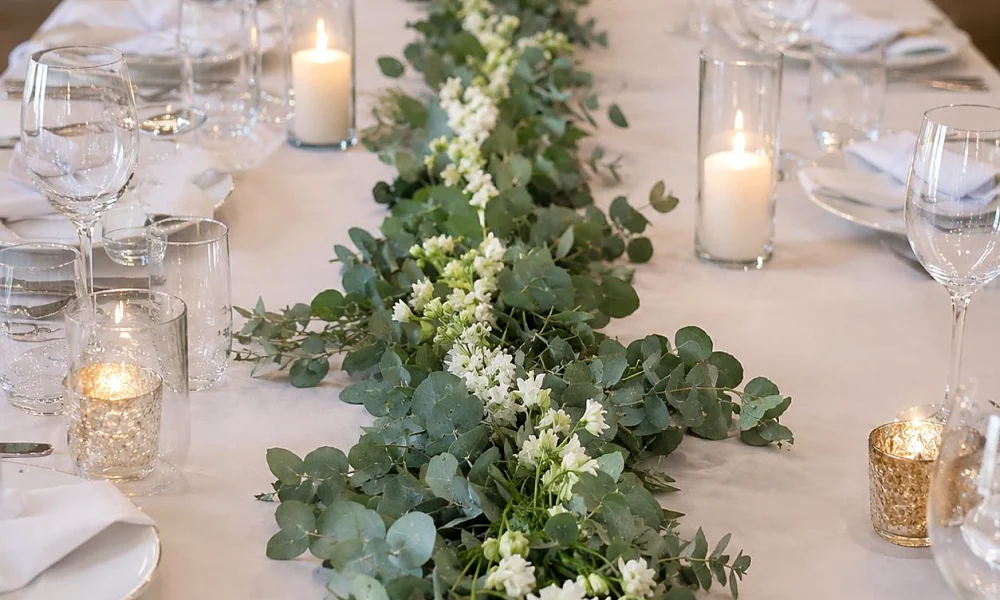
You do not have to choose only one type. A mixed arrangement can give you the look you want while controlling how much fresh foliage you need.
For example, use reusable faux greenery as the base, then add fresh eucalyptus or fern in the most visible areas. You can also use dried accents where there is no flame or heat exposure.
Check that the different materials look convincing together before building the full runner. Differences in color, shine, and leaf texture become more noticeable when the materials sit side by side.
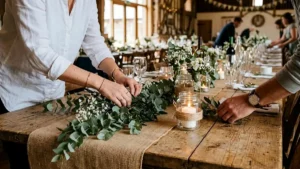
How to Make a DIY Greenery Garland
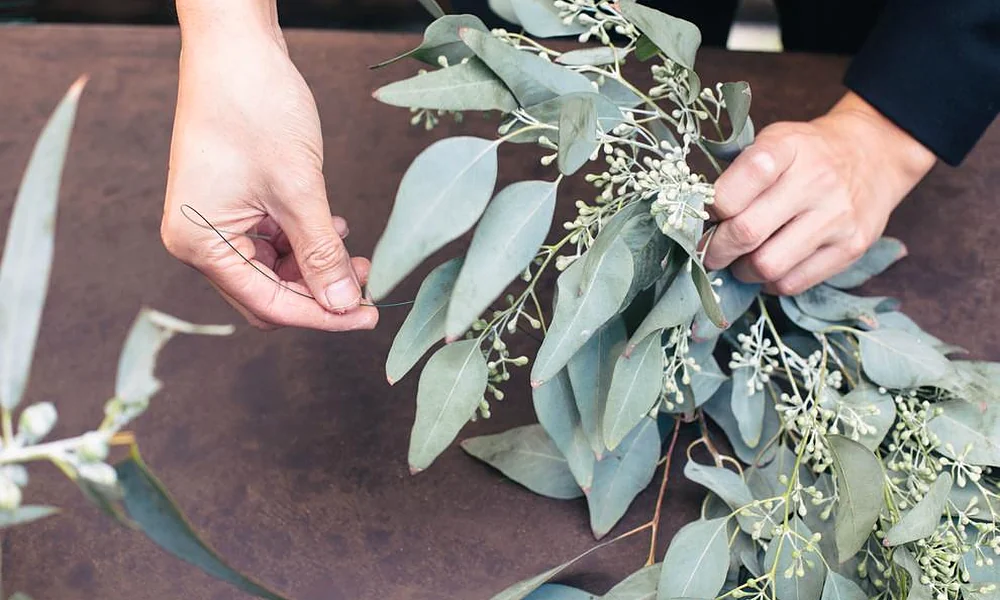
A simple wired garland is mostly a repeating process: gather a small bundle, secure it, overlap the next bundle, and continue until you reach the required length.
What You Will Need
- Fresh greenery
- Floral wire
- Wire cutters
- Garden scissors or clean pruning shears
- A clean bucket or container for hydration
- A spray bottle for light misting
Step-by-Step Garland Method
- Prepare the greenery.
Remove damaged leaves and trim away any messy stem ends. Separate the foliage into small bundles so you can work without stopping to sort through the material.
- Make the first bundle.
Gather a few stems together, keeping their tips facing in roughly the same direction. The bundle should be thick enough to create coverage but not so large that it becomes difficult to secure.
- Secure the stems.
Cut a manageable piece of floral wire and wrap it firmly around the stem ends. Keep the wire tight enough to hold the bundle without crushing the stems.
- Add the next bundle.
Place the next bundle over the wired section of the first one. Make sure it covers the wire and overlaps enough to hide the stem ends.
- Repeat along the length.
Continue adding and securing bundles until the garland reaches the length you need. Keep checking the shape as you work so the runner does not become noticeably thicker at one end.
- Finish the ends.
Trim loose stems and adjust any leaves that stick out awkwardly. Check the entire garland from above, since uneven gaps are easier to spot before it reaches the table.
A useful trick is to alternate the greenery rather than placing identical bundles one after another. For example, use ruscus for structure and add fern or eucalyptus between the bundles. The different leaf shapes make the finished garland look more natural.
When Should You Prepare Event Table Greenery?
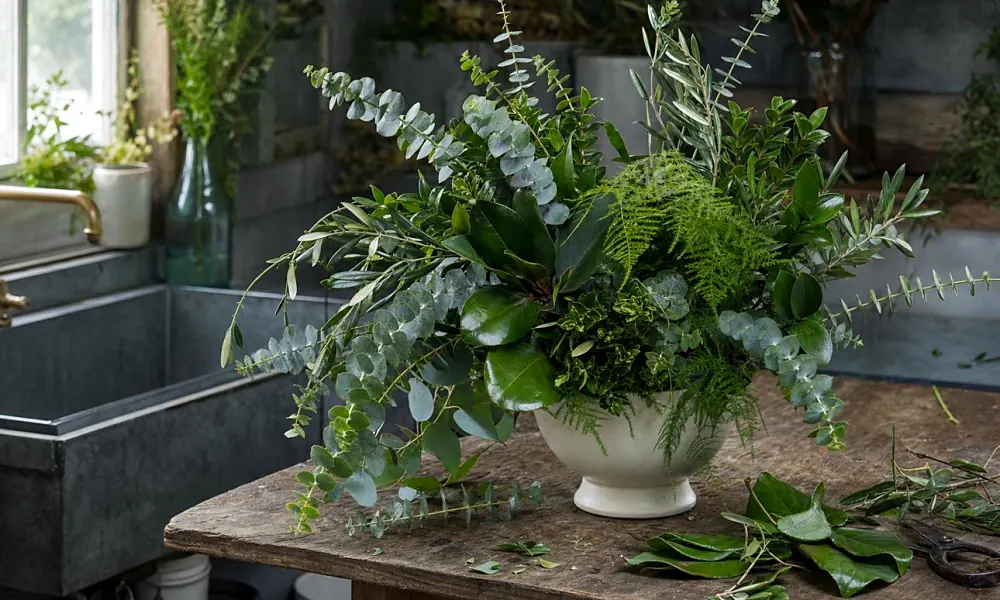
Fresh greenery needs a little planning. Preparing too early without suitable storage can leave the leaves dry or damaged before the event begins.
A practical starting timeline is:
| When | What to do |
| 1–2 weeks before | Confirm quantities, supplier, delivery arrangements, and venue rules |
| 2–3 days before | Receive the greenery, inspect it, and remove damaged material |
| The day before | Hydrate the stems and assemble the garland if storage conditions allow |
| Event morning | Check the runner, adjust the arrangement, and lightly mist where appropriate |
This schedule is a guide, not a guarantee. The best preparation window depends on the type of greenery, the supplier’s handling instructions, and the temperature of the storage area.
How to Keep Fresh Greenery Looking Good
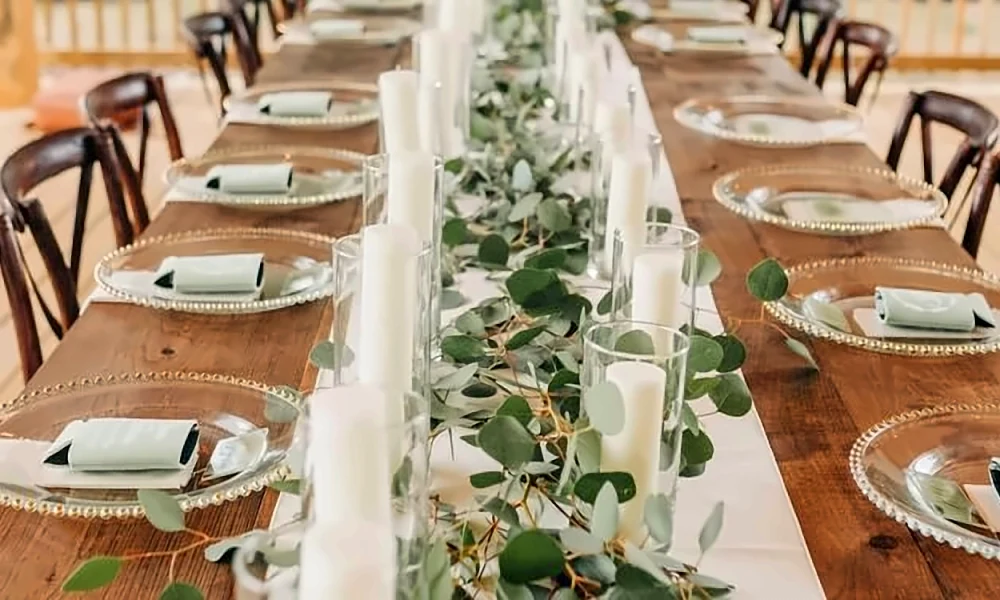
Once the stems arrive, unpack them and inspect the leaves. Remove damaged material and place loose cut stems in clean water in a cool area. Recutting the ends can also help fresh stems take up water.
Keep the greenery away from direct sunlight, heaters, and warm air vents. If the garland is already assembled, follow the supplier’s care instructions. Some arrangements can be misted lightly, while others benefit more from having their cut ends or arrangement base supplied with water.
Do not assume that misting alone will keep every type of foliage fresh. The best method depends on how the greenery is constructed and whether its stems can access water.
Event Venue Safety: Greenery, Candles, and Fragrance
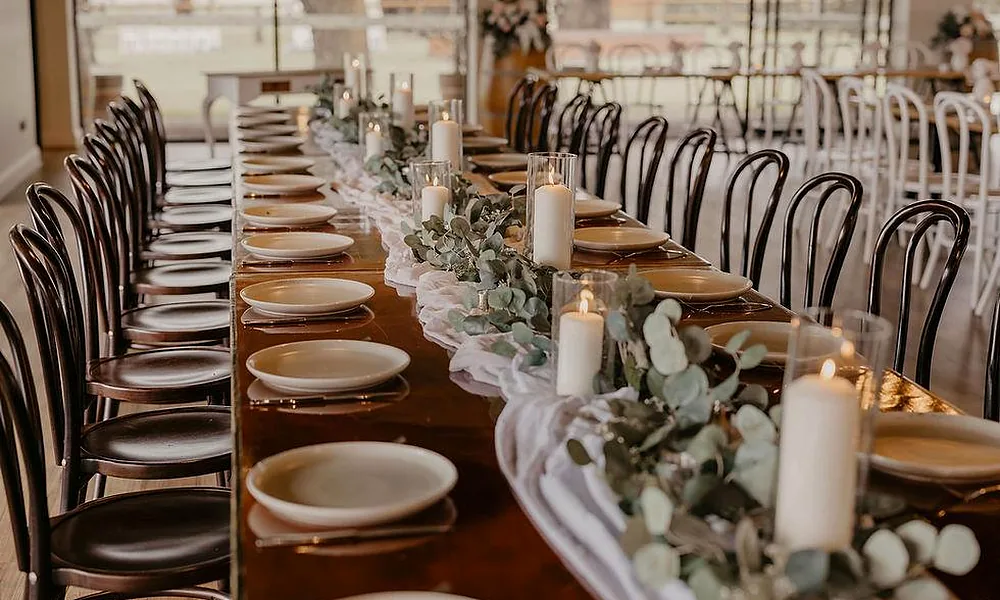
A beautiful table arrangement should not create a problem for guests or the venue.
Keep greenery away from open flames. Fresh foliage dries as time passes, and dried foliage can ignite easily. Do not place garlands against candle flames or other heat sources. Battery-operated candles are a practical alternative when you want the same visual effect without an exposed flame.
Check venue rules before decorating. Some venues restrict open flames, floral wire, adhesives, or decorations attached to furniture. Ask before you arrive with the materials.
Consider fragrance. Eucalyptus and some other foliage have noticeable scents. If guests may be sensitive to fragrance, choose a less strongly scented option or use a smaller amount.
Keep the table practical. Leave enough room for plates, glasses, serving dishes, and guests’ hands. A runner should complement the table rather than make it difficult to use.
Be careful with dried materials. Keep dried leaves, grasses, and branches away from candles, heaters, and other ignition sources. Do not rely on a decorative arrangement to remain safe simply because it was freshly assembled.
Frequently Asked Questions About Event Table Greenery
1. What greenery is best for a table runner?
Eucalyptus, ruscus, salal, pittosporum, and leatherleaf fern are useful choices. Eucalyptus creates a soft, modern look, while ruscus provides structure and salal offers fuller coverage. Choose based on the event length and the conditions at the venue.
2. How many stems do I need for a 6-foot greenery runner?
A starting estimate is around 30–50 stems for a fuller 6-foot runner. A lighter design may need less. The actual amount depends on stem size, leaf coverage, and how closely the bundles overlap.
3. How do you make a greenery garland look fuller?
Use two or three types of foliage with different leaf shapes. Overlap each bundle enough to hide the wire and stem ends, and check the runner from above as you work. A mix of firm and softer foliage usually creates more visual depth than one type of greenery alone.
4. How far in advance can you make a fresh greenery runner?
You can often assemble it the day before, provided you can store it in suitable cool conditions. Hydrate loose stems before arranging them, keep the finished runner away from sunlight and heat, and follow the supplier’s care instructions.
5. Is fresh or faux greenery better for weddings?
Fresh greenery offers natural texture and fragrance, while faux greenery is reusable and does not wilt. Fresh foliage suits events where natural appearance matters most. Faux options may be more practical when you plan to reuse the decorations or need to prepare them well in advance.
6. Can you mix fresh and dried greenery?
Yes, but keep the dried material away from open flames and heat. Check that the colors and textures work together, and make sure the arrangement can be secured without damaging the fresh stems.
7. How do you keep eucalyptus garlands fresh?
Keep eucalyptus away from direct sunlight and heat, and store loose stems in water in a cool area before arranging them. For assembled garlands, follow the supplier’s instructions for hydration and storage. Conditions and freshness can vary, so there is no guaranteed display life for every garland.
Final Thoughts
Good event table greenery comes down to choosing the right foliage, ordering enough of it, and giving yourself time to prepare the arrangement properly. Eucalyptus, ruscus, salal, and ferns can work together to create a runner that looks full without needing flowers across every inch of the table.
Start with the table measurements, confirm the supplier’s bunch sizes, and build the garland before the event day if storage conditions allow. Most importantly, keep the finished arrangement away from heat and open flames.
A little planning makes the difference between a runner that looks unfinished and one that brings the whole table together.