Key Takeaways
- Bedroom lighting influences sleep quality and mood.
- Warm lighting is generally more relaxing than cool lighting in the evening.
- Layered lighting creates a comfortable and flexible bedroom environment.
- Dimmable lights help your body transition naturally toward sleep.
- Bright lighting before bed may make it harder to unwind.
- Morning natural light supports a healthy daily sleep cycle.
- Small lighting changes can make your bedroom feel calmer and more inviting.
Quick Answer
Bedroom lighting directly affects your sleep and mood because it influences your body’s internal clock. Bright or cool-toned lights in the evening can delay sleep by reducing melatonin production, while warm lighting helps your brain recognize that it’s time to relax. Choosing soft, warm lighting before bed can improve light and sleep quality, reduce stress, and create a more comfortable bedroom environment.
How Bedroom Lighting Influences Sleep and Mood
Good sleep doesn’t begin when your head touches the pillow. It starts with the environment you create during the hours leading up to bedtime.
Among all the elements in your bedroom, lighting is one of the most important. It sends signals to your brain that affect energy levels, emotions, and sleep readiness. Even small changes in lighting can have a positive impact on your nightly routine.
Why Bedroom Lighting Matters
Light is one of the strongest signals your brain uses to determine whether it’s time to stay awake or prepare for sleep.
Natural daylight helps you stay alert throughout the day. As the sun sets, your body expects lighting to become softer and dimmer. When artificial lighting remains bright late into the evening, your brain may struggle to recognize that bedtime is approaching.
This is why many people experience difficulty falling asleep after spending hours under bright ceiling lights or looking at glowing screens.
A bedroom with gentle, warm lighting creates a smoother transition between daytime activity and nighttime rest.
Your Brain Responds to Light Every Day
Your eyes don’t simply help you see. They also communicate with your brain about the amount and color of light around you.
These signals influence:
- Sleep timing
- Alertness
- Energy levels
- Emotional balance
- Daily routines
Because of this connection, improving your bedroom lighting often supports healthier sleep habits without requiring major lifestyle changes.
The Connection Between Light and Your Body Clock

Every person has an internal body clock that follows a roughly 24-hour cycle. This natural rhythm helps regulate sleeping, waking, hormone release, and body temperature.
Light plays the biggest role in keeping this clock on schedule.
Morning Light Supports Wakefulness
Exposure to natural daylight after waking tells your brain that the day has started.
As a result, you may notice:
| Morning Light Benefits | How It Helps |
|---|---|
| Increased alertness | Helps you feel awake sooner |
| Better focus | Supports concentration during the day |
| Improved energy | Encourages a healthy daily rhythm |
| Stable sleep schedule | Makes falling asleep easier at night |
Opening your curtains soon after waking is one of the simplest ways to support your natural rhythm.
Evening Light Prepares the Body for Sleep
As daylight fades, your body begins preparing for rest.
Warm, dim lighting supports this natural process by creating a calm atmosphere. Bright white or blue-rich lighting, however, can send mixed signals that encourage wakefulness instead.
Many people unknowingly make bedtime more difficult simply by keeping every light in the room at full brightness until they decide to sleep.
How Light Affects Sleep Quality
Getting enough sleep is important, but the quality of that sleep matters just as much.
Your bedroom lighting influences how quickly you fall asleep, how often you wake during the night, and how refreshed you feel the next morning.
Bright Light Can Delay Sleep
Bright lighting during the evening can make it harder for your body to shift into sleep mode.
You may experience:
- Longer time to fall asleep
- Restless nights
- Frequent waking
- Feeling tired after sleeping
This happens because your brain still receives signals associated with daytime activity.
Warm Lighting Encourages Relaxation

Many sleep-friendly bedrooms use warm-colored lighting because it feels softer and more comfortable.
Warm lighting often creates an environment that encourages relaxation before bedtime.
Some common examples include:
| Warm Lighting Option | Best Use |
|---|---|
| Warm LED bedside lamp | Reading before bed |
| Fabric lampshade | Soft ambient lighting |
| Dimmable table lamp | Evening relaxation |
| Warm wall sconces | Gentle room lighting |
These options create a peaceful atmosphere without making the room feel overly bright.
Dim Lighting Helps Your Evening Routine
Instead of switching from bright lights directly to darkness, gradually reducing brightness gives your body time to adjust.
A simple evening routine might include:
- Turn off bright overhead lights.
- Switch to bedside lamps.
- Lower brightness about an hour before sleep.
- Avoid unnecessary bright lighting until bedtime.
This gradual change often feels more comfortable than an abrupt transition.
How Bedroom Lighting Influences Mood
Lighting doesn’t only affect sleep. It also shapes how a room feels emotionally.
A bedroom filled with harsh lighting may seem cold or stressful, while soft lighting often feels welcoming and peaceful.
Although lighting isn’t a solution for every emotional challenge, creating a calming environment can make it easier to relax after a busy day.
Bright White Light Creates Energy
Cool white lighting works well in places where focus is important.
Examples include:
- Home offices
- Kitchens
- Study areas
- Craft rooms
However, these lighting styles are generally less suitable for winding down before bed.
Soft Warm Light Feels More Comfortable
Warm lighting creates a cozy atmosphere that many people associate with comfort and relaxation.
It can make your bedroom feel:
- More inviting
- More peaceful
- Less harsh
- Better suited for evening routines
Because of this, many interior designers recommend warm lighting for bedrooms instead of bright daylight-colored bulbs.
Lighting Also Affects Your Bedroom’s Atmosphere
Think about walking into two different bedrooms.
One has bright overhead lighting that fills every corner with intense light.
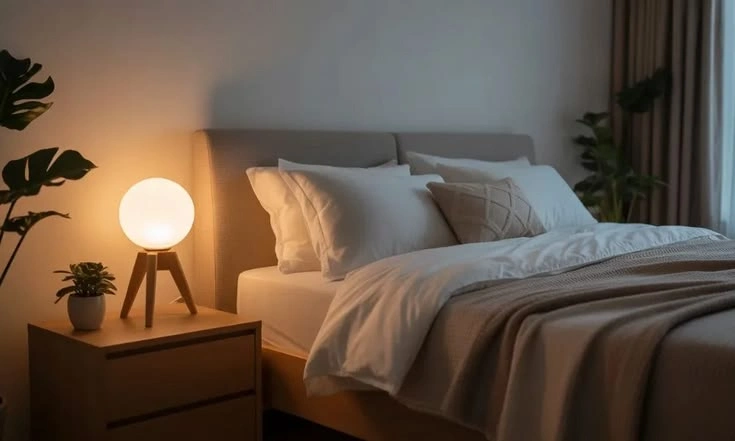
The other uses soft bedside lamps with warm bulbs and gentle shadows.
Most people naturally find the second room more relaxing because the lighting supports comfort instead of constant alertness.
A well-planned lighting setup doesn’t have to be expensive. Often, replacing a few bulbs or adding a bedside lamp is enough to create a noticeable difference in how the room feels.
Warm vs Cool Lighting: Which Is Better?
Choosing the right color temperature is one of the easiest ways to improve your bedroom.
| Feature | Warm Lighting | Cool Lighting |
|---|---|---|
| Color appearance | Soft yellow | Bright white or bluish |
| Best time | Evening | Morning and daytime |
| Supports relaxation | Yes | Less suitable |
| Reading before bed | Comfortable | Can feel harsh |
| Bedroom atmosphere | Cozy and calming | Bright and energetic |
For most people, warm lighting is the better choice for bedrooms because it aligns more closely with the body’s natural evening routine.
Best Bedroom Lighting Ideas for Better Sleep
Creating a sleep-friendly bedroom doesn’t require a complete makeover. A few thoughtful lighting choices can make your room feel more peaceful and support a healthier bedtime routine.
The goal is to create a space that gradually helps your body unwind instead of keeping your mind active.
Use Layered Lighting
A single bright ceiling light rarely provides the comfort needed before bed. Instead, combine different light sources so you can adjust the room based on the time of day.
| Lighting Layer | Best Use | Recommended Brightness |
|---|---|---|
| Ceiling Light | Cleaning and dressing | Bright |
| Bedside Lamp | Reading and relaxing | Soft |
| Wall Sconces | Evening ambience | Low |
| Floor Lamp | Cozy corner lighting | Medium |
| Accent Lighting | Decorative warmth | Soft |
Layered lighting gives you flexibility while making your bedroom feel warm and inviting.
Choose Warm Light Bulbs
The color of your light matters just as much as its brightness.
Warm white bulbs produce a soft glow that feels comfortable in the evening. They are often preferred for bedrooms because they create a relaxing atmosphere.
Cool white bulbs are better suited to workspaces where focus is more important than relaxation.
Install Dimmable Lights
A dimmer switch lets you reduce brightness as bedtime approaches.
Instead of going from full brightness to complete darkness, you can slowly lower the light level over time. This simple habit helps create a smoother transition into sleep.
Even if your room has only one main light, adding a dimmer can make a noticeable difference.
Use Bedside Lamps Instead of Overhead Lights
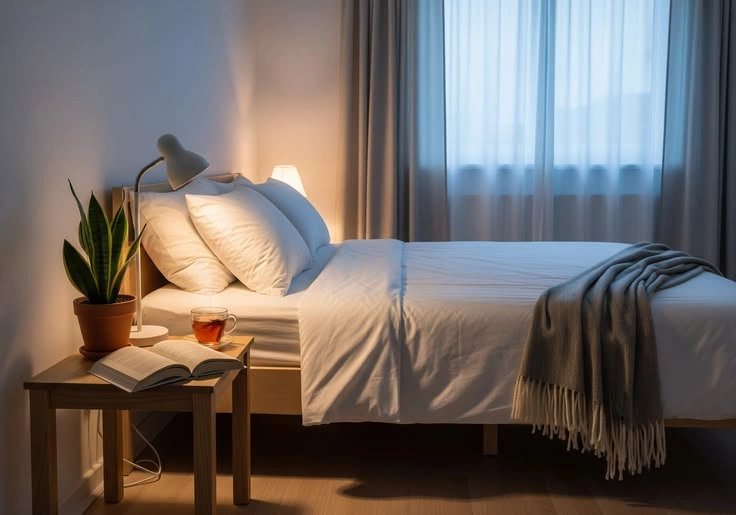
Bright ceiling lights spread light across the entire room. Bedside lamps provide softer, more focused lighting that feels less stimulating.
They also make it easier to read, journal, or relax without flooding the room with bright light.
Add Soft Accent Lighting
Accent lights are not just decorative. They can help create a calming mood in the evening.
Popular options include:
- LED strip lighting behind a headboard
- Small table lamps
- Salt lamps
- Wall sconces
- Soft fairy lights for decorative use
Choose warm-colored lighting instead of bright white for the most relaxing effect.
Smart Lighting Can Improve Your Evening Routine
Smart lighting gives you greater control over your bedroom environment.
Many smart bulbs allow you to:
- Change brightness
- Adjust color temperature
- Set bedtime schedules
- Turn lights off automatically
- Control lighting with your phone or voice assistant
These features make it easier to maintain a consistent evening routine.
If you already use a smart home system, adding smart lighting can be a practical upgrade rather than a luxury.
Bedroom Lighting Habits That Support Better Sleep
Your lighting habits matter as much as the fixtures themselves.
Small daily changes often produce better results than expensive renovations.
Follow a Consistent Evening Routine
Try lowering your lights about an hour before bed.
During this time, choose relaxing activities such as:
- Reading
- Gentle stretching
- Listening to calming music
- Meditation
- Writing in a journal
Reducing bright light while slowing your activities helps prepare both your body and mind for sleep.
Let Morning Light In
While evenings should be dim, mornings should be bright.
Open your curtains soon after waking to expose yourself to natural daylight. This helps reinforce your body’s internal clock and supports a more consistent sleep schedule.
Common Bedroom Lighting Mistakes
Many bedrooms include lighting choices that unintentionally interfere with relaxation.
Avoid these common mistakes whenever possible.
| Mistake | Better Alternative |
|---|---|
| Bright white bulbs before bed | Warm white bulbs |
| Only using overhead lighting | Layer multiple light sources |
| Extremely bright bedside lamps | Soft, dimmable lamps |
| Leaving lights on all night | Use a low-level night light only if needed |
| Ignoring natural daylight | Open curtains each morning |
Making even one or two improvements can noticeably change how your bedroom feels.
Warm Lighting vs Cool Lighting
| Feature | Warm Lighting | Cool Lighting |
|---|---|---|
| Color | Soft yellow | Bright white or blue-toned |
| Best Time | Evening | Morning and daytime |
| Relaxation | Excellent | Limited |
| Bedroom Use | Highly recommended | Better avoided before bed |
| Mood | Cozy and calming | Energizing |
For most bedrooms, warm lighting offers the better balance between comfort and functionality.
Expert Tips for Creating a Relaxing Bedroom
A comfortable bedroom is built through small details rather than one expensive purchase.
Keep these practical tips in mind:
- Choose warm LED bulbs for bedside lamps.
- Keep bright ceiling lights off during late evenings.
- Use blackout curtains if outside lights disturb your sleep.
- Keep lighting consistent every night.
- Position lamps where light doesn’t shine directly into your eyes.
- Avoid scrolling on bright screens immediately before bed.
- Use dimmers whenever possible.
- Keep decorative lighting simple instead of overwhelming the room.
Consistency is often more important than perfection.
Frequently Asked Questions
Does bedroom lighting really affect sleep?
Yes. Light helps regulate your body’s natural sleep cycle. Bright lighting late in the evening can make it harder to fall asleep, while warm, dim lighting encourages relaxation.
What color light is best for sleeping?
Warm white lighting is generally the best choice for bedrooms because it creates a calm atmosphere that supports evening relaxation.
Is it better to sleep with lights off?
For most people, sleeping in a dark room is ideal. If you need some light, choose a very dim, warm-colored night light.
Can smart bulbs improve sleep?
Smart bulbs can support healthy bedtime habits by allowing you to reduce brightness and switch to warmer colors in the evening.
How bright should bedroom lighting be?
During the day, brighter lighting is useful for everyday activities. In the evening, softer and dimmer lighting is usually more comfortable.
Are bedside lamps better than ceiling lights?
For relaxing before bed, bedside lamps are often a better choice because they provide focused, gentle lighting without filling the room with harsh brightness.
Conclusion
The connection between bedroom lighting and sleep is stronger than many people realize. A few simple changes, such as choosing warm bulbs, adding bedside lamps, and reducing brightness before bedtime, can help create a space that feels calm and welcoming.
While lighting alone won’t solve every sleep challenge, it plays an important role in supporting better rest and a more balanced mood. Combining thoughtful lighting with healthy sleep habits can make your bedroom a place where relaxation comes naturally.
At Peeacelily, we believe a peaceful home starts with intentional choices. Creating a calming bedroom with the right lighting is one simple step toward sleeping better and waking up feeling refreshed.