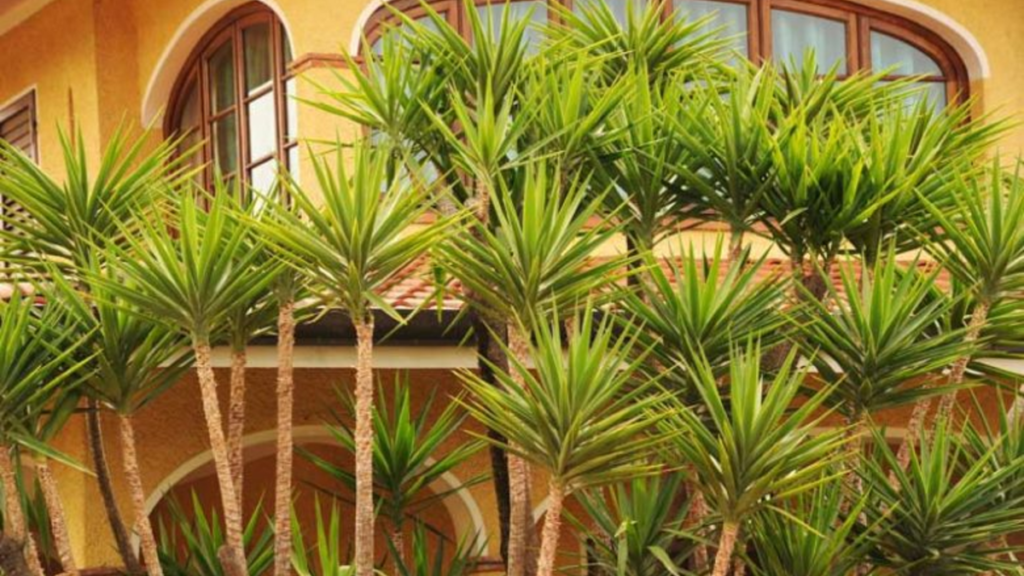
In case you are seeking a tree that is both beautiful and long-lasting for your environment, you have just found it in the yucca plant.
The yucca plant has a sword-like leaf and a durable texture, making it a good choice for those with a busy schedule or just not that green with their thumbs. This is a difficult, low-maintenance plant, which fits well in bright areas and can survive even when neglected in some instances. Yucca plant care is simple and can be taken care of by a busy plant owner or an amateur.
Yucca plants as well are also drought-resistant plants, therefore making them an excellent choice for people who are busy and may forget to water the plants every now and then. If you’re exploring more low-maintenance indoor plants, you might also love the snake plant care guide, another resilient choice for busy plant owners.
The fact that they bring a tropical touch to any room is not the only reason why they can manage difficult conditions. Let’s start by looking at some basic, practical care tips to keep your yucca indoor plant happy and healthy.
Why Yucca Plants Are Perfect for Busy Office Environments
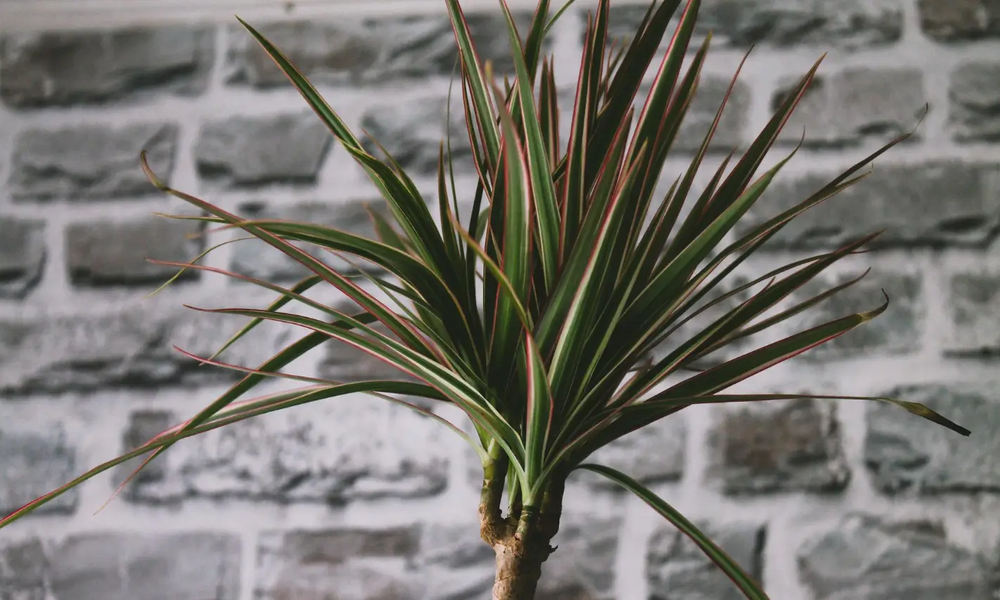
The yucca plant is among such plants that can take care of itself, almost! Yuccas are native to multiple conditions, unlike the fragile plants, which require constant care and specific attention.
They are robust, resilient, and not very demanding, and are therefore suitable for anyone who is not able to afford taking time to maintain the plant on a daily basis. Similarly, the ZZ plant leaves turning yellow guide explains how another hardy indoor plant thrives even with minimal care.
The yucca will forgive whether you are an office worker and have very little natural light, or forget to carry out a watering regime. It is also drought-tolerant, and this means that it is able to stay longer in dry soil without complaints.
It just requires a bit of light and a few waters to keep it healthy, and it is an excellent option to drought-tolerant plants that can easily fit into a hectic lifestyle.
Yucca Plant Care: Guidelines You Need to Know
We have now learned the reason why the yucca plant is an excellent selection of busy plant owners; now it is time to discuss how to take care of it.
Light Requirements: Keep It Bright!
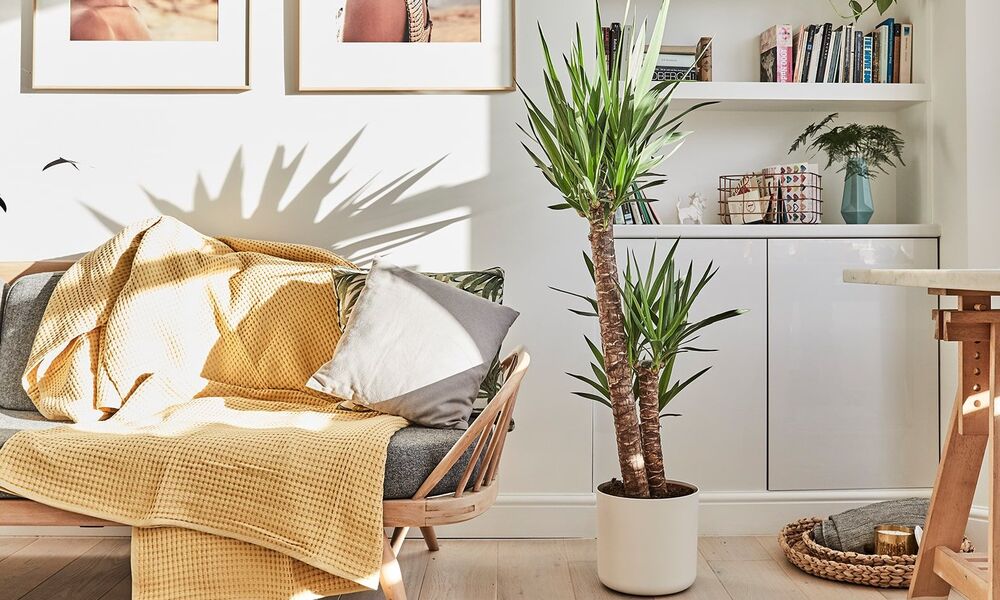
Yucca plants love the sun. They can be kept in bright indirect light, though a few hours of direct sunlight are also tolerable. The greater the amount of light received, the greater they will develop.
Then, when you plant your yucca in an office or living room, you want to find a place close to a south-facing window where a yucca can thrive.
There is no need to be concerned that your local area is not flooded with direct sunlight, as the yuccas are flexible and can be planted under the conditions of less light, too.
But remember that under low light, the growth of the plant will be slower, and the leaves themselves may need to lose some of the bright green colour.
Therefore, when you are out to have a green and healthy plant, try to expose the plant to as much natural light as possible.
Yucca Watering: Less is More
In this regard of yucca watering, it is important not to over watering. Yuccas do not like sitting in wet soil, and excessive water causes root rot. The most appropriate way is to allow the surface of the soil to dry out first, then resume watering.
The following is a basic rule: When the top 1-2 inches of soil are dry, water your yucca. This may require you to water the plant every 1-2 weeks, depending on the temperature and the level of humidity in your environment. Heavy watering would be necessary during winter when the plant starts to slow its growth.
Among the most favourable aspects of taking care of a yucca plant is that the plant is highly tolerant of being watered. When you forget about a week, two weeks, or fail to water your yucca, you should probably not have a problem resuming operations.
Soil and Potting: Well-drained Soil.
As is the case with watering, the soil in which you put your yucca plant goes down the drain. Select soil that is well-drained, e.g., cactus or succulent mix, so that roots are not saturated with water.
Yuccas are indigenous to desert-like environments; therefore, they are accustomed to dry and well-drained conditions. In case you are in an ordinary house potting mix, then you may wish to use some sand or perlite to enhance drainage.
Ensure that your pot has holes in it to enable surplus water to drain out. When you use a decorative pot that does not drain, make sure that you put a saucer at the bottom to collect any water coming out of it.
Temperature: Yuccas Like Warmth
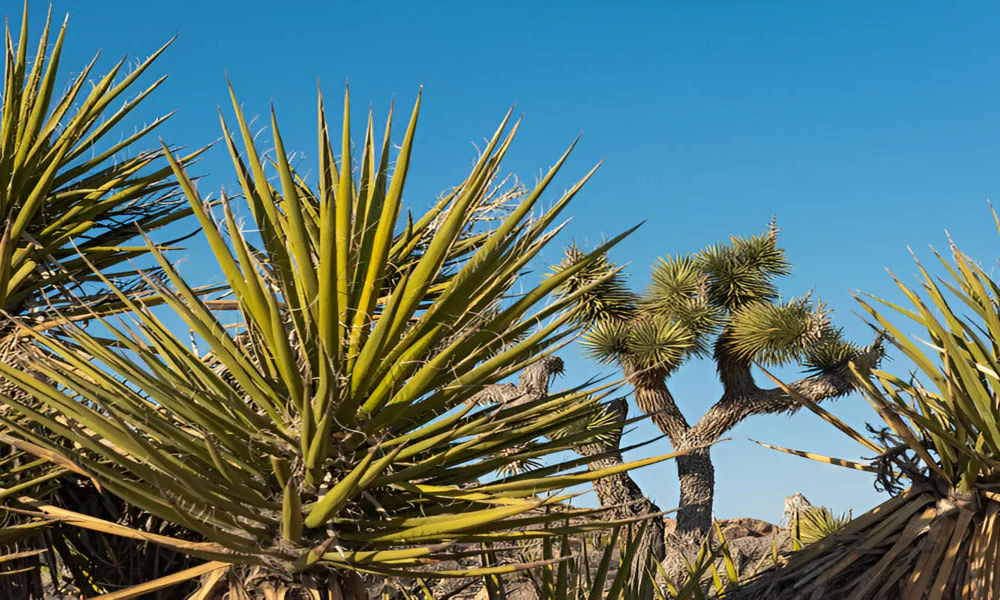
Warm climates are warmed with yucca plants, hence they favour temperatures of between 60-85oF (15- 29 °C). The cold they can withstand is rather weak and can be affected in case they are exposed to temperatures lower than 50 o C (100 F).
In the case of yucca indoor plants, they should be placed in a warm area, which should not be near the drafty windows or air conditioning ducts. In winter, it is advisable not to have your yucca close to cold or hot places, such as doorways or places close to heat, because extreme temperatures might cause stress to the plant. If you’re caring for tropical indoor plants, this Majesty Palm care guide also explains ideal temperature conditions.
Fertilising: Don’t Overdo It
Yuccas do not require so much fertilizer, although you can feed them during the growing season (spring and summer) to speed up their growth.
Apply a diluted solution of a water-soluble fertiliser of two parts. You may apply it once a month, but make sure that you do not overdo it. Excessive fertilising may result in the leaves being yellow or brown in color, and the plant may end up looking more leggy than otherwise.
When the yuccas are not growing, during the winter season, it is better not to fertilise at all. They’ll appreciate the rest!
Solving Common Yucca Issues
Yucca, despite its rugged reputation, may also have some problems, especially when the plant is not given the appropriate care. The following are the general issues and solutions.
Yellow Leaves
This is usually an indication of overwatering by way of yellow leaves. When the leaves of your yucca start to turn yellow, then it is time to cut down on the amount of water you are using and make sure that the soil is drying up between waterings. Yellowing leaves are common in many houseplants — here’s a helpful breakdown of why indoor plant leaves turn yellow and how to fix them.
Brown Leaf Tips
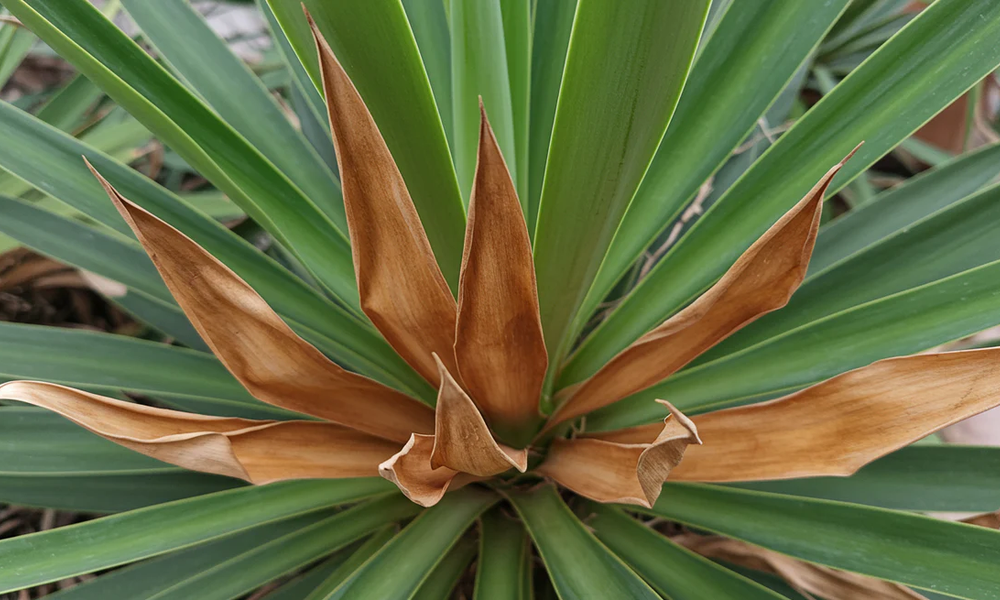
Low humidity, underwatering, and accumulation of fluoride in tap water are some of the causes that can result in brown leaf tips. To avoid this, use filtered water and ensure that there is more humidity around the plant (when necessary).
Leggy Growth
When your yucca begins to grow tall and spindly (so-called leggy growth), maybe it is a symptom that the plant is not receiving sufficient light. Maintaining the brightness of the location of the plant or periodically moving it should also assist in promoting compact growth. Low light issues can affect many plants, especially large foliage types like the Monstera plant care guide, which also needs bright indirect light to stay full and healthy.
Why Yucca Plants Are Perfect for Busy Plant Owners
The yucca plant is among the least demanding plants to be moved around, and this is particularly because some of us do not necessarily have enough time to engage in a complicated process of taking care of the plants.
It is a good choice due to its low maintenance, drought resistance, and the ability to adapt to different light conditions.
- Busy office workers
- The apartment residents have low natural light.
- Customers who travel more often.
- People who forget to water every now and then.
In case you need a plant that will grow with minimal effort and bring some form of sophistication to your home or workplace, the yucca is ideal. It is robust, sturdy, and quite ornamental, which is why it is the most appropriate solution for those who want to enjoy all the advantages of greenery but do not take care of it all the time.
Conclusion
Yucca plants are relatively simple to take care of, and the drought-resistant and hardy yucca plants make it easy to have a gorgeous landscape without the hassle.
All you need to do is provide it with some light, the occasional water, and good drainage, and your yucca will grow for many years indoors. If you’re building a collection of easy-care houseplants, you may also enjoy this complete Aloe Vera plant care guide for another drought-tolerant favorite.
Why not then, eat the yucca plant? It is hard, trendy, and suitable for those who want to bring greenery to their homes with minimal effort. Want help? Contact Us!
FAQs
How do you care for a yucca plant indoors?
Yuccas do best in bright but indirect light. In winter, a sunny, south-facing window is ideal. In summer, provide some light shading to protect the leaves from the hot midday sun, or move the plant to the west- or east-facing window.
What are the common problems with yucca plants?
Indoors, a number of cultural problems can occur; Crisp, brown lower leaves result from under-watering, but lower leaves are naturally shed as the plant grows. Low light levels can result in sagging and drooping leaves, but check for over- or underwatering.
What is the best fertilizer for yucca plants?
During the growing season, once a year in the spring, you can fertilize your Yucca elephantipes with a balanced (5-10-5), water-soluble NPK fertilizer. Dilute the fertilizer to half the recommended strength to avoid overfertilization. Apply the fertilizer to moist soil, as this helps prevent root burn.