
Indoor plants can completely change the feel of a room. They add color, texture, height, and a natural touch that makes a space feel warmer and more inviting. But simply placing plants wherever there is an empty corner does not always create a stylish look. Style Indoor Plants is about choosing the right plants, matching them with the room, and arranging them in a way that feels balanced.
Interior designers usually think about scale, shape, color, texture, and placement when adding greenery to a space. At the same time, plants are living things, so their light, temperature, humidity, and watering needs should always come first. The Royal Horticultural Society recommends choosing locations based on a plant’s growing requirements rather than decoration alone.
At peeacelily, we believe the best plant styling is practical as well as beautiful. Here is how you can create a designer-inspired indoor plant setup without making your home feel crowded.
Start With the Room, Not the Plant
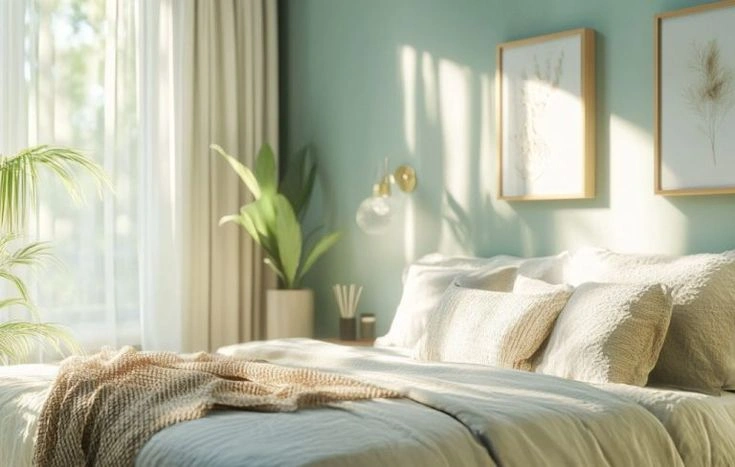
Before buying another houseplant, look at the room you want to decorate. Notice the available floor space, furniture size, windows, wall colors, and natural light. This simple step can prevent you from choosing a beautiful plant that simply does not work in that particular space.
A large living room can usually handle a tall statement plant, while a small bedroom may look better with one or two compact plants. A narrow hallway might benefit from a slim plant stand rather than a wide floor pot.
Light should also guide your decision. Some plants need bright indirect light, while others tolerate lower-light conditions. Strong sunlight through glass can also damage plants that are sensitive to direct sun.
Key Takeaways
- Start indoor plant styling by studying the room, available light, and existing furniture.
- Use one statement plant to create a strong focal point.
- Mix tall, medium, and low plants for better visual balance.
- Group plants instead of scattering small pots everywhere.
- Combine different leaf shapes and textures for more depth.
- Choose pots that complement your interior style.
- Use shelves and plant stands when floor space is limited.
- Keep plants healthy with suitable light, watering, humidity, and drainage.
- Leave some empty space so your greenery does not make the room feel crowded.
- Remember that the best styling works with a plant’s natural growing needs.
Think About Empty Spaces
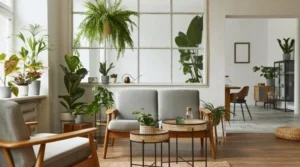
Look for areas that feel visually empty rather than trying to fill every available corner. A bare corner beside a sofa, an empty shelf, or an unused console can become a natural place for greenery.
The goal is not to have plants everywhere. It is to make each plant feel intentional.
Choose One Statement Plant
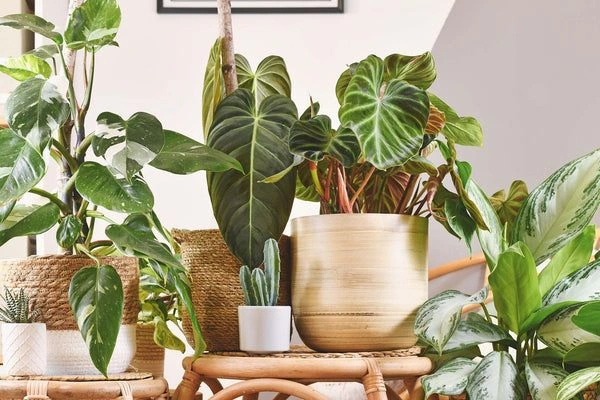
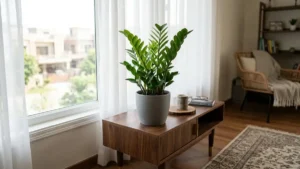
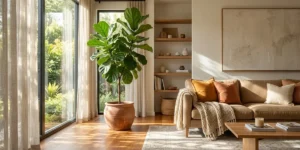
A large statement plant can become the visual focus of a room. Instead of placing several small plants together in a large empty area, try one plant with an interesting shape or strong foliage.
Plants such as fiddle leaf figs, monsteras, bird of paradise, and larger palms can work well as statement pieces when their growing conditions suit the room.
Place a tall plant beside a sofa, reading chair, cabinet, or empty corner. Give it enough breathing room so its leaves do not look squeezed between furniture and walls.
Scale matters here. A tiny plant can disappear beside a large sofa, while an oversized plant can make a small room feel cramped. Recent interior-design guidance also emphasizes matching plant and pot size to the dimensions of the room and surrounding furniture.
Use Different Heights for a Designer Look
One of the easiest indoor plant styling tricks is to create height variation. A collection of plants that are all the same height can look flat, even when the plants themselves are attractive.
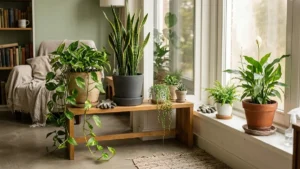
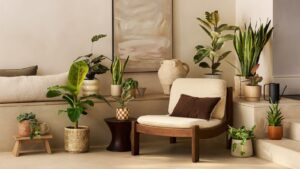
Instead, combine a tall floor plant with a medium-sized plant on a stand and a smaller plant on a table or shelf. This creates layers and makes the arrangement more interesting.
Plant stands are especially useful when you want to add greenery without buying another large plant. They also help bring smaller plants closer to eye level.
Try the Three-Level Approach
For a simple arrangement, think in three levels:
- Tall: A floor plant or tall plant stand
- Medium: A plant on a stool, shelf, or cabinet
- Low: A small plant on a coffee table or side table
You do not need to use exactly three plants. The idea is simply to avoid placing everything at the same visual level.
Group Plants Instead of Scattering Them
A common mistake is placing one small plant in every corner of the home. While this can add greenery, it can also make the room feel random.
Grouping plants creates a stronger visual statement. Try placing two or three plants together while keeping some space between their leaves and pots.
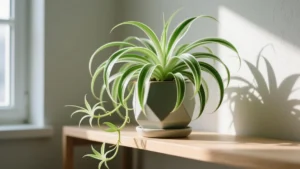
Use different shapes and heights within the group. For example, pair a tall upright plant with a medium plant and a trailing plant. Odd-numbered groupings can also create a more relaxed, natural composition.
Grouping can have a practical benefit too. Plants release moisture through their leaves, and grouping them can increase local humidity around the plants.
Mix Leaf Shapes and Textures
Good Style Indoor Plants is not only about adding more green. It is also about creating visual contrast.
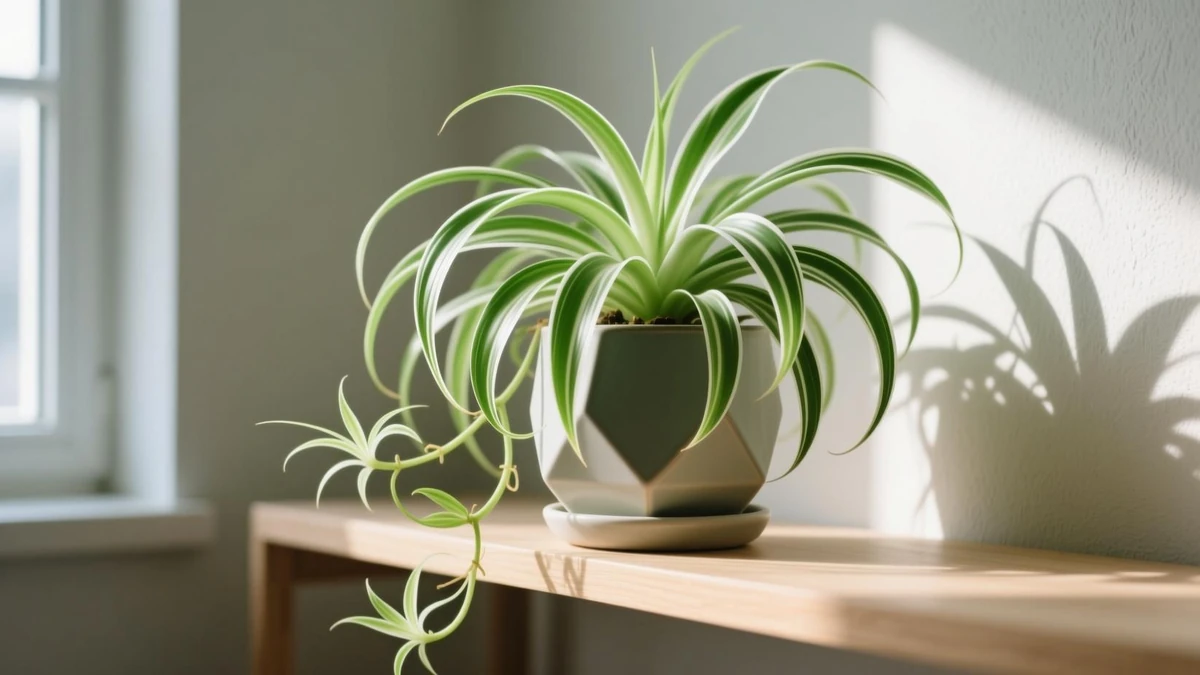
Combine plants with different leaf shapes. Large split leaves can look great beside smaller rounded leaves, while a trailing plant can soften an arrangement with upright foliage.
You can also mix smooth, glossy leaves with softer or more textured foliage. This gives the display depth without requiring lots of decoration.
Try not to choose every plant simply because it looks similar. A little contrast usually makes a collection feel more carefully designed.
Match Your Pots to Your Interior Style
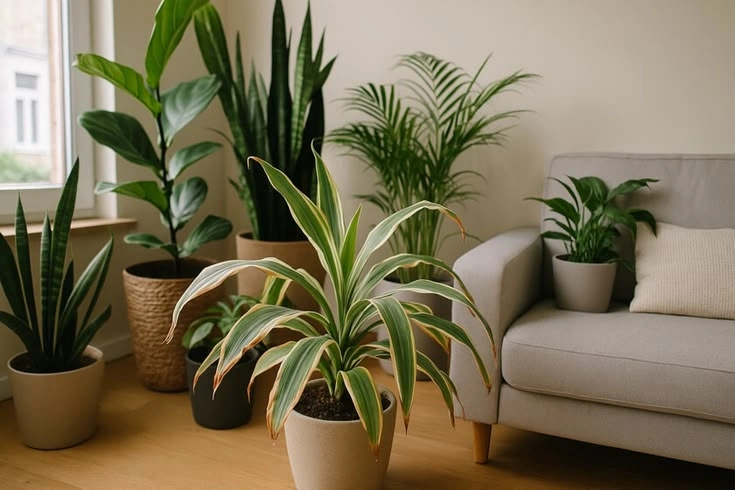
Pots are an important part of the overall look. Even a beautiful plant can appear out of place when its container clashes with the room.
For a modern interior, simple ceramic, stone, concrete, or neutral-colored pots can work well. Natural materials such as terracotta, woven baskets, and wood can suit warmer or more relaxed spaces.
You do not need every pot to match perfectly. Instead, create a visual connection through similar colors, materials, or shapes.
Hide Plain Nursery Pots
Many plants come in basic plastic nursery pots. These are useful for growing, but they may not fit your décor.
You can place the nursery pot inside a decorative cover pot or basket. Make sure excess water can drain properly and that water does not remain trapped inside the decorative container.
Good styling should never sacrifice plant health for appearance. Containers should provide suitable drainage, and the plant should be watered according to its actual needs rather than a fixed schedule.
Use Shelves and Vertical Space
If floor space is limited, look upward. Shelves, wall-mounted displays, plant stands, and hanging planters can add greenery without taking up much floor area.
Trailing plants work especially well on shelves because their leaves can naturally fall over the edge. Place smaller plants beside books, artwork, or decorative objects rather than covering the entire shelf with greenery.
Vertical styling also helps balance rooms with tall furniture or empty wall space.
Style Plants Around Furniture
Plants usually look better when they interact visually with the furniture around them.
A tall plant can soften the hard edge of a bookcase. A small plant can add life to a bedside table. A trailing plant can make an open shelf feel less rigid.
Think about the relationship between the plant and nearby objects. You want the plant to complement the furniture rather than block it.
Avoid placing large plants where people need to walk. A stylish plant that constantly gets bumped will quickly become more trouble than it is worth.
Create a Natural Focal Point
Every room benefits from a focal point, and a plant can provide one naturally.
Choose a location where the plant can be noticed without competing with everything else. A large plant beside a bright window, next to an accent chair, or near a simple console can draw attention while still feeling relaxed.
Do not create too many focal points in one room. If several large plants compete for attention, the space can start to look cluttered.
Consider Each Room Separately
Different rooms need different approaches to Style Indoor Plants.
Living Room
Use one larger statement plant near a sofa or empty corner. Add smaller plants to a coffee table, shelf, or sideboard if there is enough space.
Bedroom
Keep the arrangement simple. A small plant on a bedside table or dresser can add softness without taking over the room.
Bathroom
Bathrooms can offer higher humidity than many other areas of the home, which can suit certain tropical plants. However, check the plant’s light and humidity requirements before placing it there.
Kitchen
Small herbs or compact foliage plants can work well on windowsills or open shelves when the available light is suitable. Keep plants away from excessive heat and areas where they could be damaged.
Keep the Display Looking Fresh
Even the best arrangement will lose its appeal if the plants look dusty, damaged, or neglected.
Remove dead leaves and regularly check the foliage for pests. Clean dusty leaves gently when appropriate, and rotate plants when needed so they receive suitable light.
Do not water simply because it is a particular day of the week. Check the soil and understand the plant’s needs first. The RHS recommends checking whether the growing medium has dried rather than following a routine watering schedule.
A healthy plant will always look better than a perfectly styled plant that is struggling.
Common Style Indoor Plants Mistakes
One of the biggest mistakes is buying plants before checking whether your home can support them. Different rooms have different light, humidity, and temperature conditions, so plant selection should always take the environment into account.
Another mistake is using too many tiny plants. A collection of small pots can quickly become visual clutter. Instead, combine a few well-chosen plants with different heights and forms.
Oversized plants in tiny rooms can also overwhelm the furniture. Always consider the mature size of the plant rather than judging it only by its size at the store.
Finally, avoid covering every surface with greenery. Leaving some empty space helps the plants stand out and keeps the room feeling calm.
What Makes This Advice Reliable?
Effective Style Indoor Plants requires more than decorating knowledge because plants have real growing requirements. This guide combines practical interior-design principles such as scale, grouping, layering, and visual balance with established houseplant-care guidance from the Royal Horticultural Society.
The RHS advises considering light, temperature, humidity, watering, and drainage when positioning houseplants. It also recommends selecting plants according to the conditions available in your home.
This people-first approach matters because attractive styling should support healthy plants rather than putting appearance ahead of their needs. Google likewise emphasizes helpful, reliable, people-first content and notes that trust is the most important part of E-E-A-T.
FAQs
How do I make indoor plants look more stylish?
Choose plants in different sizes, use attractive pots, and arrange them at different heights. A few well-positioned plants usually look more polished than many scattered around the room.
How many plants should I have in one room?
There is no fixed number. Start with the room’s size and available space. One large statement plant may be enough for a small room, while a larger space can handle several plants arranged in balanced groups.
What is the best place for indoor plants?
The best place depends on the plant. Check its light, temperature, humidity, and watering requirements before choosing a location. Decorative placement should not come before the plant’s basic growing needs.
Should all my plant pots match?
No. Matching pots can create a clean look, but slightly different pots can feel more natural. Try keeping a connection between them through similar colors, materials, or shapes.
How can I style plants in a small room?
Use shelves, narrow plant stands, windowsills, and hanging planters to take advantage of vertical space. Choose compact plants and avoid filling every available surface.
How do I make my plant display look like an interior designer styled it?
Focus on balance rather than quantity. Use different heights, mix leaf shapes, choose coordinated pots, create one clear focal point, and leave enough empty space around the arrangement. Most importantly, choose plants that can actually thrive in the conditions of your home.