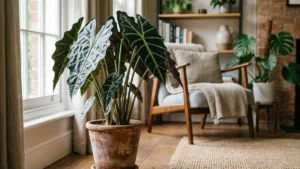
This houseplant care guide explains how to keep indoor plants healthy by mastering light, watering, soil, humidity, feeding, and repotting. It highlights that most plant problems come from incorrect care, not neglect, and shows how simple, consistent habits can help any plant thrive year-round.
Most houseplants do not die from neglect. They die from the wrong approach, too much water, not enough light or soil that stopped working months ago. Well, this houseplant care guide is designed to help fix that.
You will discover in the next few minutes precisely what your houseplants have to stay and blossom, anything from water, light, dirt humidity to food along with simple things you might run into along the way; all spelt in the simplest conditions possible, no ambiguity here.
Whatever the case may be (perhaps killing every plant you have ever owned?), if you’re ready to take your gardening skills from beginner-level to expert mode, this is the guide for you.
Why Most People Struggle with Indoor Plant Care
The reality is that caring for indoor plants is not hard; however, it does take some precision.
A succulent and a fern are living in absolutely different environmental circumstances in the nature. This is the main reason why most houseplants fail – treating them all the same. Forget the generic “water once a week” rules and understand better what actually Each plant needs that will be your one true shift.
The good news?
Every plant becomes manageable once you get the fundamentals down.
The 6 Pillars of a Great Houseplant Care Guide
1. Light — The Foundation of Plant Health
Light is light is the first variable to consider when caring for an indoor plant, and also one of the most underestimated by beginner plant parents
Plants can be broadly described in three classifications:
- Low Light: Pothos, Snake Plants, ZZ plants, and Cast Iron plants
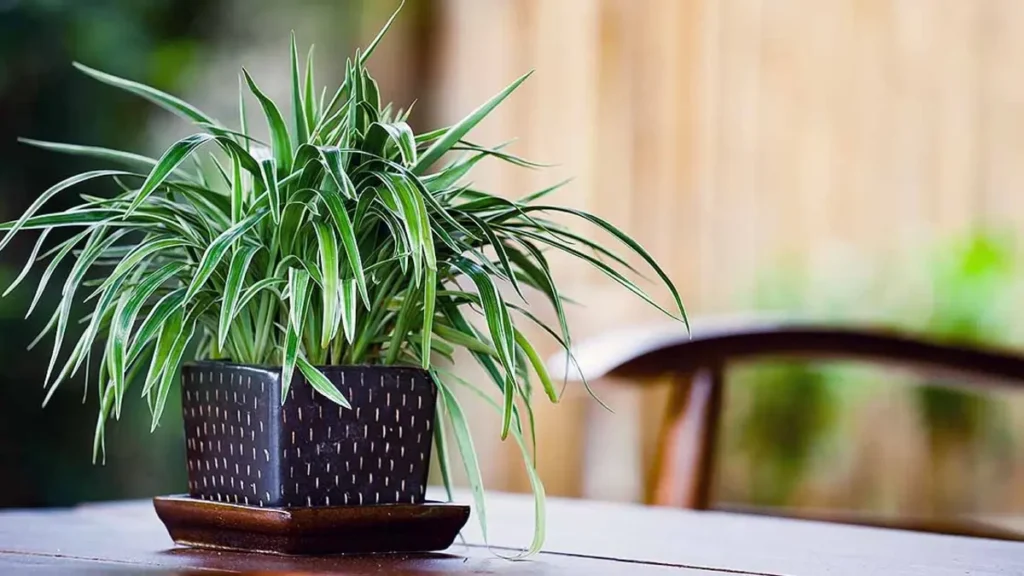
- Medium/indirect light: Peace lilies, spider plants, philodendrons
- Sun direct/bright: succulents, cacti, bird of paradise, fiddle leaf figs
As a practical tip, “bright indirect light” is close to a window but not in the direct sunlight beam that passes through it. North-facing windowsill: Low light. If there is no obstruction in your south-facing window, it is bright direct light. Position your plant as needed and don’t hesitate to shift it until it looks cheerful.
Leggy stalks, pale leaves, slow growth, cats are just some ways you know your plant is not getting the light.
Too direct sun: brown crispy patches, bleached leaf color, dry soil drying within a day
2. Watering — The #1 Mistake New Plant Parents Make
The biggest killer of houseplants is overwatering. This is one of those plant care tips that will stick with you forever.
It operates on a soil moisture threshold, not a frequency of intervals.
Finger test: Finger 2 inches into soil If it’s still damp, wait. If it is dry, then water thoroughly until the bottom begins to drain.
Different plants have very different thirst levels:
| Plant Type | Watering Frequency (Approximate) | Soil Check Before Watering |
| Succulents & Cacti | Every 2–4 weeks | Completely dry |
| Tropical plants (Pothos, Philodendron) | Every 7–10 days | Top 2 inches dry |
| Ferns & Calatheas | Every 5–7 days | Slightly moist at all times |
| Snake Plants & ZZ Plants | Every 2–3 weeks | Fully dry |
Frequencies are estimates and vary based on pot size, season, and humidity.
One more tip: Use room-temperature water. Cold water can shock tropical plants. If your tap water is heavily chlorinated, let it sit uncovered overnight before using.
3. Soil — The Unsung Hero of Plant Health
Many people buy one bag of “potting mix” and use it for all plants. That’s a mistake.
The soil is the entire ecosystem of your plant. It has to retain moisture that is just right, allow air get to the roots, and provide nutrients.
Basic soil types to know:
- Regular potting soil — Suitable for the majority of tropical indoor plants
- Cactus / Succulent mix — Well-draining, Low organic material.
- Orchid bark mix — Very chunky, very airy, for orchids and some aroids
- Peat or coco coir mix — Excellent moisture retention for ferns and calatheas
Easy upgrade: mix perlite (that white volcanic stuff) into your potting soil. A 4:1 ratio of potting mix to perlite will greatly enhance drainage and minimize the risk of root rot.
4. Humidity — What Nobody Tells Beginners
The majority of houseplants are tropical plants, after all. They evolved in an environment with 60-80% humidity. A typical home clocks in at about 30–50%, and lower during the winter when heating.
Most relevant for: calatheas, ferns, orchids, bird of paradise & most aroids.
Methods to increase humidity around your plants:
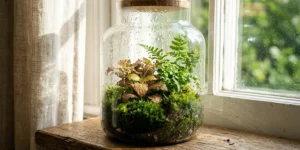
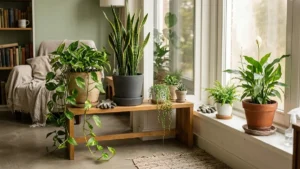
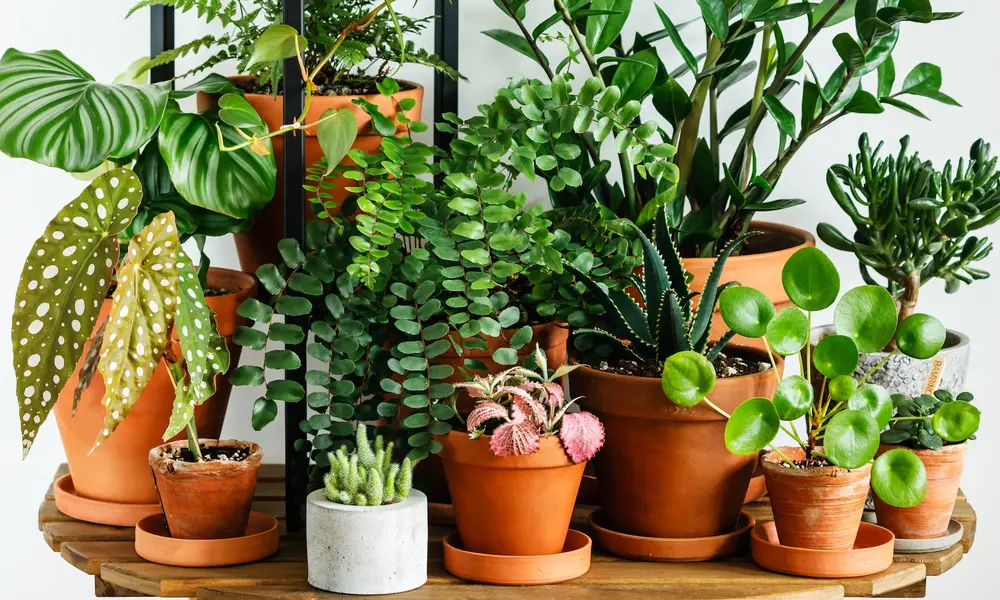
- Plant plants together( they increase humidity through transpiration)
- Put pots on a tray of pebbles with water (the pot sits on top of the water not in it)
- Place a small humidifier around your plants collection
- It is worth noting that Mist leaves from time to time (though this is contentious and less effective than the above).
Signs of leaf edge curl, dry brown tips, crispy edges: Note also those that look like holes torn in the air!
Snake plants, succulents, and ZZ Plant have low humidity tolerance, perfect for dry apartments or offices.
5. Feeding — When and How to Fertilize
Potted plants can only draw nutrients from fresh soil for so long. Nutrients in standard potting mix are mostly exhausted after about 6–8 weeks. This is where fertilizing (feeding) enters the picture — and it typically one of those most ignored basic gardening care ideas.
Simple fertilizing rules:
When to feed — spring up until the end of summer as you enter the active growing season
- Do not feed in autumn and winter (most houseplants are dormant)
- Have a balanced liquid fertiliser (with equal N-P-K numbers, e.g. 10-10-10 or 20-20-20)
- Dilute 1/2 the recommended strength — more fertilizer is not better
- This feature in your blogging tool is arguably the best benefit of creating a blog with it.
- Signs your plant is hungry: paler leaves, slow growth even in good light, new leaves smaller than the old ones.
Over-fertilising: if you see white crust on the soil surface, brown leaf tips, or wilting in moist soil.
6. Repotting — Knowing When It’s Time
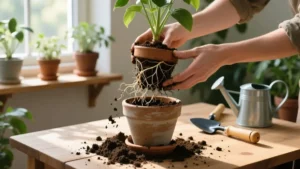
If the pot is too small, a plant cannot take up water and may even stop growing altogether. This is called being “rootbound.”
How to tell if your plant needs a larger pot:
- Roots popping out of the holes in the bottom
- Roots circling above the top of the ground
- It just shunts water through not letting it be absorbed
The problem is that plant is extremely heavy (having perfect center of gravity for a building basically) and tips over at the first sign of distress.
How to repot correctly:
- Select a pot 1–2 inches larger across than the one it was in last time, not much bigger – likely about ¼ of an inch large per side
- The day before, water the plant to lessen shock
- Loosen the root ball, breaking apart and discarding any old soil
- Pot the New Soil, water in well and keep it out of direct sun for a week
For most houseplants, repotting is required every year or two. Spring is the best time.
Common Houseplant Problems and How to Fix Them
| Problem | Likely Cause | Solution |
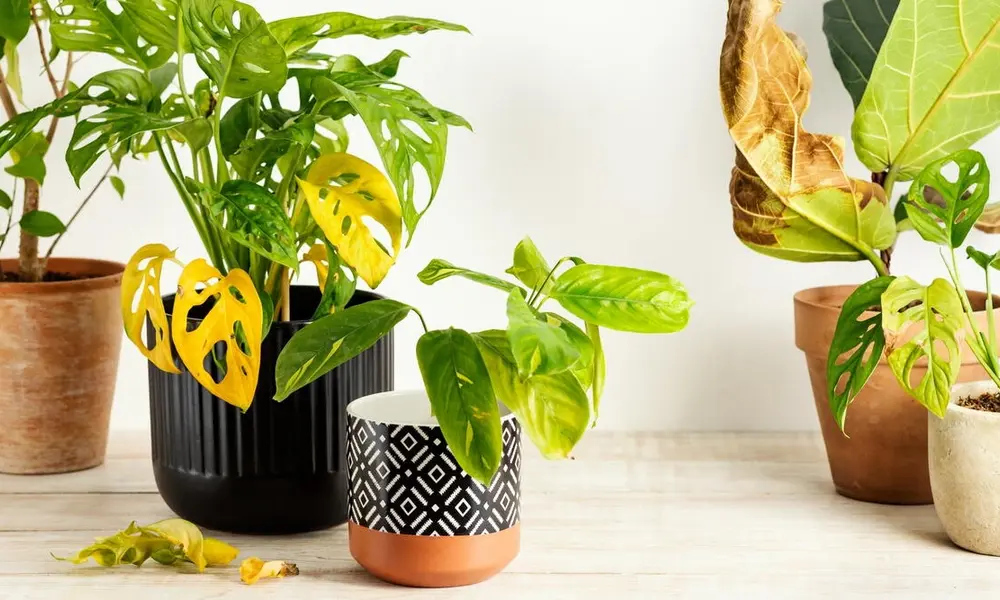
| Yellow leaves | Overwatering or poor drainage | Let soil dry out; check drainage holes |
| Brown crispy tips | Low humidity or fluoride in water | Increase humidity; use filtered water |
| Drooping leaves | Underwatering or root rot | Check soil — water if dry, repot if soggy |
| Leggy, stretched stems | Not enough light | Move closer to a light source |
| White powdery coating | Powdery mildew or mineral buildup | Improve airflow; wipe leaves; check soil |
| Tiny flies near soil | Fungus gnats (from overwatering) | Let soil dry out between waterings |
| Sticky residue on leaves | Scale insects or aphids | Wipe with neem oil solution |
Best Beginner-Friendly Plants (With Care Notes)
If you are a novice, go for low-maintenance species of plants. They are viewed as some of the hardiest, according to most commercials horticultural advice available:
Pothos (Epipremnum aureum): Very forgiving with light, watering and pretty much any level of humidity. Nearly indestructible.
Snake Plant (Sansevieria) Happy with neglect Water every 2–3 weeks. It can survive in low light and dry air.
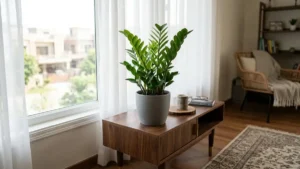
ZZ Plant (Zamioculcas zamiifolia) has rhizomes that store water. Almost impossible to kill from lack of water.
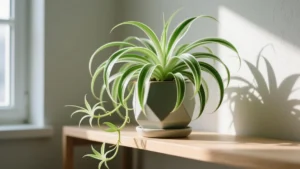
Spider Plant (Chlorophytum comosum) The Spider plant is fast-growing, air-purifying and forgiving on the watering schedule.
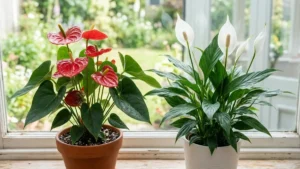
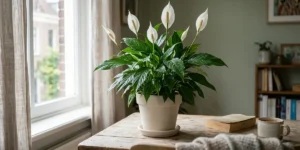
Peace Lily (Spathiphyllum) One of the rare flowering plants that do well in low light. Droops when thirsty — it is going to let you already know while it needswater.
Seasonal Adjustments: Your Houseplant Care Guide Changes Through the Year
Plants act differently in January than in July. Seasonal adjustment to your care routine is one of (but not the? that honor goes to) the most commonly overlooked plant care tips, even among seasoned growers.
Spring & Summer (Active Growth)
- Water more frequently
- Fertilize monthly
- Repot if needed
- Keep an eye out for pest explosions (it speeds them up in the heat)
Fall & Winter (Rest Period)
- Reduce watering frequency
- Stop or significantly reduce fertilizing
- As light diminishes, move plants nearer to windows
- Avoid cold drafts and heating vents
This is what makes the difference between a good and a great plant parent; it is called seasonal awareness.
Indoor Plant Care at a Glance: Quick Reference Table
| Care Element | Frequency | Key Tip |
| Watering | Varies by plant | Always check soil first |
| Fertilizing | Monthly (spring–summer) | Half-strength only |
| Repotting | Every 1–2 years | Go 1–2 inches larger |
| Dusting leaves | Monthly | Improves light absorption |
| Checking for pests | Weekly | Catch problems early |
| Rotating pot | Every 2–4 weeks | Ensures even light exposure |
Conclusion
The best houseplant care guide isn’t the most complicated one — it’s the one you actually follow consistently.
Light, water, soil, humidity, feeding, and repotting: these six pillars cover 95% of everything your plants will ever need. Master these basics and you’ll rarely lose a plant again.
Here’s the short version:
- Check soil before watering every single time
- Match your plant to its light requirements
- Feed during growing season, not year-round
- Repot when roots run out of space
- Adjust your routine with the seasons
Great indoor plant care doesn’t require a green thumb. It requires the right information — and a little attention.
For more detailed guides on individual plant species, soil mixes, pest control, and seasonal care calendars, visit PeaceLily your dedicated resource for practical, science-backed plant care.
Because every plant deserves to thrive, not just survive.
For more plant care tips, species-specific guides, and expert advice on building a healthy indoor garden, visit PeaceLily.
FAQs
Q1: What is the most important thing in a houseplant care guide?
A: The most important thing is water management. Over-watering kills more houseplants than anything else. Instead of following a fixed schedule, always check the soil moisture before watering.
Q2: How do I know if my indoor plant care routine is working?
A: Healthy plants have new growth, firmness in their leaves, and consistent color. When your plant has been growing new leaves consistently, or the existing ones are healthy-looking, you are doing well with your indoor plant maintenance.
Q3: What are the best plant care tips for beginners?
A:Begin with low-light, low-care plants (e.g. pothos, snake plant, ZZ plant), do the finger test before watering, position plants close to natural light, and fertilise only in growing season. Straightforward habits that stick outwin complex rituals every time.
Q4: How often should I fertilize my houseplants?
A: Monthly in spring and summer, watered with a balanced liquid fertilizer at half the recommended strength. During fall and winter growth naturally slows, so most plants need no feeding during this time.
Q5: Why are the tips of my plant’s leaves turning brown?
A: The most frequent causes of brown tips are insufficient humidity, fluoride or salt buildup in the soil, and inconsistent watering. Do try to increase humidity in and around the plant, flush out the soil sometimes with clean water and do not over fertilize.