Key Takeaways
- Liquid fertilizer for plants provides a convenient way to supply plant nutrients.
- Always check whether the product is concentrated or ready to use.
- Follow the fertilizer label for the correct dilution.
- There is no universal liquid fertilizer water ratio.
- Never assume that a stronger solution will produce faster growth.
- Feed plants according to their species, growth stage, and growing conditions.
- Container plants can develop salt buildup from repeated fertilizer use.
- Good drainage is essential.
- Stop feeding if you suspect over-fertilization.
- Healthy light, watering, soil, and roots are just as important as fertilizer.
Quick Answer
To use liquid fertilizer for plants, first check whether the product is a concentrate or ready-to-use formula. If it is a concentrate, measure the recommended amount and dilute it in the stated amount of water.
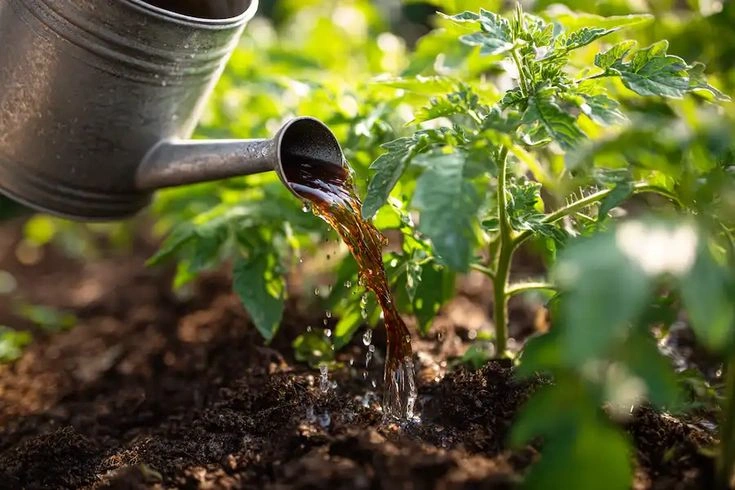
Next, apply the diluted fertilizer to the soil around the plant’s root zone rather than pouring concentrated fertilizer directly onto the roots. For container plants, allow excess water to drain freely.
Most importantly, never guess the fertilizer water ratio when the product label provides specific instructions. Different liquid fertilizers have different nutrient concentrations, so the same amount of fertilizer can have very different strengths.
What Is Liquid Fertilizer?
Liquid fertilizer is a plant nutrient product that is either ready to use or designed to be mixed with water before application. It can contain major nutrients such as nitrogen, phosphorus, and potassium, along with secondary or micronutrients depending on the formula.
The three numbers shown on many fertilizer labels represent the N-P-K analysis. For example, a 10-10-10 fertilizer contains 10% nitrogen, 10% phosphate equivalent, and 10% potash equivalent by weight.
Liquid formulas are particularly convenient for container plants because they can be measured and applied through normal watering. Moreover, nutrients in soluble fertilizers are generally available quickly compared with slow-release products.
Why Use Liquid Plant Food?
Plants need nutrients for healthy roots, leaves, stems, flowers, and overall development. Although potting soil may contain nutrients initially, repeated watering and plant growth can gradually reduce available nutrients.
Therefore, liquid plant food can be useful when a plant needs supplemental nutrition during active growth.
Main Benefits
| Benefit | Why It Helps |
|---|---|
| Easy to measure | You can control the amount applied |
| Fast nutrient availability | Soluble nutrients can become available quickly |
| Good for containers | Useful where nutrients may be limited |
| Easy application | Can usually be mixed with normal watering |
| Flexible feeding | Strength and frequency can be adjusted according to the product and plant |
However, fertilizer is not a replacement for proper light, watering, drainage, or suitable soil. A plant struggling because of poor light or root problems may not improve simply because more fertilizer is added.
How to Use Liquid Fertilizer for Plants
Using liquid fertilizer correctly is fairly simple. Nevertheless, the small details matter because concentrated products can damage plants when they are mixed too strongly.
1. Identify the Fertilizer Type
First, check the bottle or package.
Some products are concentrates that must be diluted, while others are already prepared for direct application. Never assume that every liquid fertilizer should be diluted in the same way.
2. Read the Label
The fertilizer label should tell you how much product to mix with water and how frequently to apply it.
For example, a product might instruct you to use a particular number of milliliters per liter of water. Another product may give measurements per gallon.
Follow the specific instructions for your product because fertilizer concentrations vary.
3. Measure the Fertilizer
Use a measuring spoon, measuring cup, syringe, or other suitable measuring tool.
Do not pour fertilizer directly from the bottle into a watering can unless the product specifically allows it. Accurate measurement makes the final fertilizer solution more predictable.
4. Mix With Water
Add the measured fertilizer to the required amount of water and mix thoroughly.
If you want a weaker solution, do not randomly change the fertilizer type or combine products. Instead, use less concentrate with a larger amount of water, provided the product directions allow a weaker application.
5. Apply Around the Root Zone
Apply the diluted solution to the soil around the plant.
Avoid deliberately soaking leaves or stems unless the fertilizer is specifically designed and labeled for foliar application. For ordinary liquid plant food, soil application is the straightforward choice.
6. Let Excess Water Drain
For potted plants, good drainage is important.
After watering with diluted fertilizer, allow excess solution to leave through the drainage holes. Do not allow the pot to sit permanently in fertilizer-filled water.
Liquid Fertilizer Dilution: What Is the Right Ratio?
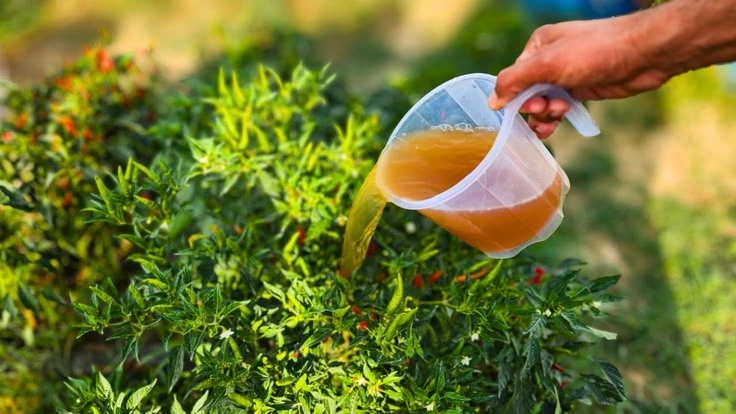
There is no single liquid fertilizer dilution ratio that works for every product.
This is one of the most important points for beginners. A concentrated 10-10-10 product and another liquid fertilizer with a different nutrient concentration cannot automatically use the same fertilizer water ratio.
For that reason, the product label should always be your first reference. Extension guidance also recommends following the stated dilution rather than using a stronger mixture.
Simple Dilution Example
Suppose a fertilizer label says:
5 mL fertilizer per 1 liter of water
For 2 liters of water:
5 mL × 2 = 10 mL fertilizer
For 500 mL of water:
5 mL ÷ 2 = 2.5 mL fertilizer
The important part is keeping the same proportion.
Should You Use Half-Strength Fertilizer?
Sometimes gardeners use a weaker solution for sensitive plants or indoor container plants. However, there is no universal rule that every plant should receive half-strength fertilizer.
A weaker solution can reduce the risk of excessive nutrient salts, but the correct approach depends on the fertilizer, plant species, growing conditions, and label instructions.
When uncertain, avoid making the solution stronger than recommended.
When to Apply Liquid Fertilizer
Timing matters almost as much as dilution.
For many houseplants, feeding makes the most sense during active growth. In contrast, plants growing slowly because of cool temperatures, low light, or seasonal dormancy generally need less supplemental fertilizer.
For indoor plants, growth can vary throughout the year depending on temperature and light. Therefore, watch the plant rather than following a rigid calendar.
Before Fertilizing
Check three things:
- Is the plant actively growing?
- Is the soil and root system healthy?
- Does the plant actually need supplemental nutrients?
If the plant is severely stressed, recently transplanted, diseased, or suffering from root rot, fertilizer may not solve the underlying problem.
How Often Should You Use Liquid Fertilizer?
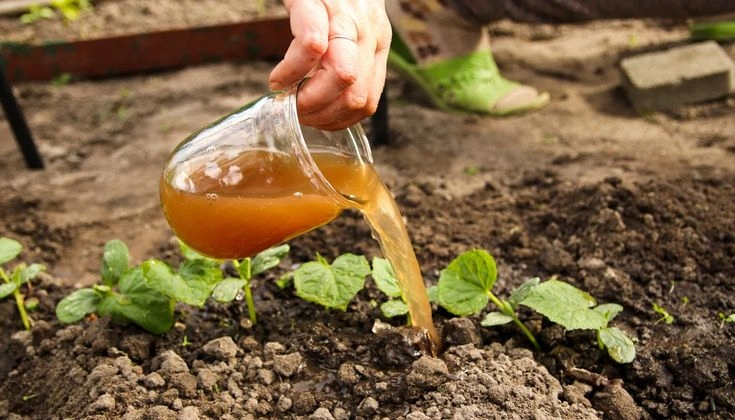
Frequency depends on the fertilizer formulation and plant.
Some products are designed for frequent diluted feeding, while others are intended for occasional applications. Therefore, always start with the manufacturer’s recommended schedule.
For example, Peeacelily’s existing plant-care guidance commonly recommends diluted feeding for particular plants rather than applying concentrated fertilizer. Its ficus guide, for instance, discusses diluted liquid feeding during active growth.
Succulents and other plants with naturally low nutrient demands generally need less feeding than fast-growing foliage plants.
Consequently, the best fertilizer schedule is not simply “more often.” It is the schedule that matches the plant and product.
Liquid Fertilizer for Indoor Plants vs. Outdoor Plants
Liquid fertilizer can work for both indoor and outdoor plants. However, their growing conditions are different.
| Factor | Indoor Plants | Outdoor Plants |
| Soil volume | Usually limited | Often larger |
| Nutrient loss | Can occur through watering | Rain and irrigation can leach nutrients |
| Feeding needs | Often modest | Can be higher for active garden growth |
| Main concern | Salt buildup in containers | Correct nutrient and soil management |
| Application | Usually around root zone | Root-zone application or product-specific methods |
Container plants deserve particular attention because repeated watering can move soluble nutrients through the pot.
Liquid vs. Granular Fertilizer
Both types can be useful. The better choice depends on how you want to feed the plant.
| Feature | Liquid Fertilizer | Granular Fertilizer |
| Speed | Generally quick availability | Can be slower depending on product |
| Application | Mixed with water | Applied to soil |
| Control | Easy to adjust solution | Measured by amount applied |
| Best for | Containers and flexible feeding | Garden beds and longer-term feeding |
| Risk | Over-concentration if mixed incorrectly | Over-application if measured poorly |
Liquid fertilizers are convenient when you want more control over individual feeding sessions. Meanwhile, controlled-release granular fertilizers can reduce how frequently you need to apply nutrients.
Neither option is automatically better for every plant.
Signs You May Be Over-Fertilizing
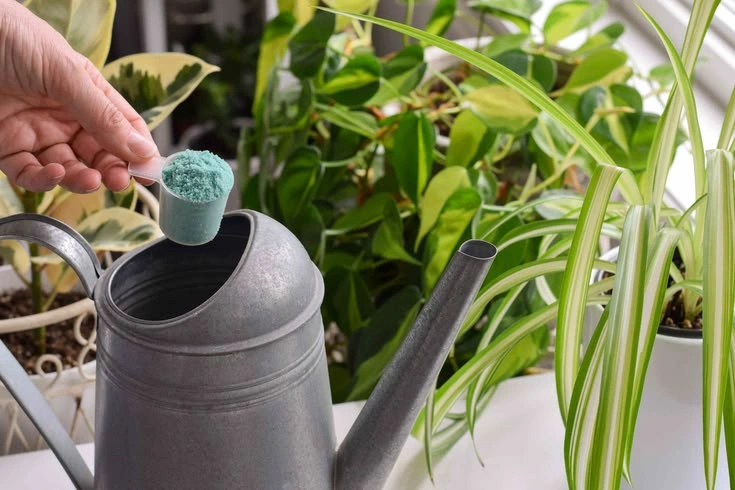
One of the biggest fertilizer mistakes is assuming that yellow or weak leaves always mean the plant needs more food.
In reality, excessive fertilizer can cause problems too.
Possible signs include:
- Brown or scorched leaf edges
- Yellowing or damaged leaves
- Weak or stunted growth
- White crust or salt deposits on soil
- Root damage
- Wilting despite adequate moisture
Excess soluble salts can make it harder for roots to take up water and can damage sensitive root tissues.
What to Do After Over-Fertilizing
If you suspect excessive fertilizer in a container, stop feeding temporarily.
Then, if the plant and potting mix are suitable for it, flush the soil thoroughly with clean water and allow the container to drain completely. Extension guidance describes leaching as a way to reduce accumulated soluble salts in container soil.
Severe damage may not disappear immediately, so give the plant time to produce healthy new growth.
Common Liquid Fertilizer Mistakes
Using More Than the Label Says
More nutrients do not automatically create more growth.
In fact, an overly concentrated fertilizer solution can harm roots and leaves.
Fertilizing Every Time You Water
This is not automatically appropriate.
Some products are designed for frequent weak feeding, while others are intended for less frequent applications. Always check the specific formula.
Fertilizing a Stressed Plant
If the real problem is root rot, poor drainage, inadequate light, pests, or watering stress, fertilizer may make the situation worse.
First identify the cause.
Ignoring Drainage
A container without adequate drainage can hold excess water around the roots.
Therefore, make sure your pot and growing medium allow excess water to escape.
Guessing the Fertilizer Ratio
A ratio that works for one bottle may be completely wrong for another.
Always use the manufacturer’s instructions as your starting point.
Liquid Fertilizer Tips for Different Plants
Foliage Plants
Plants grown mainly for their leaves often benefit from a fertilizer that provides adequate nitrogen, but the complete nutrient profile still matters.
Pothos, ficus, and many tropical foliage plants can respond well to appropriate feeding during active growth.
Flowering Plants
Flowering plants need balanced nutrition, but fertilizer alone does not guarantee flowers.
Light, temperature, watering, plant maturity, and pruning can also affect flowering.
Succulents and Cacti
Succulents generally grow more slowly and often need less fertilizer than fast-growing tropical plants.
Use a fertilizer appropriate for succulents and follow its dilution directions carefully.
Peace Lilies
Peace lilies do not require heavy feeding. Peeacelily’s own care guidance recommends balanced, diluted feeding and warns against excessive fertilization.
A Simple Liquid Fertilizer Checklist
Before applying liquid plant food, ask:
- Is this fertilizer concentrated or ready to use?
- Did I read the label?
- Did I measure the correct amount?
- Is the plant actively growing?
- Is the soil and root system healthy?
- Does the pot have drainage holes?
- Am I applying the solution to the appropriate area?
- Am I following the recommended feeding frequency?
If the answer to all of these is yes, you are much less likely to make the common mistakes associated with liquid fertilizer.
Frequently Asked Questions
Can I use liquid fertilizer every time I water?
Only if the fertilizer label specifically recommends that type of feeding schedule. Otherwise, frequent applications can lead to excessive nutrient salts.
Should I water plants before liquid fertilizer?
The best approach depends on the product and plant. Avoid applying concentrated fertilizer to dry, stressed roots. If your product instructions do not specify otherwise, using the fertilizer solution as part of normal watering can be appropriate.
Can liquid fertilizer burn plants?
Yes. An overly concentrated fertilizer solution can damage roots and contribute to leaf burn. Following the correct dilution is therefore essential.
Is liquid fertilizer better than granular fertilizer?
Not necessarily. Liquid fertilizer offers quick, flexible feeding, while granular and controlled-release products can provide nutrients over a longer period.
How much liquid fertilizer should I add to water?
Use the amount stated on your fertilizer label. There is no universal fertilizer water ratio because products have different concentrations.
Can I use liquid fertilizer on seedlings?
Some fertilizers can be used on young plants, but seedlings are sensitive. Use only a product that is suitable for them and follow its specific directions.
Can liquid fertilizer expire?
Fertilizer products can change over time, especially if stored incorrectly. Keep the product sealed and stored according to the manufacturer’s instructions.
Conclusion
Liquid fertilizer can make plant feeding simple, but the goal is not to give plants as much fertilizer as possible. Instead, successful feeding comes from using the right product, measuring it accurately, and applying it at the right time.
Most importantly, follow the fertilizer label because formulations vary. A balanced routine combined with proper light, watering, drainage, and healthy soil will usually do more for a plant than heavy feeding.
When you treat fertilizer as a supplement rather than a quick fix, it becomes a useful part of everyday plant care. With the right dilution and a little observation, beginners and experienced gardeners alike can feed their plants more safely and confidently.