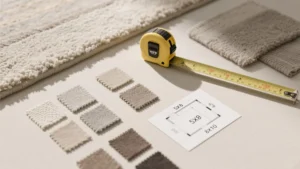
Ordering custom curtains online can feel straightforward until you reach the measurement form. You have a window, a curtain pole, and a fabric you like, but the website asks for width, drop, fullness, heading, and lining. Custom curtains online are made to the measurements and options you submit, so choosing the right heading and measuring the pole or track correctly are essential before you order.
The benefit is a better fit for unusual windows, specific lengths, and spaces where ready-made sizes do not work. The risk is that nobody visits your home to check the measurements. If you enter the wrong number, the finished curtains may not fit, and a made-to-measure order may not qualify for a change-of-mind return.
This guide explains the process step by step, including how to measure, choose a heading, compare linings, check lead times, and reduce the risk of an expensive ordering mistake.
How Custom Curtains Online Actually Work

Made-to-measure curtains are sewn to the dimensions and specifications you provide. Instead of choosing a standard panel size, you configure the order around your window and preferred finish.
Most online custom-curtain orders follow five main steps:
- Measure the window system. Record the width of your fitted pole or track and the required curtain drop.
- Choose the heading. Select how the curtain will attach to the pole or track, such as eyelet, pencil pleat, pinch pleat, or tab top.
- Select the lining and finish. Decide whether you need standard, thermal, or blackout lining, along with any available finishing options.
- Review the order details. Check the measurements, heading, lining, fabric, and delivery estimate before approving production.
- Receive and hang the curtains. Once the workroom finishes the panels, follow the supplier’s hanging and care instructions.
The most important difference between ready-made and made-to-measure curtains is responsibility for the fit. Ready-made panels come in set dimensions. With custom curtains, the workroom follows the measurements you submit.
Before ordering, check whether the workroom provides a measurement confirmation, clear instructions for each heading, fabric samples, and a written returns policy. Look for a physical business address, reachable customer support, realistic production estimates, and clear information about how measurement errors are handled.
You are paying for a made-to-order service, not simply selecting a product from a standard size list.
Measure Twice: Width and Drop for Custom Curtains
Accurate measurements are the foundation of a successful custom order. A small mistake can affect how the curtains close, how much fabric gathers, and where the panels finish.
Use a steel tape measure, a pencil, and a written measurement sheet. Keep all measurements in one unit, such as inches or centimetres, and follow the supplier’s measuring instructions if they differ from general guidance.
1. Measure the pole or track width
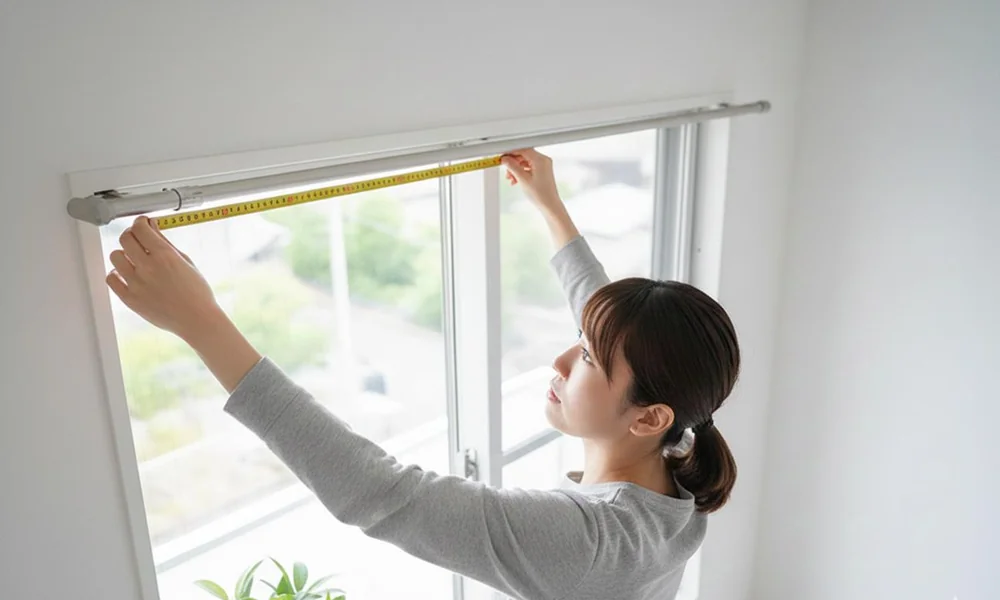
If your curtain pole or track is already installed, measure its usable width rather than measuring only the window glass.
For a pole, measure between the decorative finials. For a track, follow the supplier’s instructions about whether to include returns or overlapping sections.
If you have not installed the pole or track yet, decide where it will sit first. As a general planning guide, allow extra width beyond both sides of the window so the open curtains can stack without covering too much glass. Around six inches on each side is a commonly used starting point, but the required extension depends on the window, brackets, and available wall space.
2. Calculate the curtain fullness
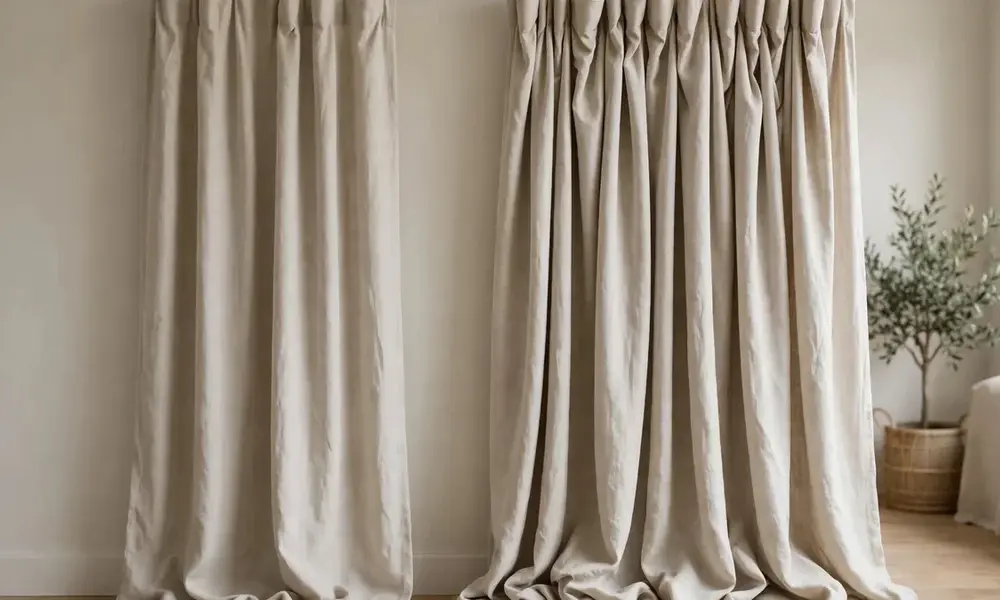
Fullness describes how much fabric is used compared with the pole or track width. It creates the folds and gathered appearance when the curtains are closed.
A common starting range is two to three times the pole or track width, depending on the fabric and heading. However, some workrooms set fullness according to the heading type, so always check whether the website asks for the finished curtain width or the total flat fabric width.
For example, if your pole measures 100 inches and the selected design uses a fullness factor of two, the total flat fabric width would be approximately 200 inches across both panels.
Do not assume every supplier uses the same calculation. Some calculate fullness automatically after you enter the pole width.
3. Measure the drop
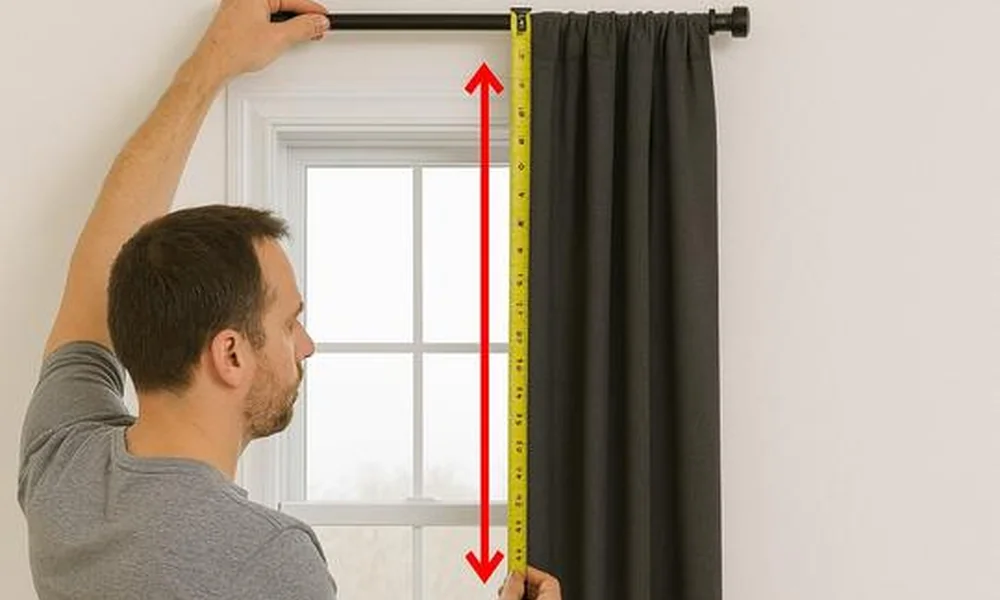
The drop is the vertical measurement from the correct starting point to where you want the curtain to finish.
Choose the finishing point before measuring:
- Sill length: The curtain finishes just above the windowsill.
- Below-sill length: The curtain extends below the sill.
- Floor length: The curtain finishes just above the floor.
- Pooled finish: The fabric extends onto the floor for a softer, more relaxed appearance, if the workroom offers this option.
The starting point changes with the heading. Eyelet curtains are generally measured from the top of the pole. Pencil pleat curtains may be measured from the eye of the ring or the top of the track, depending on the fitting.
Custom Curtain Measuring Cheat Sheet
| Measurement | How to take it | Common mistake |
|---|---|---|
| Pole width | Measure the pole between the finials | Measuring only the window glass |
| Track width | Measure the usable track according to the supplier’s instructions | Forgetting returns or overlapping sections |
| Total fabric width | Apply the workroom’s fullness calculation | Ordering fabric equal to the window width |
| Eyelet drop | Usually measure from the top of the pole | Measuring from the bottom of the eyelet |
| Pleated heading drop | Follow the supplier’s ring or track starting point | Assuming every heading uses the same starting point |
| Finish point | Decide whether the curtain will end at the sill, below it, or near the floor | Changing the required length after production |
A practical measuring example
Imagine your curtain pole measures 100 inches and you want two panels with a fullness factor of two.
- Pole width: 100 inches
- Fullness factor: 2
- Approximate total flat fabric width: 200 inches
- Number of panels: 2
- Approximate fabric width per panel: 100 inches
This example explains the basic calculation. It is not a universal ordering formula: some workrooms adjust fabric quantities for heading construction, seams, pattern matching, and standard fabric widths.
Write down your measurements, take them again, and compare the results. If the numbers do not match, measure a third time before submitting the order.
Heading Types for Custom Curtains and Why They Change the Drop
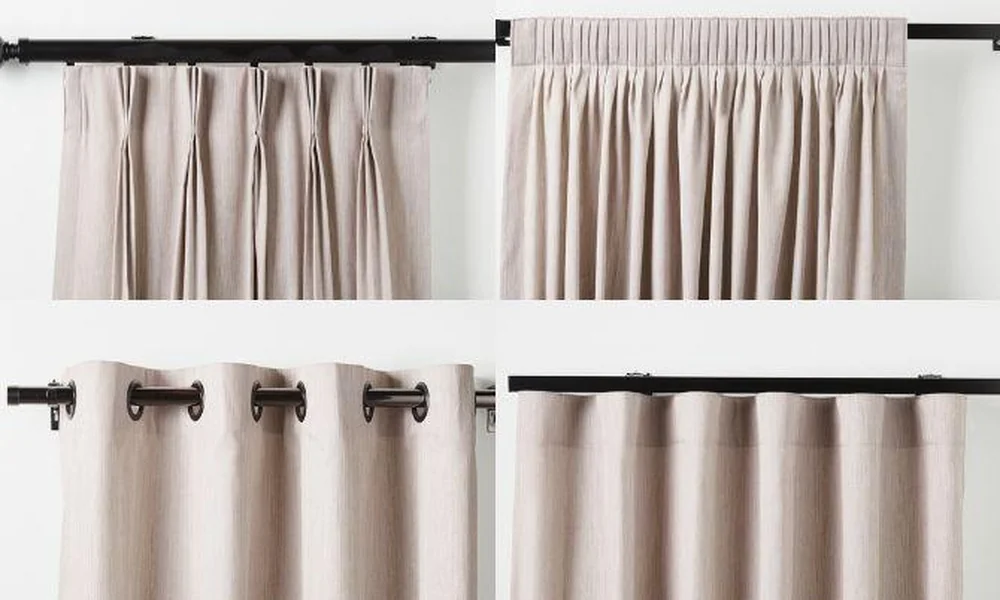
A curtain heading is the top section that attaches the panel to a pole or track. It affects how the curtain hangs, how its folds look, and where the fabric begins. Choose the heading before taking your final drop measurement. Changing it after the fabric has been cut can leave the curtains too short or too long.
Eyelet headings
Eyelet curtains have metal rings set into the top of the fabric. The rings slide directly over a curtain pole, creating broad, regular folds. They are relatively simple to hang, but they require a compatible pole. For measuring, the starting point is generally the top of the pole.
Pencil pleat headings
Pencil pleat curtains use gathered heading tape to create narrow, closely spaced folds. Hooks can be adjusted along the tape, depending on the design and fitting. They can work with suitable poles or tracks. Check the workroom’s instructions to confirm whether the drop starts at the track or the eye of the curtain ring.
Pinch pleat headings
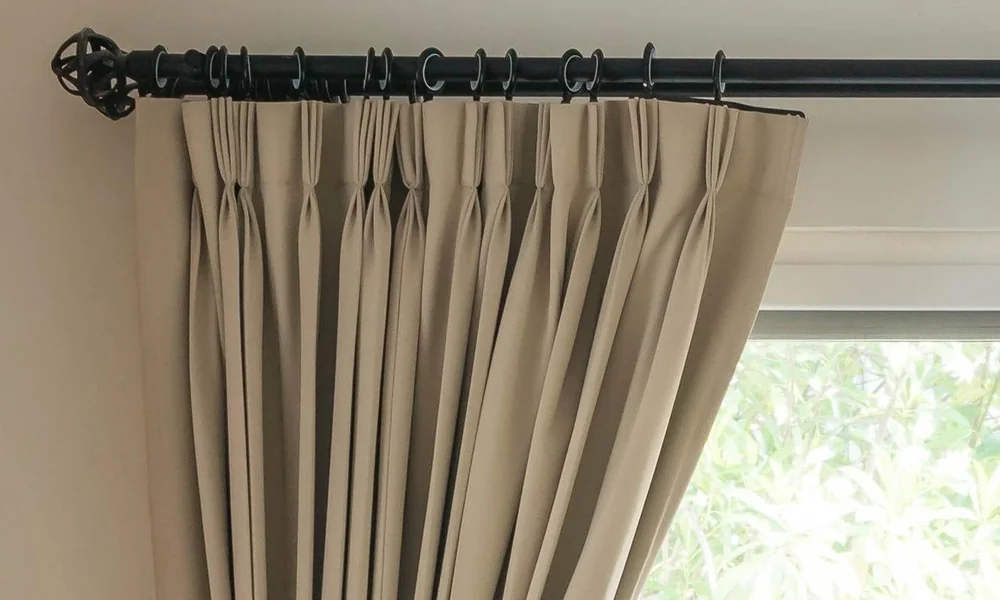
Pinch pleat curtains have sewn-in folds that create a more structured appearance. The pleats are formed into the fabric rather than created only by gathering tape. Because the heading has a built-in shape, the supplier may calculate the fabric quantity differently from a standard gathered heading. Confirm the required fullness before ordering.
Tab top headings
Tab top curtains have fabric loops attached along the top edge. The loops fit over a curtain pole and create a relaxed appearance. The tabs affect the finished hanging height, so do not assume the drop measurement works in the same way as an eyelet or pleated heading. Use the workroom’s diagram or measuring instructions.
The rule is simple: select the heading first, then measure the drop using the exact starting point specified by the supplier.
Linings for Custom Curtains: Thermal, Blackout, and When to Pay
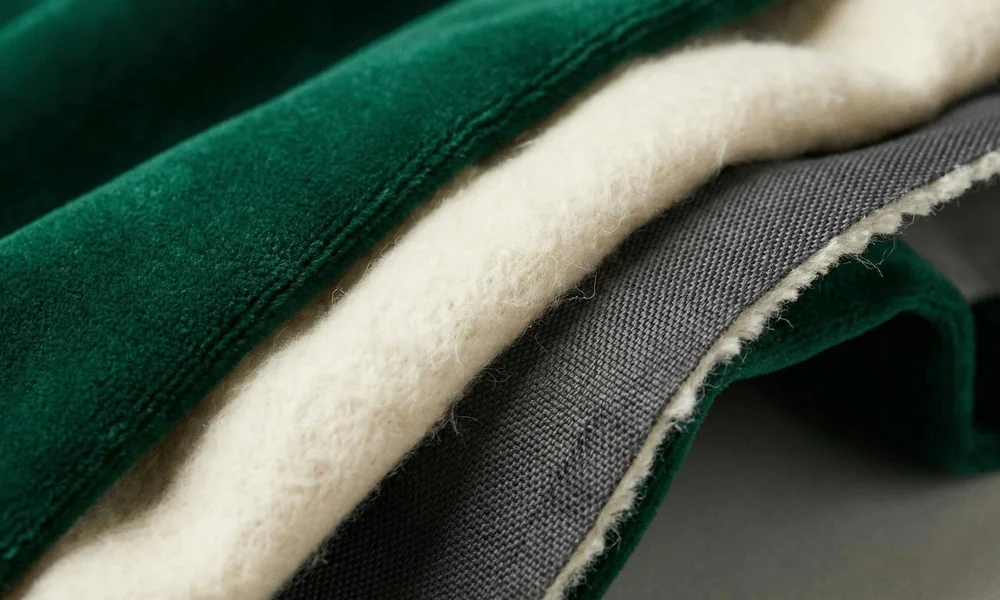
Lining is another decision to make before production. It can affect how curtains hang, how much light enters the room, and how the panels perform near windows.
The right option depends on the room’s purpose and the problem you want to solve.
| Lining type | Main purpose | Consider it when |
|---|---|---|
| Standard lining | Protects the face fabric and can improve the curtain’s drape | You mainly want a finished decorative panel |
| Thermal lining | Adds a layer intended to reduce heat transfer | The room feels affected by cold windows or unwanted heat |
| Blackout lining | Blocks most incoming light when fitted and covered properly | You need stronger light control in a bedroom or media room |
Thermal and blackout linings are not interchangeable. Thermal lining is intended to help with temperature control, while blackout lining focuses on reducing incoming light. Some curtains combine both features, but you should check each specification separately.
For a closer comparison, read our guide to blackout curtains vs thermal curtains.
Also consider the weight of the finished curtain. A heavier lining can change how the fabric falls and may require suitable poles, tracks, brackets, and fixings. Ask the workroom whether your selected heading and hardware can support the finished panels.
If you are choosing curtains for a living room, consider how the fabric and lining will work with the room’s natural light and furniture. Our guide to living room plant ideas can also help when planning a window area that includes indoor greenery.
Lead Times, Swatches, and Returns for Custom Curtains Online
A successful order is not only about measurements. You also need to understand how long production may take, how fabric samples work, and what happens if the finished curtains are not right.
Check the production lead time
Made-to-measure curtains take longer than ready-made panels because the workroom has to prepare and sew them to your specifications.
A two-to-six-week estimate is sometimes used as a general planning range, but it is not a guaranteed industry standard. Production time depends on the workroom, fabric availability, order volume, and season. Some specialist services quote longer periods.
For example, Tinsmiths’ made-to-measure FAQs describe a six-to-eight-week lead time for its hand-sewn orders. This illustrates why you should check the current estimate from the specific workroom rather than relying on a general timeframe.
If the curtains are needed for a move, renovation, or planned room update, order early and allow extra time for samples and measurement confirmation.
Order fabric swatches first
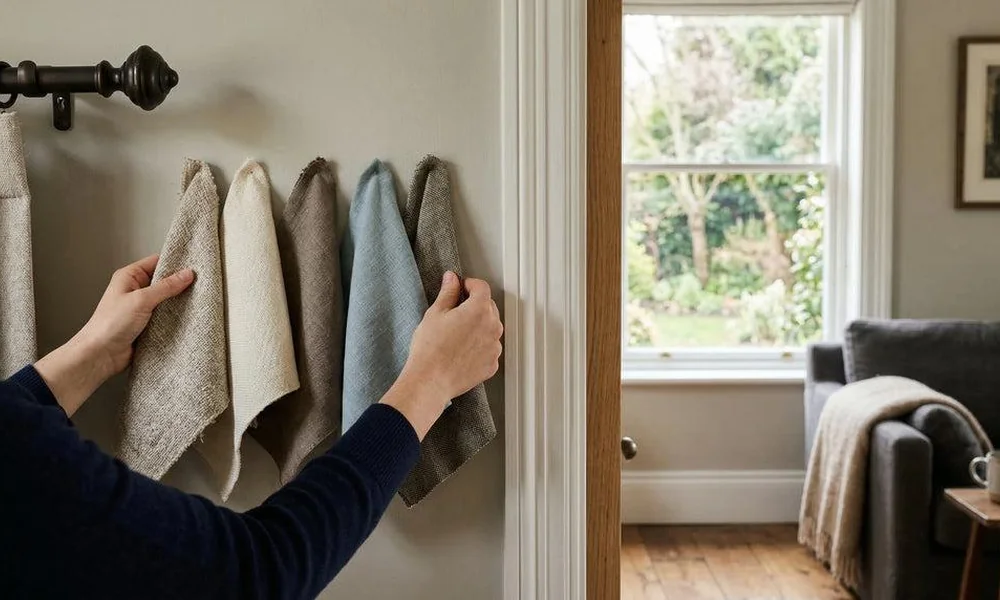
A product photograph cannot always show the exact color, texture, weight, or finish of a fabric. Screen settings and room lighting can also affect how a color appears.
If samples are available, order them before committing to the full curtain order.
Check each swatch:
- In daylight and under your room’s evening lighting.
- Against the wall color, flooring, and nearby furniture.
- Beside any existing upholstery or soft furnishings.
- At the window, where natural light may change its appearance.
A sample also helps you judge whether the fabric feels light, heavy, textured, or smooth enough for the finish you want.
Read the returns policy before paying

Do not assume custom curtains can be returned simply because you change your mind. Made-to-measure products are produced to individual specifications, so many sellers restrict change-of-mind returns.
However, the exact policy depends on the seller and the applicable consumer rules. Read the terms before ordering and check how the seller handles faulty items, incorrect specifications, damaged deliveries, and workroom measurement errors.
For an example of a seller’s made-to-measure terms, see Dunelm’s terms and conditions. Its policy explains why customers should check measurements and order details carefully before production.
Before confirming payment, make sure you understand:
- Whether made-to-measure orders are eligible for cancellation.
- Whether returns are accepted for changes of preference.
- What happens if the seller makes a manufacturing error.
- Whether the supplier accepts responsibility for incorrect measurements.
- How long you have to report damage or faults.
Keep your order confirmation, measurement summary, sample details, and written communication. These records can help if a problem occurs.
How to Check an Online Curtain Workroom Before Ordering

A professional-looking website does not automatically mean the workroom is reliable. Before placing a custom order, check the service details rather than relying only on product photographs or promotional claims.
Use this checklist:
- Look for clear measuring instructions. The supplier should explain how to measure for each heading and fitting type.
- Check the measurement confirmation process. Find out whether you receive a summary before the fabric is cut.
- Review available samples. A swatch service helps you assess the actual material before paying for the finished panels.
- Confirm production and delivery estimates. Check whether the quoted time starts after payment, sample approval, or measurement confirmation.
- Read the returns and remake policy. Understand who is responsible if the supplied measurements or finished product are incorrect.
- Check customer support. You should be able to contact the workroom with questions about unusual windows, headings, linings, or fitting requirements.
If a window has a bay, sloping ceiling, unusual track, or difficult access, ask the workroom for guidance before submitting measurements. A standard measuring formula may not cover every window shape.
FAQ: Custom Curtains Online
How do I measure for custom curtains?
Measure the fitted pole or track rather than only the window. Then calculate the required fabric width using the workroom’s fullness instructions and measure the drop from the correct starting point for your chosen heading. Use a steel tape, record the numbers, and check them twice before ordering.
How much wider than the window should custom curtains be?
The curtain pole or track width is usually the more useful measurement once it is installed. Total fabric width commonly starts around two times the pole width, although the required fullness varies by heading and fabric. Check the supplier’s calculation method before entering the order.
What does made-to-measure curtains mean?
Made-to-measure curtains are panels produced to the dimensions and specifications you provide. You choose the heading, lining, and available finishes, and the workroom makes the curtains for your window instead of supplying a standard ready-made size.
How long do custom curtains take to make?
Production time varies by workroom, fabric, and season. Some services quote a few weeks, while specialist hand-sewn orders may take longer. Ask for the current estimate before paying and allow additional time for fabric samples, measurement checks, and delivery.
Can you return custom curtains?
A made-to-measure order may be excluded from change-of-mind returns because it has been produced to your specifications. However, policies differ, and faulty or incorrectly supplied products may be treated differently. Read the seller’s terms and applicable consumer protections before placing your order.
Are custom curtains worth it compared with ready-made curtains?
They can be worthwhile when your window has unusual dimensions, you need a specific drop, or standard curtain sizes do not provide the fit you want. Ready-made curtains are usually simpler for standard windows when price and speed matter more than a precise custom fit.
What is the biggest mistake when ordering custom curtains online?
Measuring the window instead of the fitted pole or track is a common mistake. Other problems include using the wrong drop starting point, choosing the heading after measuring, and misunderstanding the supplier’s fullness calculation. Confirm all measurements before the workroom starts production.
Final Thoughts About Custom Curtains Online
Custom curtains online make it easier to get panels suited to your window, preferred length, heading, and lining. But the quality of the result depends on the information you provide before production begins.
Measure the pole or track carefully, calculate fullness using the supplier’s method, and choose the heading before recording the drop. Order swatches when possible, confirm the production timeline, and read the returns policy before paying.
A few careful checks at the beginning can prevent an expensive fitting problem later.