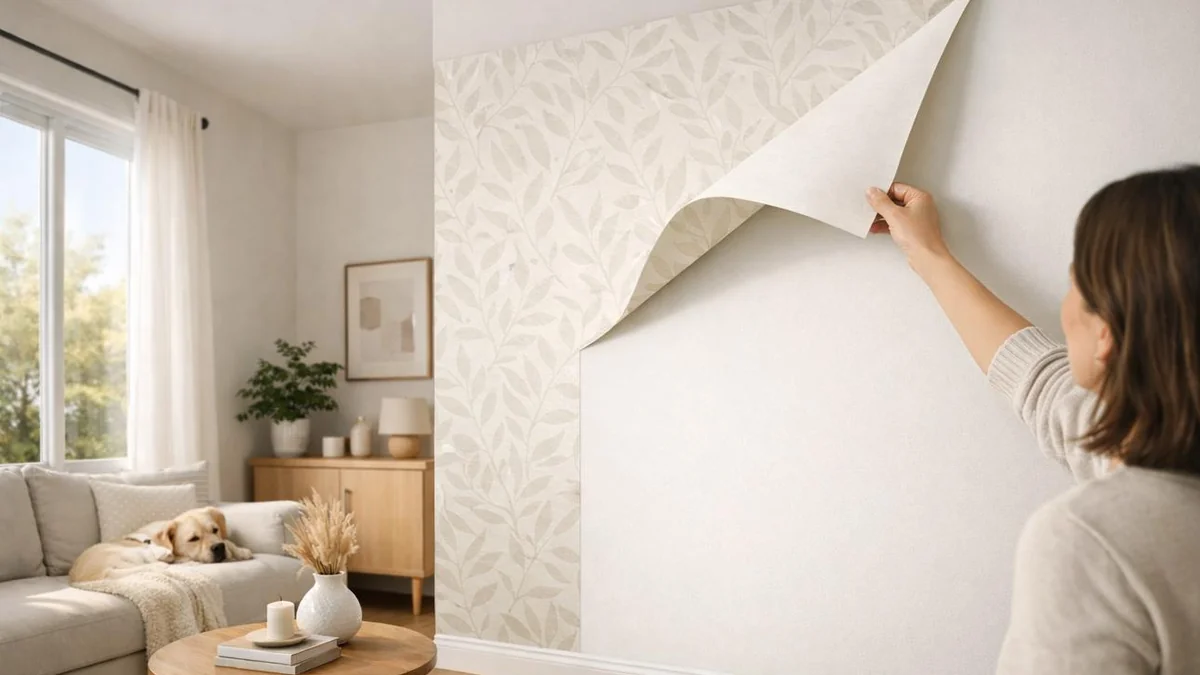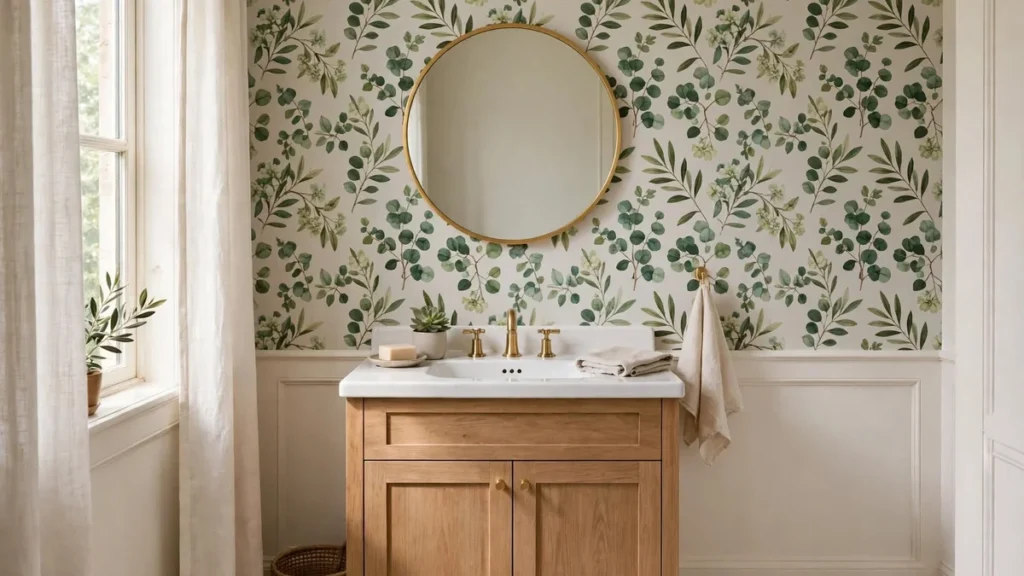
The best wallpaper for bathrooms is moisture-resistant vinyl or washable non-woven wallpaper, installed away from direct splashes in a room with effective ventilation. Powder rooms offer the safest conditions, while full bathrooms need more careful material and placement choices. For shower walls and other areas exposed to constant water, choose tile or waterproof panels instead.
Imagine choosing a beautiful wallpaper pattern for your bathroom, only to notice the edges lifting a few months later. The room looks stylish, but steam gathers after every shower, the mirror stays foggy, and the wallpaper begins to separate near the seams. The problem may not be the design or even the wallpaper quality. It may be that the material was installed in the wrong part of the bathroom.
Bathroom wallpaper can work well when you match the material to the room’s moisture level. The key is understanding the difference between washable, moisture-resistant, and waterproof finishes—and knowing where wallpaper is suitable.
Key Takeaways
- Vinyl wallpaper is generally the most practical choice for bathroom walls away from direct water.
- Washable non-woven wallpaper can work in powder rooms and well-ventilated full bathrooms.
- Powder rooms are usually the easiest spaces to decorate with wallpaper because they have no shower.
- Wallpaper should stay outside direct splash zones around showers, tubs, and taps.
- Good ventilation helps reduce moisture around wallpaper seams and edges.
- Moisture-resistant wallpaper is not waterproof and cannot replace tile or waterproof wall panels.
What Makes Wallpaper Safe for Bathrooms?
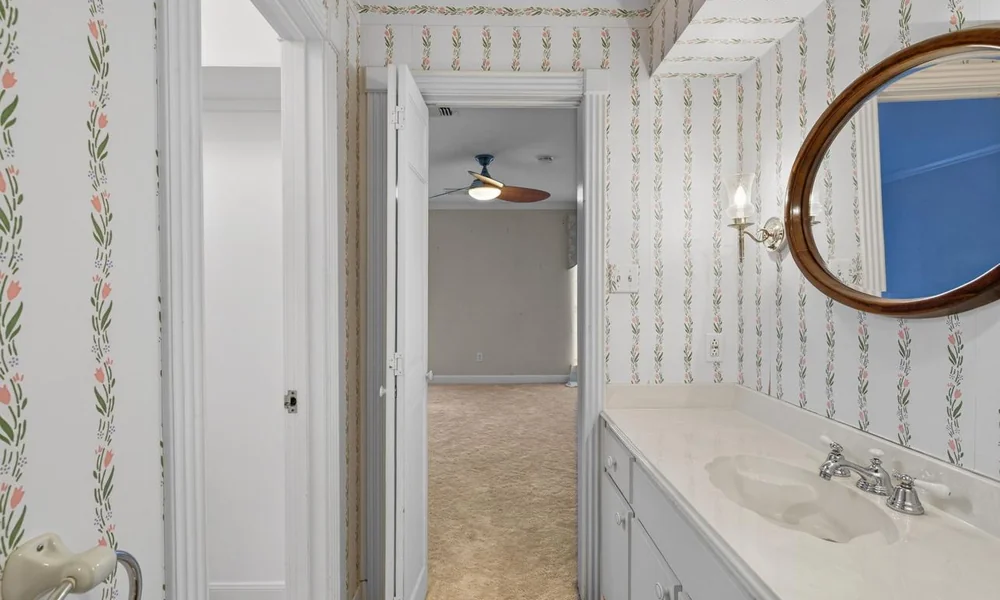
Three factors determine whether wallpaper can handle bathroom conditions: the material, its location, and the room’s ventilation.
1. The wallpaper material
Bathroom wallpaper should have a washable or moisture-resistant surface. Vinyl and selected non-woven wallpapers are commonly marketed for these conditions. Their suitability still depends on the manufacturer’s instructions and the room where you plan to install them.
2. The bathroom zone
Not every bathroom wall receives the same amount of moisture. A wall beside a toilet may experience occasional humidity, while the wall inside a shower receives direct water regularly. These are very different environments.
Wallpaper can be suitable for walls exposed to humid air, provided the room is ventilated. It is not a suitable finish for surfaces that receive constant direct splashes.
3. Ventilation and airflow
Even moisture-resistant wallpaper can struggle in a bathroom that stays damp for long periods. Steam can settle around seams, corners, and edges. A working exhaust fan helps remove humid air and gives the room a chance to dry after bathing.
A useful starting point is the bathroom wallpaper guide from Canvas and Ivy, which discusses wallpaper suitability in different bathroom conditions.
The important point is that wallpaper, placement, and ventilation work together. Choosing a moisture-resistant material does not make every bathroom wall safe for installation.
Bathroom Wallpaper Material Classes That Handle Humidity
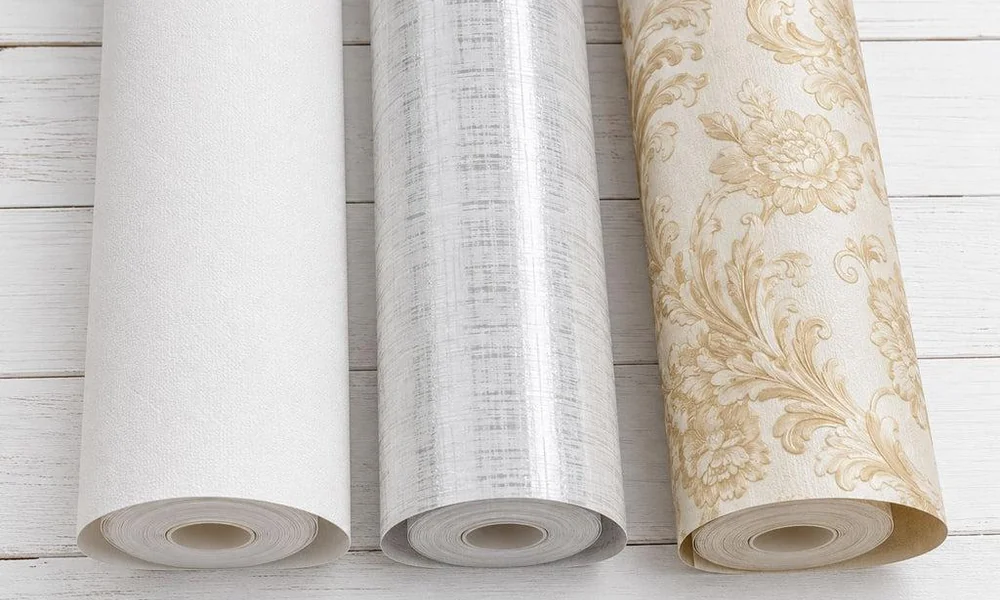
Different wallpaper materials respond to moisture in different ways. Before choosing a pattern, understand what each type offers.
| Wallpaper material | How it handles humidity | Bathroom suitability |
|---|---|---|
| Vinyl wallpaper | Has a wipeable, moisture-resistant surface | Best general option for walls away from direct splashes |
| Commercial Type II vinyl | A durable commercial-grade vinyl wallcovering designed for demanding interior settings | Suitable for appropriate bathroom walls when installation conditions are met |
| Washable non-woven wallpaper | Selected products are designed to be washable and handle ordinary humidity | Good for powder rooms and well-ventilated full bathrooms |
| Vinyl-coated paper | Has a paper backing with a vinyl surface | A possible option for mild-humidity spaces, depending on product instructions |
| Standard paper wallpaper | Absorbs moisture more readily and can weaken around seams | Generally unsuitable for steamy bathrooms |
Vinyl Wallpaper
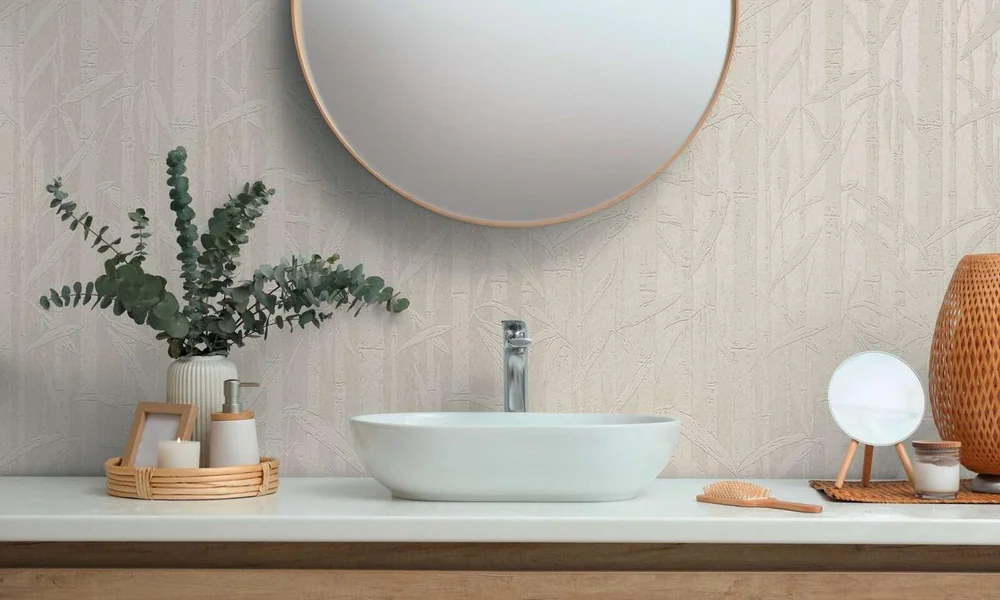
Vinyl is often the first material to consider when choosing bathroom wallpaper. Its surface is designed to be wiped clean, making it practical for areas where toothpaste, fingerprints, and everyday marks can collect.
Some commercial-grade vinyl wallcoverings, including Type II products, are made for more demanding interior environments. However, the label alone does not guarantee that a product is suitable for every bathroom. Always check the manufacturer’s installation and cleaning instructions.
Vinyl also has an important limitation: a moisture-resistant surface does not make the wall behind it waterproof. If water gets through a poorly sealed seam or remains trapped behind the wallpaper, the underlying surface can still develop moisture problems.
The Milton & King bathroom wallpaper article offers additional discussion of wallpaper materials and bathroom conditions. As a wallpaper supplier’s guidance, it is useful for understanding product considerations, but individual product specifications should always take priority.
Washable Non-Woven Wallpaper
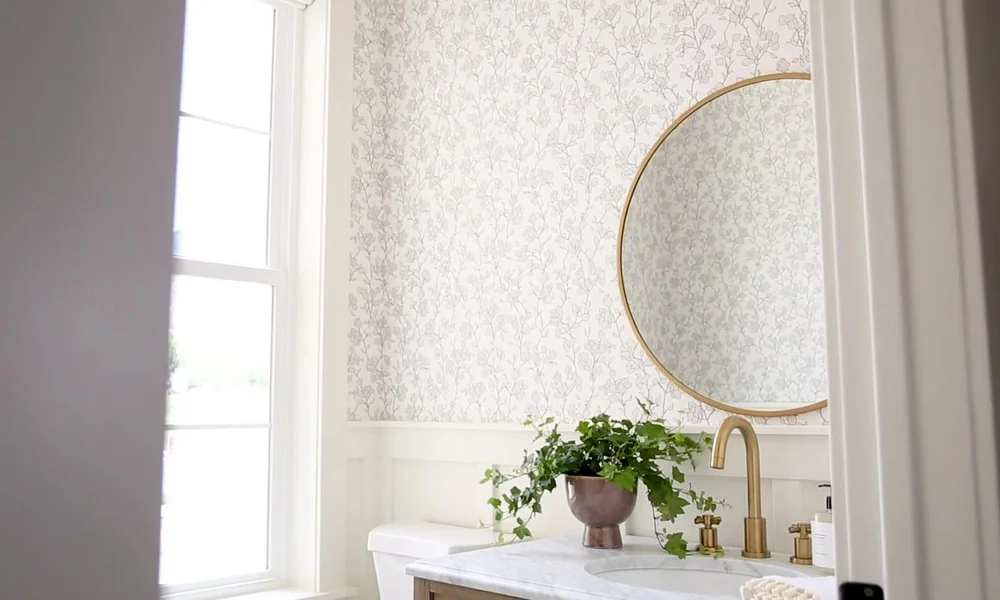
Non-woven wallpaper is made from a blend of fibers and is available in different finishes. Some bathroom-marketed versions are washable and designed to handle ordinary humidity.
It can be a suitable option for a powder room or a full bathroom with reliable ventilation, provided the product is specifically approved for that environment. Do not assume every non-woven wallpaper is moisture-resistant. Check the product description, cleaning instructions, and recommended installation conditions before buying.
Vinyl-Coated Paper
Vinyl-coated paper combines a paper backing with a vinyl surface. The coating offers more protection than an untreated paper finish, but the material is not automatically equivalent to solid vinyl.
It may be considered for a powder room or a bathroom with limited humidity, depending on the manufacturer’s guidance. Avoid using it in areas exposed to repeated steam or direct water.
Standard Paper Wallpaper
Ordinary paper wallpaper is generally a poor choice for bathrooms. It can absorb moisture, swell, and lose adhesion, particularly around seams and edges.
Even if a pattern looks perfect, the material may not tolerate the room’s conditions. If you like a paper design, look for a washable version specifically recommended for bathroom use rather than assuming the standard product will perform well.
Bathroom Wallpaper Zones: Where It Works and Where It Doesn’t
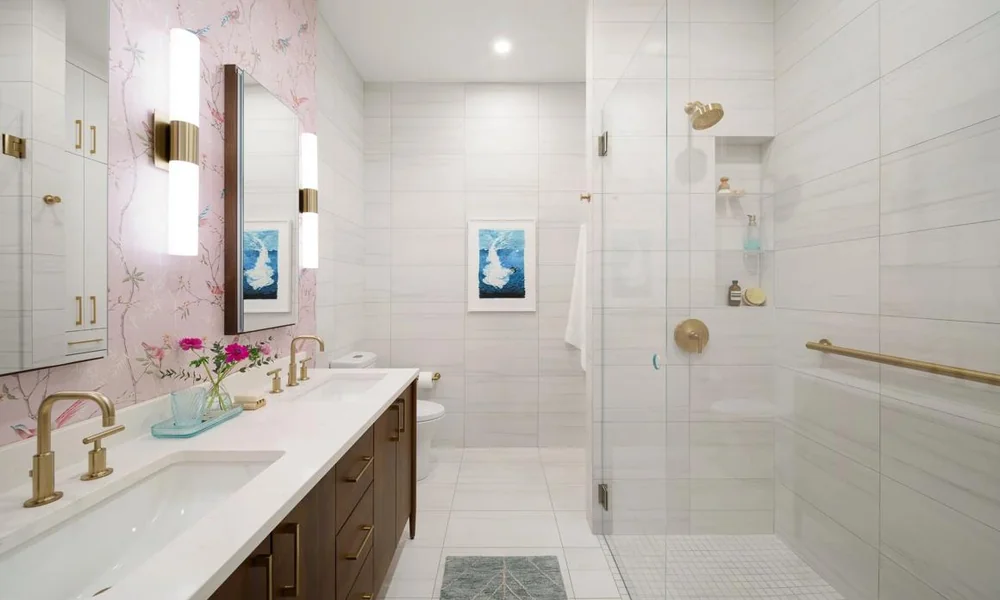
The most important decision is not simply which wallpaper you buy. It is where you plan to install it. A powder room, a full bathroom, and a shower wall have very different exposure levels. Use this table as a practical starting point.
| Bathroom zone | Is wallpaper suitable? | Recommended approach |
|---|---|---|
| Powder room or half bath with no shower | Yes, generally the easiest option | Use washable wallpaper, including suitable vinyl or non-woven finishes |
| Full bathroom, away from the tub or shower | Yes, with conditions | Choose bathroom-suitable vinyl or washable non-woven wallpaper and ensure good ventilation |
| Wall beside a sink with occasional splashes | Depends on distance and exposure | Use a suitable washable material, but protect areas that receive repeated splashes |
| Shower walls and tub surrounds | No | Use tile or properly specified waterproof wall panels |
| Wall directly behind a shower or exposed to constant water | No | Choose a finish designed for direct water exposure |
Powder Rooms: The Best Place to Start
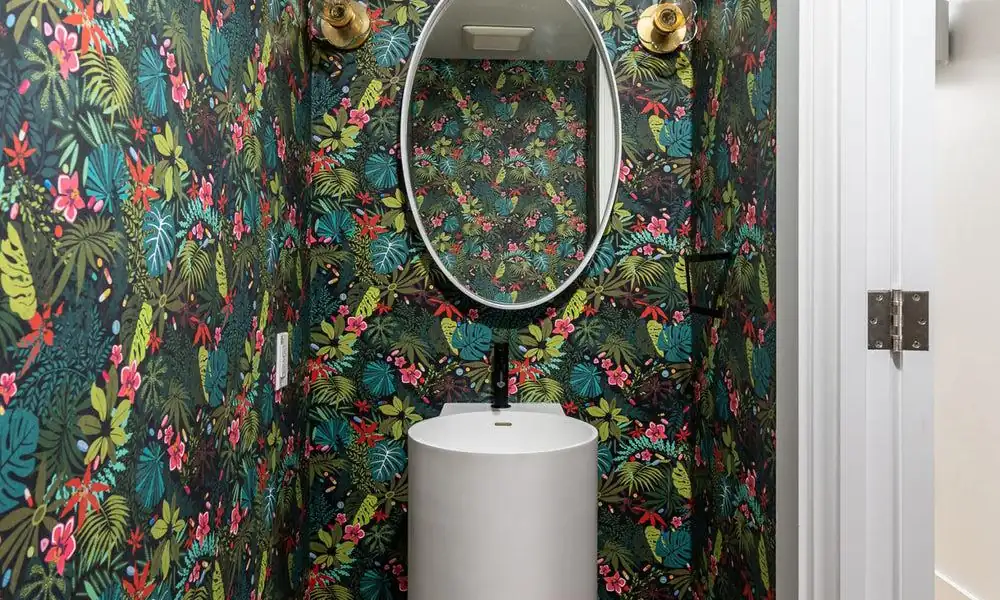
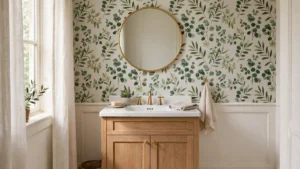
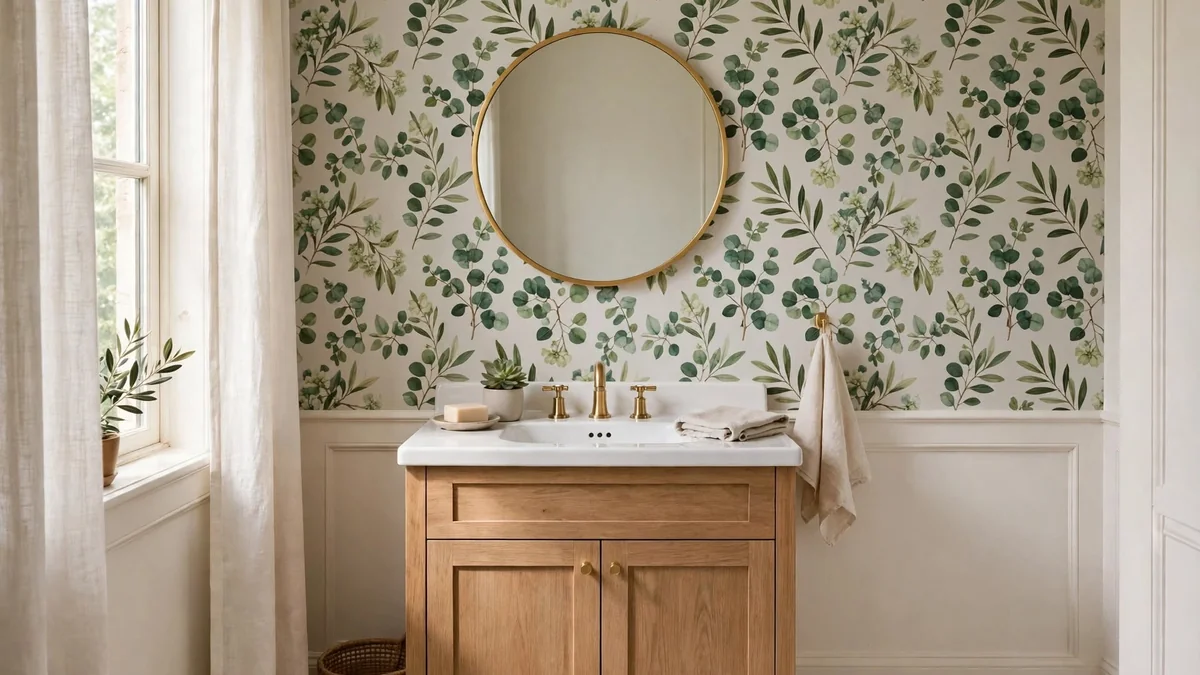
A powder room usually has a toilet and sink but no shower or bathtub. That means it experiences less steam and direct water exposure than a full bathroom. This makes it the easiest place to introduce wallpaper. You can use a bold pattern, textured appearance, or subtle botanical design without exposing the material to daily shower steam.
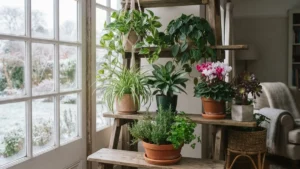
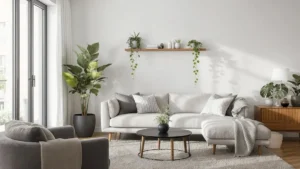
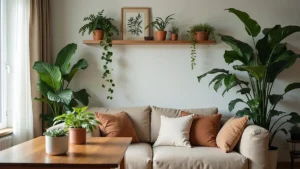
A washable wallpaper is still a sensible choice because sink areas can collect splashes. If you enjoy natural details, you can also coordinate the wall design with a small plant display. For inspiration, explore these bathroom beautification ideas with a peace lily.
Full Bathrooms: Choose Materials Carefully
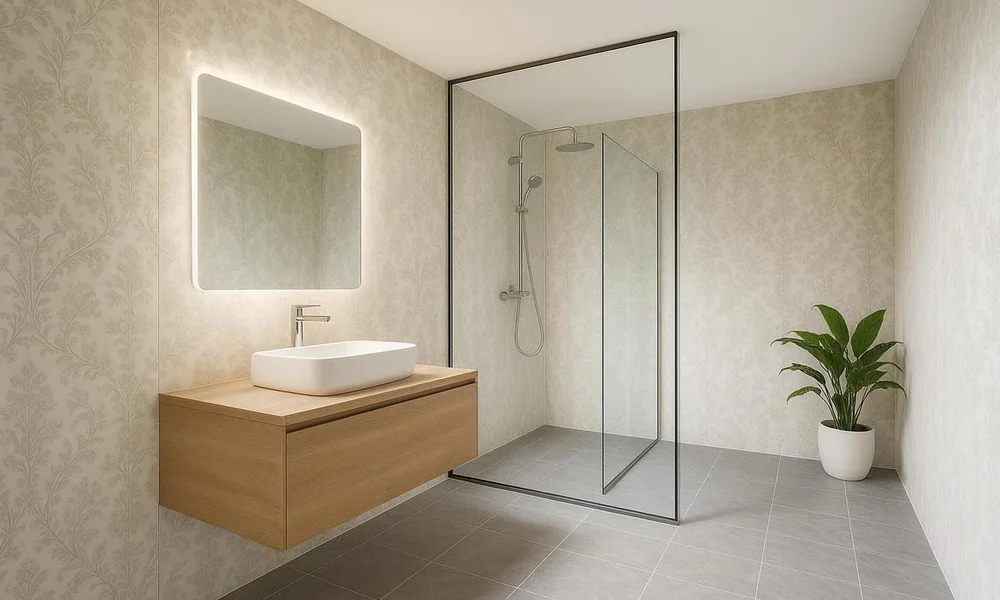
Wallpaper can work in a full bathroom, but only on suitable walls away from direct splashes.
For example, a wall behind a freestanding towel rack or a section opposite the shower may be a reasonable location. Choose vinyl or a washable non-woven product that the manufacturer approves for bathroom use.
Ventilation is essential. If the room remains damp long after every shower, even a suitable wallpaper may not perform as expected.
The experience shared in this bathroom wallpaper discussion on Reddit also reflects how room size, airflow, and material choice can affect results. Individual experiences vary, so treat community discussions as practical perspectives rather than product guarantees.
Shower and Tub Areas: Keep Wallpaper Out
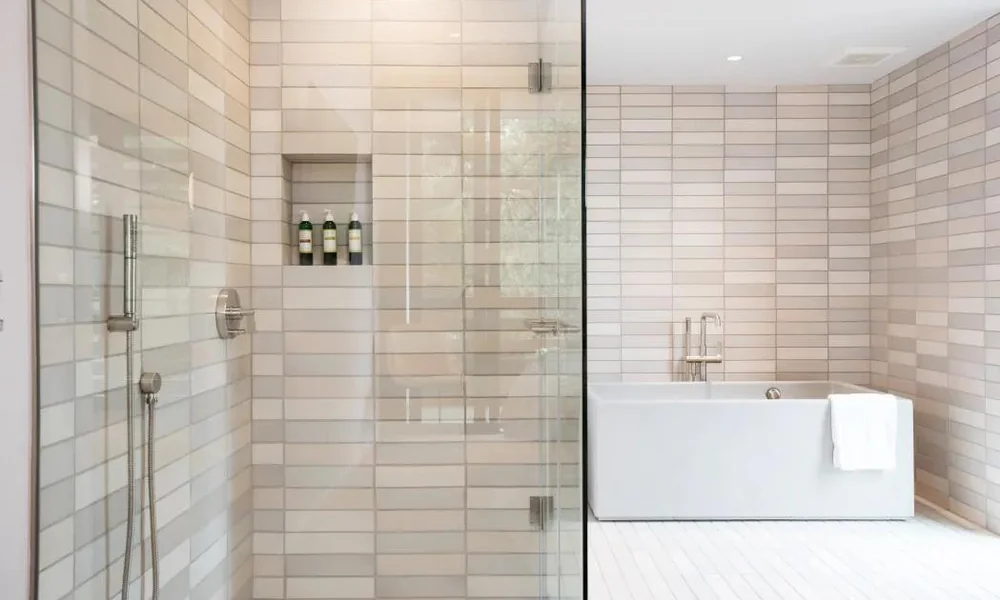
The area inside a shower, around a tub, or directly behind a shower spray receives repeated water exposure. Wallpaper is not designed to function as a waterproof wall system in these locations.
Even a wipeable vinyl surface cannot reliably protect every seam, edge, or point where water may reach the wall behind it. Use tile or properly specified waterproof wall panels instead. These materials are designed for wet-area applications when installed according to their system requirements.
The rule is simple: use wallpaper for bathroom walls exposed to humid air, not for surfaces exposed to constant direct water.
Ventilation and Installation Tips for Bathroom Wallpaper
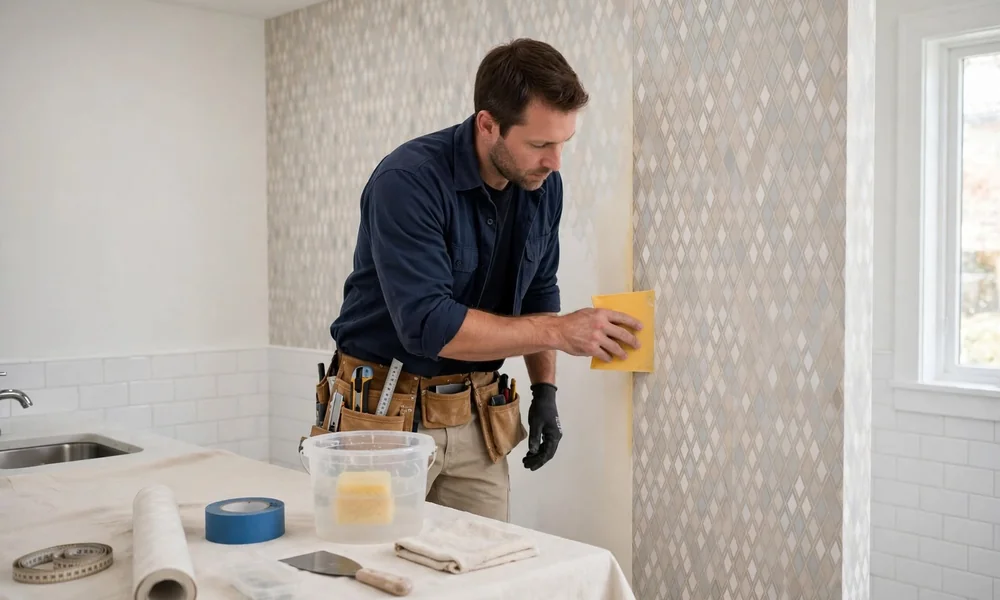
Choosing the right wallpaper is only part of the job. Proper preparation, installation, and airflow help reduce the risk of lifting seams and moisture-related damage.
1. Run the Exhaust Fan During and After Showers
Turn on the bathroom fan while showering and keep it running afterward long enough for the room to clear. A mirror that remains foggy for a long time may indicate that moisture is not leaving the room efficiently.
If your fan is connected only to the light switch, consider whether its operating time is sufficient for the room. Follow the fan manufacturer’s recommendations and address poor ventilation before installing wallpaper.
2. Start With Clean, Dry Walls
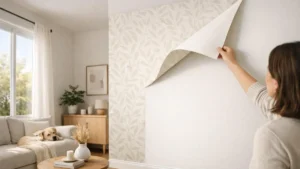
The wall surface should be clean, dry, smooth, and properly prepared. Dust, loose paint, grease, and old adhesive can interfere with wallpaper installation. Fill holes and repair damaged areas before applying primer or wall sizing where required. Follow the wallpaper manufacturer’s instructions because different materials and adhesives may need different preparation.
3. Follow the Manufacturer’s Adhesive Instructions
Do not assume every wallpaper uses the same adhesive or installation method. Some products require paste, while others have different application systems. Use the recommended adhesive and allow the wallpaper to set under the conditions specified by the manufacturer. Humid rooms may affect how quickly materials dry, so avoid rushing the process.
4. Pay Attention to Seams and Edges
Seams and exposed edges deserve particular attention because moisture can enter through poorly secured areas. Make sure the wallpaper is installed correctly around corners, windows, and other edges. Do not stretch the material to force a pattern match, and use the seam method recommended for that specific product.
5. Keep Wallpaper Clean
Use only the cleaning method recommended for the wallpaper. A product described as washable may tolerate gentle cleaning, but that does not mean it can withstand harsh chemicals, abrasive tools, or excessive water.
Wipe away ordinary marks carefully and check the seams periodically for lifting or discoloration.
6. Address Existing Dampness First
Do not cover a wall that already has damp patches, peeling paint, or visible mold. Wallpaper will not fix the underlying problem. Find and address the source of moisture before decorating. This may involve improving ventilation, repairing a leak, or resolving water penetration through the wall.
Bathroom Wallpaper Mistakes to Avoid
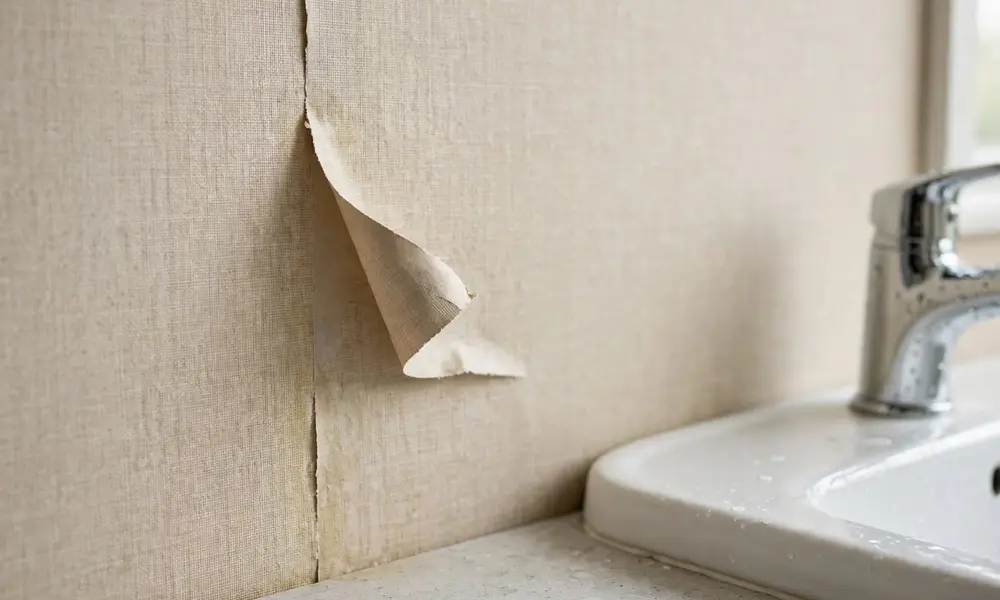
A few common decisions can shorten the life of bathroom wallpaper. Avoid these mistakes before starting your project.
1. Installing wallpaper in the splash zone
This is the biggest mistake. Moisture-resistant wallpaper is not a waterproofing system. Keep it away from shower interiors, tub surrounds, and surfaces that receive regular direct water.
2. Ignoring ventilation
A bathroom that stays humid for hours creates difficult conditions for wallpaper. Improve airflow before installation rather than expecting the wallpaper to solve a ventilation problem.
3. Trusting the word “waterproof” without checking specifications
Product descriptions can use terms such as washable, water-resistant, and moisture-resistant. These terms do not necessarily mean the wallpaper is suitable for constant water exposure.
Read the technical details and installation instructions. If the manufacturer does not clearly approve the product for your intended location, do not assume it is suitable.
4. Choosing standard paper because of its pattern
A beautiful design cannot compensate for a material that is unsuitable for the room. Look for a similar pattern in a washable vinyl or bathroom-approved non-woven finish.
5. Applying wallpaper over damp or damaged walls
Wallpaper should not hide an existing moisture problem. Damp walls can undermine adhesion and create conditions for further damage behind the finish.
6. Assuming every vinyl or non-woven product performs the same way
Material categories are broad. Product construction, coating, adhesive, and installation requirements can differ. Check the specifications for the exact wallpaper you intend to use.
FAQ: Best Wallpaper for Bathrooms
What type of wallpaper is best for bathrooms?
Vinyl wallpaper is generally the most practical choice for bathroom walls away from direct splashes because it has a wipeable, moisture-resistant surface. Selected washable non-woven wallpapers can also work in suitable conditions. Always check the manufacturer’s guidance and provide proper ventilation.
Can you put wallpaper in a bathroom with a shower?
Yes, but only on walls away from direct shower and tub splashes. Choose bathroom-suitable vinyl or washable non-woven wallpaper and make sure the room has effective ventilation. Do not install wallpaper inside the shower or on surfaces exposed to constant water.
Is a powder room a good place for wallpaper?
Yes. A powder room is usually the easiest bathroom for wallpaper because it has no shower and experiences less steam. Washable wallpaper is a practical choice around the sink, where occasional splashes and everyday marks may occur.
Does bathroom wallpaper get moldy?
It can develop problems if moisture becomes trapped behind the wallpaper or the room stays damp. A vinyl surface may resist ordinary splashes, but it does not prevent mold caused by persistent moisture behind the wallcovering. Good ventilation and dry, properly prepared walls are essential.
Can peel-and-stick wallpaper go in a bathroom?
It may work in a powder room if the product is suitable for the wall surface and the room has limited humidity. A full bathroom is more challenging because repeated steam can affect adhesive performance. Read our guide to peel-and-stick wallpaper reviews before choosing this type.
What is the biggest bathroom wallpaper mistake?
Installing wallpaper where it receives constant direct water is the biggest mistake. Moisture-resistant wallpaper is not waterproof. The second major mistake is ignoring ventilation, which can allow humidity to build up around seams and edges.
Final Thoughts
The best wallpaper for bathrooms depends on the room’s moisture level, the wall’s location, and the quality of its ventilation. Vinyl is a practical starting point for walls away from direct splashes, while suitable washable non-woven wallpaper can work in powder rooms and well-ventilated full bathrooms.
Before choosing a pattern, identify the bathroom zone and check the product specifications. Keep wallpaper away from shower interiors and other surfaces exposed to constant water. With the right material, sensible placement, and effective airflow, you can create a bathroom that feels finished and personal without asking wallpaper to do a job it was never designed to handle.