Key Takeaways
- The best plants for a home office are the ones that match your actual light and care routine.
- Snake plants and ZZ plants are strong choices for people who want low-maintenance greenery.
- Peperomia works especially well when desk space is limited.
- Spider plant is a useful option for homes with cats or dogs because ASPCA lists it as non-toxic to both.
- Pothos, peace lilies, and Chinese evergreen require pet-safety consideration.
- Low light does not mean complete darkness.
- Research supports the value of plant-enriched workspaces, but plants should not be marketed as a guaranteed productivity treatment.
- Good drainage, suitable light, and sensible watering are more important than following a rigid care schedule.
- A plant should complement your workspace rather than compete with your computer, lighting, or working area.
Quick Answer
For most home offices, the snake plant, ZZ plant, pothos, spider plant, peperomia, and Chinese evergreen are practical choices.
The best option depends on your room:
| Your situation | Good choice | Why |
|---|---|---|
| Very little natural light | ZZ plant | Handles lower-light conditions and needs little watering |
| Forget to water | Snake plant | Stores water in its leaves and tolerates dry periods |
| Small desk | Peperomia | Compact and easy to manage |
| Want a trailing plant | Pothos | Attractive vines and adaptable indoor growth |
| Have cats or dogs | Spider plant | Listed as non-toxic to dogs and cats by ASPCA |
| Want flowers | Peace lily | Attractive foliage and white flowers, but needs more attention |
| Bright sunny desk | Succulent | Compact and suited to brighter conditions |
| Larger office corner | Parlor palm | Adds height without needing a huge footprint |
RHS specifically recommends several of these plants for office environments, including peperomia for desks, snake plants and ZZ plants for lower-light areas, and philodendrons for adding foliage to workspaces.
Why Put Plants in a Home Office?
A home office can easily become visually repetitive. A desk, monitor, chair, cables, shelves, and artificial lighting may create a space that feels more functional than inviting.
Plants introduce natural shapes, colors, and textures without taking over the room. More importantly, research has found that green office environments can be associated with better workplace experiences.
The 2014 field research is particularly useful because it did not rely only on a laboratory experiment. Researchers examined real commercial offices and compared lean spaces with offices enriched by plants. All three experiments found improved outcomes after plants were introduced.
Still, it is worth keeping expectations realistic. Plants are not a substitute for good lighting, comfortable furniture, regular breaks, or an organized workstation.
1. Snake Plant
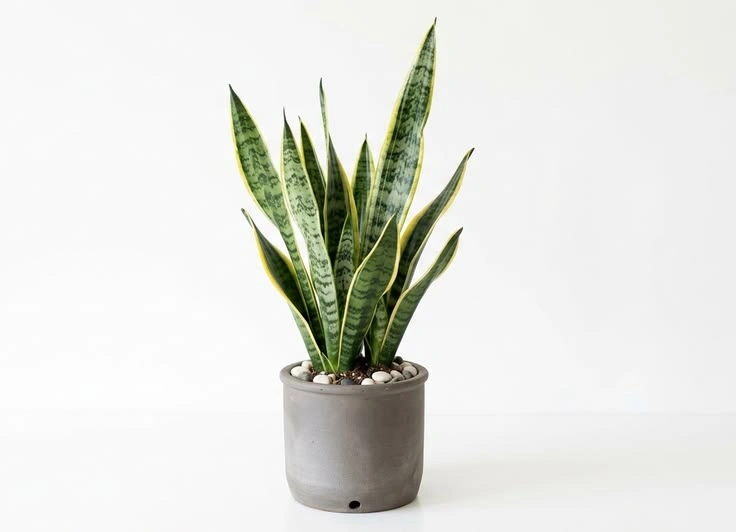
The snake plant, now commonly classified as Dracaena trifasciata, is one of the easiest choices for a busy home office.
Its upright leaves take up very little desk or floor space, while its ability to tolerate lower light makes it useful when your workspace is not directly beside a bright window. RHS lists the snake plant among its choices for low-light offices.
It is also forgiving when watering is occasionally forgotten. However, low light does not mean no light. A living plant still needs suitable light to remain healthy.
Best for: Busy workers, beginners, shelves, and floor corners.
Watch out: The ASPCA lists snake plants as toxic to cats and dogs if ingested.
2. ZZ Plant
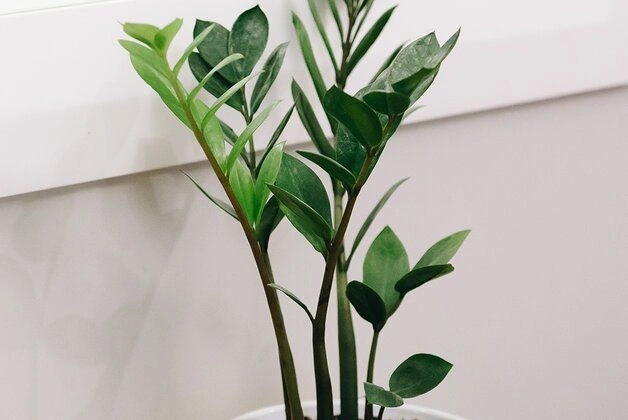
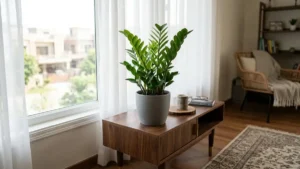
The ZZ plant, or Zamioculcas zamiifolia, is another strong candidate when you want greenery without a demanding care routine.
Its thick underground rhizomes help the plant cope with periods of dryness. RHS recommends ZZ plants for low-light office areas and notes that they require little watering.
That makes the ZZ plant especially useful for people who travel, work irregular hours, or simply do not want another daily responsibility.
Best for: Low-light rooms and people who frequently forget watering.
Care tip: Let the growing medium dry appropriately between waterings rather than following a rigid calendar.
3. Pothos
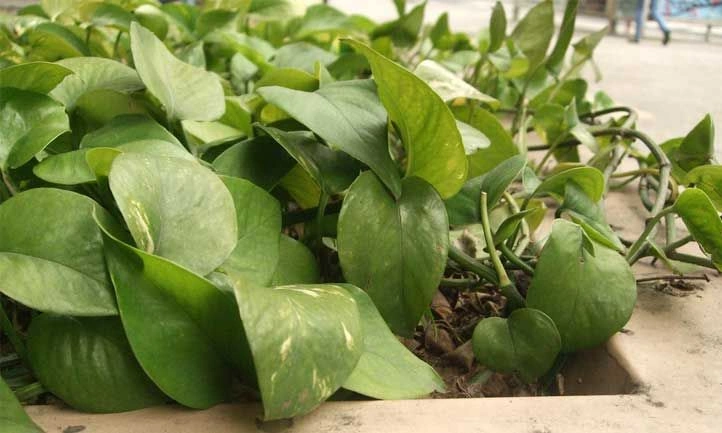
Pothos, scientifically known as Epipremnum aureum, is a popular choice when you want your workspace to have a softer, trailing appearance.
Instead of growing upright, its vines can hang from a shelf or climb around a support. This makes it useful when your desk has limited surface area.
Pothos is adaptable, but it should not be treated as a plant that can survive in complete darkness. Give it suitable indoor light and avoid keeping its roots constantly wet.
Best for: Shelves, hanging planters, and compact workspaces.
Pet note: Pothos is listed by ASPCA among plants containing insoluble calcium oxalates that can irritate if pets chew or ingest them.
4. Spider Plant
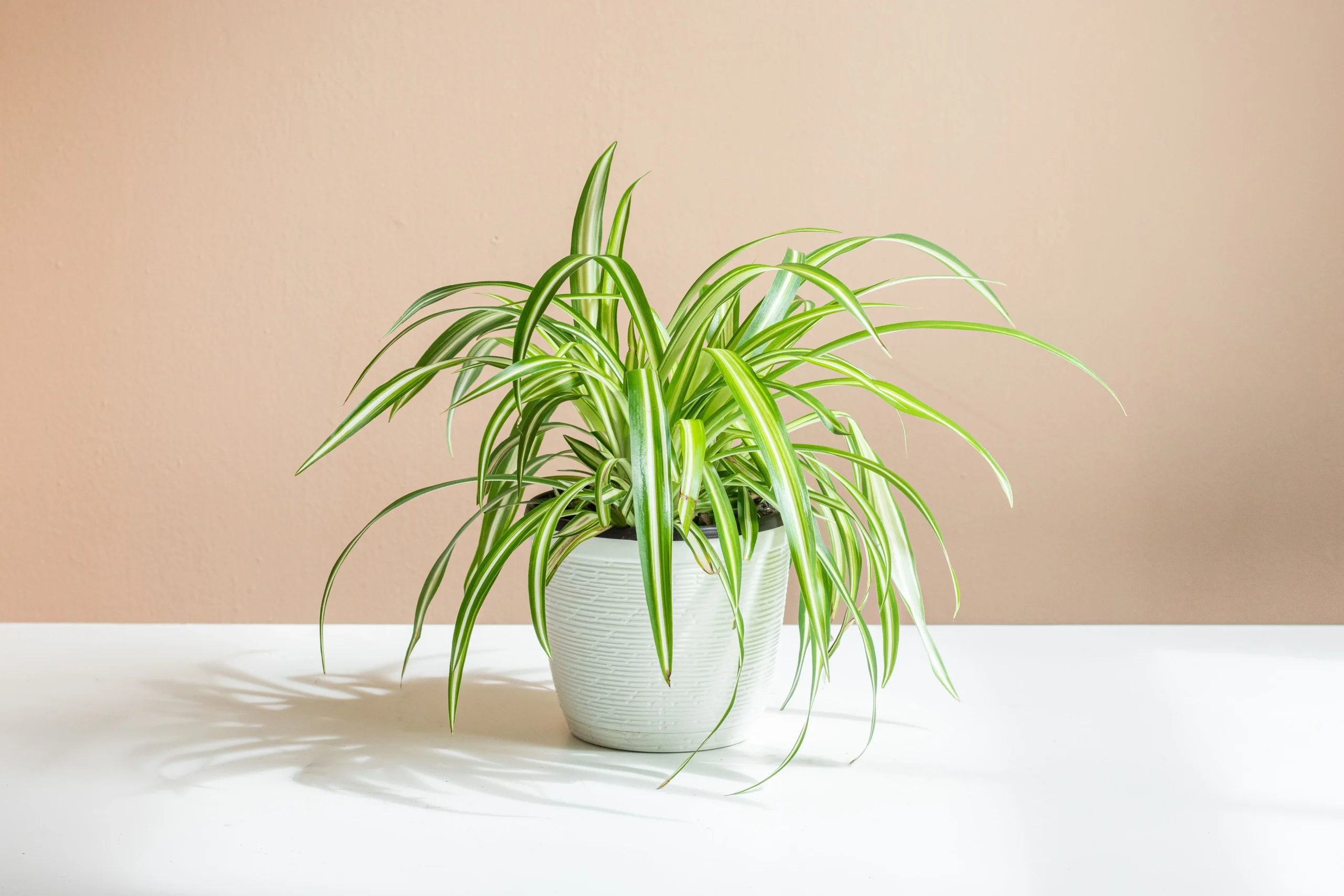
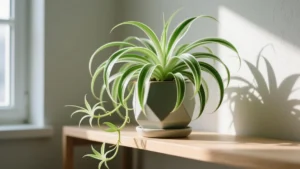
The spider plant, Chlorophytum comosum, is particularly appealing if pets share your home office.
ASPCA lists spider plant as non-toxic to dogs and cats.
Its long, arching leaves also create visual movement without requiring a large pot. Mature plants can produce small plantlets, giving them a distinctive appearance.
For a desk, shelf, or nearby cabinet, it can provide plenty of greenery without demanding much space.
Best for: Pet households, beginners, and shelves.
5. Peperomia
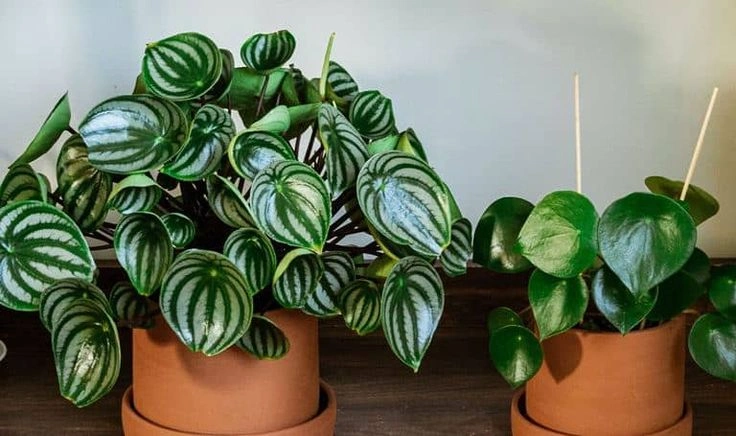
If you want something genuinely compact, peperomia deserves attention.
RHS specifically recommends shiny-leaved peperomia varieties as compact plants that are easy to care for on office desks.
Because many peperomias remain relatively small, they are less likely to interfere with your monitor, keyboard, notebook, or other equipment.
Best for: Small desks and minimalist workspaces.
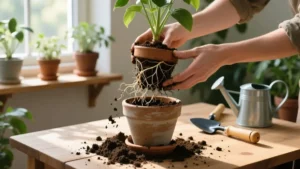
Care tip: Choose a pot with drainage and avoid keeping the soil continuously saturated.
6. Chinese Evergreen
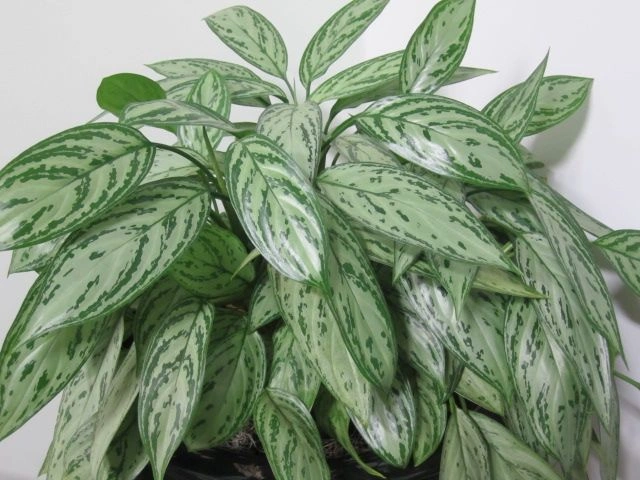
Chinese evergreen, or Aglaonema, is another option for an office that does not receive strong natural light.
RHS describes it as easy to care for and notes that wide varieties have attractive variegated leaves.
Its patterned foliage can add interest without requiring flowers, making it suitable for people who prefer decorative leaves.
Best for: Low-light rooms and larger desks.
Pet note: ASPCA identifies Chinese evergreen among plants that can irritate if pets chew or ingest them.
7. Peace Lily
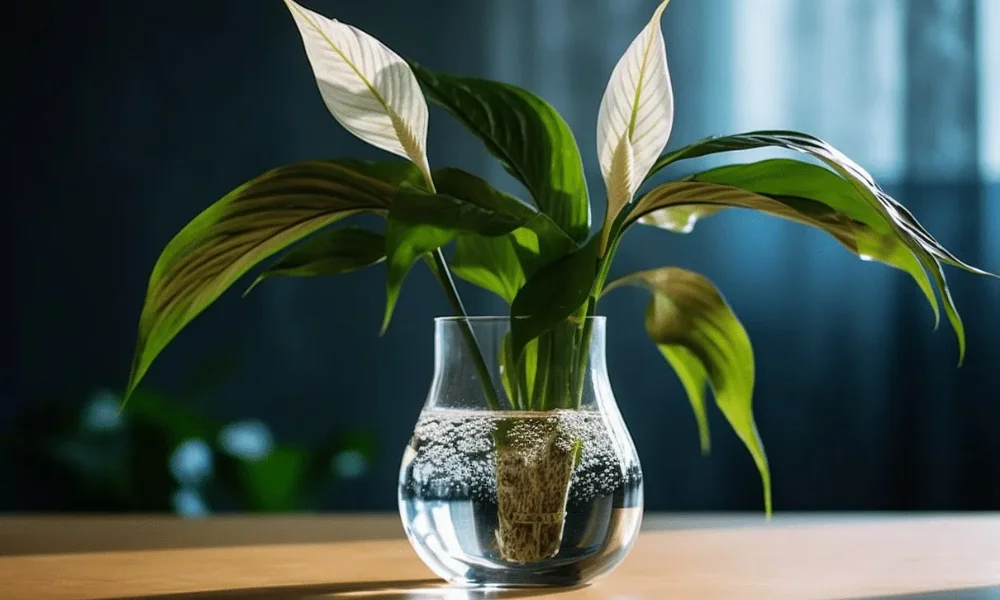
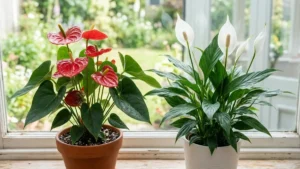
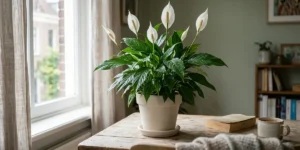
A peace lily, Spathiphyllum, can be a beautiful addition if you want flowers as well as foliage.
Its white blooms contrast nicely with dark green leaves, which makes it particularly attractive beside a desk or in an office corner.
However, it is not the lowest-maintenance choice on this list. It generally needs more consistent attention to moisture than drought-tolerant plants such as snake plants or ZZ plants.
Pet owners should also take care: ASPCA lists peace lily as toxic to cats and dogs because it contains insoluble calcium oxalates.
Best for: People who want flowers and are willing to provide more regular care.
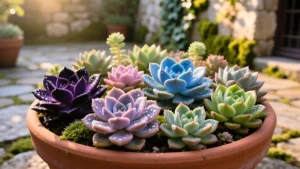
8. Succulents
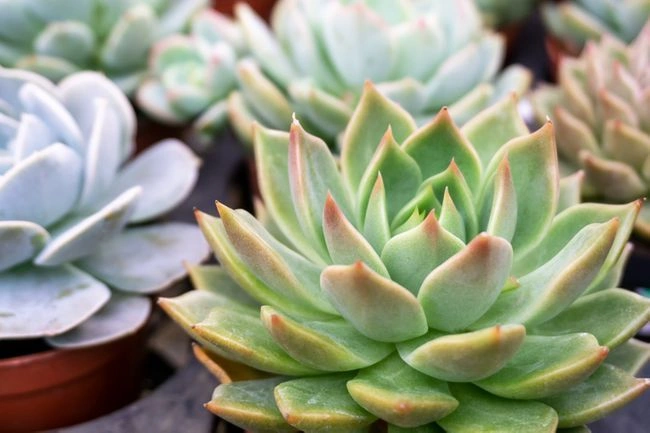
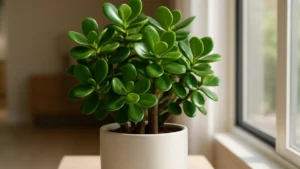
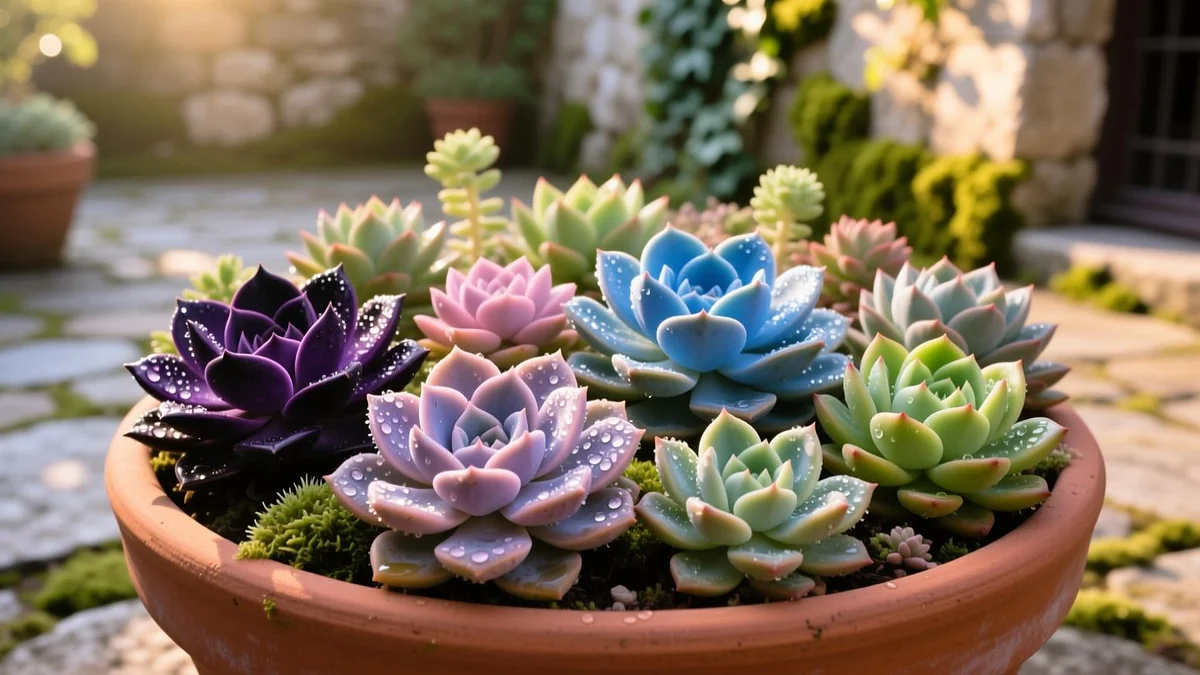
Small succulents can work well when your home office receives plenty of bright light.
Their compact size makes them easy to position near a window without consuming valuable workspace. However, they are not automatically suitable for every desk.
A dark office can be a poor environment for a sun-loving succulent. If the plant stretches toward the light or becomes unusually pale, its location may need reconsideration.
Best for: Bright desks and people who prefer very compact plants.
How to Choose the Best Plants for a Home Office
Before buying anything, look at your workspace rather than starting with the plant.
Check the Light First
Light is one of the most important factors in indoor plant selection.
A desk several feet from a window can receive dramatically less usable light than the area directly beside the glass. Meanwhile, a room with no natural light should not be treated as suitable for every “low-light” plant.
If there is genuinely insufficient natural light, a suitable grow light may be necessary.
Consider Your Desk Size
A huge plant can make a small workstation feel cramped.
For limited space, choose peperomia, a small spider plant, or another compact variety. If you have a separate corner available, a taller snake plant or larger foliage plant may work better.
Think About Your Routine
Your schedule matters just as much as your room.
If you travel regularly or often forget plant care, prioritize plants that tolerate drying periods. If you enjoy looking after plants, you can consider varieties that need more consistent attention.
Home Office Plant Comparison
| Plant | Light | Maintenance | Space | Pet safety |
| Snake plant | Low to bright indirect | Low | Small to medium | Toxic to cats and dogs |
| ZZ plant | Low to medium | Low | Small to medium | Check pet safety before purchase |
| Pothos | Low to bright indirect | Low to moderate | Small to medium | Toxic if ingested |
| Spider plant | Bright to moderate indirect | Low | Small to medium | Non-toxic to cats and dogs |
| Peperomia | Moderate indirect | Low | Small | Check specific variety |
| Chinese evergreen | Low to moderate | Low to moderate | Medium | Toxic if ingested |
| Peace lily | Moderate indirect | Moderate | Medium | Toxic to cats and dogs |
| Succulents | Bright light | Low | Small | Depends on species |
Pet safety classifications can vary by species, so checking the exact plant before bringing it home is a sensible step. ASPCA’s plant database is a useful reference for this.
How Plants Can Support Productivity
It is tempting to say that a particular plant will make you focus better, but the evidence does not support such a simple promise.
The strongest evidence here concerns the workspace environment, rather than one magical species. In the three field experiments published in the Journal of Experimental Psychology: Applied, plant-enriched offices showed improved outcomes including productivity, concentration, workplace satisfaction, and perceptions of air quality.
The researchers reported that simply enriching a previously sparse office with plants increased measured productivity by 15% in their study. That result belongs to that specific research setting and should not be presented as a guaranteed productivity increase for every home worker.
That distinction matters. Good content should separate what research actually found from what sounds appealing in marketing copy.
Common Mistakes to Avoid
Choosing a Plant for Looks Alone
A beautiful plant can still fail if your office does not provide the light it needs.
Match the plant to the environment first. Appearance should come second.
Watering on a Fixed Schedule
“Water every Sunday” sounds simple, but indoor plants do not all use water at the same rate.
Check the growing medium and the plant’s needs instead of automatically watering because a particular day has arrived.
Putting Plants in Complete Darkness
Low light is not the same as no light.
If a room has almost no natural light, consider whether a grow light is needed rather than expecting a living plant to remain healthy indefinitely.
Ignoring Pets
A plant that is perfectly suitable for a person may not be suitable for a curious cat or dog.
Before purchasing, check the exact species against a reliable toxicity database.
Simple Home Office Plant Checklist
-
Check how much natural light your workspace receives.
-
Measure the available desk or floor space.
-
Choose a plant that matches your watering habits.
-
Use a pot with appropriate drainage.
-
Keep foliage from blocking your screen or workspace.
-
Check pet safety if animals have access to the room.
-
Inspect leaves regularly for signs of stress or pests.
-
Use supplemental lighting when natural light is inadequate.
-
Avoid assuming that every indoor plant has the same care requirements.
Conclusion
The best plants for a home office do more than fill an empty corner. A well-chosen plant can add natural texture to your workspace while fitting comfortably into your daily routine.
For a busy beginner, a snake plant or ZZ plant is a sensible starting point. If you have a small desk, peperomia can provide greenery without taking over your workspace. For pet owners, spider plant offers a particularly useful option because ASPCA lists it as non-toxic to cats and dogs.
Most importantly, choose according to your room rather than chasing a single “best” plant. Once light, space, watering habits, and pet safety are considered, finding the right greenery becomes much easier.
Frequently Asked Questions
What are the best plants for a home office?
The best plants for a home office include snake plants, ZZ plants, pothos, spider plants, peperomia, and Chinese evergreen. The right choice depends mainly on light, available space, watering habits, and whether pets can reach the plant.
What is the best low-maintenance office plant?
The snake plant and ZZ plant are among the strongest low-maintenance choices because both are tolerant of periods of dryness and can handle lower-light indoor conditions. RHS specifically recommends both for low-light office environments.
Which plant is best for a small desk?
Peperomia is an excellent option for a small desk because RHS describes it as compact and easy to care for. A small spider plant can also work when there is enough room for its arching leaves.
Can plants really improve productivity?
Research suggests that plant-enriched office environments can improve workplace outcomes. A peer-reviewed study involving three field experiments found improved productivity and other workplace outcomes after plants were introduced. However, this does not mean that one particular houseplant guarantees a specific productivity improvement for every person.
What is the best office plant for low light?
ZZ plants, snake plants, and Chinese evergreen are practical choices for lower-light spaces. Even so, low-light plants still need appropriate light to grow well. RHS includes these plants among its office recommendations for lower-light conditions.
Which office plants are safe for cats and dogs?
Spider plant is listed by ASPCA as non-toxic to both cats and dogs. Other popular office plants, including snake plant and peace lily, are listed as toxic to cats and dogs, so pet owners should check each species before buying.