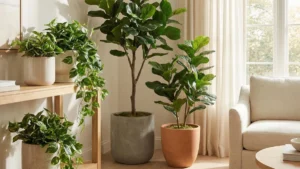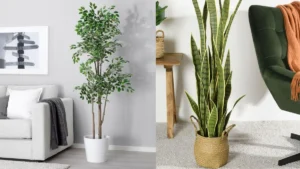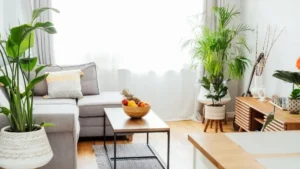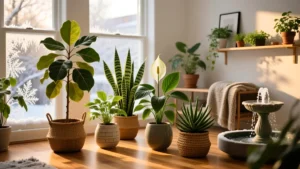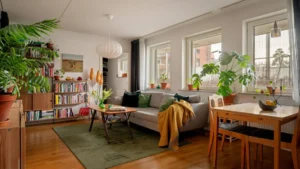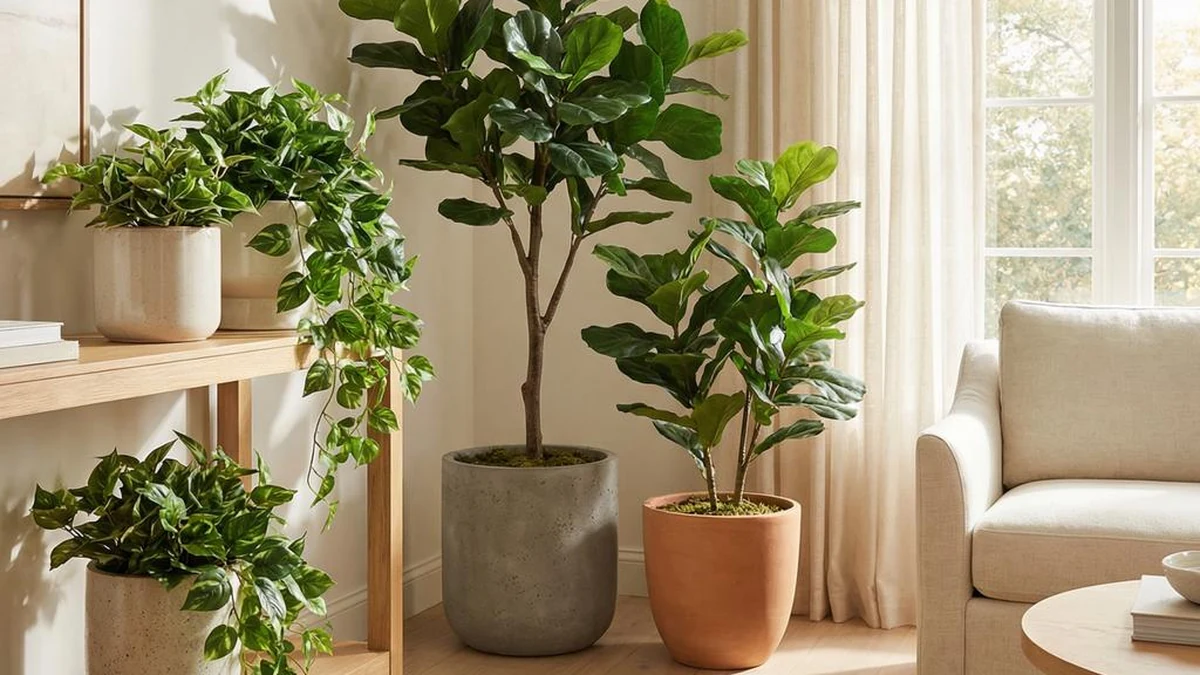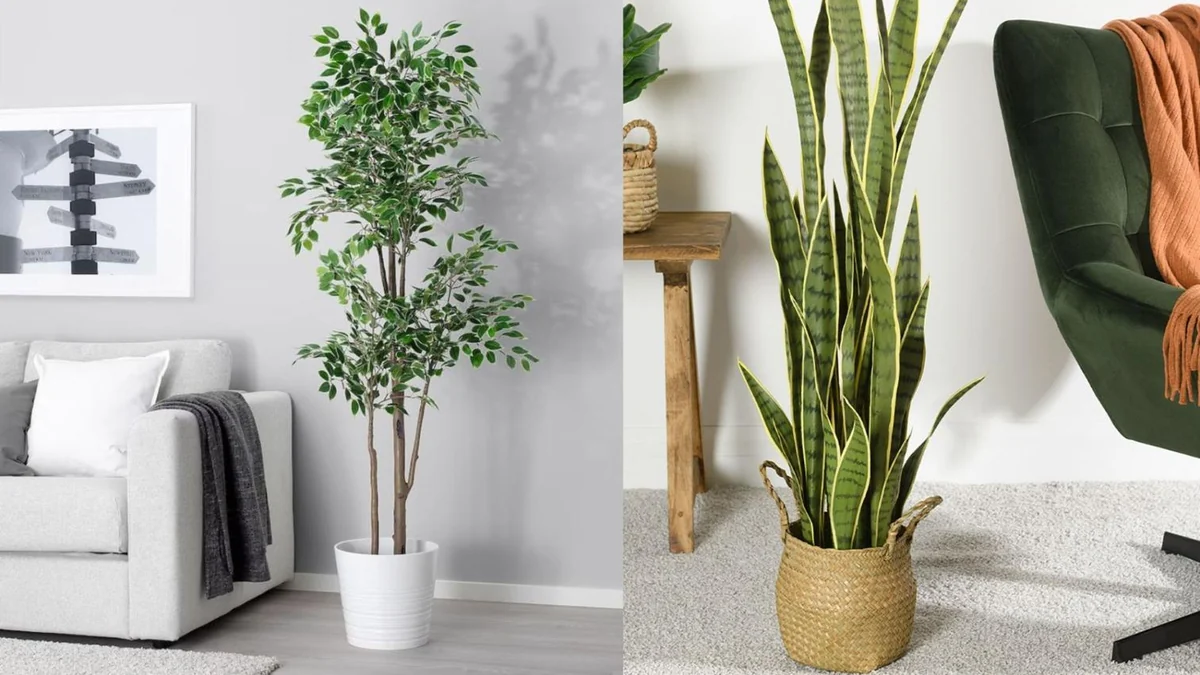
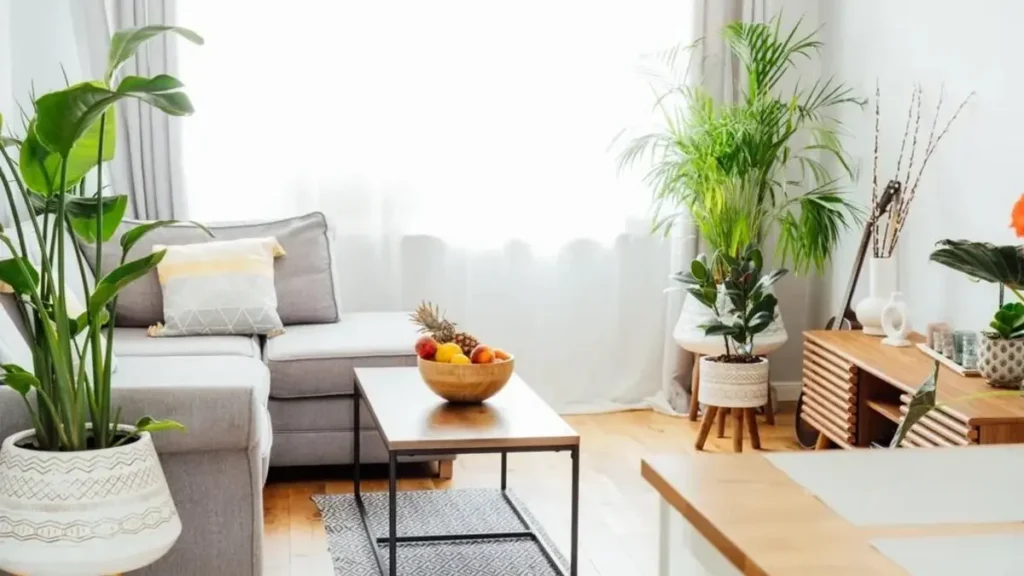
Yes, you can grow an indoor tree in a small apartment. The best choices depend on your available light, ceiling height, and how much room you can give the canopy. Dragon trees, parlor palms, money trees, rubber plants, and dwarf umbrella trees can all provide a tree-like appearance without requiring a large outdoor garden.
The secret is choosing a naturally suitable species and managing its growth with sensible pruning and repotting. A small apartment also brings practical considerations: limited window access, narrow walkways, cold drafts, and the weight of a mature plant in a heavy container.
This guide compares apartment-friendly indoor trees by light requirements and pet safety, then explains how to manage their size without compromising their health.
What Makes an Indoor Tree Work in a Small Apartment?
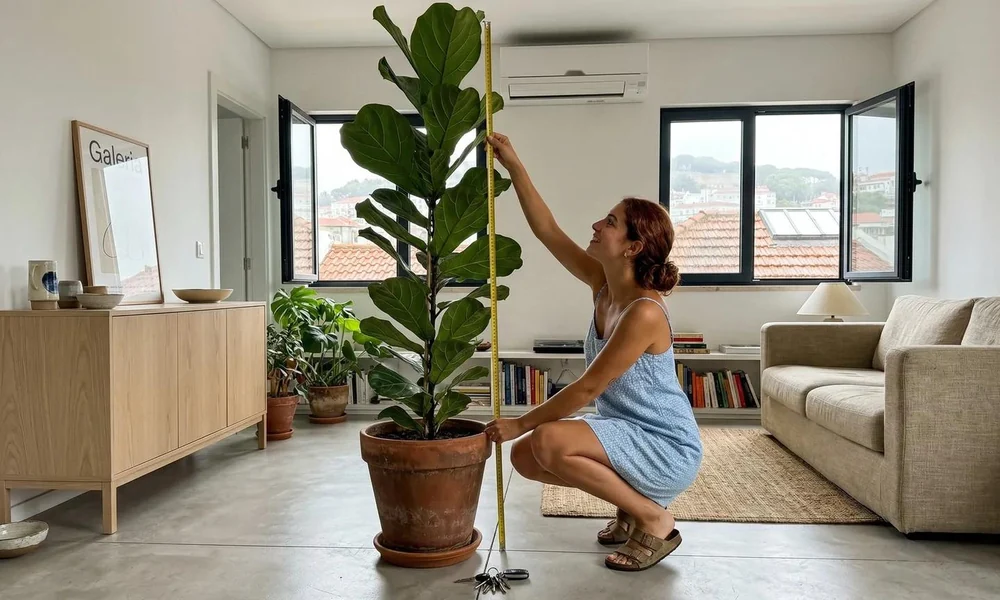
A suitable apartment tree needs to pass three basic tests: light, available space, and manageable growth.
Available light
Light is usually the biggest limitation. A window may look bright, but the amount of usable light can decrease significantly just a few feet away.
Before choosing a tree, consider where the pot will actually sit:
- Beside a bright window: Suitable for most of the trees in this guide, depending on direct sun exposure.
- Several feet from a window: Choose more tolerant species, such as a parlor palm or dragon tree.
- In a dark corner: Most living trees will struggle without supplemental grow lighting.
If your apartment has limited natural light, compare options in our guide to low-light indoor plants.
Available floor and ceiling space
A tree needs more than room for its pot. Its canopy must have enough clearance to avoid blocking walkways, brushing furniture, or interfering with doors.
Measure the space before buying. In an apartment with an eight-foot ceiling, a plant that can be maintained around five or six feet tall may be easier to manage than one that naturally grows much larger.
Manageable growth
Slow-growing or naturally compact species are usually easier to maintain in smaller homes. Some taller plants can also be kept within a reasonable shape through selective pruning.
However, keeping a plant in an excessively small container is not a substitute for proper care. Its roots still need enough room, healthy growing medium, and adequate drainage.
Best Indoor Trees for Small Apartments, Sorted by Light

The following options offer different combinations of size, light tolerance, and pet safety.
| Indoor tree | Light requirement | Typical indoor size | Pet safety | Size management |
| Dragon tree (Dracaena marginata) | Low to moderate indirect light | Around 4–6 feet | Toxic to cats and dogs | Slow growth; prune canes to manage height |
| Parlor palm (Chamaedorea elegans) | Low to moderate indirect light | Around 3–4 feet | Non-toxic to cats and dogs | Naturally compact and slow-growing |
| Money tree (Pachira aquatica) | Moderate to bright indirect light | Around 3–6 feet | Non-toxic to cats and dogs | Prune shoots to maintain shape |
| Rubber plant (Ficus elastica) | Medium to bright indirect light | Around 6–8 feet if unpruned | Toxic to cats and dogs | Topping can encourage branching |
| Dwarf umbrella tree (Schefflera arboricola) | Medium to bright indirect light | Around 4–6 feet | Toxic to cats and dogs | Responds to selective pruning |
| Yucca (Yucca species) | Bright light, some direct sun | Around 4–6 feet | Toxic to cats and dogs | Slow growth; needs a bright position |
Height ranges are approximate indoor estimates, not guaranteed mature sizes. Growth depends on the plant’s age, light, growing conditions, and pruning.
1. Dragon Tree: Best for a Narrow Space
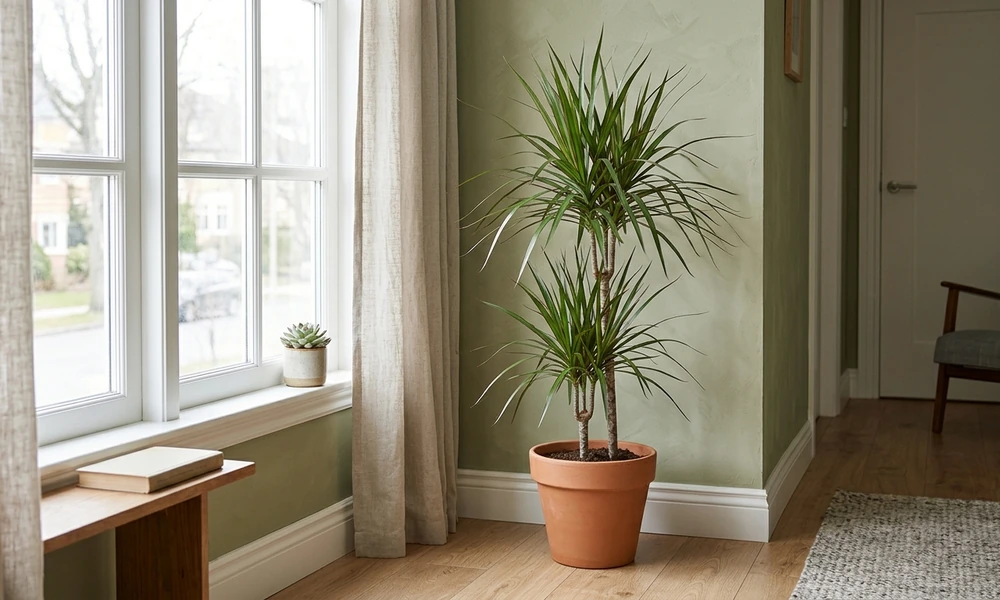
The dragon tree is a practical choice when floor space is limited. Its upright canes and narrow leaves create a vertical appearance without spreading as widely as some other indoor trees.
It tolerates lower light better than many large foliage plants, although brighter indirect light generally supports healthier growth. Its slow growth also makes it easier to manage in an apartment.
The main caution is pet safety: dragon trees are toxic to cats and dogs if chewed. For more specific growing advice, see our dracaena plant care guide.
2. Parlor Palm: Best for Lower-Light Apartments
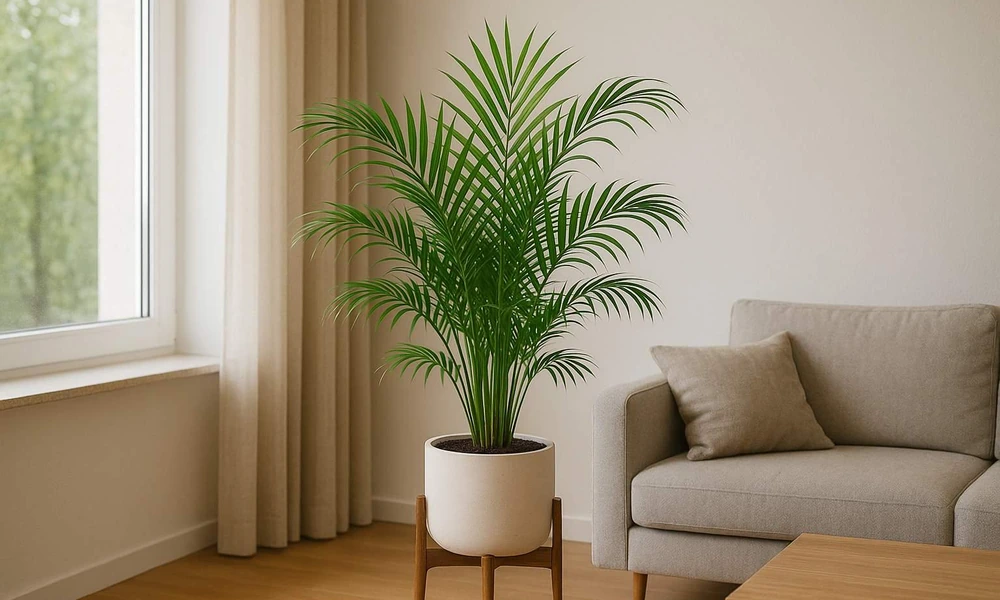
The parlor palm is one of the more compact choices on this list. It grows slowly, has a relatively manageable footprint, and tolerates lower indoor light than many other tree-form plants.
Its soft, arching fronds work well beside furniture or in a bright room where you want greenery without a bulky canopy.
It is also listed as non-toxic to cats and dogs by the ASPCA, making it a useful option for households with pets.
You can explore its growing requirements in our parlor palm care guide.
3. Money Tree: Best for a Decorative Focal Point
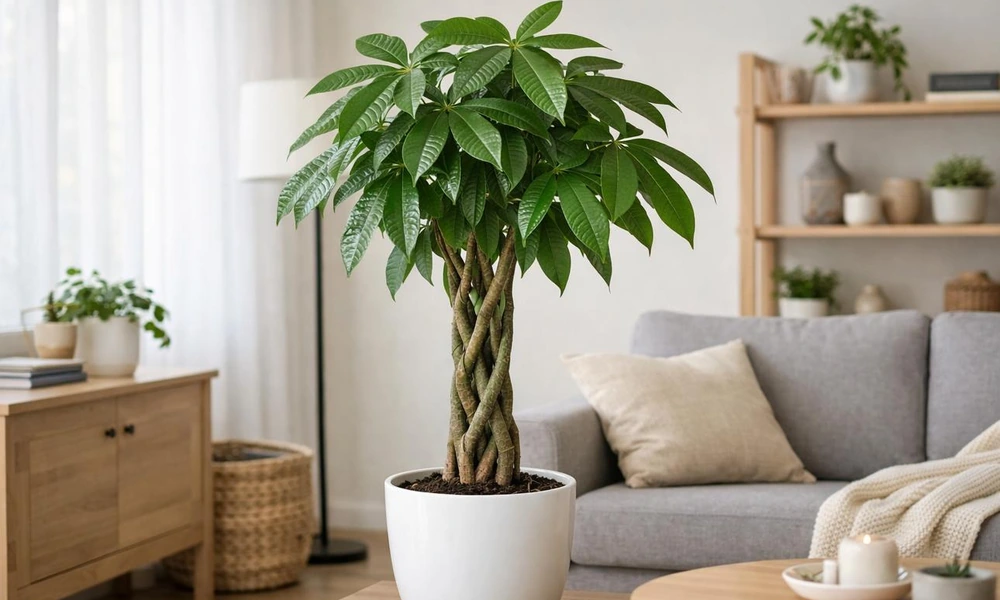
The money tree has an upright structure and attractive foliage that can create a focal point without the broad canopy of some larger indoor trees.
It prefers moderate to bright indirect light and needs a potting mix that drains well. Avoid keeping the soil constantly wet, as excessive moisture can damage its roots.
Money trees are listed as non-toxic to cats and dogs. Their stems can also be pruned to maintain a balanced shape.
For more on watering and general maintenance, see our money tree care guide.
4. Rubber Plant: Best for a Fuller Tree Shape
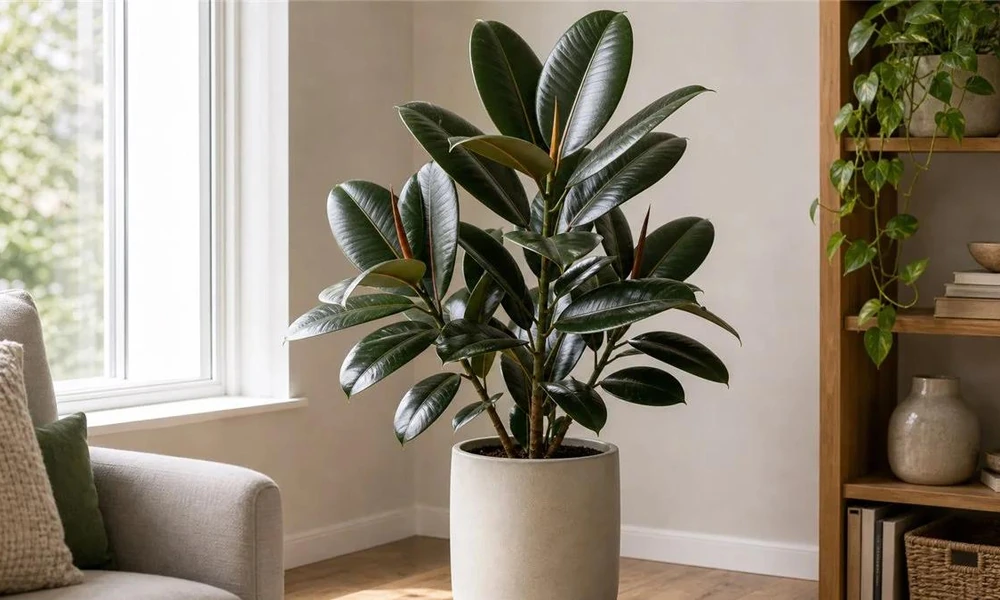
A rubber plant is a good option if you want larger leaves and a fuller appearance. Its broad foliage gives it more visual presence than a narrow-canopied tree.
It generally needs medium to bright indirect light to grow well. Because it can become tall, occasional pruning may be necessary in a smaller apartment.
One important consideration is pet safety: rubber plants are toxic to cats and dogs. Keep them out of reach if pets are likely to chew the leaves.
Our rubber plant guide covers its growing conditions and maintenance in more detail.
5. Dwarf Umbrella Tree: Best for a Branching Canopy
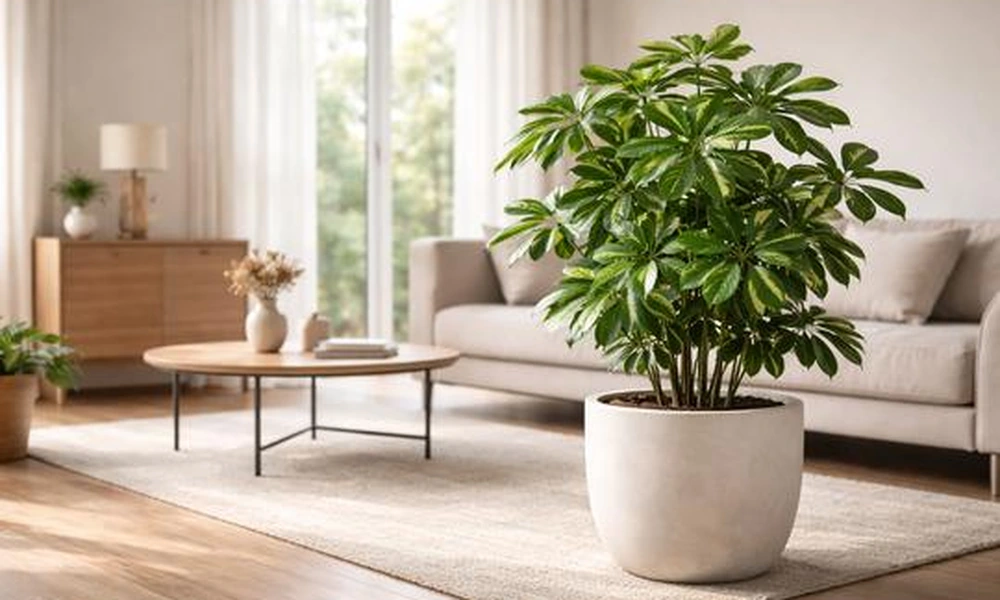
The dwarf umbrella tree is useful when you want a more traditional branching tree shape. Its clusters of leaflets create a fuller canopy, and selective pruning can help control its outline.
It prefers medium to bright light and needs enough room for its branches to spread. This makes it less suitable for extremely narrow corners.
The plant is toxic to cats and dogs, so households with curious pets should consider another option.
6. Yucca: Best for Bright Apartments
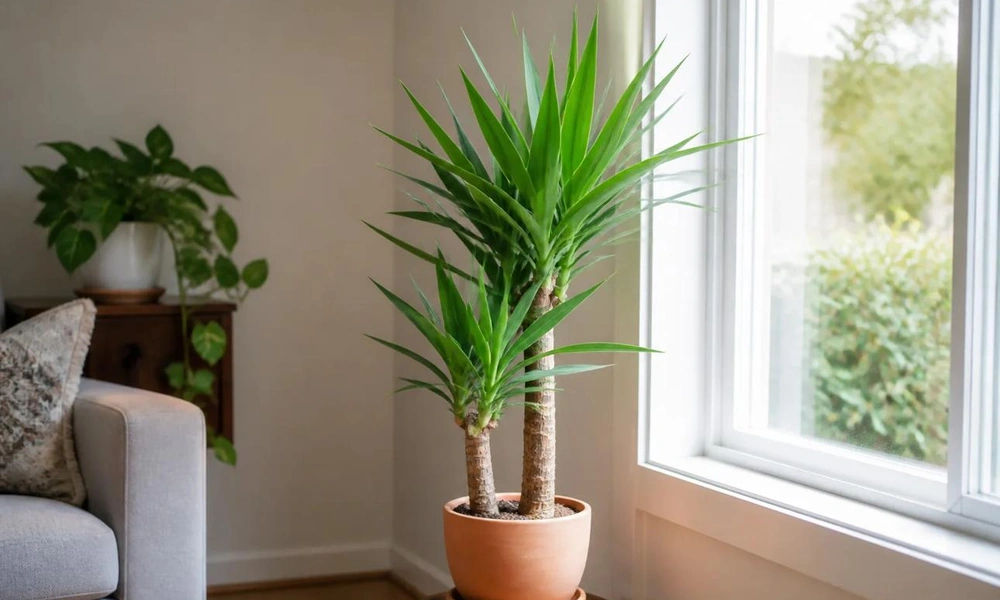
Yucca has a strong architectural appearance, with upright stems and pointed leaves. It suits apartments with bright windows and enough space for its height.
It is less suitable for dark rooms because it needs stronger light than the parlor palm or dragon tree. Avoid placing it where its stiff, pointed leaves obstruct a narrow walkway.
Yucca is toxic to cats and dogs, so placement matters in pet households. Our yucca plant care guide explains its basic growing requirements.
How to Control an Indoor Tree’s Size
Choosing the right species is only the first step. You also need to manage its growth without damaging the plant.
There are three useful approaches.
Choose an appropriate pot size
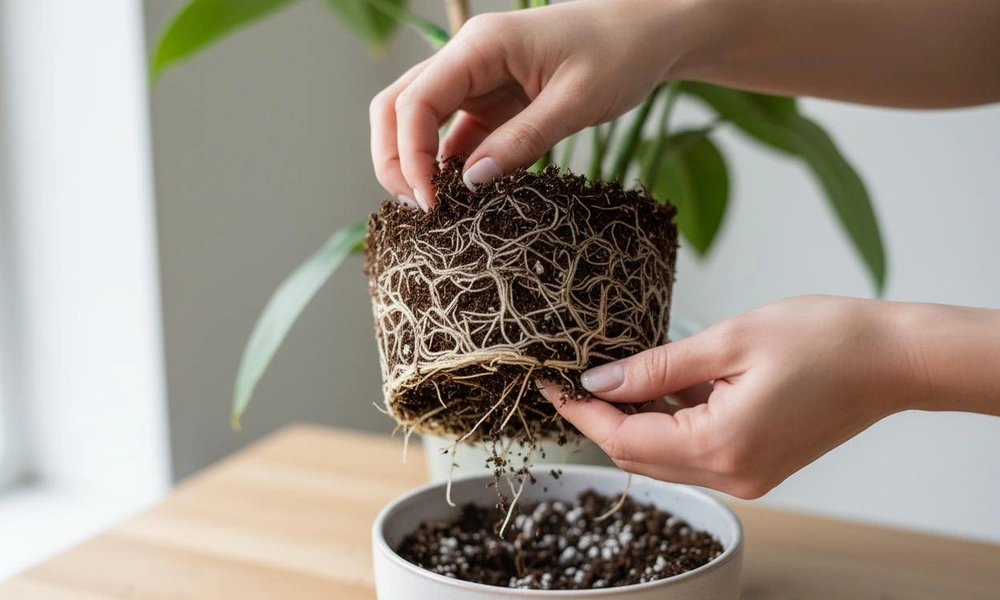
A container influences root development and overall plant growth. A pot that is too large can hold excess moisture, while one that is too small can restrict roots and stress the plant.
If you want to keep a tree at a manageable size, avoid automatically moving it into a much larger container every year. Repot when the root system needs more room or the growing medium needs refreshing.
The NC State Extension guide to plants grown in containers explains how container size affects root growth and plant development.
Prune to manage height and shape
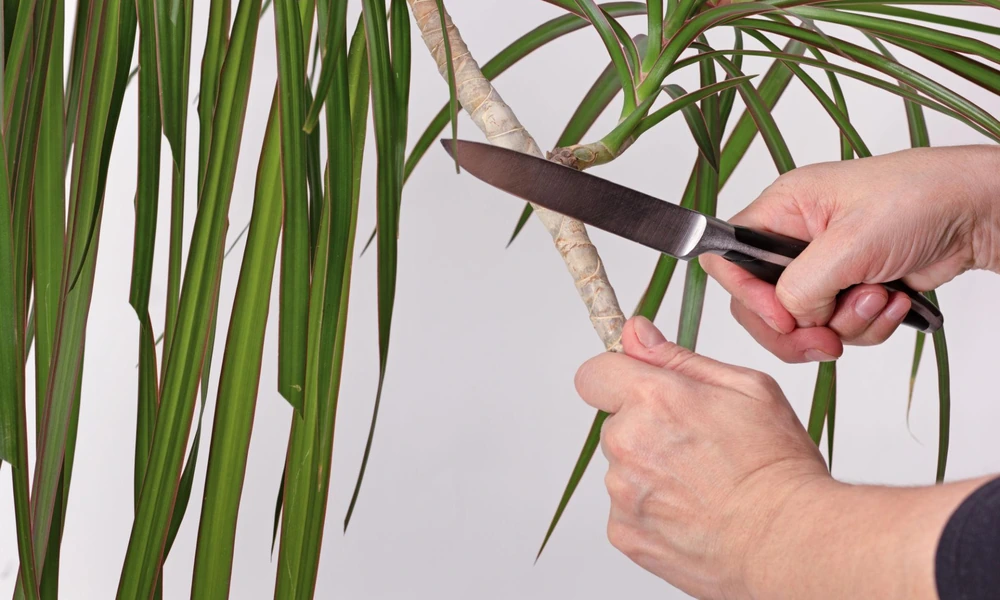
Pruning can help keep an indoor tree from becoming too tall or spreading too widely.
For suitable species:
- Remove dead or damaged growth first.
- Shorten selected stems above a node or leaf joint.
- Use clean, sharp pruning tools.
- Avoid removing too much healthy foliage at once.
- Follow species-specific guidance because not every tree responds to pruning in the same way.
Dracaenas, rubber plants, and umbrella trees can all be managed through selective pruning, but their growth patterns differ.
Keep light conditions consistent
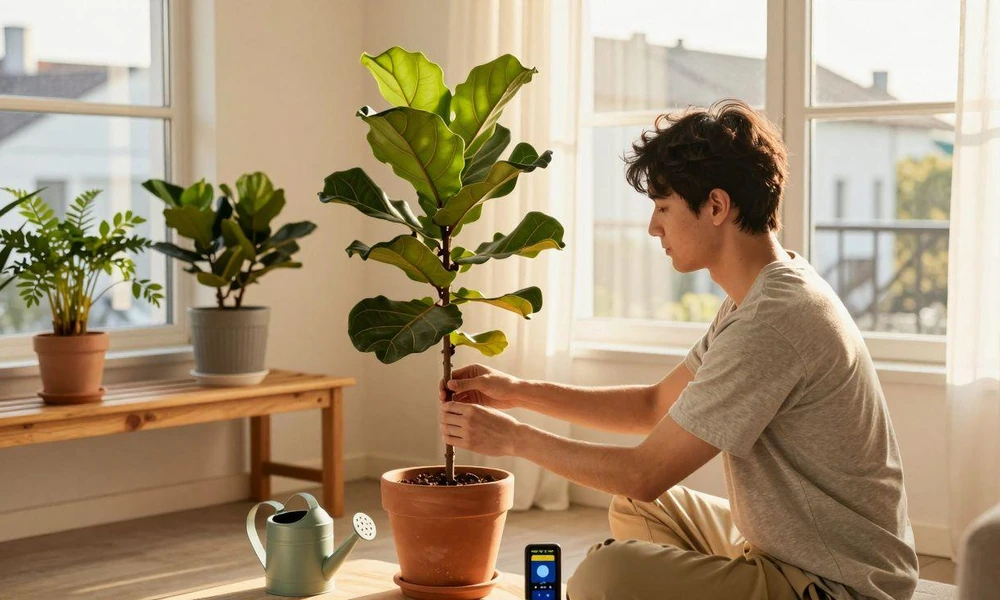
Light affects how quickly a plant grows. A tree in brighter conditions may grow more vigorously than one in moderate light.
Do not deliberately deprive a plant of the light it needs just to keep it small. Poor light can cause weak, stretched growth rather than a healthy compact shape.
Small-Apartment Placement Realities
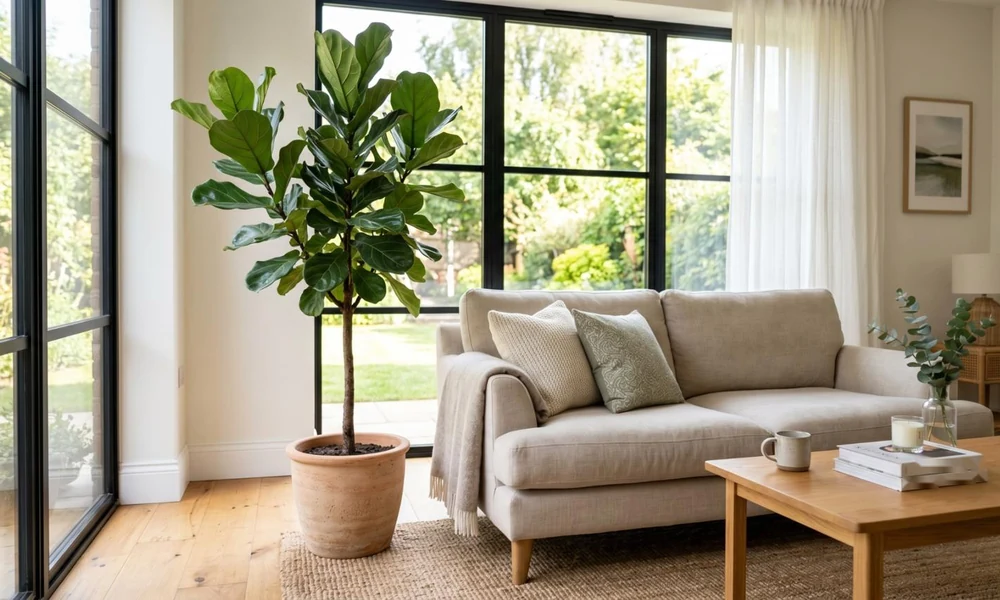
Even the right tree can become inconvenient if you put it in the wrong place.
Place the tree near a suitable window.
If your apartment has only one main window, the tree may gradually lean toward the light. Rotate the pot occasionally to encourage more even growth, provided the plant tolerates its new orientation.
Keep corners from becoming light traps.
A corner may look like the perfect place for a tree because it stays out of the way. However, a corner far from the window may receive too little light.
If that is the only available position, consider a more light-tolerant species or supplemental grow lighting.
Avoid cold drafts in winter.
Entry doors and poorly sealed windows can expose plants to sudden temperature changes. Move sensitive plants away from draft paths and avoid placing pots directly against very cold glass.
For seasonal placement and plant choices, see our guide to winter indoor plants for apartments.
Check the weight before choosing a container.
A mature plant, wet potting mix, and ceramic container can become surprisingly heavy. Choose a stable pot or plant stand with a broad base, and use a saucer to protect the floor.
Measure the route from the entrance to the final position, too. A tree that fits beside your sofa may still be difficult to carry through a narrow doorway.
FAQ: Indoor Trees for Small Apartments
Can you keep an indoor tree small in a pot?
Yes, container size can influence growth, but the roots still need enough space and healthy growing conditions.
Which indoor trees are safe for cats and dogs?
Parlor palms and money trees are listed as non-toxic by the ASPCA.
How tall do indoor trees get in apartments?
Many suitable choices can be maintained around three to six feet, depending on species and conditions.
Do indoor trees need direct sunlight?
Most prefer bright indirect light, although yucca generally needs a brighter position.
How do I stop an indoor tree from getting too tall?
Use suitable pruning and avoid unnecessary pot upsizing rather than restricting the roots excessively.
Where should I place an indoor tree in a small apartment?
Choose a bright position with enough ceiling clearance, walking space, and access for watering.
Disclaimer: Indoor plant heights and care requirements vary with species, age, light, temperature, container size, and growing conditions. Pet-safety classifications should be checked by botanical name before purchase. Even plants listed as non-toxic can cause stomach upset if eaten.