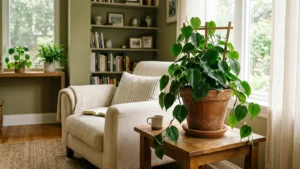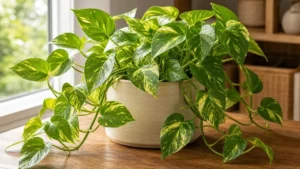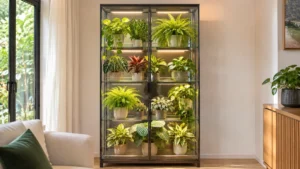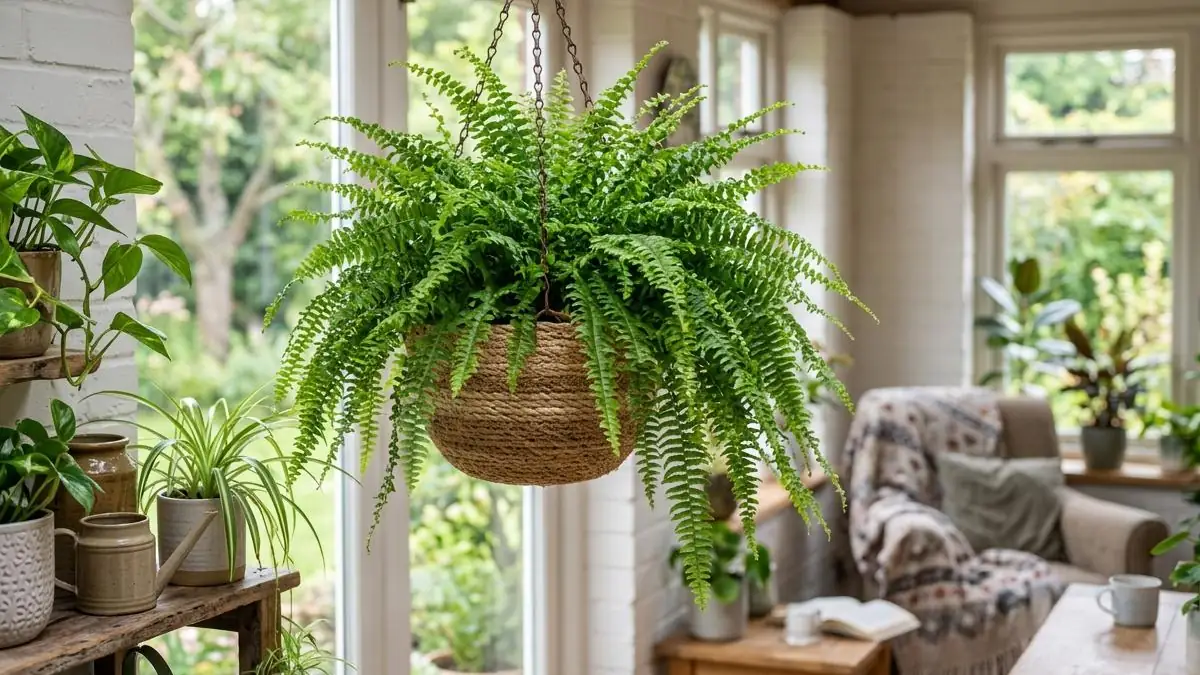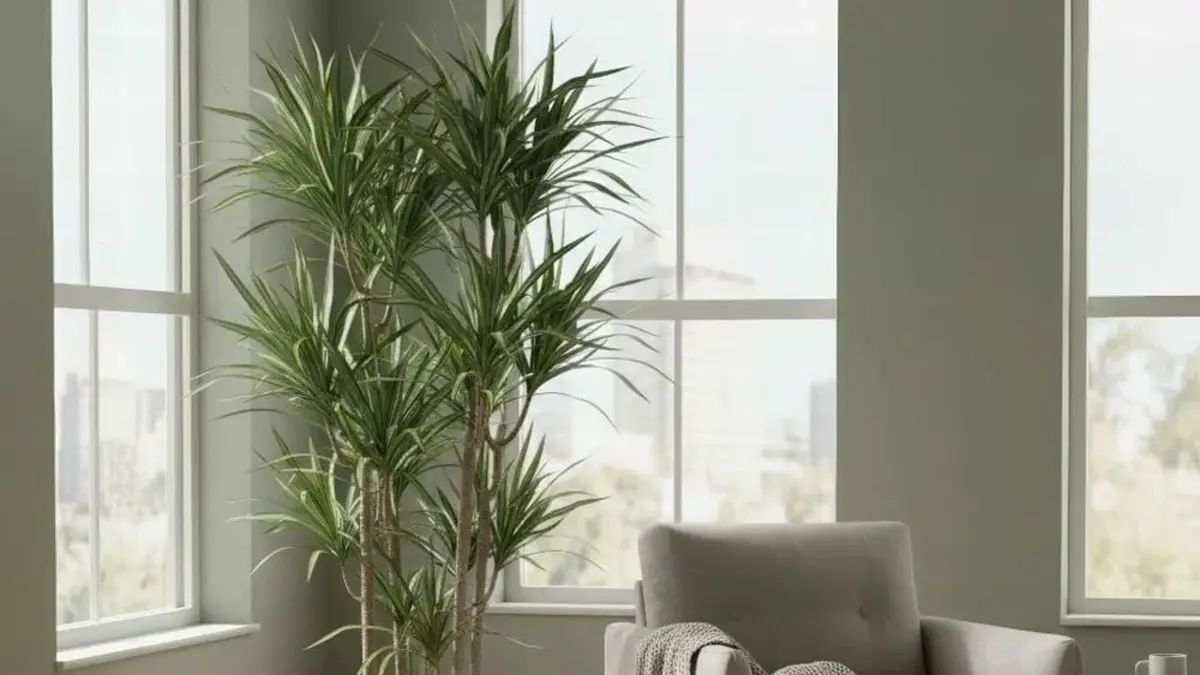
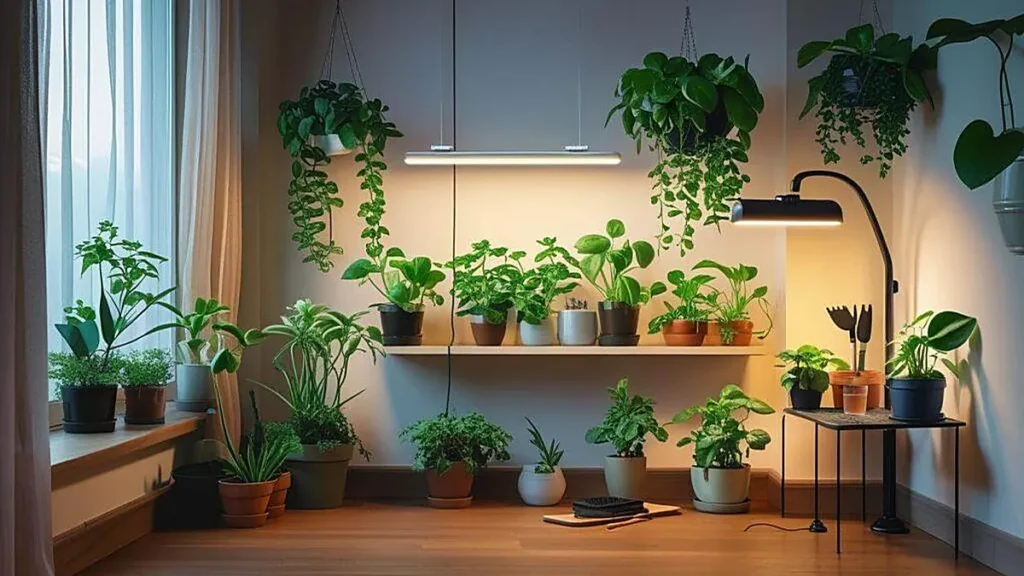
Choosing a grow light is easier when you start with your setup: use a bulb for one or two plants, linkable LED strips for a shelf, or a pendant for a larger statement plant. Look for full-spectrum output, check actual wattage and PPFD data, and match the light’s coverage to the space not just the number of plants.
The best grow light isn’t necessarily the most powerful one. A small bulb can work well for a single plant, while a shelf full of plants needs more even coverage. The important part is understanding the difference between light type, electrical wattage, and the amount of useful light that actually reaches your leaves.
How we chose: This guide uses desk research from manufacturer specifications and published product information. No hands-on product testing was performed. Product specifications are reported as published by the manufacturers, not as independent test results.
AI Overview: Which Grow Light Is Best for Indoor Plants?
- For one or two plants: A full-spectrum LED grow bulb is a simple starting point.
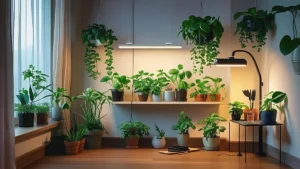
- For plant shelves: Linkable LED strips or bars spread light across a longer area.
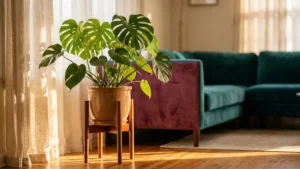
- For a large statement plant: A hanging pendant can provide focused light while fitting into a living-room setup.
- For choosing the right output: Check actual watts, PPF, PPFD, and the manufacturer’s coverage guidance.
- For measuring results: Use a suitable plant light meter rather than relying only on how bright the fixture looks to your eyes.
Key Takeaways
- Full-spectrum grow lights provide a broad range of wavelengths useful for plant growth.
- Bulbs work well for individual plants, while strips and bars suit shelves and cabinets.
- Panels are useful when you need broader coverage over a group of plants.
- Wattage tells you how much electrical power a light uses, not exactly how much useful light reaches the leaves.
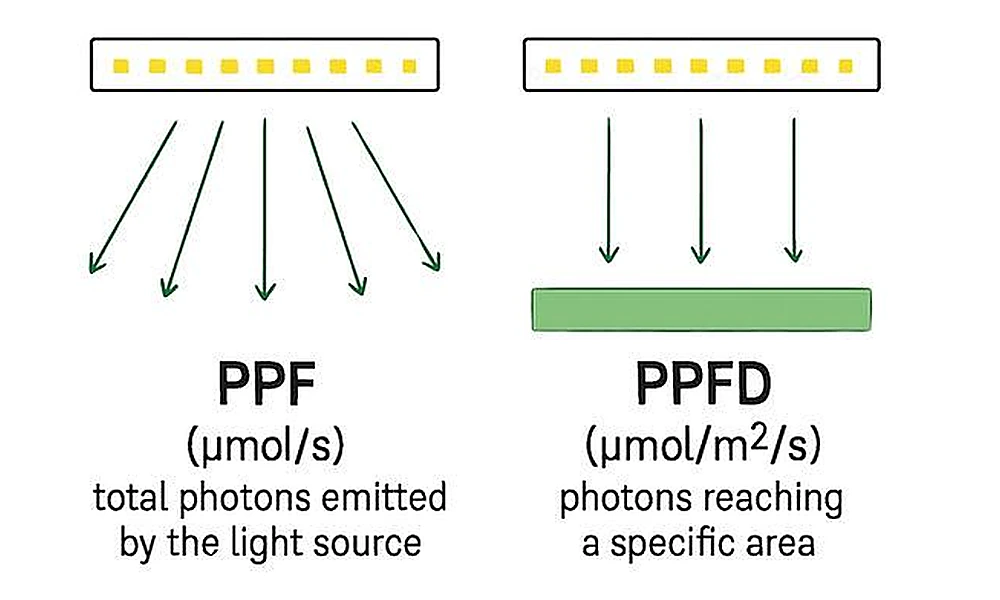
- PPF measures the total photosynthetic light output; PPFD measures how much reaches a particular area.
- Light intensity drops as the distance from the fixture increases.
- Choose a grow light based on your plants’ needs, shelf size, fixture distance, and published light-output data.
- A timer helps maintain a consistent lighting schedule.
What Does “Full Spectrum” Mean for Grow Lights?
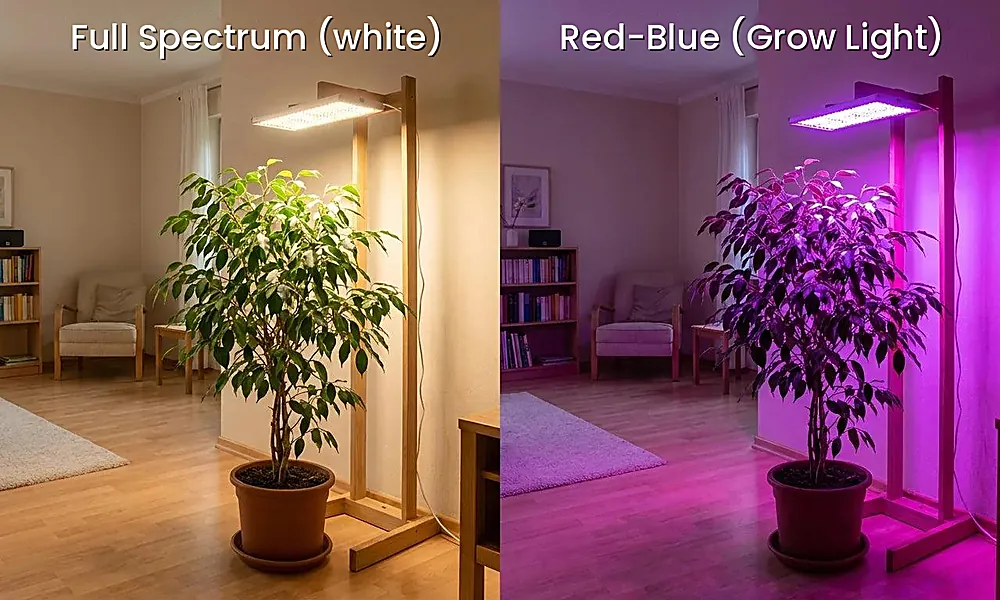
A full-spectrum grow light produces a broad range of light wavelengths, including the colors plants use for photosynthesis. The main range used to describe photosynthetically active radiation (PAR) is approximately 400–700 nanometers (nm).
Plants use different parts of this range in photosynthesis and other growth processes. That’s why a grow light designed for plants should be judged by more than how bright or white it looks in your room.
Many modern full-spectrum LEDs produce white or warm-white light. Unlike older purple or blue-red grow lights, they can blend into a normal living space and make it easier to inspect leaves for pests, discoloration, and other problems.
However, the term “full spectrum” doesn’t tell you everything. Two lights can both use that label but deliver different amounts of light to your plants.
When comparing products, look for:
- A published spectrum graph or wavelength range.
- PPF or PPFD information.
- Actual electrical wattage.
- Coverage or PPFD maps at stated distances.
- A recommended hanging height or installation guide.
A university guide from Virginia Tech explains how to choose LED grow lights, including why plant-light measurements are more useful than judging a fixture by appearance alone.
PPF vs. PPFD: What’s the Difference?
These two measurements are especially useful when comparing grow lights.
| Measurement | What it tells you | Unit |
|---|---|---|
| PPF | Total photosynthetic light emitted by a fixture each second | µmol/s |
| PPFD | Photosynthetic light reaching a specific area each second | µmol/m²/s |
| Wattage | Electrical power the fixture consumes | Watts (W) |
| Kelvin (K) | The appearance of the light’s color | K |
| Lumens | Brightness as perceived by human eyes | lm |
Think of PPF as the total amount of useful light leaving the fixture. PPFD tells you how much of that light reaches a particular spot where your plant sits.
This distinction matters because a light can have a high total output but spread it over a large area. The leaves may receive less light than you expect if the fixture is too far away.
Also, don’t confuse PAR with PPFD. PAR describes the wavelength range; PPFD describes the intensity of photosynthetic light reaching a surface.
Grow Light Types: Bulbs, Strips, Bars, and Panels
The shape of the grow light affects how you install it and how evenly it covers your plants. Choose the form factor before comparing individual models.
1. LED Grow Light Bulbs
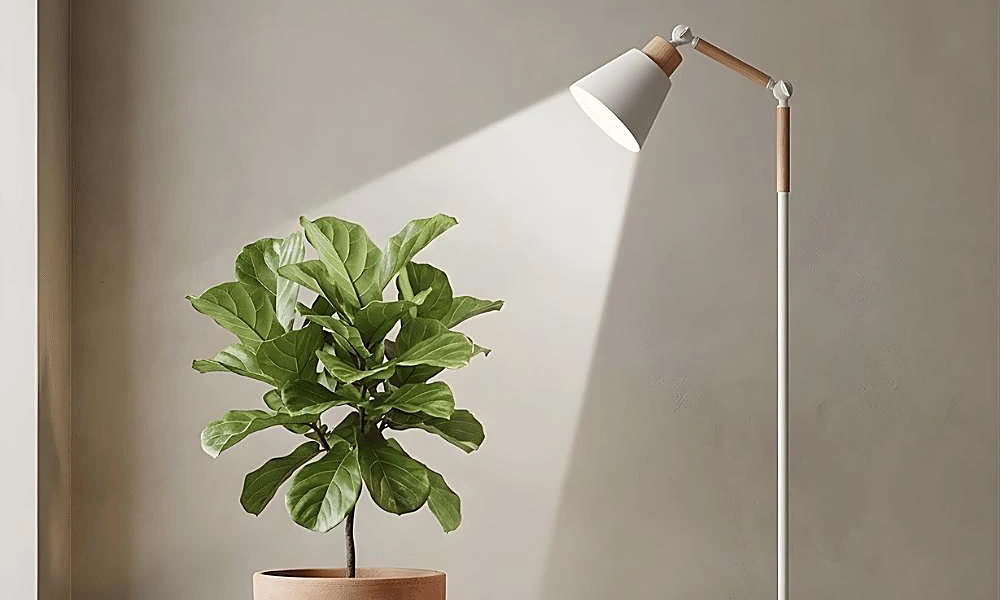
A grow light bulb screws into a compatible lamp socket. It’s one of the simplest ways to add artificial light to a small indoor plant setup.
Best for:
- One large houseplant.
- One or two small plants grouped together.
- A plant beside a desk or window.
- People who want a simple fixture without installing a lighting system.
The main limitation is coverage. A single bulb concentrates light in a relatively small area, so plants placed far to the sides may receive less.
Check the bulb’s socket type, actual wattage, beam angle, and recommended distance before buying. Also check whether the bulb fits your lamp’s enclosure and heat requirements.
2. LED Grow Light Strips
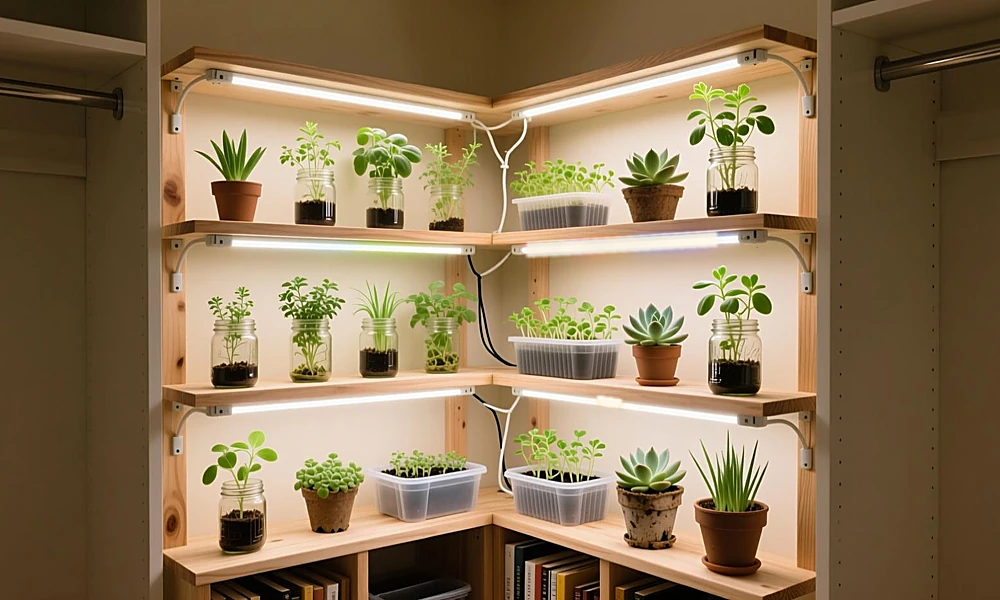
Grow light strips are long, narrow fixtures that can be attached beneath shelves or inside plant cabinets.
They’re useful when several plants sit in a row because the light can spread along the length of the shelf instead of coming from one central point.
Best for:
- Plant shelves.
- Propagation stations.
- Small indoor plant racks.
- Rows of foliage plants or seedlings.
Barrina’s T5 range is one example of this design. Its listed 2-foot model uses 10W per strip, has a 5000K color temperature and a 120-degree beam angle, and can connect with additional strips.
The advantage is flexible coverage. You can add more strips as your collection grows. The trade-off is that you’ll need to plan the mounting position and manage the power cords.
If you’re arranging a growing area, these indoor plant shelf ideas can help you think through spacing and placement before installing lights.
3. LED Grow Light Bars
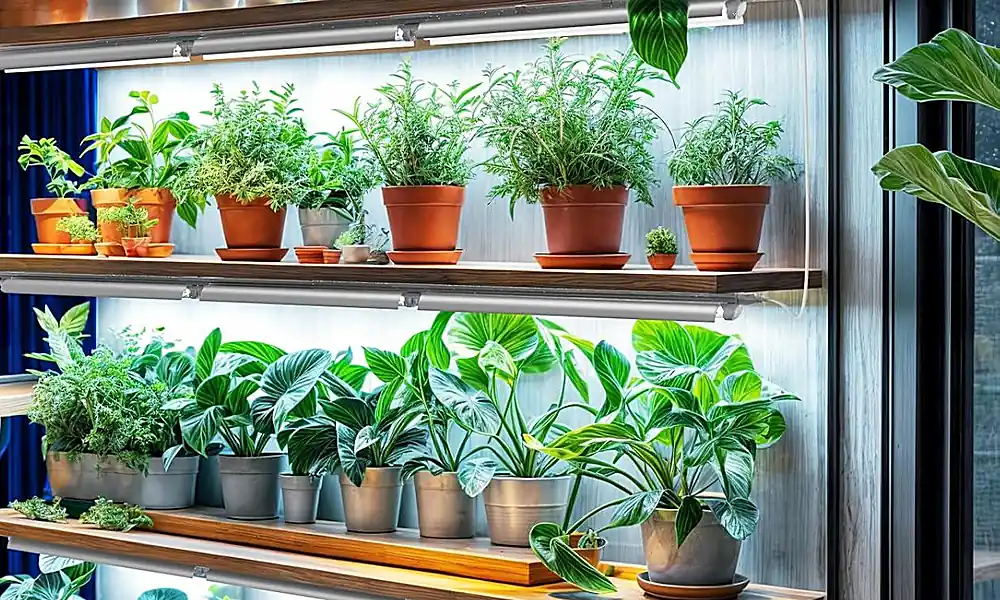
Grow light bars are similar to strips but are often designed as more substantial fixtures. Depending on the model, they may offer higher output, more even distribution, or adjustable mounting options.
Best for:
- Longer plant racks.
- Wider shelves.
- Multiple rows of plants.
- Setups that need more consistent coverage.
Check the manufacturer’s coverage map rather than assuming that a longer bar automatically provides enough light for every plant underneath it.
4. LED Grow Light Panels
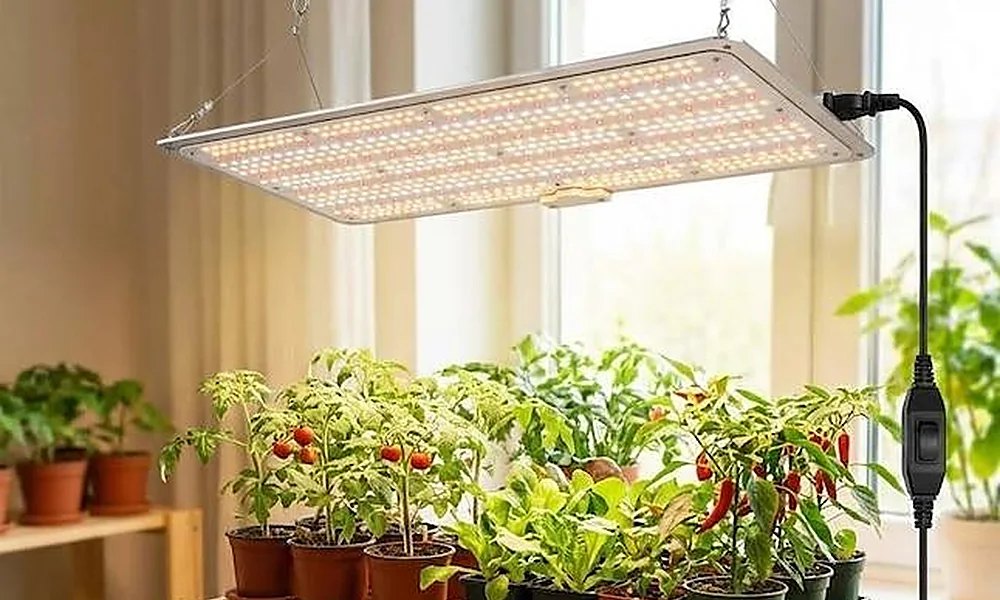
Panels contain multiple LEDs arranged across a wider surface. They can cover a group of plants or a tray more evenly than a single bulb.
Best for:
- Seedling trays.
- A broad tabletop growing area.
- Groups of plants with similar light requirements.
- Indoor growing setups that need adjustable intensity.
Panels can be more powerful than a typical household bulb. Check the dimming options, hanging height, heat management, and PPFD distribution before choosing one.
For ordinary foliage plants, a large panel may be unnecessary if a smaller bulb or strip system already provides enough light.
5. Hanging Grow Light Pendants
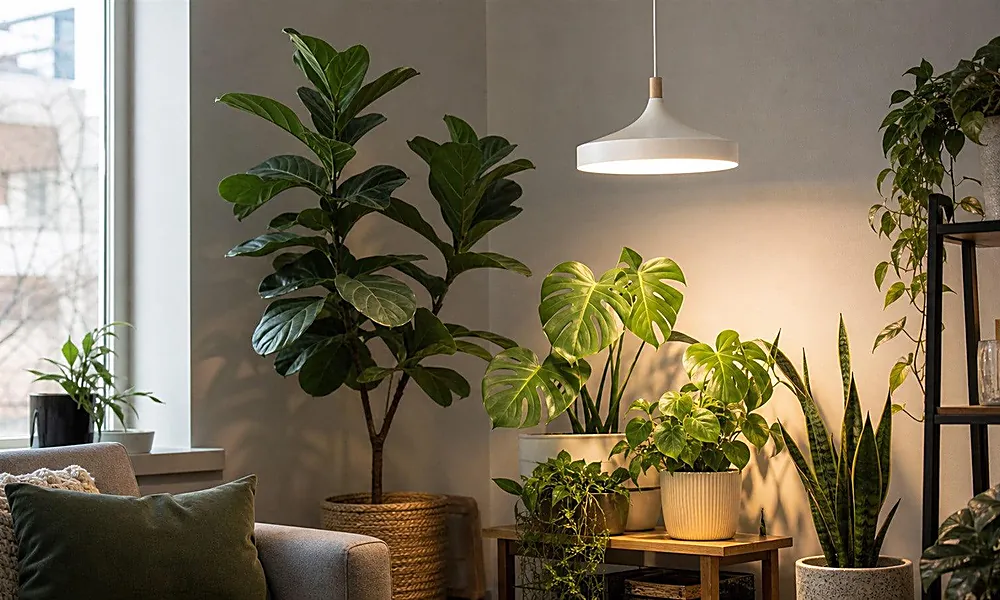
A pendant hangs above a plant and can look more like a decorative room light than a piece of growing equipment.
Best for:
- A large statement plant.
- A plant placed away from a bright window.
- Living rooms where appearance matters.
- A single focal point rather than an entire shelf.
The Soltech Aspect Gen 2 is an example. Its published specifications include 36W power consumption, 50 µmol/s PPF, a 3000K warm-white color temperature, and an inline dimmer.
Its main appeal is the combination of a decorative fixture and published growing-light specifications. The trade-off is that a pendant is generally a more expensive way to light several plants than using shelf strips.
Grow Light Wattage and Coverage: How Much Do You Need?
Wattage is useful, but it doesn’t tell you exactly how much light your plants receive. Two fixtures with the same wattage can produce different light output and distribute it differently.
Use wattage as an initial comparison, then check PPF, PPFD, and the manufacturer’s coverage information.
Rough Wattage Starting Points
The following ranges are practical starting estimates, not guaranteed coverage rules.
| Setup | Possible starting point | Suitable light type |
|---|---|---|
| One or two small-to-medium plants | 20–40W | LED bulb |
| One narrow plant shelf | Around 20–40W total | Two to four 10W strips |
| Larger shelf or rack | Around 40–80W or more | Multiple strips or bars |
| One larger statement plant | Around 30–40W | Pendant or focused fixture |
These figures are not universal plant-light requirements. The correct output depends on the species, fixture efficiency, distance, beam angle, and area being illuminated.
For example, a shade-tolerant foliage plant and a succulent don’t necessarily need the same light intensity. If your collection includes plants with very different light needs, arrange them so each receives a suitable amount.
You can also compare plant choices in our guide to low-light indoor plants.
Why Distance Matters
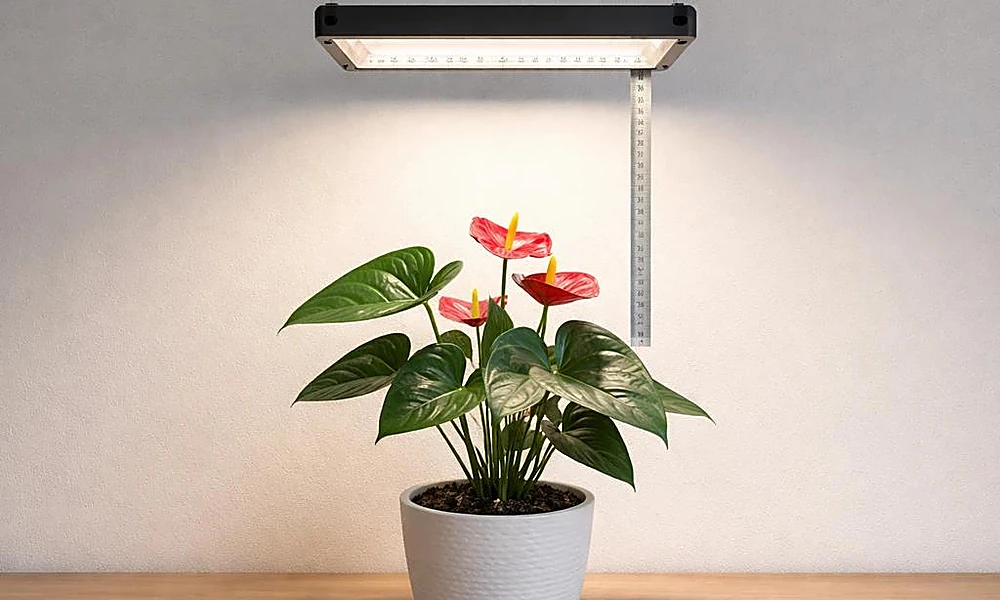
Light intensity decreases as the fixture moves farther from the leaves. A grow bulb that provides strong light close to the plant may deliver much less at a greater distance.
This is why a fixed rule such as “hang every grow light 12 inches above the plant” can be misleading.
Instead:
- Check the manufacturer’s recommended hanging height.
- Look for a PPFD map showing how much light reaches the plant at different distances.
- Position the fixture to cover the foliage evenly.
- Adjust the height or dimming level if the plant shows signs of receiving too much or too little light.
If the manufacturer doesn’t publish a useful coverage chart, treat its coverage claims cautiously.
Don’t Rely on “Watt Equivalent” Labels
Some grow lights advertise a high incandescent or HID-equivalent wattage. That number doesn’t mean the LED actually consumes that much electricity or delivers the same amount of useful light.
Look for the fixture’s actual electrical wattage and its PPF or PPFD figures instead.
A product that publishes clear measurements gives you more useful information than one relying only on impressive-sounding equivalent wattage.
Best Grow Lights for Indoor Plants by Use Case
These three options represent different setups rather than one universal winner. Their specifications below come from manufacturer product information. They were not independently tested for this article.
Best Grow Light Bulb for One Plant: SANSI BR30 36W
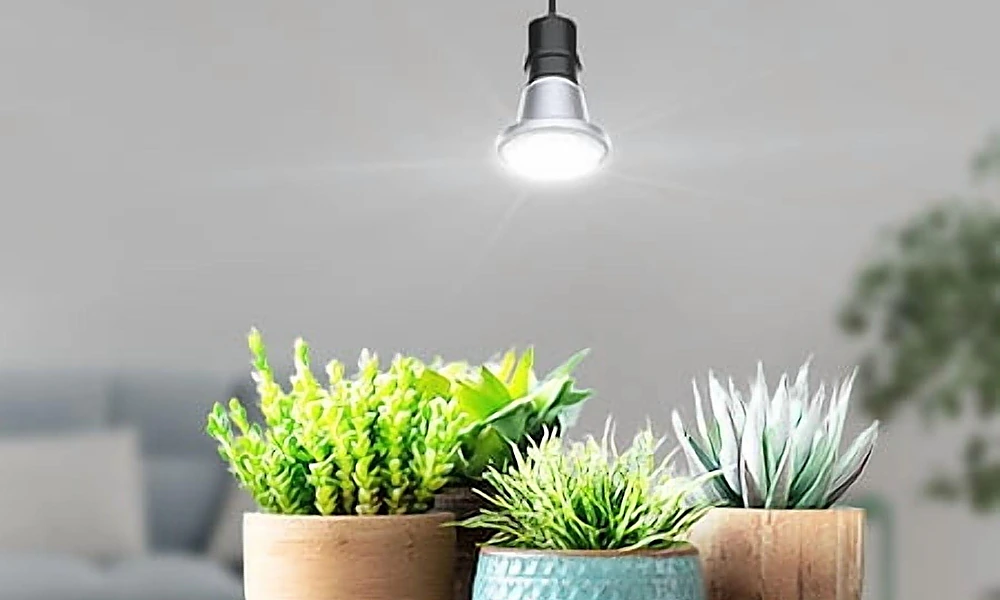
The SANSI BR30 36W is a full-spectrum LED bulb designed for a standard E26 socket in its US version.
Published specifications:
- Actual power: 36W.
- Color temperature: 4000K.
- Manufacturer-listed wavelength coverage: 400–780nm.
- PPF: 65.6 µmol/s.
- PPFD: 265.58 µmol/m²/s at 1 foot.
The published PPF and PPFD figures make this model easier to compare than a bulb that lists only wattage and lumens.
Why consider it: It provides a straightforward bulb-style option for one plant or a small group placed close enough to receive useful light.
Trade-off: One bulb has limited coverage. If you have plants spread across a wide shelf, one fixture may not distribute light evenly across all of them.
Best Grow Light Strips for Shelves: Barrina T5 2-Foot 10W
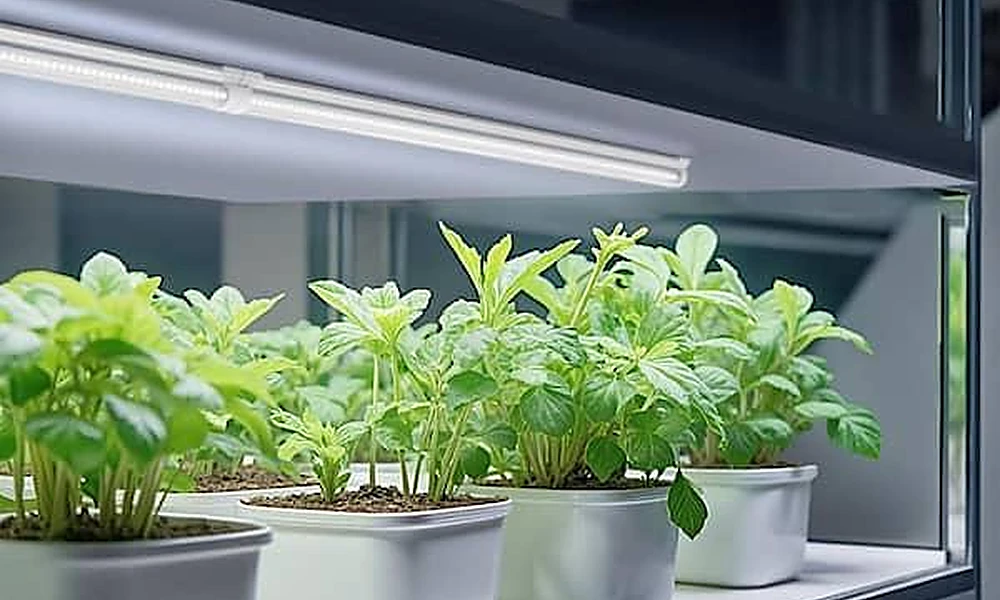
Barrina’s T5 strips are designed for shelf and rack setups. Each listed 2-foot unit uses 10W and has a 5000K color temperature.
Published specifications:
- Power: 10W per strip.
- Length: 2 feet.
- Color temperature: 5000K.
- Beam angle: 120 degrees.
- Linkable design.
- Multiple installation accessories.
The manufacturer lists configurations that allow multiple strips to connect together. That makes this style useful when you want to extend lighting across a shelf rather than rely on one bulb.
Why consider it: The slim shape works well beneath shelves, and you can expand the setup as your plant collection grows.
Trade-off: You’ll need to plan the installation, power connections, and spacing. A strip that lights the middle of a shelf may not provide even coverage at both ends.
Best Decorative Pendant: Soltech Aspect Gen 2
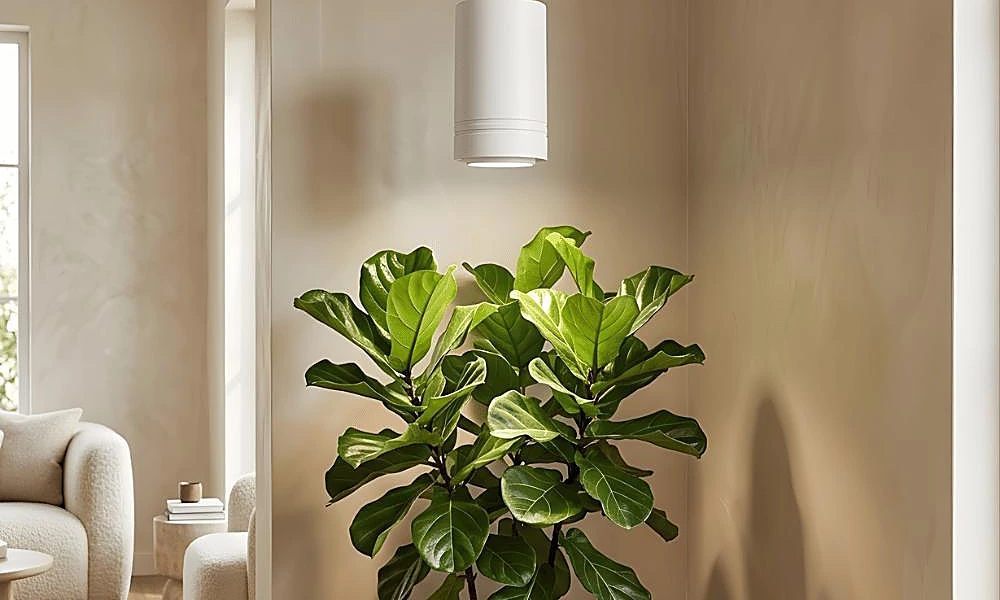
The Soltech Aspect Gen 2 is designed for people who want a grow light that also works as a room fixture.
Published specifications:
- Power: 36W.
- PPF: 50 µmol/s.
- Color temperature: 3000K warm white.
- Dimming: Inline dimmer from 10% to 100%.
- Beam angle: 60 degrees.
Its warm-white appearance and hanging design make it a different choice from shelf strips or a standard bulb.
Why consider it: It suits a single statement plant in a living space where fixture appearance matters.
Trade-off: A pendant is not the most economical choice for lighting many plants across several shelves. Its focused beam also makes placement important.
Quick Comparison
| Product | Type | Actual wattage | Best use |
|---|---|---|---|
| SANSI BR30 36W | Bulb | 36W | One plant or small cluster |
| Barrina T5 2-foot | Strip | 10W each | Shelves and racks |
| Soltech Aspect Gen 2 | Pendant | 36W | One statement plant |
Which should you choose?
- Choose SANSI if you need a bulb for a small setup.
- Choose Barrina if you’re lighting a shelf or plant rack.
- Choose Soltech if you want a decorative pendant over one main plant.
Don’t compare these products by wattage alone. Their form factors and light distribution are different, so the best choice depends on where your plants sit.
How to Tell Your Grow Light Is Actually Working
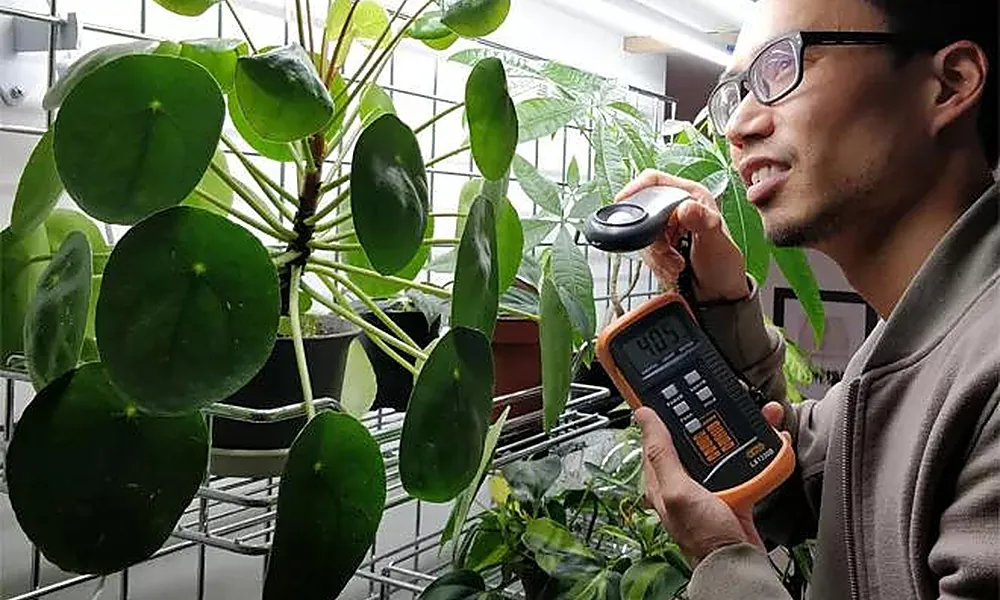
Buying a grow light is only the first step. You also need to check whether the plant receives enough light at the position where it grows.
Here are three ways to assess it.
1. Watch New Growth
Plant response is useful, although it isn’t a precise measurement.
Look for:
- New leaves that develop normally.
- Growth that stays reasonably compact for the species.
- Healthy leaf color.
- Stems that aren’t stretching excessively toward the light.
Long, weak growth and unusually large gaps between leaves can indicate insufficient light. However, watering, nutrition, temperature, and plant health can also affect growth, so don’t assume light is the only possible cause.
2. Use a Phone Light App for Rough Comparisons
A phone app may help you compare brightness in different positions. For example, you can compare the reading directly under a fixture with one at the edge of the shelf.
However, phone sensors and apps aren’t a reliable replacement for a dedicated plant-light meter. They may not measure the relevant wavelengths accurately, and lux readings don’t directly tell you PPFD.
Use them as a rough comparison tool, not as proof that your plants are receiving the correct light.
3. Use a PPFD Meter for More Precise Measurements
A quantum sensor or suitable PPFD meter measures photosynthetic light reaching a surface. This is more useful when you’re setting up a larger shelf system or adjusting fixture height.
Take readings at leaf level and at several points across the growing area. A single reading directly under the center of a fixture won’t tell you whether plants at the edges receive enough light.
Our planned plant-light measurement guide should cover the difference between lux and PPFD and how to choose a meter. Keep in mind that this article is about choosing the fixture; measuring its output is a separate task.
FAQ: Grow Lights for Indoor Plants
What does full spectrum mean for grow lights?
Full-spectrum grow lights provide a broad range of wavelengths, including the 400–700nm range commonly used to describe photosynthetically active radiation. The label alone doesn’t tell you the fixture’s intensity or coverage, so check its PPF and PPFD information.
What wattage grow light do I need for indoor plants?
A 20–40W bulb can be a starting point for one or two small-to-medium plants, while shelves may need several 10W strips. These are rough estimates; actual needs depend on distance, coverage, and plant species.
How far should a grow light be from plants?
There isn’t one correct distance for every fixture. Follow the manufacturer’s hanging-height and PPFD guidance, then adjust based on coverage and plant response. A light delivers less intensity as the distance from the leaves increases.
Do grow lights work for all houseplants?
Yes, grow lights can supplement natural light for many houseplants, but different species need different intensities and daily lighting periods. Choose a fixture that can meet the needs of your plants rather than assuming one setting suits every species.
Are full-spectrum LED grow lights better than purple grow lights?
Full-spectrum LEDs can be more comfortable in living spaces because they produce white or warm-white light. Purple fixtures can also support plant growth, so compare their actual output and coverage rather than judging by appearance alone.
Can I leave my grow light on all day?
It’s better to follow a suitable daily light schedule for the plants you’re growing. Plants have different light requirements, and leaving a fixture on continuously isn’t a substitute for matching intensity and duration to the species.
Are LED grow lights expensive to run?
Running costs depend on the fixture’s actual wattage, how many hours it operates, and your electricity rate. A 36W fixture running for 12 hours uses 0.432 kWh per day, before accounting for any other equipment.
Final Thoughts
The best grow light for indoor plants depends on the space you’re lighting. A bulb is simple for one plant, strips are practical for shelves, and a pendant can suit a larger focal plant.
Before buying, check actual wattage, PPF or PPFD, coverage, and recommended hanging height. Those details tell you more than a large watt-equivalent number or a full-spectrum label alone.
Choose the fixture that fits your setup, position it carefully, and watch how your plants respond.