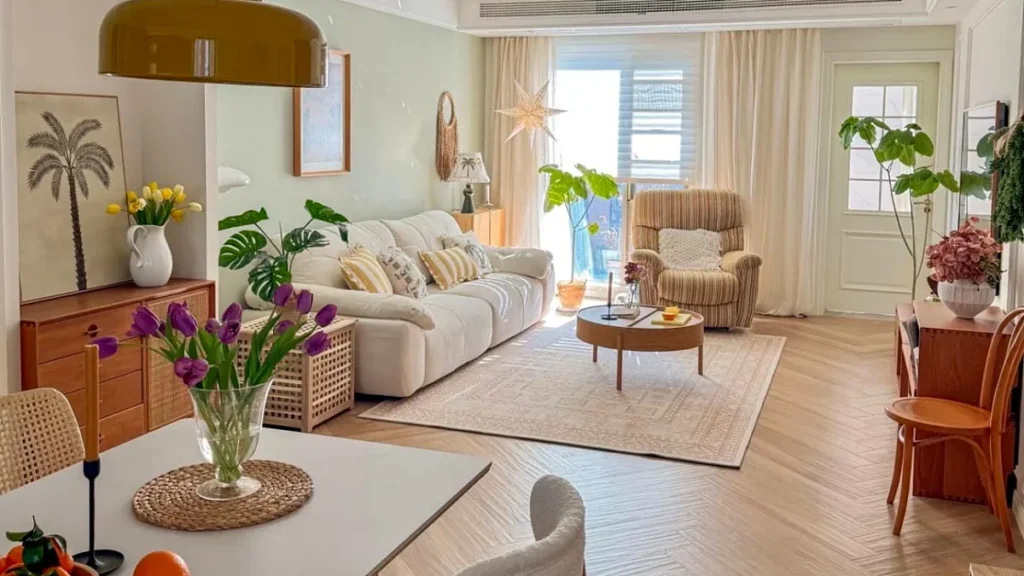
Spring Plant Decor is a good excuse to bring a little more life into your home. After months of darker colours and heavier winter textures, a few flowering bulbs, fresh green leaves, and lighter decorative touches can make a room feel completely different.
You don’t need to replace your furniture or fill every corner with new plants. Start with a couple of spring flowers, switch out a few decorative pots, and give your existing houseplants a little attention as the days get longer.
This guide covers the best plants for spring displays, simple decorating ideas for different rooms, and the care changes that help your plants adjust to the new season.
Key Takeaways About About Spring Plant Decor
- Tulips, daffodils, hyacinths, and primroses are popular choices for spring displays.
- Choose plants with some unopened buds if you want to enjoy the flowers for longer.
- Use lighter pots, simple centrepieces, and small arrangements to refresh each room.
- Adjust watering and feeding as plants begin growing more actively.
- Gradually prepare houseplants before moving them outdoors.
- Keep true lilies away from cats because they can cause severe poisoning.
- You can create a fresh spring look without buying an entirely new collection of plants.
Spring Plant Decor – AI Overview
To decorate your home for spring, add flowering bulbs such as tulips, daffodils, and hyacinths, bring in fresh greenery, and use lighter pots and natural materials. Place small arrangements in entryways, living rooms, bedrooms, and bathrooms. As daylight increases, adjust watering and feeding to match new growth, and gradually harden off houseplants before moving them outside.
Best spring plants for indoor decor
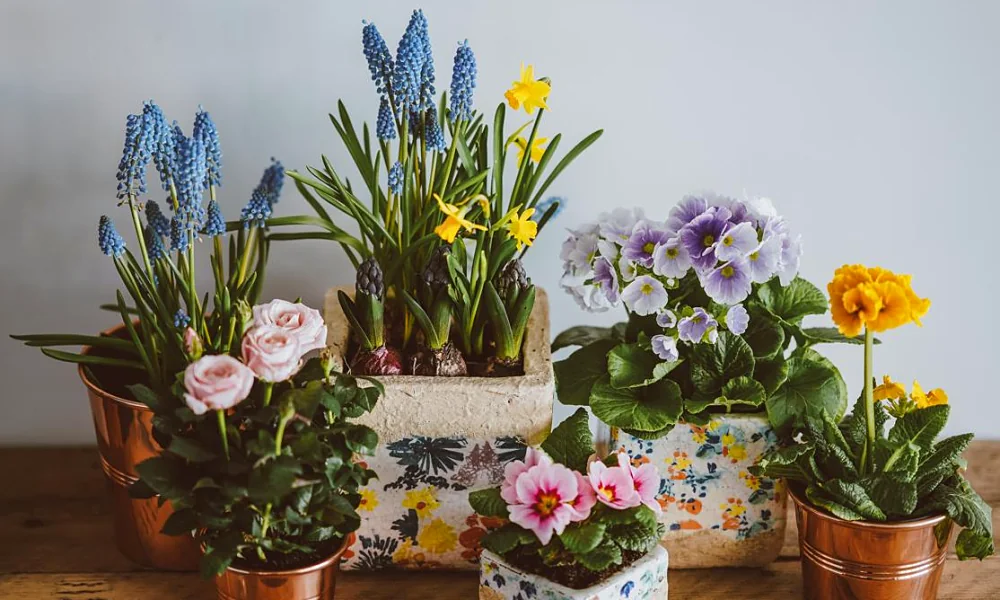
Spring flowers make decorating easy because they bring colour and texture without needing much extra styling. You can display them in simple ceramic pots, glass containers, or baskets that suit the rest of your home.
Here are some lovely options to consider.
Tulips
Tulips are one of the easiest ways to give a room a spring feel. Their clean shapes and range of colours work well in simple bowls, ceramic pots, or a line of individual stems in glass vases.
They generally last longer in cooler rooms, so keep them away from radiators and other warm spots.
Daffodils and narcissus
Their bright yellow flowers bring an instant lift to a windowsill or dining table. They look especially good in plain white or cream containers, where the flowers become the main feature.
Hyacinths
Hyacinths are known for their strong fragrance as well as their colourful flower spikes. One pot can be enough for a small room, especially if you prefer a lighter scent.
Primroses
Primroses are a cheerful choice for cool windowsills and small tabletop displays. Their compact size makes them easy to fit into spaces where a larger flowering plant would feel crowded.
Ranunculus
With their layered petals, ranunculus flowers look beautiful in a simple vase or mixed spring arrangement. They add plenty of detail without needing a complicated display.
Easter cactus
Easter cactus is a good option if you’d like a spring-flowering houseplant that can return in future years with the right care. Its rounded stem edges and colourful flowers make it a little different from the usual spring bulbs.
When buying flowering plants, look for a mix of open flowers and unopened buds. That way, you can enjoy the display as more blooms gradually appear.
Spring plant decor ideas for every room
You don’t need the same arrangement throughout the house. A small change in each room is often enough to make the whole space feel more seasonal.
Entryway: Make the first impression count
The entryway is a useful place to start because it’s the first area you see when coming home.
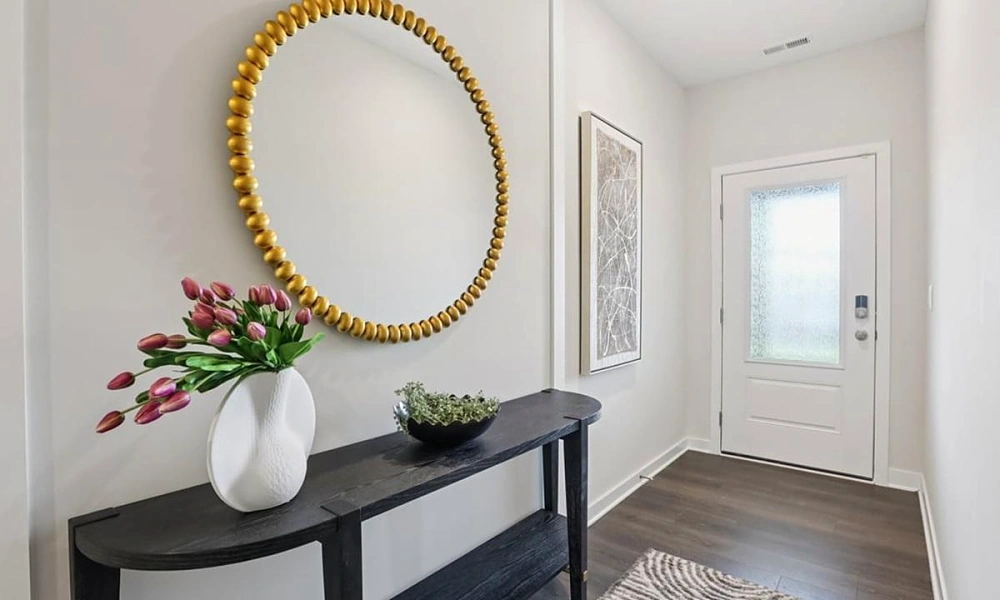
If you have a console table or small bench, try placing a bowl of spring bulbs beside a trailing plant. A simple wreath or a few natural branches can complete the arrangement without making the surface feel crowded.
Keep the colours fairly restrained. Two or three soft shades are usually enough to create a fresh look.
Living room: Refresh shelves and the mantel
This is where you can make the biggest visual change without buying much.
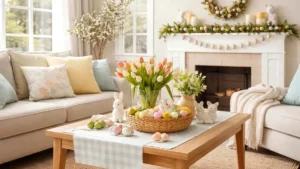
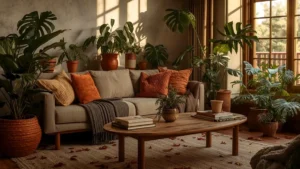
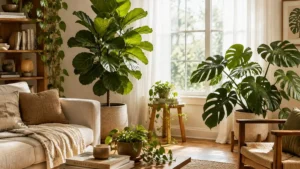
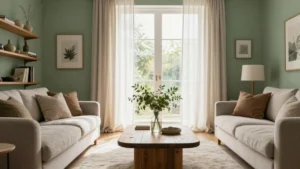
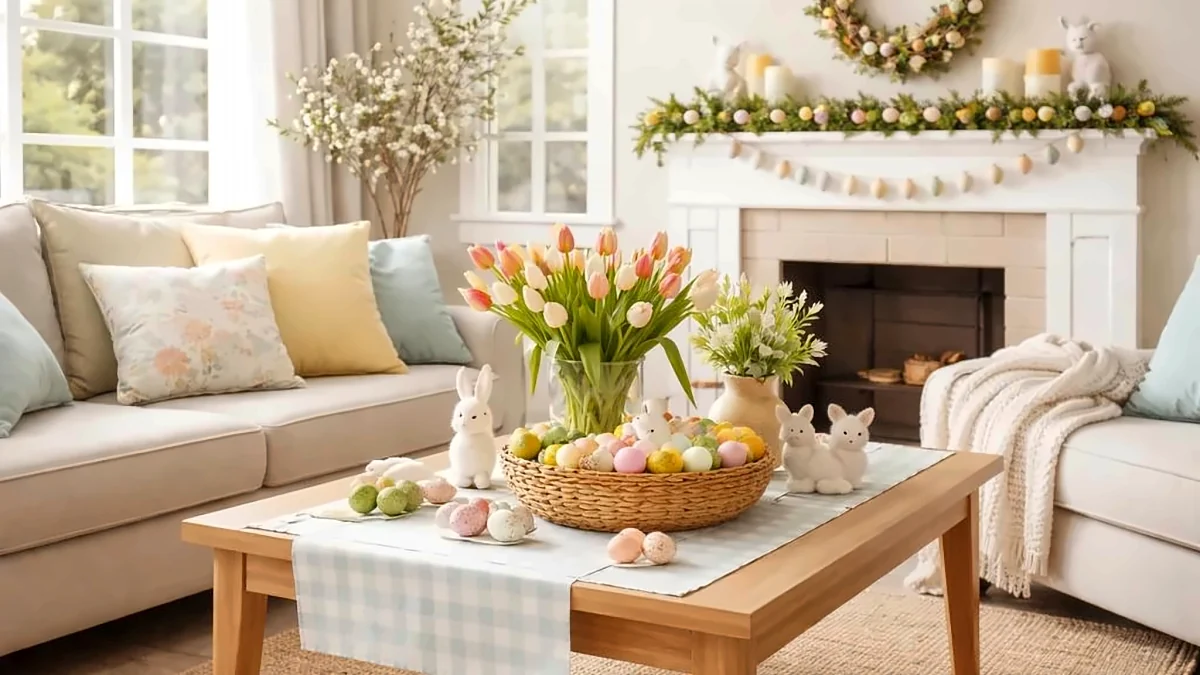
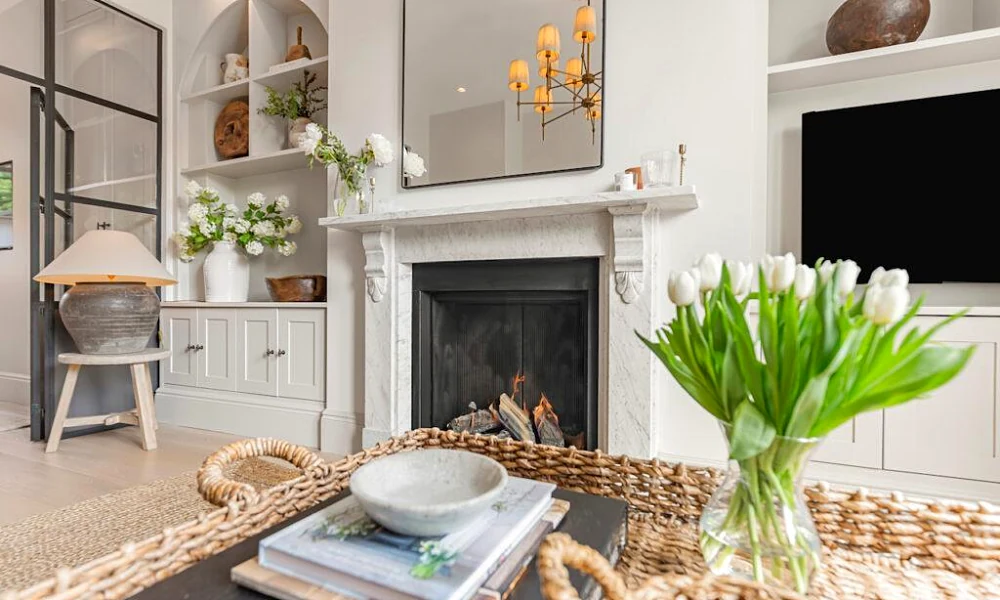
Swap dark winter pots for lighter ceramics, terracotta, or neutral containers. Add a small bulb arrangement to the mantel or place a few single stems in bud vases along a shelf.
For the coffee table, a low arrangement is often more practical than a tall bouquet. It adds colour without getting in the way when people are sitting around the table.
Dining room: Create a simple spring centrepiece
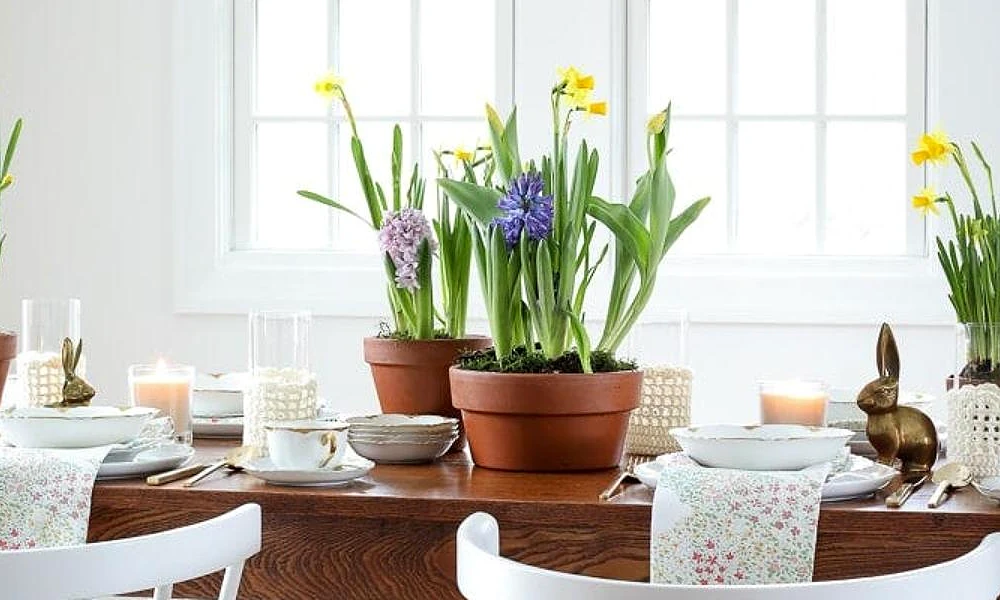
A spring table doesn’t need a large floral arrangement. A shallow bowl of bulbs, a small collection of bud vases, or a few flowering stems can do the job.
Keep the display low enough that people can see each other across the table. If you’re serving food, leave enough space for plates and serving dishes too.
Bathroom: Add a little greenery
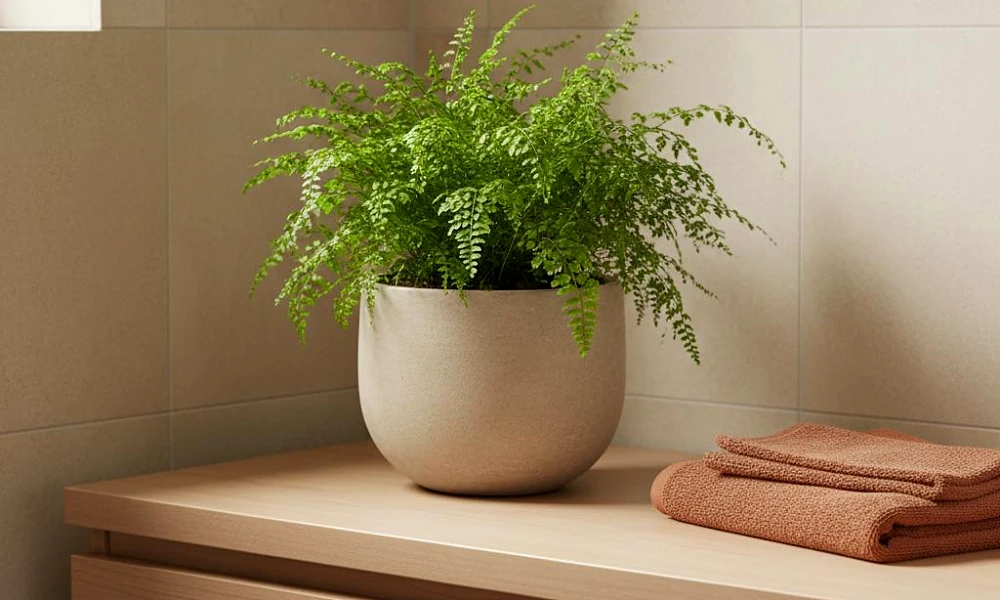
A small fern or another plant suited to your bathroom’s light and humidity can make the space feel fresher.
Pair it with lighter towels or a simple neutral pot. If your bathroom has very little natural light, choose a plant that can tolerate those conditions or use a different decorative option rather than forcing a plant to grow somewhere unsuitable.
Bedroom and home office: Keep things simple
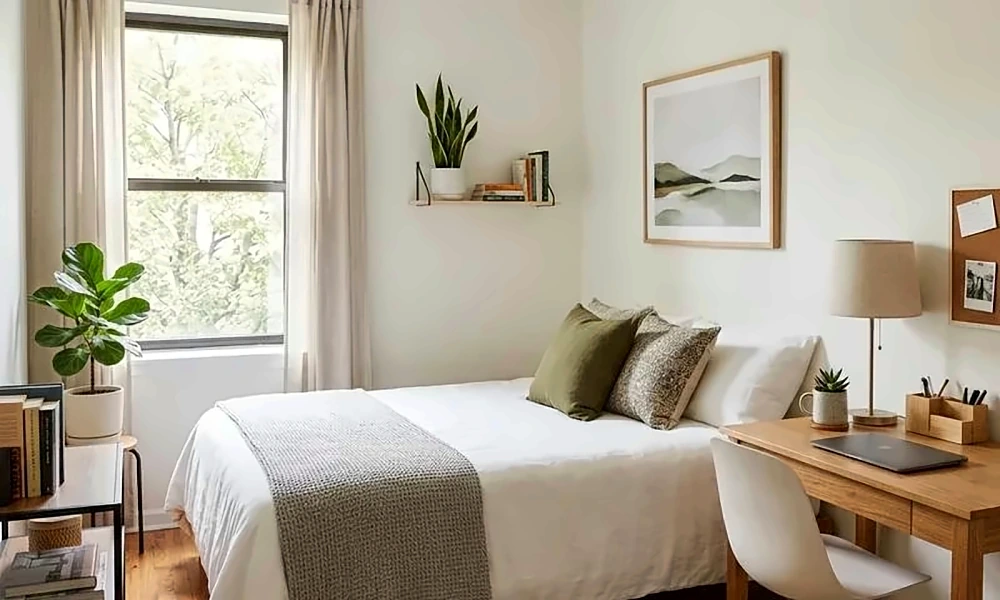
A small flowering plant on a bedside table can bring a touch of spring without taking over the room. A lighter throw or a small seasonal print can help tie the look together.
For a home office, one compact plant beside your desk is often enough. You want a little greenery in your workspace, not so many decorations that the desk becomes difficult to use.
Spring plant care: Light, watering, and feeding
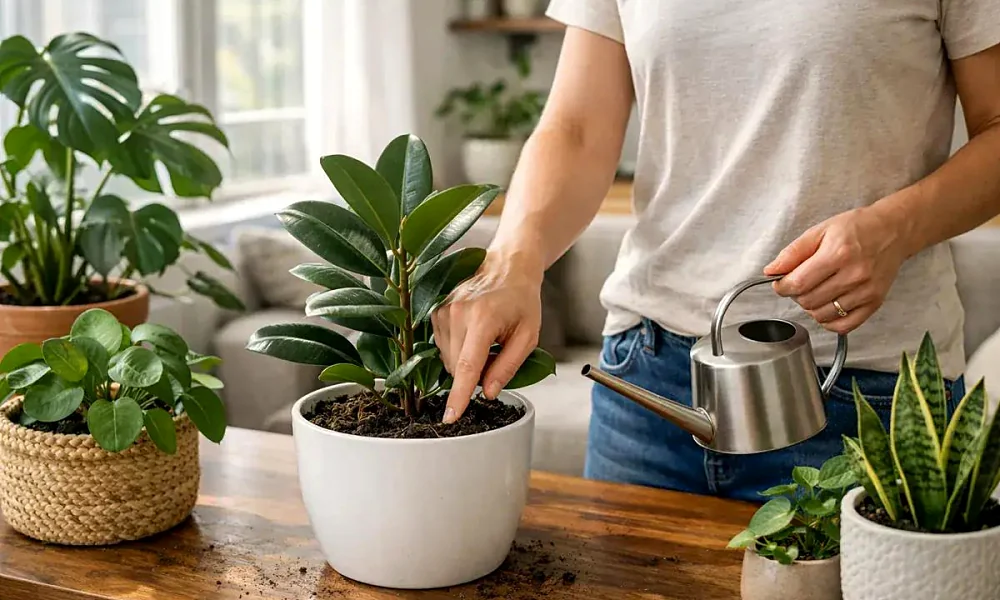
Decorating is only part of the seasonal change. As days become longer, many houseplants begin producing new growth, and their care routines may need adjusting.
Check the light. The sun’s angle changes through the year. A spot that was gentle during winter may receive stronger direct sunlight in spring. Watch for pale or bleached patches on leaves, and move plants if the light becomes too intense.
Review your watering routine. Plants that start growing actively may use water more quickly. Check the soil regularly and water when the plant’s needs indicate it’s time. Don’t automatically increase watering for every plant.
Resume feeding when growth returns. If a plant is actively growing, you can begin feeding again according to the fertilizer label. Some growers start with a diluted dose, but the right strength and frequency depend on the product and plant.
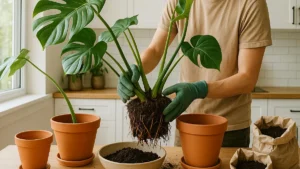
Check whether repotting is needed. Spring is a useful time to inspect roots and deal with plants that have outgrown their containers. If roots are tightly circling the pot or water runs through unusually quickly, take a closer look before deciding to repot. Our guide to rootbound plants explains the signs to watch for.
Moving houseplants outdoors after the last frost
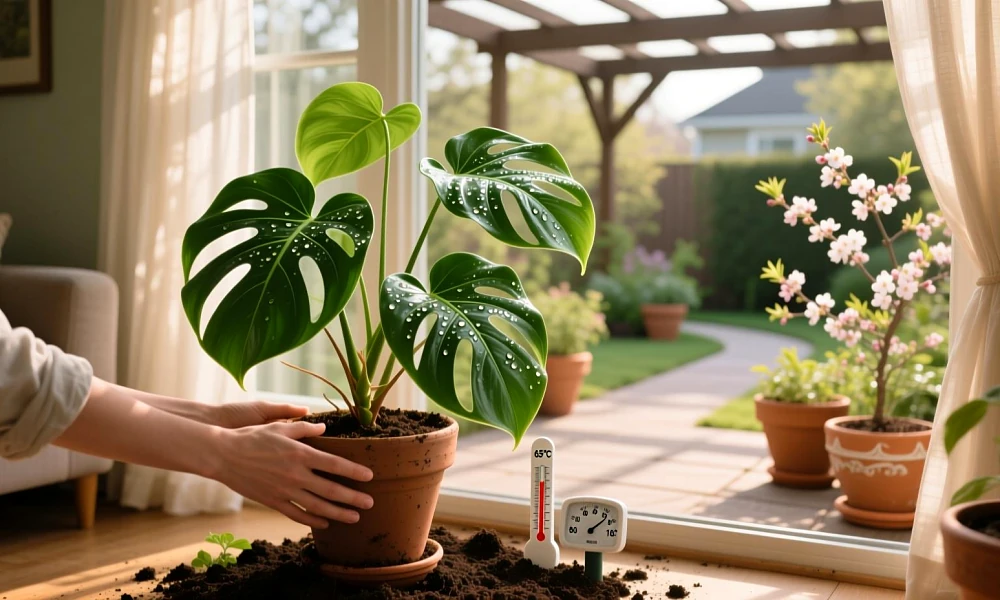
Some houseplants enjoy spending warmer months outside. A little fresh air and suitable outdoor light can be beneficial, but moving a plant straight from a protected indoor spot into strong sunlight can cause leaf damage.
The process of gradually adjusting a plant to outdoor conditions is called hardening off.
Here’s a simple way to do it:
- Start in a sheltered spot. Place the plant in shade or a protected area for around two to three hours.
- Bring it back indoors. Don’t leave it outside all day during the first few outings.
- Increase outdoor time gradually. Over roughly two weeks, allow the plant to spend longer outside.
- Introduce sunlight carefully. Increase exposure slowly, depending on the plant’s light requirements. Many tropical houseplants prefer bright shade rather than harsh direct sun.
- Watch the weather. Bring plants inside if temperatures are expected to fall below about 45°F (7°C), or sooner if the particular plant is sensitive to cooler conditions.
Check your local last-frost date before moving plants outdoors. The timing varies by location, and a warm afternoon doesn’t necessarily mean the nights are warm enough.
Pet-safe spring decorating
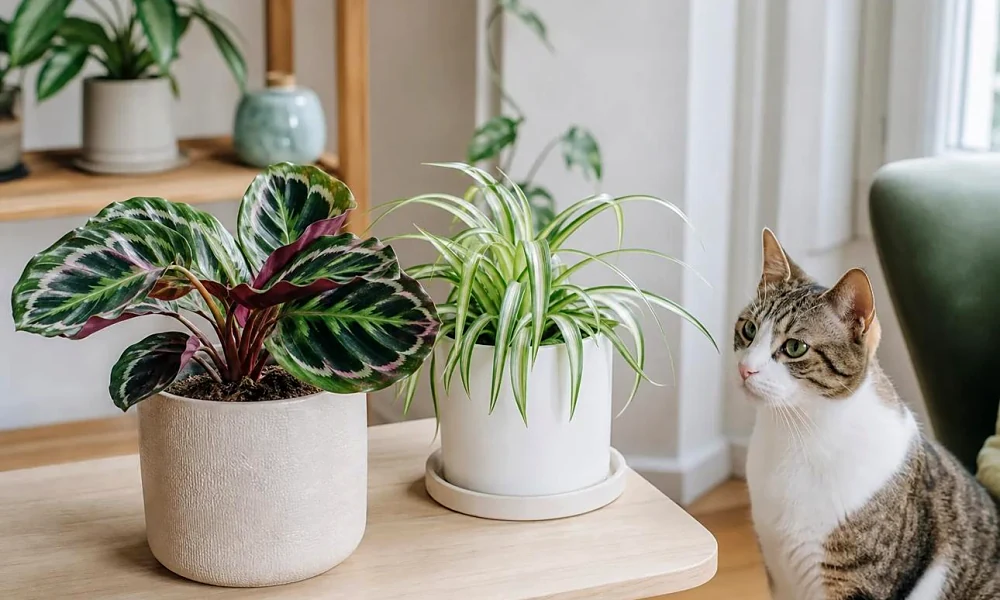
Spring flowers are beautiful, but some popular choices need extra care around pets.
The most important warning is about true lilies, including Easter lilies. These plants are extremely dangerous to cats and can cause severe kidney damage, even after a small exposure. If you have a cat, the safest choice is not to bring true lilies into your home.
Dogs can also become unwell after chewing plants, so it’s worth checking every new flower or decorative plant before bringing it inside.
Bulbs deserve some caution too. Keep planted bulb arrangements away from pets that like to dig or chew. If your cat enjoys nibbling greenery, you could offer cat grass as a more suitable alternative, while still keeping other plants out of reach.
For more options, browse our guide to cat-safe plants. The ASPCA’s lily safety guidance explains why true lilies are such a serious concern for cats.
Frequently asked questions
1. How do you decorate your home with plants for spring?
Start with a few flowering plants, such as tulips, daffodils, or primroses. Add fresh greenery, switch darker pots for lighter ones, and create small arrangements for your entryway, living room, or dining table. A few thoughtful changes are usually enough.
2. Which flowers are best for spring home decor?
Tulips, daffodils, hyacinths, primroses, and ranunculus are popular spring choices. They bring colour into a room and work well in simple pots or vases. Choose flowers with some unopened buds if you want to enjoy the display as it develops.
3. How do you force bulbs indoors?
The easiest option is to buy bulbs that have already been chilled or prepared for indoor flowering. If you’re starting with untreated bulbs, some spring varieties need a period of cold treatment before they bloom. Paperwhite narcissus is different and can be grown indoors without the same chilling requirement.
4. How long do forced bulbs last indoors?
Flowering time varies by bulb, temperature, and growing conditions. Cooler rooms generally help blooms last longer, while warm rooms and direct heat can shorten the display. Keep flowering bulbs away from radiators and other hot spots.
5. Can you reuse bulbs after they bloom indoors?
Sometimes, but don’t expect every forced bulb to flower well again. Forcing uses up much of the bulb’s stored energy. Let the leaves die back naturally, then plant suitable bulbs outdoors if your climate and soil allow. Any future flowers are a bonus rather than a guarantee.
6. When should I start moving houseplants outside in spring?
Wait until the risk of frost has passed and outdoor temperatures are suitable for the plant. Then introduce it gradually over about two weeks, starting in a shaded, sheltered place. Check local weather conditions rather than relying on a fixed calendar date.
7. Should I fertilize houseplants in spring?
You can usually resume feeding when a plant begins actively growing again. Follow the fertilizer label and the needs of the individual plant. Avoid feeding a plant that is stressed, unhealthy, or not actively growing.
8. What spring flowers should I avoid if I have cats?
Avoid true lilies, including Easter lilies, in homes with cats. They can cause severe kidney damage and are not safe simply because they’re placed on a high shelf. Check other plants and flowers before bringing them home, too.
Final thoughts About Spring Plant Decor
Spring plant decor doesn’t need to be expensive or complicated. A few flowering bulbs, fresh greenery, and lighter decorative touches can make your home feel ready for the new season.
Start with one room, see what works, and build from there. While you’re changing the look of your space, take a little time to check your plants’ light, watering, and feeding needs too. That way, your spring display won’t just look good for a few days, it can stay healthy as the season moves forward.