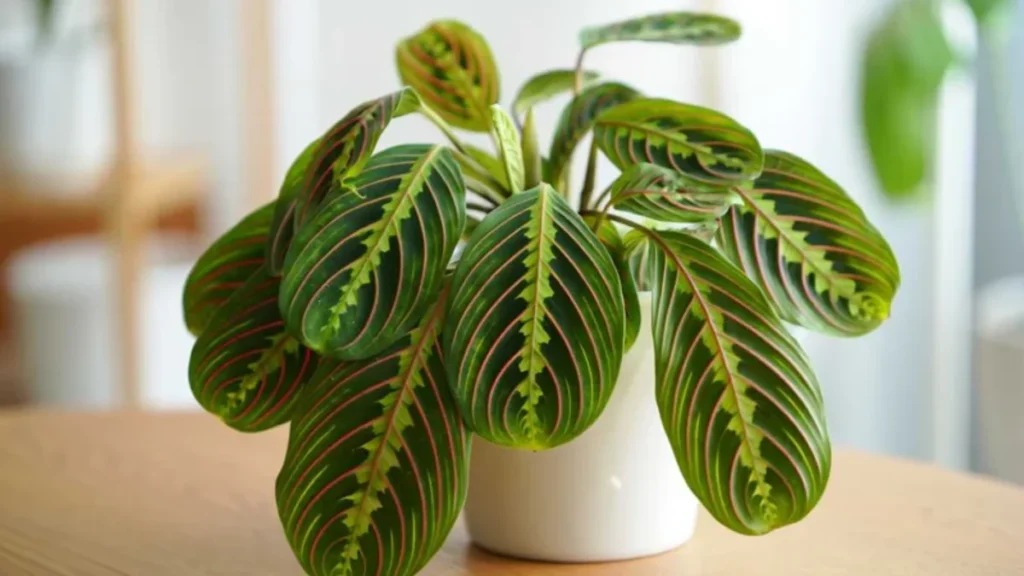
The prayer plant requires bright, indirect sunlight, evenly moist soil, and high humidity to thrive; its thin leaves curl when they are thirsty, dry, or stressed.
The prayer plant is one of the most striking and fascinating houseplants you can grow indoors. This comprehensive care roadmap will guide you through the exact science of keeping its gorgeous, active foliage healthy and vibrant. At Peeacelily, we want to help you master the delicate balance of moisture, light, and soil to ensure your plant thrives for years to come.
Key Takeaways
-
Bright Indirect Light + Even Moisture: This combination is the foundation of a healthy prayer plant.
-
Curling Leaves as Warning Signs: Inward rolling indicates under-watering, low humidity, or temperature stress.
-
Simple Propagation: You can easily grow new starts from stem cuttings rooted in water or moist soil.
-
Shared Common Names: Both Maranta and Calathea carry this nickname, but they are separate genera.
What Is a Prayer Plant? (Maranta Plant Basics)
The true prayer plant belongs to the genus Maranta, with Maranta leuconeura being the most popular species cultivated indoors. These low-growing, spreading tropical perennials are native to the warm, damp forest floors of the Brazilian rainforest.
The maranta plant displays a daily phenomenon called nyctinasty. This means its leaves sit flat during the day to capture light, then fold straight upward at night like hands joined in prayer. Best of all, these stunning plants are completely non-toxic to cats and dogs, making them safe additions to pet-friendly homes.
Prayer Plant Care at a Glance
To help your indoor prayer plant succeed, you must mimic the warm, humid understory of a tropical rainforest canopy. Use this quick-reference table to understand its core requirements at a glance:
| Care Metric | Ideal Requirement | Why It Matters |
| Light | Bright, indirect light (100 to 300 foot-candles) | Prevents faded leaf patterns and sun scorch |
| Water | Keep soil consistently moist but never soggy | Avoids root rot while preventing leaf dehydration |
| Soil | Well-draining, peat-rich or coco coir-based mix | Holds moisture while allowing air to reach roots |
| Humidity | 50% to 60% minimum (60% to 80% is ideal) | Prevents dry, crispy brown edges on leaves |
| Temperature | 65°F to 80°F (18°C to 27°C) | Protects the tropical plant from cold shock |
| Toxicity | Non-toxic to cats, dogs, and horses | Offers a worry-free choice for pet-owning households |
Prayer Plant Light Requirements Indoors
Getting the light right is crucial for maintaining the bold, contrasting colors on your maranta plant. Because they grow on the shady rainforest floor, these plants cannot handle harsh, direct sunrays.
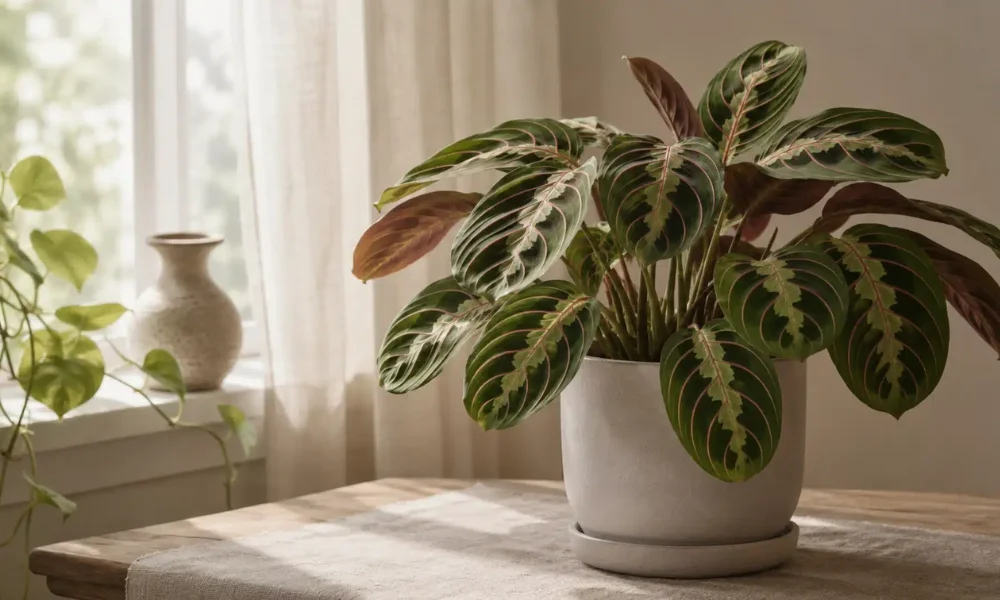
Best Window Placement for Prayer Plant Light Requirements
Your indoor prayer plant needs bright, indirect light to thrive. The sweet spot is a soft, diffused environment measuring between 100 and 300 foot-candles.
-
North-Facing Windows: These provide excellent, cool, shadow-free light all year. You do not need any curtains or blinds here.
-
East-Facing Windows: This is another great option, but you should place the plant 3 to 4 feet back from the glass to avoid hot morning rays.
-
West or South-Facing Windows: These windows are too intense. You must filter the light with a sheer white curtain or a translucent roller shade to prevent the sun from bleaching the foliage.
If your plant receives too much light, the leaves will lose their rich colors and develop dry, papery brown patches. If it does not get enough light, the new leaves will grow small, the stems will look leggy, and the signature folding movement will slow down.
Prayer Plant Watering: How Often and How Much
Watering is the most active part of prayer plant care. These plants have shallow roots and thin leaves, so they do not tolerate drying out.
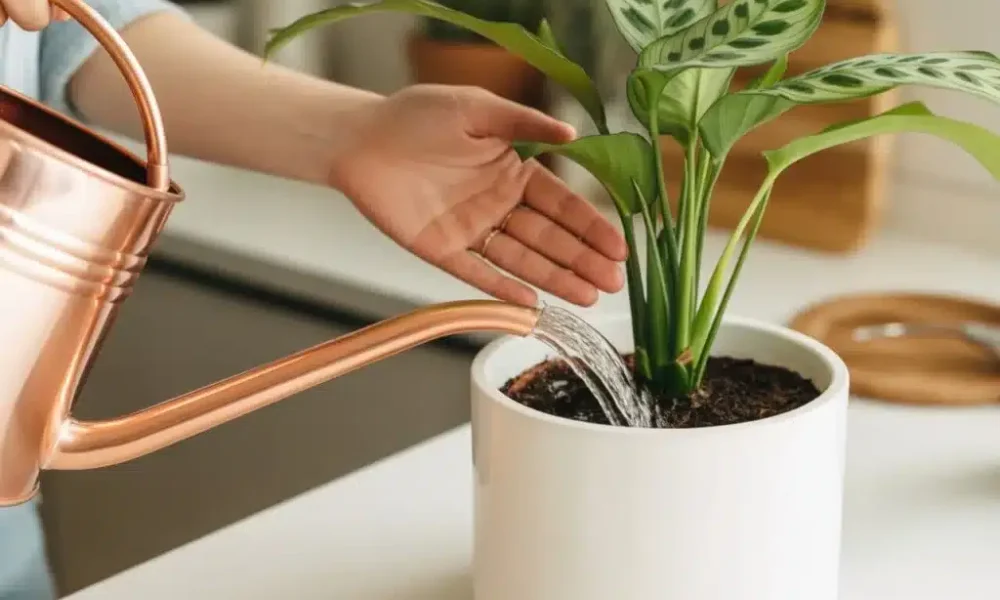
Prayer Plant Watering Schedule by Season
Instead of watering on a strict calendar schedule, use the top-inch-dry rule. Press your finger into the soil; if the top 1 inch feels dry, it is time to water.
-
Spring and Summer: During active growth, check the soil every 3 to 5 days. Water thoroughly until liquid flows out of the drainage holes at the bottom of the pot.
-
Winter: The plant will slow its growth during the colder months. Reduce your watering frequency, but do not let the soil dry out completely. Use a wooden chopstick to check the moisture levels at 1.5 inches deep before adding water.
Pro Tip: Always use filtered, distilled, or rainwater at room temperature. Tap water contains chlorine, fluoride, and hard minerals that build up in the thin leaves, causing the edges to turn yellow and brown.
Best Prayer Plant Soil Mix (Exact Recipe)
Commercial potting soil out of the bag is often too heavy and dense for a prayer plant. Dense soil traps water around the roots, cutting off oxygen and causing fatal root rot. You need a mix that retains moisture yet drains rapidly.
Use this exact, highly effective DIY recipe:
-
40% Peat Moss or Coarse Coco Coir: This holds onto the essential moisture your plant needs.
-
30% Perlite or Pumice: This creates critical air pockets and ensures fast drainage.
-
20% Fine Orchid Bark: This mimics the organic, chunky forest floor debris.
-
10% Worm Castings: This provides a gentle, organic nutrient boost to support lush leaf growth.
Always use a shallow, wide pot with at least one drainage hole. Deep pots hold too much unused water at the bottom, which quickly leads to root issues.
Prayer Plant Humidity Needs
Your indoor prayer plant expects high humidity levels to keep its leaves soft and pliable. An ideal humidity level sits between 50% and 60%, though they love levels closer to 80%. If the humidity in your home drops below 40%, the leaf tips will quickly turn crispy, brown, and dry.
To boost the moisture in the air around your plant:
-
Use a Humidifier: Running a small cool-mist humidifier nearby is the most reliable way to maintain consistent humidity.
-
Create a Pebble Tray: Place your plant pot on a tray filled with pebbles and water. As the water evaporates, it raises the humidity right around the foliage. Just make sure the bottom of the pot sits on the dry pebbles and not directly in the water.
-
Group Your Plants: Putting your houseplants close together allows them to share the moisture they naturally release.
Growing an Indoor Prayer Plant: Temperature and Placement
Keep your indoor prayer plant in a warm room with stable temperatures between 65°F and 80°F (18°C to 27°C). Exposure to temperatures below 55°F (13°C) will cause severe cold damage, leaf drop, or plant death.
Avoid placing your plant near cold drafts, open windows, air conditioners, or heating vents. The sudden gusts of dry, hot, or cold air will stress the foliage and trigger rapid curling. Rotate the pot a quarter-turn every week so that all sides of the plant receive equal light, keeping the growth balanced and full.
Prayer Plant Propagation: Step-by-Step
If your plant gets too long or leggy, you can easily trim it and use those cuttings to grow brand-new plants. The best time for prayer plant propagation is during the active spring and summer growing season.
Locate a healthy stem and find a node. The node is the small, swollen bump on the stem where leaves and roots grow. Use clean, sterilized shears to cut about 1/4 inch below a node, ensuring your cutting is 4 to 6 inches long and has at least 2 or 3 leaves.
Propagating Prayer Plant in Water
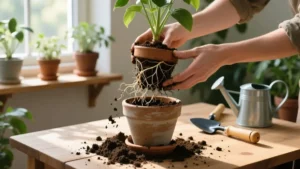
Place the cut end of your stem directly into a small jar of room-temperature distilled water. Ensure no leaves are submerged in the water to prevent rotting. Change the water every few days to keep it fresh and clean. Within 2 to 3 weeks, you will see tiny white roots emerge from the node. Once these roots are about 1 inch long, plant the cutting in a small pot with fresh soil mix.
Propagating Prayer Plant in Soil
You can also root cuttings directly in soil. Dip the bottom node of the cutting in a little rooting hormone powder if you want to speed up the process. Insert the cutting into a moist blend of half peat moss and half perlite. Cover the pot with a clear plastic bag or dome to create a mini-greenhouse. Keep the soil lightly moist, and new roots should establish in about 3 to 4 weeks.
Why Are Prayer Plant Leaves Curling?
Seeing prayer plant leaves curling during the day is a clear sign of environmental stress. While it is normal for the leaves to fold upward at night, daytime curling into tight tubes means the plant is trying to protect itself from losing water.
These are the top four reasons why this happens:
-
Under-Watering: If the soil is completely dry, the plant curls its leaves to reduce the surface area exposed to the air, conserving its remaining moisture.
-
Low Humidity: Dry indoor air pulls moisture out of the thin leaves faster than the roots can drink it up.
-
Temperature Stress: Cold drafts or hot air from heating vents will shock the plant, causing the leaves to roll up and crisp.
-
Tap Water Sensitivity: The accumulation of salts and minerals from hard tap water stresses the vascular system of the plant, leading to curling and brown edges.
Common Prayer Plant Problems
To keep your prayer plant looking its best, pay close attention to any changes in its foliage. Use this practical troubleshooting guide to quickly identify and fix common prayer plant problems:
| Problem | Likely Cause | Exact Fix |
| Yellowing leaves | Over-watering or cold drafts | Let the top inch of soil dry out, ensure the pot drains well, and move the plant to a warmer spot. |
| Brown, crispy edges | Low humidity or hard tap water | Run a humidifier near the plant and switch to distilled, filtered, or rainwater. |
| Faded leaf colors | Too much direct sunlight | Move the plant further away from the window or behind a sheer, light-filtering curtain. |
| Leaves stay flat at night | Not enough light or too much nitrogen fertilizer | Move the plant to a spot with more consistent, bright indirect light and stop fertilizing for a month. |
| Fine webbing on leaves | Spider mites (they love dry air) | Wipe down the leaves with insecticidal soap or neem oil, and increase the humidity immediately. |
Prayer Plant vs. Calathea: Clearing Up the Maranta Plant Confusion
It is very common to see both Maranta and Calathea plants sold under the name “prayer plant.” While they belong to the same botanical family (Marantaceae) and share similar care needs, they are not the same plant.
The true maranta plant has a low-growing, vining habit that looks beautiful in hanging baskets, and its leaves fold up dramatically at night. Calathea plants grow in upright, tidy clumps, have slightly stiffer leaves, and do not vine or fold as noticeably. Knowing the difference helps you choose the right pot size and placement for your home.
Conclusion
Caring for a prayer plant is a rewarding experience that brings a dynamic, living element into your indoor space. By providing the right balance of filtered light, steady moisture, and rich humidity, you can enjoy its beautiful folding leaves for years to come. For more expert, research-backed advice on growing houseplants, visit our full collection of guides at Peeacelily to help your indoor garden thrive.
Frequently Asked Questions
Is a prayer plant easy to care for?
Yes, they are relatively easy to care for once you establish a consistent routine. If you provide them with bright indirect light, keep their soil evenly moist, and avoid dry drafts, they will grow beautifully.
How often should I water a prayer plant?
You should water whenever the top 1 inch of soil feels dry to the touch. This usually means watering every 3 to 5 days in the spring and summer, and every 7 to 10 days in the winter.
Why is my prayer plant not folding at night?
If your plant stays flat at night, it is usually because it is not getting enough light during the day to trigger its natural movement. It can also happen if you have recently over-fertilized the soil with too much nitrogen.
Can prayer plants grow in low light?
They can survive in low light, but they will not thrive. The vibrant pink and green patterns on their leaves will fade, their growth will slow down, and they may stop folding at night.