Key Takeaways
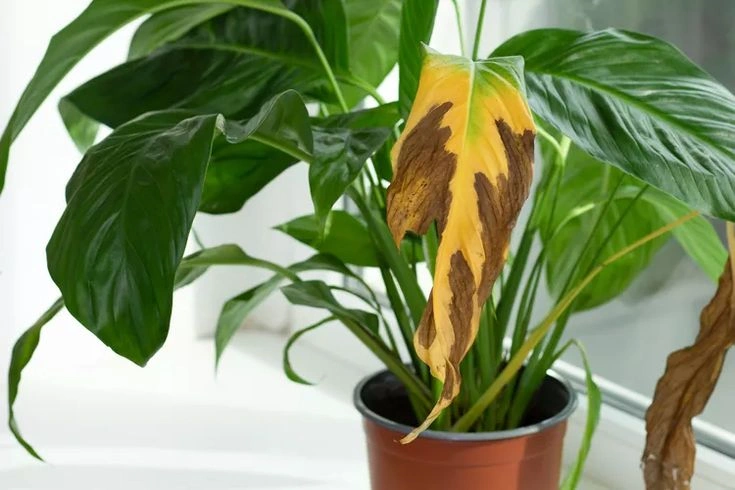
- Peace Lily Yellow Leaves Causes: The yellowing of peace lily leaves has several possible causes.
- Overwatering and poor drainage are important problems to check first.
- Underwatering can also cause yellowing, especially when accompanied by severe drooping.
- Bright indirect light is usually better than harsh direct sunlight.
- Fertilizer problems can cause discoloration, but feeding should not be the first response.
- Filtered or rainwater may help when tap water causes repeated foliage damage.
- One old yellow leaf can simply be natural aging.
- Completely yellow leaves will not normally turn green again.
- Healthy roots, suitable light, and careful watering are the foundation of recovery.
- When in doubt, observe the soil and new growth before changing your entire care routine.
Quick Answer
The most common reasons for yellow leaves on a peace lily are overwatering, underwatering, poor drainage, unsuitable light, nutrient problems, temperature stress, low humidity, and natural aging.
Start by checking the soil before doing anything else. If it stays wet for a long time, overwatering or poor drainage may be responsible. On the other hand, if the soil is very dry and the plant is drooping, underwatering is more likely.
Peace lilies generally do best in bright, indirect light, moderate humidity, warm conditions, and soil that is allowed to become slightly dry at the surface between waterings.
Why Are My Peace Lily Leaves Turning Yellow?
Yellowing is a symptom rather than a diagnosis. In other words, the same yellow leaf can be caused by several different problems.
For example, both too much water and too little water can make foliage yellow. Therefore, do not immediately add fertilizer or water simply because you see yellow leaves.
Look at the whole plant instead. Check the soil, roots, location, light, temperature, and recent changes in care.
The pattern can also provide useful clues. A single old lower leaf turning yellow is usually much less concerning than several leaves changing color at once. The RHS notes that occasional yellowing of older leaves can be a normal part of houseplant growth.
Overwatering a Peace Lily
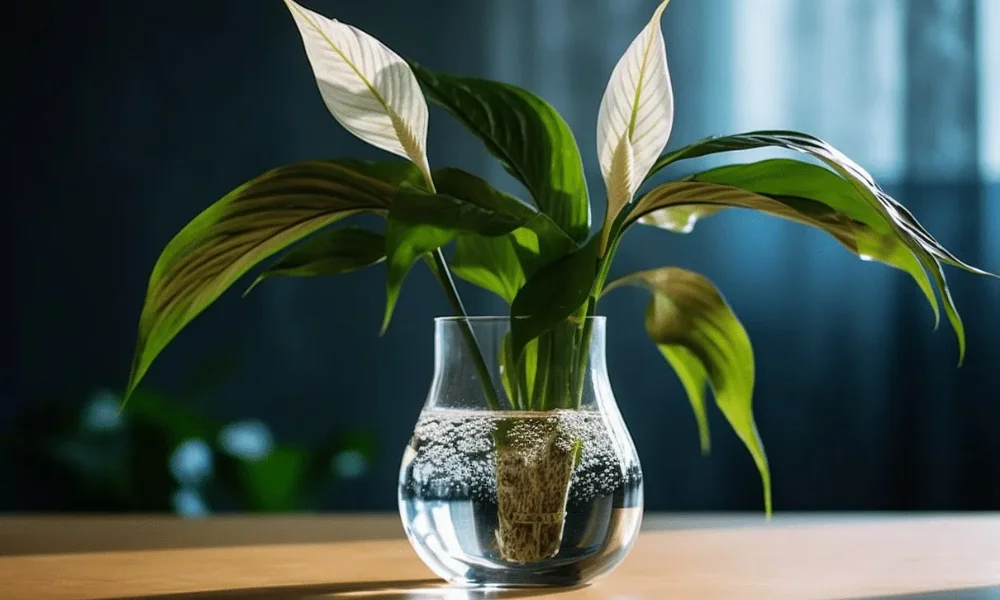
Overwatering peace lily plants is one of the first problems to investigate.
Peace lilies like moisture, but their roots also need air. When the potting mix remains wet for too long, roots can become damaged. In severe cases, root rot can develop, preventing the plant from absorbing water and nutrients properly.
Signs of overwatering
Look for:
- Several leaves turning yellow
- Soil remaining wet for many days
- Drooping despite wet soil
- A heavy pot
- A musty smell
- Brown or mushy roots
- Yellowing affecting both older and newer leaves
How to fix it
First, stop watering until the upper part of the potting mix has dried somewhat.
Next, make sure the container has drainage holes. Never allow the pot to sit permanently in water collected inside a saucer or decorative cover.
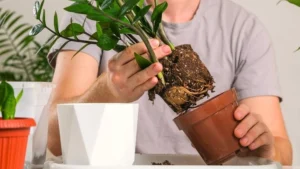
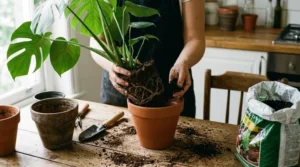
If the soil is staying wet for an unusually long time, check the roots. Healthy roots should be firm rather than soft and mushy. If substantial root damage is present, repotting into fresh, well-draining mix may be necessary.
Underwatering
Although overwatering receives a lot of attention, underwatering can also cause peace lily yellow leaves.
Peace lilies are famous for dramatic drooping when they become thirsty. If the soil becomes very dry, leaves can wilt and eventually develop yellow or brown areas.
How to tell
If the pot feels unusually light and the soil is dry several centimetres below the surface, underwatering may be the issue.
Give the plant a thorough watering so the root ball becomes evenly moist. Then allow excess water to drain completely.
However, do not create a new problem by watering on a fixed schedule without checking the soil. Temperature, pot size, humidity, season, and light all affect how quickly a plant dries.
Too Much or Too Little Light
Peace lilies prefer bright, indirect light. They can tolerate lower light, but very dark conditions can slow growth and reduce flowering. Direct hot sunlight, meanwhile, can scorch the foliage.
If yellowing appears mainly on the side facing a sunny window and you also see dry or scorched patches, excessive direct light may be responsible.
Conversely, a plant kept in a very dark corner may grow slowly and develop pale foliage.
The best solution is usually a bright location where the plant receives plenty of filtered or indirect light without harsh midday sun.
Peace Lily Fertilizer Problems
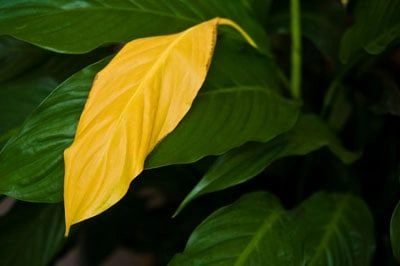
Peace lily fertilizer problems can also contribute to yellow foliage, but fertilizer should not be your first response to every yellow leaf.
Plants need nutrients for healthy growth. Nitrogen, iron, magnesium, and other nutrients have different roles, and deficiencies can produce different patterns of discoloration. However, watering problems and poor root health can sometimes look like nutrient deficiencies because damaged roots cannot absorb nutrients properly.
Too much fertilizer
Overfeeding can damage roots and cause leaf discoloration. Salt buildup may also occur in containers over time.
Therefore, always follow the fertilizer label rather than assuming more food will produce faster growth.
Too little fertilizer
A peace lily growing for a long time in depleted potting mix may eventually show pale growth, particularly when other care conditions are good.
During active growth, a general liquid houseplant fertilizer can be used according to the product instructions. The RHS recommends feeding peace lilies every few weeks during their growing season.
If you have recently repotted your plant into fresh, nutrient-containing potting mix, additional fertilizer may not be necessary immediately.
Poor Water Quality
Water quality is another factor worth considering, particularly if your peace lily repeatedly develops brown tips along with yellowing.
The RHS specifically recommends rainwater or filtered water where possible because fluoride in tap water can damage peace lily foliage.
This does not mean everyone must use bottled or distilled water. Tap-water quality varies considerably between regions.
If your plant regularly develops leaf-tip damage and you suspect your water supply, try filtered or rainwater where safe and practical. You can also flush the pot occasionally with plenty of suitable water to help reduce accumulated salts.
For growers in Pakistan and other countries with different municipal water conditions, observing how your plant responds to your local water can be especially useful.
Temperature and Humidity Stress
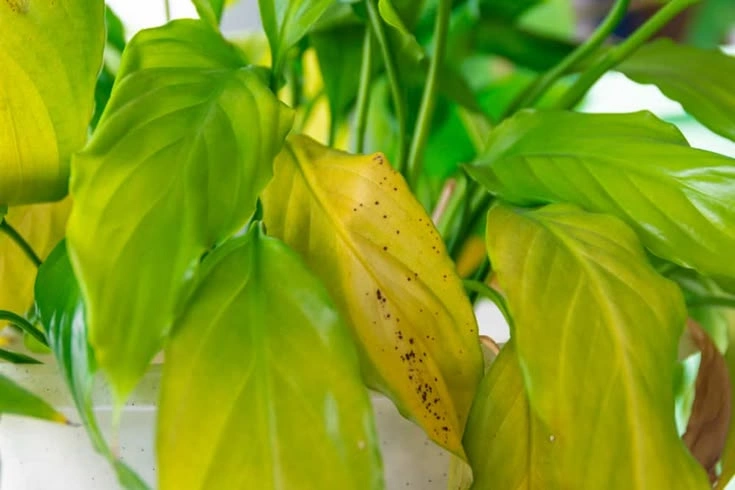
Peace lilies are tropical plants, so sudden temperature changes can cause stress.
Keep the plant away from cold drafts, very hot windows, heaters, and strong air-conditioning outlets. The RHS recommends ordinary indoor temperatures around 12 to 24°C and notes that peace lilies prefer moderate humidity.
Dry air is more commonly associated with brown edges and tips, although environmental stress can contribute to overall poor foliage quality.
If your room is very dry, especially when heating or air conditioning is running, grouping plants together or using a humidifier can help. Avoid placing the peace lily directly in the path of strong air movement.
Root Problems and Poor Drainage
Sometimes the real problem is underneath the soil.
A pot without drainage holes, compacted potting mix, or a container that is much too large can keep the root zone wet for too long. The RHS also warns that overpotting can leave excess compost damp for extended periods and increase the risk of root problems.
When repotting, choose a container only slightly larger than the current root system and use a well-draining houseplant mix.
If roots are tightly circling the container or emerging through drainage holes, the plant may also be rootbound.
Natural Aging
Not every yellow leaf needs treatment.
Older lower leaves naturally become less productive as a plant grows. Eventually, they may turn yellow and fall away. This is usually normal when only an occasional old leaf is affected and the rest of the plant remains healthy.
Simply remove completely yellow leaves with clean scissors or pruning shears.
The important point is to watch the new growth. If new leaves are green and healthy, occasional old-leaf yellowing is usually not a reason to panic.
Pests and Other Problems
Pests are less common than watering mistakes, but they should still be checked.
Inspect both sides of the leaves and the stems for insects, sticky residue, fine webbing, or unusual spots. Common houseplant pests can weaken foliage and cause discoloration.
Furthermore, sudden yellowing after moving or repotting can sometimes result from environmental stress. Instead of changing five things at once, stabilize the plant and observe its response.
The RHS recommends focusing first on suitable light, watering, drainage, and growing conditions before reaching for treatments.
How to Fix Yellow Peace Lily Leaves
Use this simple recovery process.
1. Check the soil
Feel the top few centimetres of the potting mix. Do not water simply because the calendar says it is watering day.
2. Check the drainage
Make sure excess water can escape through the bottom of the container.
3. Inspect the roots if necessary
If the plant remains wilted while sitting in wet soil, inspect the roots for signs of rot.
4. Improve the light
Move the plant to bright, indirect light if it is currently sitting in deep shade.
5. Review fertilizer use
If you have been feeding frequently, stop and reassess. If the plant has been in old, depleted mix for a long time, consider appropriate feeding during active growth.
6. Check the environment
Keep the plant away from cold drafts, heaters, and strong air-conditioning airflow.
7. Remove damaged leaves
Completely yellow leaves will not normally become green again. Removing them improves the plant’s appearance and makes it easier to monitor new growth.
Yellow Leaves Diagnosis Table
| What you notice | Most likely issue | What to do |
|---|---|---|
| Several yellow leaves and constantly wet soil | Overwatering | Allow the mix to dry somewhat and improve drainage |
| Yellow leaves with very dry soil | Underwatering | Water thoroughly and monitor moisture |
| Yellow or scorched patches near a sunny window | Too much direct light | Move to bright indirect light |
| Pale growth with slow development | Low light or nutrient issue | Improve indirect light and assess feeding |
| Yellow leaves plus mushy roots | Root damage | Remove damaged roots and repot if necessary |
| Brown tips with yellowing | Water quality or dry conditions | Consider filtered water and improve humidity |
| One old lower leaf turning yellow | Natural aging | Remove it and continue normal care |
| Yellowing after a sudden move | Environmental stress | Stabilize light, temperature, and watering |
Common Mistakes to Avoid
Watering on a fixed schedule
A plant does not need the same amount of water every week. Check the growing medium first.
Adding fertilizer immediately
Yellow leaves do not automatically mean the plant needs fertilizer. Root damage can prevent nutrient uptake in the first place.
Keeping the pot constantly wet
Moist does not mean waterlogged. Roots need oxygen as well as water.
Putting the plant in harsh sunlight
More light is not always better. Peace lilies prefer bright but indirect conditions.
Cutting every partly green leaf
Do not remove healthy green tissue unnecessarily. Completely yellow or damaged leaves are the better candidates for removal.
Peace Lily Yellow Leaves Prevention Checklist
- Check soil moisture before watering.
- Use a pot with drainage holes.
- Keep the plant in bright indirect light.
- Avoid harsh direct afternoon sun.
- Keep the plant away from strong drafts and heaters.
- Use suitable water if your tap water causes repeated leaf-tip damage.
- Feed only according to the fertilizer instructions.
- Repot when roots become crowded or the mix breaks down.
- Watch new growth for signs of improvement.
- Remove completely yellow leaves with clean tools.
FAQs
Can yellow peace lily leaves turn green again?
Usually, a completely yellow leaf will not return to its original green color. Instead, focus on correcting the underlying problem and protecting new growth.
Should I cut off yellow leaves?
Yes, completely yellow leaves can be removed. Use clean scissors or pruning shears and cut the leaf stalk near its base. The RHS also recommends removing completely yellow or damaged foliage from struggling houseplants.
How often should I water a peace lily?
There is no universal weekly schedule. Water when the upper few centimetres of the potting mix have become dry, then allow excess water to drain away. Reduce watering when growth slows.
Is yellowing always caused by overwatering?
No. Overwatering is an important possibility, but underwatering, light problems, nutrient issues, water quality, temperature stress, pests, and natural aging can also cause yellowing.
Can fertilizer cause yellow leaves?
Yes. Too much fertilizer can damage roots and contribute to leaf discoloration. However, insufficient nutrients can also cause pale foliage. Therefore, diagnose the plant before increasing fertilizer.
Should a peace lily sit in water?
No. Standing water around the roots for long periods can encourage root problems. Always allow excess water to drain away.
Why are only the bottom leaves yellow?
If only an occasional old lower leaf is yellow while new growth remains healthy, natural aging may be responsible. However, if many lower leaves turn yellow together, check watering and drainage first.
Conclusion
Peace lily yellow leaves are usually a signal that something in the plant’s environment needs attention rather than proof that the plant is dying.
Start with the basics: check the soil, inspect drainage, review the light, and look at the roots if the plant is yellowing while the soil remains wet. Next, consider water quality, fertilizer, temperature, humidity, and pests.
Most importantly, avoid making several major changes at once. Give your peace lily stable conditions and watch the new growth. With the right care, a plant that has developed yellow leaves can often produce fresh, healthy foliage again.
For more practical houseplant guidance, Peeacelily can also be used as a helpful resource when building a simple, consistent peace lily care routine.