Key Takeaways
- Best Fertilizer for Peace Lily: A balanced 10-10-10 or 20-20-20 fertilizer is suitable for many peace lilies.
- Liquid fertilizer gives you good control over the feeding strength.
- Diluted fertilizer is safer than automatically using the full label strength.
- Feed mainly during active spring and summer growth.
- Every 6 to 8 weeks is a practical light-feeding starting point.
- Avoid feeding stressed, newly repotted, or unhealthy plants.
- Brown tips and white crust can indicate fertilizer or mineral buildup.
- Good light is often more important for flowering than stronger fertilizer.
- In Pakistan, adjust feeding according to indoor temperature, light, water quality, and actual plant growth.
Quick Answer
The best fertilizer for a peace lily is generally a balanced liquid houseplant fertilizer such as 10-10-10 or 20-20-20, diluted below the full label strength.
For most indoor plants, feeding lightly during active growth in spring and summer is a practical approach. A diluted application every 6 to 8 weeks works well for many peace lilies, although the exact schedule should depend on the product label, light, soil, and plant growth.
If your peace lily is in low light, newly repotted, stressed, or showing signs of root problems, fertilizer should not be your first solution.
What Is the Best Fertilizer for Peace Lily?
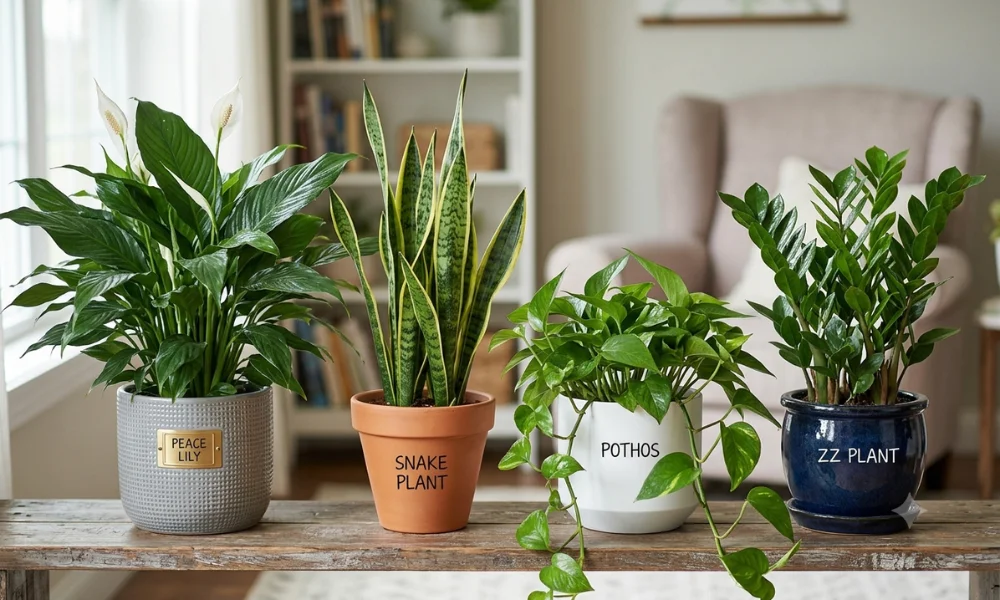
A balanced liquid fertilizer is one of the easiest choices for a peace lily because you can control how much nutrition reaches the roots.
Common balanced formulas include 10-10-10 and 20-20-20. The three numbers represent nitrogen, phosphorus, and potassium, respectively. Both can work when properly diluted.
For beginners, a liquid houseplant fertilizer is particularly convenient. Furthermore, it is easier to reduce the concentration if your peace lily is sensitive to fertilizer.
Missouri Botanical Garden also notes that indoor Spathiphyllum has very low fertility needs and recommends using fertilizer at only one-quarter of the recommended strength because over-fertilizing can burn the leaf tips and roots.
Best Overall Choice
Look for:
| Feature | Recommendation |
|---|---|
| Fertilizer type | Liquid houseplant fertilizer |
| NPK ratio | 10-10-10 or 20-20-20 |
| Strength | Diluted rather than full strength |
| Feeding period | Mainly active growth |
| Frequency | About every 6 to 8 weeks for a light feeding routine |
| Main goal | Healthy foliage and steady growth |
Always follow the fertilizer label first because different products have different concentrations.
Understanding the Peace Lily Fertilizer Ratio
The fertilizer ratio is important because it tells you how much nitrogen, phosphorus, and potassium are included.
N = Nitrogen supports leafy growth.
P = Phosphorus plays a role in root development and reproductive growth.
K = Potassium supports several plant processes and overall plant function.
A balanced 10-10-10 or 20-20-20 formula gives the plant all three major nutrients in equal proportions. However, the higher number does not automatically mean the fertilizer is better. A 20-20-20 product is more concentrated than a 10-10-10 product, so dilution matters.
Therefore, do not choose fertilizer simply because the numbers look higher.
Best Peace Lily Plant Food Options
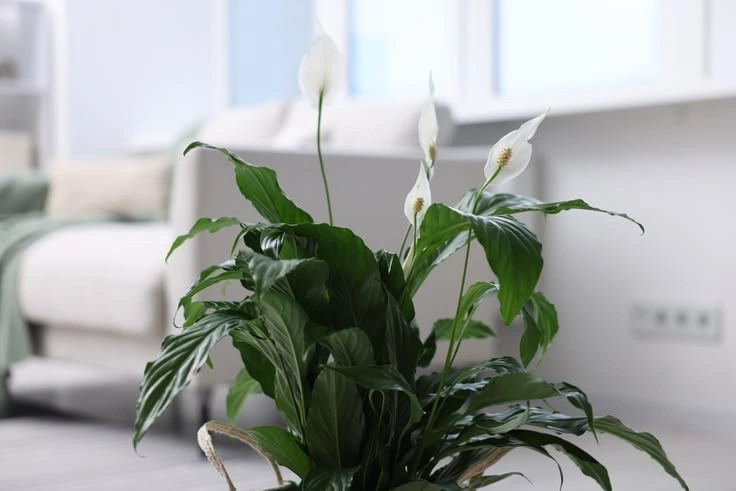
There are several types of plant food available, and each has advantages.
Liquid Fertilizer
Liquid fertilizer is a strong choice for beginners because it is easy to measure and dilute.
It also allows you to adjust the feeding strength according to the plant’s condition. For a peace lily, this control is useful because excessive fertilizer can cause salt buildup and root stress.
Slow-Release Fertilizer
Slow-release fertilizer can provide nutrients gradually over a longer period. Consequently, it can be convenient for people who do not want to remember frequent applications.
However, carefully follow the package directions. Peace lilies need relatively little fertilizer, so using too much slow-release product can still create problems.
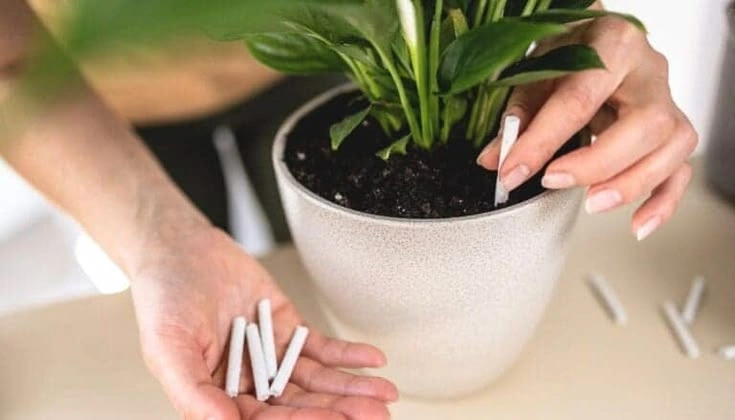
Fertilizer Spikes
Fertilizer spikes are convenient, but they are not my first choice for a peace lily.
A concentrated source of fertilizer in one small area may increase the risk of localized root damage. A diluted liquid fertilizer gives you more control over how nutrients are distributed.
When to Fertilize Peace Lily
The best time to fertilize a peace lily is when it is actively growing.
For many indoor plants, that means spring and summer. As daylight decreases and growth slows during autumn and winter, the need for additional nutrients also decreases.
The Royal Horticultural Society recommends feeding peace lilies with a general liquid fertilizer during the growing season, while other specialist guidance favors less frequent feeding.
Because indoor conditions vary, watch your plant rather than following a rigid calendar.
When Not to Fertilize
Avoid feeding when your peace lily is:
- Newly repotted
- Severely wilted
- Experiencing root problems
- Sitting in very wet soil
- Receiving very little light
- Showing obvious fertilizer burn
- Seriously stressed by temperature or watering problems
Instead, correct the underlying problem first.
How to Fertilize a Peace Lily
Fertilizing is simple when you follow a few basic steps.
1. Check the Soil and Plant
First, make sure the plant is reasonably healthy and actively growing.
A fertilizer cannot fix root rot, poor drainage, severe underwatering, or inadequate light.
2. Dilute the Fertilizer
Next, mix the fertilizer according to the label, but avoid exceeding the recommended amount.
Because peace lilies can be sensitive to excess nutrients, many growers use a weaker solution. Some specialist guidance recommends half strength, while Missouri Botanical Garden recommends one-quarter of the labeled strength for indoor Spathiphyllum.
3. Do Not Feed Bone-Dry Soil
Apply fertilizer when the potting mix is not completely dry.
Fertilizing a severely dry plant can increase the risk of root damage. If the soil is very dry, water appropriately first and then follow a cautious feeding routine.
4. Apply Around the Root Zone
Pour the diluted fertilizer evenly over the potting mix rather than concentrating it in one spot.
Afterward, allow excess water to drain completely.
5. Watch the New Growth
Finally, look at the next leaves rather than expecting damaged old leaves to repair themselves.
Healthy new leaves are a much better indication that your care routine is working.
Does Fertilizer Help Peace Lily Bloom?
Yes, adequate nutrition can support healthy growth and flowering. However, fertilizer is not the only factor responsible for flowers.
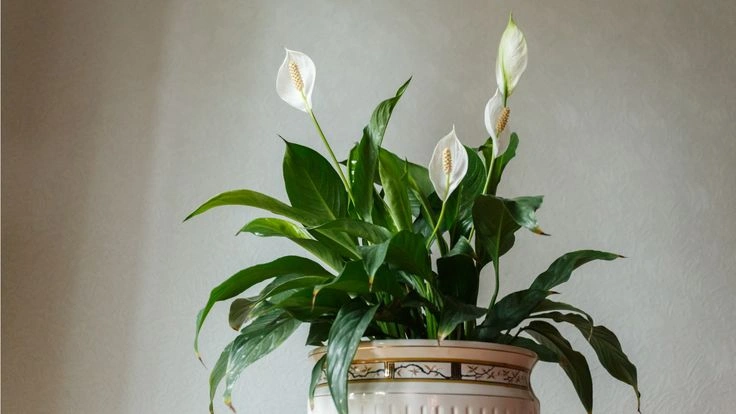
Light is especially important. Peace lilies generally prefer bright filtered or indirect light rather than harsh direct sunlight.
Therefore, if your plant has plenty of leaves but rarely flowers, increasing fertilizer may not solve the problem. Instead, check its light, watering, root health, temperature, and overall growing conditions.
A stronger “bloom booster” is not automatically better.
Signs Your Peace Lily Needs Fertilizer
A peace lily may benefit from feeding when it is actively growing but has remained in the same potting mix for a long time.
Possible signs include:
- Slow new growth
- Smaller new leaves
- Pale foliage
- Reduced flowering despite suitable growing conditions
However, these symptoms can have several causes.
For example, yellow leaves may result from watering problems, poor drainage, aging leaves, low light, or root damage. Therefore, do not assume that every yellow leaf means the plant needs fertilizer.
Signs of Too Much Fertilizer
Over-fertilizing is one of the biggest risks when feeding peace lilies.
Watch for:
- Brown or crispy leaf tips
- Yellowing leaves
- Wilting despite adequate moisture
- White or crusty material on the soil
- Poor growth
- Root damage
Excess fertilizer can increase soluble salts around the roots. As a result, the roots may have difficulty taking up water properly.
If brown tips suddenly appear after increasing fertilizer, reconsider your feeding routine before adding more.
What to Do After Over-Fertilizing
If you suspect fertilizer buildup, stop feeding the plant.
Then, if the pot has proper drainage, thoroughly flush the potting mix with plain water and allow the excess to drain away. Gardening guidance commonly recommends using several times the container’s volume of water when flushing significant fertilizer buildup.
Afterward, let the pot drain completely and avoid leaving it sitting in collected water.
If the plant is badly damaged, fresh potting mix and root inspection may eventually be necessary.
Fertilizing Peace Lilies in Pakistan
Peace lilies can be grown successfully in homes across Pakistan, but indoor conditions can vary considerably.
During hot weather, a plant near a bright window may receive intense heat, while an air-conditioned room can have cooler temperatures and drier air. Therefore, fertilizer timing should be based on actual growth and light, not simply the calendar.
In cities such as Lahore, Islamabad, Rawalpindi, Karachi, and other areas, summer conditions can be very different from winter indoor conditions.
Use filtered or otherwise suitable water when possible, particularly if your tap water is known to be hard. Water quality can matter because mineral buildup may add to salt stress. The RHS also notes that fluoride in tap water can damage peace lily foliage and recommends rainwater or filtered water where possible.
For Pakistani homes, the safest approach is simple: provide suitable indirect light, maintain appropriate watering, use a well-draining potting mix, and feed lightly when the plant is actively growing.
Common Fertilizer Mistakes
Using Too Much
More fertilizer does not mean faster growth.
Peace lilies are relatively light feeders, so a strong dose can burn roots and leaves instead.
Fertilizing Every Time You Water
Some fertilizers are designed for frequent use, but that does not mean every peace lily needs frequent feeding.
Instead, use the product instructions together with your plant’s growth and light conditions.
Feeding a Sick Plant
If your peace lily has root rot, severe dehydration, poor drainage, or another major problem, fix that issue first.
Chasing Flowers With Strong Fertilizer
A larger fertilizer dose will not compensate for poor light.
Healthy flowering comes from balanced care rather than one aggressive feeding.
Ignoring Salt Buildup
If you notice a white crust on the potting mix, investigate possible mineral or fertilizer buildup.
Regularly allowing excess water to drain through the pot can help reduce accumulated salts.
A Simple Peace Lily Feeding Schedule
| Season | What to Do |
| Spring | Start light feeding when new growth becomes active |
| Summer | Continue diluted feeding about every 6 to 8 weeks if the plant is growing well |
| Early Fall | Reduce feeding as growth slows |
| Late Fall | Usually stop regular feeding |
| Winter | Usually no fertilizer unless the plant is actively growing under strong artificial light |
This is a practical starting point rather than a universal rule. Your fertilizer’s instructions, indoor light, temperature, soil, and plant condition should always be considered.
Peace Lily Fertilizer Checklist
-
Choose a balanced houseplant fertilizer
-
Look for a formula such as 10-10-10 or 20-20-20
-
Dilute it rather than automatically using full strength
-
Feed mainly during active growth
-
Avoid fertilizing a severely stressed plant
-
Never exceed the product’s recommended concentration
-
Watch for brown tips and white salt buildup
-
Make sure the pot drains properly
-
Provide suitable indirect light
-
Adjust feeding according to the plant’s response
Frequently Asked Questions
What is the best fertilizer ratio for a peace lily?
A balanced 10-10-10 or 20-20-20 fertilizer is a practical choice. The important point is to use an appropriate dilution because peace lilies can be sensitive to excess fertilizer.
How often should I fertilize my peace lily?
A light feeding every 6 to 8 weeks during active spring and summer growth is a reasonable starting point for many indoor peace lilies. However, always consider the fertilizer label and your plant’s growing conditions.
Can I use 20-20-20 fertilizer on a peace lily?
Yes. A balanced 20-20-20 fertilizer can be used when diluted appropriately. Because it is more concentrated than 10-10-10, measuring and dilution are especially important.
Should I fertilize a peace lily in winter?
Usually, no. Indoor peace lilies commonly grow more slowly when light levels are lower, so regular feeding is generally unnecessary. An exception can be a plant that remains actively growing under strong grow lights.
Why are my peace lily leaf tips turning brown after fertilizer?
Brown tips can be a sign of fertilizer or mineral salt buildup. However, dry air, watering problems, and water quality can also contribute. If the problem began after fertilizing, stop feeding and consider flushing the soil.
Is fertilizer necessary for a peace lily to flower?
Not by itself. Fertilizer can provide nutrients needed for healthy growth, but suitable light and overall plant care are also important for flowering.
Can I use organic fertilizer for a peace lily?
You can use a suitable organic houseplant fertilizer, provided it is used according to its label. However, organic does not automatically mean it is impossible to overapply. The plant still needs nutrients in appropriate amounts.
Should I fertilize after repotting?
It is generally better to wait after repotting, particularly when fresh potting mix already contains nutrients. Once the plant has settled and begins active new growth, you can resume a light feeding routine.
Conclusion
The best fertilizer for a peace lily is not necessarily the strongest or most expensive product. A balanced liquid houseplant fertilizer, such as 10-10-10 or 20-20-20, used in a diluted concentration during active growth, is a dependable choice for many indoor plants.
More importantly, fertilizer should support good care rather than replace it. Give your peace lily suitable indirect light, appropriate watering, good drainage, and a healthy growing medium first.
Finally, remember that peace lilies are light feeders. When in doubt, feed less rather than more, observe the new growth, and adjust gradually. With this approach, your plant has a much better chance of producing healthy leaves and attractive flowers without the brown tips and root stress associated with over-fertilizing.