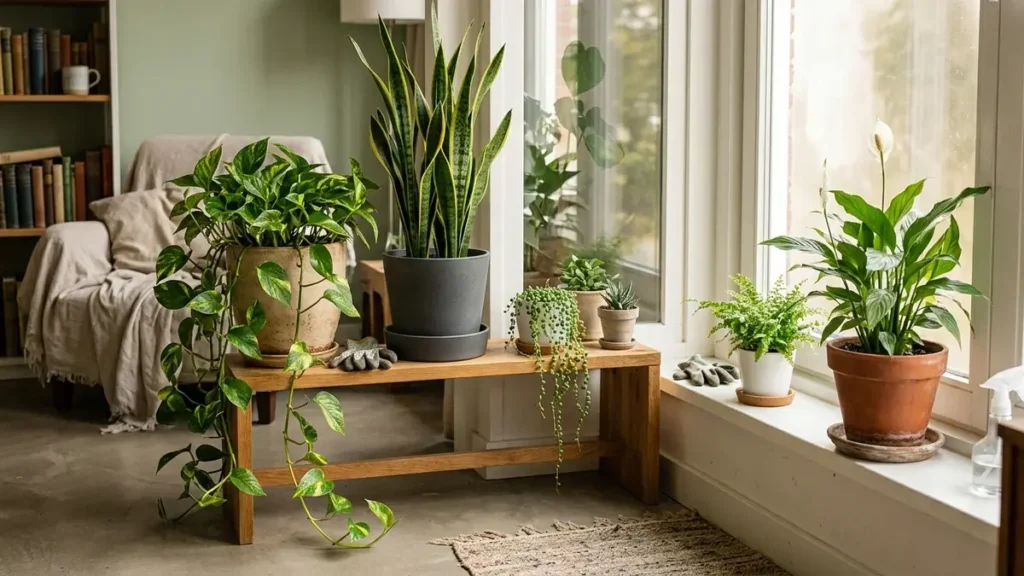
Plant care and indoor gardening can feel harder than they look. A $30 houseplant can look perfectly healthy when you bring it home. Six weeks later, the leaves are yellow, the stems are soft, and the soil still feels wet.
That doesn’t mean you’ve got a “black thumb.”
One common beginner mistake is putting a plant in a decorative pot with no drainage hole. You water it, the excess has nowhere to go, and the roots sit in wet soil. By the time the leaves show you something is wrong, the damage may already be underway.
Good plant care is less mysterious than it looks. Most houseplants need the right amount of light, sensible watering, a pot that drains, suitable soil, and temperatures that don’t swing wildly.
You also need to watch the plant instead of following a calendar. Get those habits right, and you can keep a surprising number of indoor plants healthy without turning your home into a greenhouse.
AI Overview: What do houseplants need to stay healthy?
Keeping houseplants healthy requires providing adequate natural light, well-draining soil, proper pot drainage, and consistent soil moisture checks. While room humidity and ambient temperature influence growth, improper watering and dim lighting cause most indoor plant failures.
Inspecting soil dryness directly before watering prevents root rot far more effectively than following a rigid calendar schedule. Good plant care and indoor gardening start with understanding your home’s light and each plant’s watering needs.
Key Takeaways
- Light comes first. A plant cannot compensate for a poor light location with extra fertilizer or water.
- Check the soil before watering. For many common houseplants, feel the top inch or two rather than watering because it’s Tuesday.
- Drainage is non-negotiable. Excess water needs a way out of the pot.
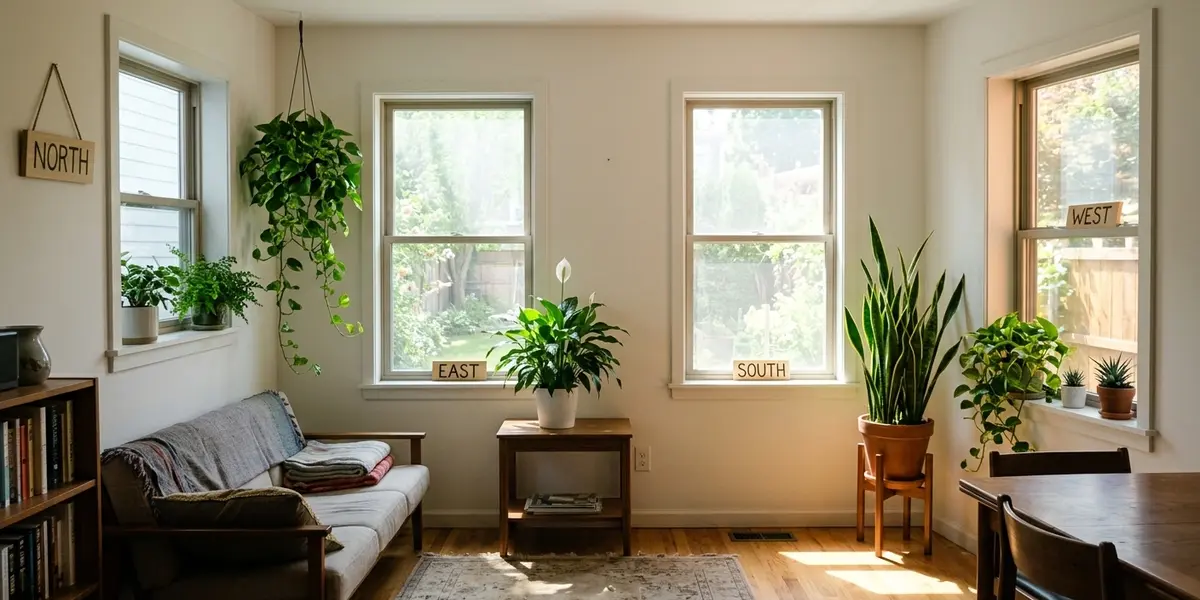
- Use the window as your starting point. North-facing windows are generally lower light, while south-facing windows provide much stronger natural light.
- Start with forgiving plants. Pothos, snake plant, and some peace lilies can be good choices, but none are indestructible.
- Do a monthly check. Look at leaves, soil, roots, pests, pot drainage, and whether the plant has outgrown its container.
What is the proper way to care for indoor houseplants?
The proper way to care for indoor houseplants involves placing them in appropriate window light, planting them in containers with drainage holes, checking soil moisture manually, and applying diluted fertilizer during active growth. Checking the top inch of soil ensures you water only when necessary, protecting roots from fatal fungal rot.
How Much Light Do Indoor Plants Need for Healthy Growth?
If you’re trying to save a struggling houseplant, check the light before reaching for the fertilizer.
Plants use light to make the energy they need for growth. A plant sitting in a dark corner may survive for a while, but slow growth, pale leaves, long spaces between leaves, and constant soil moisture can follow.
The University of Minnesota Extension houseplant guide classifies indoor light broadly as low, medium, and high while offering clear window orientation rules. It notes that a north window can suit low-light plants, east-facing windows often provide medium light, and south or southwest windows can provide high light.
Use your window as a starting point
| Window | Typical light | Good starting point |
| North | Lower, softer light | Low-light plants |
| East | Gentle morning light | Many medium-light plants |
| South | Strong light | High-light plants; protect sensitive foliage |
| West | Strong afternoon light | Bright-light plants; watch for heat |
How bright something is changes a lot depending on where it is. Trees outside, window glass, curtains, and how far you are from the light all change how much light you get. Even shade‑loving plants like peace lilies still need a little natural daylight to survive.
Try the hand-shadow test
Stand where you want to place the plant during daylight. Hold your hand about 12 inches above a surface and look at the shadow.
A strong, fairly defined shadow suggests brighter light. A faint shadow suggests lower light. If there’s barely any shadow at all, you’re dealing with a dim location. It’s a rough test, not a scientific light meter. But for a beginner deciding between a window and a dark bookshelf, it’s useful.
How to Water Houseplants the Right Way
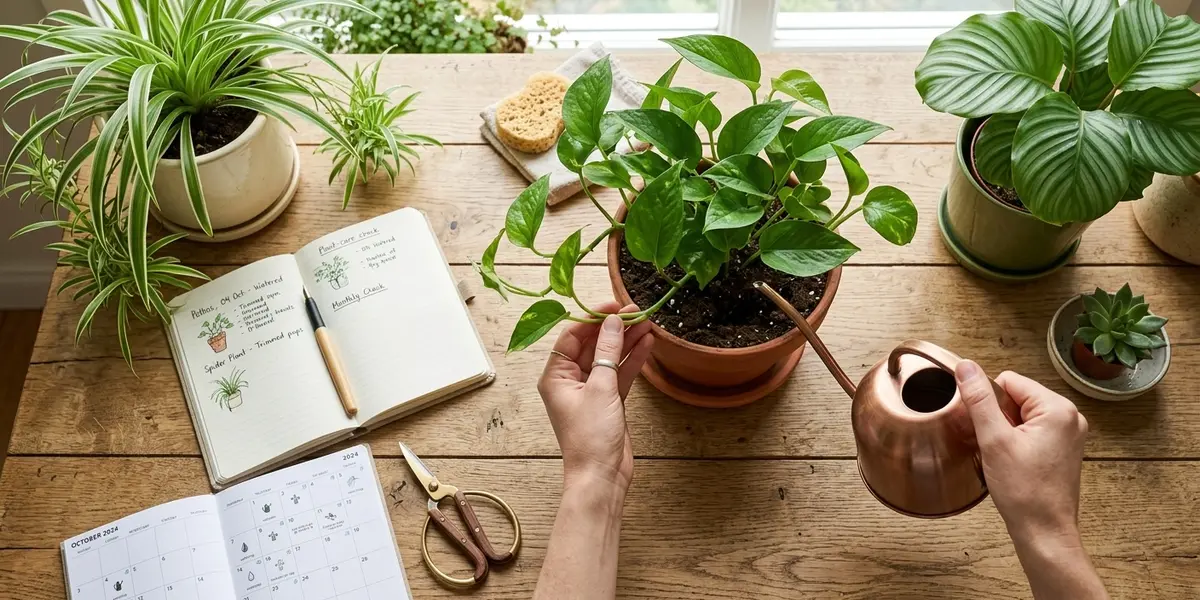
Most houseplants die because of watering mistakes. The signs on the plant can be confusing. Drooping or yellow leaves can mean too much water or too little water. Checking the soil directly is more reliable than just looking at the plant.
University of Minnesota Extension recommends checking the top inch of soil and watering when it feels dry for many houseplants. It also recommends emptying saucers so roots aren’t left sitting in water.
That’s a useful baseline, but here’s the catch: there isn’t one watering rule for every houseplant.
You’ll see advice saying the top inch should dry. Other sources say half the pot should dry, or that you should wait until the top 1–2 inches are dry.
Sources disagree because plants, pots, soil mixes, room temperatures, and light levels aren’t identical.
Start with the finger test
Push your finger into the soil about an inch. If it’s still clearly damp, wait. If the upper layer feels dry, check a little deeper and consider the plant’s normal moisture preference.
For a moisture-loving plant, you may water sooner than you would for a drought-tolerant snake plant.
Lift the pot
This sounds almost too simple. Lift the pot immediately after watering and notice its weight. Then lift it again several days later.
Dry soil and a thirsty plant often make the container noticeably lighter. This becomes especially useful when the soil surface is misleading.
Water thoroughly
When the plant actually needs water, don’t just splash a tablespoon onto the surface. Water slowly enough that the root ball becomes thoroughly wet. Let excess water drain from the bottom.
Then empty the saucer. A decorative cachepot can hide a problem here. If the plant’s nursery pot sits inside a decorative container, remove it or check underneath after watering. Don’t leave the inner pot sitting in collected water.
What about bottom watering?
Bottom watering can help a very dry or compacted root ball absorb moisture evenly.
Place the pot in a container of water and let the growing mix draw water upward through the drainage holes. Once the soil is adequately moist, remove the pot and allow excess water to drain.
It’s a technique, not a rule. You don’t need to bottom-water every houseplant.
Best Soil and Pots for Indoor Gardening
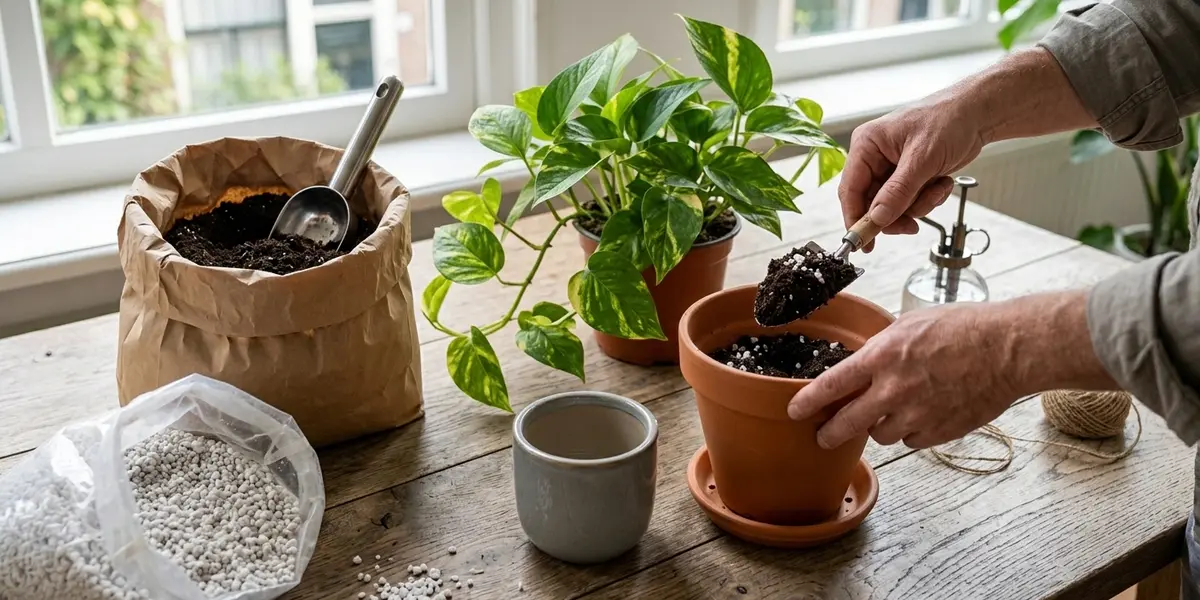
A good pot can save you from a lot of trouble.
The first thing to check isn’t the color or material. It’s the drainage hole.
A pot without a drainage opening gives excess water nowhere to go. Even if you use a beautiful decorative planter, put the plant in a separate nursery pot with drainage inside it.
Don’t make the new pot huge
Beginners often think a rapidly growing plant needs a large pot immediately.
Usually, that’s not helpful.
A much larger container holds more wet soil around a relatively small root system. That soil can stay wet longer than the plant needs.
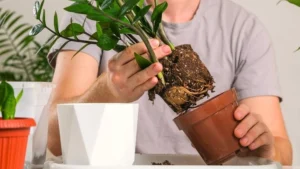
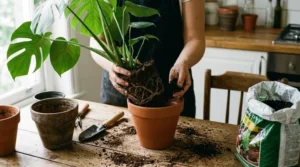
When repotting, move up gradually rather than jumping from a small container into a giant one.
Cachepot vs nursery pot
A nursery pot has drainage holes. A cachepot is mainly a decorative outer container. That’s a perfectly good combination. Just remember that the decorative pot isn’t automatically a drainage system.
Choose soil for the plant
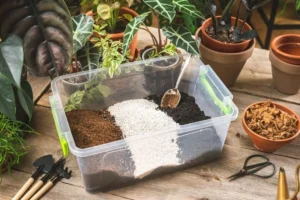
There isn’t one “best soil” for every houseplant. A general indoor potting mix can work for many common foliage plants. Plants with different needs may require a chunkier or more specialized mix.
The goal is a growing medium that holds enough moisture for the plant while still allowing excess water and air around the roots.
Indoor Plant Humidity and Temperature Guide
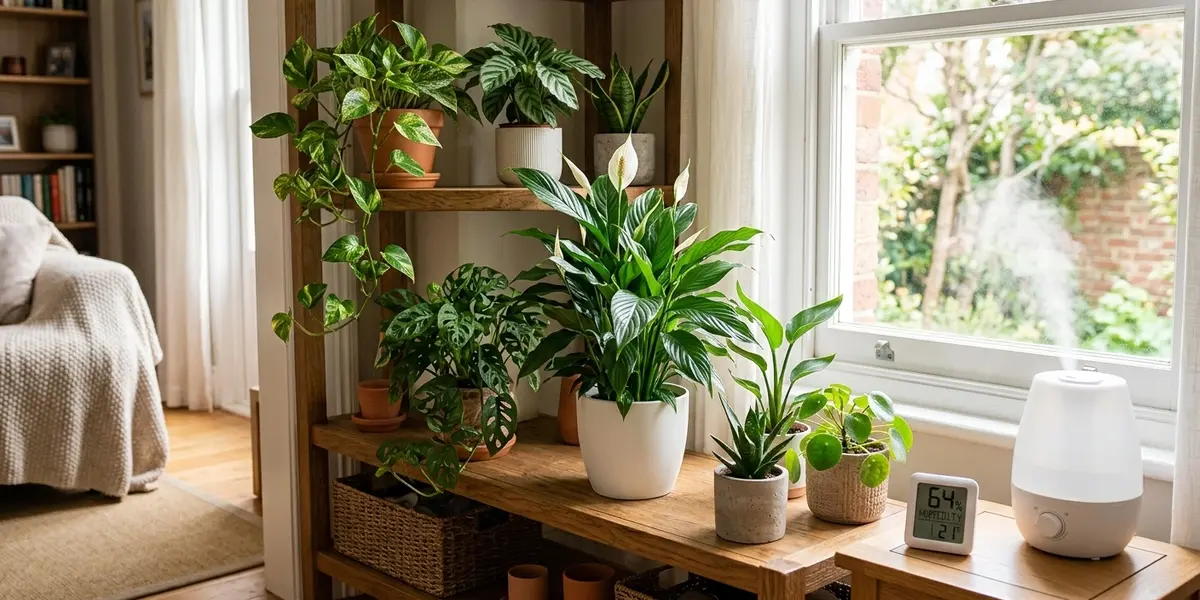
Humidity gets a lot of attention online. Sometimes too much. Most common houseplants don’t need you to turn your home into a tropical rainforest. Their needs vary by species, and ordinary indoor conditions may be fine for tougher plants.
Humidity becomes more important for plants that naturally grow in humid environments.
Don’t depend on misting
Misting the leaves can make them wet, but it doesn’t reliably maintain higher room humidity for long. So if your room is genuinely dry, a humidifier is a more dependable way to raise humidity than repeatedly spraying leaves.
And wet foliage isn’t automatically better. University of Minnesota Extension specifically advises against misting some houseplants, noting that humidity helps while wet leaves aren’t necessarily useful.
What temperature should you aim for?
Avoid extremes. A sudden cold draft beside a window can be a bigger problem than a room being a few degrees away from some perfect number.
You’ll also find different temperature floors in plant-care advice: some sources use about 55°F, others 60°F, and some tropical-plant guidance goes higher.
That’s because “houseplants” aren’t one species. For a beginner collection, a practical rule is simple: keep tropical houseplants away from cold drafts, freezing conditions, and abrupt temperature changes.
Don’t obsess over a single magic number.
How to Fertilize Indoor Plants Without Damaging Them
Fertilizer isn’t plant food in the way many beginners imagine it. Light drives photosynthesis. Water transports nutrients. Fertilizer supplies mineral nutrients the plant needs for growth.
More fertilizer doesn’t mean more growth.
In fact, too much can create salt buildup and damage roots. University of Minnesota Extension recommends using balanced houseplant fertilizer at reduced strength during active growth and warns that excessive fertilizer can cause salt buildup.
A safer beginner routine
Feed a healthy, actively growing plant according to the fertilizer label.
If you’re using a concentrated fertilizer, measure it rather than guessing. Don’t fertilize a plant simply because its leaves look terrible. First find out whether the real problem is poor light, root trouble, pests, underwatering, or overwatering.
A sick plant doesn’t need a bigger dose of everything.
Easy Indoor Plants for Beginners
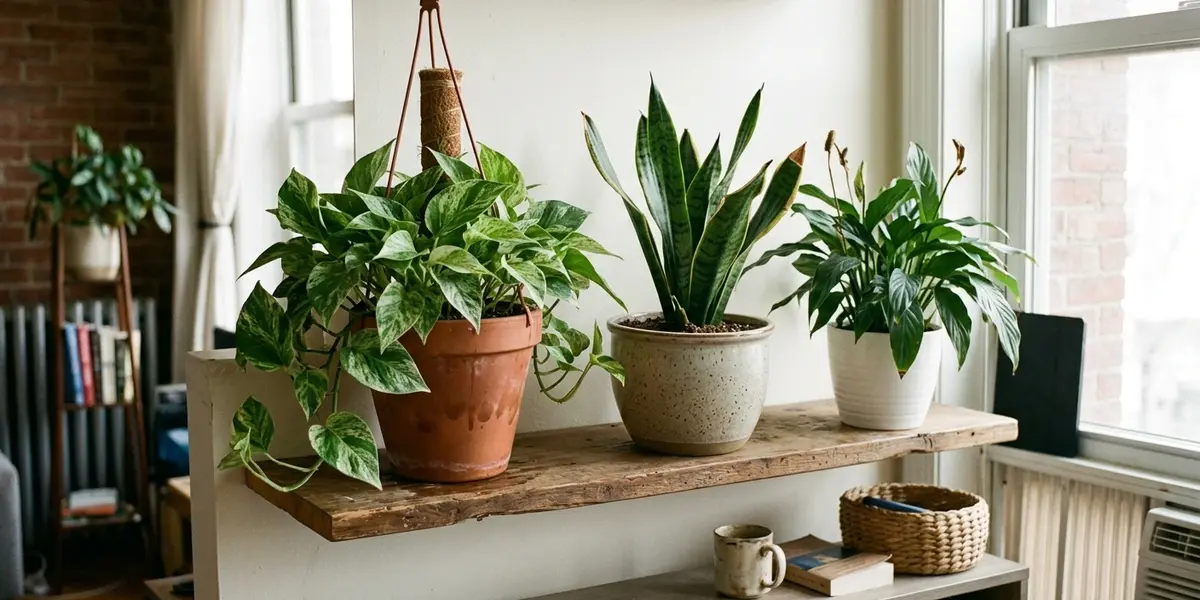
“Easy” is a useful word, but it doesn’t mean “impossible to kill.”
These three are popular for a reason.
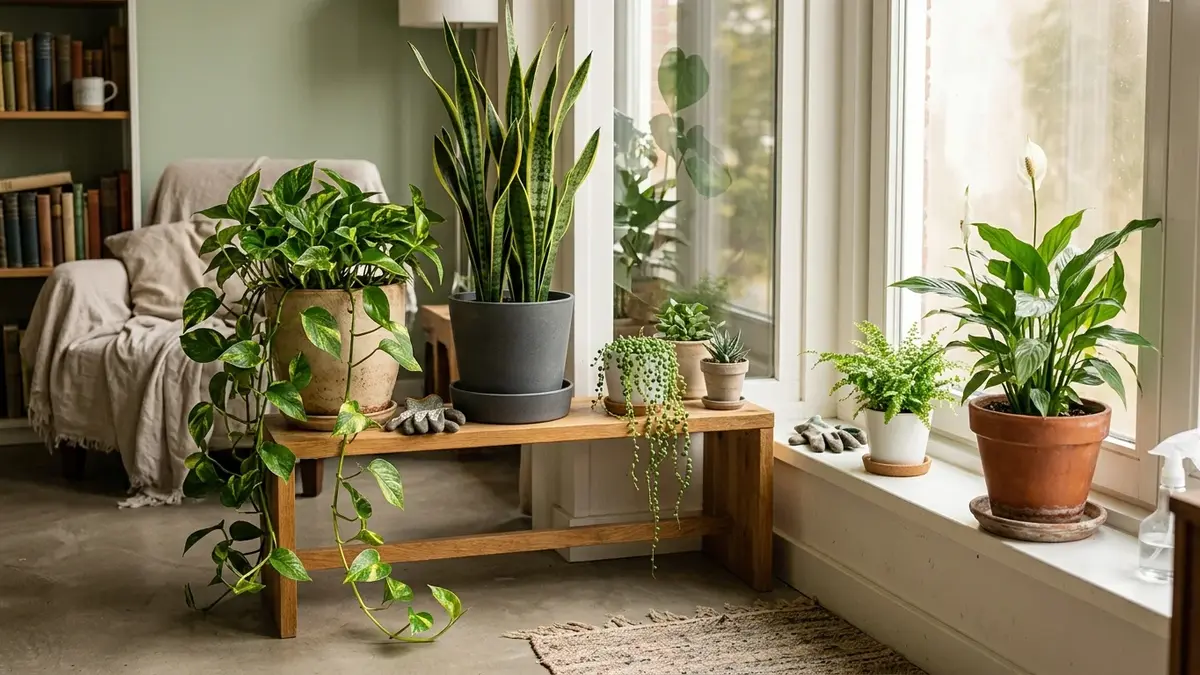
Peace lily
Peace lilies can handle lower light than many flowering houseplants, although better light generally supports stronger growth and flowering.
They also communicate dramatically when thirsty. A wilted peace lily can look almost offended. That makes it useful for beginners because the plant can give you a visible warning. But don’t use wilting as permission to let the soil stay bone-dry repeatedly.
Pothos
Pothos is adaptable and grows readily in many indoor conditions. It can tolerate lower light, although growth may become slower and less vigorous. It’s also easy to propagate from stem cuttings, making it a good first plant if you want to learn propagation without risking an expensive specimen.
Snake plant
Snake plants have thick leaves and can tolerate periods of dry soil better than many tropical foliage plants. That makes them useful for people who tend to forget watering. The opposite mistake still matters: a drought-tolerant plant can suffer when its roots remain constantly wet.
Mastering Light and Soil Drainage for Houseplants
Evaluating indoor light accurately is essential before buying new houseplants. A plant positioned in a dark corner cannot compensate for low light levels through added fertilizer or extra water. Agricultural extension guidelines classify indoor illumination into low, medium, and high zones, noting that north-facing windows suit shade-tolerant plants while south-facing windows supply intense daylight.
Selecting an appropriate pot with drainage holes remains the single most important step in preventing root disease. Planting directly into decorative cachepots without drainage openings traps excess water around roots, leading to anaerobic fungal decay. Using a plastic nursery pot inside a decorative planter allows excess water to run off safely after every watering session.
Common Indoor Plant Problems and How to Fix Them
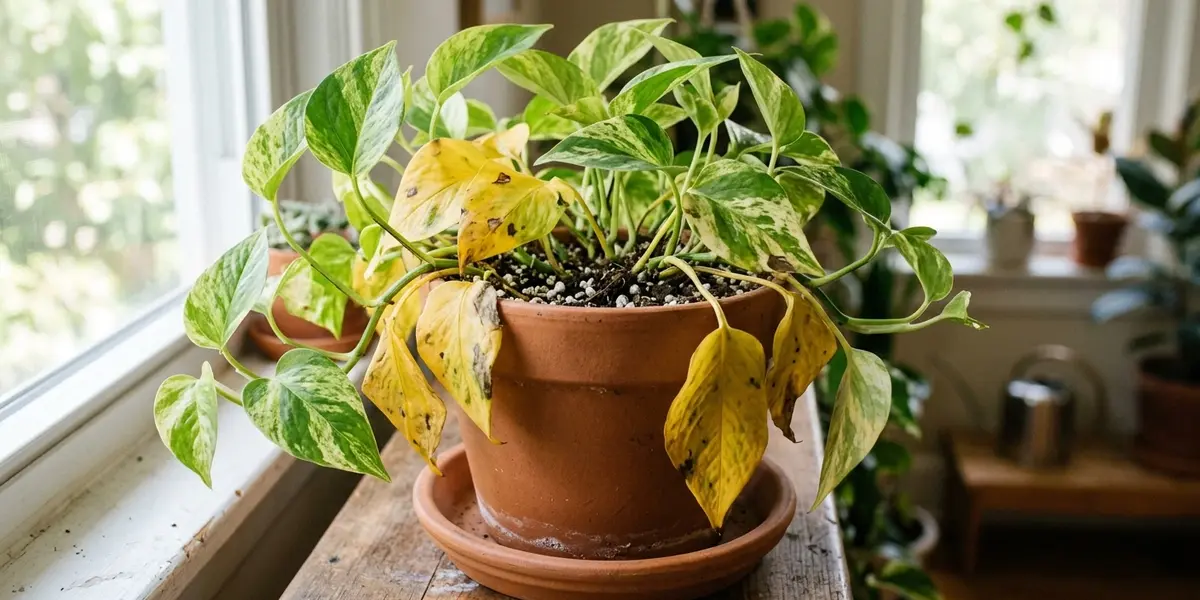
A potted pothos plant displaying yellow, drooping leaves caused by overwatering.
A symptom is a clue, not a diagnosis.
Yellow leaves can come from several causes. Drooping can mean thirst, but it can also happen when roots are stressed by excess water.
| Symptom | Possible cause | First thing to check |
| Yellow leaves | Overwatering, aging leaves, poor light, root stress | Soil moisture and drainage |
| Brown leaf tips | Dry air, inconsistent watering, salt buildup | Humidity, watering, fertilizer |
| Drooping | Underwatering, root problems, heat, cold | Soil moisture and roots |
| Long, weak growth | Not enough light | Move closer to suitable light |
| Mushy stems/roots | Prolonged excess moisture | Stop watering and inspect roots |
| Sticky leaves/webbing | Possible pests | Inspect leaves and stems closely |
Drooping deserves a closer look
If your plant suddenly collapses, don’t automatically pour water into the pot.
First feel the soil. If it’s dry several inches down, underwatering is a reasonable suspect. If the soil is wet and the plant is still drooping, adding more water could make the situation worse. Root problems, cold stress, heat, poor soil structure, and pests can all produce similar-looking symptoms.
Indoor Gardening Mistakes Beginners Should Avoid
This is where some plant-care advice gets unnecessarily complicated. You don’t need twenty rules. You need to stop making the five mistakes that cause the most trouble.
1. Watering on a calendar
“Every Sunday” sounds organized.
Plants don’t care what day it is.
Check the soil and the plant’s conditions instead.
2. Using a pot with no drainage
This is the $30 mistake from the opening story. A decorative container isn’t worth sacrificing the root system.
3. Putting a low-light plant in a dark corner
A plant may survive there for months.
That doesn’t mean it’s healthy. Low light also means slower water use, so soil can remain wet longer. University of Minnesota Extension specifically warns that plants in lower light use less water, increasing the risk of overwatering.
4. Repotting too early
A new plant doesn’t automatically need a new pot. Give it time to adjust unless there’s a clear problem such as severely poor drainage, root-bound conditions, damaged soil, or another genuine reason to intervene.
5. Fertilizing a struggling plant
Yellow leaves are not a fertilizer request.
Find the cause first. Sometimes the best “treatment” is moving the plant closer to a window or letting wet soil dry to an appropriate level.
Pet Safety for Common Houseplants
A beautiful plant isn’t automatically a safe plant. If you have cats or dogs that chew leaves, check the plant before bringing it home.
The ASPCA lists peace lily (Spathiphyllum) as toxic to dogs and cats because it contains insoluble calcium oxalates. Reported signs include oral irritation, drooling, vomiting, and difficulty swallowing.
ASPCA also identifies pothos, philodendron, dieffenbachia, calla lily, and Chinese evergreen among common houseplants containing these crystals.
That doesn’t mean every exposure becomes a life-threatening emergency. It does mean you shouldn’t assume a plant is harmless because it’s commonly sold as a houseplant. Before bringing new foliage home, consult the ASPCA toxic and non-toxic plants database to verify whether specific species pose risks to cats or dogs.
If your pet has eaten a potentially toxic plant, contact your veterinarian or an appropriate animal poison service rather than waiting for symptoms to become severe.
A Monthly Indoor Plant Care Checklist
You don’t need to spend an hour every day inspecting leaves.
A short monthly check catches many problems early.
| Week | What to do |
| Week 1 | Check soil moisture and water plants that actually need it. |
| Week 2 | Inspect leaves, stems, and the underside of leaves for pests. |
| Week 3 | Check pots, drainage holes, saucers, and roots if something looks wrong. |
| Week 4 | Rotate plants if needed, remove dead leaves, wipe dusty foliage, and reassess light. |
Then repeat.
During hot, bright periods, check more often. Plants in brighter locations can use water faster, while plants in dim areas may stay wet longer. And don’t make the checklist more important than the plant. If a plant looks different from last month, investigate it.
What about “air-purifying” houseplants?
This claim needs some honesty.
The famous NASA Clean Air Study from 1989 investigated common plants’ ability to remove certain pollutants from controlled environments. The experiments used sealed chambers, which is very different from an ordinary living room with doors opening, ventilation, HVAC systems, and changing air volume.
Later environmental studies put NASA’s early results into a realistic view. A comprehensive study by Cummings and Waring in the Journal of Exposure Science & Environmental Epidemiology examined 12 chamber experiments to evaluate real-world VOC removal rates. They found that matching normal home air‑exchange rates would need an impractically high number of plants between 10 and 1,000 plants for each square meter of floor space.
But don’t buy a peace lily expecting it to replace ventilation or an air purifier.
That isn’t what the evidence supports.
How to Start an Indoor Garden Without Overcomplicating It
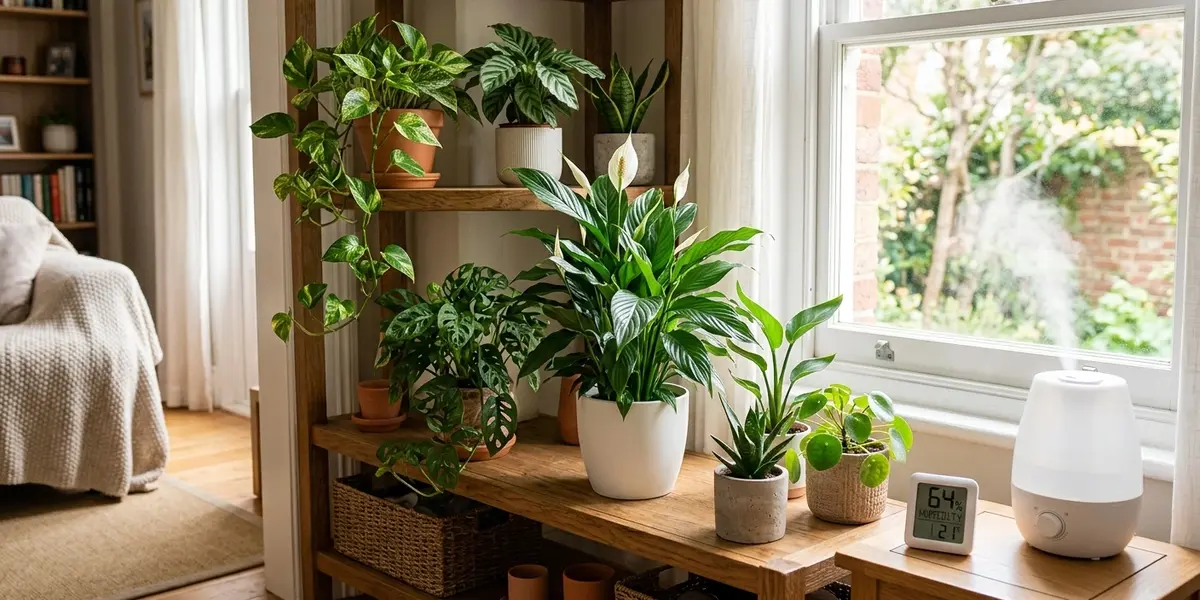
Start with one or two plants. Not twelve. Pick a location with usable natural light. Choose plants that match that light rather than trying to force every plant into the same corner.
Use containers with drainage. Learn what dry soil feels like. Then watch what happens. If the plant grows, keep doing more of what is working. If leaves change, investigate the light, soil moisture, roots, temperature, and pests before changing five things at once.
That’s the part beginners often miss. Plant care is not about finding one perfect schedule. It’s about noticing cause and effect.
A plant that gets bright light may dry out faster. A plant in a cool, dim room may stay wet for much longer. A small pot can dry quickly. A large pot can hold moisture for days.
Once you see those connections, indoor gardening becomes much less mysterious.
Conclusion
Go back to that $30 plant sitting in the decorative pot.
The plant itself wasn’t necessarily difficult. The setup was.
A container without drainage turned ordinary watering into a root problem. Poor light could have made the soil stay wet longer. And without checking the soil, it was easy to water again simply because the leaves looked unhappy.
The replacement plant doesn’t need perfect care.
It needs the basics done consistently. Give it enough light. Check the soil before watering. Let excess water drain. Use suitable soil. Keep it away from harsh temperature changes. Look at the leaves before reaching for fertilizer.
Then notice what the plant is telling you. That’s really the secret to keeping houseplants alive. Not a complicated schedule. Just paying attention before a small problem becomes a dead plant.
With a few consistent habits, plant care and indoor gardening can become a simple part of your home routine rather than a source of frustration.
Frequently Asked Questions
How often should I water indoor plants?
Check the soil instead of following a fixed schedule. Water when the upper layer is dry and the plant actually needs moisture.
What are the easiest houseplants to keep alive?
Pothos, snake plants, and peace lilies are common beginner choices. Each still needs the right light and watering.
How much light do indoor plants need?
It depends on the plant. Most need bright indirect light, while some tolerate lower-light locations.
Why are my plant’s leaves turning yellow?
Yellow leaves can come from overwatering, poor light, aging, or root problems. Check the soil and drainage first.
How do I know if I’m overwatering?
Constantly wet soil is a major warning sign. Check the pot’s drainage and let the soil dry to the level appropriate for your plant.
What is the best soil for indoor plants?
Choose a well-draining potting mix suited to the plant. Avoid heavy soil that stays wet for too long.
Do indoor plants need fertilizer?
Most actively growing houseplants benefit from occasional feeding. Follow the fertilizer label and avoid overfeeding.
How do I start an indoor garden?
Start with one or two plants that match the light in your home. Use pots with drainage and learn their watering needs.
Do houseplants really clean the air?
Plants can remove some pollutants under controlled conditions, but they don’t replace ventilation or an air purifier in a normal home.
Which houseplants are safe for pets?
Check each plant before bringing it home. The ASPCA’s toxic and non-toxic plant database is a useful place to verify pet safety.
Should I mist my houseplants?
Misting only raises humidity briefly. A humidifier or better room-level humidity control is more effective when extra humidity is actually needed.
Why is my plant drooping even though I watered it?
Drooping can come from both too little and too much water. Check the soil, drainage, roots, temperature, and light before watering again.