Key Takeaways
Encouraging new leaf growth is less about finding a secret growth booster and more about creating the right environment.
Give your plant species-appropriate light, water it according to its actual needs, provide nutrients during active growth, maintain good drainage, inspect the roots when necessary, and watch carefully for pests.
Most importantly, avoid treating every slow-growing plant the same way. A healthy houseplant does not need constant intervention. Once you correct the limiting problem, natural new growth can return in its own time.
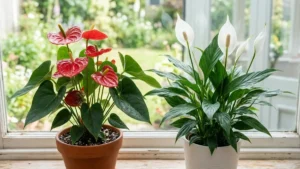
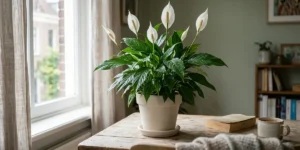
For Peace Lily, the most useful approach is simple: understand the plant first, then adjust its care. That principle works for houseplants grown in homes around the world.
Quick Answer: How to Encourage New Leaf Growth
The most reliable way to encourage new leaf growth is to give your plant the conditions it needs for active growth.
Focus on these areas:
| What to check | Why it matters |
|---|---|
| Light | Provides the energy needed for photosynthesis |
| Water | Supports normal plant functions without keeping roots waterlogged |
| Fertilizer | Replaces nutrients used over time |
| Soil and drainage | Gives roots access to air, water, and nutrients |
| Pot size | Prevents unnecessary root stress and excess wet soil |
| Pruning | Can encourage fuller growth in suitable plants |
| Humidity | Helps plants that naturally prefer more humid conditions |
| Pests | Prevents insects from weakening new and existing growth |
There is no single treatment that makes every houseplant produce leaves faster. The right approach is to correct the condition that is actually limiting growth.
Give Your Plant Enough Light
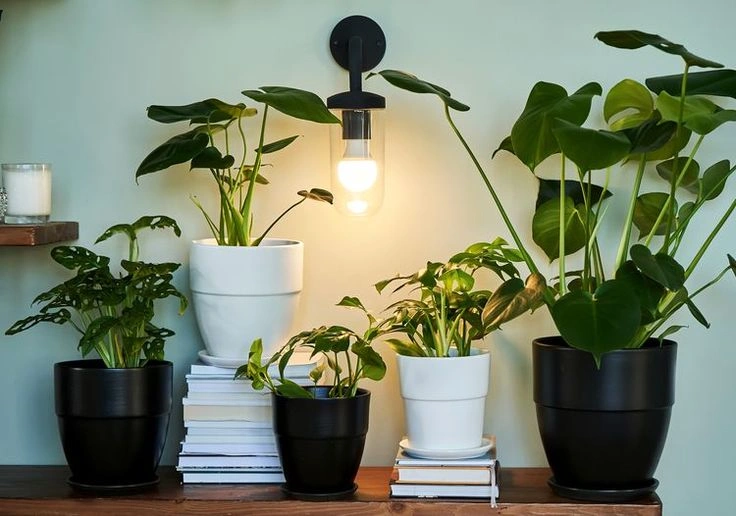
Light is one of the most important factors when you are learning how to encourage new leaf growth.
Plants use light for photosynthesis, the process through which they produce the energy and sugars needed for growth. When light is insufficient, plants may develop weak or stretched growth, pale foliage, and fewer new leaves.
However, more light is not automatically better.
A plant adapted to bright indirect light may struggle when suddenly placed in intense direct sunlight. Some plants can develop scorched or bleached foliage when light intensity is too high.
How to improve indoor light
Move the plant closer to an appropriate window if its current location is too dim. Make changes gradually, especially when moving a plant from a darker position into stronger sunlight.
If natural light is insufficient, supplemental artificial lighting can be useful for some indoor plants. The required intensity and duration vary according to the plant species.
Water According to the Plant’s Needs
Correct watering is another major part of how to encourage new leaf growth.
There is no universal watering schedule that works for every houseplant. Water requirements change with plant species, pot size, soil type, temperature, humidity, and available light.
Instead of watering simply because it is a particular day of the week, check the growing medium.
Many common houseplants can be checked by feeling the soil with your finger. The depth at which you should check depends on the plant and its growing conditions.
Avoid constantly wet soil
Overwatering does not mean giving a plant too much water on one occasion. More often, the problem is keeping the roots in poorly drained, saturated soil for too long.
Containers should have drainage holes, and excess water should be allowed to escape. Keeping roots constantly wet can contribute to root problems and poor growth.
At the same time, prolonged dryness can stress plants and slow their development. The goal is to provide moisture appropriate for the particular species rather than keeping every plant equally wet.
Feed Plants Only When They Are Actively Growing
Fertilizer can help encourage new leaf growth, but it should not be treated as a quick fix.
Houseplants use nutrients from their growing medium over time. Fertilizing can therefore be useful when plants are actively growing and actually need additional nutrients.
A balanced houseplant fertilizer is a reasonable starting point for many foliage plants. However, always follow the product label because fertilizer concentration and application instructions vary.
University of Minnesota Extension’s current guidance recommends starting gently with a balanced fertilizer at half strength every two to four weeks during active spring growth, while noting that plants receiving different amounts of light may have different needs.
Can too much fertilizer stop new growth?
Yes. More fertilizer does not automatically mean more leaves.
Overfertilizing can damage roots and contribute to salt buildup. Plants growing slowly in low light are particularly poor candidates for heavy feeding because they may not be able to use the additional nutrients effectively.
So, if a plant is sitting in a dark corner, improving its light may be more important than adding more fertilizer.
Check the Roots and Pot
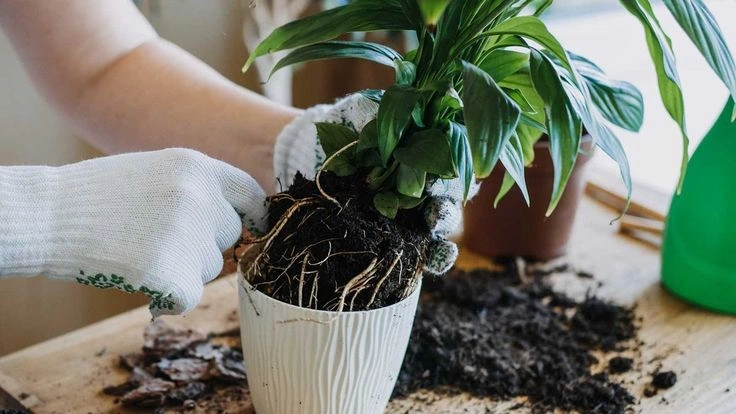
Sometimes the leaves are not the real problem. The roots may be limiting growth.
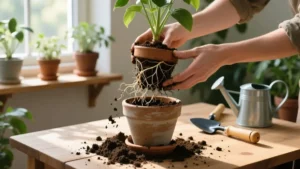
A severely root-bound plant can have slow leaf and stem development. Signs that a plant may need repotting include roots circling tightly inside the container, roots emerging from drainage holes, unusually rapid drying of the growing medium, or a plant becoming unstable in its pot.
When repotting is appropriate, avoid jumping into a dramatically larger container.
A pot that is only modestly larger is generally safer because a large volume of unused wet soil can remain moist for too long. University of Minnesota Extension recommends increasing container diameter by no more than about 2 to 3 inches when a larger pot is needed.
Fresh growing medium can also help when old soil has become compacted or when water is no longer moving through it properly.
Prune Strategically
Pruning can be useful when you want to encourage new leaf growth, particularly on plants that naturally branch or produce new shoots after pruning.
For example, current University of Minnesota Extension guidance recommends trimming leggy stems just above a leaf node when appropriate. This can help produce fuller growth rather than allowing a plant to remain stretched and sparse.
Do not remove healthy leaves simply because they are old.
Green leaves are still contributing to photosynthesis. The RHS recommends retaining predominantly green leaves on struggling plants until fresh growth develops, while completely brown, dead, or clearly damaged leaves can be removed.
Improve Humidity When Your Plant Needs It
Humidity can influence how well certain houseplants perform, particularly species that naturally grow in humid environments.
However, raising humidity is not a universal solution for every plant. Some houseplants tolerate ordinary indoor humidity quite well, while tropical foliage plants and some ferns can benefit from more humid conditions.
A humidifier can provide more consistent humidity than occasional misting.
Misting should not be considered essential for all houseplants. Illinois Extension notes that excessive misting can increase disease problems for some plants.
Keep Leaves Clean
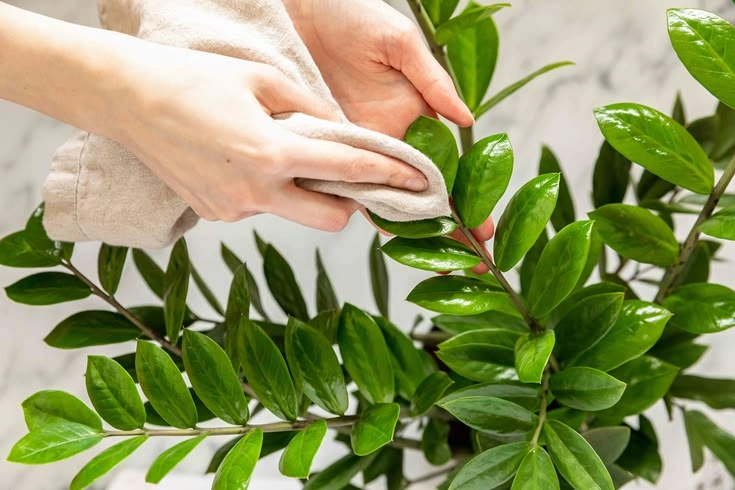
Dusty leaves can interfere with the amount of light reaching the leaf surface.
A gentle wipe with a damp cloth or a suitable rinse can remove accumulated dust from plants that tolerate it. University of Minnesota Extension recommends cleaning leaves as part of seasonal houseplant care.
Avoid unnecessary leaf-shine products. They are not required for healthy growth, and some products can interfere with normal leaf function.
Check for Pests Before Adding More Fertilizer
If your plant has stopped producing healthy leaves, inspect it closely before assuming it needs feeding.
Common houseplant pests include aphids, mealybugs, scale insects, thrips, and spider mites. Sap-feeding insects can affect plant appearance and vigor, so checking leaves, stems, and leaf undersides is an important part of troubleshooting.
Look for signs such as insects, sticky residue, distorted new growth, webbing, or unusual leaf damage.
If pests are present, deal with the underlying problem rather than trying to compensate with extra fertilizer.
Give the Plant Time to Grow
One overlooked part of how to encourage new leaf growth is patience.
Houseplants do not grow at the same speed throughout the year. Growth is influenced by light levels, temperature, plant species, and the plant’s natural growth cycle.
During periods of low light, many houseplants naturally slow down. The RHS notes that plants generally need less water and feeding when growth slows, while the University of Minnesota Extension explains that increasing daylight can signal a return to active growth.
This means a plant that produces few leaves during a darker season may not need aggressive treatment. Improving its growing conditions and allowing time for recovery can be more effective.
Common Mistakes That Slow New Leaf Growth
1. Adding fertilizer before fixing poor light
If a plant cannot receive enough light for healthy photosynthesis, fertilizer alone is unlikely to solve the problem.
2. Following a fixed watering calendar
Plants use water at different rates. Soil, temperature, humidity, pot size, and light all affect how quickly moisture is lost.
3. Moving a plant suddenly into strong sunlight
A sudden change can damage leaves. Increase light gradually when the new location is substantially brighter.
4. Using a much larger pot
Extra soil can retain moisture around roots for longer than necessary. Repot only when the plant actually needs it.
5. Removing too many healthy leaves
Green foliage continues to contribute to the plant’s energy production. Avoid stripping a struggling plant of healthy leaves.
6. Assuming every plant needs high humidity
Humidity preferences vary significantly between species. Match the environment to the plant instead of trying to make every room tropical.
A Simple New Growth Checklist
Use this checklist when a healthy-looking houseplant has stopped producing leaves:
-
Check whether the plant receives the correct amount of light.
-
Inspect the soil before watering.
-
Make sure the container drains properly.
-
Look for signs of root problems.
-
Check whether the plant is genuinely root-bound.
-
Feed only during active growth and according to the fertilizer label.
-
Inspect leaves and stems for pests.
-
Remove dead or badly damaged foliage.
-
Prune leggy growth only when appropriate for the plant.
-
Check whether the plant’s humidity requirements are being met.
-
Give the plant time to respond after correcting its conditions.
FAQs About How to Encourage New Leaf Growth
How can I make my houseplant grow new leaves faster?
Start by checking light, watering, drainage, roots, nutrients, and pests. Correcting the limiting condition is more reliable than simply adding fertilizer.
Does fertilizer encourage new leaf growth?
Fertilizer can support growth when nutrients are needed, and the plant is actively growing. However, excessive fertilizer can damage roots and may worsen plant health.
Why is my plant healthy but not growing new leaves?
Low light, seasonal slowdown, root problems, unsuitable watering, nutrient shortages, pests, or species-specific growth patterns can all contribute. Start with the plant’s basic growing requirements rather than immediately repotting or fertilizing.
Does pruning encourage new leaves?
For some plants, pruning stems above suitable nodes can encourage fuller growth. The response depends on the plant’s growth habit, so avoid using the same pruning method for every species.
Should I mist my houseplants for new growth?
Not necessarily. Some plants benefit from higher humidity, but misting is not required for every species, and excessive misting can increase disease risk in some circumstances.
Can low light stop new leaf growth?
Yes. Insufficient light limits photosynthesis and can result in weak, pale, or stretched growth. Improving the light conditions can therefore be an important step when trying to restore healthy growth.